April 2026



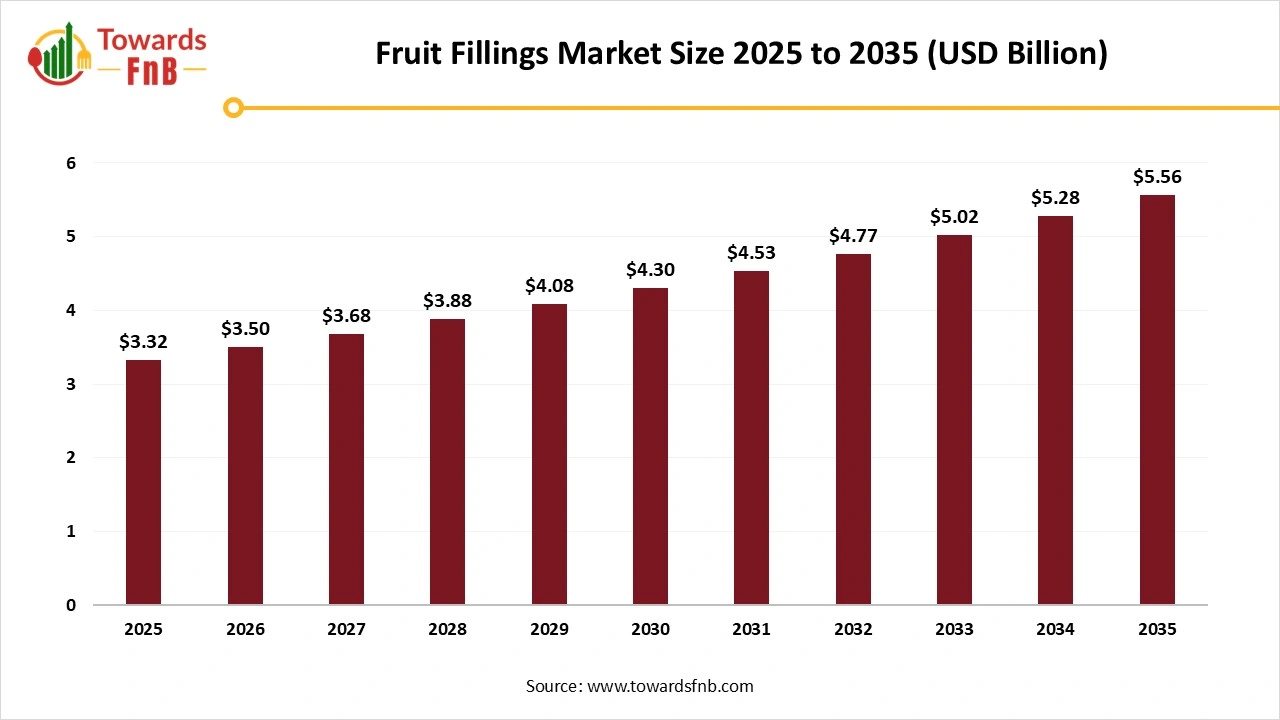
The global fruit fillings market size stood at USD 3.32 billion in 2025 and is anticipated to increase from USD 3.50 billion in 2026 to an estimated USD 5.56 billion by 2035, witnessing a CAGR of 5.3% during the forecast period from 2026 to 2035. The fruit fillings market is driven by demand for convenience foods, health-conscious options, and expanding bakery applications.
| Study Coverage | Details |
| Growth Rate from 2026 to 2035 | CAGR of 5.3% |
| Market Size in 2026 | USD 3.50 Billion |
| Market Size in 2027 | USD 3.68 Billion |
| Market Size by 2035 | USD 5.56 Billion |
| Largest Market | Europe |
| Base Year | 2025 |
| Forecast Period | 2026 to 2035 |
| Regions Covered | North America, Europe, Asia-Pacific, Latin America, and Middle East & Africa |
The fruit fillings market refers to the production and distribution of fruit-based mixtures used as ingredients in bakery, confectionery, dairy, and foodservice products. These fillings are typically made from fresh, frozen, or processed fruits combined with sweeteners, stabilizers, and flavor enhancers to achieve the desired taste, texture, and shelf life.
Fruit fillings are widely used in products such as pastries, cakes, doughnuts, pies, yogurt, ice creams, desserts, and beverages. The market is driven by rising consumer demand for convenient, natural, and clean-label ingredients, the growth of the bakery and confectionery sectors, and innovation in ready-to-use and low-sugar formulations.
The trend toward plant-based, non-GMO, and natural fruit preparations has further accelerated demand, especially in premium and artisanal food categories.
Advancements in formulation and processing methods have improved product stability and shelf life, making these fillings a favored option for manufacturers seeking consistent quality and longer durability. Improvements in processing technology, such as aseptic packaging and individually quick-frozen (IQF) techniques, have enhanced product stability, allowing producers to meet strict quality standards and prolong shelf life.
Continued research and development activities are anticipated to keep propelling market growth, unveiling new opportunities for product diversification and customization. Artificial intelligence is fostering innovation in the fruit fillings market by facilitating predictive analytics for flavor trends, optimizing texture, and modeling shelf-life. Automated mixing and cooking systems use AI algorithms to control temperature, viscosity, and ingredient ratios in real time, ensuring consistent product quality and minimizing batch rejections.
Raw Material Procurement
Processing of Fruit Fillings
Packaging of Fruit Fillings
Distribution of Fruit Fillings
Why did Europe Dominate the Fruit Fillings Market in 2025?
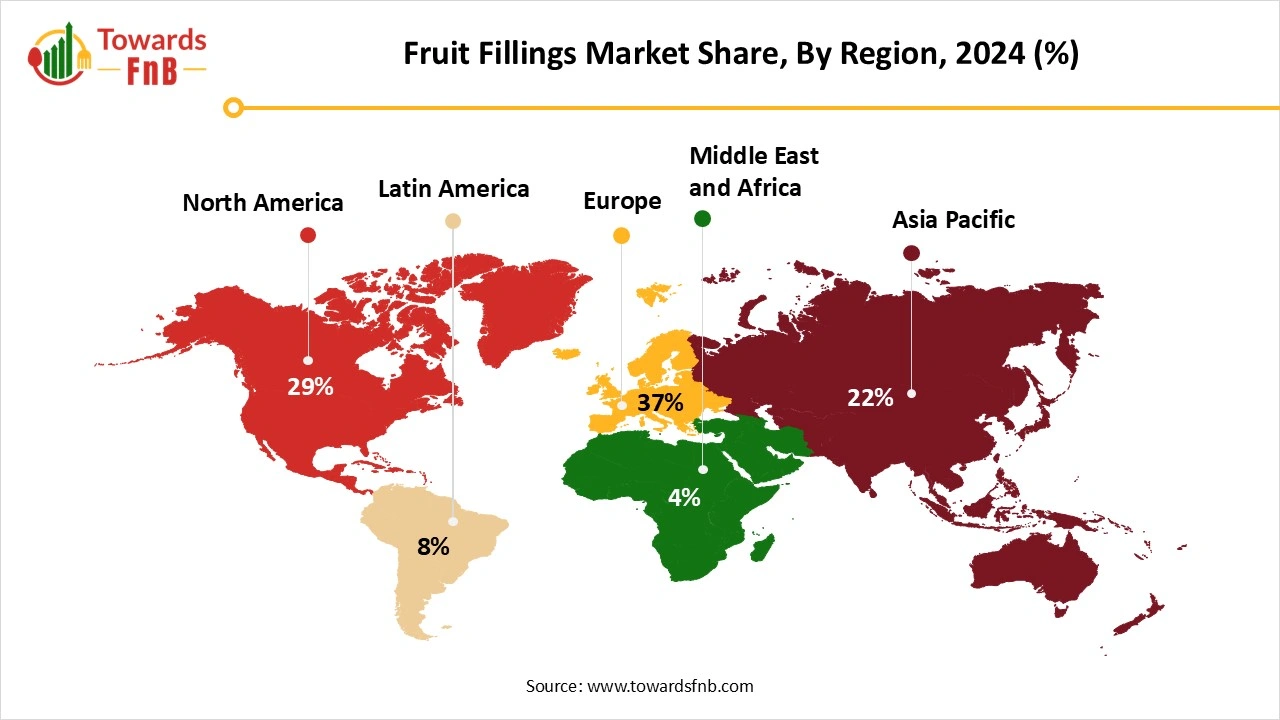
Europe dominated the fruit fillings market in 2025. In Europe, the rising demand for fruit fillings is linked to the region's diverse culinary heritage and a growing desire for high-quality, artisanal goods. European consumers value the rich flavors and quality associated with traditional dishes, and fruit fillings provide an easy way to incorporate these flavors into a range of food products. This cultural tendency toward high-quality, tasty ingredients has driven an increasing demand for fruit fillings in Europe. Moreover, the focus on sustainability and locally sourced components has become a major influence on fruit fillings in Europe.
Europe Fruit Fillings Market Size 2025 to 2035
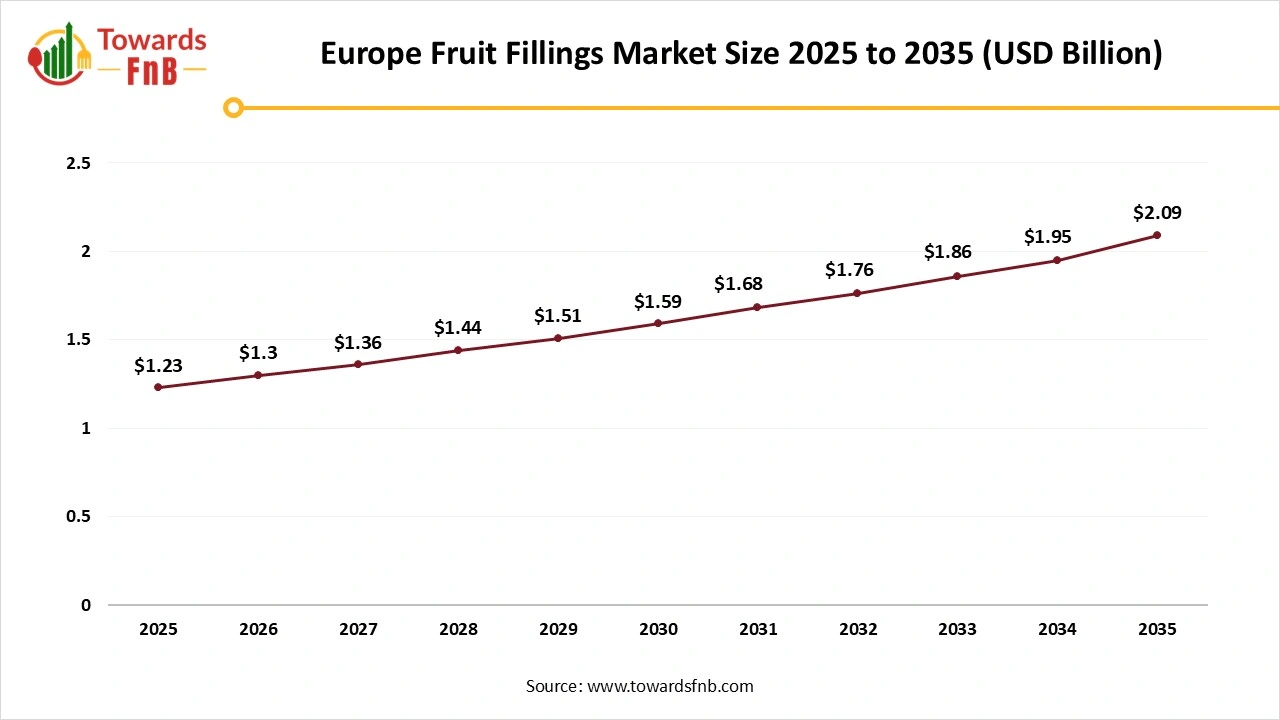
The Europe fruit fillings market size was valued at USD 1.23 billion in 2025 and is anticipated to increase from USD 1.3 billion in 2026 to an estimated USD 2.09 billion by 2035, witnessing a CAGR of 5.44% during the forecast period from 2026 to 2035.
Germany Food Fillings Market Analysis
The German food fillings market is expected to expand steadily, driven by rising demand for convenience and processed food across consumer groups. Technological advancements, including automation in filling methods and AI-driven formulations, are improving production efficiency and product personalization. Trends among health-conscious consumers are driving demand for clean-label fillings, fueling growth in organic and low-sugar filling products.
What Factors Are Driving the Demand for Fruit Fillings in the Asia Pacific?
Asia Pacific is expected to see significant growth during the forecast period. As their per capita income increases, consumers seek convenient and tasty food while becoming more health-conscious. The middle-class demographic in the Asia Pacific is growing, accompanied by increasing buying power. Consequently, the expanding middle class and rising purchasing power are driving consumer interest in quick, tasty, and natural methods for preparing food and drinks, thereby elevating demand.
India Fruit Fillings Market Analysis
The Indian fruit fillings market is expanding as demand for healthy, convenient food choices rises, driven by urbanization and a health-conscious consumer base. Important market trends include the need for natural and clean label products, adaptability in use across the dairy, bakery, and confectionery sectors, and the growing organized retail industry, which enhances accessibility.
What key factors are driving the growth of the fruit fillings market in North America?
Market growth in North America is driven by a robust bakery industry, rising consumer demand for distinctive fruit filling blends, and effective distribution networks. These elements will ensure that fruit-filled baked goods are easily accessible and readily embraced for consumption, promoting growth in the area. The strong tradition of bakery items and desserts in the area greatly underscores the growing demand for fruit fillings. In pies, pastries, croissants, biscuits, and cookies, fruit fillings add extra flavor and texture, enriching the overall sensory experience of these treats. Moreover, the rise of clean-label products has heightened demand for clear, natural ingredients.
U.S. Fruit Fillings Market
The U.S. fruit fillings market is experiencing significant growth fueled by rising consumer interest in natural, clean label ingredients and creative flavor combinations. An increasing desire for a broader selection of fruit flavors, such as tropical and exotic varieties like passionfruit, guava, and additional citrus-based fillings, is broadening consumer options. Producers are developing unique and exotic fruit flavors, along with customized choices, to satisfy consumer tastes and boost new sales.
How is Rising Consumer Demand for Fruit Fillings Driving the Latin American Market Growth?
The need for fruit fillings in Latin America stems from the increasing demand for convenient food items and healthier alternatives. Increasing awareness of the health benefits of fruit-based products, along with the abundant availability of tropical fruits in countries such as Brazil, Mexico, Chile, and Argentina, is driving positive growth prospects. Consumers throughout Latin America are increasingly drawn to organic jams, sugar-free preserves, and creative flavor combinations that align with health-focused lifestyles.
Brazil Fruit Fillings Market Analysis
The fruit fillings sector in Brazil is part of a broader, expanding fruit and vegetables industry, fueled by consumer interest in healthier, more convenient options, the growth of the food service industry, and Brazil's solid standing in global fruit output. Prominent trends include the demand for clean-label items, unique and classic fruit flavors such as passionfruit and jabuticaba, and the incorporation of fillings across products like baked goods, dairy, and ice cream. Brazil's fruit export sector is robust and expanding, encompassing fruit fillings, pulps, and fresh produce, with exports surpassing 1 million tons and generating $1.287 billion in revenue in 2024. The nation accounts for 50% of the market for tropical fruit pulp and concentrate in Latin America.
What Key Factors are Driving the Growth of the Middle East and Africa Fruit Fillings Market?
The adoption in the Middle East & Africa is bolstered by hospitality, retail bakeries, and contemporary trade, with a focus on heat resilience and storage stability. Importers prioritize strong documentation, adherence to halal standards, and bulk packaging for foodservice. Brands customize sweetness levels and packaging sizes to suit climate conditions and consumer tastes. Nations such as the UAE, Saudi Arabia, and South Africa are becoming significant markets for fruit fillings, driven by rising demand for Western-style bakery and confectionery products.
UAE Fruit Fillings Market Analysis
The demand for convenient, ready-to-eat food products and the expansion of the larger fruit and vegetable processing industry are fueling the UAE fruit fillings market. Important elements include evolving lifestyles, an increase in working women, and an emphasis on healthy eating practices. The UAE government's emphasis on food security and encouraging healthy diets supports the expansion of the fruit and vegetable processing sector.
Fruit Fillings Market Share, By Fruit Type, 2025 (%)
| Segments | Shares (%) |
| Berries | 38% |
| Apple | 15% |
| Citrus | 10% |
| Tropical Fruits | 12% |
| Stone Fruits | 11% |
| Mixed Fruits & Exotic Blends | 9% |
| Others | 5% |
Why did the Berries Segment Dominate the Fruit Fillings Market?
The berries segment led the fruit fillings market in 2025 by holding the share of 38%. Fruits such as strawberries, blueberries, and raspberries are favored for their rich, harmonious taste and attractive, vibrant hues. Berries are closely linked to antioxidants and various health advantages, corresponding with the consumer shift towards "clean-label" and healthy foods. They are utilized in various products, such as baked goods, dairy treats, frozen dessert, and drinks.
The Tropical Fruits Segment is Observed to Grow at the Fastest Rate During the Forecast Period
Consumers are showing greater interest in distinctive and global flavors, which tropical fruits such as mango, passion fruit, and dragon fruit offer. This is also influenced by convenience food trends and manufacturers' innovations, which provide consumers with a variety of attractive choices.
The segment of mixed fruits and exotic blends is growing in the fruit fillings market because of high consumer interest in flavor diversity and innovation, increasing awareness of the health advantages associated with exotic superfoods, and manufacturers' capacity to produce distinctive and high-quality products. A variety of mixed fruits and exotic combinations can be effortlessly incorporated into numerous dishes.
Fruit Fillings Market Share, By Type, 2025 (%)
| Segments | Shares (%) |
| Regular/Conventional Fillings | 45% |
| Low Sugar/Sugar-Free Fillings | 18% |
| Organic Fillings | 12% |
| Non-GMO/Clean Label Fillings | 10% |
| Customized/Specialty Fillings | 15% |
Which Type Segment Dominated the Fruit Fillings Market?
The regular/conventional fillings segment held the dominating share of 45% in 2025. Traditional techniques enable mass production with reduced seasonal fluctuations, guaranteeing a steady supply of raw materials for large food manufacturers. The food processing sector has a robust infrastructure for sourcing, processing, and distributing traditional ingredients, which supports the extensive supply of traditional fillings.
The Low Sugar/Sugar-Free Fillings Segment is Seen to Grow at a Notable Rate During the Predicted Timeframe
The growing population of people with health issues like diabetes and obesity has boosted the need for low-sugar products that meet particular dietary requirements. Fillings with low sugar content match this preference, as they often use natural sweeteners such as stevia or monk fruit, or rely on the natural sweetness of the fruit itself.
The organic fillings segment is growing rapidly, driven by an increased consumer preference for healthier, natural ingredients and a significant movement towards clean-label foods. Consumers are becoming more aware of artificial additives and preservatives, making organic fillings more appealing as a more natural, healthier, and less processed option than conventional fillings.
Fruit Fillings Market Share, By Form, 2025 (%)
| Segments | Shares (%) |
| Ready-to-Use (RTU) | 52% |
| Frozen | 15% |
| Canned | 12% |
| Syrup-Based | 10% |
| Powdered & Dehydrated Forms | 11% |
Which Form of Fruit Fillings Dominated the Market with the Largest Share?
Ready-to-use segment dominated the market with the largest share of 52% in 2025, driven by the growing need for convenience food, notable time and labor reductions for food producers and consumers, along with the capacity to offer reliable quality and continuous availability of different fruit varieties. This flexibility enables their use in numerous applications, such as pies, tarts, pastries, yogurts, and ice creams.
The Powdered & Dehydrated Forms Segment is Expected to Grow at the Fastest Rate in the Market During the Forecast Period
Dehydrated and powdered versions are light and take up less storage space, making them ideal for efficient packaging, transport, and inventory control. In contrast to fresh fruits, which are typically seasonal, dehydrated fruit products provide a steady, dependable supply of fruit ingredients year-round.
The frozen fruit filling segment is growing rapidly in the market, owing to its extended shelf life, ease of use, and maintenance of nutrients via sophisticated freezing methods. These elements attract buyers looking for easy, nutritious choices, and frozen fruits fillings can be used year-round, regardless of seasonal changes. Freezing, particularly Individual Quick Freezing (IQF), preserves the fruit's inherent flavor compounds, color, and cellular integrity more effectively.
Why did the Bakery Products Dominate the Fruit Fillings Market?
The bakery products segment held the largest market share of 47% in 2025, attributed to the common incorporation of fruit fillings in pies, tarts, and pastries that enhance flavor, texture, and visual attractiveness across a wide range of baked items. This dominance is further driven by consumer demand for convenient, healthy, and high-quality choices, the adaptability of fruit fillings across various bakery segments, and ongoing innovation in flavors and formulations.
The Beverages & Smoothies Segment is Observed to Grow at the Fastest Rate During the Forecast Period
Consumers are proactively seeking healthier alternatives to sugary sodas and synthetic drinks. Fruit fillings serve as natural sources of vitamins, minerals, antioxidants, and fiber. Customers seek distinctive and unusual taste experiences. Fruit fillings enable producers to invent and craft a diverse range of fruit mixtures and combinations.
The dairy products segment is expanding notably in the fruit fillings market, driven by rising consumer demand for offerings that balance health and flavor, the dairy sector's emphasis on innovation, and the increasing consumer interest in exotic flavor profiles within dairy applications. Shoppers seek natural sweetness and additional fruit-derived components that dairy products can offer. As a result, producers have developed innovative dairy products infused with fruit, such as yogurts, cheeses, and desserts.
Which distribution channel dominated the fruit fillings market?
The B2B segment held the dominating market share of 40% in 2025, since fruit fillings are mainly utilized as components by major food producers and the foodservice sectors like bakeries, confectioneries, and dairy manufacturers, instead of being marketed directly to consumers. B2B channels consist of direct connections between fruit filling producers and their commercial clients, fostering more reliable, transparent supply chains and improved inventory control. The B2C sector is expected to expand significantly during the forecast period, driven by the growth of e-commerce and online shopping, along with a rising consumer preference for convenience and healthier, clean-label options.
The B2C Segment is Seen to Grow at a Notable Rate During the Predicted Timeframe
Due to the rise of e-commerce and online shopping, combined with increasing consumer demand for convenience and healthier, clean-label products. The B2C segment thrives on product diversity. Manufacturers can easily introduce new and exotic flavors and specialty options. The increase in hectic lifestyles and the need for convenience foods have led consumers to seek out accessible B2C alternatives.
Which Packaging Type Dominated the Fruit Fillings Market?
The cans/ jars segment dominated the fruit fillings market by holding a share of 40%. Canned and jarred fruit fillings provide great convenience since they are ready for use and need little preparation. This attracts busy consumers leading fast-paced lives, the growing population of working people, and commercial bakers. Cans (metal containers) and jars (glass containers) are very robust and resistant to light, air, and moisture, safeguarding the product from harm during transportation and outside contamination.
The Pouches & Sachets Segment is Expected to Grow at the Fastest Rate in the Market During the Forecast PerioD
The increasing demand for packaged food and beverages, along with the convenience and cost-effectiveness of pouches over rigid packaging, is driving the pouch market. Pouches and sachets provide a convenient, effective, and user-friendly option that aligns perfectly with contemporary lifestyle trends and market needs for fruit fillings.
The buckets/drums segment is growing notably in the fruit fillings market primarily due to the increasing demand for bulk packaging solutions from the industrial and foodservice sectors. Purchasing fruit fillings in bulk (buckets and drums) is more cost-effective for large-scale operations such as commercial bakeries, confectionery manufacturers, and dairy producers, as it reduces packaging materials and production costs.
Bonne Maman
Dawn Foods
By Fruit Type
By Type
By Form
By Application
By Distribution Channel
By Packaging Type
By Region




Principal Consultant
Vidyesh Swar, Senior Research Analyst at Towards Food & Beverages, specializes in market research, focusing on supply-demand evaluation, pricing analysis, alternative proteins, plant-based foods, and sustainable food technologies within the industry.
Learn more about Vidyesh Swar
Reviewed By
Aditi Shivarkar, with 14+ years in Food and Beverages market research, specializes in food, beverage, and eco-friendly packaging. She ensures accurate, actionable insights, driving Towards FnB's excellence in industry trends and sustainability.
Learn more about Aditi ShivarkarApril 2026
April 2026
April 2026
April 2026

Fruit Fillings Market


 +1 804-441-9344
 Download Sample
 Schedule a Meeting