

April 2026



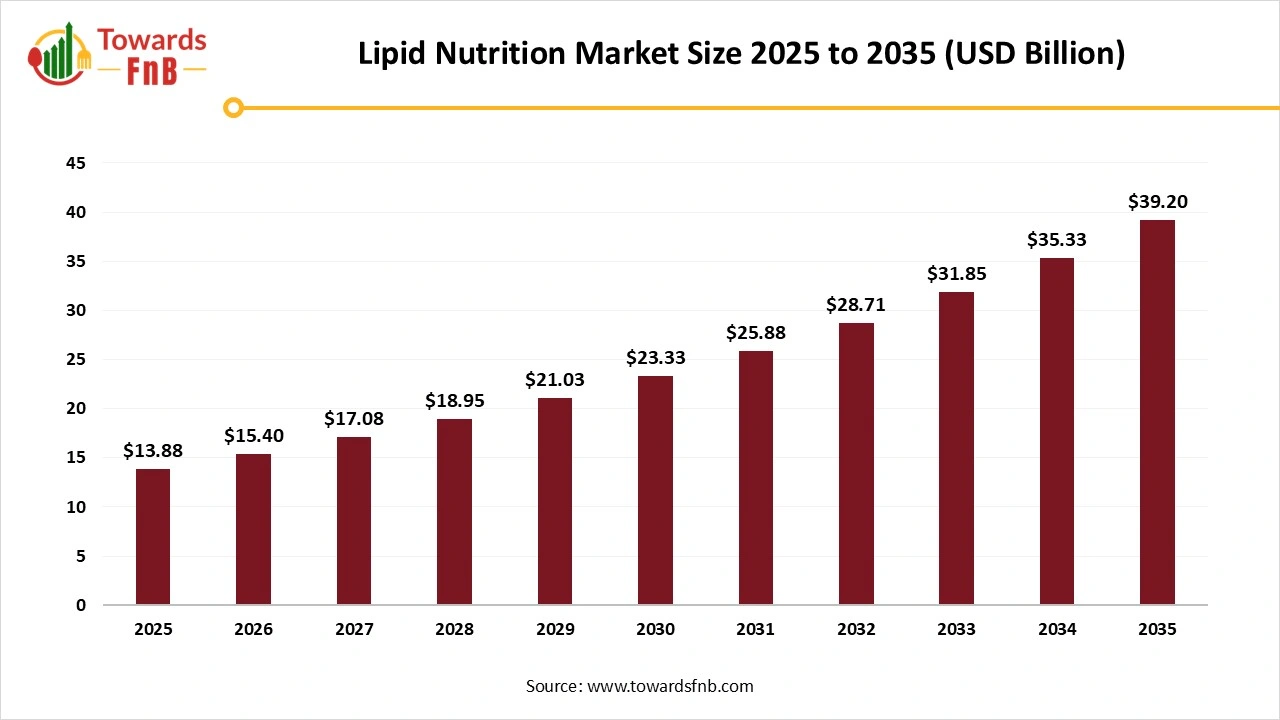
The global lipid nutrition market size reached at USD 13.88 billion in 2025 and is anticipated to increase from USD 15.40 billion in 2026 to an estimated USD 39.20 billion by 2035, witnessing a CAGR of 10.94% during the forecast period from 2026 to 2035. The growth of the market is growing significantly, driven by increasing awareness of the health benefits of omega-3 fatty acids, rising demand for functional foods and supplements, and expanding applications.
| Study Coverage | Details |
| Growth Rate from 2026 to 2035 | CAGR of 10.94% |
| Market Size in 2026 | USD 15.40 Billion |
| Market Size in 2027 | USD 17.08 Billion |
| Market Size by 2035 | USD 39.20 Billion |
| Largest Market | North America |
| Base Year | 2025 |
| Forecast Period | 2026 to 2035 |
| Regions Covered | North America, Europe, Asia-Pacific, Latin America, and Middle East & Africa |
The lipid nutrition market is witnessing rapid growth fueled by an increase in demand for functional and preventive nutrition products, as well as an increase in health consciousness, because they are essential for heart, brain, and immune health. Lipid-based ingredients like omega fatty acids are being used in functional food, clinical nutritional infant nutrition, and dietary supplements. Growing emphasis on clean label nutrition and preventive healthcare keeps driving market expansion.
Raw Materials Procurement
Retail Sales and Marketing
Waste Management and Recycling
What Made North America Dominate the Lipid Nutrition Market?
North America is dominating the market, propelled by healthcare recommendations, a well-established infrastructure for dietary supplements, and high consumer awareness. Due to the extensive use of omega-3 and other lipid products, the market is still the biggest in the world. Market leadership is strengthened by ongoing product innovations and regulatory support. North America's dominance is further reinforced by high per capita spending on health supplements.
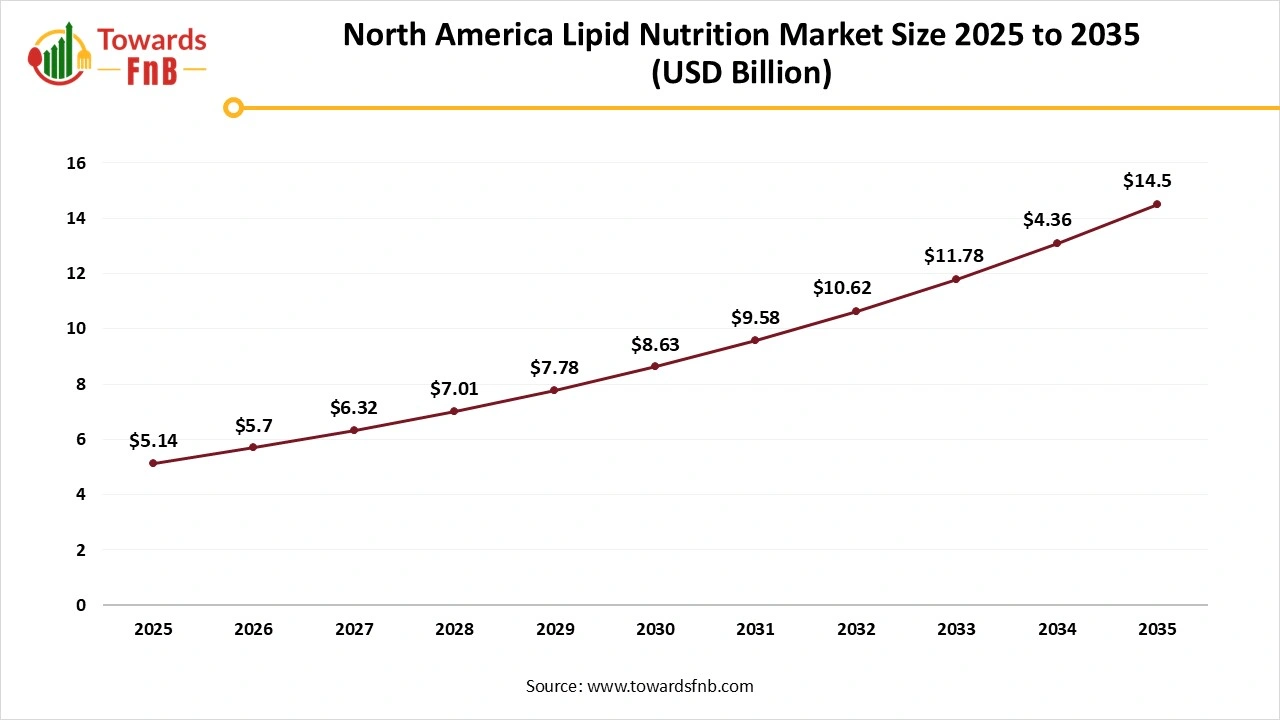
The North America lipid nutrition market size was calculated at USD 5.14 billion in 2025 with projections indicating a rise from USD 5.7 billion in 2026 to approximately USD 14.5 billion by 2035, expanding at a CAGR of 10.94% throughout the forecast period from 2026 to 2035.
U.S. Lipid Nutrition Market Trends
The U.S. lipid nutrition market is growing because of the growing trend of preventive healthcare and supplement use. Physician recommendations support the high demand for products based on omega-3 and MCT. Market leadership is maintained by high per capita spending on nutrition and wellness products. Long-term lipid supplement use is rising as the population ages. Product innovation in softgels, gummies, and functional drinks is increasing consumer appeal.
How Big is the U.S. Lipid Nutrition Market?
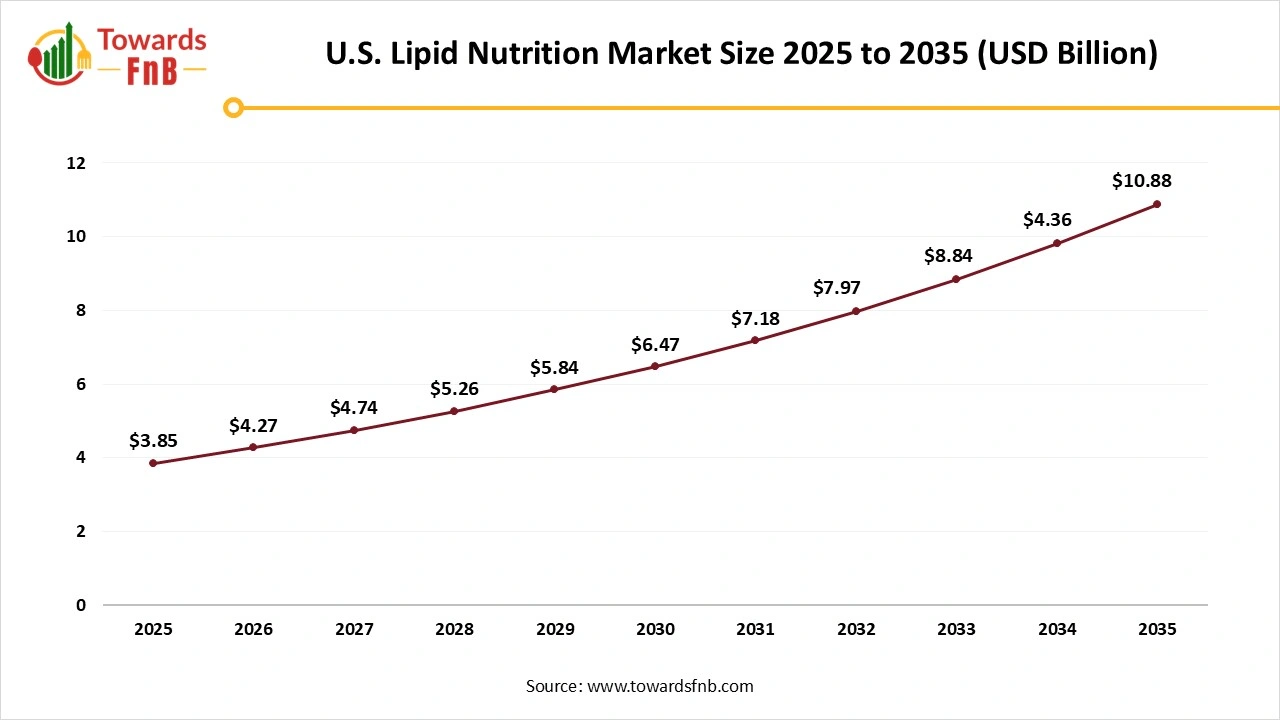
The U.S. lipid nutrition market size estimated at USD 3.85 billion in 2025 and is predicted to increase from USD 4.27 billion in 2026 to nearly reaching USD 10.88 billion by 2035, growing at a CAGR of 10.94% during the forecast period from 2026 to 2035.
Asia Pacific Expects the Fastest Growth in the Market During the Forecast Period
Driven by shifting eating habits and increased disposable income. Lipid consumption is rising as nutrition for mothers, babies, and athletes is gaining more attention. Market penetration is accelerated by urbanization and online retail expansion. Adoption of preventive nutrition is rising as lifestyle-related diseases become more widely recognized. Affordable lipid nutrition products are being introduced by regional manufacturers to gain market share.
India Lipid Nutrition Market Trends
India represents a rapidly expanding market for the lipid nutrition market, driven by an increasing number of middle-class people and a growing health consciousness. Long-term growth is being supported by government nutrition programs and an emphasis on preventive healthcare. Convenient nutrition formats are becoming increasingly popular due to rapid urbanization. Consumer access and education are improving as digital health platforms become more widely used.
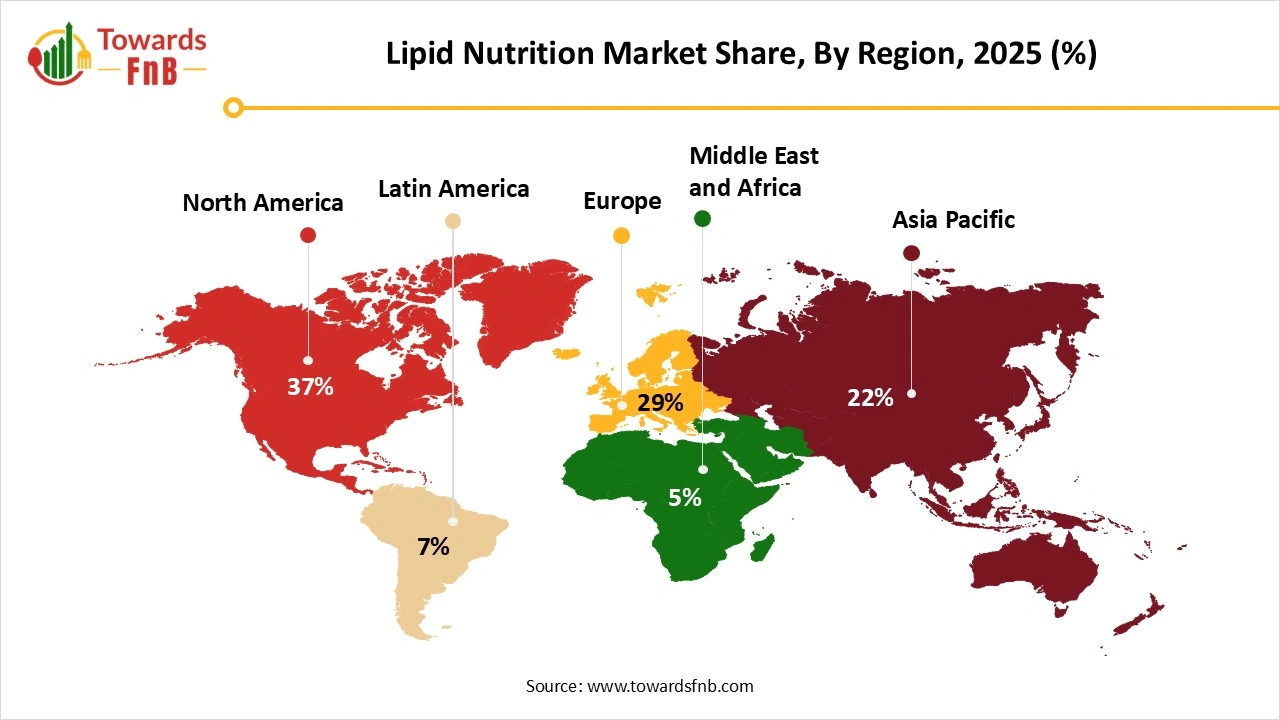
South America is growing steadily, driven by increasing awareness of cardiovascular and metabolic health. Rising adoption of dietary supplements and functional foods is supporting demand. Improving distribution networks enhances market accessibility. Urban population growth is influencing lifestyle-related nutrition consumption. Regional governments are promoting healthier diets through public health initiatives.
Brazil Lipid Nutrition Market Trends
Brazil is seeing a rising demand for the market, backed by an increase in the use of supplements and fortified foods. The demand for wellness and heart health products is rising due to changes in urban lifestyles. The market is getting stronger as international brands become more prevalent. Product availability is improving due to the growth of contemporary retail chains. Demand for lipid products is increasing due to consumer interest in sports and fitness nutrition.
Europe is growing steadily in the lipid nutrition market, driven by strong regulatory frameworks and high consumer focus on preventive health. Demand for clean-label, sustainable, and plant-based lipid products is rising. Functional food and nutraceutical adoption remains strong across the region. An aging population is increasing the demand for cognitive and joint health supplements. Strict quality standards enhance consumer trust in lipid nutrition products.
Germany Lipid Nutrition Market Trends
Germany is a key market in Europe, backed by a high level of nutraceutical consumption and awareness of the advantages of omega-3 fatty acids. Demand for plant-based and sustainably sourced lipids is rising throughout the nation. Consistent market expansion is supported by sophisticated medical systems. Customers favor nutrition products that have been clinically tested and supported by science. Robust networks of pharmacies and specialty shops facilitate consistent growth in sales.
The MEA lipid nutrition market is growing steadily, driven by rising health awareness and urban lifestyle shifts. Demand for fortified foods and dietary supplements is increasing across urban populations. Preventive healthcare initiatives support gradual adoption. Growing middle-income groups are spending more on wellness products. Expansion of modern retail and online platforms is improving product reach.
UAE Lipid Nutrition Market Trends
The UAE is experiencing a rising demand for the lipid nutrition market, due to the use of high-end supplements and wellness-oriented lifestyles. Strong retail presence and high disposable income encourage market growth. Demand is being driven by increased awareness of the benefits to the heart and cognitive health. Sports supplements and medical nutrition are becoming increasingly common. Long-term market expansion is being supported by government programs encouraging healthy living.
Lipid Nutrition Market Share, By Type, 2025 (%)
| Segments | Shares (%) |
| Omega-3 | 55% |
| Omega-6 | 25% |
| Medium-Chain Triglycerides | 12% |
| Others | 8% |
Why did the Omega-3 Segment Dominate the Lipid Nutrition Market?
The omega-3 segment dominated the market, driven by substantial proof of its anti-inflammatory cardiovascular and cognitive advantages. Widespread adoption is being fueled by high consumer awareness and advice from medical professionals. Its incorporation into functional foods, dietary supplements, and fortified goods strengthens its hold on the market. Its customer base is growing due to ongoing innovation in delivery formats like gummies and emulsions.
The Medium-Chain Triglycerides Segment is Expected to Experience the Fastest Growth in the Market During the Forecast Period.
Driven by rising consumer demand for ketogenic diet energy boosting and weight management products. Consumption is increasing due to the growing popularity among athletes of nutrition bars and beverages. Adoption is also being fueled by increased knowledge of the advantages of MCT for metabolic and cognitive health.
Lipid Nutrition Market Share, By Source, 2025 (%)
| Segments | Shares (%) |
| Animal Source | 60% |
| Plant Source | 40% |
Why did Animal Source Segments Dominate the Lipid Nutrition Market?
The animal source segment dominated the market, motivated by the extensive use of dairy fats, fish oil, and lipids derived from eggs. Animal-sourced lipids are preferred in supplements and functional foods due to their high bioavailability and established health benefits. Dominance is strengthened by consumer confidence in conventional sources of omega-3 and other essential fatty acids. Its market position is further reinforced by well-established supply chains and effective production.
The Plant Source Segment Expects the Fastest Growth in the Market During the Forecast Period.
Driven by growing numbers of vegans and vegetarians looking for lipids derived from algae, flaxseed, and chia. Plant-based options are becoming more popular due to ethical and sustainable concerns. Nutraceuticals and fortified foods are becoming more widely used, which helps the market. Adoption is being increased by ongoing research on plant-based lipid bioavailability and extraction methods.
Lipid Nutrition Market Share, By Form, 2025 (%)
| Segments | Shares (%) |
| Powder | 40% |
| Liquid | 60% |
What Made Liquid Segment Dominate the Lipid Nutrition Market?
The liquid segment dominated the market, motivated by how simple it is to add drinks, smoothie, and ready-to-drink supplements. Precise dosing and increased lipid nutrient bioavailability are made possible by liquids. The market is further strengthened by consumer preference for convenient consumption formats. Additionally, the liquid format can be combined with other useful ingredients to improve the product's appeal.
The Powder Segment Expects the Fastest Growth in the Market During the Forecast Period.
Driven by growing consumer demand for infant formulas, protein blends, and powdered nutritional supplements. Manufacturers and consumers can benefit from its long shelf life, portability, and mixability. Adoption of powdered nutrition products is increasing due to rising e-commerce sales. Powdered lipids are becoming more appealing to consumers due to improvements in flavor and solubility.
Why did Dietary Supplements and Nutraceutical Segment Dominate the Lipid Nutrition Market?
The dietary supplements and nutraceutical segment dominated the market, fueled by growing efforts to prevent chronic diseases and a high level of health awareness. MCT and omega-3 oils are frequently utilized in functional drinks, soft gels, and capsules. Growing trends in self-care and healthcare recommendations support the segment's leadership. The need for lipid-based preventive healthcare products is being driven by the aging population
The Infant Formula Segment is Expected to Experience the Fastest Growth in the Market During the Forecast Period.
Motivated by growing understanding of the role lipids play in immune and cognitive development. Globally, the use of MCT ARA and DHA oils for fortification is growing. The demand for high-end infant formulas is rising due to the growing urban population and dual-income households. Growth is being supported by growing government and pediatric endorsements for lipid-fortified formulas.
By Type
By Source
By Form
By Application
By Region





Principal Consultant
Vidyesh Swar, Senior Research Analyst at Towards Food & Beverages, specializes in market research, focusing on supply-demand evaluation, pricing analysis, alternative proteins, plant-based foods, and sustainable food technologies within the industry.
Learn more about Vidyesh Swar
Reviewed By
Aditi Shivarkar, with 14+ years in Food and Beverages market research, specializes in food, beverage, and eco-friendly packaging. She ensures accurate, actionable insights, driving Towards FnB's excellence in industry trends and sustainability.
Learn more about Aditi ShivarkarApril 2026
April 2026
April 2026
April 2026

Lipid Nutrition Market


 +1 804-441-9344
 Download Sample
 Schedule a Meeting