April 2026



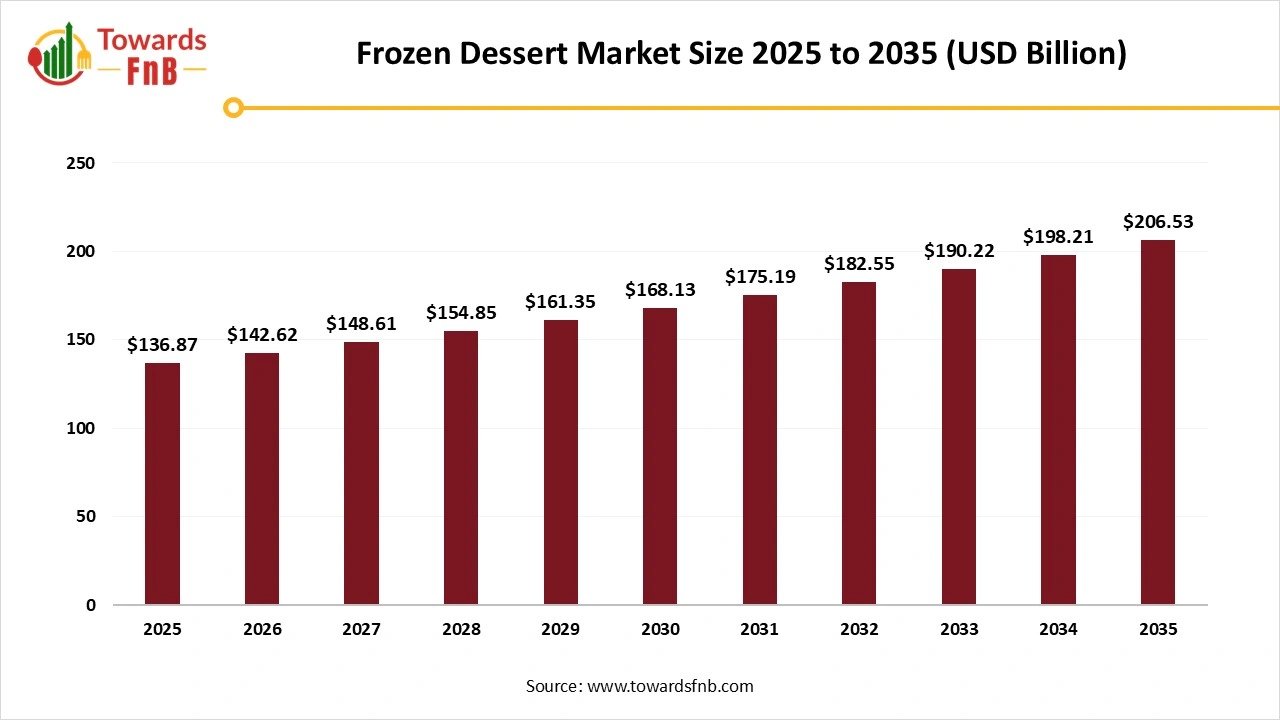
The global frozen dessert market size reached at USD 136.87 billion in 2025 and is forecasted to expand from USD 142.62 billion in 2026 to reach approximately USD 206.53 billion by 2035, at a CAGR of 4.2% during the forecast period from 2026 to 2035. Health-aware consumers are progressively looking for low-fat, low-sugar, and dairy-free choices, while producers explore innovative flavors and high-quality ingredients that contribute in the growth of the market.
| Study Coverage | Details |
| Growth Rate from 2026 to 2035 | CAGR of 4.2% |
| Market Size in 2026 | USD 142.62 Billion |
| Market Size in 2027 | USD 148.61 Billion |
| Market Size by 2035 | USD 206.53 Billion |
| Largest Market | North America |
| Base Year | 2025 |
| Forecast Period | 2026 to 2035 |
| Regions Covered | North America, Europe, Asia-Pacific, Latin America, and Middle East & Africa |
Frozen desserts are formulated by freezing liquids, semi-liquids, or solids and then incorporating flavored waters, added colors, custards, milk and other ingredients that improve the color and flavor of these desserts. The growth of the market is due to the increasing consumer demand for premium ice creams, the heightened popularity of international flavors, and the recent innovations in products by manufacturers. Major developments in areas like mechanical refrigeration, chilling and freezing methods, sanitation and cleaning, packaging along with ingredient performance have influenced the industry and boost the frozen dessert market.
Numerous rival brands of frozen treats are consistently showcased to buyers in supermarkets and hypermarkets, presenting a range of flavors, ingredients, and options in various sizes and formats further driving the market. Following a meal, consumers tend to choose frozen dessert products to help improve digestion. The market is growing due to changing consumer choices and tastes, income variations, climate changes, and the launch of various flavor products. Micro-formats are becoming more popular, particularly with Gen Z.
Their preference for exciting formats and novel flavors has led to the rise of tapas-style dishes, shareable plates, and adjustable portion sizes as food trends in both retail and dining establishments. The ice cream sector is also included, as one-third of ice cream buyers in the UK are keen to sample bite-sized servings. A third of ice cream eaters in the UK are keen on sampling bite-sized servings. Shoppers who purchase bite-sized ice creams in addition to traditional types typically spend 76% more on ice cream overall.
| Market Driver | (~) % Impact on CAGR Forecast | Geographic Relevance | Impact Timeline |
| Rising demand for indulgent & convenient treats | +3.0% to +4.0% | Global, particularly in North America & Europe, with rising urban demand in Asia Pacific | Medium (2025–2032) |
| Innovation in product formats & healthier options (low sugar, dairy free) | +2.5% to +3.5% | Global, especially in health aware developed markets; growing in APAC | Medium to Long term (2025–2035) |
| Disposable income growth & lifestyle shifts | +1.8% to +2.5% | Global, strongest in Asia Pacific and Latin America | Medium (2025–2030) |
| Retail & e commerce penetration expansion | +1.5% to +2.0% | North America and Europe lead; urban Asia Pacific catching up | Short to Medium (2025–2030) |
| Market Restraint | (~) % Impact on CAGR Forecast | Geographic Relevance | Impact Timeline |
| Health concerns over high sugar/fat content | ~ 2.5% to 3.5% | Global, especially in North America & Europe where health centric consumption is rising | Short term (2025–2028) |
| Price sensitivity for premium desserts | ~ 1.5% to 2.5% | Asia Pacific and Latin America markets where price elasticity is high | Medium term (2025–2032) |
| Seasonality impact on consumption patterns | ~ 1.0% to 1.8% | Global markets with warm/dry seasons see peaks, cooler climates show variable demand | Medium term (2025–2030) |
| Supply chain & ingredient cost fluctuations | ~ 1.0% to 1.5% | Global, impacting dairy and specialty ingredient sourcing costs | Medium to Long term (2025–2035) |
As the frozen dessert industry grew, rapid freezing methods like blast freezing were developed. This advancement enables producers to maintain the flavor and quality of ice cream while lengthening its shelf life. High-Pressure Processing HPP has become a transformative force in the ice cream sector. HPP entails applying elevated hydrostatic pressure to packaged ice cream, successfully removing detrimental bacteria and prolonging shelf life without relying on preservatives. Improvements in automation and robotics have revolutionized ice cream manufacturing processes. Contemporary factories employ automated machinery to perform tasks such as mixing ingredients, adding flavors, and packaging, resulting in enhanced efficiency and uniformity in production.
The variable costs of raw materials, especially sugar and dairy, represent one of the primary challenges as they can affect pricing and profit margins. Disruptions in the supply chain also impact production timelines and availability, particularly with regard to sourcing ingredients and packaging materials. Inconsistent revenue flows result from sales typically surging during summertime and falling in colder periods. Seasonal demand also affects the market.
Raw Material Procurement
Packaging and Branding
Waste Management and Recycling
North America Dominated the Frozen Dessert Market in 2025
There is a growing demand for high quality and artisanal frozen desserts that feature distinctive flavors and superior ingredients. Buyers are progressively seeking frozen desserts that are more nutritious, made with natural components, and devoid of synthetic additives. These factors fueling the growth of the market. Industrial merging, acquisitions and collaborations further expanding the market.
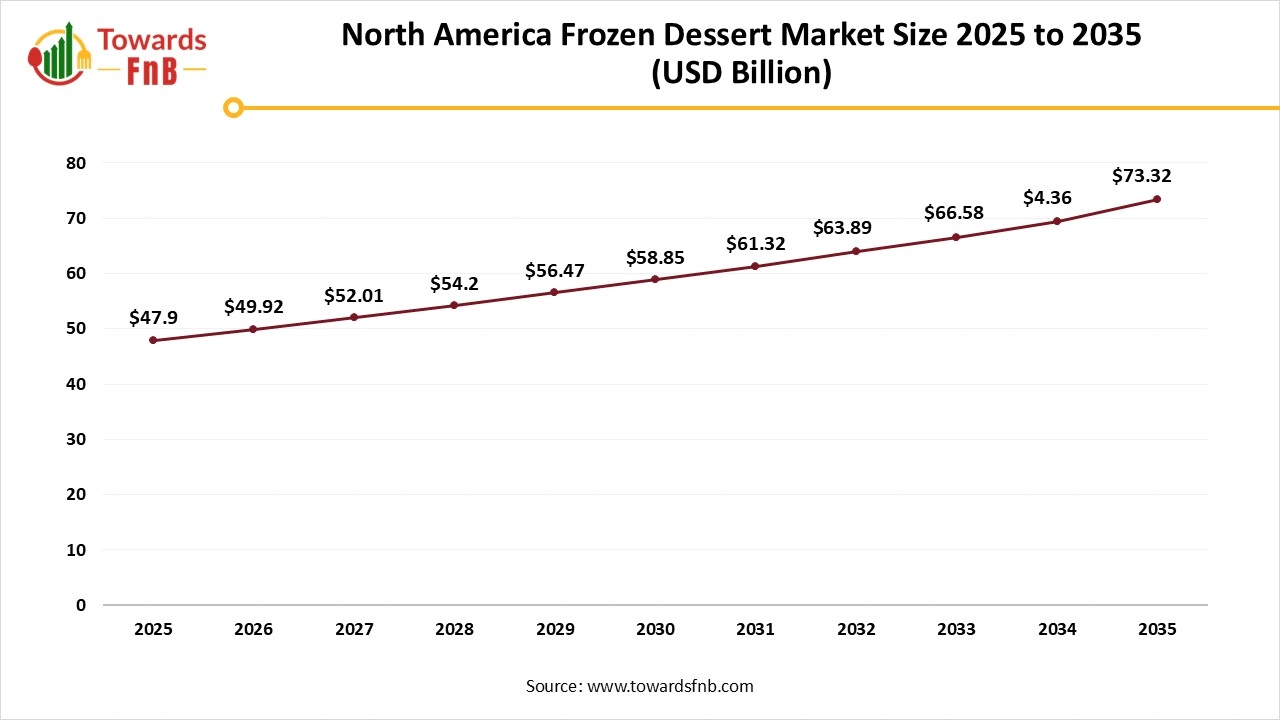
North America Frozen Dessert Market Size 2025 to 2035
The North America frozen dessert market size was valued at USD 47.9 billion in 2025 and is forecasted to expand from USD 49.92 billion in 2026 to reach approximately USD 73.32 billion by 2035, at a CAGR of 4.35% during the forecast period from 2026 to 2035.
Frozen desert market of Canada showed significant potential, attributed by changing consumer preferences and growing retail facilities. The market is defined by a growing consumer preference for snacking outside the home and trying new food options.
U.S. Frozen Dessert Market Size 2025 to 2035
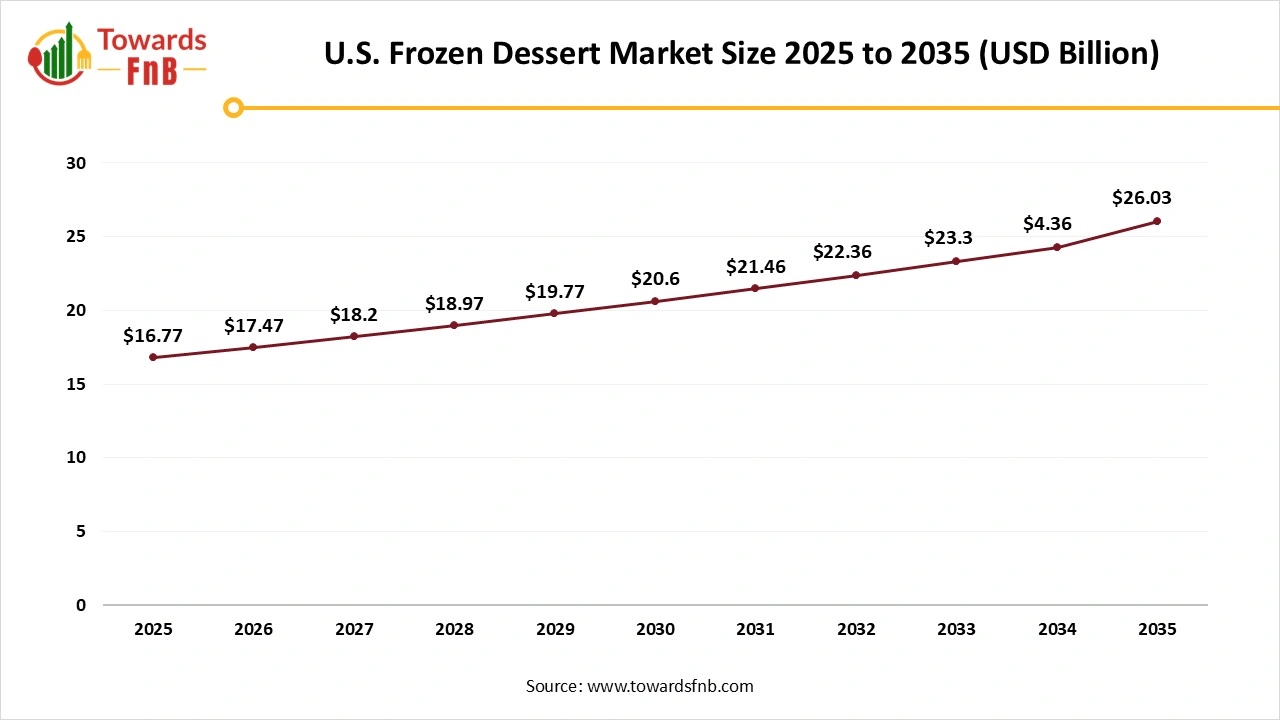
The U.S. frozen dessert market size was calculated at USD 16.77 billion in 2025 and is forecasted to expand from USD 17.47 billion in 2026 to reach approximately USD 26.03 billion by 2035, at a CAGR of 4.49% during the forecast period from 2026 to 2035.
Asia Pacific Expects a Significant Growth in the Frozen Dessert Market During the Forecast Period
The increasing popularity of frozen desserts has resulted in considerable expansion in the overall quantity of ice cream and frozen dessert retail outlets throughout the Asia-Pacific area. In addition, the frozen dessert is set to succeed in the Chinese market, since the rising demand for low-fat healthy options is expected to motivate consumers to invest more in these items. The growing consumer income, significant advancements in manufacturing capabilities, the trend towards premiumization in the country, and the rising adoption of premium products by consumers are expected to meet the rising demand for frozen desserts in China.
Kulfi has secured a spot among the world’s top frozen desserts, according to a recent global ranking by food and travel guide TasteAtlas. Kulfi has ranked 8Th out of 50 contenders with a 4.3-star rating, the dessert is standing out alongside global favorites such as Turkish dondurma and Italian gelato. (Source: Hindustan Times)
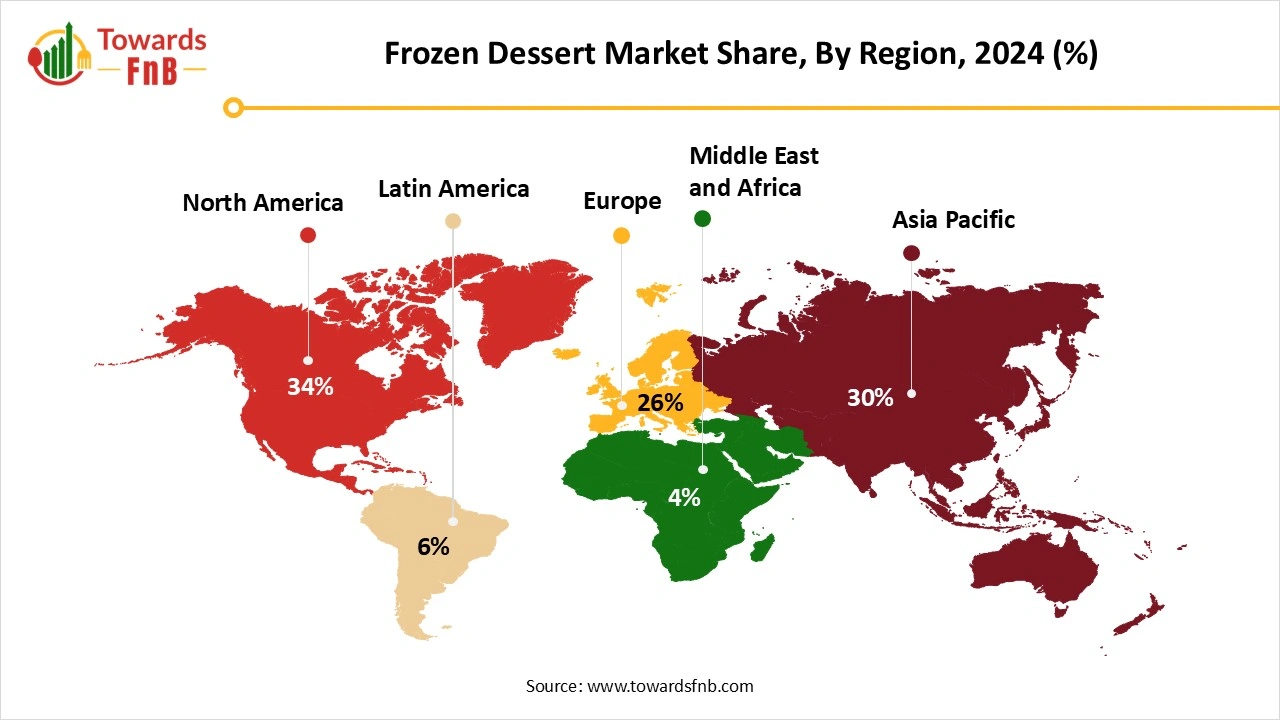
Europe Frozen Dessert Market Trends
Europe is expected to grow at a notable rate during the forecast period. The market growth in the region is driven by the increasing popularity of locally sourced and premium products, increasing trend towards natural ingredients, reduced sugar and dairy-free alternatives, strict government regulations, and increasing demand for artisanal, plant-based and healthier options. The U.K., Germany and France are notable countries driving the market growth.
Middle East and Africa Frozen Dessert Market Trends
The frozen dessert market in the Middle East and Africa is witnessing rapid growth, driven by the demand for convenience, increasing disposable incomes, rapid urbanization and hot climates, with emerging demand for premium and healthier options such as dairy-free, keto and low-fat variants and significant contributions from ice cream, with major countries like Saudi Arabia and UAE, further leveraging technology and modern retail for expansion.
UAE Frozen Dessert Market Trends
The global market for frozen dessert in UAE is a booming industry, driven by tourism, high disposable incomes, hot weather and demand for healthier, diverse and convenient options such as sugar-free products, organic/ vegan choices, artisanal ice cream and premium gelato, with significant growth in luxury segments and online retail. Major players such as local manufacturers and international brands are also supported by investments in e-commerce and cold chains.
Latin America Frozen Dessert Market Trends
The frozen dessert market in Latin America is driven by the demand for natural ingredients, rapid urbanization, and health trends. In addition, demand for premium and healthier options, increasing consumer awareness of frozen desserts related products’ benefits, changing lifestyles and trend towards artisanal and vegan products, further drives the market growth.
Brazil Frozen Dessert Industry Trends
Brazil is the leading company in the market due to their growing demand for vegan and artisanal products, large populations, growing urbanization, increasing health awareness, demand for premium and healthier products and rising investment and favorable hot weather in sustainable production to offer more accurate dietary recommendations.
The Ice Cream Segment Dominated the Frozen Dessert Market in 2025
The view of ice cream as a more nutritious, locally produced treat is a major factor propelling the market. Nations such as the U.S., Germany, and France are experiencing a transition towards high-quality, artisanal ice creams crafted with organic components and creative tastes. The sector is experiencing substantial expansion worldwide with an increasing focus on clean-label components and sustainability.
The Frozen Yoghurt Segment Expected to Grow with Highest CAGR in the Frozen Dessert Market During Projection Period
The rising trend of low-fat frozen yogurt and the launch of healthy product variations in multiple flavors are expected to offer consumers seeking a nutritious substitute for frozen treats a wide array of choices. Additionally, hectic lifestyles, along with health and wellness issues, are prompting consumers to opt for frozen yogurt as alternatives to meals.
The Hypermarkets and Supermarkets Segment Accounted for the Largest Share in the Frozen Dessert Market in 2025
Customers show a tendency to choose supermarkets and hypermarkets for frozen dessert purchase, availability of various brands and easy accessibility, improved and attractive packaging boosting the market. The café and bakery shops segment expected grow in the forecast period from 2026 to 2035. A variety of cafes and bakeries offering frozen treats have emerged due to the increasing trend of purchasing items from specialty shops. Due to current trends, they are including nutritious desserts in their menus, enhancing their product offerings.
By Product
By Distribution Channel
By Region






Principal Consultant
Vidyesh Swar, Senior Research Analyst at Towards Food & Beverages, specializes in market research, focusing on supply-demand evaluation, pricing analysis, alternative proteins, plant-based foods, and sustainable food technologies within the industry.
Learn more about Vidyesh Swar
Reviewed By
Aditi Shivarkar, with 14+ years in Food and Beverages market research, specializes in food, beverage, and eco-friendly packaging. She ensures accurate, actionable insights, driving Towards FnB's excellence in industry trends and sustainability.
Learn more about Aditi ShivarkarApril 2026
April 2026
April 2026
April 2026

Frozen Dessert Market


 +1 804-441-9344
 Download Sample
 Schedule a Meeting