
April 2026



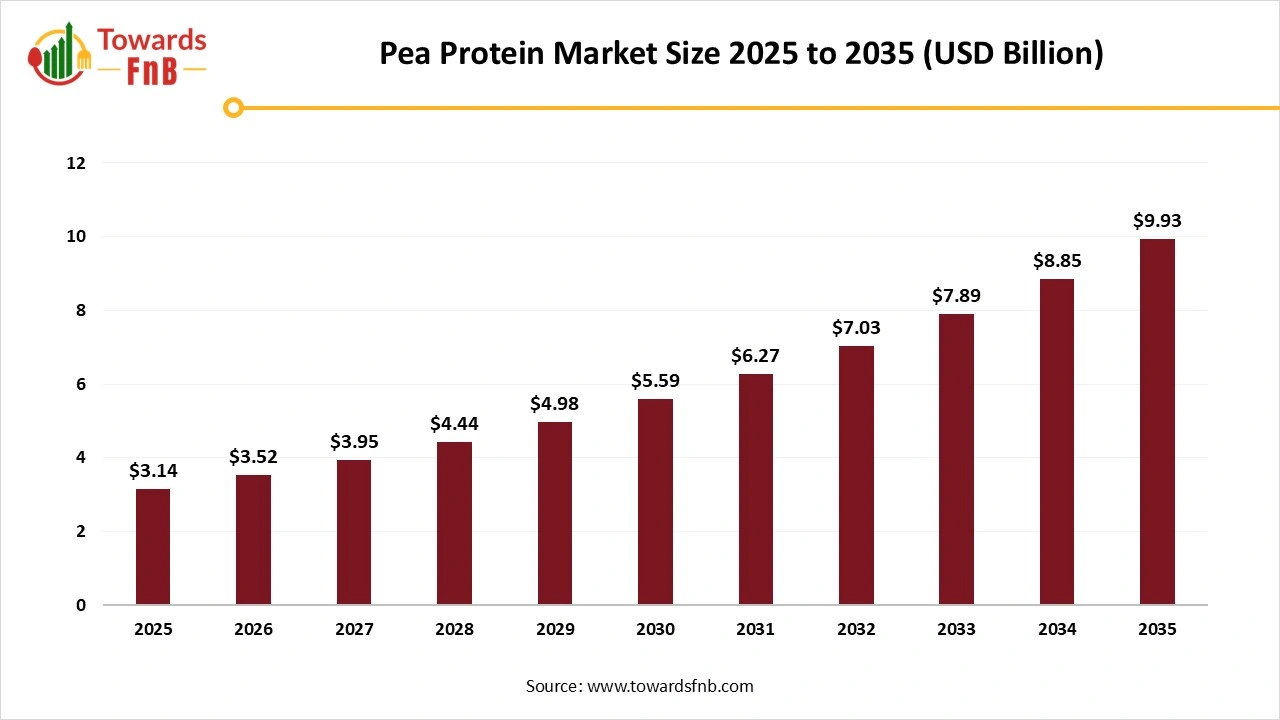
The global pea protein market size reached at USD 3.14 billion in 2025 and is anticipated to increase from USD 3.52 billion in 2026 to an estimated USD 9.93 billion by 2035, witnessing a CAGR of 12.2% during the forecast period from 2026 to 2035. Rising health awareness and a growing vegan population are significantly driving the market.
| Study Coverage | Details |
| Growth Rate from 2026 to 2035 | CAGR of 12.2% |
| Market Size in 2026 | USD 3.52 Billion |
| Market Size in 2027 | USD 3.95 Billion |
| Market Size by 2035 | USD 9.93 Billion |
| Largest Market | North America |
| Base Year | 2025 |
| Forecast Period | 2026 to 2035 |
| Regions Covered | North America, Europe, Asia-Pacific, Latin America, and Middle East & Africa |
The pea protein market includes plant-based protein ingredients extracted mainly from peas, used for nutritional and functional benefits in food, beverages, supplements, and other industries. It’s driven by rising demand for vegan or vegetarian products, clean label ingredients, and health-conscious consumers seeking hypoallergenic, sustainable protein alternatives. Pea proteins serve as meat substitutes in bakery, beverages, dietary supplements, and animal feed. Growth is boosted by innovation in isolates, concentrates, and textured variants across global regions.
Rising consumer demand has transitioned pea protein from niche markets to mainstream acceptance. Concurrently, advancements in technology have begun to address industry challenges, accelerating the maturation of the market. For instance, enhancements in the dispersibility of pea protein products have been made, exemplified by the United States Colombian Nutrition Company's introduction of particle dispersion technology that facilitates instant solubility.
Additionally, various biotech startups are employing innovative biotechnology methods to expedite the extraction and development of pea protein along with its nutritional components, while exploring new high-value raw materials and products conducive to market attractiveness. To meet eco-friendly standards, several pioneering processing technologies, such as high-pressure processing, pulsed electric field, precision fermentation, 3D extrusion, and ultrasonic technology, are gaining prominence due to their contributions to protein functionality.
Raw Material Procurement
Processing
Distribution
What Made North America the Dominant Region in the Pea Protein Market in 2025?
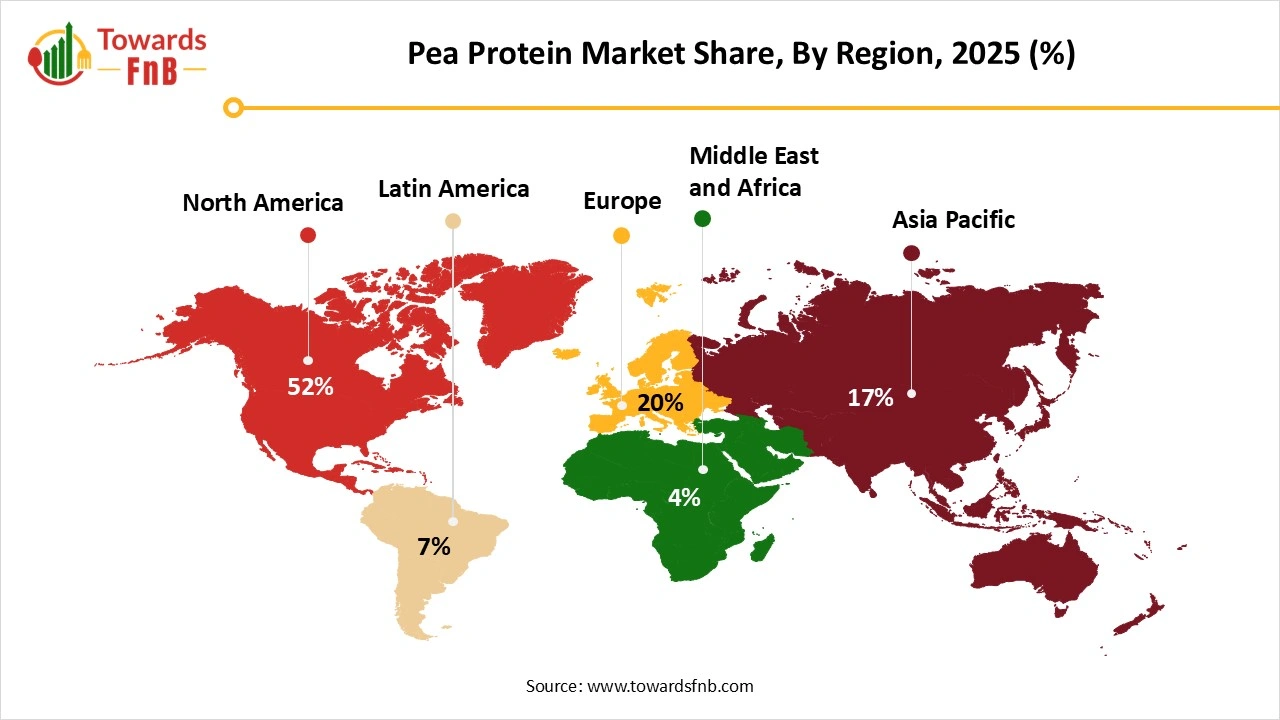
North America dominated the market with 52.4% share in 2025. The North American pea protein market is propelled by evolving dietary preferences and industrial innovation. In the United States, the increasing prevalence of flexitarian dietary patterns profoundly influences protein consumption behaviors, as consumers increasingly seek plant-based options aligned with health and sustainability objectives. Improved processing techniques are augmenting the functionality of pea protein, thereby heightening its appeal across a broader array of applications. Furthermore, rising incidences of lactose intolerance and gluten sensitivity augment demand for hypoallergenic alternatives such as pea protein.
North America Pea Protein Market Size 2025 to 2035
The North America pea protein market size was calculated at USD 1.63 billion in 2025 with projections indicating a rise from USD 1.83 billion in 2026 to approximately USD 5.16 billion by 2035, expanding at a CAGR of 12.2% throughout the forecast period from 2026 to 2035.

U.S. Pea Protein Market Trends
The growing recognition of the cardiological risks linked to red meat consumption is anticipated to further elevate the significance of pea protein in the United States. Additionally, the increasing awareness of the negative effects associated with gluten and fiber-containing foods is likely to drive market expansion in the forecast period. The presence of manufacturing facilities associated with major meat producers, including Tyson, JBF, Cargill, and National Foods, within the United States is expected to boost the utilization of pea protein as a texturizing agent in meat production.
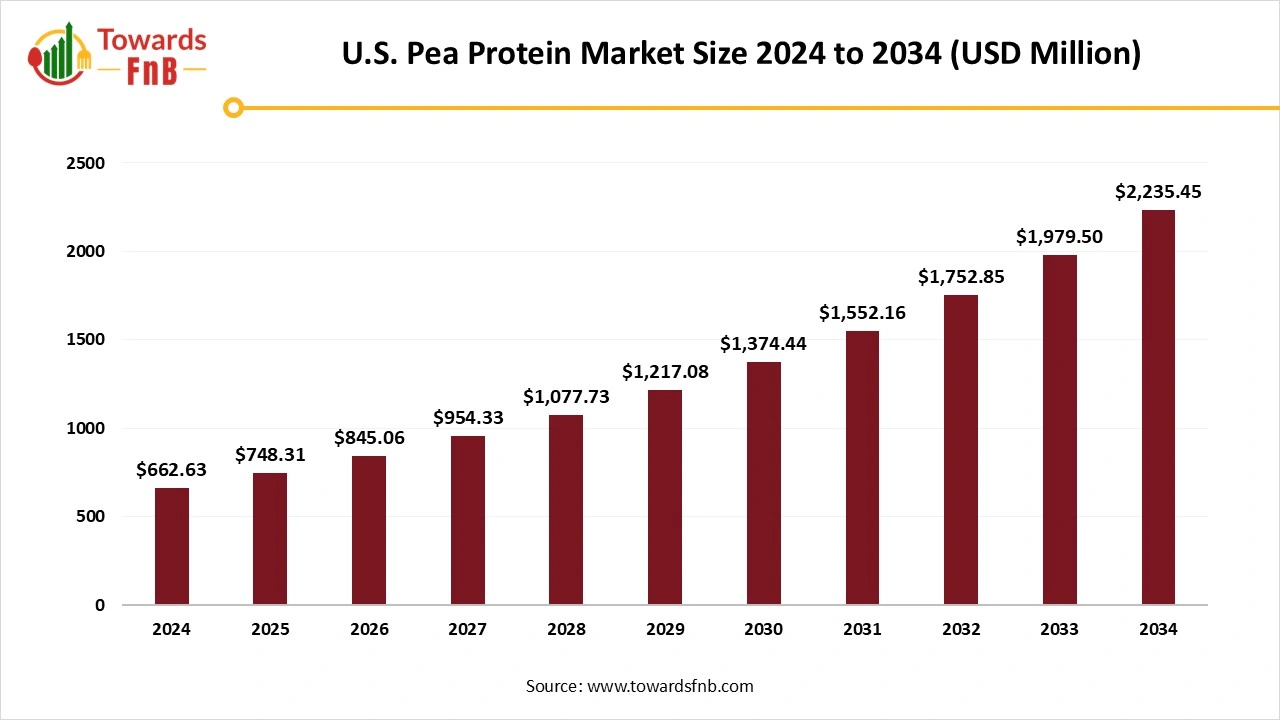
The U.S. pea protein market size estimated at USD 1.22 billion in 2025 and is predicted to increase from USD 1.37 billion in 2026 to nearly reaching USD 3.87 billion by 2035, growing at a CAGR of 12.2% during the forecast period from 2026 to 2035.
Asia Pacific: The Fastest Growing Region
Asia Pacific pea protein market is experiencing fastest growth during the forecast period, driven by a transformation in dietary patterns, an increase in plant-based diet awareness, and rapid urbanization throughout the region. The heightened consumer emphasis on maintaining a fit and active lifestyle, the substantial vegan population in India, and the growing penetration of organized and e-retail platforms are contributing to this market expansion. Furthermore, intensified competition among processed food and beverage companies is compelling these entities to incorporate novel and health-oriented ingredients into their product offerings, thereby appealing to an increasingly health-conscious consumer base.
India Pea Protein Market Trends
In India, the demand for pea protein is anticipated to expand considerably, fueled by a growing population of health-conscious consumers, a rising trend towards vegetarianism, and the increasing availability of pea protein products in both retail and online markets. Government initiatives aimed at promoting pulses and legumes further bolster this growth trajectory. The Indian market for plant-based food presents substantial opportunities for expansion, characterized by high consumer demand, rapid entry of private sector businesses, and a robust agricultural sector that provides a solid foundation for growth.
Europe Pea Protein Market Expanding Notably
The European pea protein market is projected to witness steady growth in the forthcoming years, largely attributable to the increasing consumer preference for vegan, vegetarian, or flexitarian diets, alongside heightened awareness of health concerns related to animal-based proteins, such as cancer, diabetes, and cardiovascular diseases. Additionally, the growing market penetration of gluten-free foods in key markets, including the United Kingdom and France, driven by concerns regarding the adverse effects associated with gluten-related disorders, is expected to favor industry growth throughout the forecast period.
UK Pea Protein Market Trends
In the United Kingdom, the demand for pea protein is expected to surge during the forecast period, owing to the proliferation of plant-based meat alternatives, energy bars, and plant-based snacks. The rising vegan population across Western countries, motivated by environmental and health considerations, is projected to generate substantial growth in the United Kingdom. The country is well-positioned to capitalize on this market through its world-leading scientific base and industrial capabilities across the agrifood supply chain, thus further enhancing market potential.
The Middle East and Africa Pea Protein Market Growth
The Middle East and Africa (MEA) pea protein industry is poised for significant growth in the coming years. The increasing consumer demand for organic supplements and health and wellness products serves as a primary driver for the market. Additionally, the rising demand for textured protein in convenient food and ready-to-eat products is contributing to the global development of pea protein, particularly as veganism gains popularity and consumer concerns regarding lactose intolerance rise.
UAE Pea Protein Market Trends
Growth within the United Arab Emirates market is primarily driven by increasing health and wellness awareness among consumers, which has led to a heightened demand for plant-based protein sources. The expanding prevalence of vegetarian and vegan lifestyles, coupled with a shift away from traditional animal-based proteins, significantly influences market development. Furthermore, government initiatives designed to promote sustainable food production and reduce reliance on imports support this market expansion. The evolving food service sector and the introduction of innovative food products that incorporate pea protein also play a critical role in market growth.
South America Pea Protein Market Potential
The South American market is emerging as a notable region within the broader plant-based protein landscape, guided by increasing health consciousness among consumers, a rising number of vegan and flexitarian populations, and innovative developments within the food industry. Additionally, the sports nutrition sector is increasingly adopting pea protein due to its high digestibility and muscle recovery benefits. Innovations in processing techniques and product formulations are further enhancing demand. Countries such as Brazil and Argentina are at the forefront of this trend, influenced by global sustainability movements and a growing local interest in alternative protein sources.
Brazil Pea Protein Market Trends
The Brazilian pea protein market has been experiencing remarkable momentum, driven by a rising demand for plant-based protein alternatives. This trajectory of steady growth reflects shifting consumer preferences, heightened health consciousness, and a surge in vegan and vegetarian lifestyles throughout the country. Furthermore, the expansion of e-commerce and the adoption of AI-integrated digital marketing strategies are facilitating targeted regional outreach efforts, providing personalized product recommendations, and improving overall consumer engagement in remote areas.
Pea Protein Market Share, By Type, 2025 (%)
| Segments | Shares (%) |
| Pea Protein Isolate | 43.8% |
| Pea Protein Concentrate | 27.6% |
| Textured Pea Protein | 18.4% |
| Pea Flour | 10.2%) |
Which Type of Pea Protein Dominated the Pea Protein Market in 2025?
The pea protein isolate segment led the market with 43.8% share in 2025. Pea protein isolate platforms meet high protein content requirements, exceptional purity standards, and superior functional properties across various food and nutritional applications. They are rich in iron and easily digestible, making them an excellent option for health-conscious consumers. The growing focus on fitness, weight management, and overall wellness is driving the demand for high-quality protein sources, such as pea protein isolates.
The Textured Pea Protein Segment is Expected to Grow at the Fastest Rate During the Forecast Period.
Its versatility in various food applications is a significant factor contributing to the growth of the market. This protein can be used in a wide range of products, including meat alternatives, snacks, and dairy substitutes. Its ability to mimic the texture of meat makes it particularly appealing to manufacturers looking to create plant-based meat products.
Pea Protein Market Share, By Form, 2025 (%)
| Segments | Shares (%) |
| Dry | 72.4% |
| Liquid | 27.6% |
Which Form of the Pea Protein Held the Largest Pea Protein Market Share in 2025?
The dry segment dominated the pea protein market with 72.4% share in 2025, due to its longer shelf life and ease of integration into powdered formulations like protein shakes and baking mixes. The powdered form of dry pea protein simplifies formulation processes, ensuring precise measurement and consistent distribution throughout food and beverages products. This consistency helps maintain product quality, meeting consumer expectations for reliable and enjoyable options. Additionally, the lower moisture content of dry pea protein results in lighter weight and reduced volume, which lowers transportation costs for both manufacturers and consumers.
The Liquid Segment is Projected to Grow Notably During the Forecast Period.
Driven by increased consumption of liquid pea protein among working adults looking to maintain a healthy lifestyle. Liquid isolates are ideal for ready-to-drink (RTD) beverages, smoothie, and meal replacements, catering to busy lifestyles.
Which Application Segment Dominated the Pea Protein Market in 2025?
The food and beverages segment dominated the market with the 38.5% share in 2025. Continuous innovation in food technology and product formulations is crucial for expanding the use of pea protein. Furthermore, the protein's neutral flavor profile allows it to blend seamlessly into recipes without overpowering other ingredients, making it highly versatile and suitable for various cuisines and consumer preferences. Major food and beverage companies are also entering the plant-based meat sector, either by developing their own products or through strategic partnerships and acquisitions.
The Dietary Supplements Segment is Anticipated to Grow at the Fastest Rate During the Forecast Period.
This growth is fueled by consumer interest in dietary supplements to help prevent conditions and manage nutrient shortfalls, as well as to support overall health. The rising focus on fitness, muscle building, weight management, and plant-based diets boosts the demand for convenient protein sources. Pea protein's superior nutritional profile and functional benefits align well with the needs of the expanding health, wellness, and sports nutrition markets, solidifying the dietary supplements segment's position.
Pea Protein Market Share, By Source, 2025 (%)
| Segments | Shares (%) |
| Yellow Split Peas | 62.4% |
| Chickpeas | 21.3% |
| Lentils | 16.3% |
Why did the Yellow Split Peas Segment Dominate the Pea Protein Market in 2025?
The yellow split peas segment dominated with holding 62.4% share of the market in 2025. Yellow split peas are a primary driver of market demand due to their high protein content, making them an ideal source of protein. Additionally, these legumes are rich in fiber, vitamins, and minerals, further increasing the demand for plant-based protein sources.
The Lentils Segment is Expected to Grow the Fastest During the Forecast Period.
Consumers are seeking variety in their plant-based diets, and lentils offer unique nutritional profiles that complement those of peas. This diversification is essential as the market for plant-based proteins continues to expand, with consumers looking for innovative ingredients that provide health benefits, sustainability, and versatility.
Lasenor
Meala FoodTech
By Type
By Form
By Application
By Source
By Region





Principal Consultant
Vidyesh Swar, Senior Research Analyst at Towards Food & Beverages, specializes in market research, focusing on supply-demand evaluation, pricing analysis, alternative proteins, plant-based foods, and sustainable food technologies within the industry.
Learn more about Vidyesh Swar
Reviewed By
Aditi Shivarkar, with 14+ years in Food and Beverages market research, specializes in food, beverage, and eco-friendly packaging. She ensures accurate, actionable insights, driving Towards FnB's excellence in industry trends and sustainability.
Learn more about Aditi ShivarkarApril 2026
April 2026
April 2026
April 2026

Pea Protein Market


 +1 804-441-9344
 Download Sample
 Schedule a Meeting