
April 2026



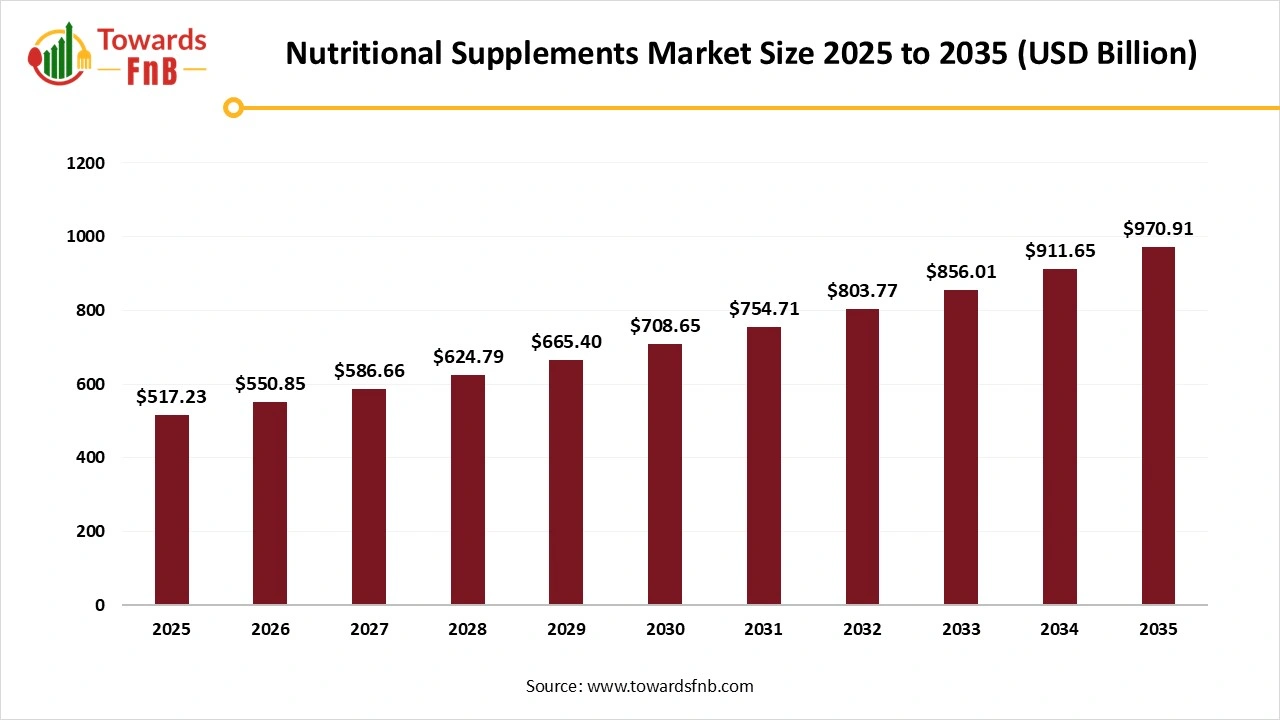
The global nutritional supplements market size reached at USD 517.23 billion in 2025 and is expected to grow steadily from USD 550.85 billion in 2026 to reach nearly USD 970.91 billion by 2035, with a CAGR of 6.5% during the forecast period from 2026 to 2035. The global market is attributed to the increasing consumer preference towards nutritional diets.
| Study Coverage | Details |
| Growth Rate from 2026 to 2035 | CAGR of 6.5% |
| Market Size in 2026 | USD 550.85 Billion |
| Market Size in 2027 | USD 586.66 Billion |
| Market Size by 2035 | USD 970.91 Billion |
| Largest Market | Asia pacific |
| Base Year | 2025 |
| Forecast Period | 2026 to 2035 |
| Regions Covered | North America, Europe, Asia-Pacific, Latin America, and Middle East & Africa |
The nutritional supplements market deals with basic forms of supplements such as gummies, liquids, powders, tablets, pills, or capsules. They often contain a mix of medicinal plants, amino acids, vitamins, minerals, and other substances. In addition, the market for nutritional supplements has witnessed various benefits such as significant innovation, improved delivery methods such as powders and gummies, plant-based alternatives, personalized nutrition, and advanced formulations. These innovations serve increasing consumer preferences for effective, convenient, health-focused, and wellness solutions.
Some of the major factors are responsible for the growth of the market such as increasing consumer preference towards maintaining a healthy lifestyle and increasing prevalence of chronic diseases such as cardiovascular diseases, obesity, and diabetes. In addition, the increasing demand for health-improved products including food additives and increasing consumer awareness related to preventive healthcare are further expected to drive global market growth during the forecast period.
To address the unique goals and health needs of consumers, they are continuously seeking personalized products. Personalization in nutritional supplements creates various opportunities in the global market. Various brands can develop targeted nutritional products that serve specific consumer needs by leveraging advances in data integration, microbiome analysis, and genetic testing. This approach provides valuable data and enhances the in-store experience for shoppers. In addition, the increasing demand for personalized solutions highlights the significance of investing in partnerships and technologies to become early adopters and allow their delivery. These personalized trends are expected to revolutionize the growth of the nutritional supplements market in the coming years.
The demand for nutritional specialized formulas and various products increases, which are sometimes very costly, and which middle-class population can't afford the nutritional supplements. Maintaining the cost of supplements is a crucial factor to consider when incorporating them into the consumer’s budget, which may create major challenges in market growth. In addition, the quality of nutritional supplements quality can vary commonly among brands, with some products containing inaccurate ingredient labels and contaminants, which may increase quality concerns among consumers and are further expected to restrain the growth of the nutritional supplements market.
Raw Material Procurement
Processing
How did Asia Pacific Dominated the Market Revenue in 2025?
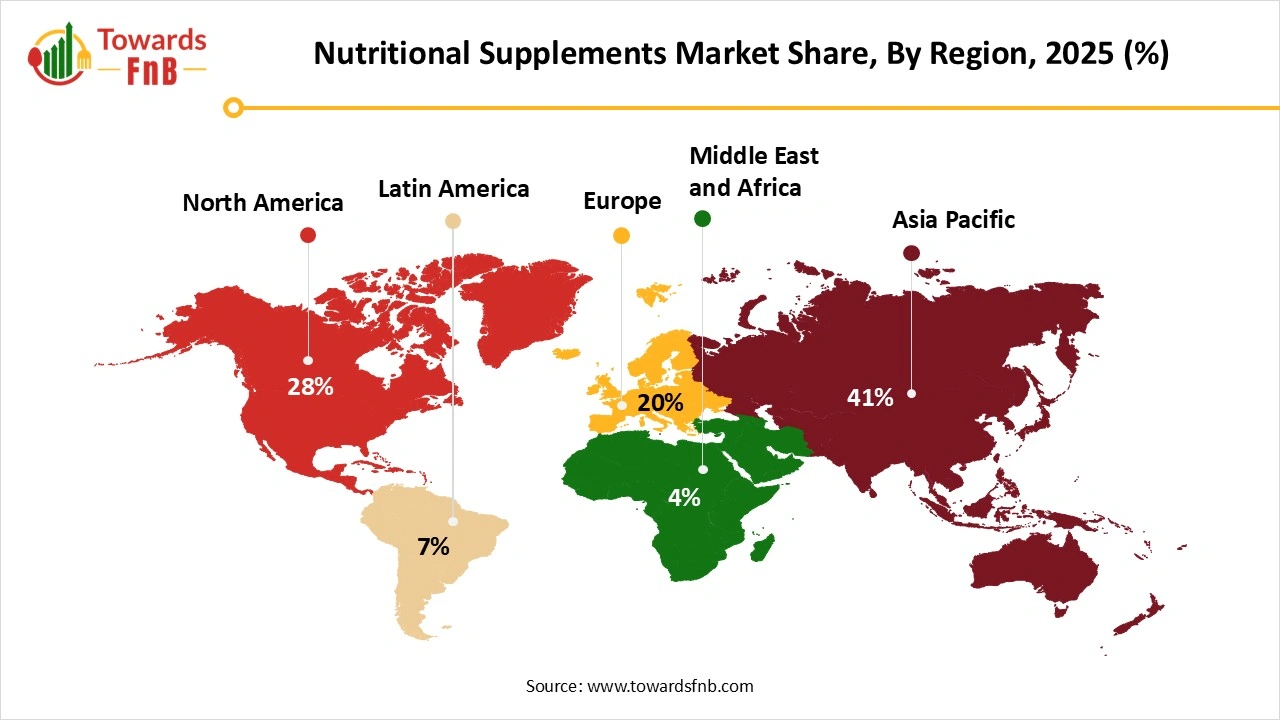
Asia Pacific dominated the market revenue in 2025. The market growth in the region is attributed to the increasing benefits of nutritional supplements, increasing availability of functional foods, and low prices of raw materials. China, India, Japan, and South Korea are dominating countries driving the market growth.
Asia Pacific Nutritional Supplements Market Size 2025 to 2035
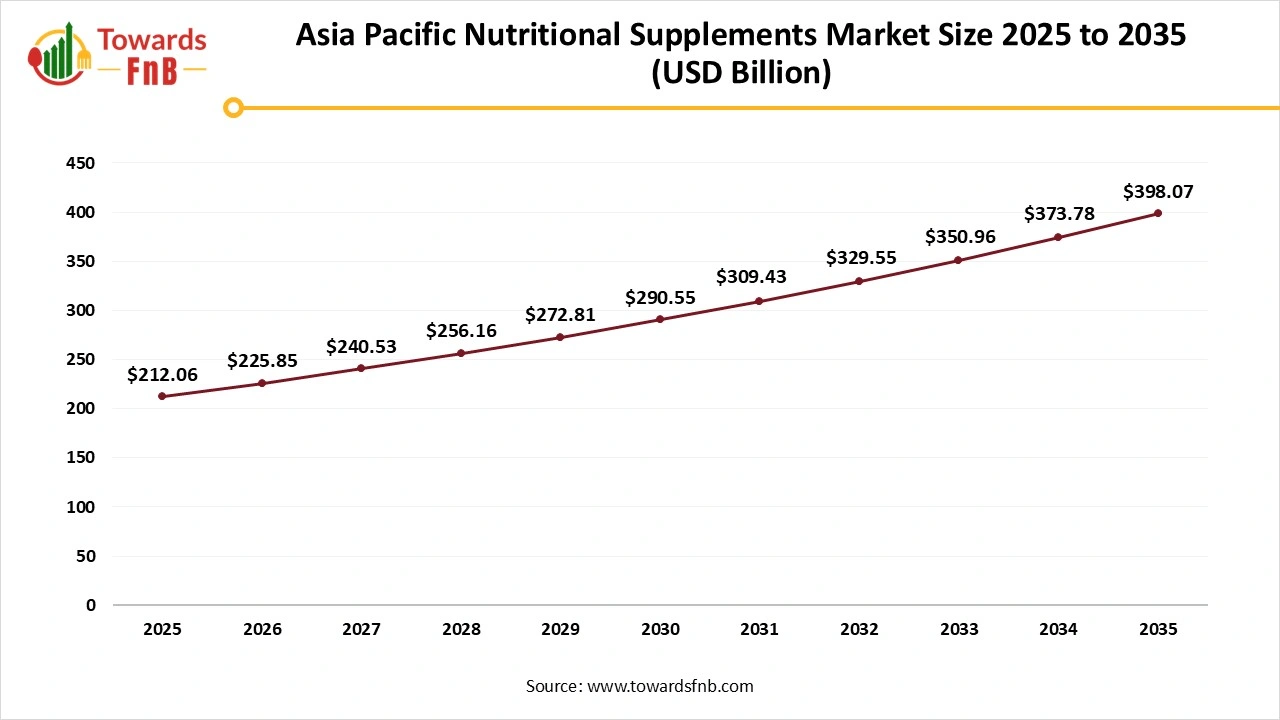
The Asia Pacific nutritional supplements market size reached at USD 212.06 billion in 2025 and is expected to grow steadily from USD 225.85 billion in 2026 to reach nearly USD 398.07 billion by 2035, with a CAGR of 6.5% during the forecast period from 2026 to 2035.
India Dominated the Nutritional Supplements Market in 2025
Which is driven by the increasing consumer awareness related to health and well-being, increasing prevalence of chronic diseases, rising population and growing food and beverage industry, expansion of e-commerce sector, increasing working population, changing lifestyles and increasing demand for packaged food products. With market share expected to increase from 33.7 billion in 2023, the Indian food and beverage packaged industry is experiencing substantial growth. The nutritional supplements sector has been growing fastest in India in recent years. There is 20% of nutritional supplements such as egg, and meat which include high nutritional value across the globe.
North America Nutritional Supplements Market Trends
North America expects the fastest growth in the market during the forecast period. The market growth in the region is driven by the growing e-commerce platforms, increasing consumer preference towards natural, organic, and plant-based supplements, growing geriatric population, increasing demand for immunity products, fitness, and personalized nutrition, and increasing consumer consciousness towards health and wellness. The U.S. and Canada are the fastest growing countries propelling the market growth.
The U.S. is expected to grow fastest during the forecast period. The market growth in the U.S. is driven by the rising technological advancements in precision and biotechnology, increasing consumer preference towards mental health, increasing demand for fitness culture, the increase of sports nutrition products, and improved accessibility.
Europe Nutritional Supplements Market Trends
Nutritional supplements have gained popularity for boosting immunity among various age groups, with an increased demand for essential vitamins and micronutrients to support health objectives in Europe. European markets have seen an increased demand for multivitamins and immune-enhancing supplements, with regulatory authorities in Europe expediting the approval process for these products, positively influencing market growth.
In Germany, accessibility of nutritional supplements is a significant factor in market development. The visibility of these products and their distribution through e-commerce platforms and retail outlets is expanding their reach across different demographics. The growth of the market is attributed to rising awareness of health and wellness and increased participation in sports. The variety of available supplements and the rise in obesity rates are also expected to drive the nutritional supplements market in Germany.
Middle East and Africa Nutritional Supplements Market Trends
In the Middle East and Africa, the nutritional supplements market, including vitamins, minerals, probiotics, prebiotics, herbal supplements, and proteins, is growing due to an increase in chronic disorders such as diabetes and cancer, along with rising obesity rates. Additionally, climatic conditions, like high daytime temperatures, are likely contributing factors to health issues, including vitamin D deficiency.
In the UAE, the nutritional supplements market is influenced by heightened health awareness, urban living, and a growing interest in preventive care. Increasing consumer focus on health and wellness, combined with higher disposable incomes and lifestyle shifts, has resulted in greater utilization of supplements across different age groups. Vitamins, minerals, and herbal products are commonly used to enhance energy, support immunity, and promote overall well-being.
Latin America Nutritional Supplements Market Trends
In Latin America, growing health consciousness is driving a trend towards improved overall well-being. There is a rising demand for products aimed at weight management, immunity enhancement, and disease prevention. The emphasis on maintaining good health is contributing to increased demand for nutritional supplements that support energy levels and mental well-being, with a focus on preventive healthcare practices.
In Brazil, the diverse cultural landscape and traditional medicine practices have shaped the nutritional supplements market. Key drivers include the increasing prevalence of chronic diseases, heightened health awareness, demand for natural and functional ingredients, regulatory approvals by ANVISA, expansion of e-commerce, and the influence of fitness and wellness trends, along with a shift toward preventive healthcare and personalized nutrition solutions.
Why did the Functional Food and Beverages Segment Dominated the Nutritional Supplements Market Share in 2025?
The functional food and beverages segment dominated the nutritional supplements market in 2025. The growth of the segment driven by various advantages such as better nutrition, supporting gut health, improving texture and taste of food, increasing demand for clean-label, natural and organic products, and increasing demand for sustainable and functional alternatives.
The Sports Nutrition Segment Expects the Significant Growth in the Market During the Predicted Period
The growth of the segment is owing to the various health benefits such as improved body consumption, enhanced maintaining healthy immune system, improved recovery, and reduced potential of injury.
How does the Powder Segment Held the Largest Nutritional Supplements Market Revenue in 2025?
The powder segment dominated the nutritional supplements market in 2025. The powder segment is widely used in various plant-based foods. The segment provides longer shelf life and ease of storage which makes them appropriate for a huge range of food and beverage products, which increases the segment's growth. In addition, the powder segment is highly contributed to market growth, because they are used in dietary supplements and nutritional products. As consumers continue to look for fermented plant-based choices in various food and beverage markets, the powder segment remains a major player in the market, which is further expected to drive the segment growth.
The Capsules Segment is Expected to Grow Significantly During the Predicted Period
The segment growth is attributed to the various benefits such as supports hair health, maintaining health, supporting cardiovascular health, promoting healthy skin, promoting longevity, strengthening bones and muscles, supporting cognitive health, enhancing immune function, and addressing nutritional deficiencies. Consumers are frequently choosing capsules over other delivery systems including liquids, powders, and tablets, which further increases the demand for capsules.
What Factors Help the Adult Segment to Grow in the Nutritional Supplements Market in 2025?
The adult segment dominated the nutritional supplements market revenue in 2025. The segment growth in the global market is driven by various benefits such as helping maintain and achieve healthy weight, helping the digestive system function, supporting healthy breastfeeding and pregnancies, reducing the risk of chronic diseases, strengthening bones, boosting immunity, supporting muscles, keeps eyes, teeth, teeth, and skin healthy and may help consumers live longer.
The Geriatric Segment Expects Significant Growth During Forecast Period
The segment growth in the market is propelled by the increasing consumer preference towards fitness and wellness and the growing geriatric population, increasing prevalence of chronic diseases, increased risk of malnutrition, and unique nutrition challenges.
How did the Brick & Mortar Segment Dominated the Market Revenue in 2025?
The brick and mortar segment dominated the nutritional supplements market in 2025. The segment growth in the global market is driven by various benefits such as the advantage of omnichannel marketing, the power of personalized consumer service and the creation of valuable and unique consumer experiences, growing e-commerce platforms, and increasing trends towards online shopping.
The E-commerce Segment Expects the Fastest Growth During the Predicted Period
The growth of the segment is attributed by the increasing busy and modern lifestyles, the growing e-commerce industry, and increasing consumer trends towards online shopping. Online retailing enables consumers to prevent crowds and chaos to improve their online shopping experience.
Why did the Weight Management Segment Hold the Largest Nutritional Supplements Market Revenue in 2025?
The weight management segment dominated the nutritional supplements market in 2025. The segment growth is attributed by various benefits such as the rapid use of social media, increasing consumer trends towards fitness trends, increasing consumer changing lifestyles, and increasing prevalence of chronic diseases such as cardiovascular diseases, diabetes, and obesity. Various consumers are searching for various solutions for weight control such as convenience and effectiveness.
The Sports and Athletics Segment is Expected to Grow Fastest During the Forecast Period
The segment growth in the market is propelled by the increasing consumer trend towards sports nutrition, increasing trend towards active and changing lifestyles, increasing consumer awareness towards health and wellbeing, and increasing demand for sports-related nutritional supplements such as creatine and protein powders.
Cizzle Brands Corporation
CFTRI
Factor
By Product
By Consumer Group
By Formulation
By Sales Channel
By Application
By Region





Principal Consultant
Vidyesh Swar, Senior Research Analyst at Towards Food & Beverages, specializes in market research, focusing on supply-demand evaluation, pricing analysis, alternative proteins, plant-based foods, and sustainable food technologies within the industry.
Learn more about Vidyesh Swar
Reviewed By
Aditi Shivarkar, with 14+ years in Food and Beverages market research, specializes in food, beverage, and eco-friendly packaging. She ensures accurate, actionable insights, driving Towards FnB's excellence in industry trends and sustainability.
Learn more about Aditi ShivarkarApril 2026
April 2026
April 2026
April 2026

Nutritional Supplements Market


 +1 804-441-9344
 Download Sample
 Schedule a Meeting