March 2026



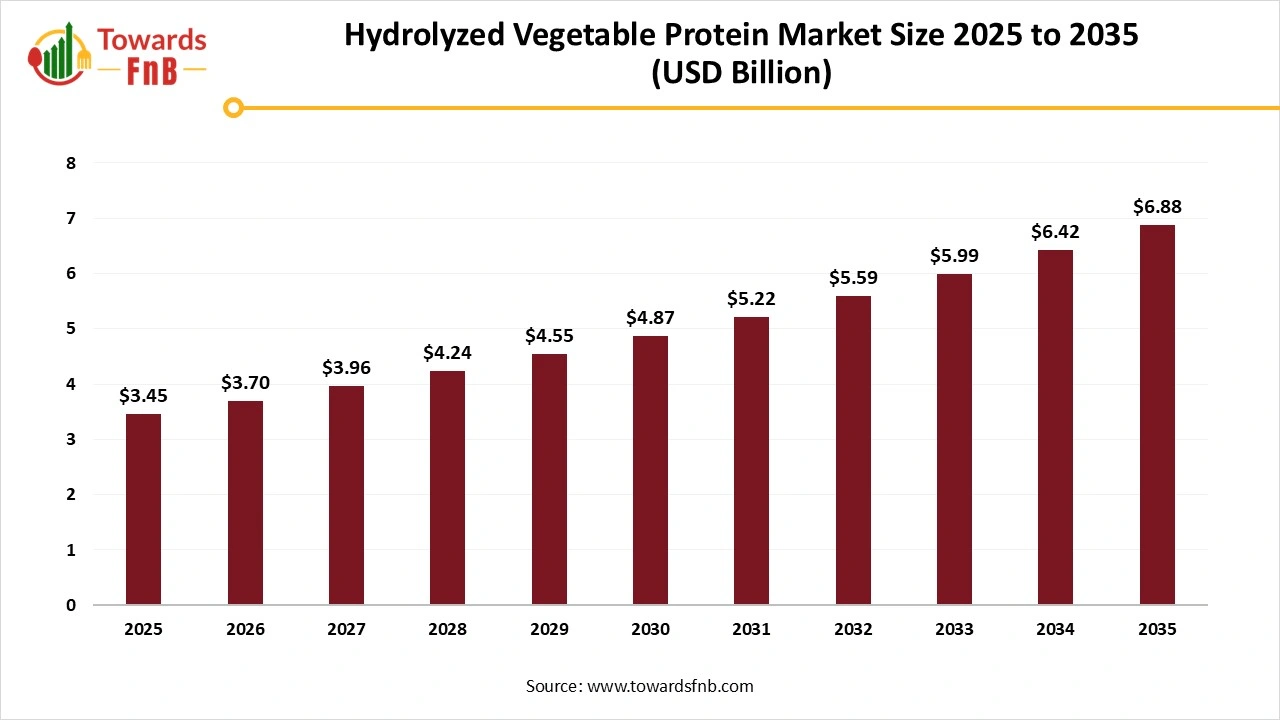
The global hydrolyzed vegetable protein market size was calculated at USD 3.45 billion in 2025 with projections indicating a rise from USD 3.70 billion in 2026 to approximately USD 6.88 billion by 2035, expanding at a CAGR of 7.15% throughout the forecast period from 2026 to 2035. Growing demand for processed food and rising veganism are significantly driving the market.
| Study Coverage | Details |
| Growth Rate from 2026 to 2035 | CAGR of 7.15% |
| Market Size in 2026 | USD 3.70 Billion |
| Market Size in 2027 | USD 3.96 Billion |
| Market Size by 2035 | USD 6.88 Billion |
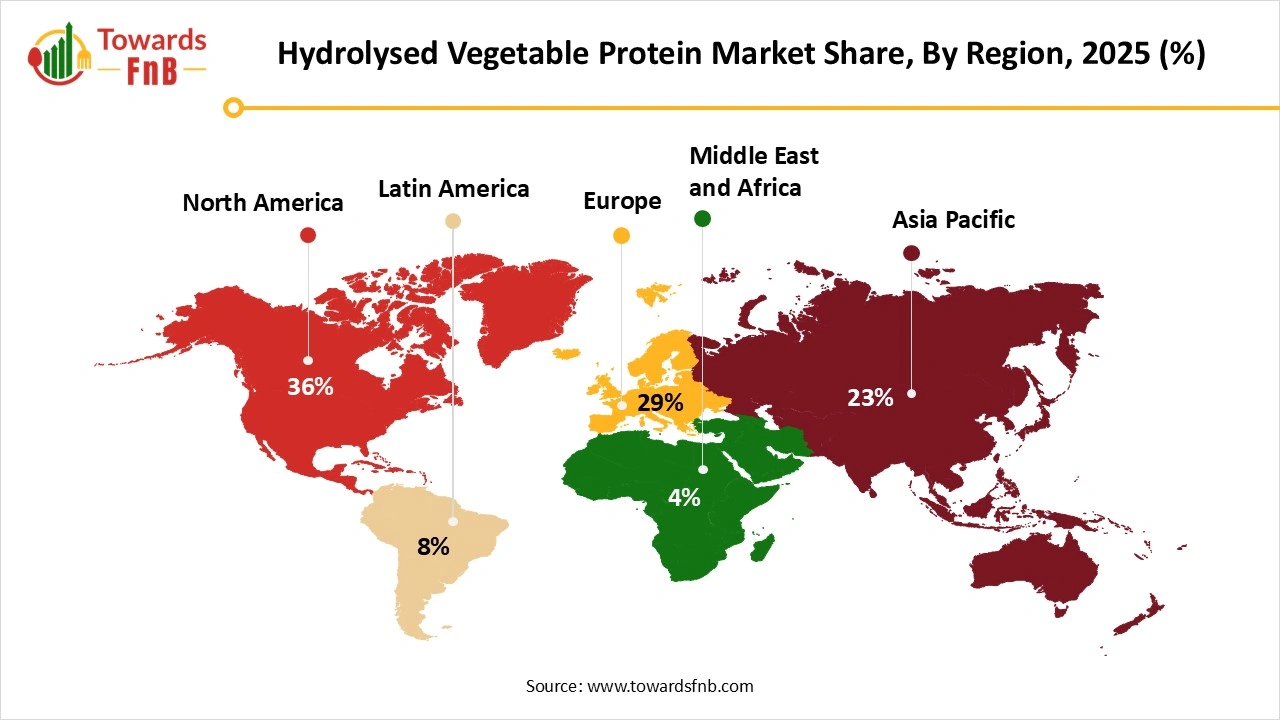
| Largest Market | North America |
| Base Year | 2025 |
| Forecast Period | 2026 to 2035 |
| Regions Covered | North America, Europe, Asia-Pacific, Latin America, and Middle East & Africa |
The hydrolyzed vegetable protein (HVP) market is experiencing rapid growth, largely driven by the rising processed food industry, where HVP is used to create unique flavors in popular food products. This market transformation is fueled by increasing consumer awareness around health and nutrition, leading to a growing demand for plant-based protein sources as people search for alternatives to traditional animal proteins.
Technological innovation plays a crucial role in advancing the hydrolyzed vegetable protein market. Emerging hydrolysis techniques, such as enzymatic hydrolysis and physical methods like membrane filtration, significantly enhance product purity, flavor profiles, and safety. Innovations in process automation and quality monitoring also improve efficiency and reduce costs, enabling manufacturers to meet the increasing demand. Furthermore, the development of customized HVP formulations, tailored for specific applications like low-sodium or allergen-free variants, provides competitive advantages.
Raw Material Procurement
Processing
Why did the North America Dominate the Hydrolyzed Vegetable Protein Market?
North America dominated market in 2025. Several key factors are driving the market's growth, including rising consumer demand for plant-based food products and a preference for healthier, more natural ingredients. Additionally, advancements in food processing technologies and the expansion of manufacturers offering innovative plant-based protein alternatives are contributing to this market expansion. The growing popularity of plant-based diets, particularly among health-conscious consumers, along with the rising demand for natural food additives, are significant drivers shaping the North American hydrolyzed vegetable protein market's growth trajectory.
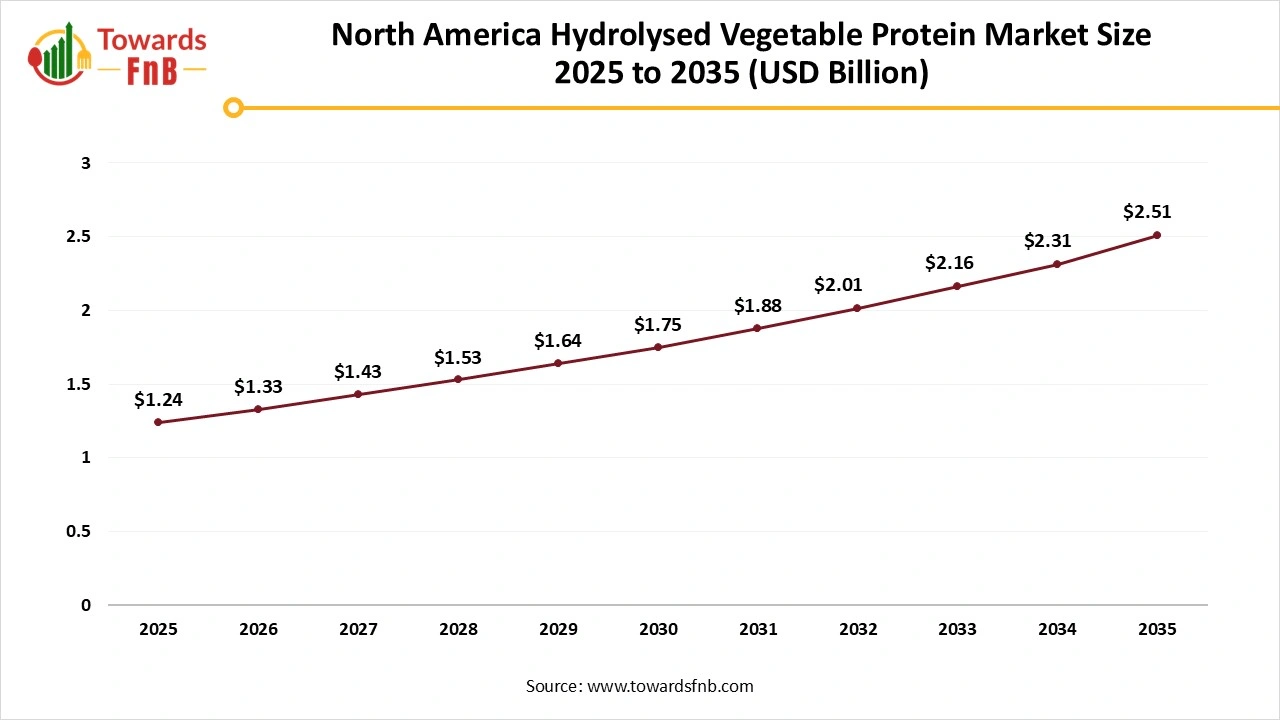
North America Hydrolyzed Vegetable Protein Market Size 2025 to 2035
The North America hydrolyzed vegetable protein market size was valued at USD 1.24 billion in 2025 and is expected to grow steadily from USD 1.33 billion in 2026 to reach nearly USD 2.51 billion by 2035, with a CAGR of 7.31% during the forecast period from 2026 to 2035.
U.S. Hydrolyzed Vegetable Protein Market Trends
The hydrolyzed vegetable protein market is witnessing considerable growth in the U.S., fueled by increasing consumer demand for plant-based protein sources. This trend is part of a broader movement towards healthier eating habits and sustainable food choices. Hydrolyzed vegetable proteins are being incorporated into a diverse range of products, from snacks to beverages, as more consumers opt for plant-based diets for ethical, environmental, or health reasons.
Asia Pacific Hydrolyzed Vegetable Protein Market Trends
Asia Pacific expects the fastest growth in the market during the forecast period, driven by a growing adoption of vegetarian and vegan diets, especially in countries like India and China. There is also increased interest in fortified foods products and functional ingredients, which has led to the incorporation of hydrolyzed vegetable proteins in various processed foods and beverages to enhance nutritional value. This trend is further supported by the presence of major food companies, as well as the growth of convenience food chains and increased urbanization, which expands the consumer base in the region.
China Hydrolyzed Vegetable Protein Market Trends
The hydrolyzed vegetable protein market is experiencing significant growth in China due to the rising demand for plant-based protein sources and the expanding food processing industry. As consumers increasingly seek healthier and more natural food ingredients, HVP has gained prominence because of its functional properties and versatility. Technological advancements and strategic collaborations among key players are also influencing market evolution, establishing China as a vital hub in the global HVP landscape.
Europe Hydrolyzed Vegetable Protein Market Trends
The European hydrolyzed vegetable protein market is experiencing significant growth, due to the rising consumer preferences towards clean-label food ingredients and plant-based protein solutions. The rise in health consciousness and the shift towards vegetarian and vegan diets have boosted the demand for hydrolyzed vegetable protein as a natural flavor enhancer and protein fortifier in processed foods. HVP is widely used in savory products such as soups, sauces, snacks, and seasonings because it provides umami flavor and improves overall food palatability.
Germany Hydrolyzed Vegetable Protein Market Trends
The demand for hydrolyzed vegetable protein is growing in Germany due to heightened awareness of plant-based diets and the increasing popularity of vegetarian and vegan lifestyles. Consumers are seeking healthier and more sustainable food options, driving the need for products containing plant-based proteins. Additionally, the food industry is incorporating hydrolyzed vegetable proteins into a wide range of products, including snacks, ready-to-eat meals, and plant-based meat alternatives, to enhance flavor and nutritional value. There is also a trend toward clean label products, as consumers look for natural and minimally processed ingredients. In a notable move toward sustainable agriculture, the German government has allocated €38 million in its 2024 budget to promote plant-based, precision-fermented, and cell-cultivated proteins, which is boosting the market. (Source: Proveg)
Hydrolyzed Vegetable Protein Market Share, By Source, 2025 (%)
| Segments | Shares (%) |
| Soy | 60% |
| Wheat | 15% |
| Corn | 10% |
| Pea | 10% |
| Others | 5% |
Why did the Soy Segment Hold the Largest Share of the Hydrolyzed Vegetable Protein Market In 2025?
The soy segment held the largest share of the market in 2025, primarily due to its widespread availability. Soy is a rich source of amino acids and a natural component in various processed foods. Hydrolyzed soy proteins are frequently used in products like meat analogs and vegetarian burgers because they have taste characteristics similar to meat products but contain less fat than options like chicken nuggets or hamburgers. Additionally, the emulsification and foaming abilities of soy protein enhance the mouthfeel and texture of foods, and it is suitable for individuals with allergies or intolerances since it is free from several common allergens, including dairy, gluten, and nuts.
The Pea Segment is Expected to Grow at the Fastest Rate During the Forecast Period
Driven by increasing consumer demand for clean-label, allergen-free, and sustainable protein alternatives. It is rich in essential amino acids, such as lysine, providing a complete protein profile that many other plant sources lack. Its natural allergen-free composition, free from soy, dairy, and gluten, makes it especially appealing to individuals with dietary restrictions.
Hydrolyzed Vegetable Protein Market Share, By Application, 2025 (%)
| Segments | Shares (%) |
| Bakery & Confectionery | 12% |
| Processed Food Products | 60% |
| Meat Substitutes | 8% |
| Beverages | 9% |
| Others | 11% |
Why did the Processed Food Products Segment Dominated the Hydrolyzed Vegetable Protein Market?
The processed food products segment dominated the market with the largest share in 2025. HVP has gained popularity in the food industry due to its versatility, cost-effectiveness, and ability to enhance the flavor of various products. Its savory flavor profile adds depth to dishes and can mimic the taste of meat, making it a preferred choice for vegetarian and vegan alternatives. This transformation enhances flavor, improves digestibility, and boosts nutritional value, making HVP a popular additive in processed foods. The rising demand for processed foods due to their convenience, longer shelf life, and changing consumer lifestyles is expected to drive the demand for HVP in these products.
The Meat Substitutes Segment is Anticipated to Grow at a Notable Rate During the Predicted Timeframe
With the increasing popularity of plant-based diets and a growing trend of reducing meat consumption, there is a rising demand for alternative protein sources. Hydrolyzed vegetable proteins, derived from soy, wheat, and pea, are widely utilized in producing meat substitutes, such as plant-based burgers, sausages, and nuggets. They provide texture, mouthfeel, and umami flavor, closely resembling the sensory experience of consuming meat.
Hydrolyzed Vegetable Protein Market Share, By Function, 2025 (%)
| Segments | Shares (%) |
| Flavoring Agent | 70% |
| Emulsifying Agent | 20% |
| Others | 10% |
Which Function Segment Held the Largest Share of the Hydrolyzed Vegetable Protein Market in 2025
The flavoring agent segment held the largest share of the market in 2025. Hydrolyzed vegetable protein has gained significant attention as a flavor enhancer that can serve as a substitute for monosodium glutamate. When proteins are broken down into their basic amino acids, they can contain up to 20% glutamate, which contributes to a savory and meaty flavor. HVP is primarily used to provide an umami taste in processed foods such as soups, chilis, sauces, meat products, gravies, spice mixtures, side dishes, and frozen meals. The market is witnessing an increase in applications across the food industry, as manufacturers seek to improve both taste and nutritional profiles.
The Emulsifying Agent Segment is Expected to Experience the Fastest Growth in the Market During the Forecast Period
The emulsifying properties of HVP are especially important in producing foods for children and determining food compositions for adults. In emulsifying roles, specific HVP peptide fractions enhance interfacial stability, improving texture and mouthfeel in sauces, dressings, and certain beverage systems. HVP acts as a natural, plant-based alternative to other emulsifiers, offering high water- and fat-holding capacities.
Herbal Isolates
Ingredion Incorporated
By Source
By Application
By Function
By Region




Principal Consultant
Vidyesh Swar, Senior Research Analyst at Towards Food & Beverages, specializes in market research, focusing on supply-demand evaluation, pricing analysis, alternative proteins, plant-based foods, and sustainable food technologies within the industry.
Learn more about Vidyesh Swar
Reviewed By
Aditi Shivarkar, with 14+ years in Food and Beverages market research, specializes in food, beverage, and eco-friendly packaging. She ensures accurate, actionable insights, driving Towards FnB's excellence in industry trends and sustainability.
Learn more about Aditi ShivarkarMarch 2026
March 2026
February 2026
February 2026

Hydrolyzed Vegetable Protein Market


 +1 804-441-9344
 Download Sample
 Schedule a Meeting