April 2026



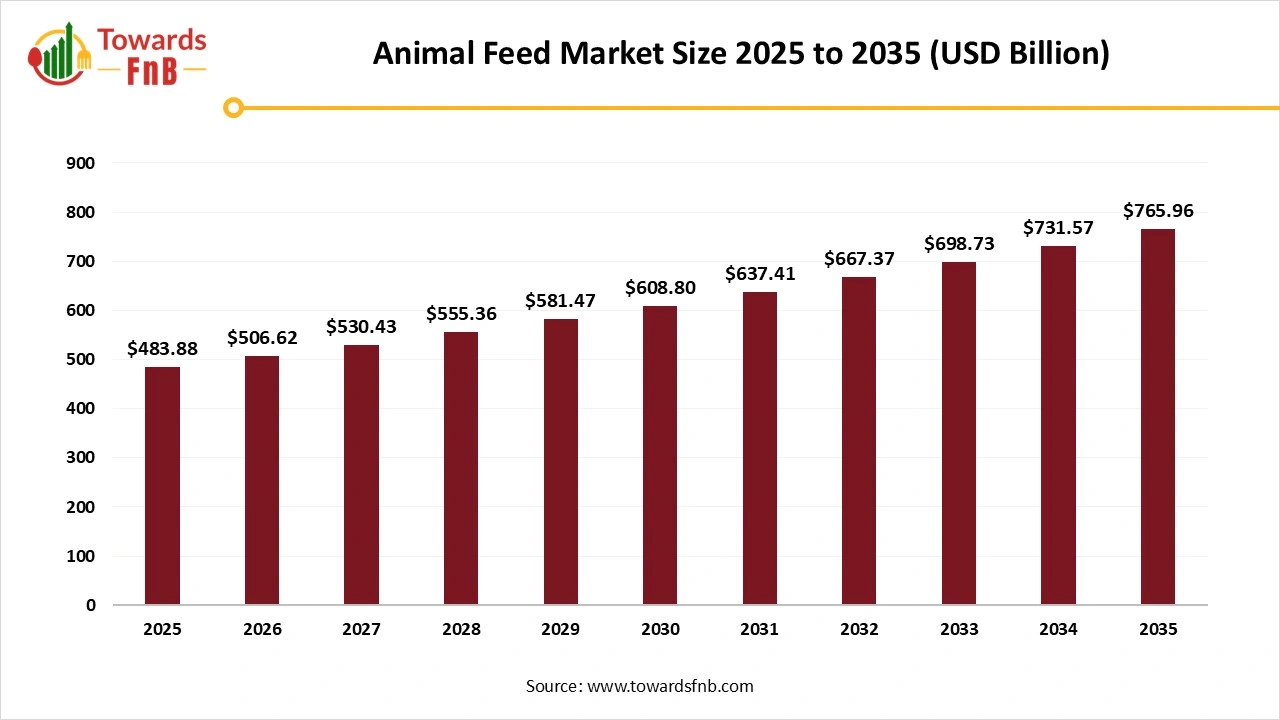
The global animal feed market size was valued at USD 483.88 billion in 2025 and is expected to expand from USD 506.62 billion in 2026 to USD 765.96 billion by 2035, with a CAGR of 4.7% during the forecast period from 2026 to 2035. Increasing worldwide population rising the demand for the livestock products substantially driving the animal feed market.
| Study Coverage | Details |
| Growth Rate from 2026 to 2035 | CAGR of 4.7% |
| Market Size in 2026 | USD 506.62 Billion |
| Market Size in 2027 | USD 530.43 Billion |
| Market Size by 2035 | USD 765.96 Billion |
| Largest Market | Asia Pacific |
| Base Year | 2025 |
| Forecast Period | 2026 to 2035 |
| Regions Covered | North America, Europe, Asia-Pacific, Latin America, and Middle East & Africa |
A growing population and changing eating habits have increased demand for premium animal products worldwide, putting the livestock sector under unprecedented scrutiny. In this ever changing environment, creating sustainable and nutritionally balanced animal feeds becomes essential to creating high-quality animal products that satisfy global demands and increasing the market of animal feed. For livestock production including breeding and reproduction along with animal well-being high quality animal feed is needed.
Increasing market of the aquaculture and increasing fish consumption further boosting the market. Escalating pet sector and pet humanization rising the demand for the high-quality pet nutrition and pet food, further fuels the market. Rising net income, evolving lifestyles, and increased awareness of health and nutrition have led to a greater demand for premium meat and meat-derived products. This has consequently increased the need for animal feed. The strong demand for food products from animals like meat, eggs, and dairy, along with a growing emphasis on animal health and nutrition, fuels the expansion of the market. Technological innovations in feed manufacturing, an increase in feed mills, and industry consolidation are additional elements driving the growth of the animal feed market.
A significant technological development influencing the field of animal feed formulation is the incorporation of computational models and artificial intelligence. This groundbreaking duo enables the examination of extensive datasets, considering aspects like animal genetics, physiology, and environmental elements. Utilizing machine learning algorithms enables researchers and nutritionists to uncover complex patterns in these datasets, resulting in an exceptional level of accuracy in feed formulation. This accuracy enhances animal performance and reduces resource use, aligning with overall sustainability objectives. In addition to artificial intelligence, the combination of molecular biology and genomics signifies a new age of customized nutrition for livestock.
A major challenge is the increasing expense of raw materials. Components like soybeans, corn and fishmeal, which constitute most of the animal feed, experience price fluctuations due to influences such as weather change, geopolitical conflicts, and rising competition for these resources from human food and biofuel sectors. Water shortages and land deterioration intensify the problem, restricting the resources needed for producing feed crops.
Raw Material Procurement
Packaging and Branding
Waste Management and Recycling
Asia Pacific Dominated the Animal Feed Market with the Largest Share in 2025
The rise in cattle farming is expected to boost the need for animal feed because of the growing human appetite for products derived from animals. It is anticipated that natural growth proponents will remain engaged in the market as their momentum continues to increase. Consumer awareness of the advantages of feed additives in disease prevention has led to a transition from regular animal feed to specialized and higher quality options. These additives enhance immunity against enzootic diseases and simultaneously lower the likelihood of metabolic disorders. Moreover, positive actions and investments are being made by the governing bodies in multiple nations within the region to enhance animal agriculture, and the adoption of innovative animal-rearing methods is expected to stimulate demand for animal feed.
Asia Pacific Animal Feed Market Size 2025 to 2035
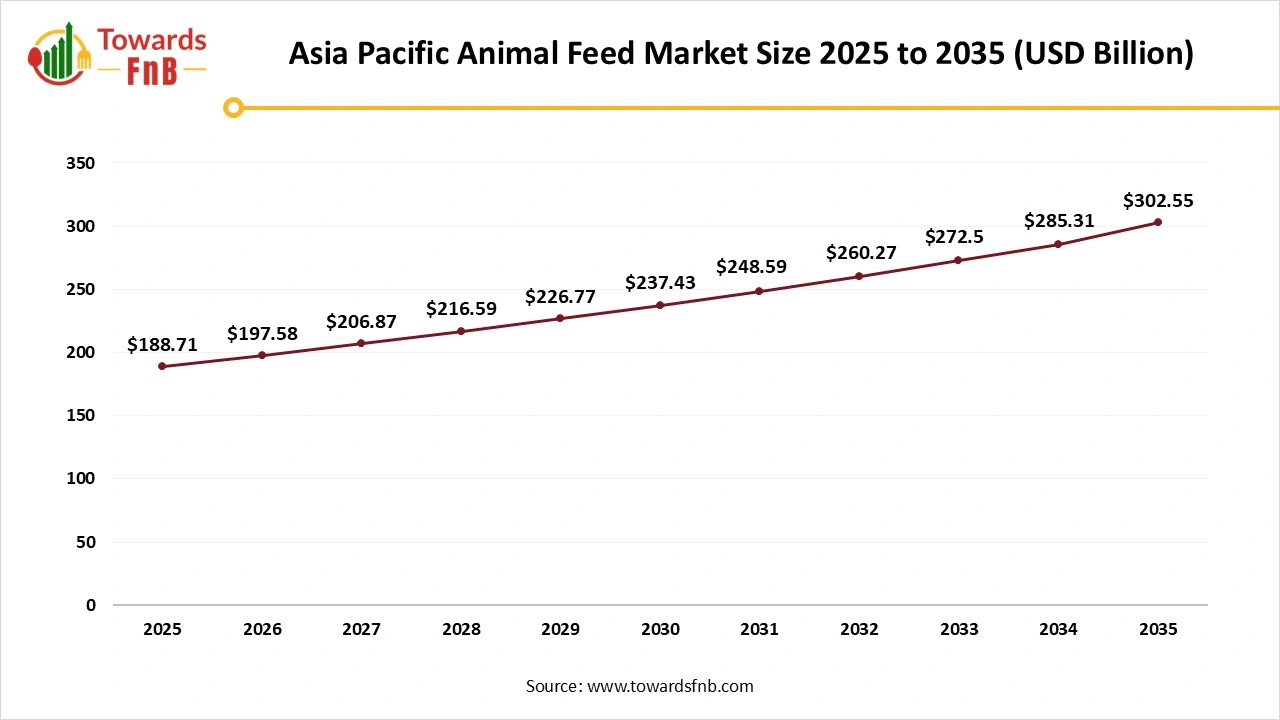
The Asia Pacific animal feed market size was calculated at USD 188.71 billion in 2025 and is expected to grow from USD 197.58 billion in 2026 to reach around USD 302.55 billion by 2035, with a CAGR of 4.83% during the forecast period from 2026 to 2035.
Escalating Animal Feed Market in China
China is a leading country in animal feed production. China's feed demand is increasing due to ongoing swine restocking and an expanding livestock industry. The rise in commercial feed tonnage is fueled by the recovery and evolution of China's pig industry, along with swine farms partnering with specialized feed mills. The increasing living standards of the Chinese people and the heightened demand for high-protein foods are driving the growth of the animal feed market in China.
2025 China logistics agendas evolving potential changes for the Foreign Trade Law and Customs Law, with more strict compliance requirements.
North America Observed to Grow at the Fastest Rate in the Animal Feed Market During the Forecast Period
The growth of the market is expanding because of rising demand for dairy and meat items, escalation of livestock production, advancements animal nutrition technologies, and increasing awareness regarding advantages of utilizing compound feed for livestock. Additionally, the North American market is upsurging due to the augmented use of feed enzymes and probiotics that are important in improving the productivity of livestock. There are around 5,650 animal feed producing facilities in the U.S. formulating more than 284 million tons of pet food and finished feed every year. The mill sizes differ drastically from a small on-farm mixer to advanced, computerized system with minimum workers developing more than 1 million tons of feed every year for swine or poultry activities.
The European animal feed market is projected to grow significantly
This growth is driven by increasing meat consumption and the demand for high-quality, productive animal products. Europe is the second-largest producer of compound feed in the world, following the Asia-Pacific region. According to the Agri-Food Outlook 2023 report by Alltech, European countries accounted for 263 million tons (20.7%) of the world’s compound feed production, which totaled 1.266 billion tons in 2022.
In Germany, the animal feed market is driven by rising demand for sustainable practices, pet humanization, and specialized feed products. Increased awareness among individuals regarding animal nutrition is positively impacting the market. Proper nutrition is essential for maximizing livestock productivity.
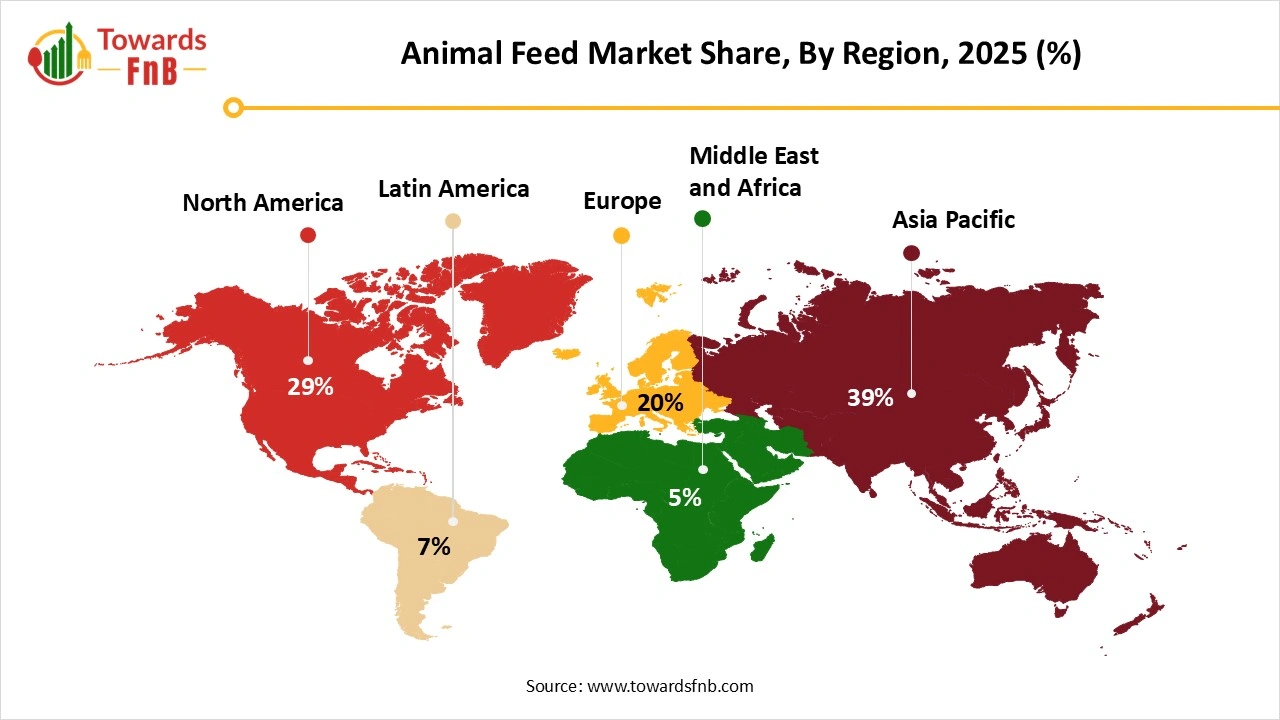
The animal feed market in the Middle East and Africa (MEA) is also growing, fueled by an increased demand for animal protein and advancements in animal nutrition. Between 2021 and 2022, total compound feed production in the Middle East surged by 24.7%, outpacing other regions. Iran and Saudi Arabia are significant players in feed production within the region.
In Saudi Arabia, rising awareness regarding health and nutrition has led to increased demand for quality animal products, serving as a key driver for the animal feed market’s growth. The Saudi government has been proactive in ensuring high standards for food safety and quality, which in turn stimulates the need for better quality animal feed. Additionally, the rising consumption of meat and processed foods in Saudi Arabia significantly contributes to the market demand.
In South America, the expanding cattle industry is one of the primary factors propelling the animal feed market. Brazil and Argentina are major players in the global supply chains for animal proteins, being the world’s leading producers and exporters of cattle, chicken, and pork. Growing local demand for animal-derived products, coupled with strong export prospects, is also a significant force behind the region's animal feed market. As diets shift toward higher protein consumption, particularly in urban areas, the demand for meat, dairy, and eggs continues to rise.
Brazil's animal feed market is the third largest globally, driven by strong raw material output and high domestic meat consumption. The market is expected to grow further, with the poultry sector being a major consumer, and there is a noticeable shift toward sustainability and efficiency in production methods.
The Poultry Segment Held the Dominating Share of the Animal Feed Market in 2025.
Indulging and developing markets have expanded poultry market and poultry becomes most consumed livestock globally specifically in developing nations. As the demand for the poultry increasing consumers are constantly developing innovative food products for the development and nutrition of poultry sector. Developments in poultry rearing methods are fostering the expansion of the market.
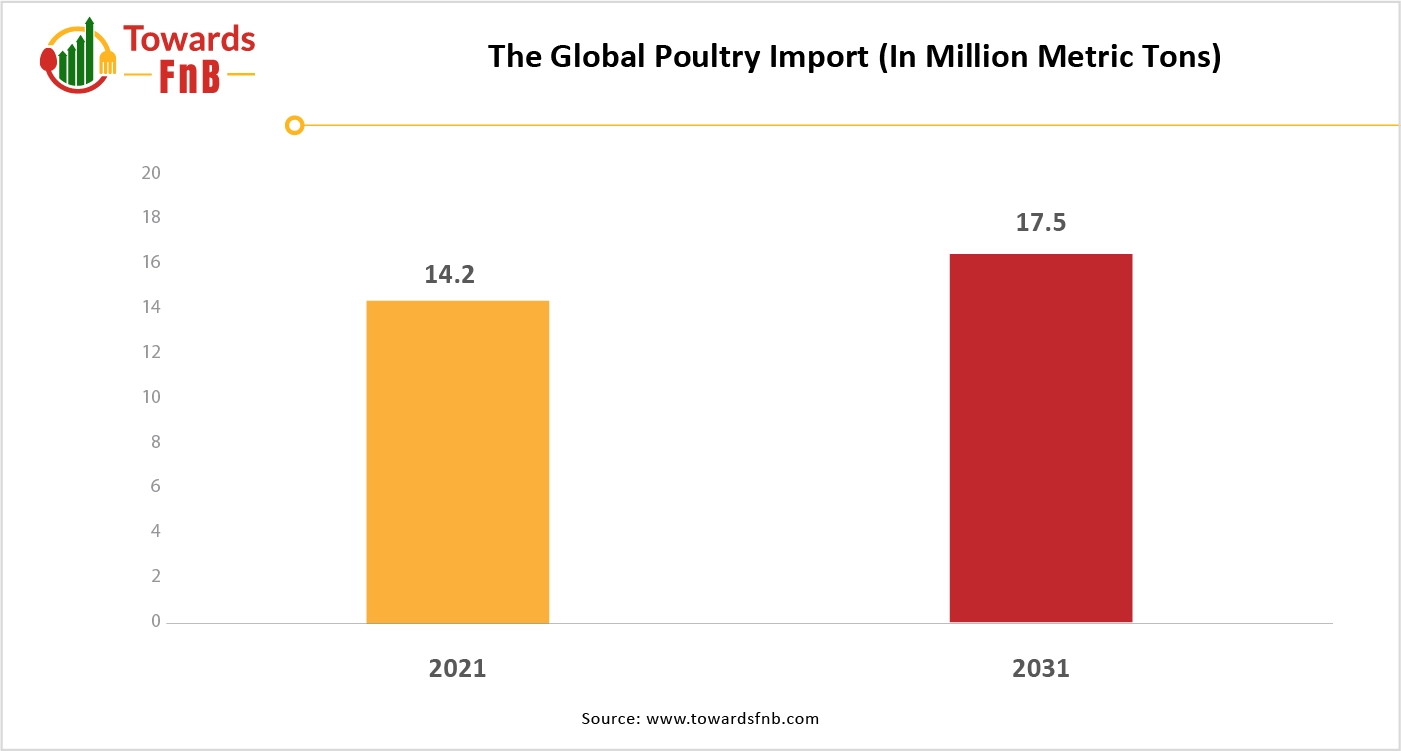
Animal feed manufacturers are scaling up manufacturing to complete the demand from layers, broilers, and other poultry animals because of increasing poultry consumption in developing countries. Growing import and export of the poultry demanding the complete and healthy nutrition for overall development. The meat trade, which includes poultry imports, has grown considerably since 2001. Between 2001 and 2021, worldwide poultry imports increased by an average of 4 percent annually, reached 14.2 million metric tons in 2021. The USDA forecasts that poultry imports will increase to 17.5 million metric tons by the year 2031.
The Cattle Segment is Seen to Grow at a Notable Rate in the Animal Feed Market During the Predicted Timeframe.
The cattle feed market is constantly leveraging as milk producers start to change conventional cattle feed with nutritionally blended balanced cattle feed, considering the noticeable advantages of nutritional feed for yield enhancement. Additionally, population rise and growing living standards, the livestock market has been enforced to change and improve for completing demand from consumers by providing healthy compound animal feed to livestock animals. As a result, this factor helps to expand the cattle industry and feed market.
The Amino Acid Segment Dominated the Animal Feed Market with the Largest Share in 2025.
Since most livestock are unable to produce amino acids, the demand for animal feed amino acids has increased in recent years. Research and development efforts have shown that the primary and secondary limiting amino acids, lysine and methionine, are increasingly utilized in lactating dairy cows to enhance production efficiency and minimize metabolic disorders. Additionally, a rise in the demand for organic meat from consumers in developed countries, along with the adoption of new animal husbandry practices and the maintenance of high agricultural standards, has fostered a favorable outlook for the industry. The rising use of sustainable agricultural methods has also boosted the demand for high-quality animal feed that support animal wellness and improve production efficiency. The increasing collaborations among companies that drive innovations are beneficial to the market.
The Antibiotics Segment is Expected to Grow at the Fastest Rate in the Animal Feed Market During the Forecast Period.
Various research and studies provide evidence regarding the positive effects derived from the use of antibiotics as feed additives. Pigs receiving antibiotics in their diet need 10–15% less feed to reach the desired growth level. The expense of feed represents a significant part of the costs associated with raising animals. Therefore, the inclusion of antibiotics significantly reduces costs. Antibiotics included in the feed also guarantee better conversion of feed into animal products and enhancements. The daily growth rate of animals fed with antibiotic-enriched food is recognized to be enhanced by 1–10% in comparison to that of animals receiving feed without antibiotics. The meat sourced from animals given antibiotics is of superior quality, containing more protein and less fat than that from animals not treated with antibiotics and the benefiting to the market expansion.
Insectika Biotech
Kemin Industries
Evonik
By Species
By Additives
By Region






Principal Consultant
Vidyesh Swar, Senior Research Analyst at Towards Food & Beverages, specializes in market research, focusing on supply-demand evaluation, pricing analysis, alternative proteins, plant-based foods, and sustainable food technologies within the industry.
Learn more about Vidyesh Swar
Reviewed By
Aditi Shivarkar, with 14+ years in Food and Beverages market research, specializes in food, beverage, and eco-friendly packaging. She ensures accurate, actionable insights, driving Towards FnB's excellence in industry trends and sustainability.
Learn more about Aditi ShivarkarApril 2026
April 2026
April 2026
April 2026

Animal Feed Market


 +1 804-441-9344
 Download Sample
 Schedule a Meeting