April 2026



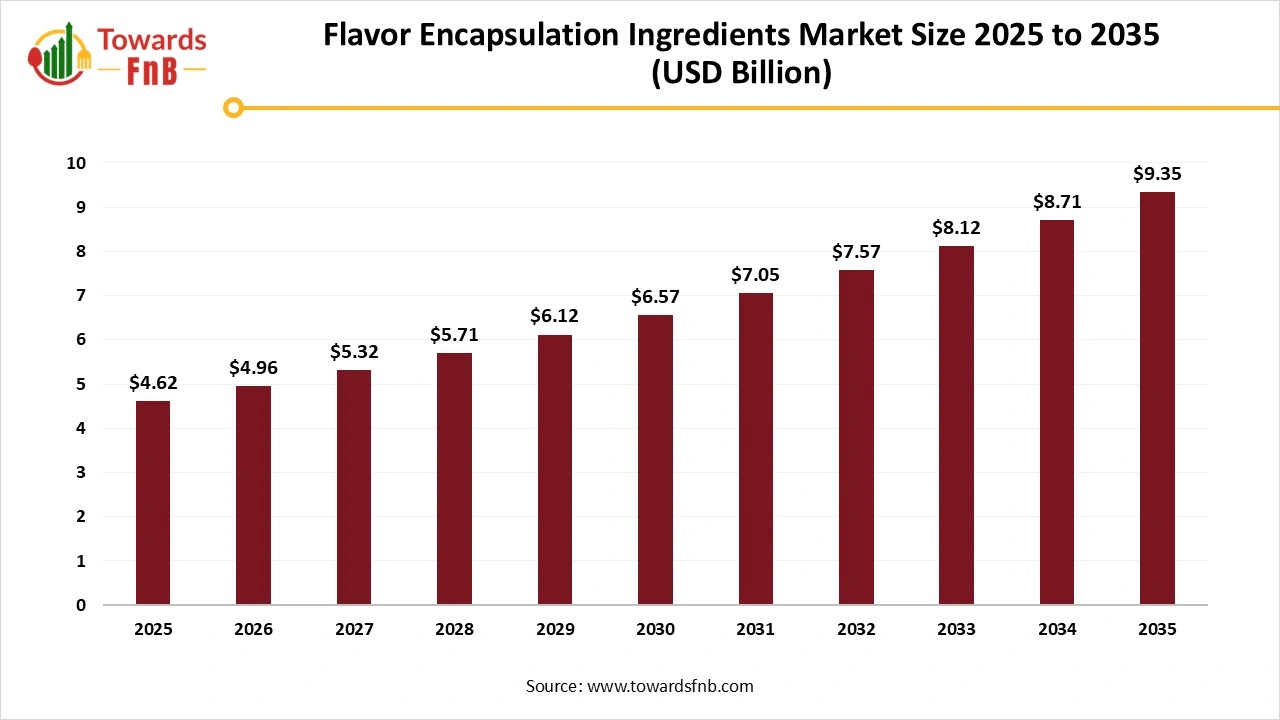
The global flavor encapsulation ingredients market size reached at USD 4.62 billion in 2025 and is anticipated to increase from USD 4.96 billion in 2026 to an estimated USD 9.35 billion by 2035, witnessing a CAGR of 7.3% during the forecast period from 2026 to 2035. Consumer preference for less-processed food and focus on flavor protection drive the market growth.
| Study Coverage | Details |
| Growth Rate from 2026 to 2035 | CAGR of 7.3% |
| Market Size in 2026 | USD 4.96 Billion |
| Market Size in 2027 | USD 5.32 Billion |
| Market Size by 2035 | USD 9.35 Billion |
| Largest Market | North America |
| Base Year | 2025 |
| Forecast Period | 2026 to 2035 |
| Regions Covered | North America, Europe, Asia-Pacific, Latin America, and Middle East & Africa |
Flavor encapsulation ingredients are materials that protect the flavor of food from moisture, heat, or oxygen. Their functions include shielding flavors, masking undesirable tastes, and controlled release of flavors. The common methods used for flavor encapsulation are spray chilling, melt extrusion, spray drying, and fluid bed coating. The various encapsulation ingredients are modified starches, cyclodextrin, whey protein, hydrogenated vegetable oil, maltodextrin, gelatin, and others. They are widely used in applications like baked goods, chewing gum, nutritional supplements, and confectionery.
Flavor encapsulation ingredients market growth is driven by a huge seeking of nutrient-rich foods, increased consumption of processed food, focus on enhancing food products, increasing need for odor masking, clean label movement, rising consumption of nutraceuticals, and the growing use of ethnic flavors.
The key technological shifts in the flavor encapsulation ingredients market are driven by the demand for flavor enhancer, improving stability, and better protection. The growing interest in advancements like nanoencapsulation, machine learning, molecular inclusion complexes, and advanced encapsulation methods protects sensitive flavors and prevents degradation. The major shift is the integration of AI, which enhances the release mechanism and develops consumer-aligned flavors.
AI accelerates the development of new encapsulated materials and enhances the efficiency of spray-drying techniques. AI discovers hidden pairings of encapsulation ingredients and develops unique food flavors. AI detects defects in encapsulated products and develops wall materials. AI helps to create plant-based materials and reduces energy usage. Additionally, AI develops consumer-aligned flavors and manufactures clean-label products.
| Country | Flavor Encapsulation Ingredients Used | Key Encapsulation Techniques Used |
| India | Maltodextrin Gum Acacia Milk Proteins Modified Starches |
Spray Drying Extrusion Spray Chilling |
| China | Cyclodextrins OSA Starches Gum Arabic Proteins |
Nanoencapsulation Coacervation Spray Drying |
| Germany | Waxes Carbohydrates Yeast Cells Proteins |
Microencapsulation Spray Drying Matrix Encapsulation Nanoencapsulation |
| United States | OSA Starch Acacia Gum Maltodextrin Cyclodextrins |
Emulsification Spray Drying |
Raw Material Procurement
Quality Testing and Certification
Processing and Preservation
Why North America Dominates the Flavor Encapsulation Ingredients Market?
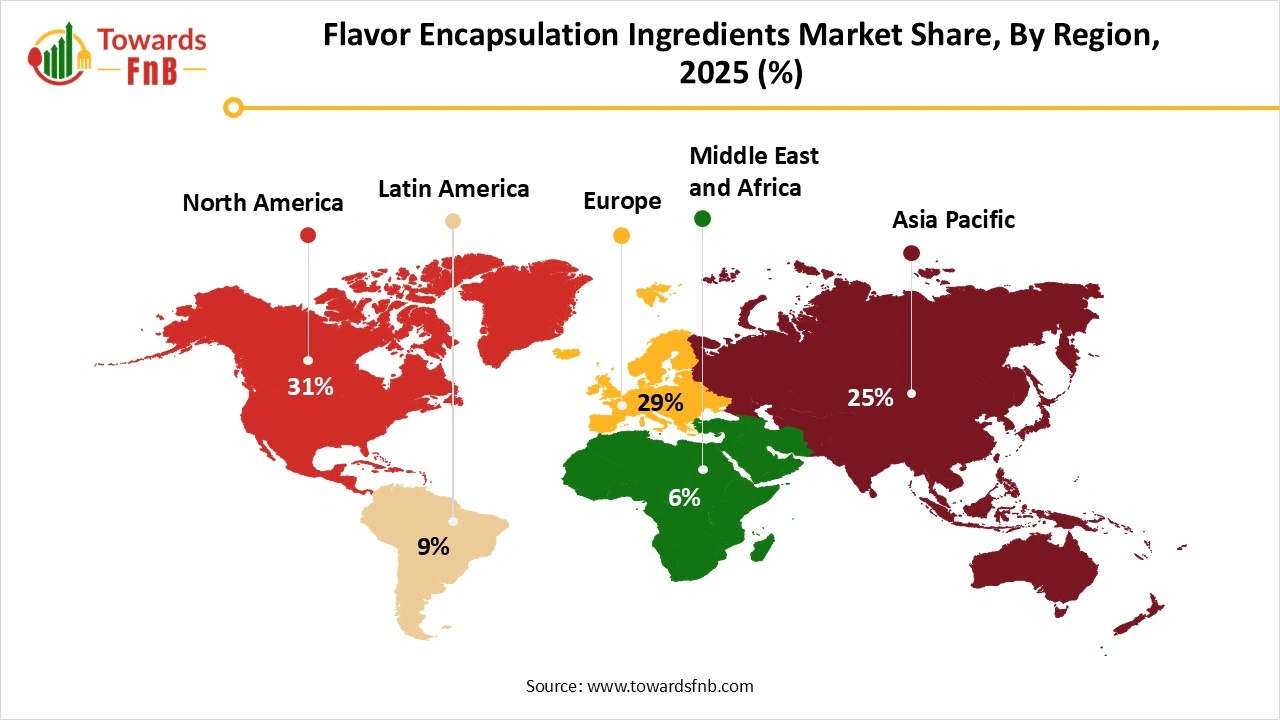
North America dominated the flavor encapsulation ingredients market in 2025. The consumer shift towards clean-label foods and the increased consumption of dietary supplements increase demand for flavor encapsulation ingredients. The huge popularity of convenient snacks and the strong focus on personalised nutrition require flavor encapsulation ingredients. The increased production of processed food and the well-established food and beverages sector increase demand for flavor encapsulation ingredients. The presence of key players like Sensient, Cargill, IFF, and Balchem drives the market growth.
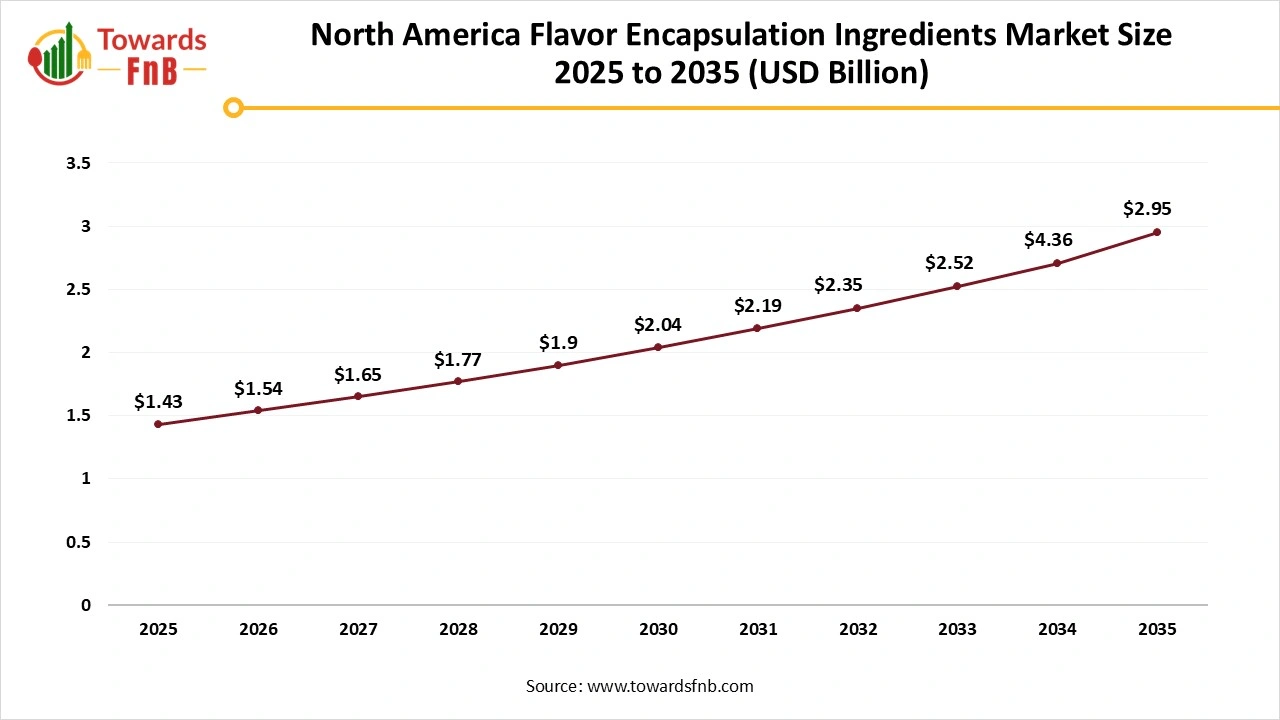
North America Flavor Encapsulation Ingredients Market Size 2025 to 2035
The North America flavor encapsulation ingredients market size was calculated at USD 1.43 billion in 2025 with projections indicating a rise from USD 1.54 billion in 2026 to approximately USD 2.95 billion by 2035, expanding at a CAGR of 7.51% throughout the forecast period from 2026 to 2035.
Smart Flavor Delivery: U.S. Role in Flavor Encapsulation Ingredients
The United States is a major contributor to the market. The growing consumer base seeking health-focused products and the presence of a mature food processing industry increase demand for flavor encapsulation ingredients. Huge consumption of packaged food and the popularity of the clean label movement increase demand for flavor encapsulation ingredients. The increased spending on premium encapsulated products supports the overall market growth.
Asia Pacific Flavor Encapsulation Ingredients Market Trends
Asia Pacific is experiencing the fastest growth in the market during the forecast period. The increased consumption of higher-quality foods and the preference for fortified snacks increase demand for flavor encapsulation ingredients. The rapid expansion of on-the-go foods and the rise in popularity of flavored dairy drinks increase demand for flavor encapsulation ingredients. The government's focus on food fortification programs and growing online presence drives the overall market growth.
Preserving Flavors: Revolution of Flavor Encapsulation Ingredients in India
India is rapidly growing in the market. The strong consumer preference for ready-to-eat meals and the increased consumption of carbonated beverages increase demand for flavor encapsulation ingredients. The vast presence of the spice industry and the availability of Quick Service Restaurants increase demand for flavor encapsulation ingredients. The well-established food sector supports the overall market growth.
Europe Flavor Encapsulation Ingredients Market Trends
Europe is growing at a notable rate in the market. The growing consumer demand for functional supplements and increased interest in quick foods increase the demand for flavor encapsulation ingredients. The focus on the development of long-lasting flavors and the need for enhancing food stability increases demand for flavor encapsulation ingredients. The growing expansion of prepared foods drives the market growth.
Germany Rise in Flavor Encapsulation Ingredients
Germany is growing in the market. The well-developed food & beverage base and the increased consumption of health-boosting foods increase demand for flavor encapsulation ingredients. The focus on enhancing nutrient delivery and the popularity of vegan products increases demand for flavor encapsulation ingredients. The well-established food infrastructure supports the market growth.
Why the Carbohydrates and Modified Starches Segment Dominates the Flavor Encapsulation Ingredients Market?
The carbohydrates and modified starches segment dominated the flavor encapsulation ingredients market in 2025. The large-scale production of food and the strong consumer demand for clean-label ingredients increase demand for carbohydrates and modified starches. The cost-effectiveness, enhanced functionality, and excellent binding of carbohydrates and modified starch help market expansion. The increasing use of cyclodextrins and OSA starches drives the market growth.
The Proteins/Lipid & Waxes Segment is the Fastest Growing in the Market During the Forecast Period.
The increased production of functional foods and the preference for natural ingredients increase demand for protein/lipid & waxes. The superior stability, cost-effectiveness, and high efficiency of proteins/ lipid & waxes help market expansion. The targeted release and the versatility of proteins/lipid & waxes support the market growth.
Flavor Encapsulation Ingredients Market Share, By Application, 2025 (%)
| Segments | Shares (%) |
| Beverage | 35% |
| Bakery and Confectionery | 25% |
| Dairy and Dairy Alternatives | 20% |
| Savory and Snack Foods | 12% |
| Nutritional and Functional Foods | 8% |
How did the Beverages Segment hold the Largest Share in the Flavor Encapsulation Ingredients Market?
The beverages segment held the largest revenue share in the flavor encapsulation ingredients market in 2025. The trending plant-based drinks and the surging growth of fortified drinks increase demand for flavor encapsulation ingredients. The explosive growth in ready-to-drink teas and the increased consumption of powdered beverages increase demand for flavor encapsulation ingredients. The growing popularity of non-alcoholic beverages drives the market growth.
The Nutritional & Functional Foods Segment is Experiencing the Fastest Growth in the Market During the Forecast Period.
The growing health-conscious consumer and the busy lifestyles increase demand for nutritional & functional foods. The increasing prevalence of preventive healthcare and the focus on masking undesirable flavors increase demand for flavor encapsulation ingredients. The growing consumption of ready-to-drink products supports the overall market growth.
Flavor Encapsulation Ingredients Market Share, By End-User, 2025 (%)
| Segments | Shares (%) |
| Food and Beverage Manufacturers | 60% |
| Flavor Houses and Compounders | 25% |
| Nutrition and Supplement Brands | 15% |
Which End-User Dominated the Flavor Encapsulation Ingredients Market?
The food & beverage manufacturers segment dominated the flavor encapsulation ingredients market in 2025. The rapid growth in the production of ready-to-eat meals and the focus on extending the shelf-life of food products increase demand for flavor encapsulation ingredients. The increasing need to lower waste and the development of unique flavor combinations create demand for flavor encapsulation ingredients. The increased consumption of instant food products drives the overall growth of the market.
The Nutrition & Supplement Brands Segment is the Fastest Growing in the Market During the Forecast Period.
The trending personalised nutrition and the growing popularity of plant-based protein increase demand for supplements that require flavor encapsulation ingredients. The increased consumption of omega-3 fatty acids and the transition towards a non-pill format help market expansion. The growing popularity of functional nutrition supports the overall market growth.
Flavor Encapsulation Ingredients Market Share, By Encapsulation Process, 2025 (%)
| Segments | Shares (%) |
| Spray Drying | 50% |
| Spray Congealing/Chilling | 20% |
| Fluid Bed Coating | 15% |
| Glass Encapsulation | 10% |
| Other Processes | 5% |
How did the Spray Drying hold the Largest Share in the Flavor Encapsulation Ingredients Market?
The spray drying segment held the largest revenue share in the market in 2025. The increased production of uniform powder quality and the growing food application increase demand for spray drying. The strong focus on the protection of sensitive compounds and the industry standardization increases demand for spray drying. The effective cost, rapid process, and versatility of spray drying drive the market growth.
The Fluid Bed Coating and Glass Encapsulation Segment is Experiencing the Fastest Growth in the Market During the Forecast Period.
The strong focus on maintaining stable flavors and the increased consumption of flavorful foods increase the adoption of fluid bed coating and glass encapsulation. The strong focus on lowering dependence on artificial preservatives and the need for enhancing food aroma increase demand for fluid bed coating. The enhanced stability, improved handling, and uniformity of fluid bed coating support the overall market growth.
Alvinesa
RUSTARK
By Encapsulation Material
By Application
By End-User
By Encapsulation Process
By Region




Principal Consultant
Vidyesh Swar, Senior Research Analyst at Towards Food & Beverages, specializes in market research, focusing on supply-demand evaluation, pricing analysis, alternative proteins, plant-based foods, and sustainable food technologies within the industry.
Learn more about Vidyesh Swar
Reviewed By
Aditi Shivarkar, with 14+ years in Food and Beverages market research, specializes in food, beverage, and eco-friendly packaging. She ensures accurate, actionable insights, driving Towards FnB's excellence in industry trends and sustainability.
Learn more about Aditi ShivarkarApril 2026
April 2026
March 2026
February 2026

Flavor Encapsulation Ingredients Market

 +1 804-441-9344
 Download Sample
 Schedule a Meeting