April 2026



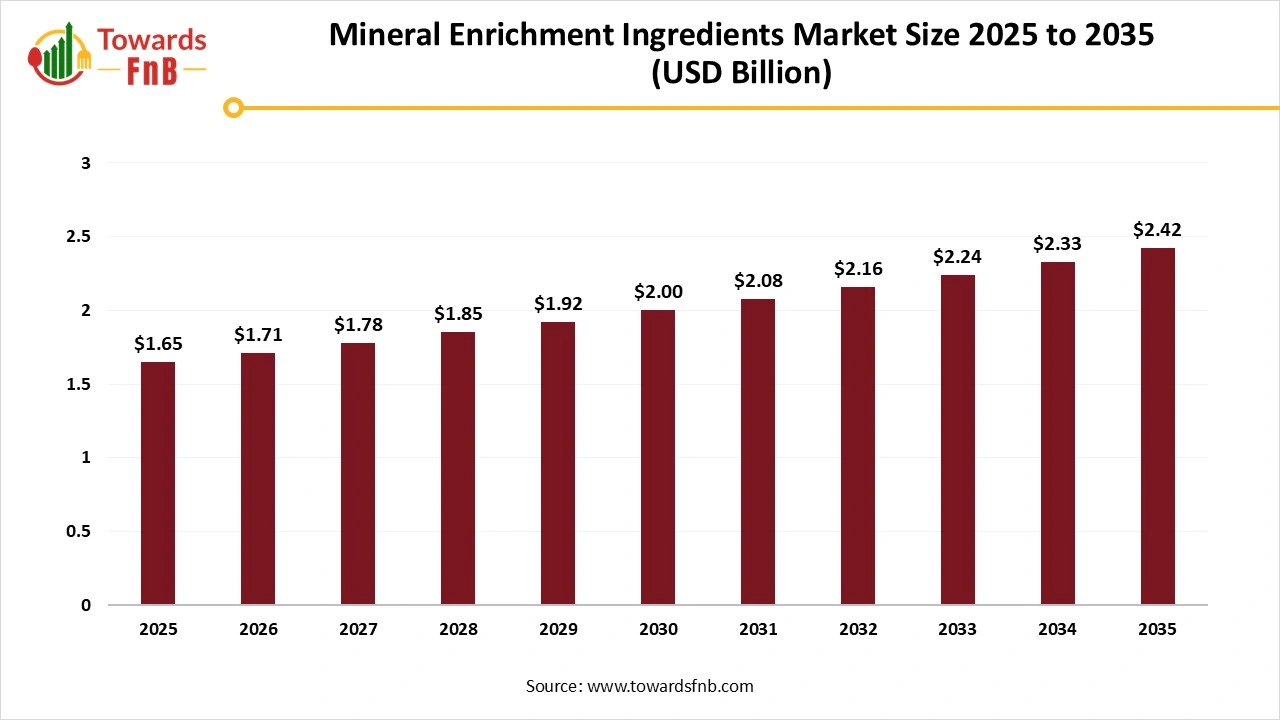
The global mineral enrichment ingredients market size estimated at USD 1.65 billion in 2025 and is predicted to increase from USD 1.71 billion in 2026 to nearly reaching USD 2.42 billion by 2035, growing at a CAGR of 3.9% during the forecast period from 2026 to 2035. The trending plant-based diets and the growing vegetarianism drive market growth.
| Study Coverage | Details |
| Growth Rate from 2026 to 2035 | CAGR of 3.9% |
| Market Size in 2026 | USD 1.71 Billion |
| Market Size in 2027 | USD 1.78 Billion |
| Market Size by 2035 | USD 2.42 Billion |
| Largest Market | North America |
| Base Year | 2025 |
| Forecast Period | 2026 to 2035 |
| Regions Covered | North America, Europe, Asia-Pacific, Latin America, and Middle East & Africa |
Mineral enrichment ingredients are essential nutrients that are added to food products to boost nutritional value. Various mineral enrichment ingredients are iron, magnesium, iodine, calcium, potassium, and many more. They are used in forms like gluconates, blends, phosphates, and lactates. They address nutrient deficiencies and improve nerve function. Mineral enrichment ingredients offer benefits like maintaining strong bones, boosting energy levels, enhancing immune cell function, improving muscle concentration, and boosting metabolic functions. They are widely used in products like dairy, cosmetics, cereals, beverages, and grains.
The mineral enrichment ingredients market growth is driven by the popularity of functional food, growing health consciousness, increasing mineral deficiencies, rising public health issues, strong focus on personalized nutrition, growing food fortification, expansion of sports nutrition, and shift towards vegan diets.
The mineral enrichment ingredients market is undergoing key technological shifts driven by sustainability, performance efficiency, and customized nutrition delivery. Technological innovations like sensor technologies, advanced geometallurgical modelling, and digital simulation enhance accuracy and lower environmental impact. The major shift is that the AI incorporation creates tailored products and boosts the recovery process.
AI provides promising mineral locations and enhances the mineral quantity. AI controls sorting equipment and optimizes the haul routes. It easily sorts valuable minerals and optimizes energy consumption. AI easily identifies natural mineral sources and accelerates the development of FFIs. AI extends enriched products' shelf-life and develops personalised mineral supplementation. Overall, AI is a data-driven approach that enhances the manufacturing efficiency of mineral enrichment ingredients.
Processing and Preservation
Quality Testing and Certifications
Retail Sales and Marketing
| Country | Key Regulations | Key Minerals Produced | Major Applications |
| India | FSSAI Regulations BIS |
Iron Magnesium Zinc |
Staple Foods Fortification Dairy |
| United States | FDA Policy | Sodium Iron Zinc |
Dairy Sports Drink Cereals & Grains |
| France | AGEC Law | Calcium Magnesium Potassium |
Fortified Diary Breakfast Cereals Fortified Waters |
| Brazil | ANVISA | Calcium Iron Potassium Sodium |
Plant-Based Beverages Staple Food Fortification Functional Drinks |
Why North America Dominates the Mineral Enrichment Ingredients Market?
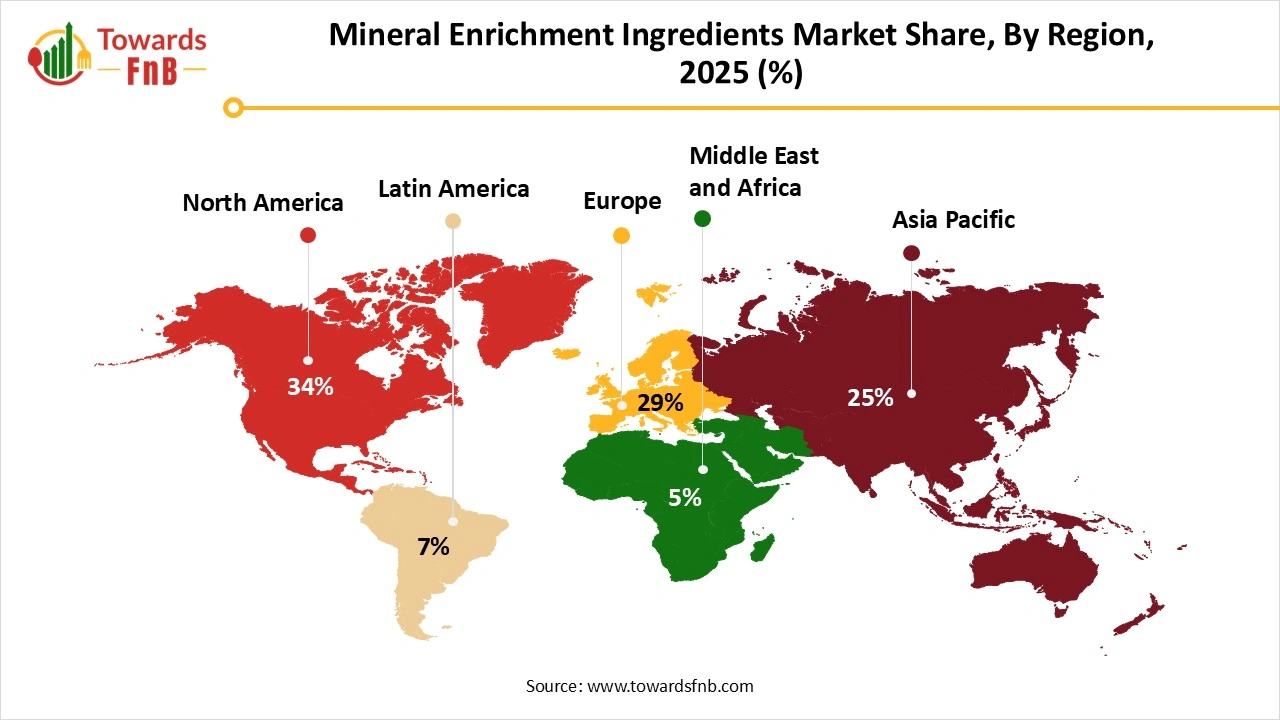
North America dominated the mineral enrichment ingredients market in 2025. Consumer focus on proactive healthcare and the increased consumption of dietary supplements increases demand for mineral enrichment ingredients. The popularity of fortified foods and the government's focus on fortification create a higher demand for mineral enrichment ingredients. The increased spending on premium supplements and the demand for staple foods require mineral enrichment ingredients. The presence of leading players like Kellanova, Archer-Daniels-Midland Company, and General Mills drives market growth.
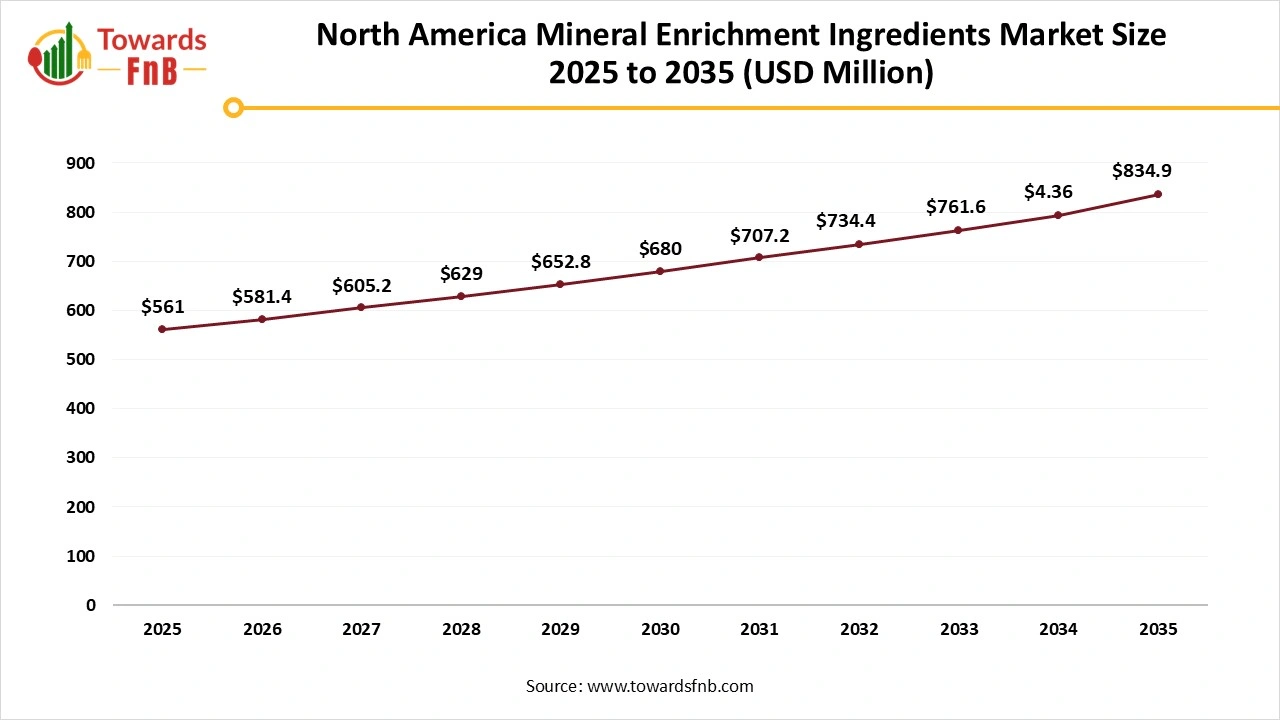
North America Mineral Enrichment Ingredients Market Size 2025 to 2035
The North America mineral enrichment ingredients market size was calculated at USD 561 million in 2025 with projections indicating a rise from USD 581.40 million in 2026 to approximately USD 434.90 million by 2035, expanding at a CAGR of 4.06% throughout the forecast period from 2026 to 2035.
Powering Nutrition: U.S. Driving Mineral Enrichment Ingredients Growth
The United States is a key contributor to the market due to growing awareness of nutritional deficiencies. The popularity of personalised health plans and the focus on boosting immunity increase demand for mineral enrichment ingredients. The well-developed dietary supplement base and the surging sports nutrition increase demand for mineral enrichment ingredients. The presence of health-conscious consumer support the overall market growth.
How Big is the U.S. Mineral Enrichment Ingredients Market?
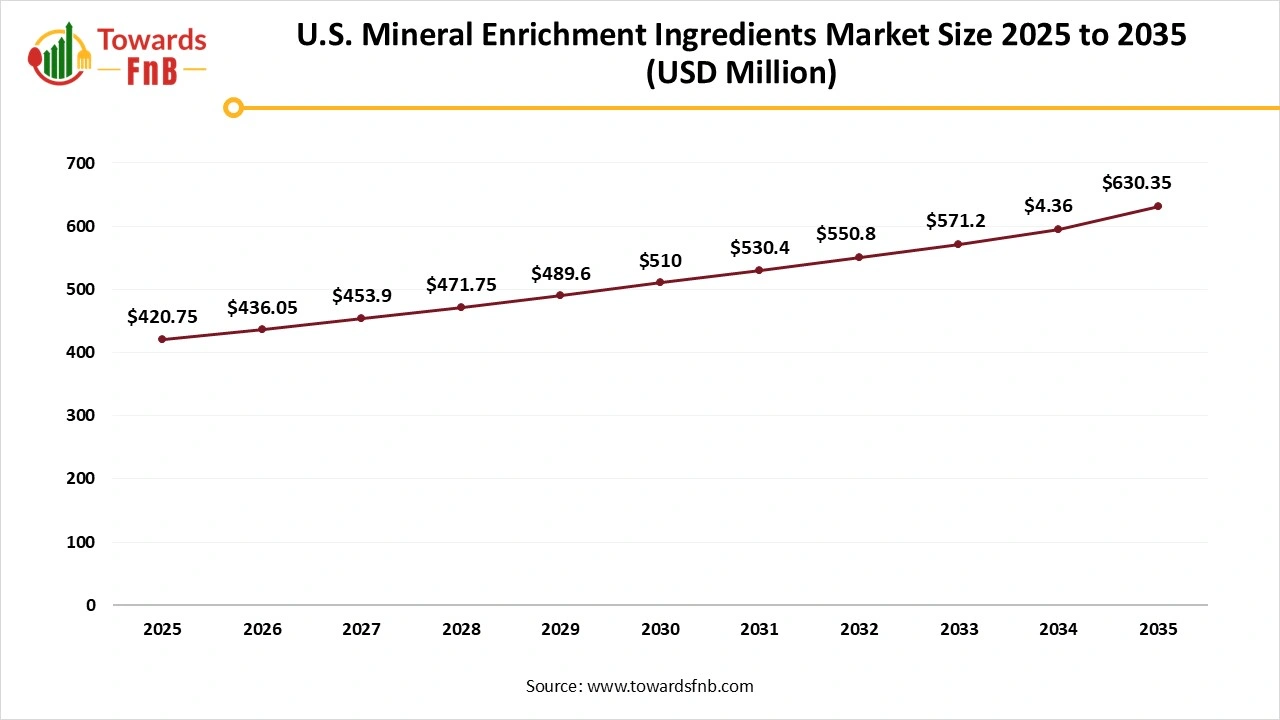
The U.S. mineral enrichment ingredients market size was valued at USD 420.75 million in 2025 and is expected to grow steadily from USD 436.05 million in 2026 to reach nearly USD 630.35 million by 2035, with a CAGR of 4.13% during the forecast period from 2026 to 2035.
Asia Pacific Mineral Enrichment Ingredients Market Trends
Asia Pacific is experiencing the fastest growth in the market during the forecast period. The growing awareness of nutritional gaps and the increased adoption of premium nutrition increase demand for mineral enrichment ingredients. Government initiatives for the production of nutrition supplements and the huge consumption of beverages increase demand for mineral enrichment ingredients. The growing lifestyle disorders and the growth in micronutrient deficiencies require mineral enrichment ingredients. The abundance of mineral reserves drives market growth.
China’s Role in Mineral Enrichment Ingredients Production
China is a major contributor to the market. The growing awareness about the consumption of health-conscious products and the increased consumption of protein bar increases demand for mineral enrichment ingredients. The availability of national nutrition policies and the growing calcium deficiencies create a higher demand for mineral enrichment ingredients. The large-scale fortified food manufacturing supports overall market growth.
Europe Mineral Enrichment Ingredients Market Trends
Europe is growing at a notable rate in the market. The strong focus on preventing chronic disorders and the availability of ready-to-eat cereals increase demand for mineral enrichment ingredients. The growing nutritional deficiencies in older people and the rise in plant-based diets increase demand for mineral enrichment ingredients. The ongoing advancement in fortification drives the market growth.
Expansion of Mineral Enrichment Ingredients in Germany
Germany is substantially growing in the market. The growing requirement for nutritional support in older people and the focus on managing deficiencies increase demand for mineral enrichment ingredients. The strong focus on consumption of functional foods and the increased production of nutraceuticals increases demand for mineral enrichment ingredients. The transition towards clean-label diets supports the overall market growth.
Mineral Enrichment Ingredients Market Share, By Form, 2025 (%)
| Segments | Shares (%) |
| Powder | 70% |
| Granule | 30% |
Why Powder Segment Dominates the Mineral Enrichment Ingredients Market?
The powder segment dominated the mineral enrichment ingredients market in 2025. The growing fortification of beverages and the strong presence of the animal feed industry increase demand for powders. The ease of use, longer shelf life, and enhanced bioavailability of powder help market expansion. The growing health awareness among consumers and increased consumption of protein shakes increase demand for powders, driving the overall market growth.
The Granule Segment is the Fastest Growing in the Market During the Forecast Period.
The popularity of customized nutrition and the popularity of dry mixes increases demand for granules. The growing manufacturing of dietary supplements and increased consumption of baked goods increase demand for granules. The easy handling, controlled release, enhanced stability, improved bioavailability, and superior processing of granules support market growth.
Mineral Enrichment Ingredients Market Share, By Ingredient Type, 2025 (%)
| Segments | Shares (%) |
| Zinc | 35% |
| Sodium | 16% |
| Potassium | 14% |
| Calcium | 12% |
| Phosphorous | 13% |
| Magnesium | 10% |
How did the Zinc Segment hold the Largest Share in the Mineral Enrichment Ingredients Market?
The zinc segment held the largest revenue share in the mineral enrichment ingredients market in 2025. The growing global rate of zinc deficiency in consumers and a strong focus on infant nutrition increase demand for zinc. The increased popularity of food fortification activities and the trend of healthy drinks increases the adoption of zinc. The proven efficacy and superior bioavailability of zinc drive market growth.
The Sodium Segment is Experiencing the Fastest Growth in the Market During the Forecast Period.
The focus on enhancing the flavor of food and the growth in healthier food options increase demand for sodium. The increased use of preservatives in processed food and the need for maintaining the texture of baked goods increase demand for sodium. The popularity of frozen food and focus on combating micronutrient deficiency increase demand for sodium, supporting overall market growth.
Mineral Enrichment Ingredients Market Share, By End Use, 2025 (%)
| Segments | Shares (%) |
| Food Industry | 40% |
| Dairy | 15% |
| Bakery & Confectionary | 12% |
| Breakfast Cereals | 11% |
| Meat & Fish | 13% |
| Ready-to-eat meals | 9% |
Which End Use Dominated the Mineral Enrichment Ingredients Market?
The food industry segment dominated the mineral enrichment ingredients market in 2025. The growing consumption of energy bars and the trend of veganism increase demand for mineral enrichment ingredients. The increased production of plant-based food products and the daily consumption of staples increase demand for mineral enrichment ingredients. The expanding food processing industry and the popularity of ready-to-eat products increase demand for mineral enrichment ingredients, driving the overall market growth.
The Dairy Segment is the Fastest-Growing in the Market During the Forecast Period.
The rising production of fortified dairy products and the higher rate of calcium deficiency increase demand for mineral enrichment ingredients. The growing number of fitness enthusiasts and increasing focus on natural nutrition increase demand for dairy products. The popularity of mineral-enriched yogurts and the availability of premium milk support the overall market growth.
Maha Aroovaa India
ACI Pure Flour Limited
Benefit Juice
By Form
By Ingredient Type
By End Use
By Region





Principal Consultant
Vidyesh Swar, Senior Research Analyst at Towards Food & Beverages, specializes in market research, focusing on supply-demand evaluation, pricing analysis, alternative proteins, plant-based foods, and sustainable food technologies within the industry.
Learn more about Vidyesh Swar
Reviewed By
Aditi Shivarkar, with 14+ years in Food and Beverages market research, specializes in food, beverage, and eco-friendly packaging. She ensures accurate, actionable insights, driving Towards FnB's excellence in industry trends and sustainability.
Learn more about Aditi ShivarkarApril 2026
February 2026
February 2026
February 2026

Mineral Enrichment Ingredients Market

 +1 804-441-9344
 Download Sample
 Schedule a Meeting