April 2026



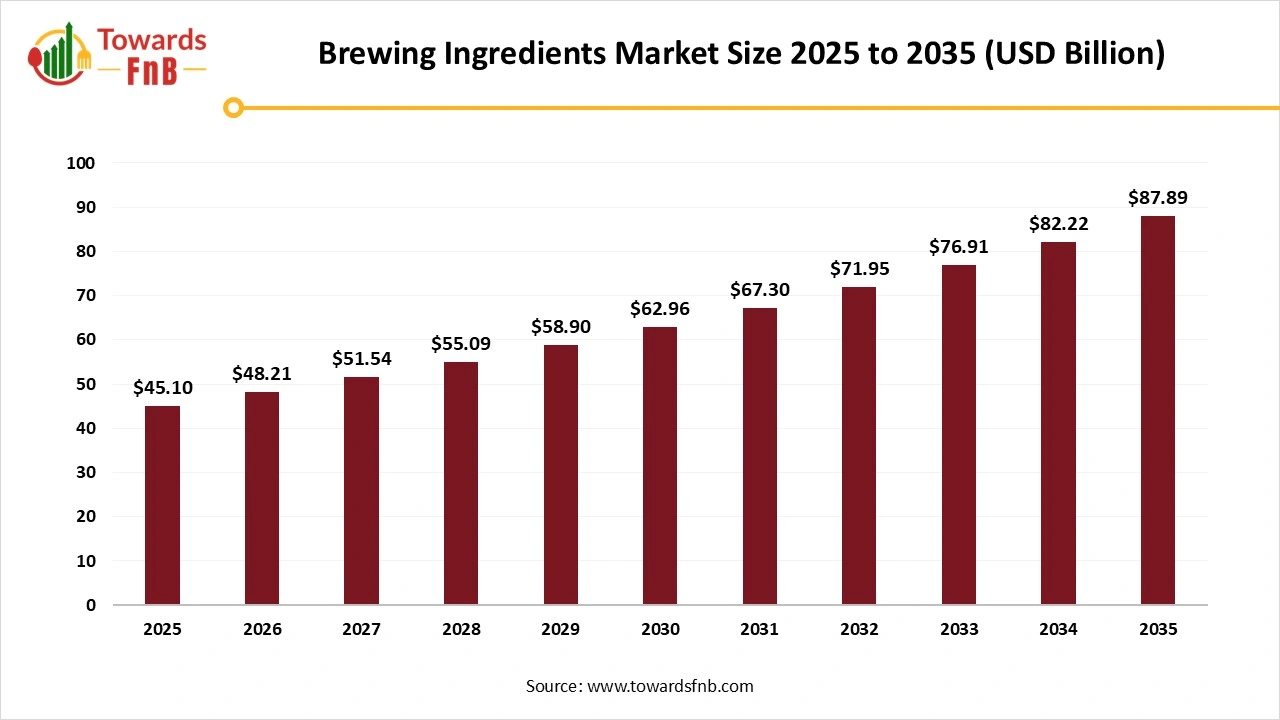
The global brewing ingredients market size estimated at USD 45.10 billion in 2025 and is predicted to increase from USD 48.21 billion in 2026 to nearly reaching USD 87.89 billion by 2035, growing at a CAGR of 6.9% during the forecast period from 2026 to 2035. Growing demand for craft beer and low alcoholic beverages is driving the market.
| Study Coverage | Details |
| Growth Rate from 2026 to 2035 | CAGR of 6.9% |
| Market Size in 2026 | USD 48.21 Billion |
| Market Size in 2027 | USD 51.54 Billion |
| Market Size by 2035 | USD 87.89 Billion |
| Largest Market | Asia Pacific |
| Base Year | 2025 |
| Forecast Period | 2026 to 2035 |
| Regions Covered | North America, Europe, Asia-Pacific, Latin America, and Middle East & Africa |
The brewing ingredients market is experiencing robust growth. The market growth is largely boosted by the rising global consumption of beer and the swift growth of craft breweries, driving increased demand for high-quality, different brewing ingredients across both established and emerging markets. Additionally, growing consumer demand for premium, artisanal, and flavor-rich beer varieties is driving breweries to innovate with specialty malt, yeast, hops and natural additives.
Technological advancements have paved the way for exploring unconventional flavor profiles. Precision equipment allows brewers to control the addition of ingredients and influence the final taste of the beer. This flexibility enables experimentation with a wide range of components, from exotic fruits and spices to non-traditional grains. This trend has sparked an explosion of creativity in the industry, with craft breweries leading the way in innovation. The focus of innovation has expanded beyond simply finding new styles or flavors to include goals like addressing climate issues, building a network of reliable partners, and creating high-quality, hyper-local products that attract new customers.
Raw Material Sourcing
Processing
Which region dominated the brewing ingredients market in 2025?
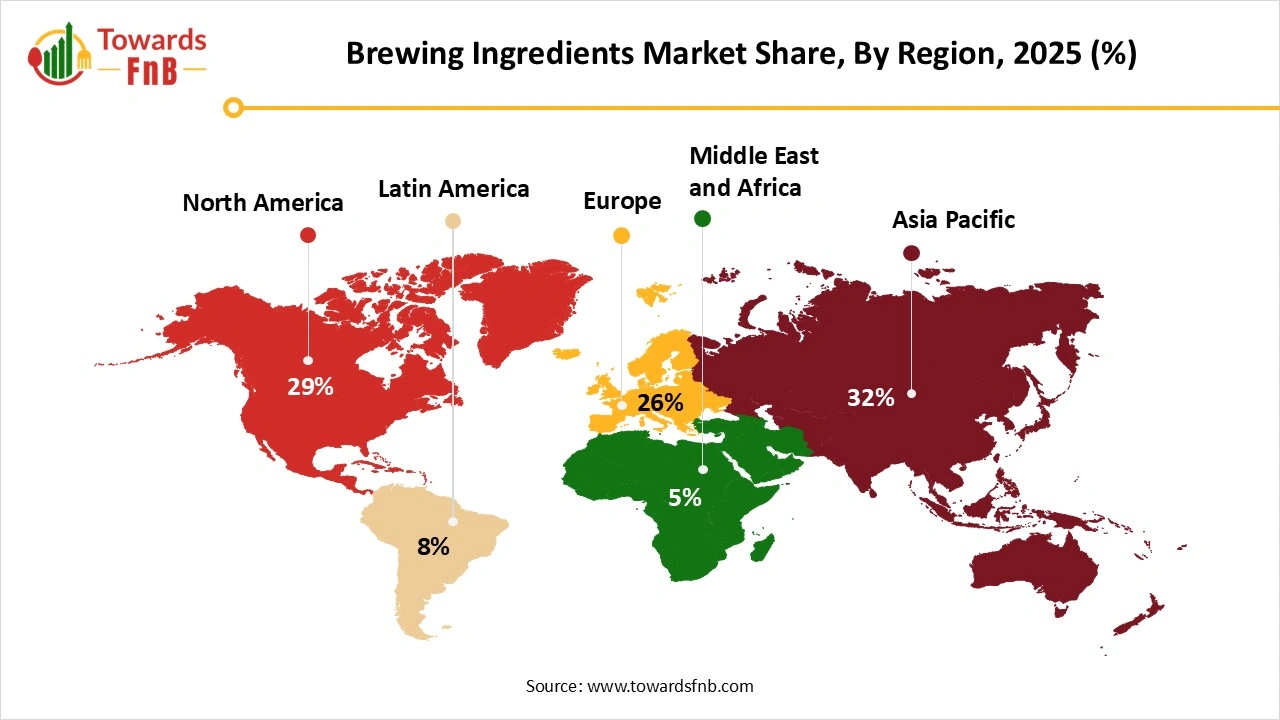
Asia Pacific dominated the market in 2025. The market in the Asia Pacific is experiencing rapid expansion driven by increasing consumer demand for premium, artisanal beverages and evolving brewing traditions. Growth factors in these regions include urbanization, rising disposable incomes, and shifting consumer preferences toward craft and premium products. The brewing ingredients boom in the Asia Pacific region is transforming malt demand, expanding its applications beyond traditional brewing.
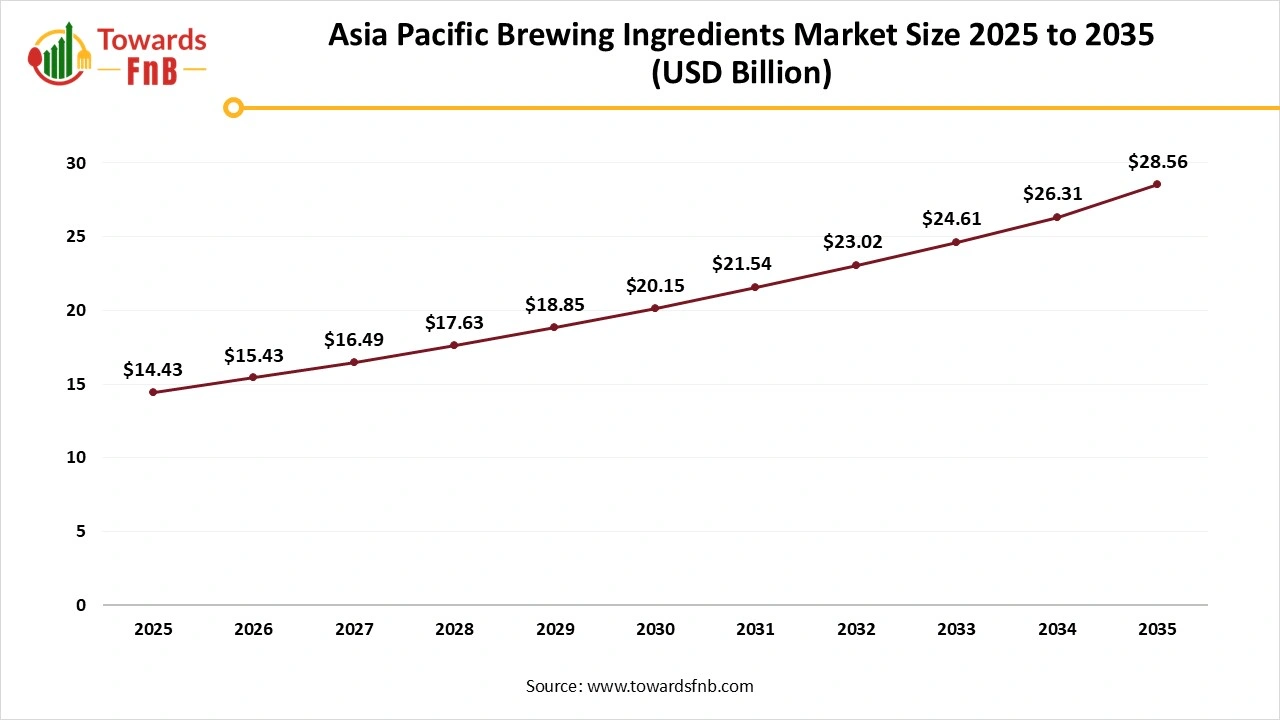
Asia Pacific Brewing Ingredients market Size 2025 to 2035
The Asia Pacific brewing ingredients market size was calculated at USD 14.43 billion in 2025 with projections indicating a rise from USD 15.43 billion in 2026 to approximately USD 28.56 billion by 2035, expanding at a CAGR of 7.07% throughout the forecast period from 2026 to 2035.
China Brewing Ingredients Market Trends
Brewing ingredients market in China is growing significantly. Change is occurring in China’s consumer market due to a trend toward premiumization. With rapid urbanization and rising income levels, there is a growing consumption upgrade across the country. Monitoring trends in the craft beer industry is crucial; currently, the production of fruit beer is popular, particularly among female consumers, leading to increased demand for fruit ingredients in craft beer brewing.
North America Brewing Ingredients Market Trends
North America expects the fastest growth in the market during the forecast period, driven by a burgeoning craft beer movement, increasing consumer preference for premium and artisanal products, and a rising focus on health-conscious formulations. As the region continues on a steady growth trajectory, the demand for innovative and high-quality brewing ingredients such as malt, hops, yeast, and adjuncts is surging. This market expansion is further fueled by technological advancements in brewing processes, changing consumer taste preferences, and a favorable regulatory environment that encourages product innovation and diversification.
U.S. Brewing Ingredients Market Trends
The U.S. brewing ingredients market is a vital segment, driven by the increasing popularity of craft beer, innovative brewing techniques, and a rising consumer preference for diverse and high-quality flavors. As the craft brewing sector continues to expand, the demand for specialized ingredients and organic options is also increasing. Consumer interests in taste and flavor, low-alcohol options, and food and beverages collaborations are propelling beer innovation.
European Brewing Ingredients Market Trends
The European brewing ingredients market is experiencing a significant transformation, with impressive growth anticipated to continue in the coming years. European beer drinkers are increasingly opting for craft beers instead of mass-produced options, drawn to the distinctive flavors and unique brewing ingredients that craft beers provide. There is a rising demand for a variety of beer styles, including craft lagers, ales, stouts, and experimental flavors like CBD-infused beers. Health-conscious consumers, particularly millennials and Gen Z, are leaning towards lower-alcohol and non-alcoholic beers, which further diversifies the range of options available in the market. The emergence of microbreweries and independent craft breweries across Europe has been a key driver of this market expansion.
UK Brewing Ingredients Market Trends
The brewing ingredients market in UK is steadily growing, fueled by changing consumer tastes, an increase in artisanal brewing, and a heightened desire for distinctive flavor profiles. The younger demographic is particularly influential in shaping the market, showing more enthusiasm for premium and locally made beverages. Retail and online distribution channels are expanding, providing greater access to a wide variety of craft beers. As the market matures, regional branding and product innovation are further solidifying the UK market share. In response to rising environmental concerns, breweries are reevaluating their ingredient sourcing practices. Trade associations like the Society of Independent Brewers (SIBA) and the British Beer & Pub Association (BBPA) are encouraging brewers to prioritize local sourcing of ingredients to reduce their carbon footprints.
Brewing Ingredients Market Share, By Ingredient Type, 2025 (%)
| Segments | Shares (%) |
| Malt | 42% |
| Hops | 18% |
| Yeast | 16% |
| Adjuncts | 14% |
| Enzymes | 10% |
Which Ingredient Type Segment Dominated the Brewing Ingredients Market in 2025?
The malt segment held the largest share of the market in 2025. This growth can be attributed to the increasing demand for plant-based ingredients, natural sweeteners, and versatile, sustainable ingredients among brewers. The growing popularity of craft beer, microbreweries, and alcoholic beverages such as whiskey, beer, and vodka also contributes significantly. Additionally, product innovations, such as dark malt, and rising disposable incomes are aiding market expansion.
The adjuncts segment is expected to grow at the fastest rate during the forecast period
As the brewing industry evolves, the perception of adjuncts has shifted. Once viewed merely as cost-cutting measures, adjuncts are now recognized as essential tools for creative innovation and practical brewing enhancements. Common examples include oats, wheat, maize, and rice, while niche grains like rye, spelt, and even quinoa are increasingly being incorporated into modern recipes. Producers are seeking adjunct brewing solutions that enhance the flexibility, capacity, and sustainability of their processes.
Brewing Ingredients Market Share, By Form, 2025 (%)
| Segments | Shares (%) |
| Dry | 62% |
| Liquid | 38% |
Which Form Segment Dominated the Brewing Ingredients Market in 2025?
The dry segment dominated the market with the largest share in 2025. Factors driving this growth include the rising popularity of craft beer, growing demand for convenience and extended shelf-life, and advancements in technology and processing techniques. Dry brewing ingredients, such as dry yeast, tend to be more affordable than liquid strains and contain a higher number of cells per package.
The liquid segment is anticipated to grow notably during the forecast period
Driven by its appeal among craft brewers and homebrewing enthusiasts who are looking for enhanced flavor profiles and traditional brewing practices. Liquid forms typically offer superior solubility and are associated with richer aromatic characteristics in the final product.
Brewing Ingredients Market Share, By Beer Type, 2025 (%)
| Segments | Shares (%) |
| Lager | 48% |
| Ale | 28% |
| Stout | 13% |
| Others | 11% |
Which Beer Type Segment Dominated the Brewing Ingredients Market in 2025?
The lager segment held the largest market share in 2025. Lager is primarily consumed in bars, restaurants, hotels, wine shops, nightclubs, supermarkets, and online retail. Additionally, major manufacturers are introducing new flavors such as tequila, apple, cheese, blueberry, chocolate, and lemon. Due to increasing awareness of pesticide-free ingredients, there is a growing demand for lagers crafted from organic ingredients.
The ale segment is projected to grow at the fastest rate during the forecast period
Ale is a low-calorie, low-carb beverage compared to other beers, and it also contains antioxidants and various nutrients. This makes ale increasingly popular among health-conscious consumers seeking a healthier and more balanced lifestyle, thus propelling the ale market. Breweries are adopting sustainable sourcing practices, reducing water usage, and implementing recycling programs to lessen their ecological footprint.
Brewing Ingredients Market Share, By Brewery Size, 2025 (%)
| Segments | Shares (%) |
| Industrial Breweries | 50% |
| Craft Breweries | 30% |
| Microbreweries | 20% |
Which Brewery Size Dominated the Brewing Ingredients Market in 2025?
The industrial breweries segment dominated the market in 2025. The brewing industry is primarily dominated by large-scale production, which requires significant and consistent quantities of malt, hops, and other adjuncts. This dominance is supported by established global supply chains, cost-effective purchasing strategies, and a focus on producing consistent mass-market lager products.
The craft breweries segment is expected to experience the fastest growth during the forecast period
The rising popularity of craft beer and microbreweries, along with an increase in global beer consumption, is driving this growth. Consumers are shifting their preferences toward premium and diverse beers, leading to a surge in demand for specialty malts, unique hop varieties, and innovative yeast strains. Craft breweries prioritize quality and innovation over mass production, resulting in the use of diverse and high-quality ingredients.
Angel Yeast
EIGHT Elite Light Beer
By Ingredient Type
By Form
By Beer Type
By Brewery Size
By Region




Principal Consultant
Vidyesh Swar, Senior Research Analyst at Towards Food & Beverages, specializes in market research, focusing on supply-demand evaluation, pricing analysis, alternative proteins, plant-based foods, and sustainable food technologies within the industry.
Learn more about Vidyesh Swar
Reviewed By
Aditi Shivarkar, with 14+ years in Food and Beverages market research, specializes in food, beverage, and eco-friendly packaging. She ensures accurate, actionable insights, driving Towards FnB's excellence in industry trends and sustainability.
Learn more about Aditi ShivarkarApril 2026
April 2026
April 2026
April 2026

Brewing Ingredients Market


 +1 804-441-9344
 Download Sample
 Schedule a Meeting