April 2026



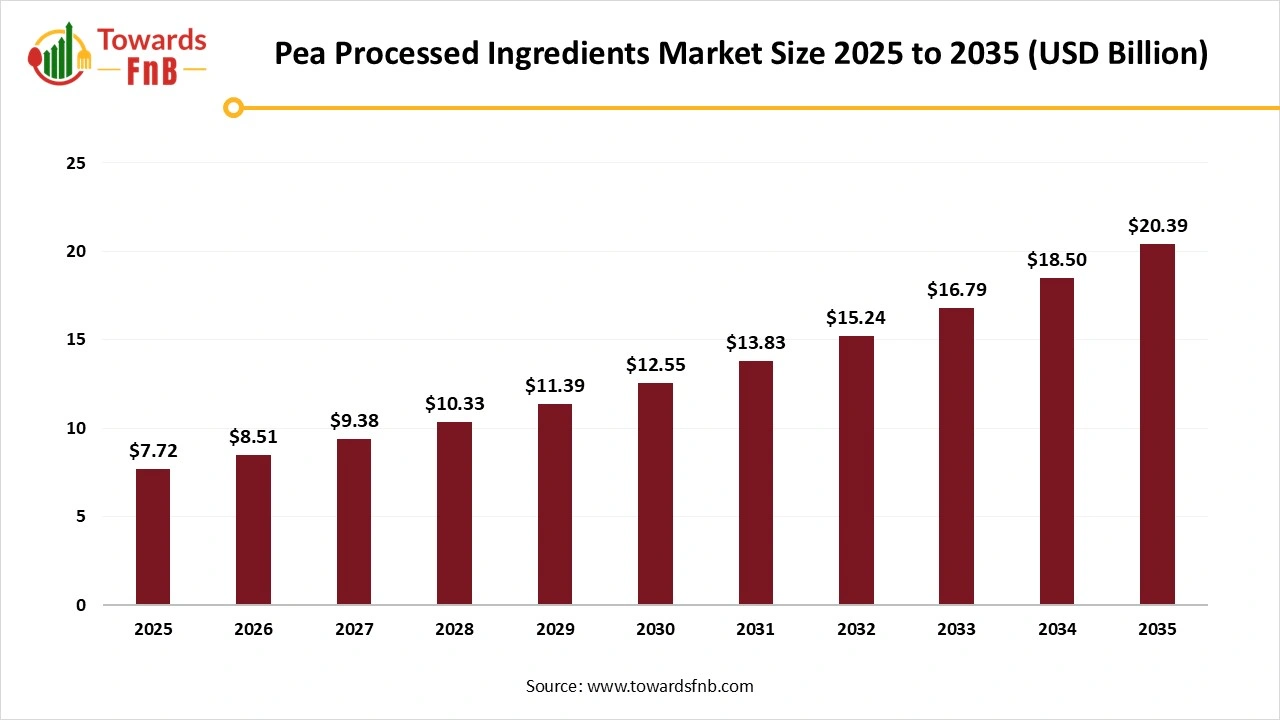
The global pea processed ingredients market size reached at USD 7.72 billion in 2025 and is anticipated to increase from USD 8.51 billion in 2026 to an estimated USD 20.39 billion by 2035, witnessing a CAGR of 10.2% during the forecast period from 2026 to 2035. Increasing demand for plant-based protein and the rising trend of a vegan diet are driving the market.
| Study Coverage | Details |
| Growth Rate from 2026 to 2035 | CAGR of 10.2% |
| Market Size in 2026 | USD 8.51 Billion |
| Market Size in 2027 | USD 9.38 Billion |
| Market Size by 2035 | USD 20.39 Billion |
| Largest Market | North America |
| Base Year | 2025 |
| Forecast Period | 2026 to 2035 |
| Regions Covered | North America, Europe, Asia-Pacific, Latin America, and Middle East & Africa |
Pea processed ingredients are products created by transforming raw peas into functional components used in food manufacturing. These components include pea protein isolates, concentrates, flours, and fibers. They are valued for their high protein content, sustainability, and versatility, especially as consumers increasingly seek plant-based options. From protein isolates to flour and concentrates, pea-processed ingredients are transforming the sector of alternative protein and functional food ingredients.
Technological advancements in food processing are enhancing product quality and diversity. Innovations such as extrusion technology are enabling the development of novel pea-based products that cater to diverse consumer preferences. This progress is attracting investments, which further expand market opportunities and help manufacturers appeal to consumers seeking healthier lifestyles. Technologies such as high-pressure processing, pulsed electric field, precision fermentation, ultrasound, 3D printing, and artificial intelligence have shown immense promise. With ongoing research and development in extraction methods, pea-processed ingredients can also be used as substitutes for flour, fiber, and starch in the bakery industry.
Raw Material Procurement
Processing
Why did North America Dominate the Pea Processed Ingredients Market in 2025?
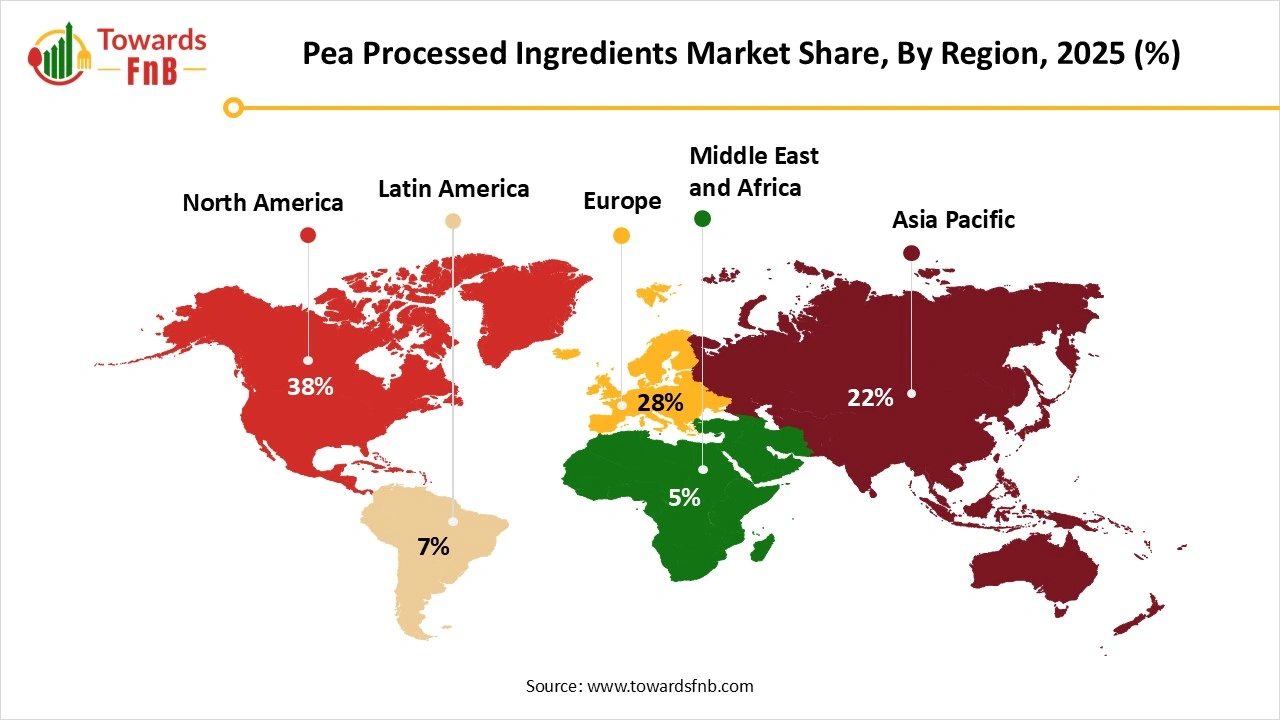
North America dominated the pea processed ingredients market in 2025. Pea processed ingredients have gained significant traction in North America, driven by rising consumer demand for plant-based, sustainable, and allergen-free protein sources. Derived from yellow peas, which are widely cultivated in the region, they serve as versatile components in various food and beverages applications, ranging from protein shakes to meat substitutes. While many Americans are reducing their meat intake, they are not eliminating it, leaning more toward a flexitarian diet rather than strict veganism or vegetarianism. Plant proteins are increasingly used in sports nutrition and as meat alternatives.
North America Pea Processed Ingredients Market Size 2025 to 2035
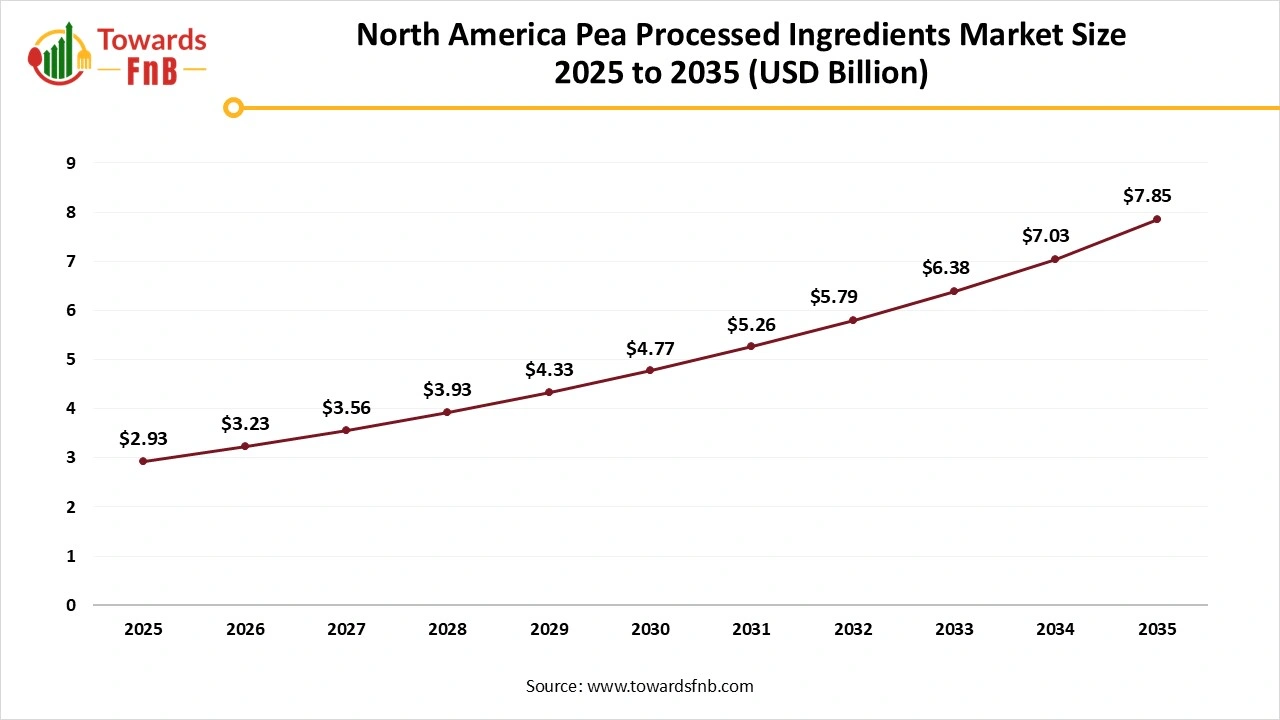
The North America pea processed ingredients market size was calculated at USD 2.93 billion in 2025 with projections indicating a rise from USD 3.23 billion in 2026 to approximately USD 7.85 billion by 2035, expanding at a CAGR of 10.36% throughout the forecast period from 2026 to 2035.
U.S. Pea Processed Ingredients Market Trends
The U.S. pea processed ingredients market experienced robust growth. This growth trajectory reflects structural changes in food manufacturing, dietary supplements formulation, and alternative protein development, where pea-based ingredients are increasingly favored for their nutritional profiles, functional performance, and environmental benefits. The increasing adoption of clean-label products and the shift toward vegetarian and vegan diets further propel market expansion. Favorable regulatory frameworks and clear labeling guidelines facilitate the integration of pea ingredients, ensuring consumer trust and compliance with food safety standards.
How Big is the U.S. Pea Processed Ingredients Market?
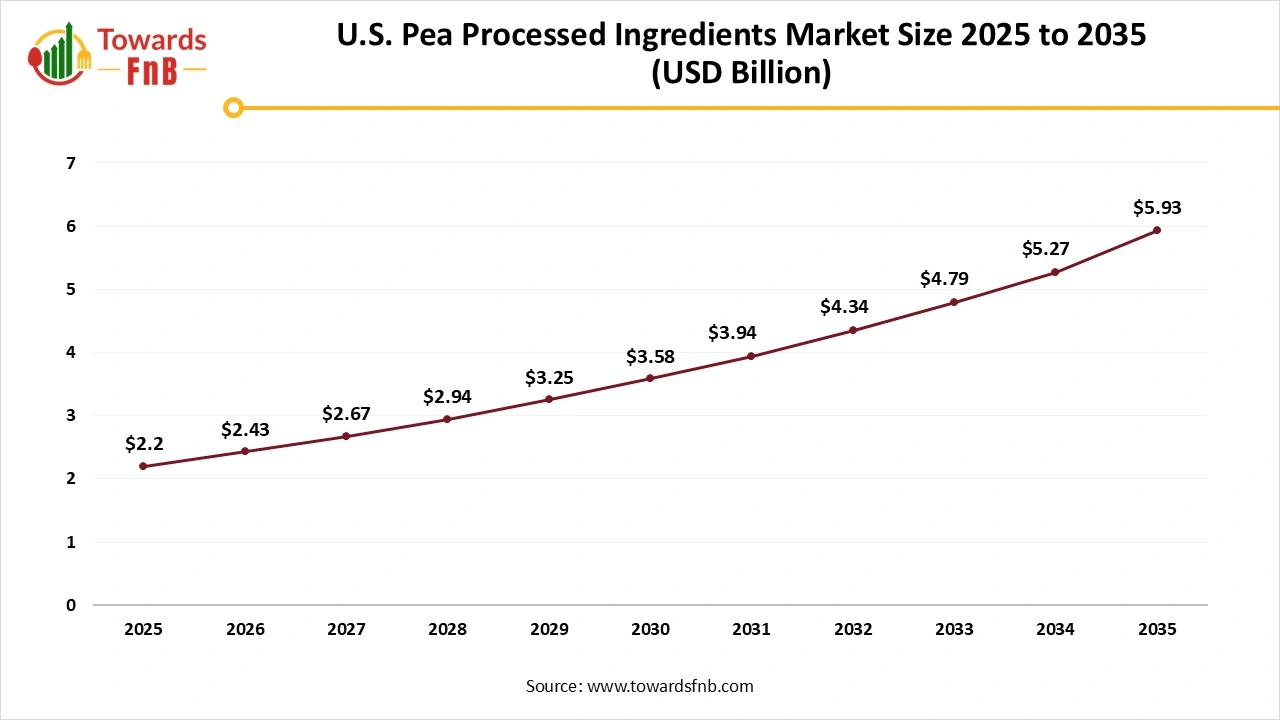
The U.S. pea processed ingredients market size was valued at USD 2.2 billion in 2025 and is expected to grow steadily from USD 2.43 billion in 2026 to reach nearly USD 5.93 billion by 2035, with a CAGR of 10.42% during the forecast period from 2026 to 2035.
Asia Pacific Pea Processed Ingredients Market Trends
Asia Pacific expects fastest growth during the forecast period. Health concerns, environmental awareness, ethical considerations, and dietary restrictions have all contributed to the rising prioritization of plant-based foods to reduce the risk of chronic diseases such as heart disease and diabetes. As western dietary practices evolve and the demand for vegan options increases, the market continues to grow. Furthermore, the desire for sustainable food sources has led more individuals to seek alternatives to animal proteins. Expanding applications in bakery, dairy, meat alternatives, snacks, and beverages in China, India, and Japan are also boosting market growth.
India Pea Processed Ingredients Market Trends
The pea processed ingredients market in India is growing significantly. India has the potential to play a significant role on the global stage by growing and processing plant-based products while leveraging its natural, social, and economic advantages. A substantial portion of India's population follows vegetarian or vegan diets, providing a solid foundation for the adoption of plant proteins. Additionally, with lactose intolerance being prevalent in India, there is a growing demand for dairy alternatives fortified with plant proteins.
Europe Pea Processed Ingredients Market Trends
The European pea processed ingredients market is expected to experience sustained global growth, driven by increasing consumer demand for plant-based and clean label products. The emergence of new protein sources in recent years has revitalized this sector. Among various plant proteins, pea protein stands out in Europe due to its numerous nutritional, functional, economic, and ecological benefits. Derivatives of yellow pea protein, such as flour, concentrate, isolate, and textured proteins, offer a wide range of applications, from meat and dairy alternatives to bakery products and specialized nutrition.
Germany Pea Processed Ingredients Market Trends
In Germany, the pea processed ingredients sector is experiencing steady expansion due to rising consumer demand for plant-based proteins and sustainable food sources. The increasing adoption of pea processed ingredients in emerging sectors, such as plant-based meats, dairy alternatives, and functional foods, signals significant growth potential. Innovations in clean-label formulations and non-GMO processing techniques are creating new opportunities for product differentiation and premium pricing.
Pea Processed Ingredients Market Share, By Type, 2025 (%)
| Segments | Shares (%) |
| Protein | 60% |
| Starch | 20% |
| Flour | 12% |
| Fiber | 8% |
How did Pea Protein Segment Dominate the Pea Processed Ingredients Market in 2025?
The pea protein segment dominated the market in 2025. Pea protein has become a popular choice among plant-based proteins as more consumers seek healthier and more sustainable options. Companies are expanding their product lines to include a wider variety of pea protein-based options, ranging from protein bars to plant-based burgers. This expansion is driving market growth.
The Starch Segment is Projected to Grow at the Fastest Rate During the Forecast Period
Pea starch is increasingly valued in the food industry due to its functional properties and healthy profile. Naturally gluten-free, additive-free, and with a low environmental impact, pea starch is ideal for cleaner, more versatile formulations. Its versatility in various applications, such as food and beverages, pet food, and pharmaceuticals, is also contributing to its market growth.
Pea Processed Ingredients Market Share, By Application, 2025 (%)
| Segments | Shares (%) |
| Food | 50% |
| Meat & Meat Substitutes | 10% |
| Performance Nutrition | 6% |
| Functional Foods | 4% |
| Snacks | 7% |
| Bakery | 3% |
| Confectionery | 10% |
| Others | 2% |
| Beverage | 8% |
Which Application Segment Held the Largest Share of the Pea Processed Ingredients Market in 2025?
The food segment held the largest share of the market in 2025. Pea processed ingredients are being integrated into a variety of food products due to their excellent nutritional profile and plant-based protein content. This segment includes various categories, such as snacks, bakery product, meat alternatives, dairy alternatives, and ready-to-eat meals. As consumer awareness of health and wellness grows, the demand for plant-based and allergen-free ingredients has accelerated, making pea-based ingredients an attractive choice.
The functional foods sub-segment is experiencing notable growth driven by the demand for clean-label products, allergen-free positioning, and functional versatility. Functional foods are becoming more popular, and their demand is increasing even in developing countries. Consumers are increasingly aware of the significant impact of food on health. Pea-based ingredients are non-GMO, gluten-free, and hypoallergenic, making them suitable for allergen-friendly, vegan, keto, and paleo diets.
Lasenor Emul, S.L
TERRA
Beyond Meat
By Type
By Application
By Region





Principal Consultant
Vidyesh Swar, Senior Research Analyst at Towards Food & Beverages, specializes in market research, focusing on supply-demand evaluation, pricing analysis, alternative proteins, plant-based foods, and sustainable food technologies within the industry.
Learn more about Vidyesh Swar
Reviewed By
Aditi Shivarkar, with 14+ years in Food and Beverages market research, specializes in food, beverage, and eco-friendly packaging. She ensures accurate, actionable insights, driving Towards FnB's excellence in industry trends and sustainability.
Learn more about Aditi ShivarkarApril 2026
March 2026
February 2026
February 2026

Pea Processed Ingredients Market


 +1 804-441-9344
 Download Sample
 Schedule a Meeting