April 2026



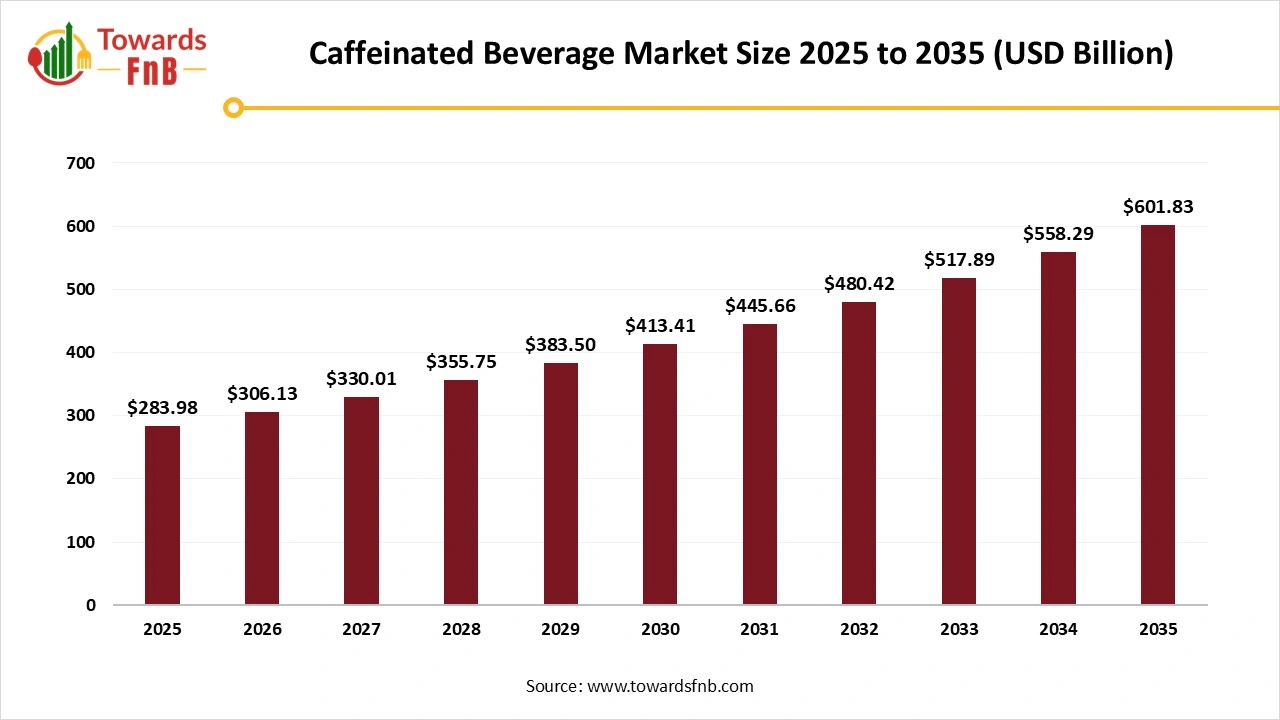
The global caffeinated beverage market size reached at USD 283.98 billion in 2025 and is anticipated to increase from USD 306.13 billion in 2026 to an estimated USD 601.83 billion by 2035, with a CAGR of 7.8% during the forecast period from 2026 to 2035. Growing demand for energy drinks and innovation in ready-to-drink products are driving the market.
| Study Coverage | Details |
| Growth Rate from 2026 to 2035 | CAGR of 7.8% |
| Market Size in 2026 | USD 306.13 Billion |
| Market Size in 2027 | USD 330.01 Billion |
| Market Size by 2035 | USD 601.83 Billion |
| Largest Market | North America |
| Base Year | 2025 |
| Forecast Period | 2026 to 2035 |
| Regions Covered | North America, Europe, Asia-Pacific, Latin America, and Middle East & Africa |
The caffeinated beverage market is presently experiencing a robust evolution, characterized by changing consumer preferences and rising demand for innovative products. The most popular types of caffeinated beverages involve ready-to-drink coffee, energy drinks, and carbonated soft drinks with added caffeine. As health consciousness increases, consumers are shifting towards beverages that not only give energy but also provide functional benefits. Therefore, manufacturers are developing caffeinated beverages with added health benefits.
Technological advancements in the caffeinated beverage market are driven by demands for clean label, improved functionality, and on-the-go convenience. For instance, d9 Designs Inc. launched a pioneering innovation in caffeine technology with the launch of d9-Caffeine, heralded as the first advancement in the caffeine molecule. New formulations with d9-Caffeine can change functional beverages, providing prolonged energy with minimal side effects. Furthermore, integration of AI is transforming the game for quality control in the caffeinated beverage industry by automating processes and improving precision.
Raw Material Procurement
Processing
How did North America Dominate the Caffeinated Beverage Market in 2025?
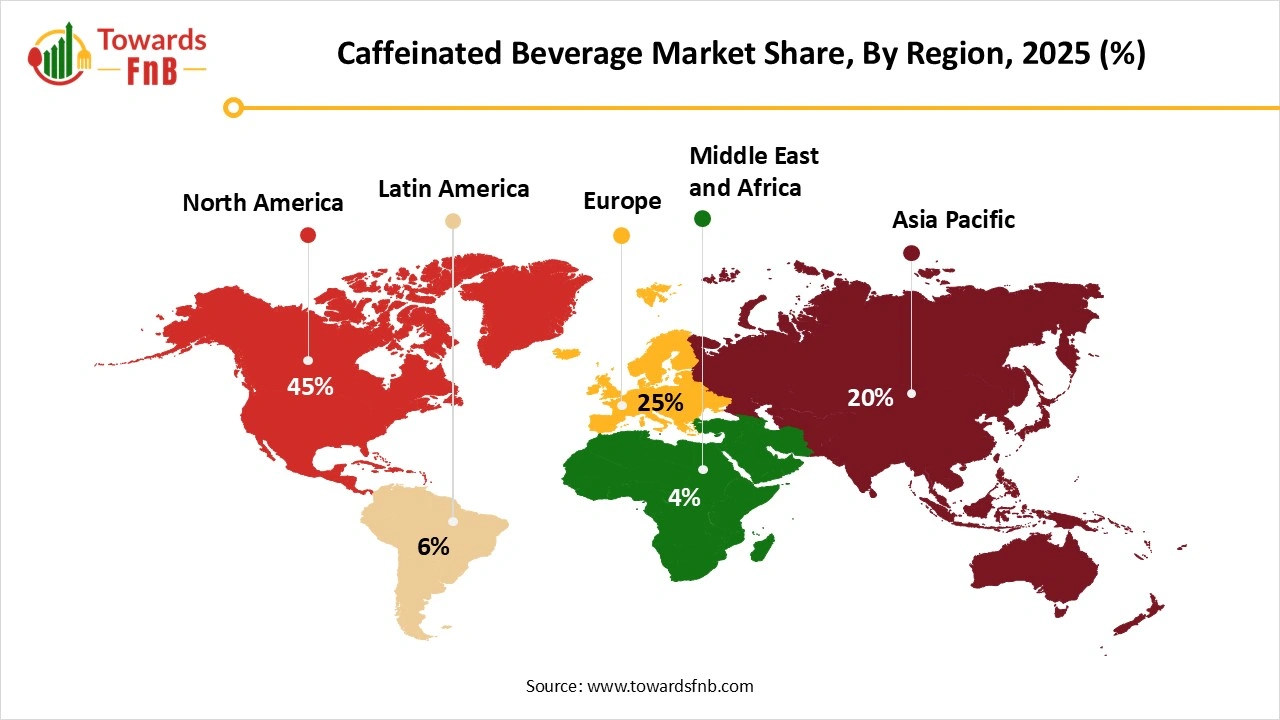
North America dominated the caffeinated beverage market in 2025. The demand for caffeinated beverage in continues to rise as consumers seek quick energy boosts, enhanced mental alertness, and convenient hydration amidst busy lifestyles. Coffee, energy drinks, caffeinated teas, and ready-to-drink beverages remain popular among working adults, students, and anyone requiring sustained focus during prolonged work or study sessions. RTD formats and single-serve caffeinated beverages facilitate ease of consumption at home, in offices, and during travel. Innovation in flavor variety, the incorporation of functional additives such as vitamins or electrolytes, and the development of sugar-free or low-calorie formulations further enhance product appeal.
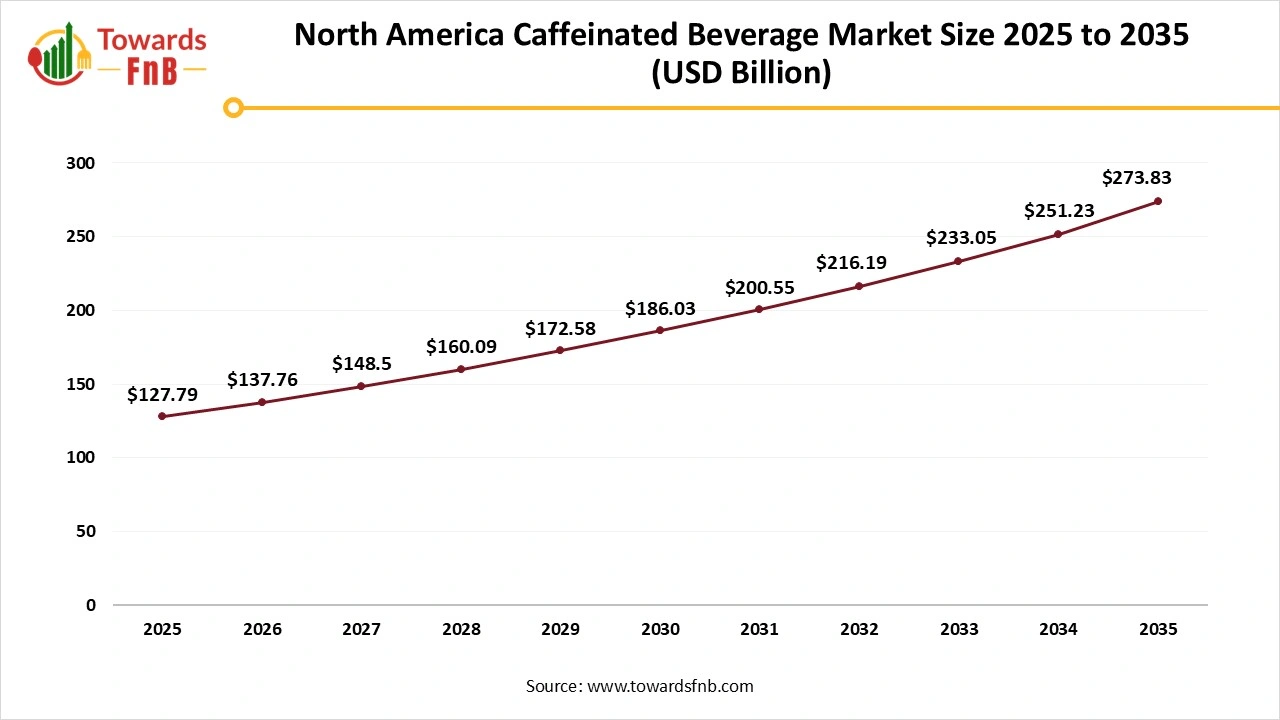
North America Caffeinated Beverage Market Size 2025 to 2035
The North America caffeinated beverage market size was calculated at USD 127.79 billion in 2025 with projections indicating a rise from USD 137.76 billion in 2026 to approximately USD 273.83 billion by 2035, expanding at a CAGR of 7.92% throughout the forecast period from 2026 to 2035.
U.S. Caffeinated Beverage Market Trends
Consumers are increasingly demanding high-quality, ethically sourced caffeinated beverages with specific flavor profiles. Specialty coffee offers premium flavors that attract consumers willing to pay a premium for superior quality. This trend has contributed to a growing demand within the U.S. market, leading to the rise of independent roasters and third-wave coffee establishments. Additionally, many consumers in the U.S. favor coffee with functional benefits, such as the inclusion of probiotics, adaptogens, or immune-boosting ingredients. The demand for plant-based milk alternatives, including almond and oat milk, is also reshaping trends within the U.S. caffeinated beverage market.
How Big is the U.S. Caffeinated Beverage Market?
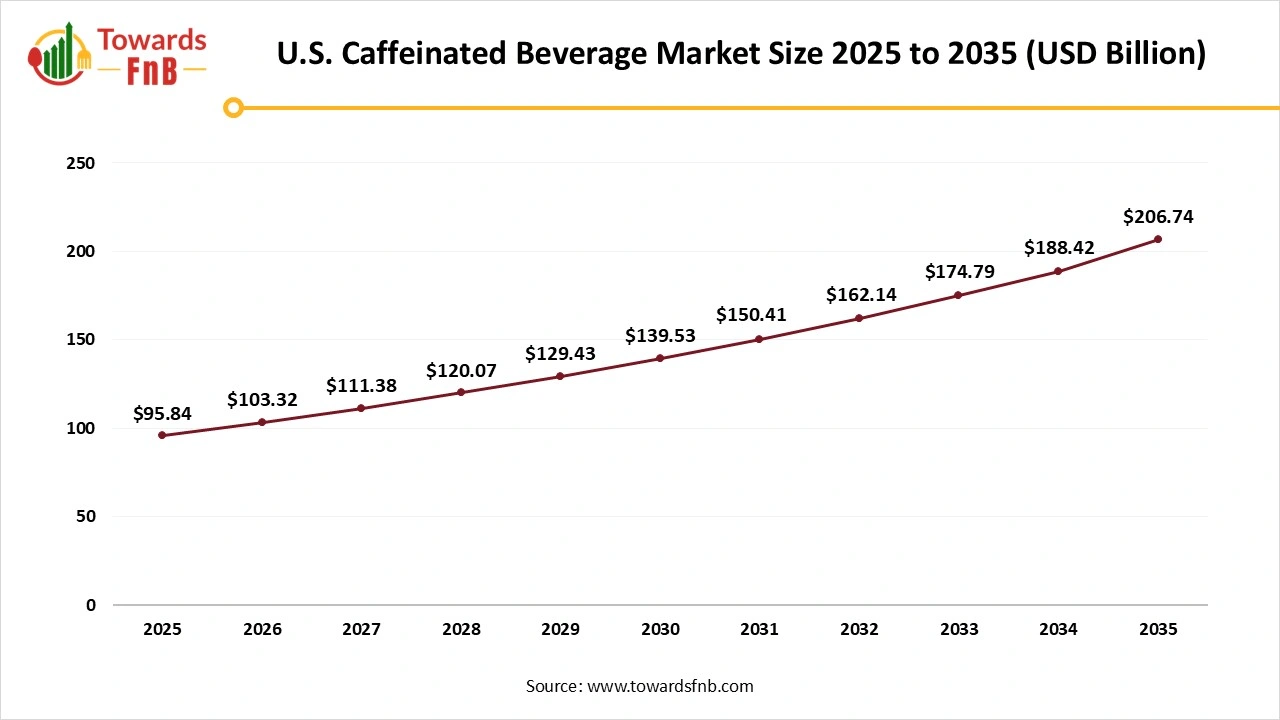
The U.S. caffeinated beverage market size estimated at USD 95.84 billion in 2025 and is predicted to increase from USD 103.32 billion in 2026 to nearly reaching USD 206.74 billion by 2035, growing at a CAGR of 7.99% during the forecast period from 2026 to 2035.
Asia Pacific Caffeinated Beverage Market Trends
Asia Pacific caffeinated beverage market expects the fastest growth during the forecast period. In the Asia Pacific region, the market is experiencing significant growth, fueled by the rising demand for energy drinks, increasing coffee consumption, and health-conscious consumer trends. Energy drinks are particularly popular among young professionals and students seeking quick energy boosts. Additionally, the growing adoption of coffee, influenced by western lifestyles, is contributing to market expansion, with premium and specialty coffee gaining traction in countries such as China, India, and Japan. Consumers are increasingly aware of the cognitive and physical performance benefits associated with caffeine, driving demand for low-sugar and functional beverages.
India Caffeinated Beverage Market Trends
The demand for caffeinated beverage has rapidly increased in India due to lifestyle changes among the population, particularly urbanization and a younger demographic that is becoming increasingly health conscious. In recent years, coffee has gained popularity as a beverage in India, which has traditionally favored tea. The café culture has proliferated in the country, driven by rising disposable incomes, urbanization, and the availability of diverse hot and cold brews. This market has experienced rapid growth through the adoption of modern retail and e-commerce platforms.
Europe Caffeinated Beverage Market Trends
The European caffeinated beverage market has witnessed considerable growth, driven by evolving consumer preferences, innovative product offerings, and an increasing demand for functional beverages. Consumers in Europe are exhibiting a growing preference for premium, artisanal, and specialty coffee variants, thereby promoting market expansion as they seek unique flavors and high-quality sourcing. Leading companies such as Nestlé, Mondelez International, and Lavazza are making substantial investments in product innovation and are enhancing their regional presence to capture greater market share.
German Caffeinated Beverage Market Trends
The German caffeinated beverage market is primarily propelled by an escalating consumer demand for energy-boosting products, notably energy drinks and ready-to-drink coffees. As the need for mental alertness and physical stamina grows, particularly among busy professionals, students, and athletes, caffeinated beverages provide a convenient solution. In recent years, there has been a discernible shift towards healthier options within the German market.
Caffeinated Beverage Market Share, By Product, 2025 (%)
| Segments | Shares (%) |
| Carbonated Soft Beverage | 60% |
| Energy Beverage | 17% |
| RTD Tea and Coffee | 13% |
| Others | 10% |
Which Product Segment Dominated the Caffeinated Beverage Market in 2025?
The carbonated soft drinks segment dominated the market in 2025. Trends in soft drinks indicate that younger consumers desire healthy functionality alongside innovative flavor combinations. An increasing demand for convenience, coupled with global urbanization, has stimulated growth in this industry. Companies are diversifying their product lines by introducing healthier, sugar-free, and flavored variants, thereby driving market expansion. Furthermore, the emergence of premium and artisanal carbonated beverages is attracting discerning consumers who seek unique flavors and experiences.
The Energy Beverage Segment is Anticipated to Grow at the Fastest Rate During the Forecast Period
Consumers are in search of drinks that align with their specific needs, whether for workout energy, early morning shifts, or performance enhancement during gameplay. Brands are responding to this demand by incorporating natural alternatives such as stevia or monk fruit, alongside creative flavor blends that offer satisfying taste without excessive sugar. Health-conscious individuals are gravitating toward beverages made with plant-based, clean ingredients that provide energy without the adverse effects associated with artificial stimulants. Popular natural caffeine sources such as green tea extract, coffee beans extract, guayusa, and guarana are gaining traction.
Caffeinated Beverage Market Share, By Distribution Channel, 2025 (%)
| Segments | Shares (%) |
| Online | 20% |
| Offline | 80% |
Which Distribution Channel Dominated the Caffeinated Beverage Market in 2025?
The offline segment dominated the market with the largest share in 2025, due to its extensive product assortments, attractive promotional offers, and widespread presence in urban and suburban areas. These retail formats afford consumers the convenience of one-stop shopping and the ability to compare various brands and products. The in-store experience, which includes individualized assistance from sales personnel and interactive displays, may significantly influence purchasing decisions and foster consumer trust in the product.
The Online Segment is Projected to Experience Notable Growth Over the Predicted Timeframe
Driven by the increased penetration of e-commerce and a rapidly expanding user base across grocery platforms. Products such as coffee, tea, health drinks, and syrups, which were once predominantly sold through traditional channels, are increasingly being purchased online. Additionally, the rise of quick commerce has served as a substantial growth driver for the coffee market, particularly benefitting new Direct-to-Consumer (D2C) brands. Quick delivery options facilitate consumer trials of innovative products.
Coca-Cola South Africa
Bodyarmor
Grupo Jumex® and AriZona Beverages
By Product
By Distribution channel
By Region





Principal Consultant
Vidyesh Swar, Senior Research Analyst at Towards Food & Beverages, specializes in market research, focusing on supply-demand evaluation, pricing analysis, alternative proteins, plant-based foods, and sustainable food technologies within the industry.
Learn more about Vidyesh Swar
Reviewed By
Aditi Shivarkar, with 14+ years in Food and Beverages market research, specializes in food, beverage, and eco-friendly packaging. She ensures accurate, actionable insights, driving Towards FnB's excellence in industry trends and sustainability.
Learn more about Aditi ShivarkarApril 2026
April 2026
April 2026
April 2026

Caffeinated Beverage Market

 +1 804-441-9344
 Download Sample
 Schedule a Meeting