April 2026



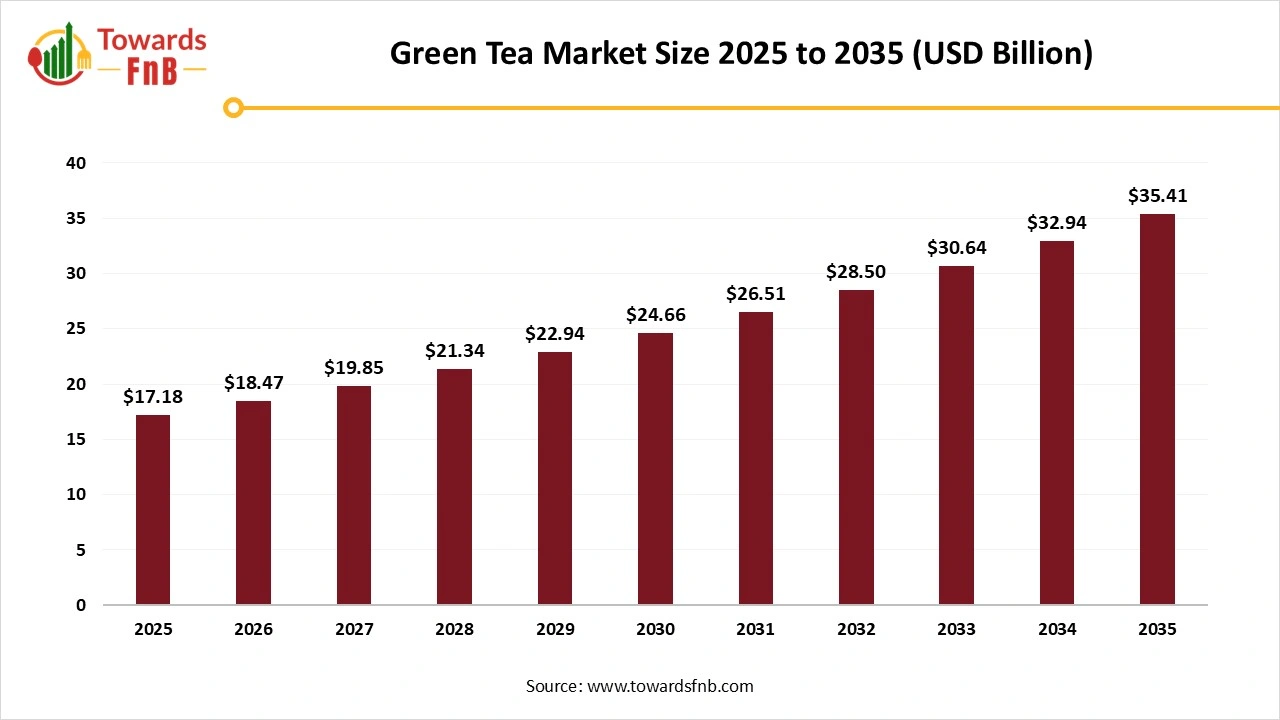
The global green tea market size reached at USD 17.18 billion in 2025 and is expected to rise from USD 18.47 billion in 2026 to nearly reaching USD 35.41 billion by 2035, growing at a CAGR of 7.5% during the forecast period from 2026 to 2035. The market is attributed to the increasing demand for tea as a source of nutrients.
| Study Coverage | Details |
| Growth Rate from 2026 to 2035 | CAGR of 7.5% |
| Market Size in 2026 | USD 18.47 Billion |
| Market Size in 2027 | USD 18.85 Billion |
| Market Size by 2035 | USD 35.41 Billion |
| Largest Market | Asia Pacific |
| Base Year | 2025 |
| Forecast Period | 2026 to 2035 |
| Regions Covered | North America, Europe, Asia-Pacific, Latin America, and Middle East & Africa |
The green tea market deals with plant-based, healthy, and organic beverages among millennials. Green tea provides various health advantages such as detoxifying the body, maintaining body weight, reducing excess fats, and more. Tetley green tea and Lipton green tea are the most popular green teas consuming rapidly across the globe. The global market for green tea is witnessing rapid growth due to factors such as the increasing consumer focus on healthy lifestyles, increasing prevalence of lifestyle related diseases such as high blood pressure and obesity, increasing demand for healthy beverages, and growing popularity and numbers of gyms and yoga centers across the globe.
The market is expected to drive rapid growth due to its various benefits such as reducing blood pressure, support weight loss, lowering stroke risk, prevent type 2 diabetes, enhancing memory, lowers cholesterol, supporting bone health and more. Due to the high antioxidant content, green tea can reduce blood pressure. Heart stroke is one of the major causes of disability and death especially in adults and green tea can help to prevent heat stroke. Green tea may prevent and maintain type 2 diabetes and reduce insulin resistance. Green tea also can help to reduce the cholesterol level and enhance an individual’s memory. Green tea can reduce the risk of osteoporosis, and this bone can increase the risk of wrist fractures, spine, and hip. These factors are expected to drive the growth of the market during the forecast period.
Leading companies in the green tea market are competing through product innovation, premiumization, and health-focused positioning. Key players are expanding organic and flavored green tea portfolios while investing in sustainable sourcing and clean-label formulations. Brands are also leveraging functional benefits such as antioxidants, weight management, and immunity support to attract health-conscious consumers. Ready-to-drink green tea variants, premium loose-leaf offerings, and e-commerce-led distribution strategies are helping companies strengthen global reach. Additionally, strategic partnerships with wellness brands and regional expansions across Asia-Pacific, North America, and Europe continue to shape competitive growth in the green tea industry.
| Advancement Area | Description |
| Product Innovation | Introduction of flavored, functional, and fortified green tea variants |
| Organic Sourcing | Increased focus on organic, pesticide-free tea cultivation |
| Ready-to-Drink Formats | Growth of bottled and canned green tea beverages |
| Sustainable Packaging | Adoption of recyclable, biodegradable, and eco-friendly packaging |
| Digital Distribution | Expansion of direct-to-consumer and online retail channels |
| Health Positioning | Strong emphasis on antioxidants, metabolism, and immunity benefits |
Green tea has been related to various health advantages, from helping digestion to enhancing metabolism. Green tea is designed to meet specific needs such as detoxification, immunity, and stress relief. Green tea will continue to evolve into an even more powerful tool for holistic wellness, as consumers increasingly prioritize functional food and beverages. In addition, the adoption of personalization will be a future and green tea is no exception. Based on drinker’s moods, dietary needs, and preferences, they may soon be able to customize their brews, with the rise of technology.
Furthermore, scientific advancements in green tea are also a significant opportunity in the market. The science of green tea is also developing and evolving rapidly. The future is bright for green tea lovers, from new antioxidant discoveries to understanding how green tea impacts gut health. The future of green tea is exciting and vibrant due to its rich history. The green tea market is poised to remain a beloved beverage for generations to come from sustainable practices and wellness-focused blends to bold technological innovations and flavor experiments.
There are few side effects of drinking green tea in adults. People with various caffeine sensitivities can cause symptoms such as upset stomach, nausea, irritability, anxiety, and insomnia after drinking green tea. Green tea may adversely affect liver health in rare cases, due to the consumption of high concentrations of it. It may also increase consumers' heart rate and blood pressure. These restraining factors are expected to hinder the growth of the green tea market.
Raw Material Procurement
Packaging and Branding
Waste Management and Recycling
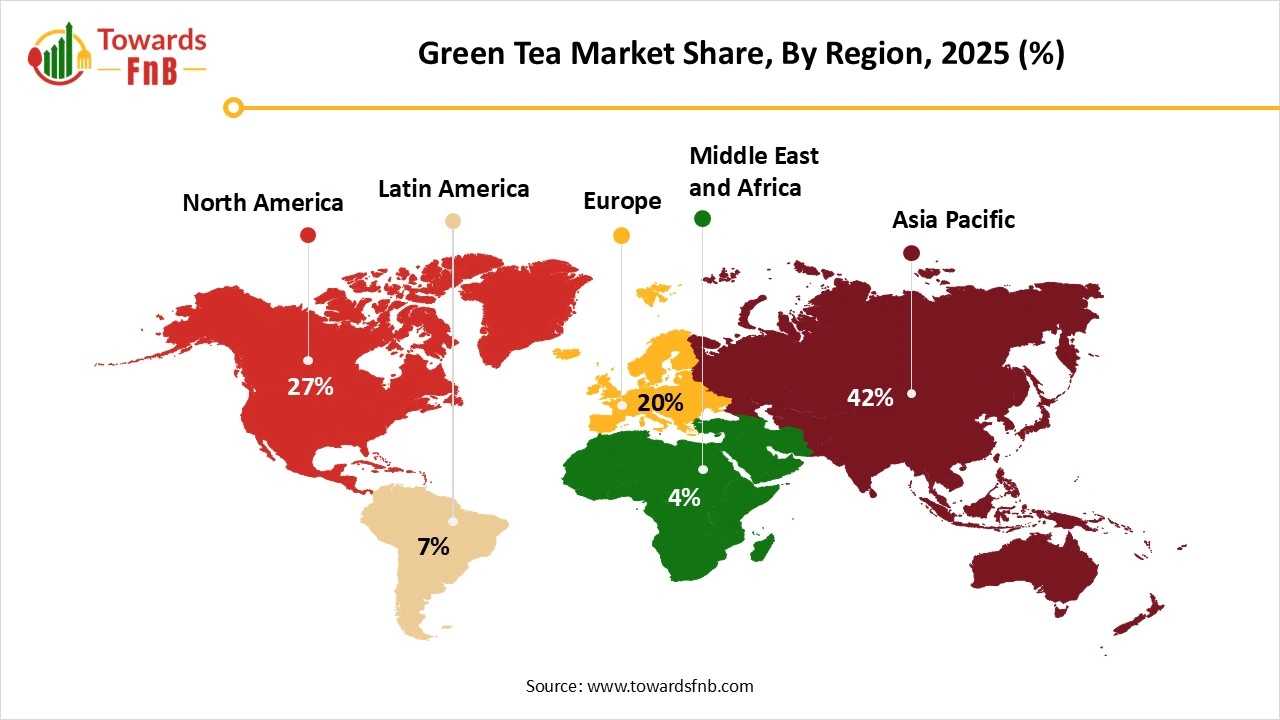
Asia Pacific Dominated the Green Tea Market in 2025
The market growth in the region is attributed to the increasing discretionary incomes, increasing consumer awareness about health benefits, increasing consumer trend towards healthy nutritional profile, and high production of green tea. In addition, the increasing preference towards clean-label, natural, and organic products is also driving the market growth in the region. Green tea is the fastest growing industry in the region. With a rich tea heritage, the region is the birthplace of tea and known for green tea consumption, particularly in countries such as Japan and China. China, India, Japan, and South Korea are dominating countries driving the market growth. People consume approximately 50% of total green tea consumption in China across the globe.
Asia Pacific Green Tea Market Size 2025 to 2035
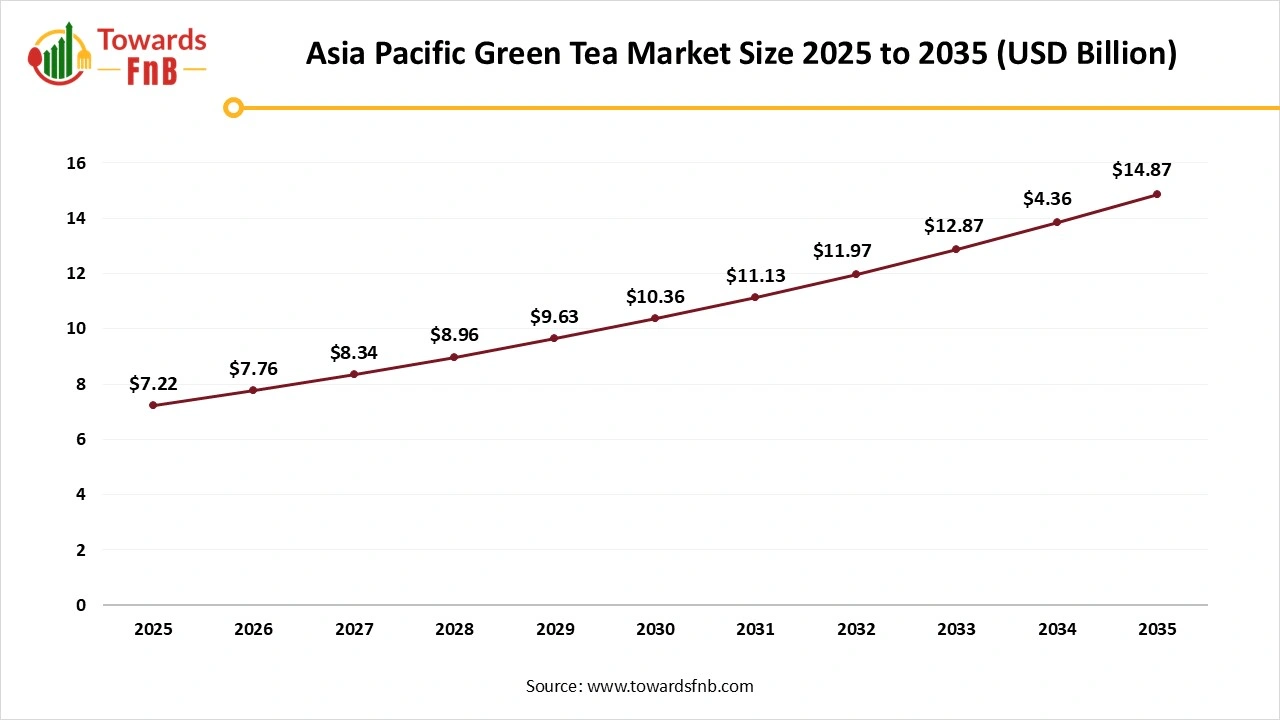
The Asia Pacific green tea market size was calculated at USD 7.22 billion in 2025 with projections indicating a rise from USD 7.76 billion in 2026 to approximately USD 14.87 billion by 2035, expanding at a CAGR of 7.5% throughout the forecast period from 2026 to 2035.
How India is Revolutionizing the Green Tea Market?
India is dominated the market share in 2024 in Asia Pacific due to the increasing consumer trend towards health and wellness, increasing awareness of the weight management benefits and antioxidants, and growing e-commerce platforms. Due to the demand from various countries, Indian tea exports hit a decade high of 255 million kg in 2024 and marked a 10% growth from 2023. Under the Indian brand, rising Kenyan tea imports, up 288%, spark concerns about blending. India sent 231.69 million kgs to the world markets, as compared to 2023. As compared to 1,374.97 million kg in 2023, India’s tea production stood at 1,382.03 million kgs in 2024.
North America Green Tea Market Trends
North America expected to grow fastest during the forecast period. The market growth in the region is driven by factors such as the increasing demand for tea among the millennials, increasing popularity of functional beverages, increasing prevalence of lifestyle-related health diseases such as cardiovascular diseases, diabetes, and obesity, and increasing awareness of health benefits. The U.S. and Canada are the fastest growing countries driving the green tea market. The U.S. is the fastest growing country in the region. About 86 million older people and adults age 20 have total cholesterol levels above 200 mg/dL in the U.S.
Europe is expected to grow at a notable rate during the forecast period. The green tea industry in Europe is witnessing robust growth, driven by rise of flavor innovation, demand for ethical/ organic products and health awareness with France, UK and Germany leading consumption, while online sales and tea bags grow. Major trends such as expansion into plant-based diets, sustainable packaging, and premiumization.
Germany Green Tea Market Trends
Germany is the largest green tea industry in Europe. The market growth in the country is driven by the increasing health awareness, strong preference for sustainably sourced and organic products, increasing demand for ready-to-drink formats, and growing popularity of fruit and herbal teas.
How is the Middle East and Africa Transforming the Green Tea Market?
The market growth in the region is driven by factors such as the increasing consumer health awareness, increasing disposable incomes, lifestyle changes, demand for convenience and trend towards functional, loose-leaf, organic and flavored teas, with local production and online sales.
South Africa Green Tea Market Trends
The green tea market in South Africa is growing steadily, driven by the increasing demand for convenience, instant and ready-to-drink beverages, increasing health consciousness and rising urbanization. The global market is also shaped by economic factors and health trends, and demand for antioxidant rich options.
How is Latin America Transforming the Green Tea Market?
The Latin America green tea market is driven by increasing disposable incomes, urbanization, innovation in convenience and flavors, demand for organic options, premiumization, flavored green teas and ready-to-drink options and increasing health awareness.
Brazil Green Tea Market Trends
The Brazil green tea market is showing notable growth driven by shifting consumer preferences and broader health trends. Increasing health consciousness among Brazilian consumers is a key factor, as people seek beverages perceived to support wellness, weight management, and antioxidant benefits, boosting demand for green tea across urban centers.
The Flavored Green Tea Segment Dominated the Green Tea Market Share in 2025
The segment growth in the market is attributed to the increasing desire for flavored beverages, the increasing popularity of health-improving nutritional profiles, and the increasing consumer trend toward flavored beverages. Due to the growth of novel distribution channels, the popularity of flavored teas is increasing rapidly across the globe. The consumption of flavors including floral, citrus, fruit, and novel in packaged teas enhances visibility and market share, which contributes to propelling the market growth. Over recent years, flavored green tea offers a delightful twist to traditional tea drinking and has surged in popularity.
The Unflavored Green Tea Segment is Expected to Grow Fastest During the Forecast Period
The segment growth in the market is driven by the increasing awareness towards clean label products, increasing production of unflavored green teas. There are various benefits related to unflavored green teas such as improving skin health, promotes oral health, helping in weight management, enhances brain function, supports heart health and highly rich in antioxidants.
The Green Tea Bags Segment Dominated the Green Tea Market Share in 2025
The segment growth in the market is driven by increasingly changing busy lifestyles, increasing modern-day hectic lifestyles, the rising popularity of innovative flavors, increasing demand for clean-label products and rising technological advancements in the tea producing sector. Green tea bags are widely used across the globe due to their portability, easy storage and availability contributed to driving segment growth.
The Instant Green Tea Mixes Segment is Expected to Grow Fastest During the Forecast Period
The segment growth in the green tea market is driven by the increasing availability of functional beverages, increasing demand for ready-to-drink green teas, and the increasing popularity of blends and flavors. Instant green tea mixes are enriched with antioxidants and bioactive compounds and are suitable for phenylketonurics. The raw materials used for manufacturing instant green teas are tea waste or green tea leaves. Various companies such as Goodricke are the significant companies in the instant green teas. They have extensive manufacturing and R&D facilities to manufacture and design instant teas as per consumer requirements. By the Falta Export Processing Zone, these instant teas are 100% EOU-approved.
The Supermarkets and Hypermarkets Segment Dominated the Green Tea Market in 2025
The segment growth in the market has contributed to factors such as the increasing adoption of advanced technologies and increasing easy shopping experience. To offer quality products to the consumers, supermarkets are emphasizing meeting new regulatory demands including quality assurance and refrigerant leaks, which further increase the demand for these distribution channels.
The Online Retail Segment is Expected to Grow Fastest During the Forecast Period
Due to the growing e-commerce platform. The major benefits of shopping green tea online are home delivery, cost-effectiveness, quality assurance, convenience, and variety. Consumers can find the perfect teas to enjoy at work and home, by considering taste and reading reviews, which further drives the segment growth.
Yeo
Coca-Cola
In September 2025, the Tea Research Association (TRA) Tocklai launched a decaffeinated green tea powder derived from Assam's elite clones, containing 75% less caffeine and enriched with antioxidants. TRA also introduced an AI-based tea germplasm characterization tool for predicting drought tolerance.
In August 2025, the Clean Jeju Green Tea Agricultural Cooperative, known as 'Sumang,' announced plans to launch a new product named Hojicha. Hojicha is a roasted green tea made by pan-firing tea leaves at high temperatures, recognized for its rich, nutty aroma and low caffeine content.
By Type
By Form
By Distribution Channel
By Region





Principal Consultant
Vidyesh Swar, Senior Research Analyst at Towards Food & Beverages, specializes in market research, focusing on supply-demand evaluation, pricing analysis, alternative proteins, plant-based foods, and sustainable food technologies within the industry.
Learn more about Vidyesh Swar
Reviewed By
Aditi Shivarkar, with 14+ years in Food and Beverages market research, specializes in food, beverage, and eco-friendly packaging. She ensures accurate, actionable insights, driving Towards FnB's excellence in industry trends and sustainability.
Learn more about Aditi ShivarkarApril 2026
April 2026
April 2026
April 2026

Green Tea Market


 +1 804-441-9344
 Download Sample
 Schedule a Meeting