March 2026



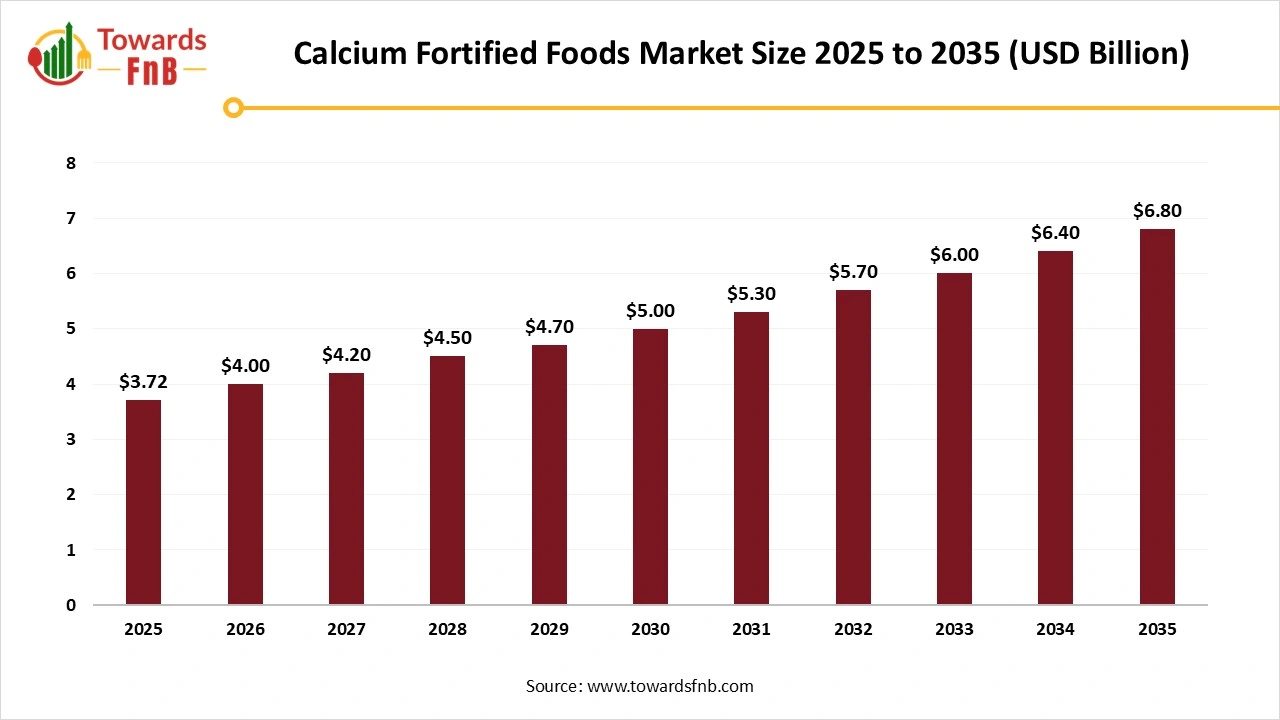
The global calcium fortified foods market size estimated at USD 3.72 billion in 2025 and is predicted to increase from USD 4 billion in 2026 to nearly reaching USD 6.80 billion by 2035, growing at a CAGR of 6.22% during the forecast period from 2026 to 2035. The surge in calcium deficiencies and the huge prevalence of bone-related diseases drive market growth.
| Study Coverage | Details |
| Growth Rate from 2026 to 2035 | CAGR of 6.22% |
| Market Size in 2026 | USD 4 Billion |
| Market Size in 2027 | USD 4.20 Billion |
| Market Size by 2035 | USD 6.80 Billion |
| Largest Market | North America |
| Base Year | 2025 |
| Forecast Period | 2026 to 2035 |
| Regions Covered | North America, Europe, Asia-Pacific, Latin America, and Middle East & Africa |
Calcium fortified foods are food products with additional calcium content. They offer benefits like enhancing calcium intake, regulating muscle contractions, lowering blood pressure, preventing hypertensive disorders, strengthening gut health, maintaining healthy bones, and managing cholesterol levels. The natural sources of calcium are leafy greens, nuts, dairy, seeds, fish, and beans. The various calcium-fortified foods are almond milk, orange juice, bread, tofu, soy milk, yogurt, cereals, and flours.
The calcium fortified foods market growth is driven by the growing wellness awareness, strong focus on preventing bone density loss, expanding plant-based food, strong focus on muscle health, growing calcium deficiency, popularity of lactose intolerance, mandatory fortification programs, aging population, and development of convenient food formats.
The calcium fortified foods market is undergoing key technological shifts driven by demand for enhancing sensory profiles, improving taste profiles, and higher bioavailability. The technological shifts, such as advanced fortification methods, smart manufacturing, advanced encapsulation, and improved precision technologies helps in enhancing product stability and increasing calcium absorption. The AI incorporation is the major shift in the calcium fortified foods industry, driven by demand for personalized nutrition and improving manufacturing efficiency.
AI analyzes the best calcium sources and enhances fortification processes. AI detects inconsistencies in fortified products and offers personalised recommendations for food products. AI mimics the texture of meat products and optimizes ingredient mixing. AI enhances product shelf life and optimizes the sourcing of raw materials. Overall, AI is transforming the calcium fortified foods industry.
| Food Product | Calcium Source Used | Food Type | Per 100g Serving Calcium Content |
| Fortified Breakfast Cereal | Calcium Carbonate | Ready-to-Eat Product | Between 300mg and over 1000mg |
| Fortified Almond Milk | Calcium Carbonate Tricalcium Phosphate |
Dairy-Free Milk | 173mg |
| Fortified Fruit Juice | Calcium Citrate Malate Calcium Lactate |
Functional Beverage | 140mg |
| Fortified Wheat Flour | Calcium Carbonate Calcium Phosphate |
Staple Cereal Product | 252mg |
Raw Material Procurement
Processing and Preservation
Quality Testing and Certifications
Why North America Dominates the Calcium Fortified Foods Market?
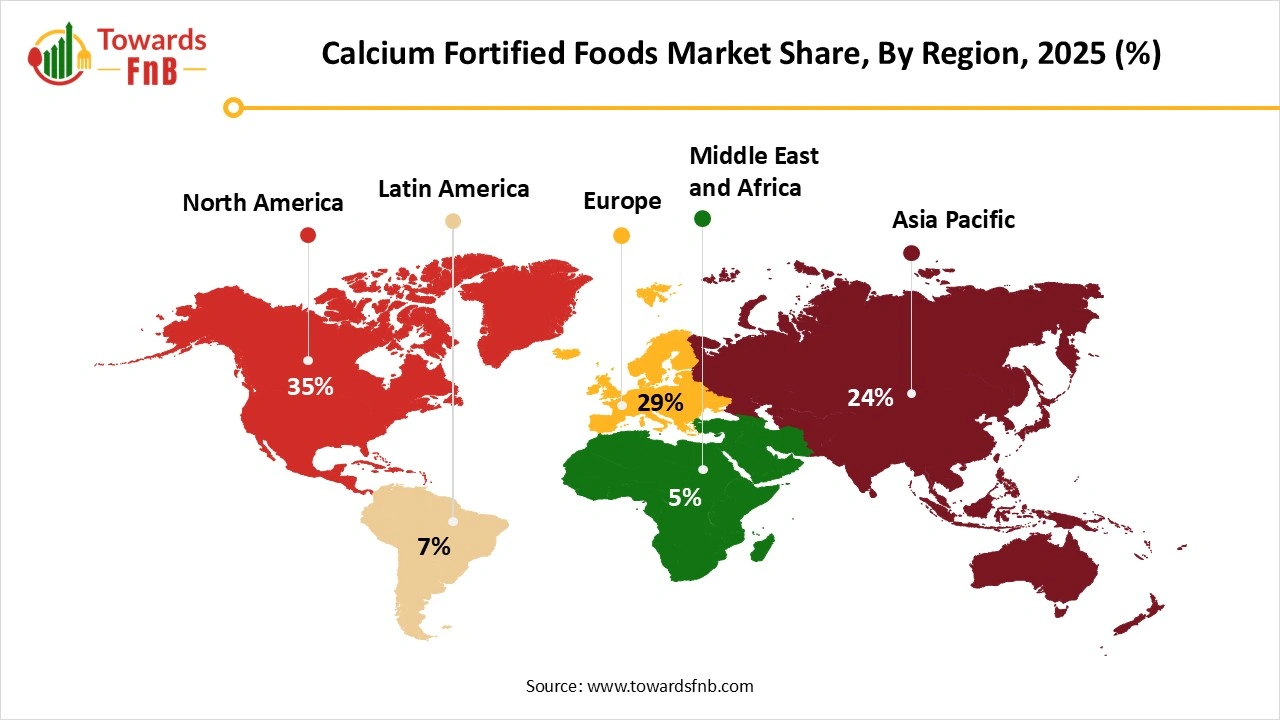
North America dominated the calcium fortified foods market in 2025. The growing awareness of bone issues and the increased consumption of nutrient-dense products increase demand for calcium fortified foods. The increased dairy consumption and the well-established functional food industry increase demand for calcium fortified foods. The government backing for fortification of food and the focus on preventing osteoporosis increase the adoption of calcium fortified foods, driving the overall market growth.
Rise of Calcium Fortified Foods in the United States
The United States is a major contributor to the market. The growing awareness of the importance of calcium intake and the growing lactose intolerance increases demand for calcium fortified foods. The high consumption rate of bakery product and the rise in veganism requires calcium fortified foods. The high investment in fortifying food products and the surge in consumption of on-the-go nutritional solutions support the overall market growth.
Asia Pacific Calcium Fortified Foods Market Trends
Asia Pacific is experiencing the fastest growth in the market during the forecast period. The growing rate of osteoporosis and the increasing awareness of malnutrition increase demand for calcium fortified foods. The transition to the Western dietary habits and the lactose intolerance trends requires calcium fortified foods. The increased expansion of health-oriented food products and the rising implementation of food fortification programs drive the market growth.
Role of Calcium Fortified Foods in India
India is rapidly growing in the market. The growing awareness of enhancing bone density and the strong focus on combating micronutrient deficiencies increase demand for calcium fortified foods. The busy schedules of consumers and the high spending on health-focused products increase demand for calcium fortified foods. The government focuses on tackling malnutrition, and the shift towards the consumption of packaged food supports the market growth.
Europe Calcium Fortified Foods Market Trends
Europe is growing notably in the market. The growing awareness of bone health concerns and the rising interest in dairy-free lifestyles increase demand for calcium fortified foods. The growing participation in sports and the awareness about the consumption of nutrient-dense products increase demand for calcium fortified foods. The ongoing food technology innovation drives the overall market growth.
France Expanding in Calcium Fortified Foods Industry
France is growing at a substantial rate in the market. The strong wellness focus and the increased consumption of dairy alternatives products increase demand for calcium fortification. The need to manage nutrient deficiencies and the functional nutrition trend increases the adoption of calcium fortified foods. The public health initiatives support the overall market growth.
Calcium Fortified Foods Market Share, By Nature, 2025 (%)
| Segments | Shares (%) |
| Organic | 15% |
| Conventional | 85% |
Why the Conventional Segment is Dominating the Calcium Fortified Foods Market?
The conventional segment dominated the calcium fortified foods market in 2025. The higher demand for dairy alternatives and the strong focus on boosting bone health increase demand for conventional calcium fortified foods. The increased prevalence of calcium deficiencies and the rise in the fortification of staple foods increases adoption of conventional calcium fortified foods. The high availability, convenience, consumer familiarity, affordability, and ease of formulation of conventional products drive the market growth.
The Organic Segment is the Fastest-Growing in the Market During the Forecast Period
The growing rate of veganism and the growing rate of chronic diseases increase demand for organic calcium fortified foods. The increased health consciousness among consumers and the focus on on-the-go nutritious options require organic calcium fortified foods. The sustainability, high bioavailability, and clean labels of organic products support the overall market growth.
Calcium Fortified Foods Market Share, By Product, 2025 (%)
| Segments | Shares (%) |
| Bakery & Snacks Products | 12% |
| Dairy & Dairy Alternatives | 45% |
| Breakfast & Cereals Bars | 8% |
| Baby Food & Infant Formula | 10% |
| Others | 25% |
How did the Dairy & Dairy Alternatives Segment hold the Largest Share in the Calcium Fortified Foods Market?
The dairy & dairy alternatives segment held the largest revenue share in the calcium fortified foods market in 2025. The growing prevalence of osteoporosis and the increased health consciousness increase demand for dairy & dairy alternatives. The growing dairy allergies in consumers and the growth in fitness-oriented consumers require dairy alternatives. The increased consumption of plant-based milk and the high consumption of dairy products drive market growth.
The Baby Food & Infant Formula Segment is Experiencing the Fastest Growth in the Market During the Forecast Period
The parents' focus on healthy bone development and growth in working mothers increases demand for calcium fortified baby food. The increased nutrient deficiencies in infants and the high preference for organic baby products increase demand for calcium fortified infant formula. The popularity of convenient baby foods and the rising demand for specialized infant formula support the overall market growth.
Calcium Fortified Foods Market Share, By Distribution Channel, 2025 (%)
| Segments | Shares (%) |
| Hypermarkets & Supermarkets | 50% |
| Convenience Stores | 13% |
| Specialty Stores | 12% |
| Online | 17% |
| Others | 8% |
Which Distribution Channel Dominated the Calcium Fortified Foods Market?
The hypermarkets & supermarkets segment dominated the calcium fortified foods market in 2025. The consumer's strong focus on attractive product display and the availability of niche calcium fortified items increases the purchasing of calcium fortified products from hypermarkets & supermarkets. The consumer demand for a one-stop shopping experience helps market expansion. The high accessibility, extensive product range, strategic promotion, and convenience of hypermarkets & supermarkets drive the market growth.
The Online Channel Segment is the Fastest-Growing in the Market During the Forecast Period
The consumer's strong focus on tailored shopping experiences and easy access to specialized products increases buying from the online channel. The personalization, unmatched convenience, exclusive promotions, easy accessibility, informed purchasing, and effective marketing of the online channel support the overall market growth.
Petits Filous
Plenish
Alpro
By Nature
By Product
By Distribution Channel
By Region



Principal Consultant
Vidyesh Swar, Senior Research Analyst at Towards Food & Beverages, specializes in market research, focusing on supply-demand evaluation, pricing analysis, alternative proteins, plant-based foods, and sustainable food technologies within the industry.
Learn more about Vidyesh Swar
Reviewed By
Aditi Shivarkar, with 14+ years in Food and Beverages market research, specializes in food, beverage, and eco-friendly packaging. She ensures accurate, actionable insights, driving Towards FnB's excellence in industry trends and sustainability.
Learn more about Aditi ShivarkarMarch 2026
March 2026
March 2026
December 2025

Calcium Fortified Foods Market


 +1 804-441-9344
 Download Sample
 Schedule a Meeting