April 2026



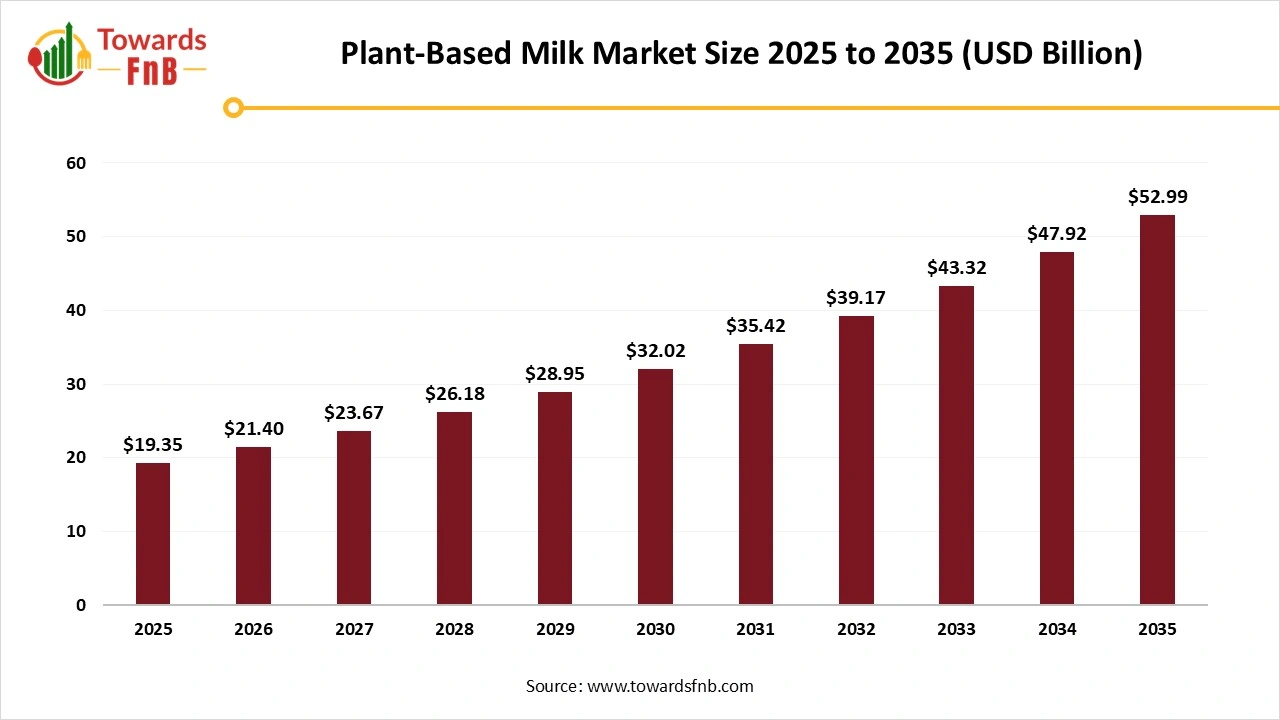
The global plant-based milk market size evaluated at USD 19.35 billion in 2025 and is predicted to increase from USD 21.40 billion in 2026 to nearly reaching USD 52.99 billion by 2035, growing at a CAGR of 10.6% during the forecast period from 2026 to 2035. The rise of flexitarianism and the growing lactose intolerance rate drive market growth.
| Study Coverage | Details |
| Growth Rate from 2026 to 2035 | CAGR of 10.6% |
| Market Size in 2026 | USD 21.40 Billion |
| Market Size in 2027 | USD 23.67 Billion |
| Market Size by 2035 | USD 52.99 Billion |
| Largest Market | Asia Pacific |
| Base Year | 2025 |
| Forecast Period | 2026 to 2035 |
| Regions Covered | North America, Europe, Asia-Pacific, Latin America, and Middle East & Africa |
Plant-based milk is a type of non-dairy milk derived from plant materials like seeds, legumes, nuts, and others. The various plant-based milk are almond, coconut, hemp, soy, rice, flax, and oat. They are cholesterol-free and ideal for vegan consumers. The plant-based milk is lactose-free and offers a less creamy consistency. They offer benefits like promoting good gut bacteria, aiding weight management, lowering GHG emissions, and supporting heart health. Plant-based milk is widely used in applications like cooking, vegan yogurts, sweets, nutritional fortification, beverages, desserts, and baking.
The plant-based milk market growth is driven by increased awareness of dairy allergies, focus on environmental footprint, rise of veganism, expansion of premium dairy products, increased consumption of clean label products, and the robust growth of D2C.
The plant-based milk market is undergoing a key technological shift driven by demand for maintaining nutrient integrity, improved stability, and shelf-life extension. The ongoing innovations like advanced extraction, smart packaging, novel extraction, advanced processing, enzymatic treatment, and precision fermentation enhance milk texture, lower microbial load, and develop unique sensory profiles. The key shift is the integration of AI, which develops tailored products and speeds up the innovation process.
AI analyzes the molecular composition of plant-based milk ingredients and improves the flavor of legume-based milk. AI develops products faster and prevents defective batches. AI lowers carbon footprint and optimizes processing techniques. AI detects contaminants in plant-based milk in real-time and provides optimal ingredient combinations. AI lowers energy usage and monitors production equipment. Additionally, companies like Alpro, NotCo, and Bel Group use AI for the development of plant-based milks and products.
Raw Material Procurement
Processing and Preservation
Quality Testing and Certifications
| Type of Plant-Based Milk | Derived From | Applications |
| Soy Milk | Soybeans | Baked Goods Soups Sauces |
| Coconut Milk | Coconut | Desserts Muffins Curries Smoothies Dips |
| Almond Milk | Almond | Protein Shakes Iced Coffee Creamy Soups Ice Cream Gravies |
| Oat Milk | Oats | Cappuccinos Panckaes Chia Pudding Hot Chocolate |
Why Asia Pacific is Dominating the Plant-Based Milk Market?
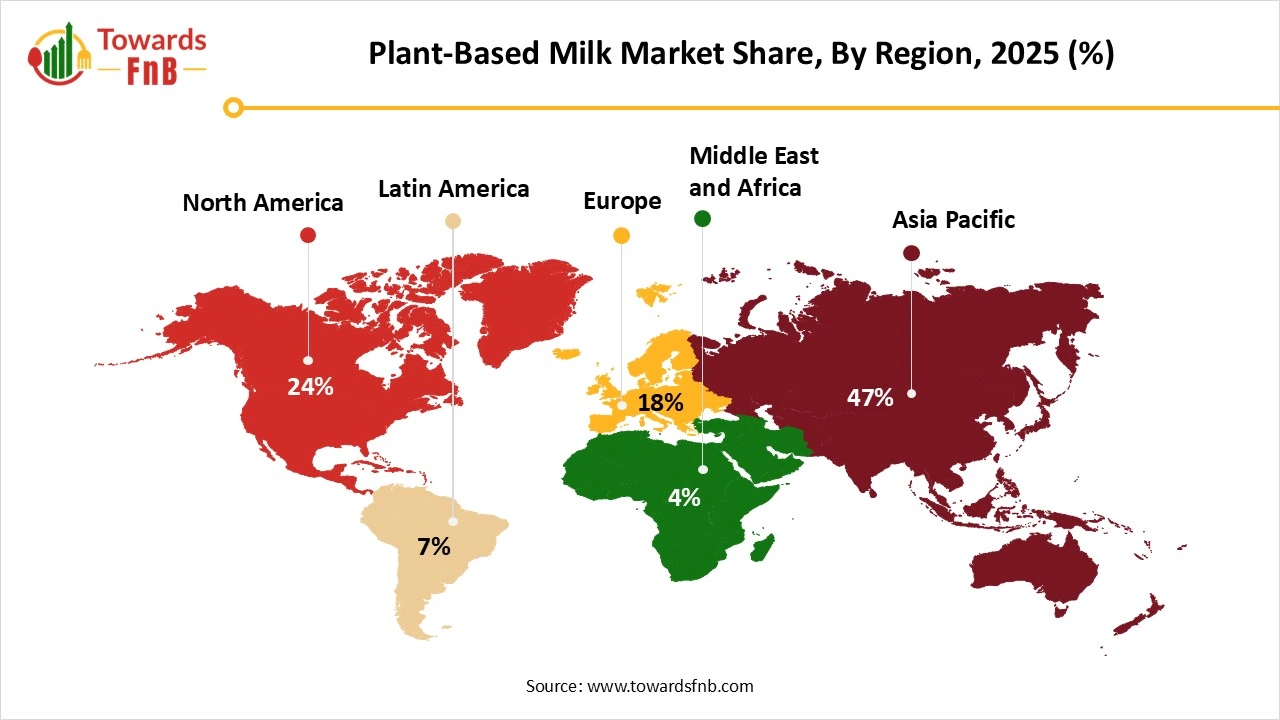
Asia Pacific dominated the plant-based milk market with approximately 47% share in 2025. The growing lactose intolerance in East Asian consumers and the increased popularity of traditional non-dairy products increase demand for plant-based milk. The strong focus on lowering the risk of cardiovascular diseases and the shift towards sustainable products increase the adoption of plant-based milk. The national health strategies and the strong presence of e-commerce drive the overall market growth.
Asia Pacific Plant-Based Milk Market Size 2025 to 2035
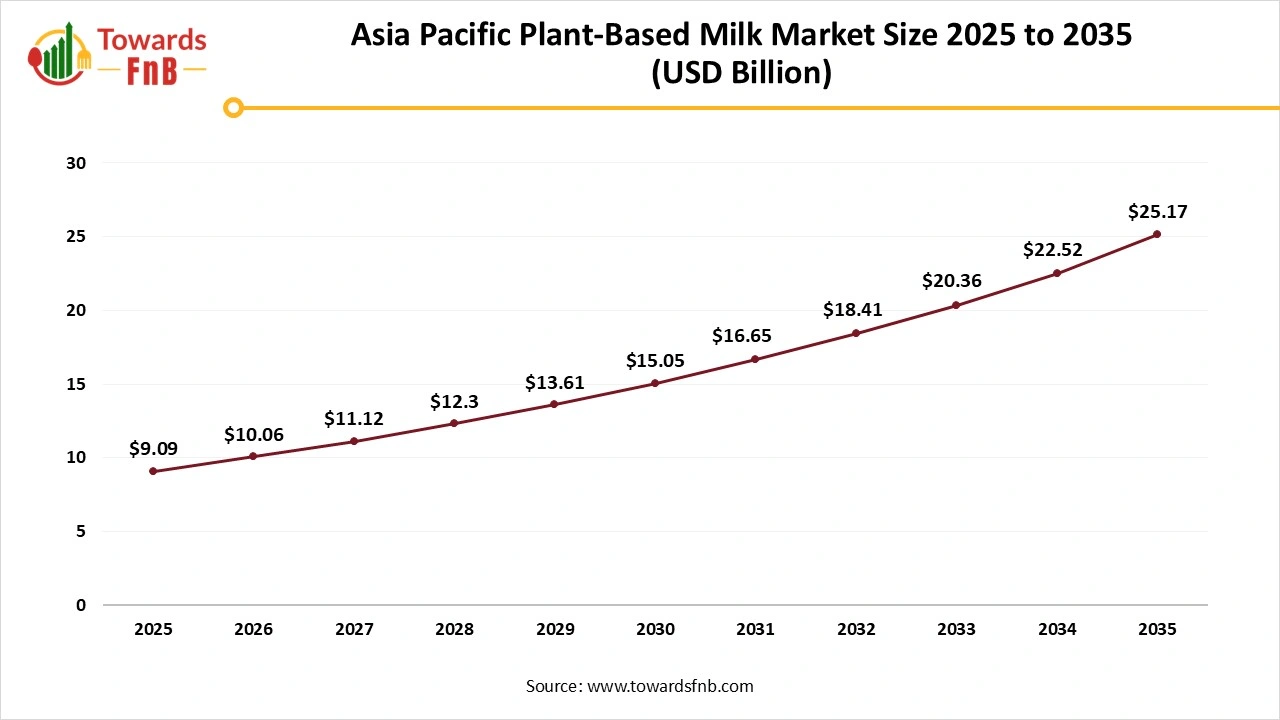
The Asia Pacific plant-based milk market size was calculated at USD 9.09 billion in 2025 with projections indicating a rise from USD 10.06 billion in 2026 to approximately USD 25.17 billion by 2035, expanding at a CAGR of 10.72% throughout the forecast period from 2026 to 2035.
A Greener Sip: India’s Revolution in Plant-Based Milk
India is rapidly growing in the market. The increased dietary concerns and the rapid growth in the eco-conscious population increase demand for plant-based milk. The increased production of plant-based food and the growth in online retail increases adoption of plant-based milk. The transition towards lower-calorie diets and the increasing investment in plant-based foods support the overall market growth.
North America Plant-Based Milk Market Trends
North America is experiencing the fastest growth in the market during the forecast period. Consumer awareness about saturated fat and the high rate of lactose intolerance increases the adoption of plant-based milk. The adverse effect of dairy farming on the environment and the consumer's focus on cruelty-free alternatives increase the demand for plant-based milk. The increased development of fortified products and the growing popularity of the ready-to-drink format drive the market growth.
From Dairy to Plants: United States Reshaping Plant-Based Milk Production
The United States is the largest contributor to the market. The increased awareness of lactose allergies and the focus on reducing the environmental footprint increase demand for plant-based milk. Consumer shift towards ethical consumption and the increased expansion of flexitarianism increases adoption of plant-based milk. The growth in food service and the increasing awareness of the health benefits of plant-based milk support the market growth.
Plant-Based Milk Market Share, By Source, 2025 (%)
| Segments | Shares (%) |
| Almond Milk | 35% |
| Oat Milk | 12% |
| Soy Milk | 15% |
| Coconut Milk | 8% |
| Others | 30% |
What made the Almond Milk Segment Dominate the Plant-Based Milk Market?
The almond milk segment dominated the plant-based milk market with approximately 35% share in 2025. The strong focus on the consumption of lower-calorie milk and the growing number of health-conscious consumers increase demand for almond milk. The high rate of lactose intolerance and the increased consumption of flavored milk increase demand for almond milk. The pleasant texture, convenience food, superior nutritional profiles, and high availability of almond milk drive the market growth.
The Oat Milk Segment is the Fastest-Growing in the Market During the Forecast Period
The robust growth in Barista culture and the increased consumption of vegan options increase demand for oat milk. The increased popularity of coffee culture and the need to lower carbon emissions increase demand for oat milk. The superior taste, nutritional value, allergen-friendliness, and superior functionality of oat milk support the market growth.
Plant-Based Milk Market Share, By Formulation, 2025 (%)
| Segments | Shares (%) |
| Unflavored/Plain | 65% |
| Flavored (Vanilla, Chocolate, etc.) | 35% |
How did the Unflavored or Plain Segment hold the Largest Share in the Plant-Based Milk Market?
The unflavored or plain segment held the largest revenue share of approximately 65% in the market in 2025. The growing popularity of baking and the increased consumption of coffee increases demand for unflavored milk. The increased development of food recipes and the focus on the smooth texture of food products increase demand for unflavored milk. The on-the-go consumption of smoothies and the need to reduce fat consumption increase the adoption of plain milk, driving the overall market growth.
The Flavored Segment is Experiencing the Fastest Growth in the Market During the Forecast Period
The increased rate of vegetarian people and the strong presence of coffee shops increase demand for flavored milk. The increased consumption of chocolate-flavor milk and the increasing use of flavored milk in cafes boost market expansion. The improved taste, functional nutrition, convenient packaging, and enhanced texture of flavored plant-based milk support the overall market growth.
Plant-Based Milk Market Share, By Distribution Channel, 2025 (%)
| Segments | Shares (%) |
| Supermarkets & Hypermarkets | 42% |
| Online/E-commerce | 15% |
| Convenience Stores | 43% |
Which Distribution Channel Dominated the Plant-Based Milk Market?
The supermarkets & hypermarkets segment dominated the plant-based milk market with approximately 42% share in 2025. The consumer strong focus on trying multiple brands products, and the availability of discounts increases the buying of plant-based milks from supermarkets. The high visibility, consumer trust, strategic merchandising, convenience, and product variety in supermarkets & hypermarkets drive the market growth.
The Online/E-commerce Segment is the Fastest-Growing in the Market During the Forecast Period
The growing consumer's effortless browsing of plant-based milks and the growth in subscription-based sales increase the adoption of online/e-commerce sales. The easy selection, DTC Reach, unmatched convenience, and easy accessibility of online/e-commerce platforms support the market growth.
Plant-Based Milk Market Share, By Application, 2025 (%)
| Segments | Shares (%) |
| Direct Beverages | 68% |
| Bakery & Confectionery | 10% |
| Ice Cream & Frozen Desserts | 22% |
How did the Direct Beverages Segment hold the Largest Share in the Plant-Based Milk Market?
The direct beverages segment held the largest revenue share of approximately 68% in the market in 2025. The growing dairy allergies and the popularity of cholesterol-free diets increase demand for direct beverages. The increased adoption of on-the-go beverage consumption and the growing popularity of smoothie increase demand for plant-based milks. The trending non-dairy beverages and the growing coffee applications increase demand for plant-based milk, driving the overall market growth.
The Bakery & Confectionery Segment is Experiencing the Fastest Growth in the Market During the Forecast Period
The increased popularity of pastries and the growing demand for sweets increases the adoption of plant-based milk. The growing popularity of vegan bakeries and the growth in cake culture increase the adoption of plant-based milk. The growing production of chocolates and the increased production of various confectionery products require plant-based milk, supporting the overall market growth.
MALK Organics
Alpro
HRX
Ripple Foods
By Source/Product Type
By Formulation/Flavor
By Distribution Channel
By Application
By Region




Principal Consultant
Vidyesh Swar, Senior Research Analyst at Towards Food & Beverages, specializes in market research, focusing on supply-demand evaluation, pricing analysis, alternative proteins, plant-based foods, and sustainable food technologies within the industry.
Learn more about Vidyesh Swar
Reviewed By
Aditi Shivarkar, with 14+ years in Food and Beverages market research, specializes in food, beverage, and eco-friendly packaging. She ensures accurate, actionable insights, driving Towards FnB's excellence in industry trends and sustainability.
Learn more about Aditi ShivarkarApril 2026
April 2026
April 2026
April 2026

Plant-Based Milk Market


 +1 804-441-9344
 Download Sample
 Schedule a Meeting