April 2026



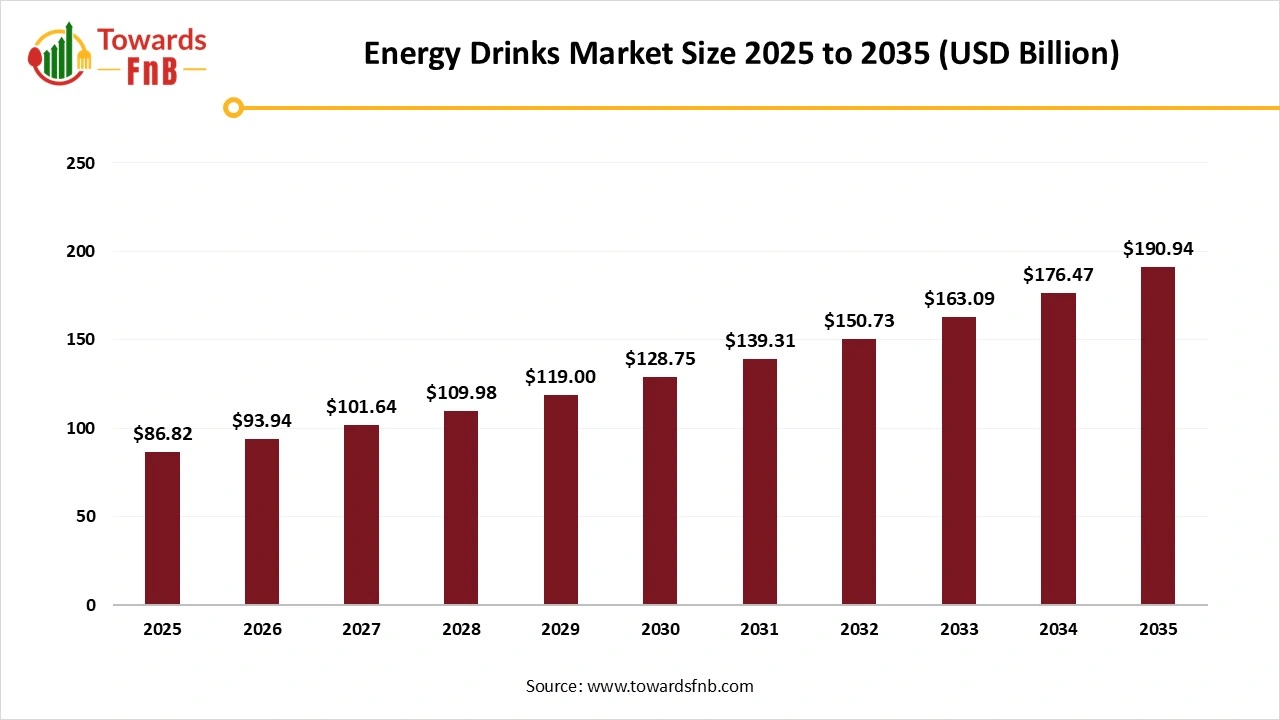
The global energy drinks market size estimated at USD 86.82 billion in 2025 and is predicted to increase from USD 93.94 billion in 2026 to nearly reaching USD 190.94 billion by 2035, growing at a CAGR of 8.2% during the forecast period from 2026 to 2035. This growth is due to rising demand for functional beverages that support alertness, stamina and active lifestyles.
| Study Coverage | Details |
| Growth Rate from 2026 to 2035 | CAGR of 8.2% |
| Market Size in 2026 | USD 93.94 Billion |
| Market Size in 2027 | USD 101.64 Billion |
| Market Size by 2035 | USD 190.94 Billion |
| Largest Market | North America |
| Base Year | 2025 |
| Forecast Period | 2026 to 2035 |
| Regions Covered | North America, Europe, Asia-Pacific, Latin America, and Middle East & Africa |
The energy drinks market is experiencing a significant transformation, influenced by changing consumer preferences and an increasing demand for healthier, more functional beverages. Energy drinks have become a dietary staple among many teenagers and young adults, particularly within the realms of esports and gaming. The most successful companies in this sector are those that effectively adapt to these evolving consumer preferences while embracing broader trends such as wellness.
Advances in smart packaging technology are being integrated into energy drinks to enhance the consumer experience. Augmented reality is being utilized in marketing campaigns to engage consumers and provide interactive experiences. Beyond ingredient innovation, cutting-edge technologies are revolutionizing the distribution and utilization of energy within the human body. For example, nano-encapsulation improves the bioavailability of vitamins, caffeine, and plant-based ingredients. Artificial intelligence is also being employed to identify optimal ingredient combinations that meet specific performance objectives. Major industry players such as AB InBev, Coca-Cola, and PepsiCo are actively investing in AI technology to enhance productivity, streamline production, and improve customer engagement.
Raw Material Procurement
Processing
How did North America dominate the Energy Drinks Market in 2025?
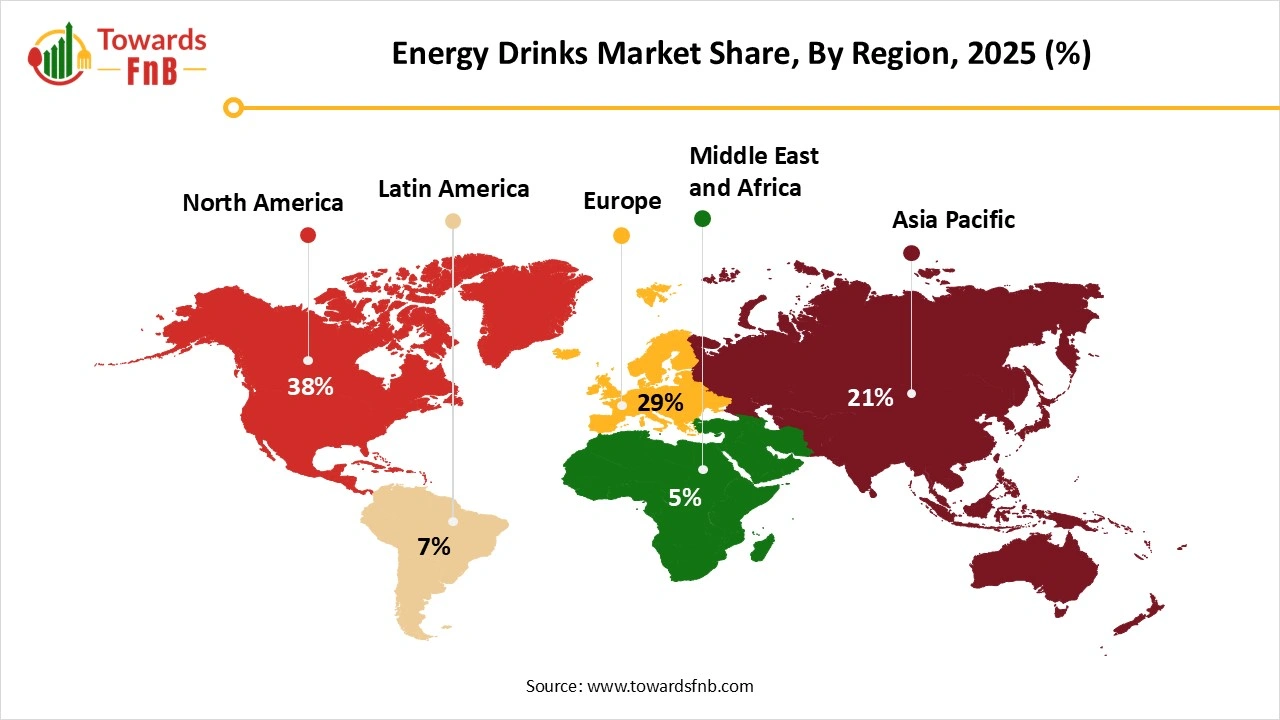
North America dominated the energy drinks market in 2025. In North America, energy drinks have rapidly gained popularity, particularly among millennial and Generation Z consumers. There is a pronounced demand for clean-label products and a heightened awareness of healthy food options, as American consumers increasingly gravitate towards nutrient-rich, sugar-free, and organic energy drinks. This trend is bolstered by growing consumer awareness regarding sugar consumption, particularly in light of rising diabetes concerns.
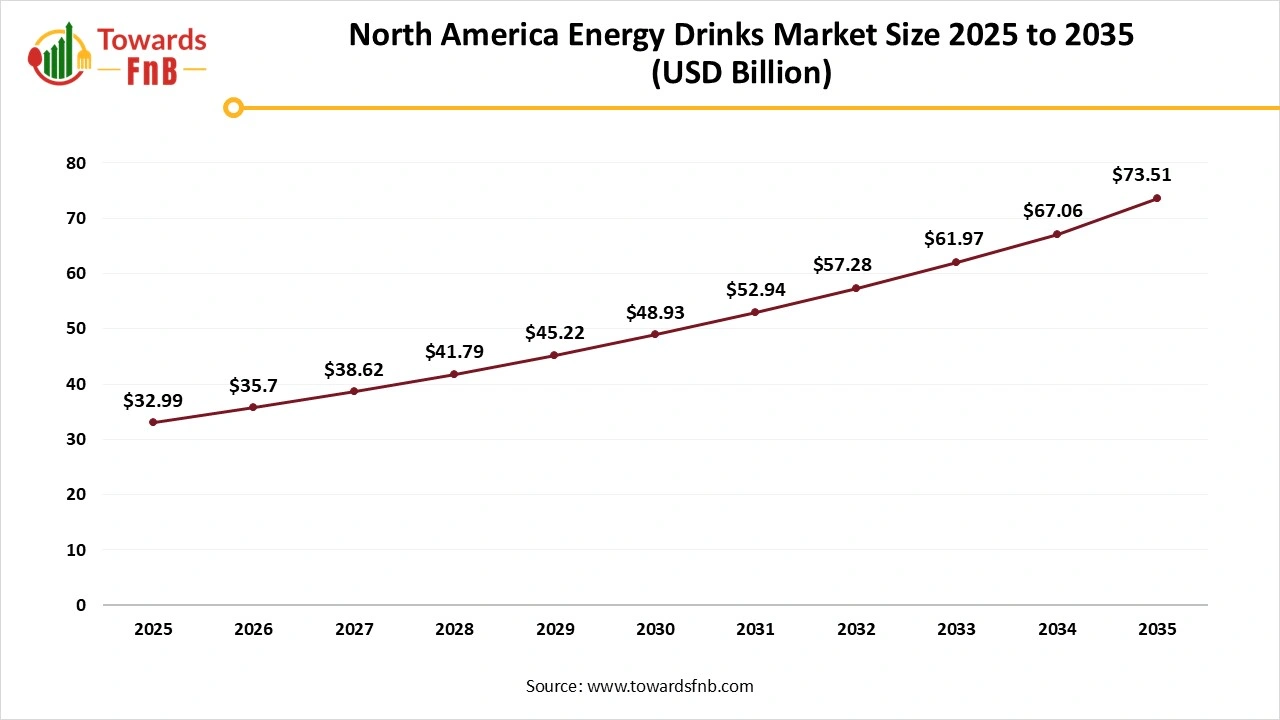
North America Energy Drinks Market Size 2025 to 2035
The North America Energy Drinks market size was calculated at USD 32.99 billion in 2025 with projections indicating a rise from USD 35.7 billion in 2026 to approximately USD 73.51 billion by 2035, expanding at a CAGR of 8.34% throughout the forecast period from 2026 to 2035.
U.S. Energy Drinks Market Trends
The U.S. energy drinks market has expanded significantly. Consumers tend to favor these beverages as potential enhancers of both physical and cognitive performance. Beverages devoid of high sugar, glucose, and fructose corn syrups have become increasingly popular among health-conscious consumers. Market players are actively promoting these products as functional beverages that augment energy levels, alertness, and overall physical vitality. Furthermore, the fast-paced lifestyles of millennials are propelling market growth, as energy drinks with high caffeine content and rapid energy-boosting capabilities align well with contemporary demands. The health-conscious tendencies of the younger population are driving dynamic shifts within the market.
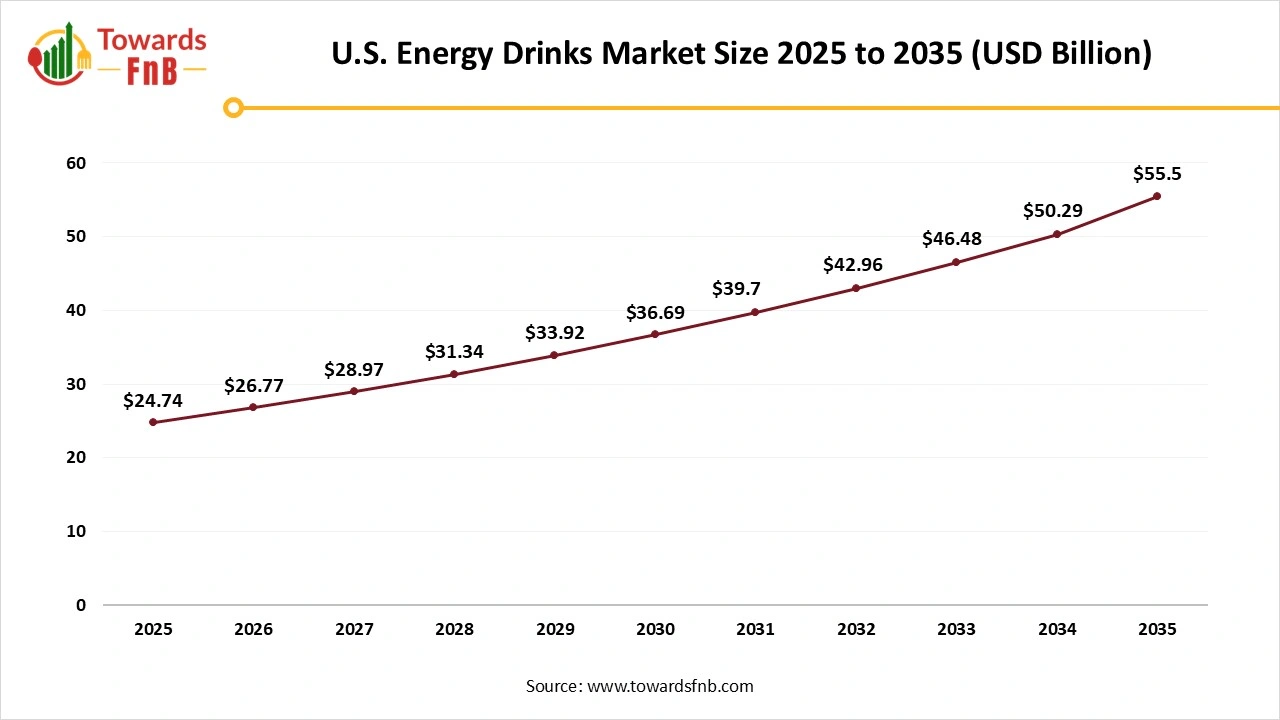
How Big is the U.S. Energy Drinks Market?
The U.S. energy drinks market size estimated at USD 24.74 billion in 2025 and is predicted to increase from USD 26.77 billion in 2026 to nearly reaching USD 55.5 billion by 2035, growing at a CAGR of 8.41% during the forecast period from 2026 to 2035.
Asia Pacific Energy Drinks Market Trends
Asia Pacific expects fastest growth during the forecast period. The growth of the market can be attributed to rapid urbanization and increasing disposable incomes in countries like China, India, and Vietnam. This has expanded the consumer base, particularly among millennials and young professionals who seek quick energy boosts to support their active lifestyles. The region's large youth population, along with rising fitness awareness and busy work schedules, has led to an increased demand for functional beverages that enhance mental alertness and physical performance. Additionally, the rise of e-commerce and digital marketing has improved product accessibility and consumer engagement throughout the Asia Pacific region.
India Energy Drinks Market Trends
The energy drinks market in India is growing rapidly. Rapid urbanization, a growing middle class, and greater exposure to global lifestyles have contributed to the rising consumption of energy drinks. Initially targeted towards athletes and fitness enthusiasts, these beverages are increasingly consumed by young adults, working professionals, students, and gamers seeking instant energy, alertness, and a competitive edge. Brand loyalty in the energy drinks market is influenced by several dynamic factors, including taste, price, health considerations, packaging, advertising appeal, and social influence. The emergence of "better-for-you" energy drinks reflects global trends, which are particularly amplified in India by Ayurvedic traditions.
Europe Energy Drinks Market Trends
The energy drinks market in Europe is growing at a notable rate. The growth can also be linked to evolving consumer lifestyles and health trends. Increasing health consciousness among European consumers has resulted in a higher demand for energy drinks that offer functional benefits beyond just energy boosts, such as sugar-free, natural, and organic formulations. For example, in Germany, a key market, major retailers like Edeka and Lidl have expanded their offerings to include healthier energy drink options, reflecting a shift toward wellness-oriented consumption patterns. This trend caters to consumers’ desires for products that enhance alertness and stamina while aligning with their fitness and dietary preferences.
Germany Energy Drinks Market Trends
The German energy drinks market is experiencing significant growth. While global brands like Red Bull dominate, local contenders such as Effect and Monster have established their niches by tapping into unique aspects of German culture. Effect, for instance, has positioned itself as a healthier alternative by using organic ingredients while still providing the necessary energy boost. Regulatory frameworks in Germany, consistent with EU standards, enforce strict labeling of caffeine content and health claims, ensuring consumer safety and building trust. Furthermore, the government’s focus on sustainability encourages manufacturers to adopt eco-friendly packaging, resonating with environmentally conscious consumers.
Energy Drinks Market Share, By Product, 2025 (%)
| Segments | Shares (%) |
| Energy Drinks | 80% |
| Energy Shots | 20% |
Which Product Segment Dominated the Energy Drinks Market in 2025?
The energy drink segment dominated the market in 2025, driven by rising health consciousness, evolving consumer preferences, and increasing demand for functional beverages. In response to consumer demand for better-for-you products, brands are introducing clean labels, including sugar- and gluten-free drinks, as well as natural, plant-based formulations. Manufacturers are actively reformulating products with natural sweeteners, botanical extracts, and clean label ingredients to appeal to this growing segment.
The Energy Shots Segment is Projected to Grow at the Fastest Rate During the Forecast Period
Energy shots have carved out a significant niche, providing consumers with a quick and convenient way to boost their energy levels. Their compact size and portability make them an ideal option for those seeking a quick energy boost without carrying a larger beverage. Energy shots are formulated with concentrated doses of caffeine, vitamins, and other energy-enhancing ingredients, offering an effective solution for combating fatigue.
Energy Drinks Market Share, By Type, 2025 (%)
| Segments | Shares (%) |
| Conventional | 85% |
| Organic | 15% |
Why did the Conventional Segment Dominate the Energy Drinks Market in 2025?
The conventional segment held the largest share of the market in 2025, as these products provide a well-established, immediate energy boost that appeals to a broad consumer base, especially young adults and working professionals. Conventional energy drinks typically contain higher levels of caffeine and sugar, delivering quick and effective stimulation, which remains popular despite growing health concerns. Iconic brands with strong market presence and high brand awareness, such as Red Bull, continue to dominate the market due to their consistent product quality.
The Organic Segment is Seen to Grow at a Notable Rate During the Predicted Timeframe
As consumer preferences evolve toward healthier and more transparent products, organic energy drinks are at the forefront of the beverage industry. Unlike conventional energy drinks, which often contain artificial flavors, colors, and excessive sugars, clean energy drinks prioritize natural ingredients and transparency. This focus appeals to health-conscious consumers who seek both an energy boost and assurance regarding the quality of the products they consume.
Energy Drinks Market Share, By Packaging, 2025 (%)
| Segments | Shares (%) |
| Bottles | 25% |
| Cans | 70% |
| Others | 5% |
How did the Cans Segment Dominate the Energy Drinks Market in 2025?
The cans segment accounted for the largest market share in 2025. The sleek and glossy exterior of beverage cans offers a substantial area for distinctive designs and branding, which is essential in a competitive marketplace. Brands such as Red Bull and Monster have made significant investments in creating recognizable and impactful can designs that capture consumer attention on retail shelves and in vending machines. In addition to their aesthetic appeal, the streamlined style of cans provides an effective barrier against light and air, thereby extending the freshness of energy drinks and enabling rapid chilling.
The Bottles Segment is Anticipated to Experience the Fastest Growth Rate During the Forecast Period
Bottles are resealable, portable, and user-friendly, rendering them well-suited for consumers with on-the-go lifestyles. Many plastic bottles are now designed with ergonomic shapes and sports caps to meet consumer preferences. An increasing number of brands are employing bottles made from 100% recycled PET, thereby reducing the reliance on virgin plastic and minimizing waste. Bottles are available in various sizes, ranging from small single-serve containers to larger resealable options, thereby providing consumers greater control over their consumption.
Energy Drinks Market Share, By Distribution Channel, 2025 (%)
| Segments | Shares (%) |
| On-Trade | 25% |
| Off-Trade | 75% |
Which Distribution Channel Held the Largest Share of the Energy Drinks Market in 2025?
The off-trade segment held the largest share of the market in 2025. This distribution channel encompasses the sale of energy drinks through retail outlets where products are purchased for off-premise consumption, including supermarkets, convenience stores, liquor stores, and online platforms. The convenience of purchasing energy drinks alongside regular grocery items, coupled with promotional discounts and the option for bulk purchases, renders this channel highly appealing to consumers.
The On-Trade Segment is Projected to Grow at the Fastest Pace During the Forecast Period
The on-trade channels involve sales through food service outlets that serve the general public in a non-captive environment, including cafes, bars, full-service restaurants, fast food establishments, dedicated home delivery services, and self-service cafeterias. On-trade environments typically rely on impulse purchases and experiential consumption, making energy drinks a prevalent choice during social events, nightlife activities, and sporting gatherings.
GORGIE
HELL, ENERGY DRINK
By Product
By Type
By Packaging
By Distribution Channel
By Region





Principal Consultant
Vidyesh Swar, Senior Research Analyst at Towards Food & Beverages, specializes in market research, focusing on supply-demand evaluation, pricing analysis, alternative proteins, plant-based foods, and sustainable food technologies within the industry.
Learn more about Vidyesh Swar
Reviewed By
Aditi Shivarkar, with 14+ years in Food and Beverages market research, specializes in food, beverage, and eco-friendly packaging. She ensures accurate, actionable insights, driving Towards FnB's excellence in industry trends and sustainability.
Learn more about Aditi ShivarkarApril 2026
April 2026
April 2026
April 2026

Energy Drinks Market


 +1 804-441-9344
 Download Sample
 Schedule a Meeting