April 2026



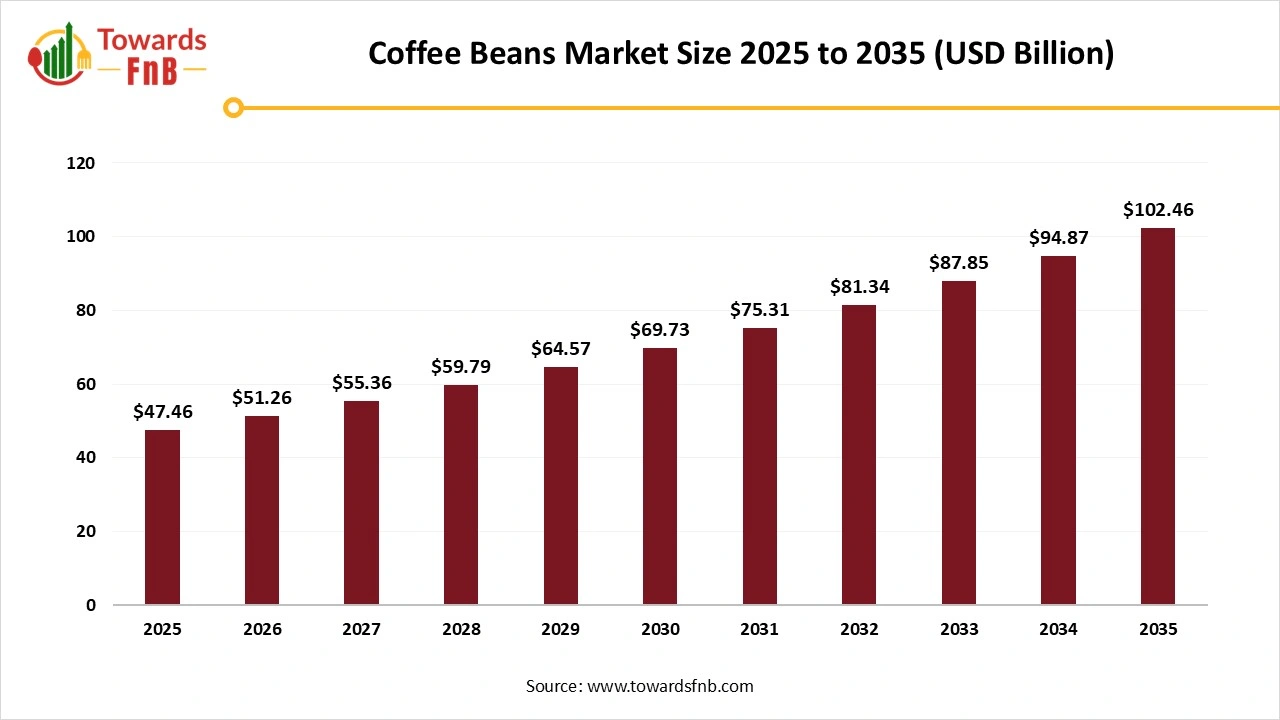
The global coffee beans market size reached at USD 47.46 billion in 2025 and is predicted to increase from USD 51.26 billion in 2026 to reach approximately USD 102.46 billion by 2035, expanding at a CAGR of 8% during the forecast period from 2026 to 2035. Rapid urbanization, increasing popularity of coffee drinks among young and adults and increasing café culture driving the market.
| Study Coverage | Details |
| Growth Rate from 2026 to 2035 | CAGR of 8% |
| Market Size in 2026 | USD 51.26 Billion |
| Market Size in 2027 | USD 55.36 Billion |
| Market Size by 2035 | USD 102.46 Billion |
| Largest Market | Europe |
| Base Year | 2025 |
| Forecast Period | 2026 to 2035 |
| Regions Covered | North America, Europe, Asia-Pacific, Latin America, and Middle East & Africa |
Drinking coffee provides various health benefits as coffee contains antioxidants, these advantages of coffee increase the consumption of coffee and increase the demand for coffee beans. Consumers are progressively looking for high-quality, single-origin, and specialty coffee experiences, which is boosting the demand for premium coffee beans. Aspects such as distinct flavor characteristics, handcrafted roasting techniques, and the third-wave coffee movement have driven producers and sellers to provide more refined and traceable choices, leading to an optimistic outlook for the coffee bean market. A key trend driving the growth of the coffee beans market is the increasing focus on sustainability and ethical sourcing methods. Customers are becoming more conscious of the ecological effects and the conditions of labor involved in the production of their coffee.
Increased technological advancements improved the global coffee beans market demand. Various agriculture technology like drones and IoT sensors are used to check plant growth, plant monitoring. Processing technology innovations in roasting and packaging techniques aid in the restoration of the freshness and flavor of the beans for extended periods, improving the overall quality of the coffee. As more individuals work from home, there is notable increase in home brewing. Aficionados are purchasing premium coffee-making gear and trying out various brewing techniques, including French press, espresso, and cold brew, which necessitate kinds of beans and grinds. This trend has resulted in higher sales of premium beans and an increased interest in kits for home roasting.
Brazil and Vietnam are two of the world’s largest coffee producers in 2025, which have spectacularly impacted areas of production and led the supply shortages and price fluctuations. The lower production volume and decreased carry-forward stocks are expected to influence India’s coffee export.
Consumers are looking for artisanal coffee and brewing techniques, quality of coffee beans is largely hampered by the processing methods. There is swift development in the processing technologies to meet the emerging coffee trend among consumers and to maintain integrity and the quality of the coffee beans. carbonic maceration, digestion and anaerobic fermentation technologies have been created to enhance the flavor and taste prospect of coffee beans. Development in the milling and sorting technology also enhanced the quality and efficiency of coffee beans. Technological advancements creating tremendous opportunities for the manufacturers for the expansion of the coffee beans market.
Yield and production of coffee beans is greatly affected by the climate change, disease and pests. Arabica coffee is more sensitive to the temperature, pests and overall climate issues and leads to the decrease yield and lower quality of the coffee beans. Climatic conditions like heavy and irregular rainfall pattern, drought conditions majorly affecting the yield and efficiency of the coffee beans and thus, affect the growth of the coffee beans market.
Cultivation/Production
Initial Processing
Milling/Curing
Roasting
Retail and Consumption
Europe counted for 31% of worldwide coffee consumption. Growth of coffee beans market is projects to the increased coffee consumption, changing lifestyle, rising demand for authorized and certified coffee products. Most popular drink in the Europe is the coffee in daily routine. Furthermore, demand for coffee is also increasing because of the increasing number of coffee shops and coffee chain stores, consumers are also buying coffee machines for making specialized coffee at home. Rising demand for artisanal and premium coffee beverages growing the market of coffee beans.
Europe Coffee Beans Market Size 2024 to 2034
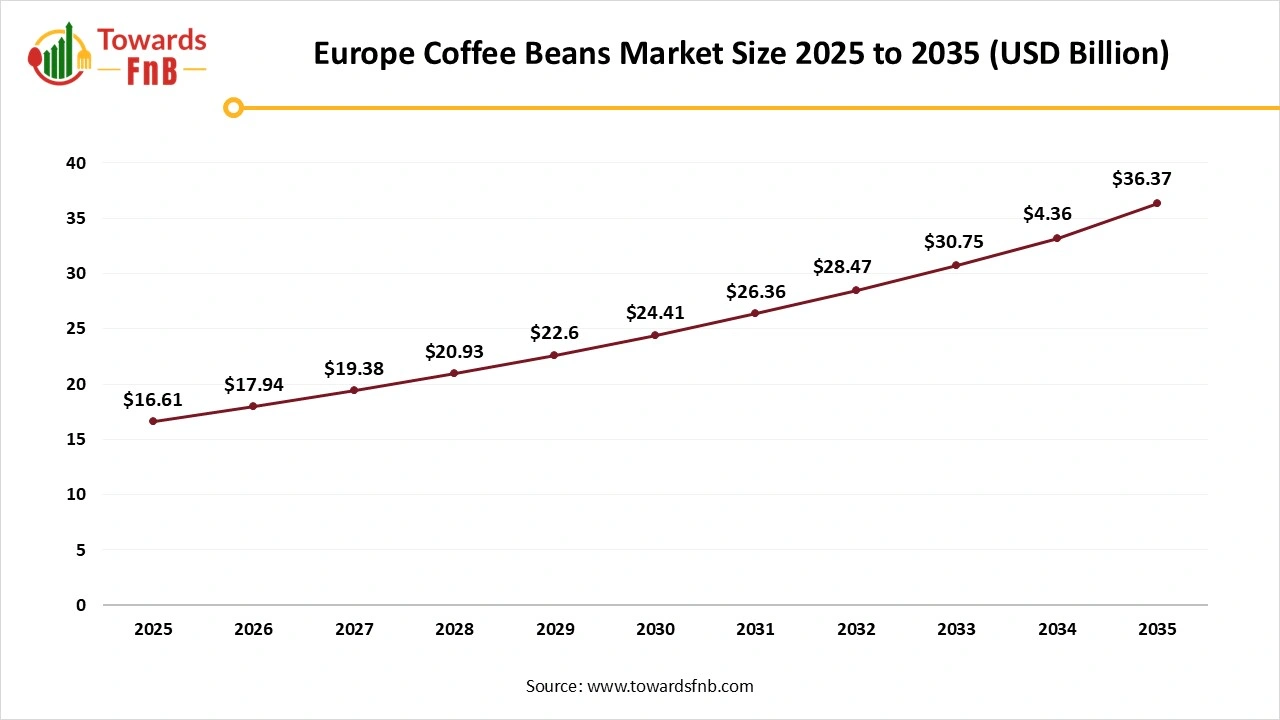
The Europe coffee beans market size reached USD 16.61 billion in 2025 and is anticipated to increase from USD 17.94 billion in 2026 to an estimated USD 36.37 billion by 2034, witnessing a CAGR of 8.15% during the forecast period from 2026 to 2035.
Germany is a major player in the regional market, contributing to the growth due to the country's largest import and consumption value of coffee beans in Europe. Germany’s dynamic culture, like vibrant café culture and high per capita consumption of coffee, contributes to this growth. The growing trend of the “home-barista” movement and demand for specialty coffees has boosted the market growth. The growing consumer demands for high quality, origin, and sustainable practices are increasing for organic and fair-trade coffee products sales in Germany.
Asia Pacific Coffee Beans Market Observed to Grow at the Fastest Rate During the Forecast Period
Due to social and environmental factors, coffee drinkers in the Asia Pacific area are showing an increasing preference for products that come from ethical sources. The growing popularity of organic certification in consumer markets, especially in nations like China and India, is especially noteworthy. The growth of coffee shops such as Starbucks, Costa, and CCD have increased customer demand for high-end coffee experiences, turning coffee drinking into a social pastime. Demand in the market is being driven by this tendency, which has increased interest in a variety of coffee bean varietals. Additionally, coffee's popularity in the corporate sector has been further boosted by its incorporation into bakery and pastry items.
India’s Leveraging Coffee Beans Market
Coffee lovers from all over the world have taken an interest in India's specialty coffee in recent years. Careful growing methods, a distinct origin, a plucking routine, unique processing, branding, handling, and look are characteristics that set specialty coffee apart. As to the data provided by the Food and Agriculture Organization, India ranks seventh in terms of coffee export volume. This increasing demand for coffee in India fostering the coffee beans market.
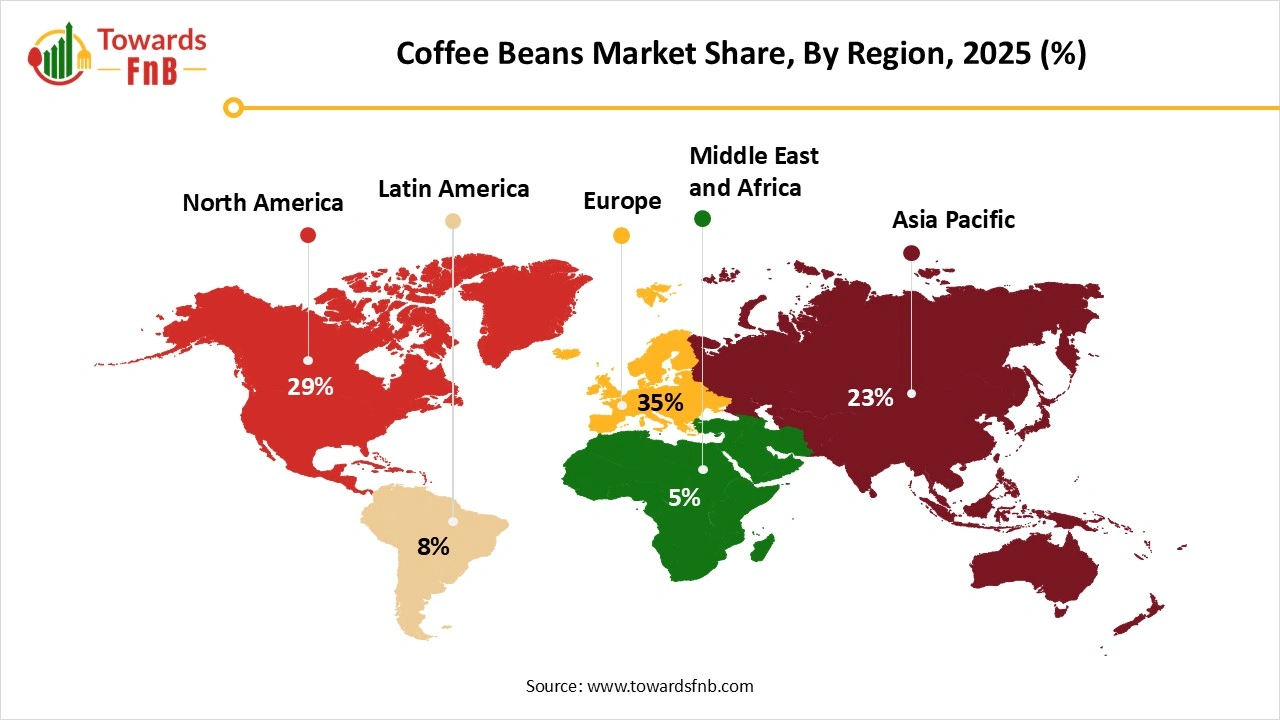
The North American coffee beans market plays a crucial role in the global beverage industry due to its significant consumption volume, economic contribution, and influence on consumer trends. Coffee is a staple beverage in households and commercial establishments, with the United States and Canada being two of the largest coffee consumers worldwide. The market size is driven by an established coffee culture, evolving consumer preferences toward specialty and gourmet coffee, and numerous multinational coffee brands. The demand for premium coffee beans has increased due to rising disposable incomes and a greater focus on quality and origin.
The U.S. coffee beans market is a large and expanding industry, primarily fueled by high domestic consumption and strong demand for specialty, organic, and ethically sourced products. The market heavily relies on imports, making the U.S. one of the world's largest importers of coffee beans. Nearly all coffee consumed in the U.S. is sourced from tropical climates, with Brazil, Colombia, and Vietnam being major suppliers. Green (raw) Arabica beans constitute the majority of these imports.
The Middle East and Africa (MEA) coffee beans market is characterized by a blend of strong local traditions, particularly in coffee-producing African nations, and the rapid adoption of global coffee trends in urban centers of the Middle East. There has been a significant rise in the number of specialty coffee shops and growing interest in artisanal coffee experiences, particularly in urban areas of South Africa and the UAE.
The UAE coffee bean market is a dynamic billion-dollar industry marked by a strong café culture and rising demand for specialty and premium coffee experiences, while still being heavily reliant on imports. Although the market is saturated, it offers opportunities for innovation and differentiation, especially in the specialty and e-commerce segments.
The Latin American coffee bean market is a significant global player, driven by robust domestic consumption and strong export capabilities, especially from Brazil and Colombia. The market is expected to grow, with key segments including roasted and instant coffee, driven by demand for premium and convenience products, alongside increasing domestic consumption.
The growth factors of the Brazilian coffee beans market are multifaceted, with the primary factor being Brazil's ideal climate for producing high-quality coffee beans. The diverse climate and soil conditions across Brazil enable the cultivation of both Arabica and Robusta coffee beans. These favorable conditions ensure a consistent supply of coffee beans, which is crucial for maintaining Brazil's dominant position in the global coffee market.
The Arabica Beans Segment Held the Dominating Share of the Coffee Beans Market in 2025
Growth of arabica coffee beans is majorly associated with the aroma and taste of the coffee compared to other coffee varieties. Arabica beans are the preferred option for an increasing number of coffee lovers due to their smooth, mellow flavor and reduced caffeine content. Significant growth drivers involve the expansion of specialty coffee shops and the surge in coffee enthusiasts looking for exceptional and distinctive coffee experiences.
The Robusta Beans Segment is Seen to Grow at a Notable Rate During the Predicted Timeframe
Bold flavor, increased caffeine concentration, disease resistance, crema creation, cost-effectiveness, blending possibilities, quick coffee, and consistent flavor are some of distinctive qualities of robusta beans. In the coffee industry, robusta beans are used in a variety of coffee blends, espresso shots, and instant coffee products and expanding the market. They are valued for their distinctive qualities and are an essential component of the worldwide coffee industry, despite their reputation for having a strong, slightly bitter flavor.
The Food Segment Held the Largest Share of the Coffee Beans Market in 2025
Coffee beans are used in preparation of various product including dairy and bakery. Green coffee beans extract is used in the dietary supplements. Coffee is often used in the preparation of Savory dishes for the marination of meat or pork to add the flavor. Integrating coffee beans into cookie dough enhance a flavour and taste that satisfy consumer’s taste.
The Pharmaceuticals Segment is Expected to Grow at the Fastest Rate in the Coffee Beans Market During the Forecast Period
The pharmaceutical industry is using coffee beans and their byproducts for their bioactive chemicals, such as antibacterial, anti-inflammatory, and antioxidant qualities, which may find use in topical formulations and as components in food supplements and cosmetic goods. The presence of phenolic compounds, flavonoids and caffeine in coffee has attracted attention of pharmaceutical industries for therapeutic application.
The Coffee Bean & Tea Leaf™
Coffee Holding Co.
Lavazza
By Product
By Application
By Region





Principal Consultant
Vidyesh Swar, Senior Research Analyst at Towards Food & Beverages, specializes in market research, focusing on supply-demand evaluation, pricing analysis, alternative proteins, plant-based foods, and sustainable food technologies within the industry.
Learn more about Vidyesh Swar
Reviewed By
Aditi Shivarkar, with 14+ years in Food and Beverages market research, specializes in food, beverage, and eco-friendly packaging. She ensures accurate, actionable insights, driving Towards FnB's excellence in industry trends and sustainability.
Learn more about Aditi ShivarkarApril 2026
April 2026
April 2026
April 2026

Coffee Beans Market

 +1 804-441-9344
 Download Sample
 Schedule a Meeting