March 2026



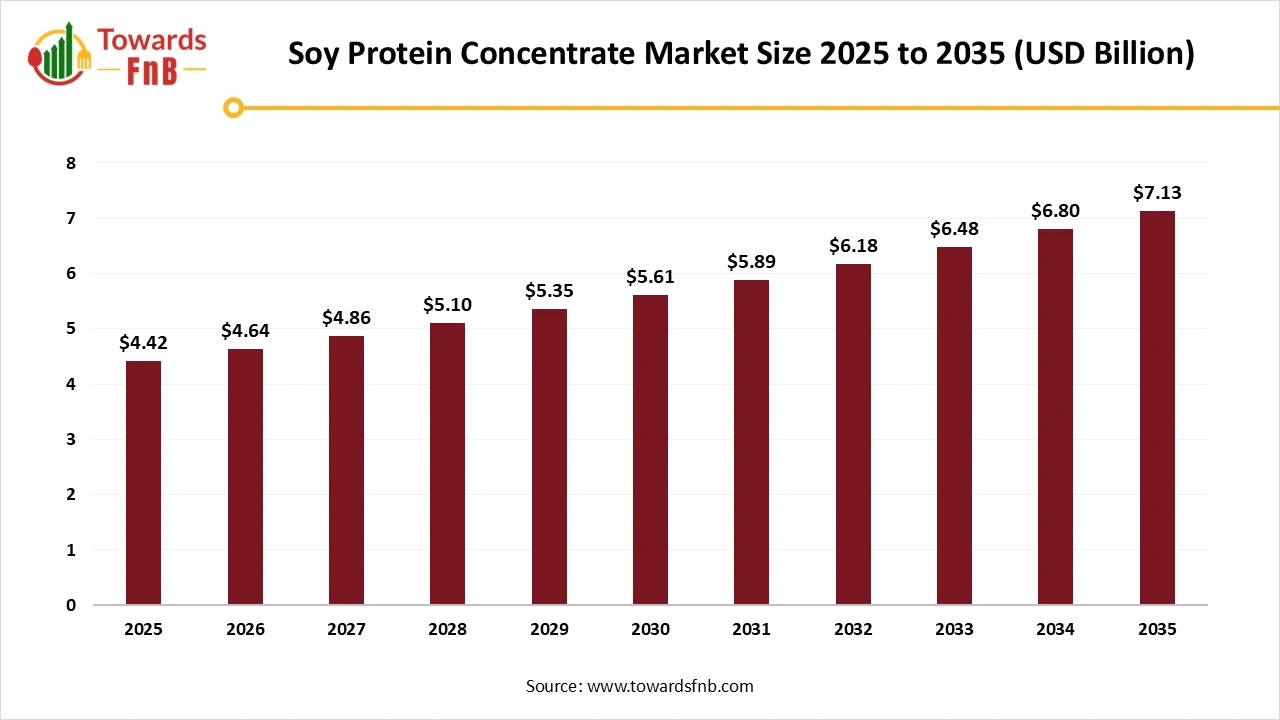
The global soy protein concentrate market size reached at USD 4.42 billion in 2025 and is anticipated to increase from USD 4.64 billion in 2026 to an estimated USD 7.13 billion by 2035, witnessing a CAGR of 4.9% during the forecast period from 2026 to 2035. Growing health consciousness and increasing demand for plant-based protein are driving the market.
| Study Coverage | Details |
| Growth Rate from 2026 to 2035 | CAGR of 4.9% |
| Market Size in 2026 | USD 4.64 Billion |
| Market Size in 2027 | USD 4.86 Billion |
| Market Size by 2035 | USD 7.13 Billion |
| Largest Market | Asia Pacific |
| Base Year | 2025 |
| Forecast Period | 2026 to 2035 |
| Regions Covered | North America, Europe, Asia-Pacific, Latin America, and Middle East & Africa |
The soy protein concentrate (SPC) market is a growing sector driven by global demand for affordable, plant-based protein, growing health consciousness, and the rise of meat alternatives, with strong growth projected across food & beverage, nutraceuticals, and animal feed. It provides functional properties such as water binding, emulsification, and texturizing, which improve product stability, texture, and nutritional value.
The advent of advanced technologies has the potential to enhance the resource utilization of plant-based proteins compared to traditional processing methods. Novel processing techniques have enabled improvements in the quality characteristics of soy proteins and contributed to the creation of market-oriented food products. Innovations such as cold plasma, ultrasound, high-pressure processing, and enzymatic/fermentation methods are enhancing solubility and emulsification while reducing allergenic properties. Additionally, Artificial Intelligence is transforming the soy protein concentrate sector. AI models can simulate sensory attributes and predict the effects of modifications in ingredients or processing conditions on the final product, facilitating precise adjustments to optimize texture and flavor.
Raw Material Procurement
Processing
Distribution
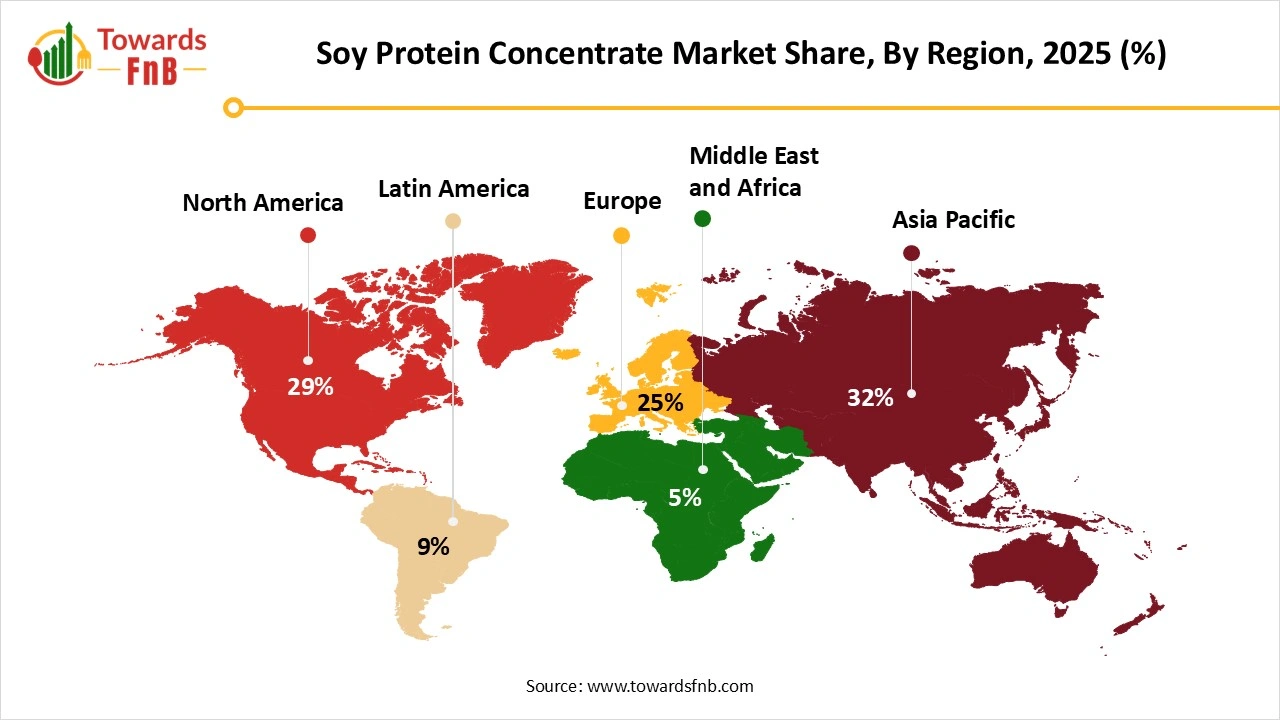
Why did the Asia Pacific Dominate the Soy Protein Concentrate Market in 2025?
Asia Pacific dominated the market in 2025. The Asia Pacific soy protein concentrate market is undergoing a notable transformation, propelled by shifting consumer preferences towards plant-based and health-oriented products. Increasing awareness of the nutritional advantages of soy protein, combined with a growing population of vegetarians and vegans, is driving demand within the food and beverage sector. Furthermore, the rising incorporation of soy protein concentrates in functional foods, sports nutrition, and dietary supplements is fostering robust market expansion.
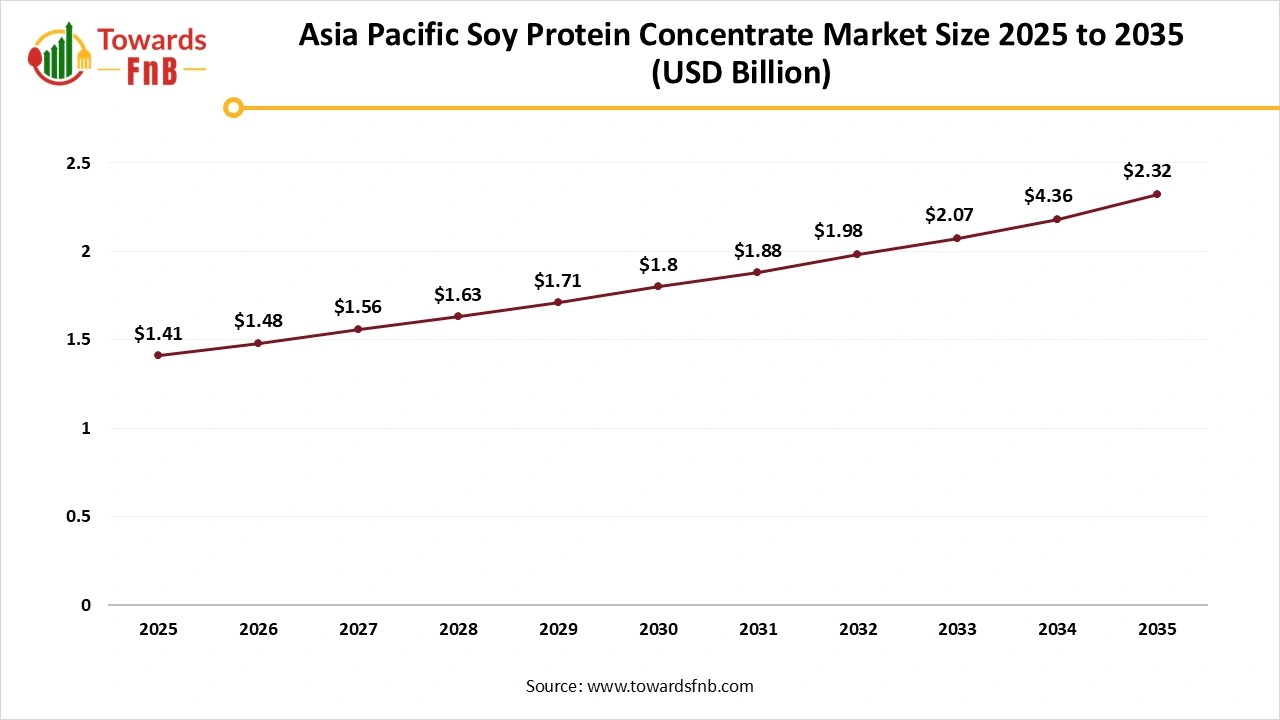
Asia Pacific Soy Protein Concentrate Market Size 2025 to 2035
The Asia Pacific soy protein concentrate market size estimated at USD 1.41 billion in 2025 and is predicted to increase from USD 1.48 billion in 2026 to nearly reaching USD 2.32 billion by 2035, growing at a CAGR of 5.11% during the forecast period from 2026 to 2035.
India Soy Protein Concentrate Market Growing with Exports
The Indian soy protein concentrate industry is witnessing a significant transformation, influenced by evolving dietary preferences and heightened health consciousness among consumers. This shift in dietary habits is reshaping the industry landscape as manufacturers refine their product offerings to address the increasing demand for soy products and alternative plant-based options. The industry is particularly bolstered by its role in food fortification, meat alternatives, and dietary supplements, especially in urban centers such as Mumbai, Delhi, and Bengaluru. India is also solidifying its position as a prominent global exporter.
North America Soy Protein Concentrate Market Growth
North American soy protein concentrate market expects fastest growth during the forecast period, due to the increasing consumer adoption of plant-based protein alternatives. This growth is further augmented by the rising prevalence of vegan and flexitarian diets, alongside a general increase in health consciousness. Additionally, heightened awareness regarding the environmental benefits of plant-based proteins is prompting a growing number of consumers to select soy protein concentrate. Supportive regulatory frameworks and investments in technologies for formulated plant-based food are also contributing to the expansion of this market. With evolving consumer expectations and sustained efforts in product marketing and development, the North American soy protein concentrate market is poised for significant growth.
U.S. Soy Protein Concentrate Market Trends
The sustainability trend among consumers is driving demand for soy protein concentrate, thereby advancing the U.S. market. The rising population of vegans and vegetarians, coupled with an increase in lactose intolerance, is further propelling the U.S. market. Soy protein concentrate holds considerable appeal in the food industry for enhancing the color, aroma, and protein content of diverse food products. Moreover, innovations in processing technologies and a broadening application scope, which includes dairy alternatives and functional foods, are supporting market expansion.
Europe Soy Protein Concentrate Market Expansion
In Europe, the soy protein concentrate market is witnessing substantial growth fueled by escalating consumer demand for plant-based proteins, growing awareness of sustainable and health-conscious dietary choices, and expanding applications across various food and beverages sectors. As the region shifts toward more sustainable and nutritious dietary options, the market is well-positioned to capitalize on evolving consumer preferences and supportive regulatory environments for plant-derived ingredients.
Germany Soy Protein Concentrate Market Analysis
Germany's soy protein industry is undergoing significant transformation, driven by shifts in consumer preferences and dietary habits. Recent advancements in industry-specific innovations, such as soy protein microencapsulation, enzymatic modification, and clean-label processing techniques, are revolutionizing the landscape of soy protein concentrate powder in Germany.
Emerging Soy Protein Concentrate Market of MEA
Middle East and Africa expects substantial growth in the market. The rising disposable incomes and awareness about plant-based diets are driving demand in these areas. Additionally, the emphasis on diversifying food sources to ensure food security contributes to market growth. The increasing demand for gluten-free, high-protein, and functional food further bolsters the adoption of soy protein concentrates as a sustainable and cost-effective protein source. The growing food processing industry, particularly in nations like South Africa, Nigeria, and the Gulf Cooperation Council nations, is also facilitating market growth by combining soy protein concentrate into snacks, bakery items, meat substitutes, and dairy alternatives.
UAE Soy Protein Concentrate Market Trends
In the United Arab Emirates, the soy protein concentrate industry is experiencing growth due to several key drivers, including heightened health awareness and conscious eating habits, which lead to an increase in the consumption of high-protein and nutritious food options. The rise of fitness culture and interest in sports nutrition is also contributing to the demand for protein-enriched foods and beverages. Major drivers include the popularity of flexitarian diets, growing interest in fitness and wellness, and a shift toward locally sourced, environmentally friendly ingredients.
South America Soy Protein Concentrate Market Potential
In South America, the market is driven by the demand for sports and nutrition products among athletes, bodybuilders, and individuals recovering from illnesses. Additionally, the weight management sector is also expanding, with protein serving as a primary constituent ingredient. A substantial population that is lactose intolerant contributes to the demand for alternative dairy substitutes, such as soy protein. The South American soy protein concentrate market is further supported by a growing inclination toward vegan diets, the functional efficiency of these products, and their cost-competitiveness.
Brazil Soy Protein Concentrate Market Analysis
Brazil stands out as one of the largest producers and exporters of soybean, thereby providing a robust raw material base for soy protein concentrate production. Market growth is driven by increasing domestic demand for plant-based proteins, propelled by health-conscious consumers and an expanding vegetarian population. Furthermore, the food processing industry is increasingly adopting soy protein concentrate for use in meat alternatives, dairy substitutes, and functional foods. The competitive landscape features both local and international companies that are focusing on sustainable sourcing and processing efficiencies.
Soy Protein Concentrate Market Share, By Form, 2025 (%)
| Segments | Shares (%) |
| Dry | 71% |
| Liquid | 29% |
Which Form of the Soy Protein Concentrate Dominated the Soy Protein Concentrate Market in 2025?
The dry segment dominated the market in 2025. Due to its superior shelf life, ease of transportation, and cost-effectiveness in bulk storage and handling, dry soy protein concentrate is widely used in both the food and feed industries. It boasts a high protein content and can be easily incorporated into various formulations, especially in meat analogs and bakery products.
The Liquid Segment is Expected to Experience the Fastest Growth During the Forecast Period.
Driven by liquid foods such as beverages, smoothie, and nutraceuticals. Advanced stabilization and emulsification technologies have improved the functional properties of liquid soy protein, making it suitable for a wider range of applications, including beverages and nutritional supplements.
Soy Protein Concentrate Market Share, By Application, 2025 (%)
| Segments | Shares (%) |
| Food Products | 38% |
| Beverages | 14% |
| Dietary Supplements | 12% |
| Nutraceuticals | 10% |
| Animal Feed | 9% |
| Cosmetics and Personal Care | 8% |
| Pharmaceuticals | 5% |
| Others | 4% |
Which Application Segment Dominated the Soy Protein Concentrate Market in 2025?
The food products segment held the largest share of the market in 2025. Increasing demand for textured soy protein from end-users, owing to its nutritional composition, is significantly supporting its growth. More health-conscious individuals worldwide are opting for high-protein products. Additionally, soy protein concentrate (SPC) serves as a cheaper protein source than animal-based alternatives, allowing manufacturers to offer affordable, healthy products.
The Dietary Supplements Segment is Projected to Grow at a Notable Rate During the Forecast Period.
This growth is driven by an increasing focus on preventive health management and natural ingredient intake. The segment's acceleration reflects a rising consumer interest in protein supplementation and functional nutrition, particularly in sports nutrition and elderly care applications. Increasing concerns regarding obesity, diabetes, and heart health are also driving demand for protein supplements to help manage these conditions.
Soy Protein Concentrate Market Share, By Function, 2025 (%)
| Segments | Shares (%) |
| Emulsification | 32% |
| Solubility | 22% |
| Water Binding | 18% |
| Foaming | 14% |
| Thickening Agent | 10% |
| Others | 4% |
Which Function Segment Held the Largest Soy Protein Concentrate Market Share in 2025?
The emulsification segment held the largest market share in 2025. The leading position of emulsification is primarily driven by its crucial role in stabilizing food products, particularly in processed foods, meat alternatives, and dairy substitutes. Soy protein concentrate is well-known for its excellent emulsifying properties, allowing it to effectively bind water and fat, thus enhancing texture and consistency in various formulations.
The Thickening Agent Segment is Expected to Experience the Fastest Growth in the Market During the Forecast Period.
The popularity of ready-to-eat meals and processed foods has increased the acceptance of thickeners in food processing, as they contribute to improved texture, stability, and shelf life. Soy protein concentrate offers exceptional thickening, emulsifying, and moisture-retaining capabilities, which are vital for achieving desirable textures in meat substitutes.
Bunge
International Finance Corporation and Astarta
ACI Group
By Form
By Application
By Function
By Region




Principal Consultant
Vidyesh Swar, Senior Research Analyst at Towards Food & Beverages, specializes in market research, focusing on supply-demand evaluation, pricing analysis, alternative proteins, plant-based foods, and sustainable food technologies within the industry.
Learn more about Vidyesh Swar
Reviewed By
Aditi Shivarkar, with 14+ years in Food and Beverages market research, specializes in food, beverage, and eco-friendly packaging. She ensures accurate, actionable insights, driving Towards FnB's excellence in industry trends and sustainability.
Learn more about Aditi ShivarkarMarch 2026
March 2026
February 2026
February 2026

Soy Protein Concentrate Market


 +1 804-441-9344
 Download Sample
 Schedule a Meeting