April 2026



The global soybean market size reached at USD 208.64 billion in 2025 and is forecast to rise from USD 218.03 billion in 2026 to reach approximately USD 324.01 billion by 2035 with a CAGR of 4.5% during the forecast period from 2026 to 2035. The growth factor for soybean is into animal feed industry specially in livestock and poultry industries and also in the food processing industry to produce a several products like soy milk, tofu, soy sauce and cooking oil.

| Study Coverage | Details |
| Growth Rate from 2026 to 2035 | CAGR of 4.5% |
| Market Size in 2026 | USD 218.03 Billion |
| Market Size in 2027 | USD 227.84 Billion |
| Market Size by 2035 | USD 324.01 Billion |
| Largest Market | Asia pacific |
| Base Year | 2025 |
| Forecast Period | 2026 to 2035 |
| Regions Covered | North America, Europe, Asia-Pacific, Latin America, and Middle East & Africa |
Soybeans are a kind of legume which are rich in proteins and healthful, which gives them several nutritional uses. Consumers can eat them, drink them in the form of milk, and consume them in supplement form. Apart from nutrition, they are utilised to extract cooking oil, which makes them ecologically friendly fuel, as well as crayons, candles, and engine lubricants. Soybeans come in three colors such green, yellow, and Black, which are greatly utilized in Asian food culture. They are also known as Glycine max, which contain antioxidants and phytonutrients.
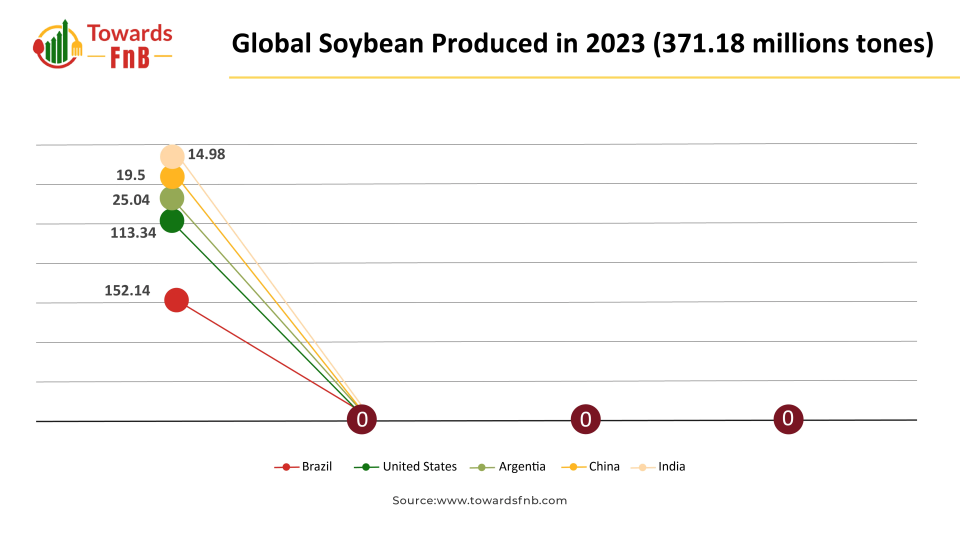
The growing livestock industry is an important sector driver of the soybean market, as soybean meal serves as a high-quantity protein for poultry, cattle, and swine. On the other hand, there is a complicated balance between supply and demand for the market. As the soybean harvest finishes in Brazil’s Mato Grosso, which is the world’s largest soybean-producing region has recorded a cater of 49.62 million tonnes in the year of 2024-2025.
There are several opportunities in the soybean market as biofertilizers, which are a part of the agricultural biologicals category that introduces beneficial micro-organisms to soil. These microorganisms enhance soil fertility by increasing nutrient absorption and availability whose outcome is a healthier and resilient soybean plant. As consumers and industries accelerate the use of friendly products, farmers can utilize agricultural biologicals, which can market their crops as sustainable. Eco-friendly farming can develop biological inputs as they lessen the demand for artificial pesticides and fertilizers.
Biopesticides support crops naturally from pests and diseases, which assist them in yield quality. They are secure for the environment and have fewer bad effects on the soil’s long-term health benefits as they are sourced from natural resources. Also, agricultural biologists often prove more cost-effective as compared to traditional chemical inputs. Farmer profitability can be grown by improving soil health and decreasing reliance on costly chemical fertilizers.
The major challenges and limitations faced by the soybean market is faced by farmers due to non-accessibility of labour needed at times due to the impact of weather, the higher cost of agrochemicals, and the complexities in getting credit. Time-to-Time harvesting is crucial for soybean farming. If the harvesting gets delayed, then the grain will emerge from the pod, and if it falls on soil, it can reduce overall production. Farmers even have a lack of storage, so they must sell the produce immediately after harvesting.
Asia Pacific Dominated the Soybean Market in 2024
The consumers are heavily aware of health risks linked with high product consumption such as saturated fat and cholesterol. These issues have led to several plant proteins as healthier alternatives. As a result, consumers still give importance to naturalness and digestive health, which avoids artificial ingredients and GMOs too. Most Asian consumers always scrutinize ingredient labels on plant-based products.
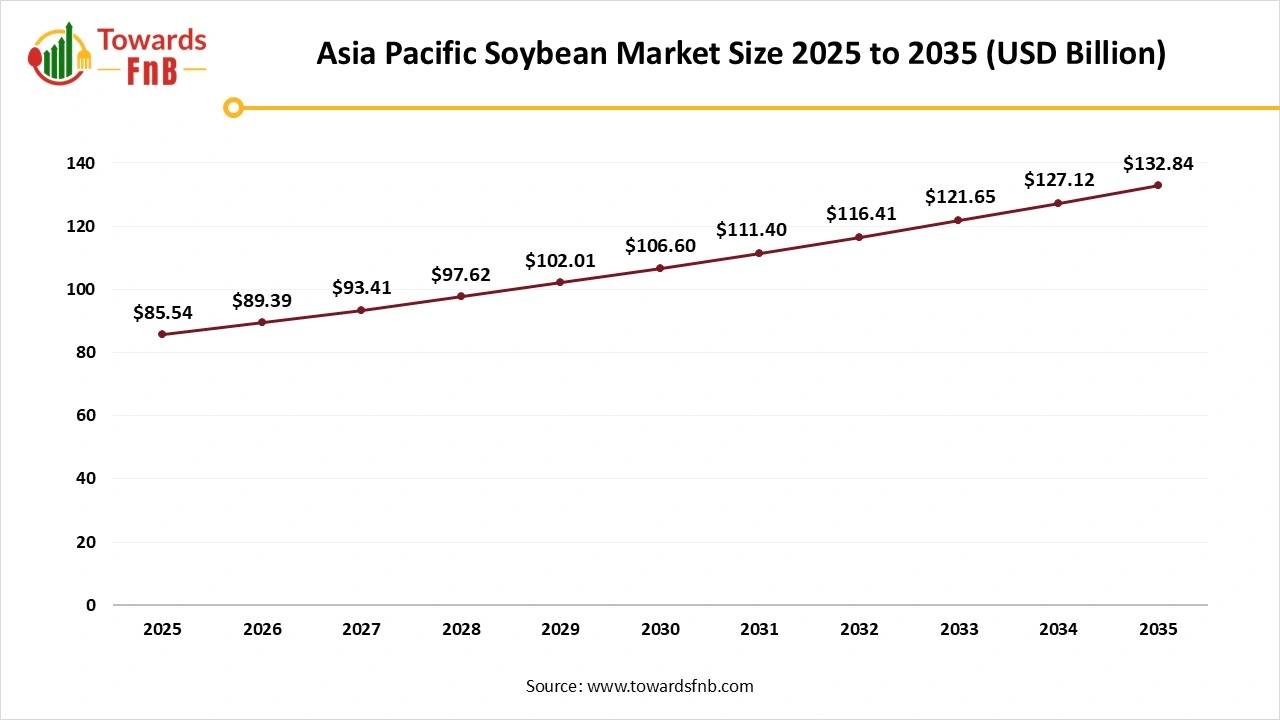
The Asia Pacific soybean market size reached at USD 85.54 billion in 2025 and is forecast to rise from USD 89.39 billion in 2026 to reach approximately USD 132.84 billion by 2035 with a CAGR of 4.5% during the forecast period from 2026 to 2035.
The plant protein market trend has resulted in rising issues for animal welfare and the environmental effect of animal agriculture, which are driving consumers to choose plant-based options. Plant-based proteins offer a lesser environmental effect as compared to animal products, which contribute to greenhouse gas emissions, water pollution, and deforestation. The third and last trend is related to technological advancement in plant-based protein, which has considerably improved texture, taste and functionality, which makes them more attractive than animal products.
China Has Marked a Significant Share in Asia Pacific in the Year 2024.
Soybean cultivation in China is focused primarily in the vast northeastern region, which is the main soybean developing area of the region. Heilongjiyang province, which is China’s largest producer of soybean, has led to significant growth in soybean output and cultivation, which yielded 9.54 million in 2022, which resulted in 47% of the country’s total output. The province has grown yields with the help of improved varieties and innovative field management techniques. Furthermore, the black earth in Heihe is known for its fertility, which contributes to the high quality of locally grown soybeans.
India Soybean Market at Boost
India is the second-largest country, leading the regional market, due to the country's expanded agriculture sector and government support for this sector. Growing focus on enhanced processing techniques to improve soybean yield and efficiency is bringing significant innovations in the emerging market. The demand for plant-based proteins has increased among young Indian millennials and the Gen Z population. Additionally, the expanding poultry industry is fueling the production volume of soybeans in the country. Government support and investments in soybean production and export are further contributing to the market growth.
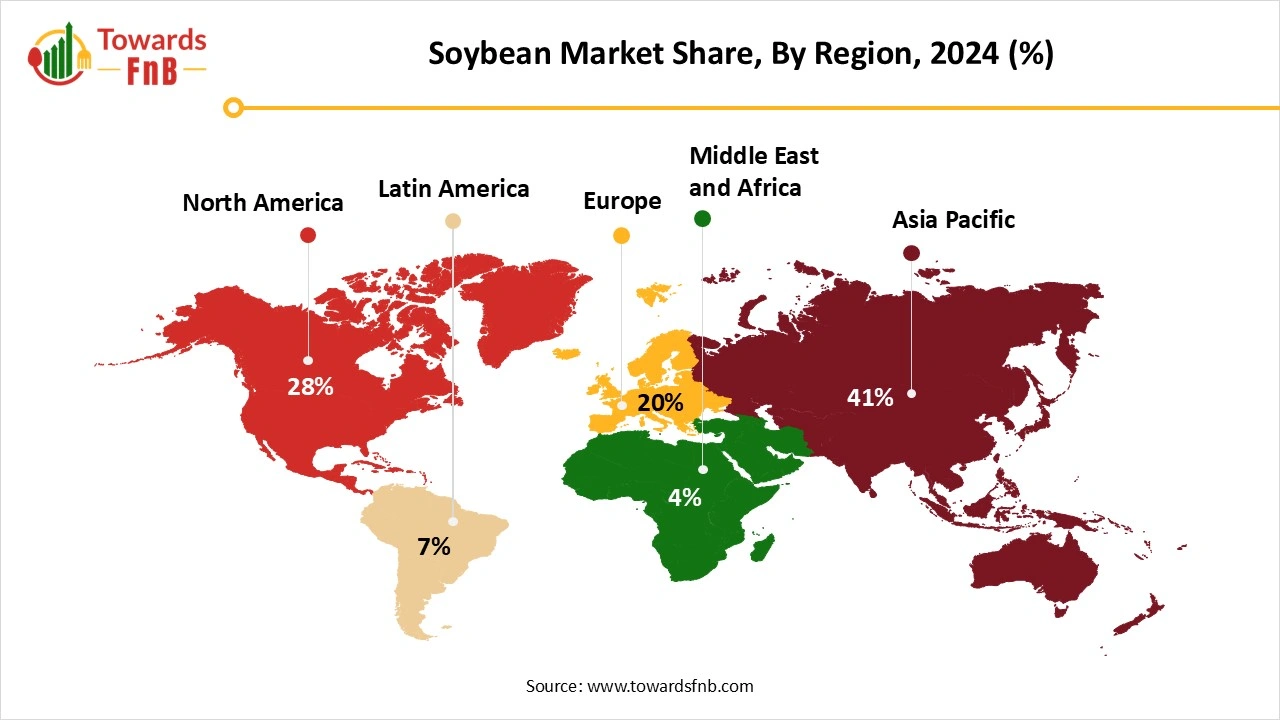
North America Expects Significant Growth in the Soybean Market During the Forecast Period.
A growing population, rising consumer consciousness, and climate change are adding new pressures and greater demand for sustainable nutrition and energy. United States soy farmers assist in growing and developing sustainable solutions to today’s biggest issues. The sustainable soy products are now a complete package of 10,000+ product packs, which forms a crucial part of U.N sustainable development goals.
Soybeans are officially cultivated and grown in Eastern and Western Canada by heavily focus is on the East. Canada is one of the largest exporters of the soybean and China is the largest buyer of soybeans from Canada. Meanwhile, soybeans are crushed in eastern Canada, whereas some eastern Canadian soybeans are imported to food markets. Canadian farmers have advantages from the significant growth in the global soybean trade.
With instance to this,
In Europe, significant volumes of soybean are imported primarily for livestock feed, mainly sourced from Brazil, the United States, and Argentina. Furthermore, the demand for genetically modified (GM)-free soybeans for human consumption is expected to rise. The European soybean market is undergoing a transformative phase, characterized by increasing domestic demand, the expansion of cultivation areas, and a growing commitment to sustainable and traceable agricultural practices. The primary driver of this growth is the escalating demand for plant-based proteins, which are becoming increasingly popular for human consumption in the form of meat alternatives and animal feed, particularly in the poultry and dairy industries.
The soybean market in the United Kingdom is experiencing substantial growth, driven by an increasing consumer focus on plant-based diets and sustainable protein sources. Food manufacturers are progressively incorporating full-fat soy into dairy alternatives, meat substitutes, and health foods, establishing it as a versatile ingredient that aligns with changing consumer preferences.
In 2024, the United Kingdom imported £401 million worth of soybeans, ranking it as the 249th most imported product out of 1,223 categories. The principal sources for the United Kingdom's soybean imports in 2024 were Brazil (£243 million), the United States (£66.3 million), Canada (£62.6 million), Belgium (£7.72 million), and China (£7.44 million).
The soybean market in the Middle East and Africa is rapidly evolving due to increasing demand, changes in agricultural practices, and the region’s reliance on imports to meet its growing needs. In the Middle East, countries such as Egypt, Saudi Arabia, and Algeria are prominent players in the soybean import market, utilizing soybeans primarily for animal feed production, oil extraction, and other processing requirements. Soybeans are integral to both global and regional agricultural frameworks, playing a crucial role in fulfilling the rising demand for protein-rich food and animal feed. This is particularly focused on key soybean-producing countries, including Nigeria and South Africa.
South Africa has emerged as a significant contributor to the global soybean market, demonstrating substantial growth in production over the last decade. The country produces approximately 2.7 million tonnes of soybeans, of which 2 million tonnes are allocated for domestic use. Many of the domestically consumed soybeans are directed towards the production of soymeal for animal feed.
The soybean market in Latin America is one of the most important in the world, driven mainly by Brazil and Argentina, which together rank among the top global producers and exporters. Brazil has become the largest soybean exporter, supported by vast farmland, favorable climate, and strong demand from China. Argentina, while also a major producer, focuses heavily on processing soybeans into meal and oil, making it a leading exporter of these value-added products. Paraguay and Bolivia also contribute significantly to regional supply.
In Brazil, the soybean market is a cornerstone of the country’s agricultural economy and a major driver of export revenue. The industry benefits from continuous expansion into new agricultural frontiers, though this growth raises concerns about deforestation and environmental impacts, particularly in the Amazon and Cerrado regions. Logistics also play a significant role such as improvements in ports, railways, and highways have boosted export efficiency, though bottlenecks still occur during peak seasons.
Soybean Market Share, By Nature, 2025 (%)
| Segments | Shares (%) |
| GMO | 84% |
| Non-GMO | 16% |
The GMO Segment Led the Soybean Market in 2025
As crop production has grown, agricultural researchers have developed new growing systems, inputs, and genetically modified seeds to increase yields of mass-produced crops like soybeans. These advances have emerged production to serve an abundant, affordable source of protein for human food and animal feed. Around the world, most large-scale soybean processors depend on solvent extraction to differentiate the oil from the meal to supply food and feed markets. Whereas, the small-scale mechanical oil may not compete with solvent extractors when they offer an unwanted benefit or organic soybean meal.
The Non-GMO Segment is Expected to Grow at the Fastest Rate During the Forecast Period
Consumer attitude towards non-GMO is very positive, which shows a rising preference for natural and perceived healthier food options. Several consumers link non-GMO with environmental benefits and health, which drives growth. Furthermore, there is emerging interest in traceability and transparency in food production as consumers are finding information about their food origins and production methods.
Soybean Market Share, By Form, 2025 (%)
| Segments | Shares (%) |
| Raw | 15% |
| Processed | 85% |
The Processed Soybean Segment Dominated the Soybean Market in 2025
Soybean is well known for its high protein value, and the health and nutritious value comes from Nigeria. The beans are very low in carbohydrates and have a lower glycaemic index, which is a measure of how foods can affect the growth in blood sugar after a meal. Processed soybeans come in different forms, such as tofu, soy milk, and soy oil, which are excellent sources of protein, having a specific amount of phytic acid, B Vitamins, and dietary minerals.
The Raw Segment is Expected to Grow at the Fastest Rate in the Soybean Market During the Forecast Period
The market for raw soybean is expanding due to several factors, particularly from China, where soybeans are hugely utilised for animal feed and soy-based food products. Additionally, the rising use of soybean oil in the biofuel industry, especially for biofuel production, is contributing to increased demand. Soy-based products are also utilised in inks, plastics and adhesives, and other industrial materials, which contributed to broader demand.
Soybean Market Share, By End-Use, 2025 (%)
| Segments | Shares (%) |
| Food & Beverages | 12% |
| Animal Feed | 73% |
| Industrial Use | 8% |
| Others | 7% |
The Animal Feed Segment Dominated the Soybean Market in 2025
The effective use of soybean in the livestock industry has become a crucial practice to improvise animal productivity and health. By adding soybean into animal feed, directors can improve feed conversion, promote faster and healthier growth. Furthermore, the balance of amino acids and high digestibility contributes to better acceptance of nutrients, which converts into better performance in milk and meat production. To maximize the advantages, it is crucial to adjust the proportions and combinations with other feeds according to specific requests of the livestock, which ensures a balanced and efficient diet.
The Food and Beverage Segment are Expected to Grow at the Fastest Rate in the Soybean Market During the Forecast Period
Soybean can be utilised in the production of dairy products, such as formula milk powder and liquid milk. It can be improved using the protein content and milk nutrition and flavor, which gives beneficial advantages in amino acid content, flavor, and ratio. It can be used as a functional additive or non-non-functional filler in the manufacturing of meat products. Apart from this, it is beneficial in fish products, baked goods and pasta foods, protein drinks, and canned food too.
Crystal Crop Protection
DEKALB and Asgrow
Rallis India Limited
Moolec Science
By Nature
By Form
By End-Use
By Region






Principal Consultant
Vidyesh Swar, Senior Research Analyst at Towards Food & Beverages, specializes in market research, focusing on supply-demand evaluation, pricing analysis, alternative proteins, plant-based foods, and sustainable food technologies within the industry.
Learn more about Vidyesh Swar
Reviewed By
Aditi Shivarkar, with 14+ years in Food and Beverages market research, specializes in food, beverage, and eco-friendly packaging. She ensures accurate, actionable insights, driving Towards FnB's excellence in industry trends and sustainability.
Learn more about Aditi ShivarkarApril 2026
April 2026
April 2026
April 2026

Soybean Market

 +1 804-441-9344
 Download Sample
 Schedule a Meeting