April 2026



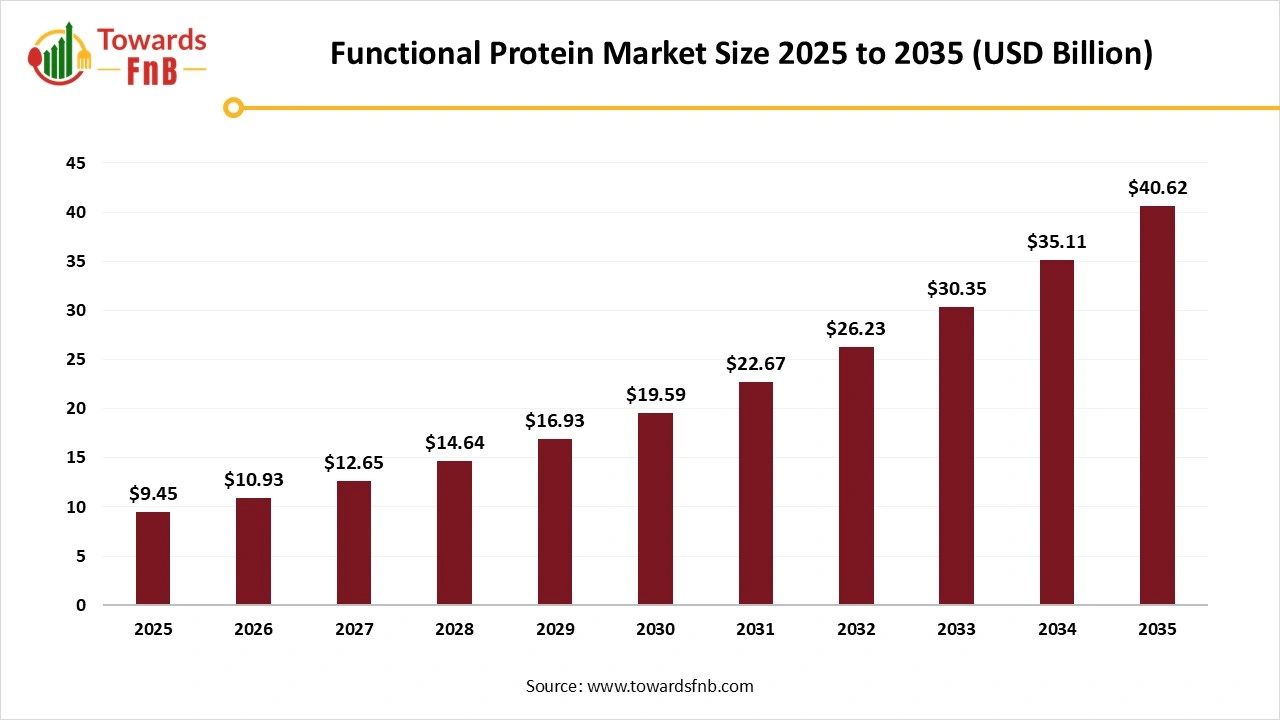
The global functional protein market size reached at USD 9.45 billion in 2025 and is anticipated to increase from USD 10.93 billion in 2026 to an estimated USD 40.62 billion by 2035, witnessing a CAGR of 15.7% during the forecast period from 2026 to 2035. The expansion of sports nutrition and the focus on muscle maintenance drive market growth.
| Study Coverage | Details |
| Growth Rate from 2026 to 2035 | CAGR of 15.7% |
| Market Size in 2026 | USD 10.93 Billion |
| Market Size in 2027 | USD 12.65 Billion |
| Market Size by 2035 | USD 40.62 Billion |
| Largest Market | Asia Pacific |
| Base Year | 2025 |
| Forecast Period | 2026 to 2035 |
| Regions Covered | North America, Europe, Asia-Pacific, Latin America, and Middle East & Africa |
Functional protein are a type of protein that is capable of performing specific functions in the body. They perform functions like chemical messengers, transport substances, catalyzes reaction, and defend against pathogens. They offer benefits like enhancing immunity, providing stability to food products, accelerating recovery rate, enhancing hydration, improving nutritional profiles, and promoting sustainability. The various functional proteins are hormones, defense, storage, enzymes, movement, and transport. The functional proteins are very important for regulation, metabolic processes, and immune response.
The functional proteins market growth is driven by increased plant-based protein consumption, expansion of fitness culture, high spending on functional food products, popularity of protein-enhanced dairy, focus on metabolism improvement, growing obesity rates, continuous growth in active lifestyles, and the focus on a healthy lifestyle.
The technological shifts like microencapsulation, microarray technology, cold plasma technology, high-throughput screening, clean-label technologies, and novel processing techniques are being experienced in the market, driven by demand for the creation of a cleaner label, sustainability, enhancing extraction, and improving nutritional value. One of the major shifts is the integration of AI technology driven by demand for optimizing texture, lowering development times, and optimizing novel proteins.
AI develops non-natural protein structures and accelerates the delivery of functional ingredients. AI easily identifies high-quality ingredient sources and manufactures therapeutic proteins. AI determines the solubility of functional protein and replicates the taste of animal protein. AI optimizes precision fermentation and creates sustainable protein formulations. Overall, AI creates customized functional proteins by lowering cost.
For instance, Amai Proteins uses AI for the production of healthy sweet proteins.
Raw Material Procurement
Processing and Preservation
Quality Testing and Certifications
| Type | Role | Examples |
| Catalytic Proteins | Increase Reaction Rates Metabolic Regulation |
Pepsin Lipase |
| Transport Proteins | Moving Substances Within the Body Homeostasis Regulation Cell Signaling & Communication |
Lipoproteins Hemoglobin |
| Hormonal Proteins | Physical Growth Metabolism Regulation Reproduction |
Somatotropin Insulin ADH |
| Storage Proteins | Storing Nutrients for Development and Growth | Casein Zein Myoglobin Ovalbumin |
| Defensive Proteins | Pathogen Destruction Interferon Signaling Antibody Action |
Complement System Proteins Fibrinogen Immunoglobulins Lysozyme |
Why Asia Pacific Dominates the Functional Protein Market?
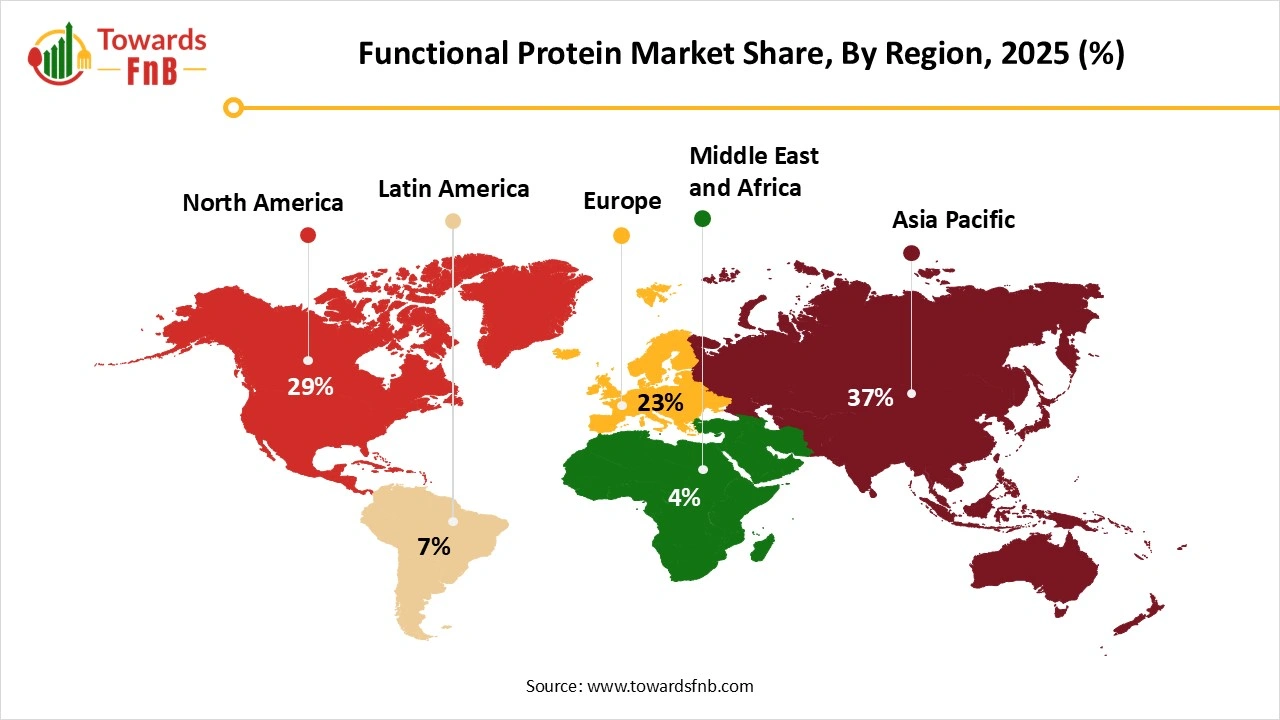
Asia Pacific dominated the functional proteins market in 2025. The growing consumption of nutritious diets and the surging vegetarian populations increase demand for functional proteins. The strong focus on combating lifestyle diseases and the high popularity of protein bar increase the adoption of functional proteins. The growing sports culture and the focus on maintaining muscle mass require functional proteins. The continuous expansion of the food and beverage sector and the growing rate of gym memberships require functional proteins, driving the overall market growth.
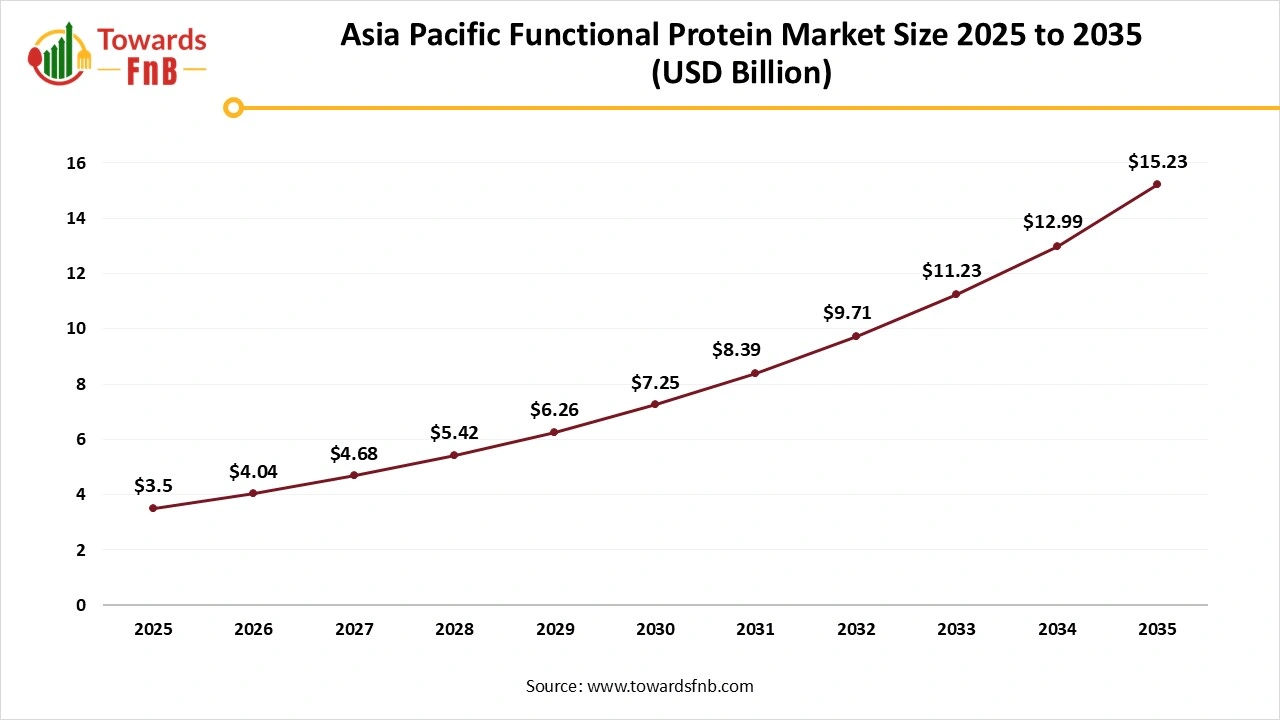
Asia Pacific Functional Protein Market Size 2025 to 2035
The Asia Pacific functional protein market size was calculated at USD 3.5 billion in 2025 with projections indicating a rise from USD 4.04 billion in 2026 to approximately USD 15.23 billion by 2035, expanding at a CAGR of 15.84% throughout the forecast period from 2026 to 2035.
China Powering Functional Proteins Development
China is a major contributor to the market. The growing fitness culture in younger generations and the focus on preventive healthcare increase demand for functional proteins. The increased popularity of bodybuilding and the rising modernization of the food sector increase the adoption of functional proteins. The growing consumption of plant-based proteins and the popularity of supplements support the overall market growth.
North America Functional Protein Market Trends
North America is experiencing the fastest growth in the market during the forecast period. The growing wellness consciousness and the robust growth in fitness activities increase demand for functional proteins. The need to maintain muscle mass in older people and the focus on active lifestyles increase the adoption of functional proteins. The increased awareness of chronic illness and the well-established food processing base increases demand for functional proteins drive the overall market growth.
Functional Proteins Transforming Health in the United States
The United States is a key contributor to the market in the North America region. The strong focus on enhancing digestive health and the increased need for weight loss increase demand for functional proteins. The robust growth in sports nutrition and the growing health consciousness require functional proteins. The advanced food technology and the focus on managing age-related conditions require functional proteins, supporting the overall market growth.
Why Whey Protein Concentrates Segment is Dominating the Functional Protein Market?
The whey protein concentrates segment dominated the functional proteins market in 2025. The increased use of foaming agents in food processing and the expanding sports nutrition industry increases demand for whey protein. The strong focus on muscle recovery and the increasing obesity rates require whey proteins. The rapid digestion, cost-effectiveness, high functionality, rapid absorption, and superior nutrition of whey protein drive the overall market growth.
The Soy Protein Segment is the Fastest-Growing in the Market During the Forecast Period
The growing ethical consumerism and the popularity of plant-based proteins increase demand for soy protein. The high consumption rate of cholesterol-free products and the innovation in food processing require soy proteins. The sustainability, high functionality, and superior nutritional values of soy proteins support the overall market growth.
How did the Animal-Based Segment hold the Largest Share in the Functional Protein Market?
The animal-based segment held the largest revenue share in the functional proteins market in 2025. The increased production of functional food and the need for muscle recovery increase demand for animal-based protein. The high consumption of sports nutrition supplements requires animal-based proteins. The high bioavailability, application diversity, superior nutritional profile, and technical functionality of animal-based proteins drive the overall market growth.
The Plant-Based Segment is Experiencing the Fastest Growth in the Market During the Forecast Period
The growing prevalence of chronic illness and the increasing environmental awareness increase demand for plant-based proteins. The increased production of nutritional bars and the high consumption rate of protein-enriched snacks require plant-based proteins. The popularity of a flexitarian lifestyle and wellness trends supports the overall market growth.
Why Dry Segment Dominates the Functional Protein Market?
The dry segment dominated the functional proteins market in 2025. The increased production of bakery items and the growing rate of on-the-go lifestyles increase demand for dry form. The higher production rate of muscle-building supplements requires a dry form. The high protein concentration, logistic efficiency, consumer convenience, high precision, and longer shelf life of the dry form drive the market growth.
The Liquid Segment is the Fastest-Growing in the Market During the Forecast Period
The increased production of specialized nutritional products and the transition towards protein-enriched beverages increase demand for liquid form. The increased consumption of yogurt and the focus on workout recovery increases adoption of the liquid form. The unmatched convenience, faster absorption, targeted benefits, and rapid effectiveness of the liquid form support the overall market growth.
Which Application held the Largest Share in the Functional Protein Market?
The dietary supplements segment held the largest revenue share in the functional proteins market in 2025. The growth in proactive health management and the push for plant-based diets increases demand for dietary supplements, which require functional proteins. The increased consumption of protein powder and the huge need for muscle recovery increase the consumption of dietary supplements. The need for nutritional support and the focus on managing malnutrition drive the overall market growth.
The Functional Beverage Segment is Experiencing the Fastest Growth in the Market During the Forecast Period
The consumer demand for ready-to-drink protein and the focus on weight management increase demand for functional protein beverages. The expanding home workouts and the growing lactose-intolerant populations increase demand for functional beverages. The nutrient bioavailability, convenience, and wellness consciousness support the overall market growth.
Verley
Tetra Pak
ZXCHEM Group
By Product
By Source
By Form
By Application
By Region




Principal Consultant
Vidyesh Swar, Senior Research Analyst at Towards Food & Beverages, specializes in market research, focusing on supply-demand evaluation, pricing analysis, alternative proteins, plant-based foods, and sustainable food technologies within the industry.
Learn more about Vidyesh Swar
Reviewed By
Aditi Shivarkar, with 14+ years in Food and Beverages market research, specializes in food, beverage, and eco-friendly packaging. She ensures accurate, actionable insights, driving Towards FnB's excellence in industry trends and sustainability.
Learn more about Aditi ShivarkarApril 2026
April 2026
April 2026
April 2026

Functional Protein Market


 +1 804-441-9344
 Download Sample
 Schedule a Meeting