April 2026



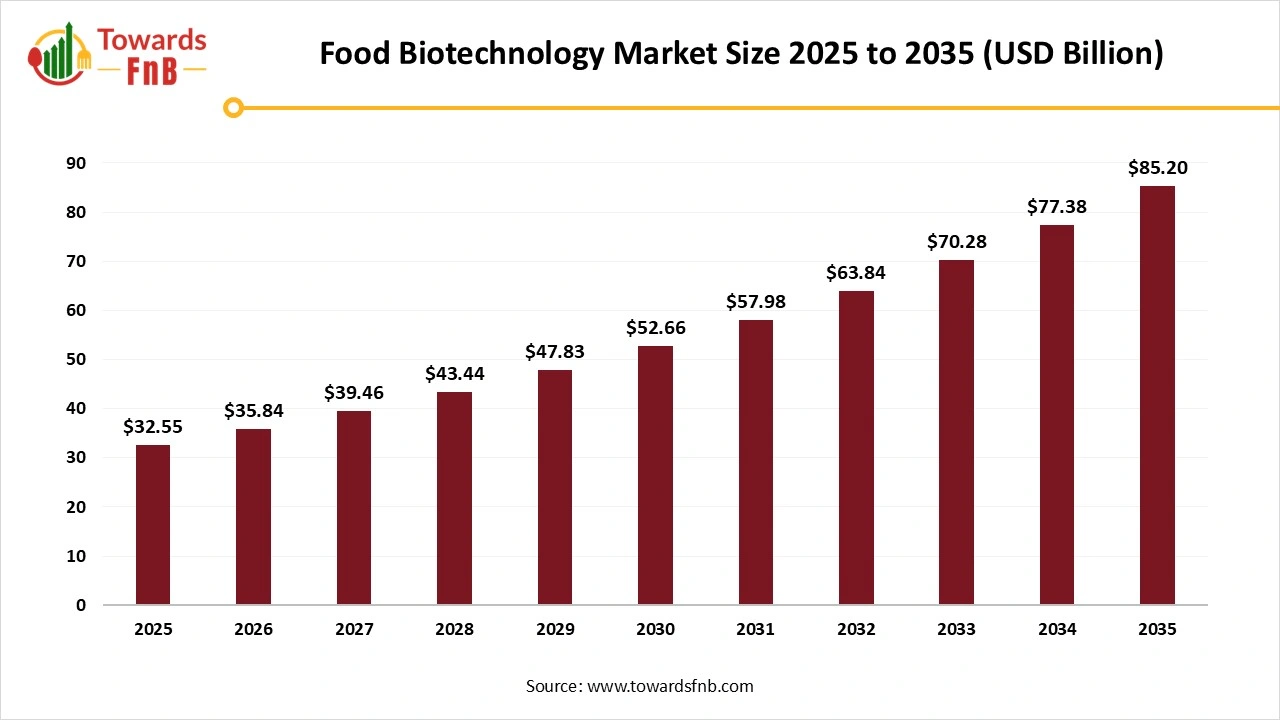
The global food biotechnology market size estimated at USD 32.55 billion in 2025 and is predicted to increase from USD 35.84 billion in 2026 to nearly reaching USD 85.20 billion by 2035, growing at a CAGR of 10.10% during the forecast period from 2026 to 2035. The growth of the market is driven by rising advancements in synthetic biology and genetic engineering.
| Study Coverage | Details |
| Growth Rate from 2026 to 2035 | CAGR of 10.10% |
| Market Size in 2026 | USD 35.84 Billion |
| Market Size in 2027 | USD 39.46 Billion |
| Market Size by 2035 | USD 85.20 Billion |
| Largest Market | North America |
| Base Year | 2025 |
| Forecast Period | 2026 to 2035 |
| Regions Covered | North America, Europe, Asia-Pacific, Latin America, and Middle East & Africa |
The food biotechnology market is driven by factors like increasing food demand and security, growing health awareness, rising investments in R&D, demand for efficient production and healthier foods via microbial solutions, rising technological advancements such as sustainable farming and CRISPR, climate change pressures needing resilient crops and increasing demand for food across the globe.
The rise of technological advancements in food biotechnology are transforming the market through smart packaging, cultivated meat platforms, precision fermentation, CRISPR gene editing and AI, focusing on production efficiency, improved traceability, plant-based alternatives, sustainability and enhanced nutrition. Key areas consists of advanced processing to maintain freshness and safety, cell-based technology for bioinformatics for research and developments, and genetic modification for traits such as better yields and pest resistance, which further expected to revolutionize the growth of the market in the coming years.
Raw Material Procurement
Packaging and Branding
Waste Management and Recycling
| Country | Regulatory Body | Key Regulations | Focus Areas | Notable Notes |
| India | Food Safety and Standards Authority of India (FSSAI) | Food Safety and Standards (Packaging and Safety Regulations) and Licensing and Registration of Food Businesses) | Major focus areas in the food biotechnology market include improving animal health, creating biofortified foods, using fermentation and enzymes for processing and developing GM crops with enhanced yield and nutrition such as Golden Rice. | The food biotechnology industry is attributed to the innovations aimed at improving production efficiency, safety, nutrition and sustainability, with notable developments in genetic engineering and alternative proteins. |
Why is North America Dominating the Food Biotechnology Market?
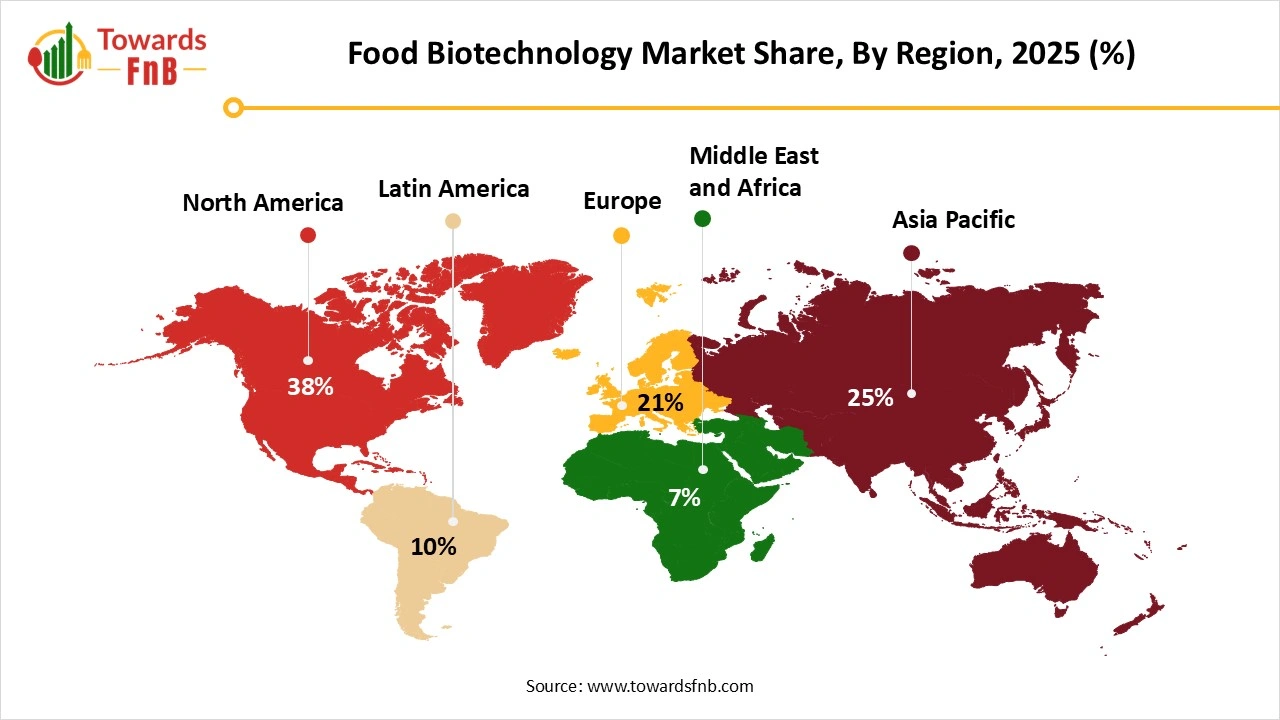
North America dominated the food biotechnology industry revenue in 2025. The market growth in the region is driven by the increasing focus on personalized nutrition, functional foods and sustainable agriculture, increasing government supportive regulations, rising research and development investments especially in cell-based foods such as lab-grown meat and GMOs, and consumer spending on nutritious food. Various companies integrate biotechnology to address these demands, balancing innovation with public trust and regulatory challenges. The U.S. and Canada are the major and dominating countries driving the market growth.
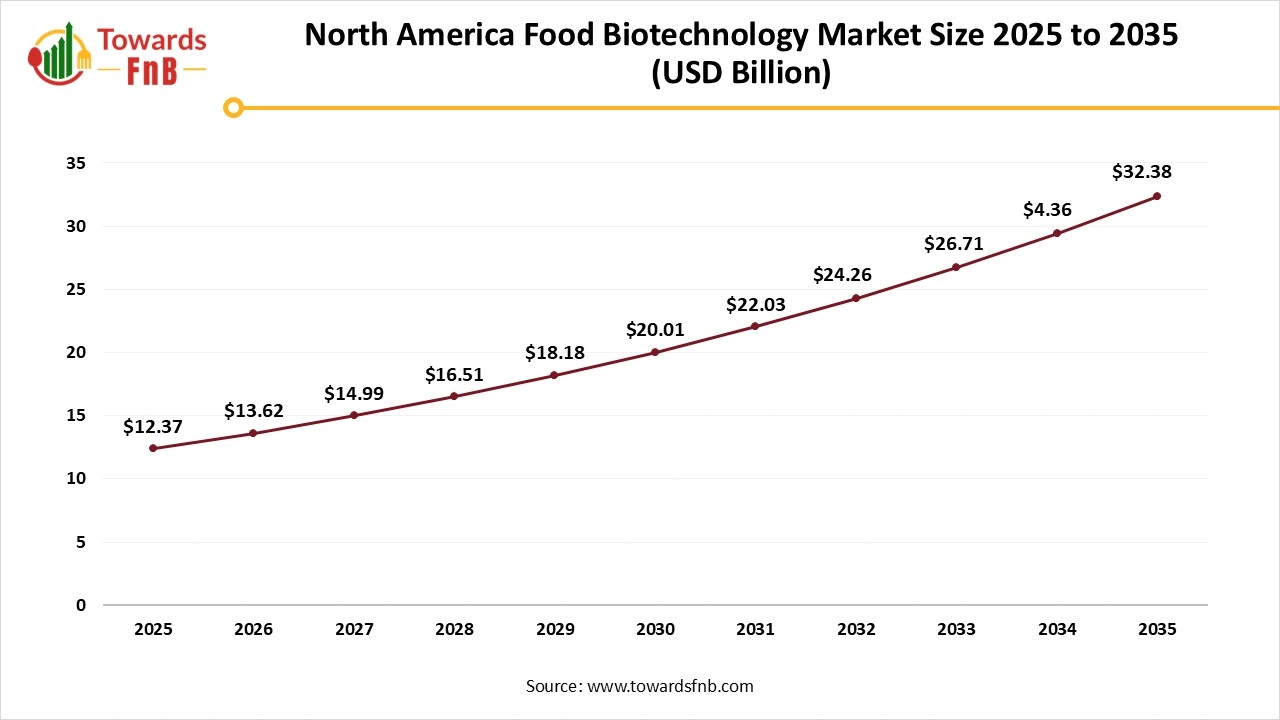
The North America food biotechnology market size reached at USD 12.37 billion in 2025 and is anticipated to increase from USD 13.62 billion in 2026 to an estimated USD 32.38 billion by 2035, witnessing a CAGR of 10.10% during the forecast period from 2026 to 2035.
The U.S. Food Biotechnology Market Trends
The food biotechnology industry in the U.S. is witnessing strong growth, driven by rising technological advancements such as bioinformatics and AI, increasing consumer demand for sustainable and healthier foods, and innovations in functional food and cellular agriculture, with major investments in genetically modified crops for reduced costs and higher yield, aiming to address health concerns and improve food security.
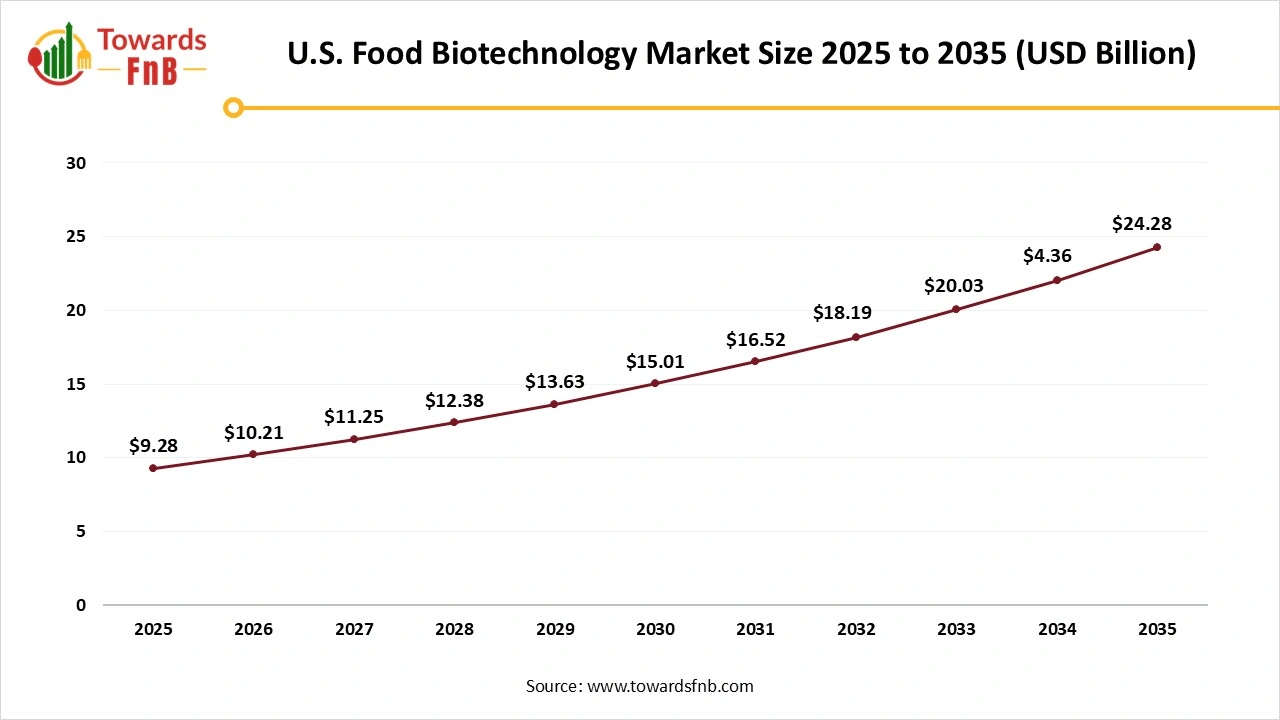
The U.S. food biotechnology market size was valued at USD 9.28 billion in 2025 and is expected to grow steadily from USD 10.21 billion in 2026 to reach nearly USD 24.28 billion by 2035, with a CAGR of 10.10% during the forecast period from 2026 to 2035.
Asia Pacific is expected to grow fastest during the forecast period. The market in the region is driven by factors such as increasing focus on enhanced nutrition, waste reduction and functional foods, advancements in fermentation, alternative proteins, precision agriculture and gene editing, focus on sustainability goals, increasing need for food security and increasing health awareness. Various companies are focusing on innovation in enhanced nutrition, waste reduction and functional foods, which expected to increase the demand for food biotechnology in the region.
India Food Biotechnology Market Trends
India is expected to grow fastest during the forecast period. The food biotechnology industry in India is witnessing rapid growth, driven by a government push for innovation and booming bioeconomy, focusing on functional ingredients, biotech flavors and sustainable food. India imported startup ecosystem and advanced flavors, as India is the major player in the Asia Pacific region, further integrating IT for efficiency in smart processing and fermentation.
Why is Europe Driving the Food Biotechnology Market?
Europe is expected to grow at a notable rate during the forecast period. The market growth in Europe is driven by increasing EU government policy support, sustainable food production, and innovation in alternative proteins such as cultured meat and precision fermentation, aimed at rising competitiveness, with major areas such as enhanced bio-ingredients, shelf-life and nutrition. The overall biotech food industry in Europe shows a trend towards cleaner labels, research ecosystems and robust investments, major expansion in novel food technologies.
The Germany Food Biotechnology Market Trends
The food biotechnology industry in Germany rapidly growing industry, driven by consumer demand for clean-label and healthy products, rise in healthy eating, strong focus on R&D, sustainability needs and rise of technological innovation, major growth in agricultural biotech and food tech startups, focusing on areas such as improved food processing, biopesticides, precision farming and alt-proteins, with biotech applications major to future food efficiency and security.
How are the Middle East and Africa Boosting the Food Biotechnology Market?
The Middle East and Africa market shows significant growth, driven by increasing government efforts for food security, rising rapid urbanization and increasing health awareness, focusing on advanced processing, precision agriculture and functional foods. In addition, integration of IoT and AI, increasing consumption of ready-to-eat and processed meals, and increasing demand for dietary supplements, nutraceuticals and functional foods, which further expected to increase the presence of food biotechnology in the region.
UAE Food Biotechnology Market Trends
The UAE food biotechnology market is witnessing rapid growth, driven by rising technological innovation, focus on sustainability and increasing government initiatives for food security, with major investments in Food Innovation Hub and Abu Dhabi. The food biotechnology also focuses on artificial intelligence, biopesticides, vertical farms and precision farming, aiming to create a resilient food system and reduce import reliance by applying biotech to crop development, processing and protection.
Why does South America Driving the Food Biotechnology Market
The market in South America shows major growth, driven by increasing demand for functional foods, beverages, dairy and processed food, improved food stability and safety and increasing consumer demand for better nutrition and healthier options. While agricultural biotech focuses on digital tools, sustainability, the broader food tech scene integrates AI, enhanced crops and GMOs.
Brazil Food Biotechnology Market Trends
The market in Brazil is a growing sector, driven by innovation in alternative proteins such as cultivated meat, rising demand for functional foods such as prebiotics and probiotics, rising strong agricultural base such as coffee, corn and soy. The market's forecast shows significant revenue potential with expanding R&D, foreign investment and strong government support, especially in areas enhancing food nutrition, sustainability and security.
Food Biotechnology Market Share, By Type, 2025 (%)
| Segments | Shares (%) |
| Transgenic Crops | 35% |
| Synthetic Biotechnology Derived Products | 65% |
Why is Synthetic Biotechnology Derived Products Dominating Food Biotechnology Market?
The synthetic biotechnology derived products segment dominated the market revenue in 2025. The synthetic biotechnology derived products play an important role in the market as they offer innovative, efficient and sustainable solutions to challenges such as environmental impact and food security across the globe. They also allow the creation of novel food products and components, which may improve production efficiency and enhance nutritional value compared to traditional methods. In addition, synthetic biology is also catering to specific dietary preferences, expanding consumer choices and driving the creation of entirely new food ingredients and sources.
The Transgenic Crops Segment is Expected to Grow Fastest During the Forecast Period.
The transgenic crops play a crucial in the market, focusing on enhanced nutrition and focusing on traits such as herbicide/ pest resistance. The segment growth is driven by the factors such as stress tolerance, enhanced nutrition value, reduced herbicide/pesticide use, improved crop yields and increased food demand, nutritional enhancement, government support and policy and advanced technologies such as genome editing.
Food Biotechnology Market Share, By Application, 2025 (%)
| Segments | Shares (%) |
| Animals | 60% |
| Plants | 30% |
| Others (Micro-organisms) | 10% |
How is Animals Segment Dominating the Food Biotechnology Market?
The animals segment dominated the global market revenue in 2025. Animals are the major segment in the food biotechnology industry as targets for improving livestock efficiency, models for human disease research, tools for producing therapeutic proteins and sources for genetic enhancement such as better nutrition and disease resistance in milk or meat, all driving innovation in biopharma, animal health and food security, with a focus on product quality and productivity. The selective breeding and genetic modification create animals with improved feed efficiency and disease resistance and faster growth, leading to more sustainable and abundant eggs, milk and meat.
The Plants Segment is Expected to Grow Fastest During the Forecast Period.
Plants are fastest growing foundation in the market, driving by allowing solutions for enhanced nutrition, sustainability and food security through creating plant-based medicines and novel ingredients, improving crop yields, breeding for resilience and genetic modification, transforming raw agricultural products into efficient, safe and high-value components and sources.
Ayushi Hisaria
Rwanda
By Type
By Application
By Region





Principal Consultant
Vidyesh Swar, Senior Research Analyst at Towards Food & Beverages, specializes in market research, focusing on supply-demand evaluation, pricing analysis, alternative proteins, plant-based foods, and sustainable food technologies within the industry.
Learn more about Vidyesh Swar
Reviewed By
Aditi Shivarkar, with 14+ years in Food and Beverages market research, specializes in food, beverage, and eco-friendly packaging. She ensures accurate, actionable insights, driving Towards FnB's excellence in industry trends and sustainability.
Learn more about Aditi ShivarkarApril 2026
April 2026
April 2026
April 2026

Food Biotechnology Market


 +1 804-441-9344
 Download Sample
 Schedule a Meeting