April 2026



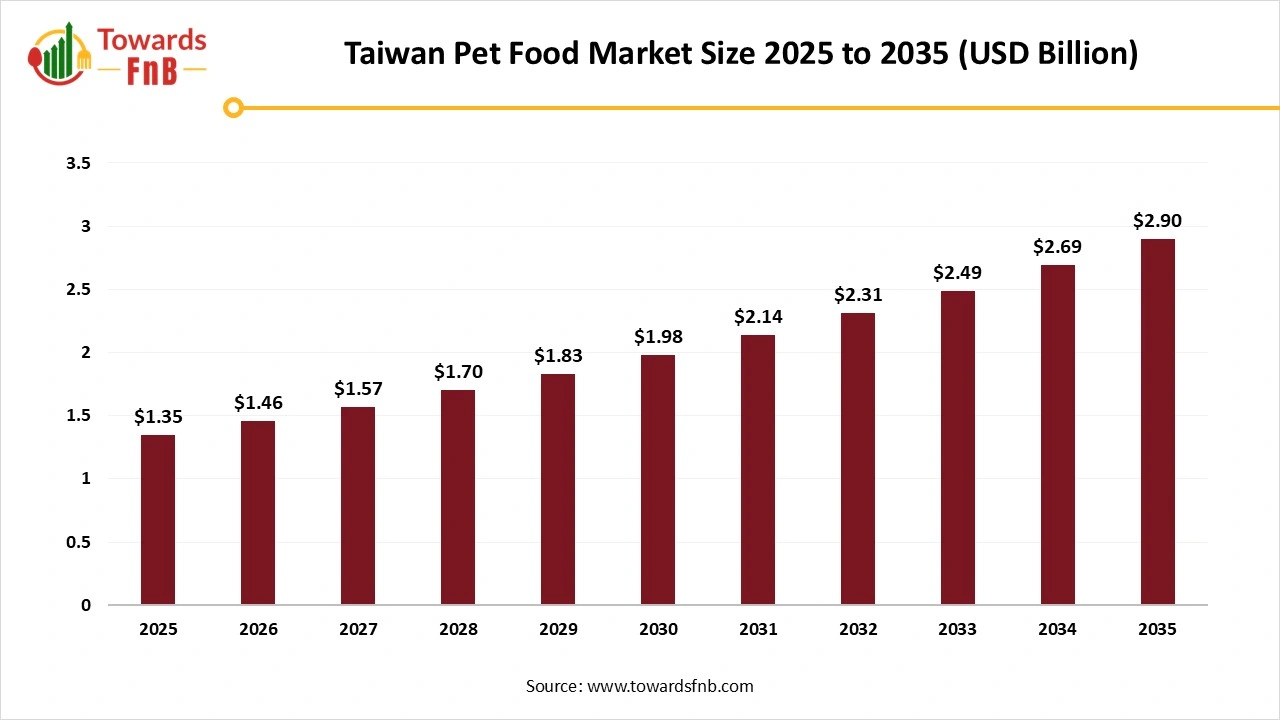
The Taiwan pet food market size stood at USD 1.35 billion in 2025 and is predicted to grow from USD 1.46 billion in 2026 to hit approximately USD 2.90 billion by 2035, expanding at a CAGR of 7.95% from 2026 to 2035. The growing number of households owning pets in Taiwan drives market growth.
| Study Coverage | Details |
| Growth Rate from 2026 to 2035 | CAGR of 7.95% |
| Market Size in 2026 | USD 1.46 Billion |
| Market Size in 2027 | USD 1.57 Billion |
| Market Size by 2035 | USD 2.90 Billion |
| Base Year | 2025 |
| Forecast Period | 2026 to 2035 |
Pet food is prepared nutrition developed for domesticated pets. It is made using ingredients like carbohydrates, additives, protein, and fats. It offers essential nutrients to pets. It offers benefits like optimal digestive health, immune system support, tailored nutrition, weight management, and healthy skin. The various types of pet food include wet food, grain-free food, organic food, dry food, raw food, therapeutic food, and treats. It is utilized in applications like specific dietary formulations, pet treats, nutraceuticals, veterinary diets, and kibble processing.
The Taiwan pet food industry growth is driven by the growing demand for human-grade pet food, high preference for pets over children, increased spending on pet nutrition, expansion of pet food brands, development of grain-free pet food, higher demand for fresh pet food, stringent safety regulations, and the expansion of frozen pet food.
The Taiwan pet food industry is undergoing key technological shifts driven by demand for enhanced safety, precision nutrition, and customized food formulas. The ongoing shifts in the market are IoT, smart feeding, smart pet tech, and smart manufacturing helps in boosting efficiency, tracking nutritional needs, and enhancing packaging integrity. The major shift is the AI integration, which helps in speeding up marketing strategies.
AI customizes pet diet plans and easily predicts the composition of the recipe. AI enhances the safety of the manufacturing process and easily analyzes social trends. AI improves the availability of products and speeds up the product formulation cycles. AI easily analyzes batch consistency and offers greater food security. AI analyzes consumer purchase history and minimizes human error. Overall, AI automates the manufacturing process of pet food.
Raw Material Procurement
Processing and Preservation
Quality Testing and Certifications
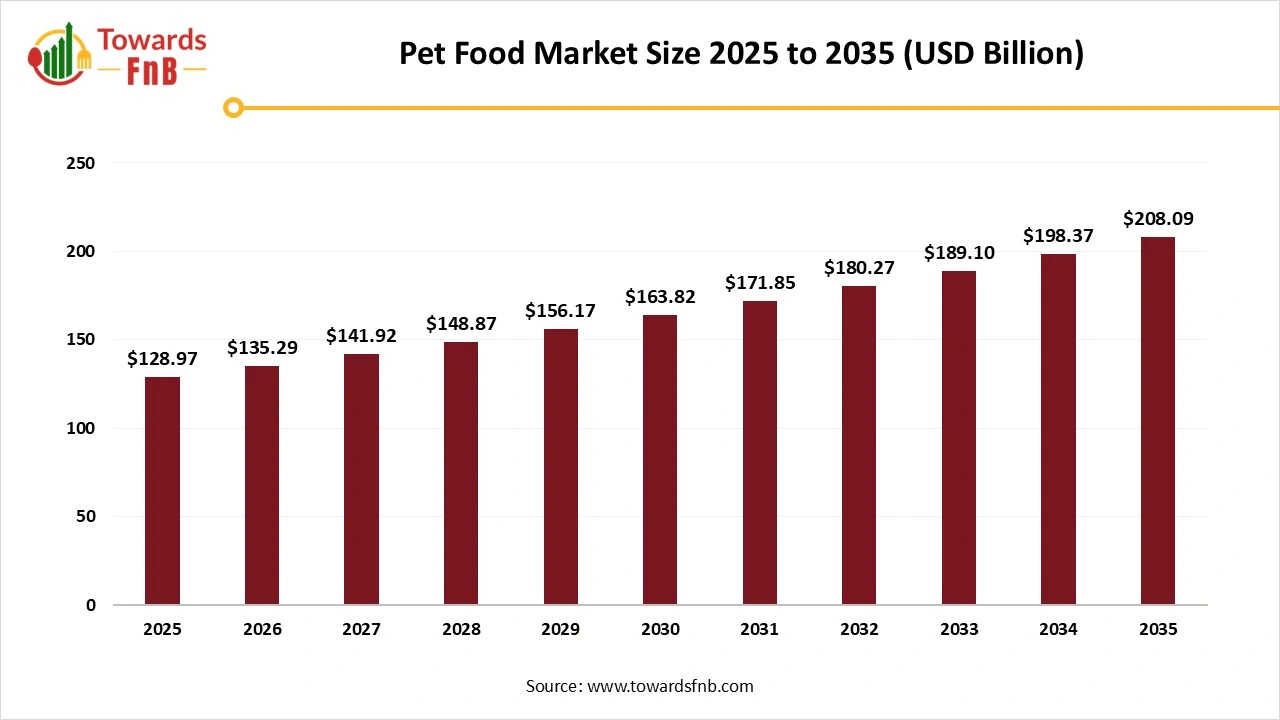
The global pet food market size was valued at USD 128.97 billion in 2025 and is projected to increase from USD 135.29 billion in 2026 to approximately USD 208.09 billion by 2035, registering a CAGR of 4.9% over the forecast period. This growth is driven by rising pet ownership, growing pet humanization trends, increased focus on pet health and nutrition, and the continuous expansion of the pet food industry.
The Dog Food Segment Dominated the Market with 52% of Market Share in 2025
The dog food segment dominated the Taiwan pet food market with a 52% share in 2025 due to the rising ownership of dogs. The growing dog population in Taiwan and the higher demand for specialized dog foods increase the production of dog food. The growing apartment living and the focus on senior pet care increase the adoption of dog food. The huge spending on dog diets and the high consumption rate of dry dog food drive the segment growth.
The cat food segment held the second-largest market share of 38% in 2025 and is expected to grow at the fastest CAGR of 8.4% during the forecast period due to the smaller apartment consumer preference for cats. The increased ownership of cats and the growing humanization of cats increase demand for cat food. The awareness about cats' nutritional needs requires cat food. The popularity of wet food and the strong demand for allergy-friendly formulations support segment growth.
The Dry Food Segment Led the Market with 46% Market Share in 2025
The dry food segment led the Taiwan pet food market with a 46% share in 2025 due to the longer shelf life. The growth in smaller living spaces and the high preference for staple pet food diets increase demand for dry food. Consumers' strong focus on budget-friendly options and the well-established pet supermarket increases the adoption of dry food. The ease of packaging, lower price, easy storage, stability, and convenience of dry food drive segment growth.
The wet food segment held the second-largest market share of 28% in 2025 due to its hydration benefits. The focus on high-moisture-content food and the huge spending on premium ingredients increase the adoption of wet food. The growth in the population of older pets and the rise in online shopping increase the adoption of wet food. The increased development of premium wet formulations supports segment growth.
The treats & snacks segment held the third-largest market share of 16% in 2025 and is expected to grow at the fastest CAGR of 9.2% during the forecast period due to the increased purchasing of treats. The strong focus on pet bonding and the rise in health-based snacking increase the adoption of treats & snacks. The increased pet pampering and the focus on pet dental health increase demand for treats & snacks. The popularity of reward-based snacks and the development of allergen-friendly treat formulations boost segment growth.
The veterinary diets segment held the fourth-largest market share of 10% in 2025 due to the growing pet health issues. The focus on health-oriented nutrition and the rising veterinary recommendations increases the adoption of veterinary diets. The preference for pets' preventive care and growing chronic conditions in pets increases the adoption of veterinary diets. High spending on therapeutic diets and the growing veterinary advice support segment growth.
The Animal-Based Segment Held the Market Share of 62% in 2025
The animal-based segment held the largest revenue share of 62% in the Taiwan pet food market in 2025 due to the pet owner preference for high-protein pet food. The shift to high-quality pet diets and the focus on the overall wellness of pets increase the adoption of animal-based ingredients. The increasing number of pet cats and the higher demand for fresh pet food increase the adoption of animal-based ingredients. The high dependency on meat-based ingredients drives the segment growth.
The plant-based segment held the second-largest market share of 23% in 2025 due to the increasing sustainability concerns. The growing incomes of the younger population and the awareness of environmental concerns increase demand for plant-based ingredients. The preference for nutrient-rich products and the strong presence of the vegetarian population increase demand for plant-based ingredients. The increased production of balanced plant-based formulations supports the segment growth.
The alternative protein segment held the third-largest market share of 15% in 2025 and is expected to grow at the fastest CAGR of 10.3% during the forecast period due to the surging adoption of sustainable protein. The focus on pet allergy management and the premiumization of ingredients increases the adoption of alternative protein. The focus on digestible proteins and the growing cost of meat increases demand for alternative proteins. The popularity of insect-derived proteins boosts segment growth.
The Offline Segment Contributed the Highest Market Share of 64% in 2025
The offline segment contributed the highest revenue share of 64% in the Taiwan pet food market in 2025 due to the consumer demand for in-store consultation. The high availability of specialty pet shops and the growing on-demand purchases increase the adoption of offline distribution. Consumer preference for reading labels and the increased purchasing of prescribed food create higher demand for offline distribution. The availability of expert advice and the rise of bulk purchasing drive segment growth.
The online segment held the second-largest market share of 36% in 2025 and is expected to grow at the fastest CAGR of 9.8% during the forecast period due to the growing convenience-driven purchasing. The availability of 24/7 access and the expansion of social commerce increase the adoption of online distribution. Competitive prices, fast delivery, and subscription service in online distribution help with expansion. The integration of omnichannel with online distribution channels supports segment growth.
The Mid-Range Segment Dominated the Market with 42% Market Share in 2025
The mid-range segment dominated the market with a 42% share in 2025 due to the growth in mass-market consumers. The increased sensitivity of high-priced pet food and the focus on convenience food increase the adoption of mid-range pet food. The increased adoption of small-breed dogs and the expansion of product variety increase the adoption of mid-range pet food. The strong focus on balancing the budget and competitive pricing on mid-tier brands drives segment growth.
The premium segment held the second-largest market share of 30% in 2025 and is expected to grow at the fastest CAGR of 9.6% during the forecast period due to the huge demand for high-quality pet food. The strong focus on preventing pet allergies and the growing urban income levels increase the adoption of premium pet food. The increased use of human-grade ingredients and the expansion of international brands support segment growth.
The economy segment held the third-largest market share of 28% in 2025 due to the growing consumer dependence on affordable options. The growing ownership of multiple pets and the increased number of cost-conscious consumers increase the adoption of the economy range. The availability of RTE pet food options and the increased bulk pet food purchasing boost segment growth.
Cat in Love
SoluPet and CHC Healthcare Group
By Pet Type
By Product Type
By Ingredient Type
By Distribution Channel
By Price Range



Principal Consultant
Vidyesh Swar, Senior Research Analyst at Towards Food & Beverages, specializes in market research, focusing on supply-demand evaluation, pricing analysis, alternative proteins, plant-based foods, and sustainable food technologies within the industry.
Learn more about Vidyesh Swar
Reviewed By
Aditi Shivarkar, with 14+ years in Food and Beverages market research, specializes in food, beverage, and eco-friendly packaging. She ensures accurate, actionable insights, driving Towards FnB's excellence in industry trends and sustainability.
Learn more about Aditi ShivarkarApril 2026
April 2026
April 2026
March 2026

Taiwan Pet Food Market


 +1 804-441-9344
 Download Sample
 Schedule a Meeting