April 2026



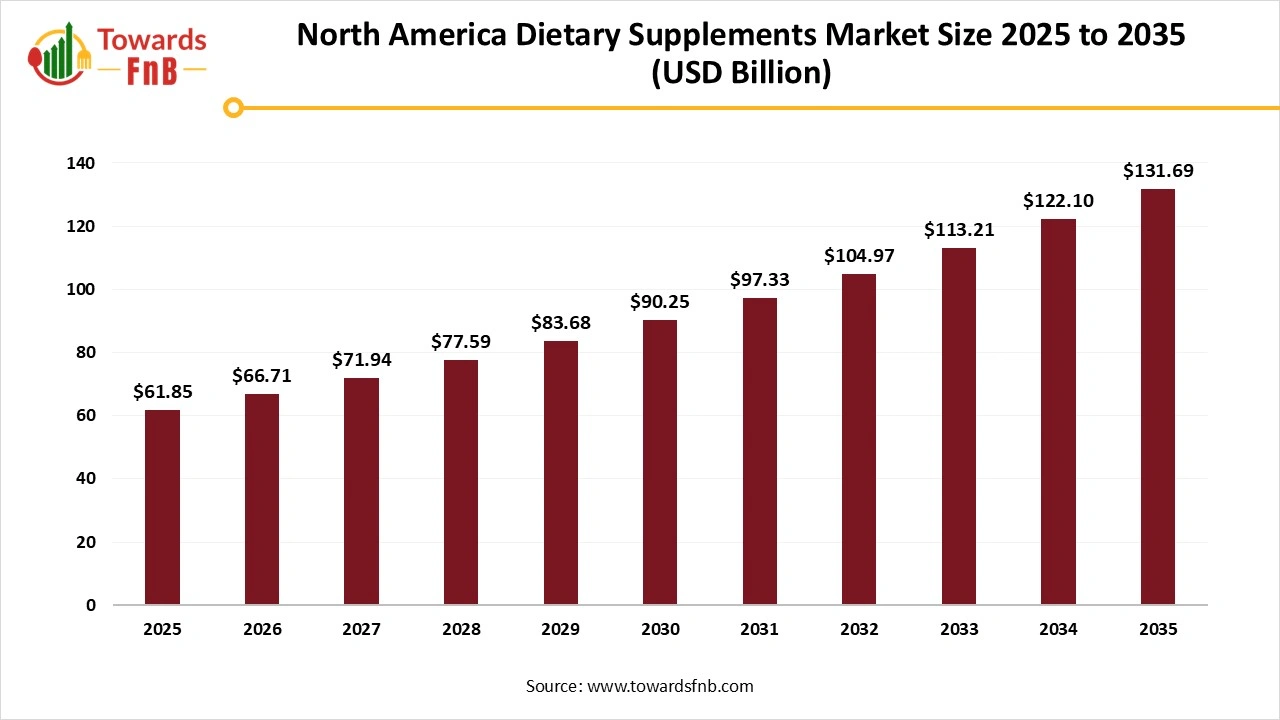
The North America dietary supplements market size stood at USD 61.85 billion in 2025 and is predicted to increase from USD 66.71 billion in 2026 to approximately USD 131.69 billion by 2035, expanding at a CAGR of 7.85% from 2026 to 2035. Growing fitness trends and increased multivitamin consumption drive market growth.
| Study Coverage | Details |
| Growth Rate from 2026 to 2035 | CAGR of 7.85% |
| Market Size in 2026 | USD 66.71 Billion |
| Market Size in 2027 | USD 71.94 Billion |
| Market Size by 2035 | USD 131.69 Billion |
| Base Year | 2025 |
| Forecast Period | 2026 to 2035 |
Dietary supplements are products that supplement individuals’ diets. The ingredients in dietary supplements are minerals, amino acids, fatty acids, herbs, probiotics, vitamins, functional extracts, and botanicals. Dietary supplements offer targeted nutritional support and enhanced physical function. They improve immunity and maintain bone density. They complement the diet and fill nutritional gaps. They are available in forms like powders, capsules, pills, energy bars, tablets, drinks, and gummies.
The North America dietary supplements industry growth is driven by the demand for immunity boosters, the burgeoning elderly population, expansion of DTC channels, rise of sports nutrition, increased addressing of nutritional gaps, strong FDA support, expansion of AI-driven technologies, and the growing plant-based supplement demand.
The North America dietary supplements industry is experiencing a technological transformation due to the popularity of digital health and growing demand for science-backed solutions. Transformations include wearable integration, blockchain technology, smart supplement system, predictive maintenance, and digital manufacturing. The adoption of artificial intelligence (AI) is the key shift in the industry.
AI offers precise nutrition recommendations and analyzes bioactive compounds. AI offers personalised health insights and strengthens the management of the supply chain. AI analyzes the feedback of consumers and creates personalized supplement packs. AI predicts the bioavailability of supplements and ensures the availability of supplements. AI tests the efficacy of the supplement and improves consumer engagement. Overall, AI helps to develop data-backed supplement solutions.
Raw Material Procurement
Processing and Preservation
Quality Testing and Certifications
Dietary Supplements Shaping Wellness in the United States
The U.S. is a prominent contributor to the market. The focus on health maintenance and the need for health support in aged people increases the demand for dietary supplements. The well-established fitness industry and the cultural demand for preventing health issues increase the adoption of dietary supplements. The higher demand for performance-enhancing supplements and the strong distribution networks of dietary supplements drive the market growth.
Dietary Supplements Influence on Canada
Canada is substantially growing in the market. The growing demand for general wellness products and the availability of health information increase demand for dietary supplements. Canadians' priority for overall well-being and the growing wellness spending increase the adoption of dietary supplements. The growing natural nutrition supports the segment growth.
Why the Vitamins Segment Dominated the North America Dietary Supplements Market?
The vitamins segment dominated the market with a 35% share in 2025 due to the focus on deficiency prevention. The need to promote overall longevity and the aging population increases demand for vitamins. The focus on energy enhancement and the strong wellness culture increases the adoption of vitamins. The long-standing familiarity and targeted functionality of vitamins drive the segment growth.
The minerals segment held the second-largest share of 20% in the market in 2025 due to the surging bone health issues. The prevention of heart diseases and the growing cognitive function concerns increase the demand for minerals. The growing mobility issues and the focus on women’s health increase demand for minerals. The increased zinc supplement consumption and the rise in tailored minerals support segment growth.
The botanicals segment held the third-largest share of 15% in the market in 2025 and is expected to grow at the fastest CAGR of 9.5% during the forecast period due to the surging interest in plant-based supplements. Rising age-based mobility issues and the shift to user-friendly formats increase the adoption of botanicals. The rise in treating food as medicine and the increased ingredient examination increases the use of botanicals. The expansion of nootropics boosts segment growth.
The amino acids segment held a share of 10% in the market in 2025 due to the rise in sports nutrition. The focus on lowering mental fatigue and combating loss of muscle mass increases consumption of amino acids. The popularity of plant-based diets increases demand for amino acids. The huge consumption of amino acid supplements supports the segment growth.
How the Tablets Segment Dominated the North America Dietary Supplements Market?
The tablets segment dominated the market with a 30% share in 2025 due to the increased advice from healthcare professionals. The cheaper production and the high ingredient density of tablets help with expansion. The growing bulk purchasing and rise in intake of daily supplements increase the adoption of tablets. The high availability of tablets in chewable options and the huge demand for portable solutions drive segment growth.
The capsules segment held the second-largest share of 20% in the market in 2025 due to the high popularity of natural capsules. The surge in daily supplementation and the customized nutrition awareness increases the adoption of capsules. The shift towards HPMC capsules helps with expansion. The superior bioavailability, enhanced effectiveness, and easy consumption of capsules support segment growth.
The gummies segment held the third-largest share of 15% in the market in 2025 and is expected to grow at the fastest CAGR of 10.2% during the forecast period due to its ease of daily intake. Growing user compliance and the higher need for immunity-enhancing items increase the adoption of gummies. The taste-friendly formats and ongoing functional innovations in the flavor of gummies boost the segment growth.
The powders segment held the fourth-largest share of 15% in the market in 2025 due to its increasing use in sports nutrition. The growing health-based trends and the huge demand for tailored dosages increase the adoption of powders. The growth in sports culture and awareness about preventive nutrition increases the use of powders. The huge popularity of protein powders and the availability of collagen powder support segment growth.
Which Application Segment Dominated the North America Dietary Supplements Market?
The general health segment held the largest market share of 25% in 2025 due to the preventive healthcare awareness. The rising healthcare costs and the strong focus on general vitality increase demand for dietary supplements. Growing immunity concerns and the proactive health management increase the adoption of dietary supplements. The high lifestyle disease rates and the high rate of wellness items purchasing drive segment growth.
The immunity segment held the second-largest share of 18% in the market in 2025 due to the post-pandemic awareness. The growing interest in proactive immunity strengthening and the increased knowledge about enhancing longevity increase the demand for immunity-strengthening dietary supplements. The growing seasonal illness and rising benefits of vitamin C increase demand for dietary supplements, supporting the overall segment growth.
The bone & joint health segment held the third-largest share of 12% in the market in 2025 due to the growing bone density loss. The prevalence of arthritis and the focus on preventing future bone issues increase demand for dietary supplements. The growing incidence of musculoskeletal disorders and the awareness of an active lifestyle increase demand for dietary supplements. The huge interest in calcium supplements boosts segment growth.
The brain & mental health segment held a share of 8% in the market in 2025 and is expected to grow at the fastest CAGR of 9.3% during the forecast period due to the surging cognitive disorders in the elderly population. The priority for mental wellness and the focus on mood management increases demand for mental health dietary supplements. The focus on maintaining brain health and the growing dementia rates increases the adoption of dietary supplements, supporting the overall segment growth.
Why the Adults Segment Dominated the North America Dietary Supplements Market?
The adults segment dominated the market with a 50% share in 2025 due to their focus on improving overall health. Adults' preference for managing cardiovascular diseases and the focus on avoiding curative treatments increases demand for dietary supplements. The adults focus on maintaining better energy levels, and the need for muscle recovery increases the adoption of dietary supplements, driving the segment growth.
The geriatric population segment held the second-largest share of 30% in the market in 2025 and is expected to grow at the fastest CAGR of 8.4% during the forecast period due to the growing age-based health concerns. The growing vitamin deficiencies in older people and the rising joint degeneration create a higher demand for dietary supplements. The increased consumption of multivitamin-mineral and bone health supplements boosts segment growth.
The children segment held the third-largest share of 20% in the market in 2025 due to the focus on child nutrition. The iron deficiency in children and the parents' focus on long-term children's wellness increases demand for dietary supplements. The increased development of child-friendly supplement formulations and the growing production of fortified gummies drive segment growth.
How Offline Segment Dominated the North America Dietary Supplements Market?
The offline segment contributed the biggest market share of 60% in 2025 due to the higher focus on seeking advice. The extreme trust in physical stores and the consumer's priority to compare products increases demand for offline buying. The availability of knowledgeable staff and immediate product availability in offline distribution helps with market expansion. The strong presence of companies like GNC, CVS, and Walgreens drives the segment growth.
The online segment held the second-largest share of 40% in the market in 2025 and is expected to grow at the fastest CAGR of 10.5% during the forecast period due to the convenience of home ordering. Consumers' priority is managing costs, and the focus on specialized brands increases purchasing from online platforms. The focus on minimizing physical contact and the explosion of digital markets increase online buying. The high convenience of e-commerce supports segment growth.
ViVi Youth
Lonza Capsugel
Benefiber
By Ingredient Type
By Form
By Application
By End User
By Distribution Channel
By Region


Principal Consultant
Vidyesh Swar, Senior Research Analyst at Towards Food & Beverages, specializes in market research, focusing on supply-demand evaluation, pricing analysis, alternative proteins, plant-based foods, and sustainable food technologies within the industry.
Learn more about Vidyesh Swar
Reviewed By
Aditi Shivarkar, with 14+ years in Food and Beverages market research, specializes in food, beverage, and eco-friendly packaging. She ensures accurate, actionable insights, driving Towards FnB's excellence in industry trends and sustainability.
Learn more about Aditi ShivarkarApril 2026
March 2026
March 2026
February 2026

North America Dietary Supplements Market


 +1 804-441-9344
 Download Sample
 Schedule a Meeting