April 2026



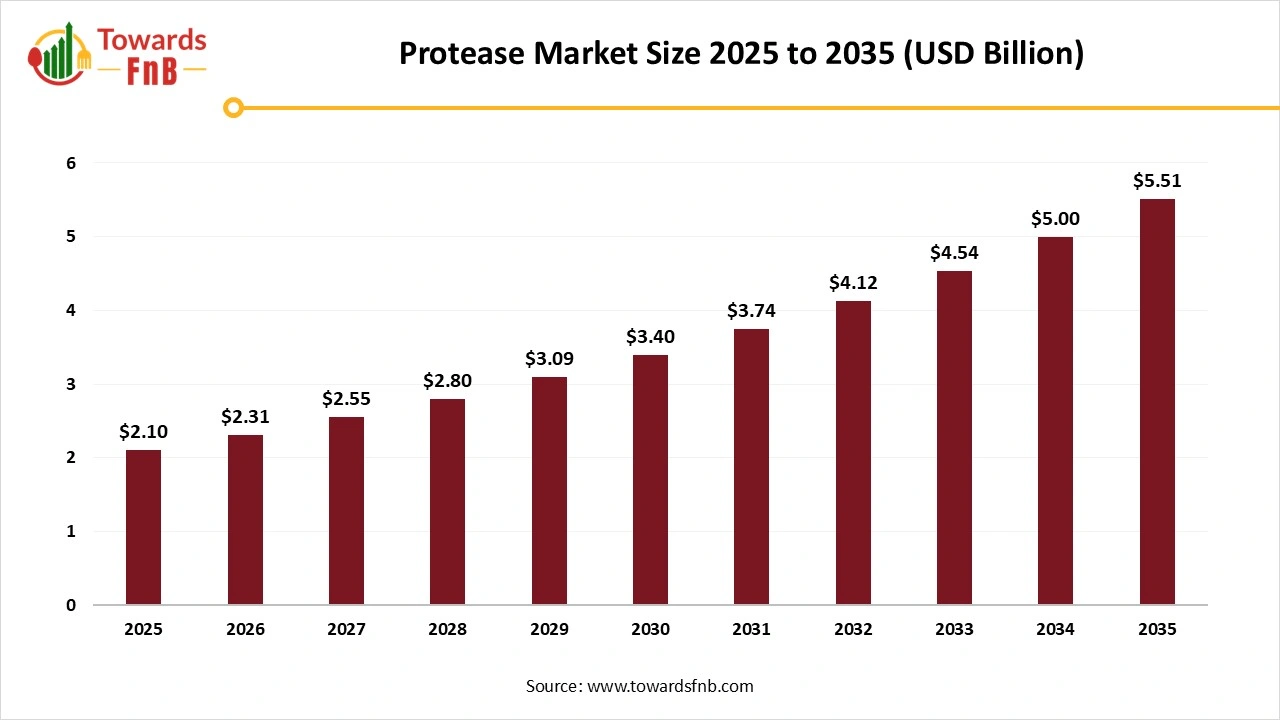
The global protease market size was calculated at USD 2.10 billion in 2025 and is expected to grow steadily from USD 2.31 billion in 2026 to reach nearly USD 5.51 billion by 2035, with a CAGR of 10.12% during the forecast period from 2026 to 2035. The development of protease-based drugs and the growing household applications drive market growth.
| Study Coverage | Details |
| Growth Rate from 2026 to 2035 | CAGR of 10.12% |
| Market Size in 2026 | USD 2.31 Billion |
| Market Size in 2027 | USD 2.55 Billion |
| Market Size by 2035 | USD 5.51 Billion |
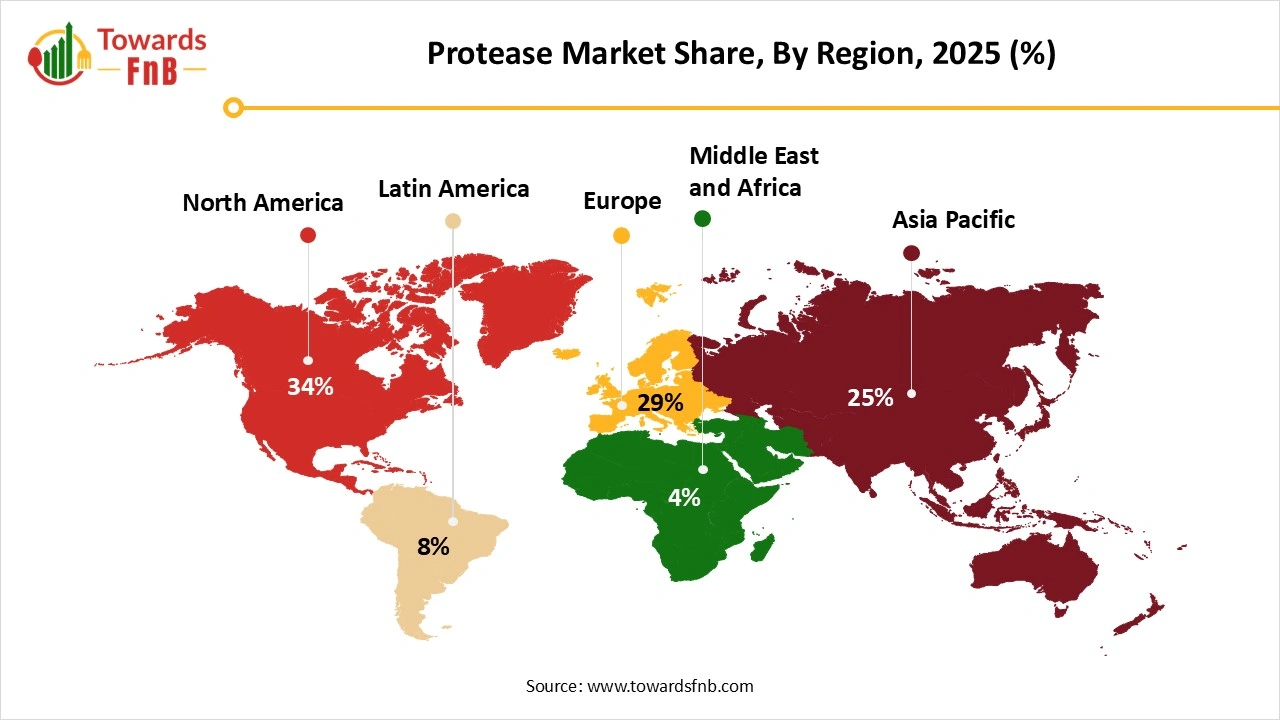
| Largest Market | North America |
| Base Year | 2025 |
| Forecast Period | 2026 to 2035 |
| Regions Covered | North America, Europe, Asia-Pacific, Latin America, and Middle East & Africa |
Protease is a protein-digesting enzyme that breaks down protein into smaller protein units. The functions of protease are protein recycling, blood coagulation, tissue remodeling, breaking down dietary proteins, cell signaling, immune response, tissue repair, catabolism, controlling cell proliferation, and tissue modelling. The proteases are classified according to catalytic type, biological functions, mechanism of action, and pH activity. They are available in food sources like papaya, figs, legumes, pineapple, kiwi, sprouted seeds, and fermented foods. They are widely used in applications like dishwashing detergents, leather production, cosmetic formulation, food processing, and waste management.
The protease market growth is driven by the growing therapeutic use, increased use of biodegradable products, robust industrialization, higher need for stain removal, focus on enhancing the flavor of baked goods, push towards protease-based therapies, advancements in enzyme immobilization, growing use of enzymatic solutions, rising cheese production, and the increased spending on high-quality cleaning agents.
The protease market is undergoing key technological shifts driven by demand for enhancing yield, improving production efficiency, sustainability, and cost-effective production. The technological innovations, like computational modelling, machine learning, digital twins, and recombinant technology, increase discovery speed and optimize protein structures. The major innovation is the incorporation of AI driven by demand for optimizing stability and the production of custom proteases.
AI easily predicts catalytic function and manufactures synthetic substrates of protease. AI enhances enzyme activity and supports faster product development. AI easily develops customized enzymes and determines the protease inhibitors. AI easily manufactures feed protease and improves the product consistency. AI supports sustainable manufacturing and identifies drug targets. Overall, AI fosters faster development in the protease industry.
Raw Material Procurement
Processing and Preservation
Quality Testing and Certifications
| Protease Type | Available In | pH | Class | Applications |
| Trypsin | Pancreas | 7.5 to 8.5 | Serine Proteases | Protein Engineering Therapeutic Applications Fish Tenderization Food Modification Leather Processing |
| Rennin | Calf Abomasum | 3.0 to 4.0 | Aspartic Protease | Various Cheese Production Junket Preparation Probiotic Encapsulation Medicine Milk Coagulation |
| Papain | Papaya Fruit | 6.0 to 7.0 | Cysteine Protease | Brewing Industry Textile Industry Serology Personal Care Meat Tenderization Wound healing Contact Lens Claener |
| Subtilisin | Gram-Positive Bacteria | 9.0 to 10.0 | Alkaline Serine Protease | Food Industry Wound Healing Waste Management Organic Chemistry Studies Leather Processing Dishwashing Products |
| Pepsin | Gastric Chief Cells | 1.5 to 2.5 | Eukaryotic Aspartic Protease |
Digestive Supplements |
| Elastase | Pancreatic Acinar Cells | 8.0 to 9.0 | Serine Proteases | Cancer Research Laundry Detergents Textile Industry Diagnostic Markers Waste Management |
| Thrombin | Liver | 7.0 to 8.5 | Serine Proteases | Fibrin Glues Burn Treatment Cancer Therapy Surgical Hemostasis Medical Devices |
Why North America Dominates the Protease Market?
North America dominated the protease market in 2025. The strong research capabilities and the well-established food processing industry increase demand for protease. The growing number of orthopedic disorders and the increased production of high-protein food increase the adoption of protease. The strong presence of the biotech industry and the focus on waste treatment require protease, driving the overall market growth.
North America Protease Market Size 2025 to 2035
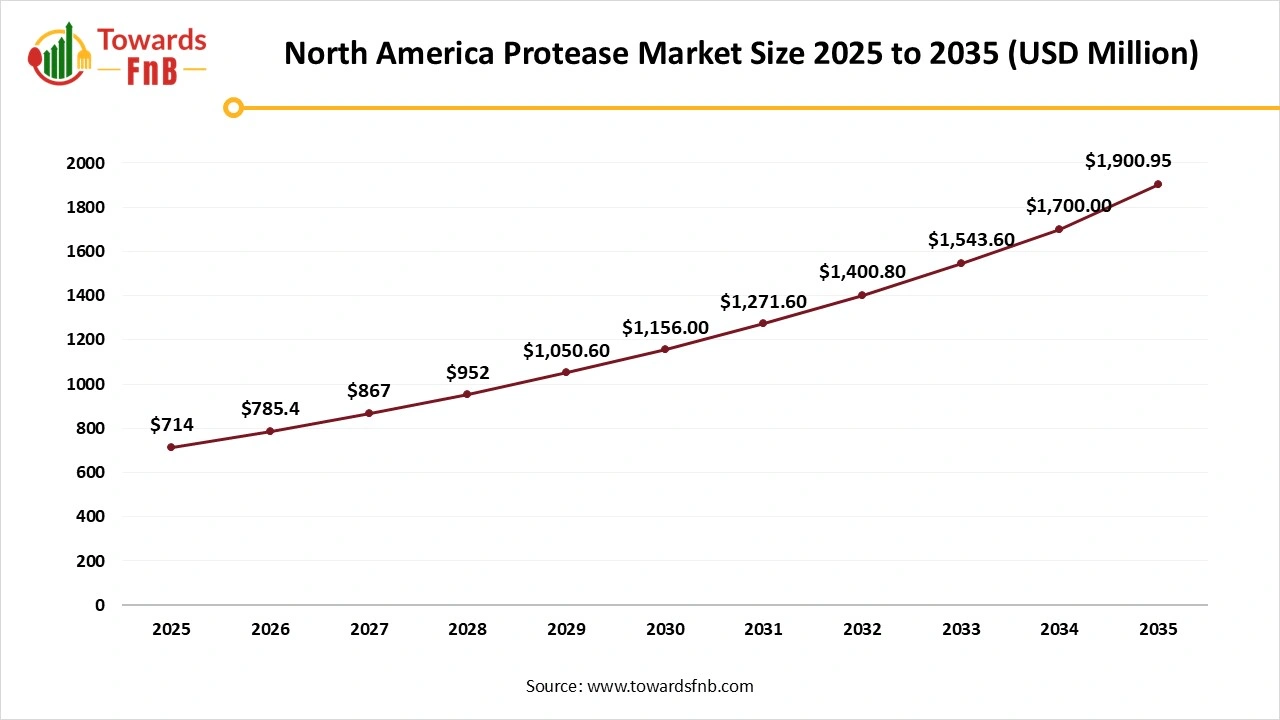
The North America protease market size was valued at USD 714 million in 2025 and is expected to grow steadily from USD 785.4 million in 2026 to reach nearly USD 1,900.95 million by 2035, with a CAGR of 10.29% during the forecast period from 2026 to 2035.
Unlocking the Power of Protease in the United States
The United States is a key contributor to the market. The increased utilization of protease-based therapies and the expanding textile processing require protease. The increased prevalence of inflammatory disorders and the increased investment in biotechnology increase demand for protease. The shift towards enzyme-based solutions and the robust growth in biofuels requires protease, supporting the overall market growth.
Europe Protease Market Trends
Europe is experiencing the fastest growth in the market during the forecast period. The robust meat processing and the increased production of dietary supplements increase demand for protease. The increased utilization of laundry detergents and the expansion of high-protein pet food increases adoption of protease. The high consumption rate of packaged food and the growing feed conversion ratios require protease, driving the overall market growth.
Germany’s Role in Protease Contribution
Germany is a major contributor to the market. The growing development of effective cleaning solutions and the rising consumption of specialized food products increase demand for protease. The robust pharmaceutical industrial infrastructure and the growing livestock industry require protease. The growing field of enzyme engineering and the eco-friendly products trend requires protease, supporting the overall market growth.
Protease Market Share, By Application, 2025 (%)
| Segments | Shares (%) |
| Food Processing | 50% |
| Pharmaceuticals | 15% |
| Biotechnology | 12% |
| Animal Feed | 8% |
| Detergents | 15% |
Which Application Dominated the Protease Market?
The food processing segment dominated the protease market in 2025. The growing meat tenderization and the increased cheese production increase demand for protease. The growing food manufacturing and the popularity of sports nutrition increases adoption of protease. The need to enhance the texture of convenience food and the high consumption rate of plant-based protein require protease, driving the overall market growth.
The Pharmaceuticals Segment is the Fastest-Growing in the Market During the Forecast Period
The growing number of inflammation cases and the focus on the modification of drugs require protease. The rise in digestive disorders and the transition to targeted therapies increase demand for protease. The increased protein purification and the expansion of surgical applications require protease, supporting the overall market growth.
Protease Market Share, By Source, 2025 (%)
| Segments | Shares (%) |
| Plant-Based | 50% |
| Animal-Based | 20% |
| Microbial | 30% |
How did the Plant-Based Segment hold the Largest Share in the Protease Market?
The plant-based segment held the largest revenue share in the protease market in 2025. The transition to vegan products and the increased production of pharmaceuticals increase demand for plant-based protease. The rise in medicinal applications and the shift towards non-GMO ingredients require plant-based protease. The cost efficiency, safety profile, sustainability, and high performance of plant-based protease drive the market growth.
The Microbial Segment is Experiencing the Fastest Growth in the Market During the Forecast Period
The increased production of stain removal solutions and the rise in eco-friendly desizing increase demand for microbial protease. The transition to bio-based processes and innovations in genetic engineering requires microbial protease. The superior stability, high production efficiency, robustness, and superior functionality of microbial protease support the overall market growth.
Protease Market Share, By Type, 2025 (%)
| Segments | Shares (%) |
| Serine Proteases | 25% |
| Cysteine Proteases | 45% |
| Aspartic Proteases | 20% |
| Metalloproteases | 10% |
Why Cysteine Proteases Segment Dominates the Protease Market?
The cysteine proteases segment dominated the protease market in 2025. The rise in beer clarification and focus on treating gluten intolerances increases the adoption of cysteine proteases. The need to enhance dough rheology and the presence of acidic industrial environments increase the adoption of cysteine proteases. The growing consumption of digestive supplements and the growth in tenderizing meat require cysteine proteases, driving the overall market growth.
The Serine Proteases Segment is the Fastest-Growing in the Market During the Forecast Period
The increased utilization of eco-friendly detergents and the focus on improving the nutritional value of food increase demand for serine proteases. The rise in drug formulations and the shift towards natural food ingredients increases the adoption of serine proteases. The popularity of recombinant technology and the growth of biopharmaceuticals require serine proteases, supporting the overall market growth.
Protease Market Share, By Form, 2025 (%)
| Segments | Shares (%) |
| Liquid | 50% |
| Powder | 30% |
| Granular | 20% |
How did the Liquid Segment hold the Largest Share in the Protease Market?
The liquid segment held the largest revenue share in the market in 2025. The growth in beverage processing and the expanding detergent sector increases demand for liquid formulations. The rise in cleaning activities and the growth of industrial manufacturing require liquid formulations. The uniform distribution, superior stability, ease of incorporation, and convenience of liquid form drive the market growth.
The Powder Segment is Experiencing the Fastest Growth in the Market During the Forecast Period
The surge in the production of nutritional supplements and the increased soap manufacturing increases the adoption of powder form. The rise in protein modification and the growth in high-performance engineering increase demand for powder form. The long-term storage, versatility, cost-effectiveness, and superior stability of powder form support the overall market growth.
Bionetix
Novonesis
By Application
By Source
By Form
By Region




Principal Consultant
Vidyesh Swar, Senior Research Analyst at Towards Food & Beverages, specializes in market research, focusing on supply-demand evaluation, pricing analysis, alternative proteins, plant-based foods, and sustainable food technologies within the industry.
Learn more about Vidyesh Swar
Reviewed By
Aditi Shivarkar, with 14+ years in Food and Beverages market research, specializes in food, beverage, and eco-friendly packaging. She ensures accurate, actionable insights, driving Towards FnB's excellence in industry trends and sustainability.
Learn more about Aditi ShivarkarApril 2026
April 2026
April 2026
April 2026

Protease Market


 +1 804-441-9344
 Download Sample
 Schedule a Meeting