April 2026



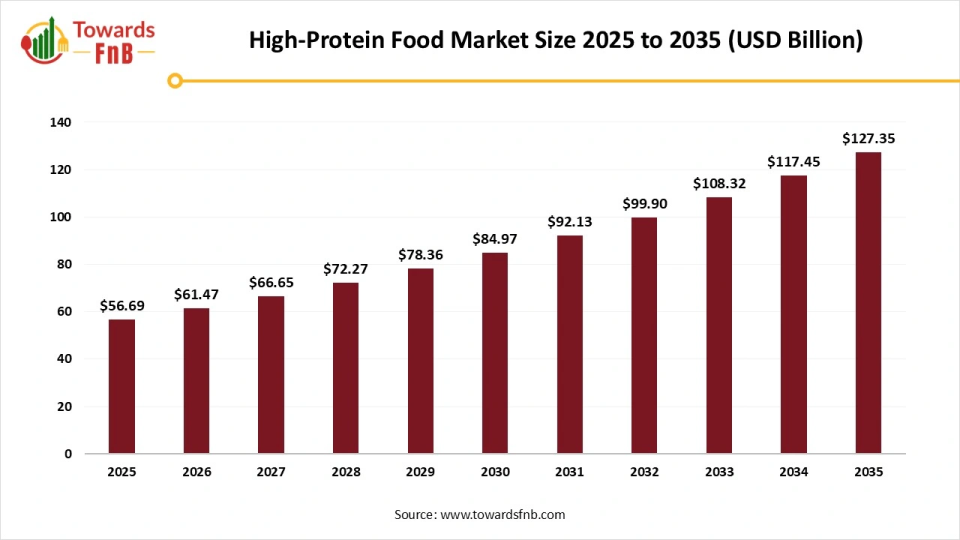
The global high-protein food market size was valued at USD 56.69 billion in 2025 and is expected to grow steadily from USD 61.47 billion in 2026 to reach nearly USD 127.35 billion by 2035, with a CAGR of 8.43% during the forecast period from 2025 to 2034.The market growth is attributed to the growing demand for high-protein foods.
| Study Coverage | Details |
| Growth Rate from 2025 to 2035 | CAGR of 8.43% |
| Market Size in 2026 | USD 61.47 Billion |
| Market Size in 2027 | USD 66.65 Billion |
| Market Size by 2035 | USD 127.35 Billion |
| Largest Market | North America |
| Base Year | 2025 |
| Forecast Period | 2026 to 2035 |
| Regions Covered | North America, Europe, Asia-Pacific, Latin America, and Middle East & Africa |
The high-protein food market offers a wide range of products, from dairy-based products including cheese and yogurt to plant-based options such as lentils, peas, and soy. The market for high-protein foods has been growing rapidly in recent years, leading to increasing knowledge of the health benefits of protein consumption. In addition, the increasing substantial preference toward product landscape and the increasing popularity of vegetarian and vegan lifestyles are expected to drive the growth of the market. Proteins are a necessary component in daily meals and play a crucial role in immune system support, tissue repair, and muscle growth. Furthermore, the increasing intake of protein among adults to gain their goals, including athletic stamina, developing lean muscles and body-building, and rising advancements in protein-rich snacks and food technology are further anticipated to propel the growth of the high-protein food market during the forecast period.
One of the significant factors driving market growth is the increasing plant-based protein products. The market is growing rapidly leading to the increasing popularity of plant-based foods. Consumers are continuously shifting towards plant-based proteins including lentil, peas, and soy, and seeking options for traditional animal-based protein sources. These products are healthy, environmentally friendly, and ethical, which increases the demand for plant-based food. In addition, the increasing vegetarian and vegan lifestyles with the rising advancements in food technology, further drive the market growth. Furthermore, the rising diversification and product innovation to address changing consumer tastes, increasing disposable income in developing regions, and increasing need for healthy and on-the-go meal options are further anticipated to propel the high-protein food market during the forecast period.
The increasing use of artificial intelligence creates significant opportunities for customers to manage their health and diet. 51% of customers prefer artificial intelligence to help them make nutritious and safe food choices, according to the 2024 IFIC Food and Health Survey. In addition, 65 percent of consumers believed that online apps and tools can help them enhance their physical activity and diet. AI can analyze market trends and consumer preferences to create plant-based protein products that best match texture, taste, and nutritional expectations, in product development. AI can predict functional and structural changes in proteins by simulating different protein combinations under various processing and cooking conditions.
This allows product formulations that closely replicate the nutritional profile, taste, and texture of animal proteins, which further increases choice for consumers. AI-driven analytics are considered to reduce waste, enhance supply chain efficiency, and ensure the timely delivery of fresh products to market in the future. These AI trends are expected to enhance the growth of the high-protein food market in the coming years.
The high intake of protein food includes high-fat foods such as fatty cuts and full-fat dairy. These fatty cuts of sausages, bacon beef, etc. are mostly related to heart diseases and cancer. The huge amount of protein is harmful to chronic heart problem patients, which may create major challenges in the market. In addition, the lack of fiber available in high-protein foods may cause constipation or other health problems. Furthermore, high expenditure on acquiring and manufacturing protein-based products may limit the intake of high-protein foods, which is further expected to restrain the growth of the high-protein food market.
Raw Material Procurement
Processing
Distribution
North America Dominated the High-Protein Food Market in 2024.
The market growth in the region is attributed to the growing customer appetite for protein-rich diets, rising well-developed fitness culture, and increasing demand for plant-based and animal-based protein products, including drinks, snacks, and protein powders. The U.S. and Canada are dominating countries driving ting countries driving the market growth.
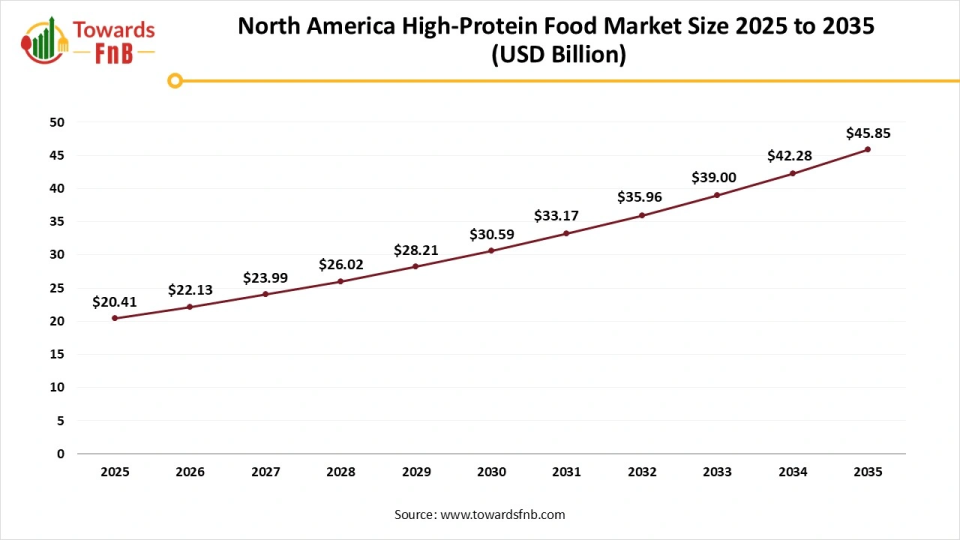
The North America high-protein food market size was calculated at USD 20.41 billion in 2025 with projections indicating a rise from USD 22.13 billion in 2026 to approximately USD 45.85 billion by 2035, expanding at a CAGR of 8.43% throughout the forecast period from 2026 to 2035.
Canada is a significant country in the region. High-protein foods in Canada such as plant-based protein foods are an important part of healthy eating in Canada. The U.S. is also a significant country and popular for plant-based protein driven by increasing consumer preference towards taste and increasing demand for nutritious and convenient food options. Culinary innovation and food technology is one of the leading factor that increasing the consumer base in the United States.
Asia Pacific is Expected to Grow Fastest in the Market During the Forecast Period.
The growth in the region is driven by the increasing middle-class population, increasing awareness of the health benefits of high-protein diets, growing urbanization, and increasing disposable incomes. China, India, Japan, and South Korea are the fastest growing countries driven by increasing demand for plant-based and animal-based alternatives.
India is the fastest growing country in the high-protein food market driven by increasing demand for protein-enriched foods, with major dairy companies such as Mother Dairy and Amul Dairy, which is further responding to protein deficiency and consumer awareness. 80% of Indians consume a significant amount of protein which is essential and boosts metabolism and drives muscle growth. Lentils, Chickpeas, Paneer, Quinoa, and Almonds and Peanuts are the best high-protein-rich Indian foods, which may further accelerate the market demand.
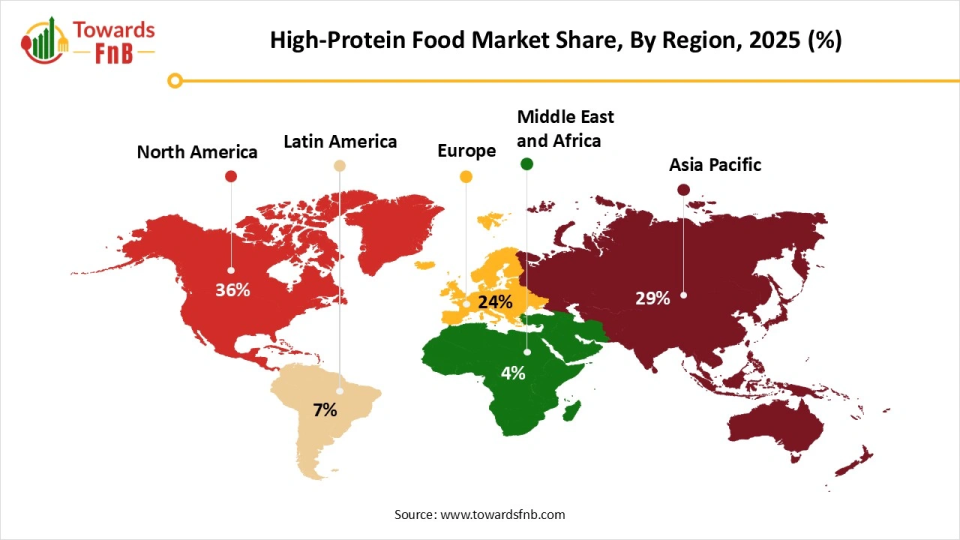
China is a major player in the regional market, contributing to growth due to countries' increased health-conscious consumers and disposable incomes. The demand for protein-rich food and beverages is growing in China, including both conventional meat and dairy products and plant-based alternatives. China has experienced rapid adoption of biotechnological protein production methods, including yeast-based protein from CO2, and a significant focus on sustainability.
The growth of the high-protein food market in Europe is primarily driven by increasing consumer awareness about health and wellness, resulting in a rising demand for protein-rich diets. The prevalence of chronic diseases such as obesity, diabetes, and cardiovascular conditions encourages consumers to adopt healthier eating habits, further boosting demand for high-protein foods. Additionally, the popularity of plant-based and vegan diets has expanded the market, as consumers seek alternative protein sources like plant proteins, pulses, and legumes.
In the UK, demand for high-protein food is soaring due to health and wellness trends, sports nutrition, social media influence, and a shift from processed food to whole foods. Growth is observed in both animal protein and plant-based options. Younger consumers, in particular, are seeking protein for weight management, immune support, and muscle building, leading to protein claims on products ranging from yogurts to cereals. However, nutritionists advise balancing these with fiber-rich and whole foods.
The high-protein food market in the Middle East and Africa is also experiencing growth, driven by increased consumer awareness regarding health and wellness. Urbanization and rising disposable incomes have expanded access to diverse food options, prompting consumers to seek high-protein products. Government initiatives aimed at promoting nutritional security and food fortification further support this market growth.
In the UAE, the demand for high-protein food is booming, driven by heightened health consciousness, fitness trends, and a significant obesity crisis. This has led to increased consumption of protein powders, supplements, and fortified foods, along with a strong shift toward plant-based alternatives like pea, soy, and pulses for wellness and weight management. Strong growth is projected for this segment.
In Latin America, the high-protein food market is increasingly influenced by the rising popularity of plant-based protein products, particularly in urban regions of Brazil, Chile, and Mexico. Evolving regulatory frameworks and rising consumer literacy regarding nutritional labels are also having an impact. For instance, Argentina, Brazil, and Mexico have seen notable increases in demand for alternative protein, with 65%, 67%, and 78% of the population, respectively, showing interest. The Brazilian population is leading the way by reducing their animal protein consumption by 29% and transitioning to a vegetarian or vegan diet by 6%.
Brazil's high-protein food demand is thriving, fueled by rising health consciousness, fitness trends, and the popularity of sports nutrition, which favors both animal and plant proteins in supplements, snacks, and meals.
High-Protein Food Market Share, By Product, 2025 (%)
| Segments | Shares (%) |
| High-Protein Packed Foods | 60% |
| High-Protein Drinks | 30% |
| Protein Supplements | 10% |
The High-Protein Packed Foods Segment Dominated the High-Protein Food Market in 2025
The segment growth in the market is owing to the increasing demand for on-the-go healthy meals and increasing fitness awareness. To improve weight management and muscle building, high-protein packed foods such as meal replacements, bars, and snacks are gaining popularity across the globe. Eating a proper amount of protein can have various advantages, such as increasing feeling of fullness and satiety, increasing energy, diabetes management, and blood sugar balance. In addition, increasing consumption of vegetables, paneer, blood sugar regulation, convenience, boosting metabolism, and muscle maintenance and building are further expected to drive the segment growth in the market.
The High-Protein Drinks Segment Expects Substantial Growth in the Market During the Forecast Period.
The segment growth in the market is driven by the increasing need for hydration and recovery after and before physical exercise. As customers looking for easy and quick methods to increase their protein consumption, smoothie, and protein shakes are gaining popularity, which further drives the segment growth. Drinking or eating high-protein drinks may help consumers lose weight, feel full, keep lean muscle, and reduce body fats are further anticipated to enhance the segment growth. Furthermore, there are various advantages of high-protein shakes, which accelerate high-protein food market demand such as helping muscle growth, losing weight, and decreasing overeating, which can speed up recovery and preserve muscle mass.
High-Protein Food Market Share, By Distribution Channel, 2025 (%)
| Segments | Shares (%) |
| Online | 25% |
| Offline | 75% |
The Offline Segment Dominated the High-Protein Food Market in 2025
The offline segment is significantly growing through gyms, supermarkets, and healthy food shops, where consumers can gain advice from skilled personnel and physically inspect items. The continuous expansion of distribution methods, increasing brand awareness, and spontaneous purchases are further expected to drive the segment growth in the market.
The Online Segment Expects Significant Growth in the Market During the Forecast Period.
The segment growth in the market is attributed to the rising online shopping experience, rising tailored and convenience solutions, and increasing emergence of direct-to-consumer companies and subscription services. In addition, online platforms enabling consumers to make informed purchase decisions and give competitive pricing, reviews, and extensive product information are expected to propel the segment growth in the global market.
Hormbles Chormbles
Mother Dairy
Arla Food Ingredients
By Product
By Distribution Channel
By Region





Principal Consultant
Vidyesh Swar, Senior Research Analyst at Towards Food & Beverages, specializes in market research, focusing on supply-demand evaluation, pricing analysis, alternative proteins, plant-based foods, and sustainable food technologies within the industry.
Learn more about Vidyesh Swar
Reviewed By
Aditi Shivarkar, with 14+ years in Food and Beverages market research, specializes in food, beverage, and eco-friendly packaging. She ensures accurate, actionable insights, driving Towards FnB's excellence in industry trends and sustainability.
Learn more about Aditi ShivarkarApril 2026
April 2026
April 2026
April 2026

High-Protein Food Market


 +1 804-441-9344
 Download Sample
 Schedule a Meeting