April 2026



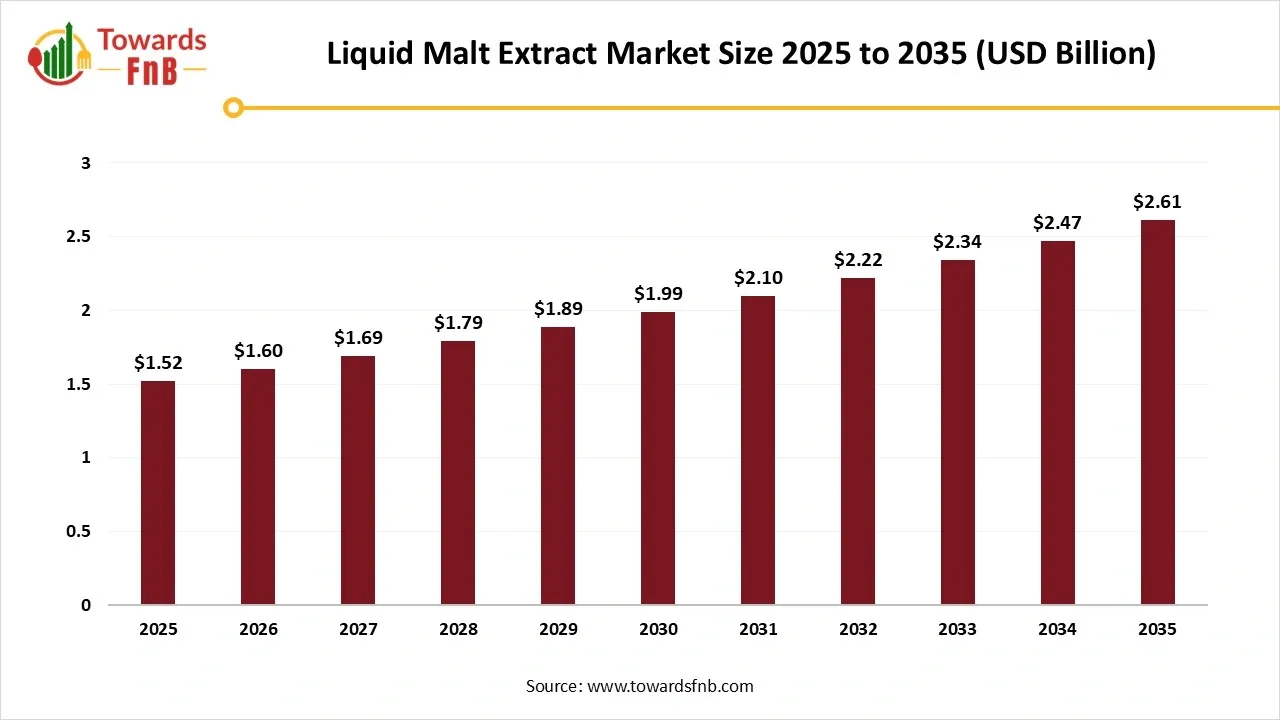
The global liquid malt extract market size reached at USD 1.52 billion in 2025 and is expected to rise from USD 1.60 billion in 2026 to nearly reaching USD 2.61 billion by 2035, growing at a CAGR of 5.54% during the forecast period from 2026 to 2035. The increasing consumer preference for nutritious and natural ingredients drives the growth of the market.
| Study Coverage | Details |
| Growth Rate from 2026 to 2035 | CAGR of 5.54% |
| Market Size in 2026 | USD 1.60 Billion |
| Market Size in 2027 | USD 1.69 Billion |
| Market Size by 2035 | USD 2.61 Billion |
| Largest Market | Europe |
| Base Year | 2025 |
| Forecast Period | 2026 to 2035 |
| Regions Covered | North America, Europe, Asia-Pacific, Latin America, and Middle East & Africa |
The liquid malt extract market refers to the global industry engaged in the production, distribution, and application of malt extracts in liquid form, derived primarily from malted barley and other cereal grains. Liquid malt extract is a concentrated syrup containing sugars, protein, enzymes, and flavor compounds used as a natural sweetener, fermentation agent, coloring agent, and flavor enhancer. It is widely used in brewing, food and beverages, pharmaceuticals, and nutritional supplements. Its clean-label, non-GMO, and enzymatic properties make it popular in natural product formulations and health-oriented applications.
Some of the various factors driving the growth of the market. The increasing demand in the brewing industry, increasing consumer trend towards artisanal and distinctive beers, increasing consumer knowledge of liquid malt’s nutritional properties, increasing demand for supplements and foods, and increasing demand for alcoholic beverages are expected to fuel the growth of the market.
The rise of technological advancements in liquid malt extract may create significant opportunities in the global market. The rising advancements in extraction procedures ensure flavor profiles, better product consistency, and improved purity and yield. The technological innovations including membrane filtration are reducing energy and waste consumption and enhancing sustainability and efficiency, which further enhances segment growth. In addition, the rise of digital monitoring and automation in production facilities improves quality control and operational performance. To address increasing regulatory standards and consumer demand, these technological advancements strides allow manufacturers. These advanced factors are expected to revolutionize the growth of the liquid malt extract market in the coming years.
The increased storage challenges and limited shelf life are some of the major restraining factors hindering market growth. Liquid malt extracts are sensitive to contamination, temperature, and moisture, which may hamper their product quality. In addition, during bulk storage and transportation, this adds to the complexity and cost of handling. The liquid malt extract can lose Flavor, crystallize or thicken, if not stored properly. These challenges may discourage consumers, which is further expected to restrain the growth of the liquid malt extract market.
How Europe Dominate the Liquid Malt Extract Market Revenue in 2025?
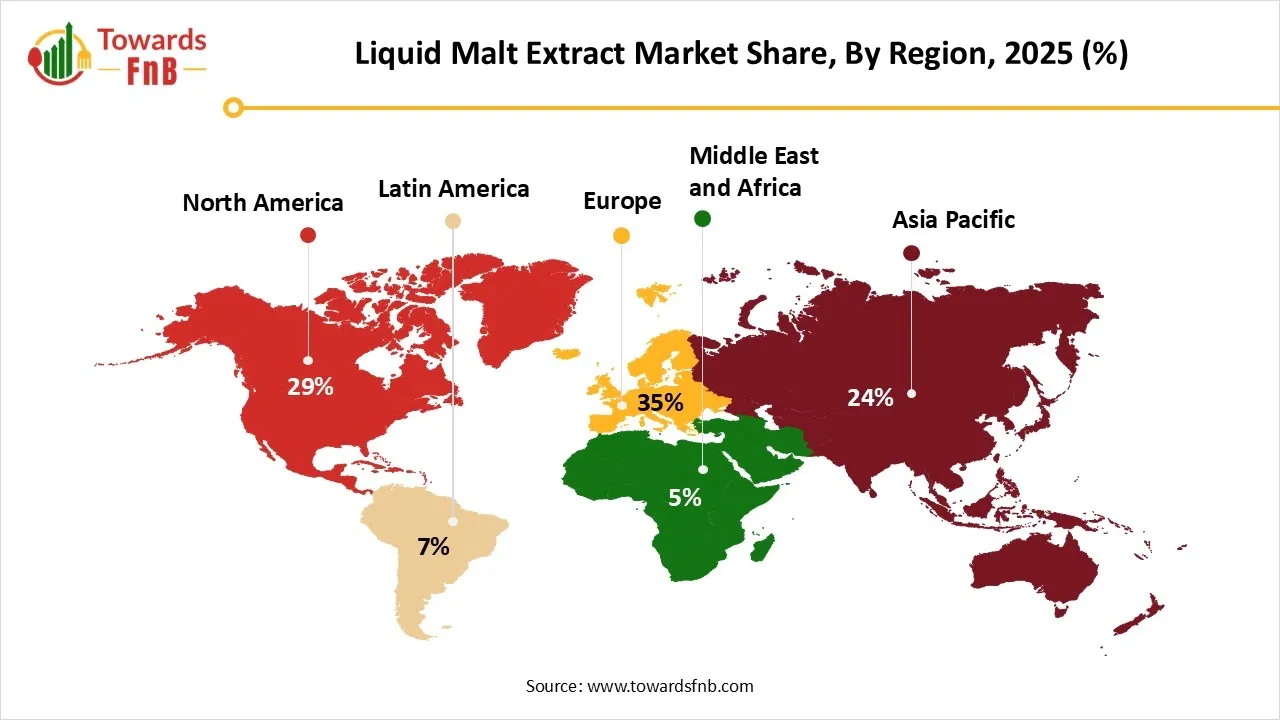
Europe dominated the liquid malt extract market in 2025. The segment growth in the region is attributed to the growing production in the food and beverage industry, increasing demand for natural and clean-label ingredients, increasing consumer preference towards baking traditions, and the growing brewing industry.
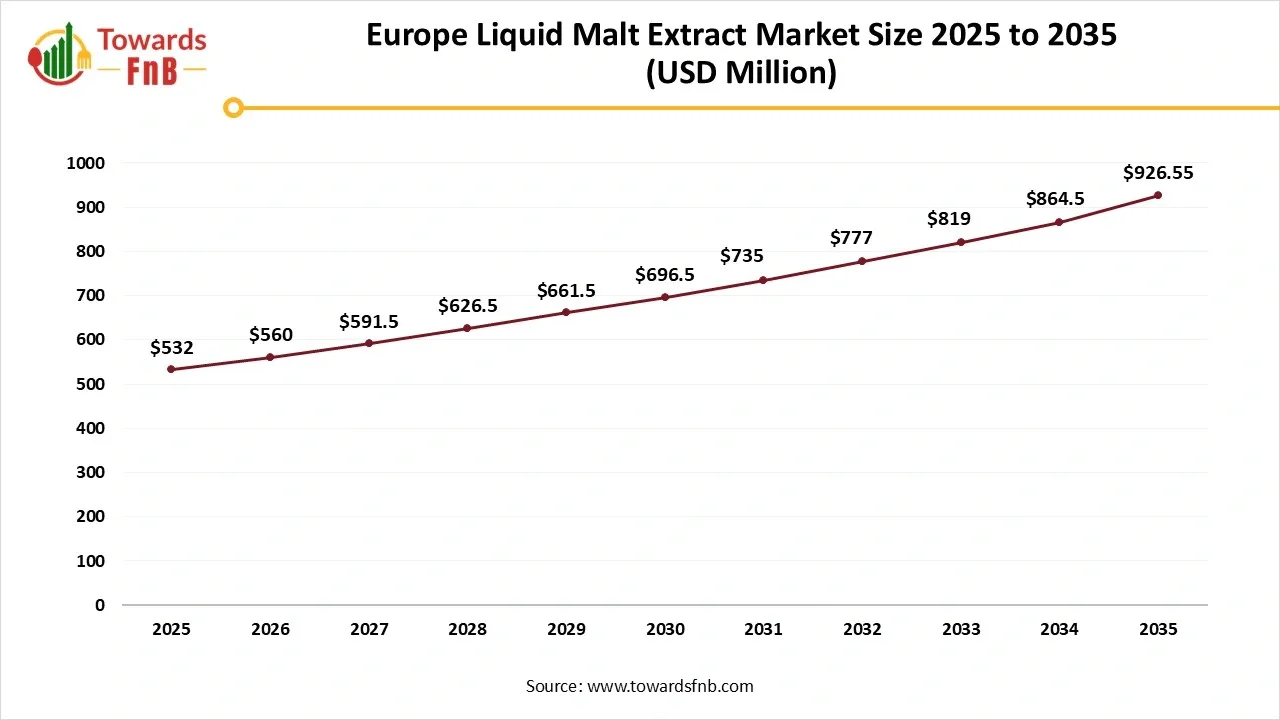
Europe Liquid Malt Extract Market Size 2025 to 2035
The Europe liquid malt extract market size was valued at USD 532 million in 2025 and is expected to rise from USD 560 million in 2026 to nearly reaching USD 926.55 million by 2035, growing at a CAGR of 5.71% during the forecast period from 2026 to 2035.
Asia Pacific Liquid Malt Extract Market Trends
Asia Pacific is expected to grow fastest during the forecast period. The market growth in the region is driven by increasing food processing industries in various countries, rising health awareness, rapid urbanization, and increasing demand for natural and organic food products. China, India, and Japan are the fastest growing countries driven by the growing brewing industry and increasing demand for alcoholic beverages.
India Liquid Malt Extract Market Trends
India is expected to grow fastest during the forecast period, driven by the growing brewing industry and increasing demand for alcoholic beverages. The brewing industry in India is the one of the fastest growing countries, with a consumption of 345 million cases of beer. The alcohol beverage industry is set to achieve new highs in the coming years, with the increasing GDP, tropical climate and young population, which may expected to drive the growth of the market in India.
Germany Liquid Malt Extract Market Trends
Germany's liquid malt extract market is growing significantly. This growth can be attributed to the growing demand for natural sweeteners alongside an increase in specialty brewing. The Federal Ministry of Food and Agriculture's ongoing support for sustainable grain cultivation and local sourcing enhances supply chain stability.
Consumer preference for non-GMO and additive-free products is shaping both industrial formulations and retail offerings, while government incentives for organic and clean-label food innovations are further promoting the utilization of malt-based ingredients across the nutraceutical and food processing sectors.
North America’s Growing Liquid Malt Extract Industry
The North American liquid malt extract market plays a pivotal role within the food and beverage industry, as well as in sectors such as brewing, baking, and pharmaceuticals. LME, an essential ingredient in brewing and distilling, contributes significantly to the production of alcoholic beverages, particularly beer. Its relevance extends beyond food production, with diverse applications in dietary supplements, functional foods, and energy drinks.
In response to evolving consumer preferences towards more natural and health-conscious options, LME serves as a vital ingredient, providing nutritional benefits, including high fiber content, proteins, and essential minerals.
U.S. Liquid Malt Extract Market Trends
The growth trajectory of the U.S. market is predominantly driven by escalating demand from the brewing industry. Liquid malt extract is integral to the beer production process, contributing to flavor, color, and body. The surge in popularity of craft beer, coupled with an increase in overall beer consumption, serves as a primary driver for this demand. Additionally, liquid malt extract is utilized across the production of various beverages and food products, resulting in a diverse demand landscape.
Liquid Malt Extract Market Share, By Product, 2025 (%)
| Segments | Shares (%) |
| Light Malt Extract | 55% |
| Amber Malt Extract | 25% |
| Dark Malt Extract | 20% |
How does the Light Malt Extract Held the Largest Liquid Malt Extract Market Revenue in 2025?
The light malt extract segment dominated the liquid malt extract market in 2025. The light malt extract is widely used as a nutrient supplement. It provides a source of minerals, vitamins, proteins, and carbohydrates that support development and growth. To simplifies the brewing process and save time. Consumer don't need to worry about sparging and mashing their grains, with liquid light malt extract.
The Dark Malt Extract Segment is Expected to Grow Fastest During the Forecast Period
Dark malt extract is widely used across various applications such as health and nutrition, baking, and brewing. This is ideal for hearty baked goods and dark beers. The segment growth in the market is attributed to the various benefits such as plant-based and vegan-friendly, fermented sugars to make alcohol, texture enhancers, support gut health, providing quick energy, and a natural source of nutrients.
Liquid Malt Extract Market Share, By Source, 2025 (%)
| Segments | Shares (%) |
| Barley | 60% |
| Wheat | 30% |
| Rye | 5% |
| Others | 5% |
Why Barley Segment Dominate the Liquid Malt Extract Market Revenue in 2025?
The barley segment dominated the liquid malt extract market share in 2025. Barley is known for its balanced sugar profile and high enzyme activity. Among manufacturers, this is the preferred source aiming for consistent performance and quality. With traditional malting procedures, its natural compatibility and composition, further make it a cost-effective and reliable choice. Barley malt extracts are known for their nutritional values, such as dietary fiber, minerals, and vitamins, which further drive segment growth.
The Wheat Segment is Expected to Grow Fastest During the Forecast Period
The segment growth in the market is attributed to factors such as rising technological advancements in processing and extraction, increasing consumer preference towards alternative and gluten-free grain, rising innovations in malt-based and non-alcoholic beverages, increasing demand for functional and nutritional beverages, increasing demand for natural and clean-label ingredients and growing popularity in breakfast and bakery products.
Liquid Malt Extract Market Share, By Form, 2025 (%)
| Segments | Shares (%) |
| Liquid Malt Extract | 80% |
| Concentrated Liquid Malt Extract | 20% |
What Factors Help Liquid Extract to Grow in 2025?
The liquid malt extract segment dominated the liquid malt extract market in 2025. Liquid malt extract is a concentrated syrup that includes flavor, enzymes, proteins, and sugar compounds used as a flavor enhancer, coloring agent, fermentation agent, and natural sweetener. It is highly used in nutritional supplements, pharmaceuticals, food and beverages, and the brewing industry. In addition, liquid malt extract’s enzymatic properties, non-GMO, and clean-label properties make it popular in health-oriented applications and natural product formulations, which further drives segment growth.
The Concentrated Liquid Malt Extract Segment is Expected to Grow Fastest During the Forecast Period
The concentrated liquid malt extract is widely used in various applications such as nutritional supplements, breakfast cereals, confectionery, bakery, and brewing. In addition, increasing focus on sports nutrition and foods, increasing growth in non-alcoholic and craft brewing malt beverages, and increasing demand for natural and functional ingredients are expected to drive the segment growth.
How Alcoholic Beverages Segment Dominates Liquid Malt Extract Market Revenue in 2025?
The alcoholic beverages segment dominated the liquid malt extract market in 2025. The segment growth in the global market is driven by various benefits such as helping in heart rate, helping to get more active, preventing kidney stones, helping brain development, and maintaining blood sugar. There are 33% of wine drinkers and 41% of beer drinkers across the globe, which may increase the demand for liquid malt extract in alcoholic beverages. In addition, it is expected that 25% to 40% fewer people a hardened artery, stroke, and heart attacks.
The Nutraceuticals and Functional Beverages Segment is Expected to Grow Fastest During the Forecast Period
Functional beverages are highly nutritious. They may promote proper development and growth, prevent nutrient deficiencies, and protect against disease. In addition, preventing nutrient deficiencies, protecting against disease, and promoting proper development are various health benefits, which are further expected to fuel the segment growth.
Liquid Malt Extract Market Share, By Distribution Channel, 2025 (%)
| Segments | Shares (%) |
| Business-to-Business (B2B) | 70% |
| Business-to-Consumer (B2C) | 30% |
Why did the B2B Segment Held the Largest Liquid Malt Extract Market Revenue in 2025?
The B2B segment dominated the market in 2025. The segment growth in the market is driven by factors such as increased personalized e-commerce interactions, improved operational efficiency, greater understanding of buyer behavior, and increased product discoverability. It is projected that B2B food companies growing over 18%, from the year 2022 to 2028. To connect suppliers of food and beverages, distributors, wholesalers, and alcohol beverage suppliers, these companies allow transactions.
The Online Retail (B2C) Segment is Expected to Grow Fastest During the Forecast Period
The segment growth in the market is attributed to the growing e-commerce platforms, increasing consumer trend towards online shopping, rising culture of home brewing, and increasing consumer trend towards health and wellness. In addition, the craft beer industry is moving towards 210 billion within the next 5 years and expanding by 10% per year. Furthermore, B2C offers various benefits such as access to rare beers, convenience, product information, and product information such as ratings, reviews, and descriptions for each beer, which further accelerates the segment demand.
Liquid Malt Extract Market Share, By End-User, 2025 (%)
| Segments | Shares (%) |
| Industrial Food & Beverage Manufacturers | 60% |
| Craft & Commercial Brewers | 20% |
| Pharmaceutical & Nutraceutical Companies | 10% |
| Retail Consumers | 10% |
How do Food and Beverage Manufacturers Segment Dominate Liquid Malt Extract Market Revenue in 2025?
The food and beverage manufacturers segment dominated the market in 2025. The segment growth in the market is driven by factors such as increasing consumer trends toward vendor sourcing, increasing growth in liquid malt beverages, and increasing consumer preference towards natural sweeteners and clean-label usage.
The Craft Brewers Segment is Expected to Grow Fastest During the Forecast Period
Craft beer is gaining popularity due to its tradition, flavor, and artistry, and is popular for creating innovative and unique brews. Craft breweries often have a significant sense of personal touch and community.
Glen Moray
Saltire Rare Malt
WhistlePig Whiskey
By Product Type
By Source
By Form
By Application
By Distribution Channel
By End User
By Region





Principal Consultant
Vidyesh Swar, Senior Research Analyst at Towards Food & Beverages, specializes in market research, focusing on supply-demand evaluation, pricing analysis, alternative proteins, plant-based foods, and sustainable food technologies within the industry.
Learn more about Vidyesh Swar
Reviewed By
Aditi Shivarkar, with 14+ years in Food and Beverages market research, specializes in food, beverage, and eco-friendly packaging. She ensures accurate, actionable insights, driving Towards FnB's excellence in industry trends and sustainability.
Learn more about Aditi ShivarkarApril 2026
March 2026
March 2026
February 2026

Liquid Malt Extract Market

 +1 804-441-9344
 Download Sample
 Schedule a Meeting