April 2026



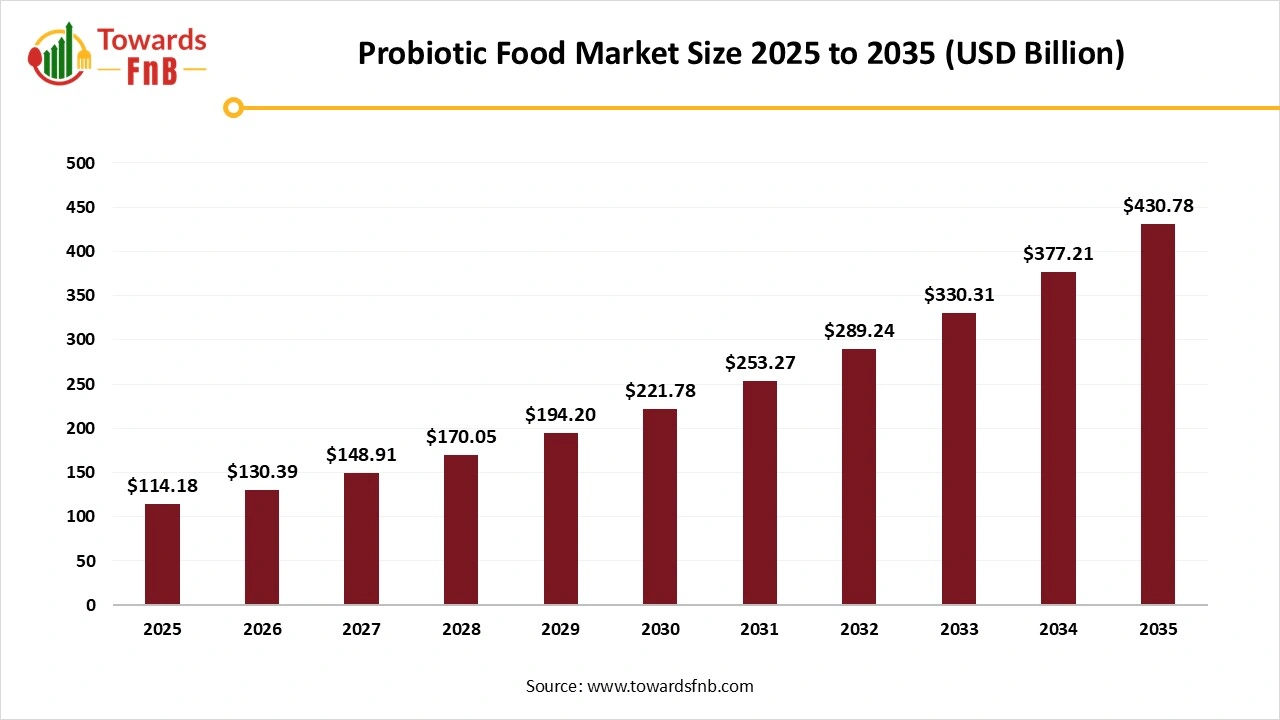
The global probiotic food market size stood at USD 114.18 billion in 2025 and is forecasted to expand from USD 130.39 billion in 2026 to reach approximately USD 430.78 billion by 2035, at a compound annual growth rate (CAGR) of 14.2% during the forecast period from 2026 to 2035. The rising consumer awareness regarding gut health, convenience purchase, rising applications in various sectors, and growing digestive issues in consumers drive the growth of the market.
| Study Coverage | Details |
| Growth Rate from 2026 to 2035 | CAGR of 14.2% |
| Market Size in 2026 | USD 130.39 Billion |
| Market Size in 2027 | USD 148.91 Billion |
| Market Size by 2035 | USD 430.78 Billion |
| Largest Market | Asia Pacific |
| Base Year | 2025 |
| Forecast Period | 2026 to 2035 |
| Regions Covered | North America, Europe, Asia-Pacific, Latin America, and Middle East & Africa |
Probiotics are foods that consist of yeast or live organisms that provide benefits to gut health. They promote the growth of good bacteria in the body. They are available in fermented foods such as tempeh, miso, kombucha, aged cheese, yogurt, kefir, sauerkraut and many more. Probiotics are available in dietary supplements such as powders, capsules, tablets, chews, and liquids. There are various types of probiotics available, such as lactobacillus, Bifidobacterium, and saccharomyces boulardii. Probiotics help to improve digestion, boost immunity, reduce gut problems, reduce cholesterol, and manage weight.
Factors such as growing natural remedies, rising demand for probiotics in sports, and growing consumer awareness about gut health are responsible for the growth of the market. The growing demand for animal probiotics and the expansion of distribution channels are fueling the growth of the market.
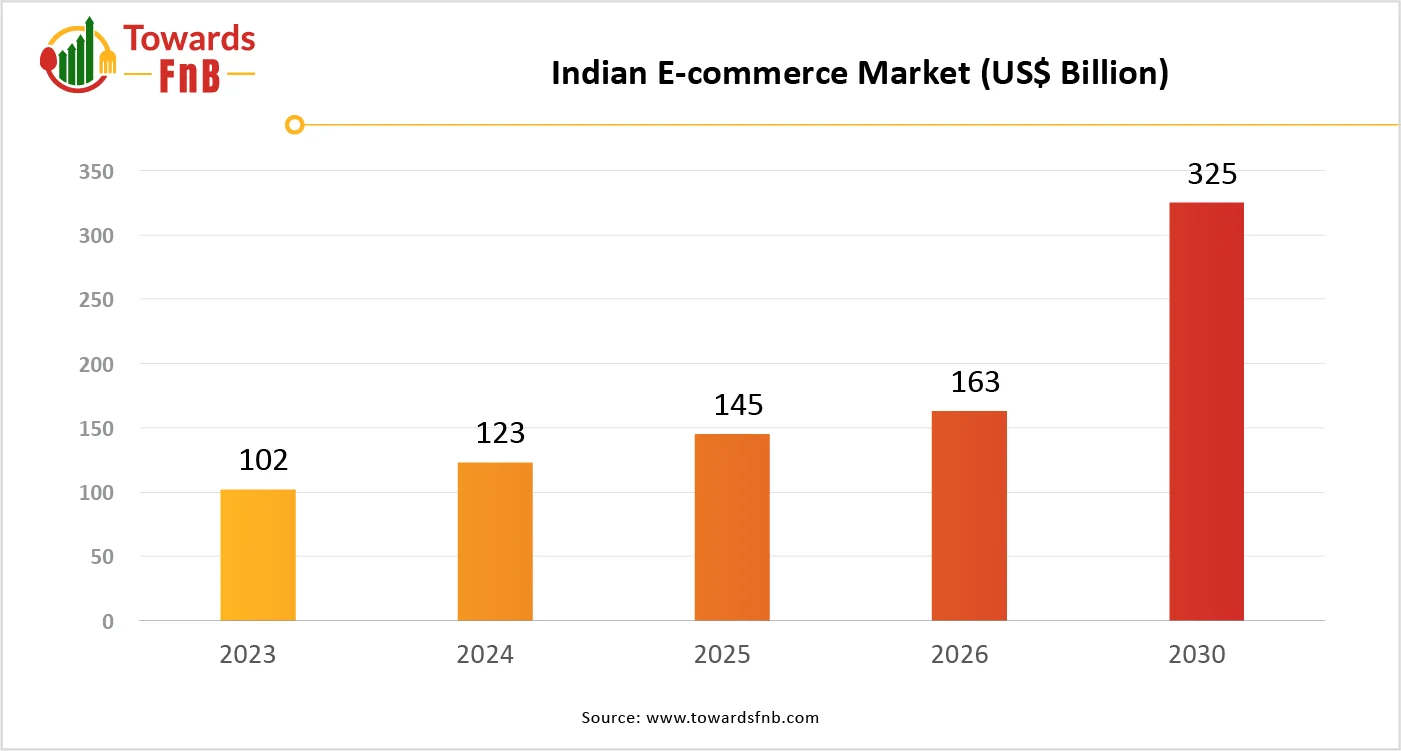
The trending e-commerce market boosts the growth of the probiotic market. E-commerce provides convenience to consumers; due to this, they can purchase probiotics from anywhere and anytime. On online platforms, various brands can promote their product through different channels. The availability of 24/7 shopping and the convenience of comparing various probiotics products help in market growth.
Consumers' busy lifestyles increase the demand for online shopping, which saves time and effort. Consumers can easily read reviews, compare prices, and understand product features on online platforms. Rise in subscription-based services, personalised products, and improved consumer experience due to e-commerce fuels market growth. Rising availability, convenience, and brand engagement to wider audiences make e-commerce a key driver for the growth of probiotics foods.
| Market Driver | (~) % Impact on CAGR Forecast | Geographic Relevance | Impact Timeline |
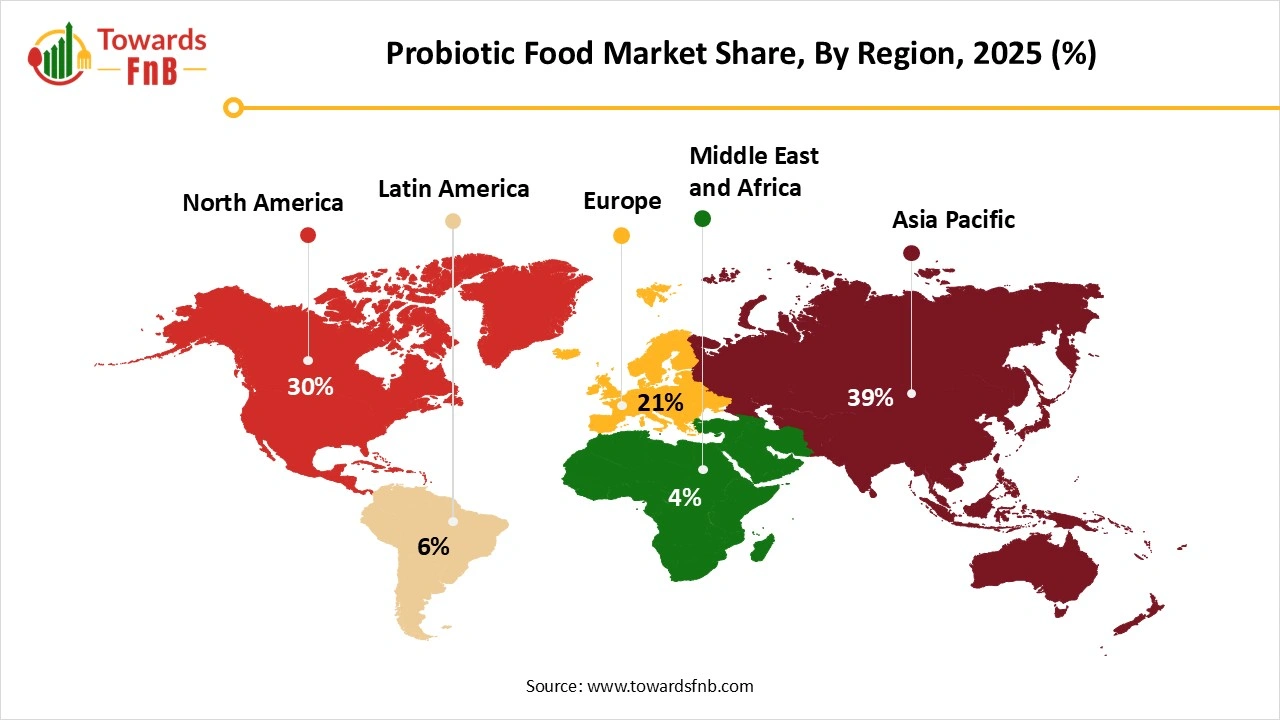
| Rising consumer awareness of gut health & wellness | +4.0% to +5.0% | Asia Pacific dominating share (39% in 2025), strong consumer interest also in North America & Europe | Medium to Long term (2025–2035) |
| Increasing incidence of digestive & lifestyle related health issues | +2.5% to +3.5% | Global, with significant growth in Asia Pacific & North America | Medium (2025–2030) |
| Expanded product portfolio across foods & beverages | +2.0% to +3.0% | North America & Europe lead with innovation; rising adoption in Asia Pacific | Short to Medium term (2025–2030) |
| Retail & e commerce channel expansion | +1.5% to +2.5% | North America & Europe lead; urban Asia Pacific catching up | Short to Medium term (2025–2030) |
| Market Restraints | (~) % Impact on CAGR Forecast | Geographic Relevance | Impact Timeline |
| Consumer skepticism on efficacy claims | ~ 2.0% to 3.0% | North America & Europe where regulatory scrutiny and consumer awareness are higher | Short term (2025–2028) |
| Price sensitivity of probiotic products versus conventional foods | ~ 1.8% to 2.5% | Asia Pacific and Latin America with cost conscious populations | Medium term (2025–2032) |
| Supply chain constraints for quality cultures & ingredients | ~ 1.2% to 1.8% | Global, more acute in import dependent regions | Medium term (2025–2030) |
| Regulatory & labeling challenges across markets | ~ 1.0% to 1.5% | Europe and North America with stringent food and health claim standards | Long term (2025–2035) |
Innovations in probiotic foods create an opportunity to market. Technological advancement includes improving stability, viability, and delivery of probiotic products. Researchers are working on innovating new probiotic strains that improve health benefits. The development of a new variety of flavors and formulations helps to attract consumers. The growing companies' investment in researching new strains of probiotics creates a strong opportunity for market growth.
Advanced techniques like microencapsulation, nanotechnology, and gene editing enhance the effectiveness and safety of probiotic foods. Manufacturing probiotics to personal needs potentially going to help in market growth. In the future, techniques like advancement in biotechnology and 3D printing of probiotics will create strong opportunities in the growth of the market.
Despite several advantages related to probiotic foods, there are some disadvantages like side effects that develop in some cases by consuming probiotic foods, such as gas, bloating, diarrhea, abdominal discomfort, and nausea. Amines present in probiotics foods trigger headaches in some people. In some cases, it causes allergic reactions such as rash, itching, swelling, and dizziness. In rare cases, infections such as sepsis may occur in ill patients. The several side effects of probiotics may hamper the growth of the market.
Raw Material Procurement
Packaging and Branding
Waste Management and Recycling
Asia Pacific: Powerhouse of Probiotic Food
Asia Pacific dominated the probiotic food market in 2025. The rising awareness about gut health and a healthy gut microbiome drives the growth of the market in the region. The strong tradition of consuming fermented foods and growing digestive issues in consumers helps in market growth. The growing health-conscious people demand probiotic foods in their diet. Rising disposable income and government initiatives in promoting probiotics in the region drive the growth of the market. Furthermore, growing innovations in product development in the region fuel market growth.
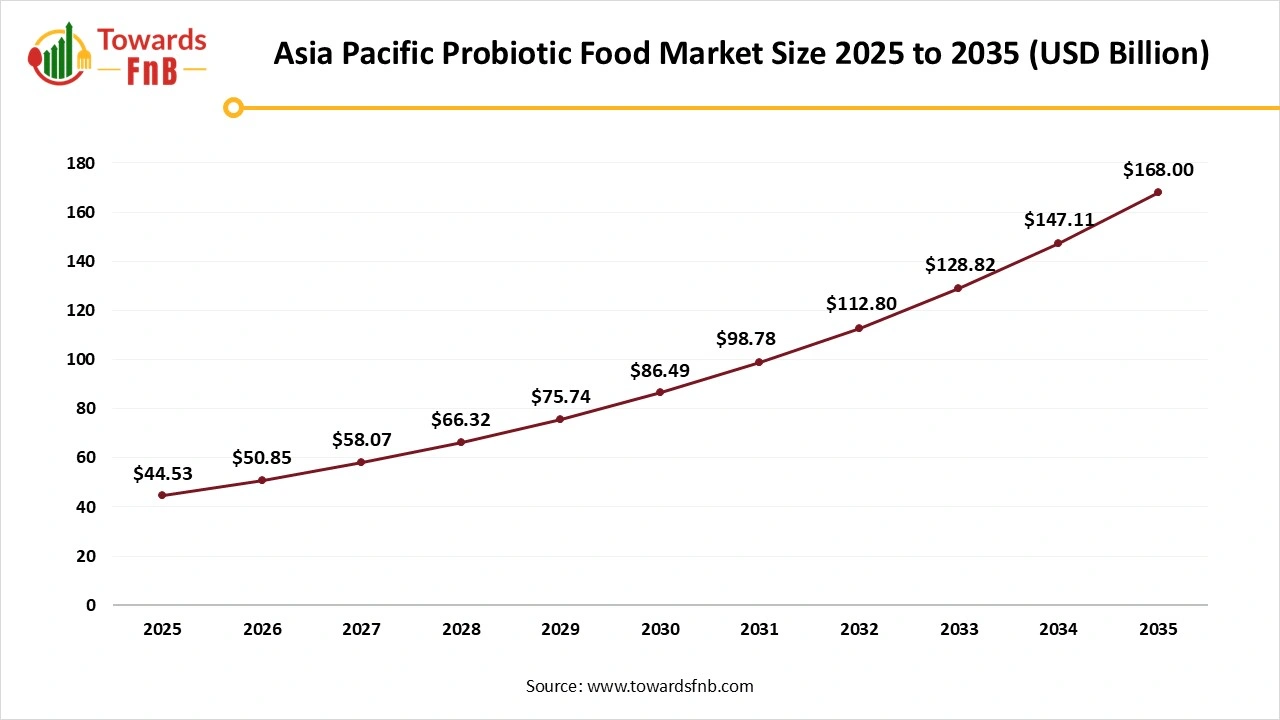
The Asia Pacific probiotic food market size stood at USD 44.53 billion in 2025 and is forecasted to grow from USD 50.85 billion in 2026 to reach approximately USD 168 billion by 2035, at a compound annual growth rate (CAGR) of 14.2% during the forecast period from 2026 to 2035.
India dominated the probiotic food market in the Asia Pacific region. The rising gastrointestinal problems and consumer awareness regarding overall health drive the growth of the market in the region. The rising population, lifestyle changes, and growing middle class in the country drive the growth of the market in the country. For instance, in India, the government initiatives like National Nutrition Mission helps in the growth of the market.
Asian innovations in the probiotic Food Market-2025
North America’s Unstoppable Growth in Probiotic Food
North America is the fastest-growing market during the forecast period. The growing consumer awareness of digestive health and rising adoption of natural healthcare remedies drive the growth of the market in the region. The growing various health issues in consumers increases the demand for probiotic foods to boost immunity. Innovations in probiotic foods in the food and beverage sector help in market growth. Strong economies in countries like the U.S. and Canada and expanded distribution networks support the market growth in the region.
United States dominates the probiotic food market in North America. The rising disposable income and growing health consciousness among American consumers drive the growth of the market in the country. United States consists of strong distribution channels such as online and hypermarkets/supermarkets. The rising product innovation in the United States and the presence of key players drive the growth of the market.
How is Europe Driving the Probiotic Food Market?
Europe is expected to grow at a notable rate during the forecast period. Major drivers include increasing popularity of functional foods, a focus on preventive healthcare and increasing consumer consciousness of gut health. The dairy market, especially fermented milk and probiotic yogurts, is gaining popularity in Europe. The UK, Germany and France are the strongest countries propelling the market growth in the region.
The Probiotic Food Market Trends in Germany
The German probiotic food industry is rising significantly, fueled by a shift for preventive healthcare and increasing consumer awareness of gut health. Key factors include innovations in product formats, growing geriatric population and increasing popularity of functional foods like probiotic drinks and yogurt.
Why Does the Middle East and Africa Driving the Probiotic Food Market?
The probiotic food sector across the region is witnessing major growth due to the a shift toward preventive healthcare, a rise in lifestyle diseases and awareness of immune and digestive health. Probiotic drinks and yogurt are rapidly consuming across the region. UAE, Saudi Arabia, and South Africa are the strong countries fueling the market growth.
South Africa Probiotic Food Market Trends
South Africa has a growing and significant probiotic food sector, driven by advancements in food technology, a traditional foundation in fermented foods and increased consumer interest in health and wellness. The market also includes a wide range of products such as supplements, fortified cereals, and fermented dairy.
How is South America Driving the Probiotic Food Market in 2025?
South America’s probiotic food industry rising significantly, driven by consumer demand for functional food and beverages such as fortified drinks and yogurt. The market also includes cosmetics, animal feed, dietary supplements and human food, and beverages.
Probiotic Food Market Trends in Brazil
Due to the awareness of health and wellness trends and large consumer base, Brazil is a major player. The market is expanding beyond fermented products to include dietary supplements, beverages and functional foods, with a strong emphasis on immunity, digestion, and gut health.
The Probiotic Food & Beverage Segment Dominated the Probiotic Food Market in 2025
Rising consumer awareness regarding gut health and increased preference for functional foods drive the growth of the market. Beverages that include probiotics contain live microorganism that improves immunity power and gut health. Probiotic foods are infused in various food products like nutrition bars, granola bars, vegetables, soy, and many more, fueling the market growth. Beverages like juices, smoothies, and yogurt drinks contain probiotics to heal the gut. The growing awareness about eating probiotic and innovations of dishes and beverages further drive the growth of the market.
The Probiotic Dietary Supplement Segment is the Fastest-Growing Segment During the Forecast Period
Rising immunity benefits and ease of supplement consumption drive the growth of the market. Consumers are more aware of gut health, and its overall impact on the body increases the demand for probiotic dietary supplements. These supplements are available in various formats, such as powders, capsules, and gummies. Innovations in products according to various concerns like women’s health, sports nutrition, and many more drive the growth of the market. Furthermore, the development of shelf-stable probiotic supplements and their convenience propel the market growth.
The Bacteria-Based Segment Dominated the Probiotic Food Market in 2025
The cost-effective manufacturing process, affordability, and easy accessibility drive the growth of the market. The established benefits and ease of incorporating them in foods fuels the market growth. The bacteria-based probiotics help to improve digestion, boost immunity, and manage irritable bowel syndrome and diarrhea.
The Yeast-Based Segment is the Fastest-Growing Segment During the Forecast Period
The growing advancement in yeast-based product development and therapeutic benefits drives the growth of the market. Yeast-based probiotics provide benefits such as stimulating the growth of other good bacteria in gut health, anti-inflammatory effects, enhancing absorption of nutrients, and restoring gut microbiome, which fuels the market growth. Furthermore, Yeast-based probiotics supplements contain nutritional value such as proteins, amino acids, and vitamin B and prevent the growth of harmful bacteria & fungi, driving the market growth.
The Human Segment Dominated the Probiotic Food Market in 2025
The growing awareness about gut health and its effect on overall health drives the growth of the market. The rising availability of probiotics in different varieties, such as fortified foods, beverages, and topical products, fuels the growth of the market. Growing innovations in product development and availability on different distribution channels help in market growth.
The Animal Segment is the Fastest-Growing Market During the Forecast Period
The rising demand for sustainable options in the livestock industry and the lowering of the usage of antibiotics in animal health drive the growth of the market. The high disposable income increases the demand for animal protein sources and helps in market growth. Probiotics offer various benefits to animal health, such as improving gut microbiome, enhancing digestion, and improving feed efficiency. Furthermore, rising focus on animal welfare and protecting animals from diseases drives the growth of the market.
The Hypermarkets/ Supermarkets Segment Dominated the Probiotic Food Market in 2025
The availability of a wide variety of products, such as yogurt, kefir, fruit beverages, and many more at a single stop, drives the market's growth. Consumers can easily purchase probiotic foods along with other groceries in one location. The growing private-label probiotic food brands in retail stores fuel the growth of the market.
The Online Store Segment is the Fastest-Growing Market During the Forecast Period
The rising consumer preference for online shopping due to its convenience drives the growth of the market. On online platforms, there are a variety of products available, and consumers can easily read reviews about products. Online platforms offer discounts, promo codes, and sales to consumers, which drives the growth of the market. Furthermore, online stores are available 24/7, and it is easy to shop from anywhere, which fuels the market growth. In the busy lifestyles of consumers, online shopping helps to save time and propels market growth.
By Product
By Ingredient
By End-Use
By Distribution
By Region






Principal Consultant
Vidyesh Swar, Senior Research Analyst at Towards Food & Beverages, specializes in market research, focusing on supply-demand evaluation, pricing analysis, alternative proteins, plant-based foods, and sustainable food technologies within the industry.
Learn more about Vidyesh Swar
Reviewed By
Aditi Shivarkar, with 14+ years in Food and Beverages market research, specializes in food, beverage, and eco-friendly packaging. She ensures accurate, actionable insights, driving Towards FnB's excellence in industry trends and sustainability.
Learn more about Aditi ShivarkarApril 2026
April 2026
April 2026
April 2026

Probiotic Food Market


 +1 804-441-9344
 Download Sample
 Schedule a Meeting