April 2026



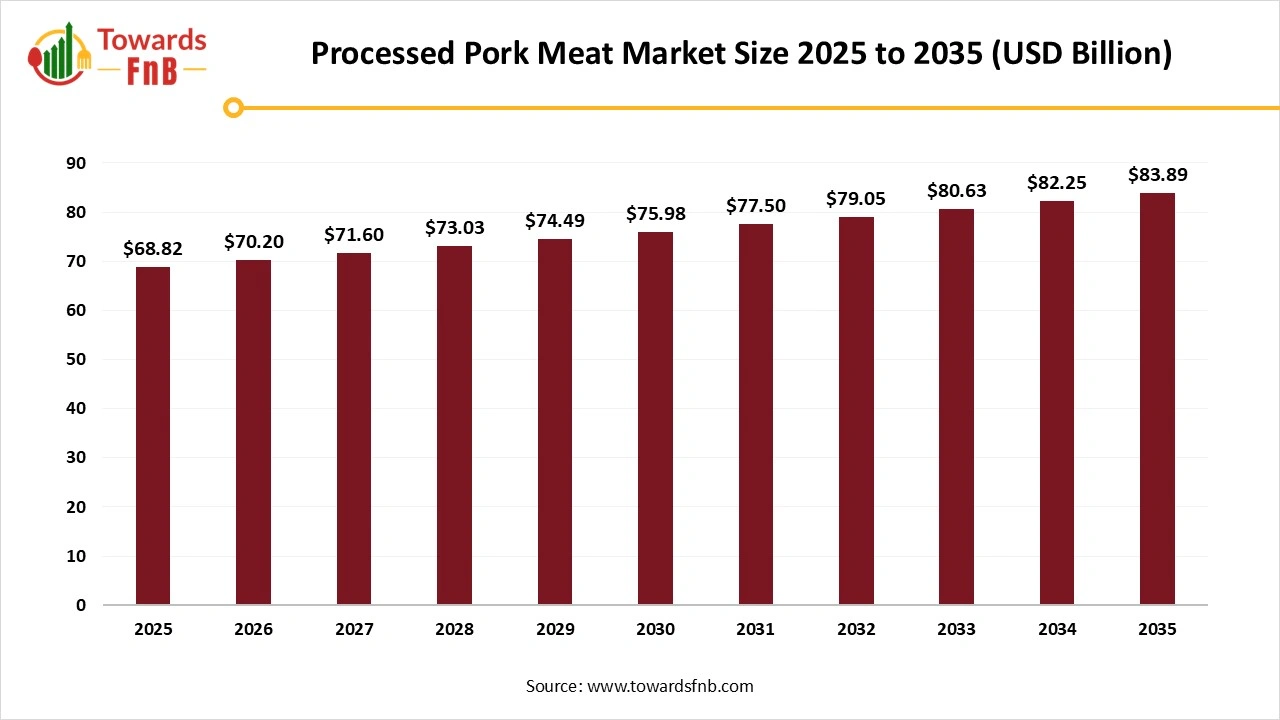
The global processed pork meat market size reached at USD 68.82 billion in 2025 and is anticipated to increase from USD 70.20 billion in 2026 to an estimated USD 83.89 billion by 2035, witnessing a CAGR of 2% during the forecast period from 2026 to 2035. The growing demand for processed food and the expanding foodservice sector are significantly driving the growth of the market.
| Study Coverage | Details |
| Growth Rate from 2026 to 2035 | CAGR of 2% |
| Market Size in 2026 | USD 70.20 Billion |
| Market Size in 2027 | USD 71.60 Billion |
| Market Size by 2035 | USD 83.89 Billion |
| Largest Market | Asia Pacific |
| Base Year | 2025 |
| Forecast Period | 2026 to 2035 |
| Regions Covered | North America, Europe, Asia-Pacific, Latin America, and Middle East & Africa |
The processed pork meat market includes meat that has transformed through processes such as salting, curing, fermentation, and smoking aims to enhance flavor and improve preservation. The market is driven by growing demand for convenience food, rapid urbanization, and expanding food service. The market focuses on products like bacon, sausages, and ham.
The processed pork meat industry is experiencing a significant technological transformation, marked by the integration of automation and robotics alongside traditional manual labor. Advances in artificial intelligence, robotics, and human-robot collaboration, which represent core components of Industry 5.0, are central to this transition. Furthermore, recent developments in food technology are expanding the boundaries of flavor enhancement through innovative methods that utilize enzymatic activity, microbial fermentation, and enhanced encapsulation technologies for flavor. The integration of AI and big data analytics within the meat industry is revolutionizing methodologies of taste formulation.
Raw Material Procurement
Processing
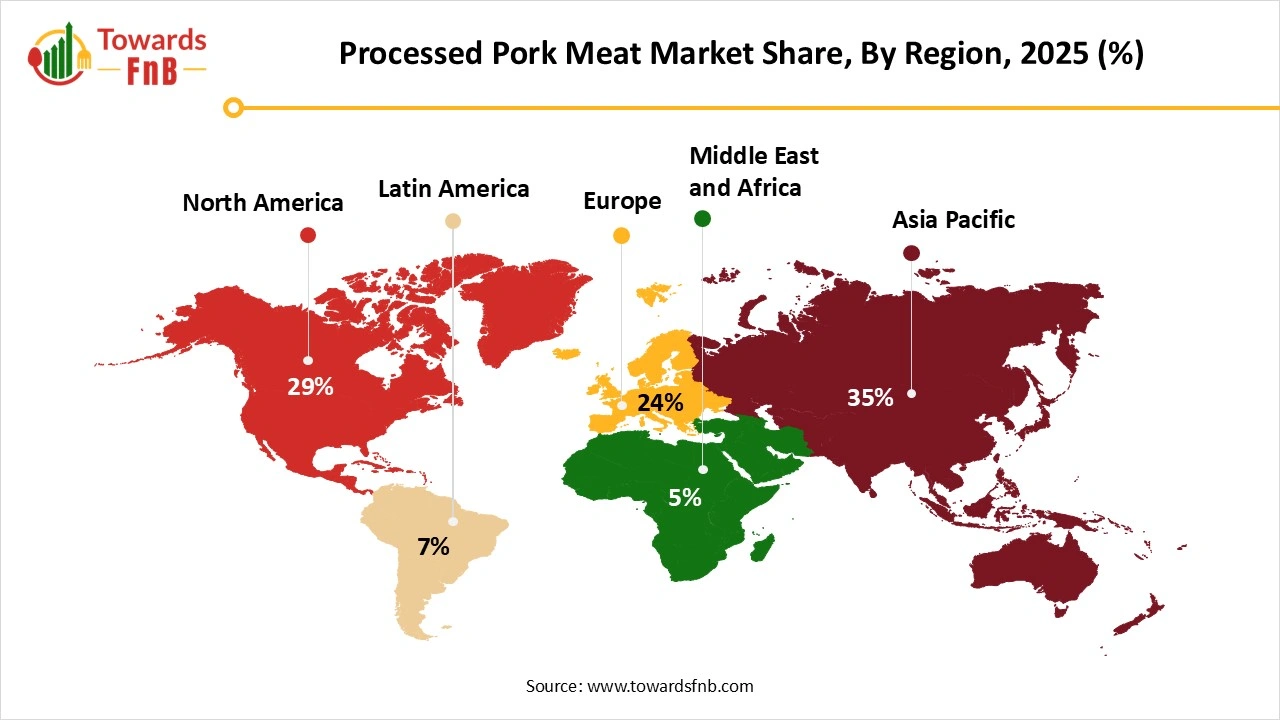
Asia Pacific dominated the Processed Pork Meat Market in 2025
In Asia Pacific, pork is the most widely consumed red meat. South Korea, Vietnam, and China demonstrate the highest per capita consumption of pork within the region, which has boosted the market. The growth of Asian populations and economies is facilitating a rapid increase in pig production across the continent. Additionally, rising consumer demand for pork, coupled with increasing disposable income, is fostering growth in the market, driven by the introduction of new pork products. The growing consumer attraction to protein-rich meat, in conjunction with urbanization, is further contributing to the expansion of the processed pork meat sector.
Asia Pacific Processed Pork Meat Market Size 2025 to 2035
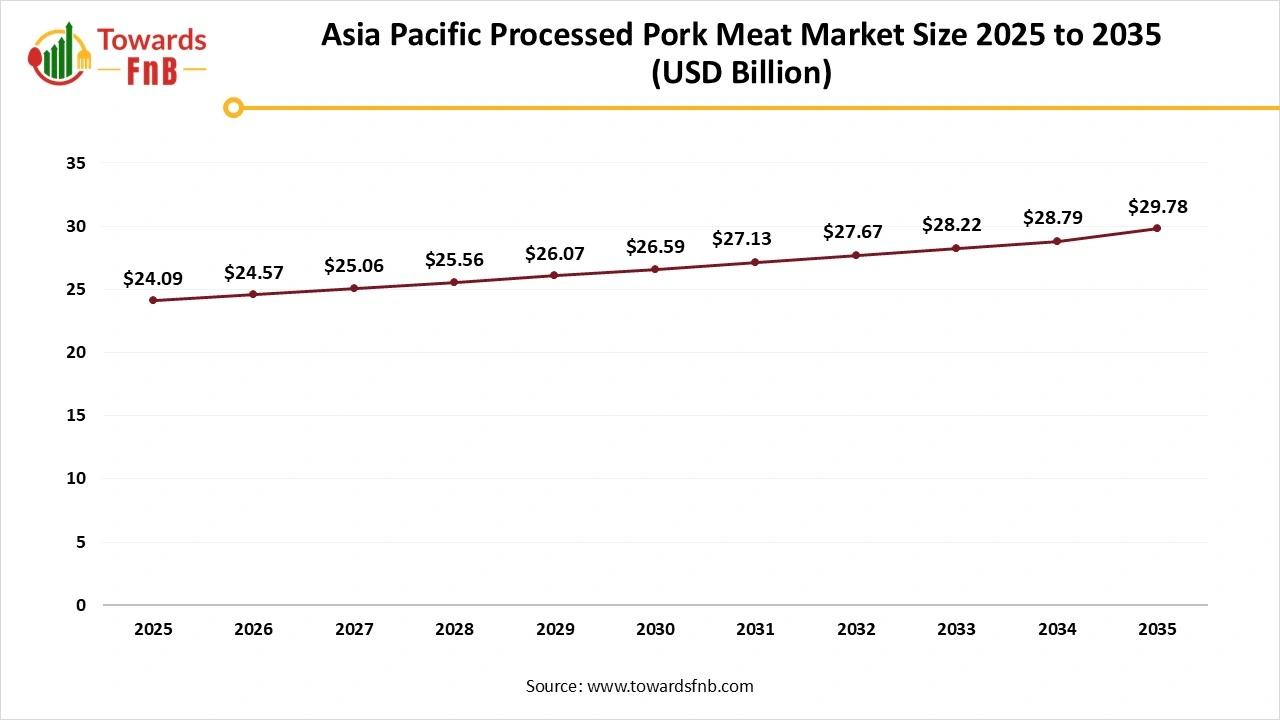
The Asia Pacific processed pork meat market size was calculated at USD 24.09 billion in 2025 with projections indicating a rise from USD 24.57 billion in 2026 to approximately USD 29.78 billion by 2035, expanding at a CAGR of 2.14% throughout the forecast period from 2026 to 2035.
China Processed Pork Meat Market Trends
China is a significant region in the market. In China, urban millennials and Generation Z consumers are actively seeking portable meat formats that align with their dynamic lifestyles and perceived health benefits. The fast-paced nature of life in urban areas is accelerating the demand for ready-to-eat and processed pork meat products. The processed pork meat market in China is currently undergoing a regulatory transformation aimed at enhancing quality and standards and encouraging further consolidation.
North America Processed Pork Meat Market Trends
North America expects fastest growth during the forecast period. The processed pork meat market is experiencing substantial growth due to shifting consumer preferences, dietary diversification, and the rising demand for convenient, protein-rich food products. Companies are investing in product expansion within this sector. For instance, Hormel Foods Corporation, Tyson Foods Inc., and Conagra Brands Incorporated are innovating new products and providing a diverse range of processed pork offerings, such as sausages and bacon, through supermarkets and online channels. By producing diverse and ethically sourced pork products, these companies consistently meet the increasing demand for premium and responsibly produced meat across North America.
U.S. Processed Pork Meat Market Trends
The processed pork meat market is expanding rapidly in the U.S. Heightened awareness of the health benefits associated with animal protein consumption is a significant driver of processed pork meat sales in the U.S. Consumers are gravitating towards high-protein diets, resulting in a substantial increase in the popularity of pre-marinated pork cuts, sausages, and other value-added products. These offerings cater to busy consumers, allowing for quick meal preparations without compromising quality or flavor.
Europe Processed Pork Meat Market Trends
The processed pork meat market in Europe is currently driven by a rising consumer demand for high-quality pork products. This demand has been fueled by the region's diverse culinary traditions and an increasing awareness of protein-rich diets, contributing to consistent market growth. The European Union stands as the world's second-largest producer of pork, following China, and is the leading exporter of pork and related products. Within the EU, Germany, Spain, and France are the primary producing nations. European culinary practices are rich and varied, with pork constituting essential components in iconic dishes such as German bratwurst, French charcuterie, Italian prosciutto, Spanish chorizo, and British bacon. Market stakeholders are investing in innovative processing techniques to align with evolving consumer preferences and environmental standards.
Germany Processed Pork Meat Market Trends
Several key factors are propelling the processed pork meat market in Germany, including an increasing demand for protein-based food products, a growing preference for convenient food options among consumers, and a rise in poultry meat consumption. The market's growth is further supported by a strong consumer inclination toward processed pork products, advancements in processing technologies, and expanding export opportunities. Moreover, the proliferation of e-commerce and online food delivery services in Germany is anticipated to significantly enhance the growth of the market, providing consumers with convenient and accessible purchasing options.
Processed Pork Meat Market Share, By Product Type, 2025 (%)
| Segments | Shares (%) |
| Sausages | 40% |
| Bacon and Ham | 20% |
| Deli Meats | 10% |
| Canned and Preserved | 17% |
| Other Processed Products | 13% |
Why did the Sausages Segment Dominate the Processed Pork Meat Market in 2025?
The sausages segment dominated the processed pork meat market in 2025, driven by consumer preferences for convenient and ready-to-eat food packaging products, alongside an expanding culinary culture that embraces a diverse array of sausage varieties. Changing food habits, coupled with increasing disposable incomes in emerging economies, are anticipated to further bolster the global demand for sausages. Retailers and food service providers are experiencing a surge in demand for cooked sausages, particularly in urban areas where efficient meal solutions are in high demand.
The Bacon and Ham Segment is Projected to Grow at a Notable Rate During the Forecast Period
Attributed to evolving consumer lifestyles and heightened demand for ready-to-eat products, as well as innovations in meat processing technologies. Bacon, derived from the pork belly, and hams, obtained from the hind leg of the pig, are cured pork products that are integral to global cuisines. These products are processed through methods such as salting, smoking, or brining to enhance flavor and prolong shelf life.
Processed Pork Meat Market Share, By Nature, 2025 (%)
| Segments | Shares (%) |
| Conventional | 75% |
| Organic | 25% |
How did the Conventional Segment Dominate the Processed Pork Meat Market in 2025?
The conventional segment dominated the market with the largest share in 2025. This dominance is primarily due to its widespread production, cost-effectiveness, and availability in global markets. Conventional pork continues to be the preferred choice for the majority of consumers because of its affordability and consistent supply through established farming and distribution networks.
The Organic Segment is Seen to Grow at the Fastest Rate During the Forecast Period
This increasing interest is driven by a more profound awareness concerning food quality, health, animal welfare, and long-term sustainability. Organic pork is sourced from pigs raised adhering to stringent organic farming standards that prioritize natural growth, clean feed, humane treatment, and minimal chemical intervention throughout the animal's life cycle. As consumers increasingly seek products perceived as natural, this trend is likely to benefit the market for organic meat products.
Processed Pork Meat Market Share, By Distribution Channel, 2025 (%)
| Segments | Shares (%) |
| On-trade | 60% |
| Off-trade | 40% |
Which Distribution Channel Dominated the Processed Pork Meat Market in 2025?
The on-trade segment held the largest share of the market in 2025, reflecting the ongoing trend of out-of-home fresh meat consumption, which has solidified its appeal within the hospitality sector. The versatility of pork meat makes it a favored ingredient in a plethora of recipes, including sandwiches, hamburgers, sirloin steak, secret steak, and ribs, collectively accounting for one-third of consumption occasions. Contributing factors to this growth include urbanization, rising disposable incomes in developing nations, and a heightened demand for convenient, on-the-go food options.
The Off-Trade Segment is Expected to Experience the Fastest Growth During the Anticipated Timeframe
The rise of app-based meat ordering and delivery platforms, alongside ghost kitchens (non-physical establishments), has simplified the processed pork meat purchasing process for consumers. Grocery retailers are enhancing their online stores to provide a seamless shopping experience. Major international companies, such as Walmart, Kroger, Amazon Fresh, and Grofers, are focusing on expanding their customer bases and are extensively engaging in promotional efforts, thus driving the growth of the online grocery sector.
CPF Food and Beverage
Olymel
Mission Barns
By Product Type
By Nature
By Distribution Channel
By Region




Principal Consultant
Vidyesh Swar, Senior Research Analyst at Towards Food & Beverages, specializes in market research, focusing on supply-demand evaluation, pricing analysis, alternative proteins, plant-based foods, and sustainable food technologies within the industry.
Learn more about Vidyesh Swar
Reviewed By
Aditi Shivarkar, with 14+ years in Food and Beverages market research, specializes in food, beverage, and eco-friendly packaging. She ensures accurate, actionable insights, driving Towards FnB's excellence in industry trends and sustainability.
Learn more about Aditi ShivarkarApril 2026
February 2026
March 2026
February 2026

Processed Pork Meat Market

 +1 804-441-9344
 Download Sample
 Schedule a Meeting