April 2026



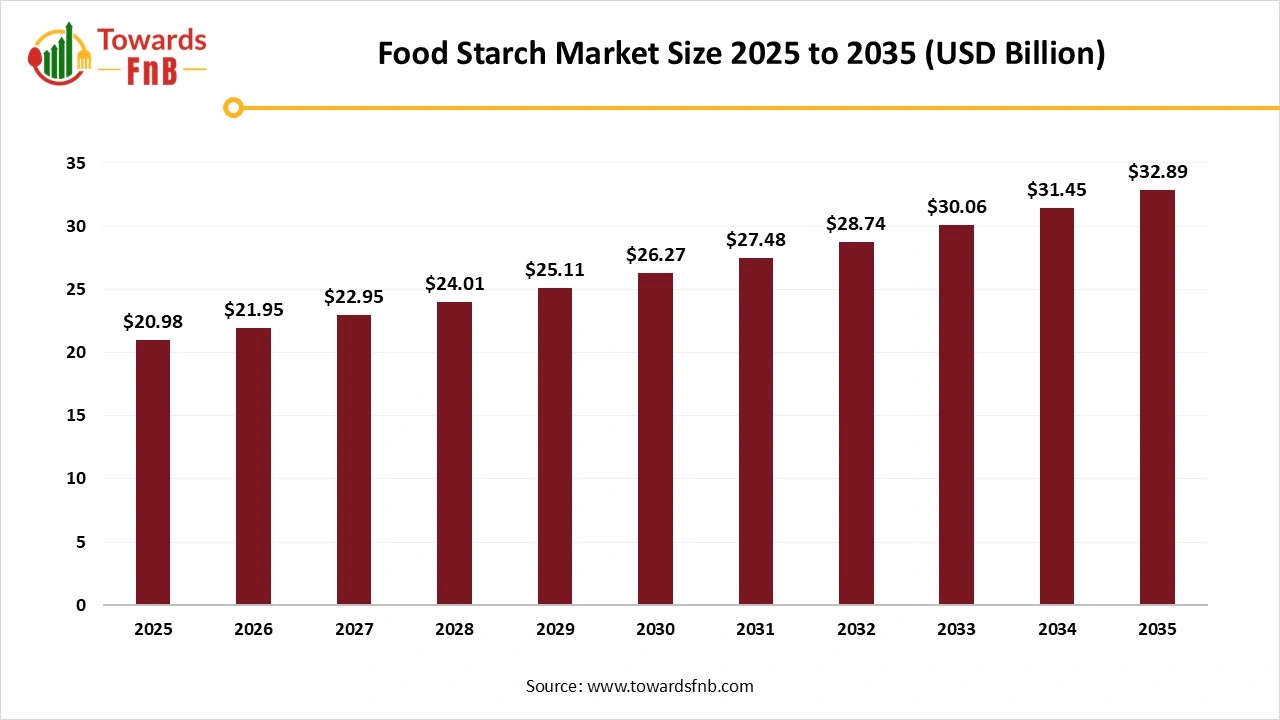
The global food starch market size estimated at USD 20.98 billion in 2025 and is predicted to increase from USD 21.95 billion in 2026 to nearly reaching USD 32.89 billion by 2035, growing at a CAGR of 4.6% during the forecast period from 2026 to 2035. The rise of instant food options and the higher vegetarian food consumption drive market growth.
| Study Coverage | Details |
| Growth Rate from 2026 to 2035 | CAGR of 4.6% |
| Market Size in 2026 | USD 21.95 Billion |
| Market Size in 2027 | USD 22.95 Billion |
| Market Size by 2035 | USD 32.89 Billion |
| Largest Market | North America |
| Base Year | 2025 |
| Forecast Period | 2026 to 2035 |
| Regions Covered | North America, Europe, Asia-Pacific, Latin America, and Middle East & Africa |
Food starch is a polymeric carbohydrate made up of glucose units. They are very important for brain function and are packed with essential nutrients. They are made from common sources like whole grains, potatoes, corn, tapioca, and others. The various types of food starch are resistant starch, native starch, and modified starch. They improve insulin sensitivity, lower calorie intake, reduce cholesterol, and provide energy to the body. They are widely used as thickening agents, texture improvers, emulsifiers, coating agents, and stabilizers. Food starch is used in gravies, gummed candies, processed food, sausage, and pie fillings.
The food starch market growth is driven by the expansion of confectionery items, robust industrialization, advancement in modified starch, surging vegan diets, high consumption rate of processed food, shift away from synthetic products, extensive demand for gluten-free products, and increasing use of food biotechnology for starch modification.
The key technological shifts are happening in the food starch market, driven by demand for high-quality starch, sustainability, and functional native starch. The technological shift, like robotics, enzymatic modification, green modification techniques, genetic engineering, and automation, helps in monitoring starch quality, modifies starches, lowers waste, and provides better texture. The major innovation is the AI integration that optimizes the production process, improves supply chain efficiency, and enhances quality inspection.
AI easily understands the quality of raw materials and manufactures high-quality starch. AI detects impurities in feedstocks and easily develops customized starches. AI predicts starch demand and optimizes the use of resources. AI develops tailored modified starches and creates healthier starch products. AI ensures the final product safety and lowers overstocking. Additionally, players like MOA Foodtech, NotCo, Ingredion, and Cargill use AI for various applications in starch production.
Raw Material Procurement
Processing and Preservation
Quality Testing and Certification
| Starch Type | Source | Key Producing Country | Key Applications |
| Maize Starch | Maize | United States China |
Baking Confectionery |
| Tapioca Starch | Cassava | Thailand Indonesia |
Sauces Gravies Dairy Products Snacks |
| Wheat Starch | Wheat | China European Union |
Bakery Puddings Soups |
| Potato Starch | Potato | Germany Netherlands |
Fried Foods Soups Meat Processing Snacks |
Why North America Dominates the Food Starch Market?
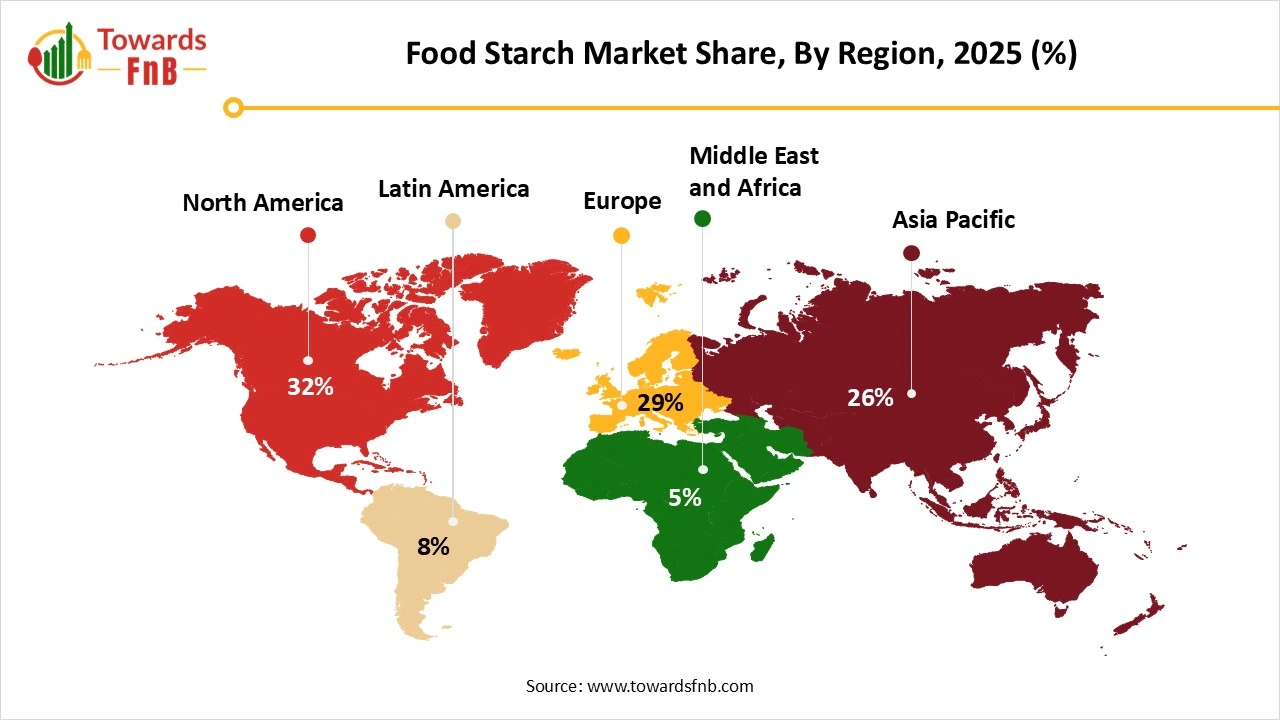
North America dominated the food starch market in 2025. The strong agricultural base and the increased consumption of convenience snacks increase demand for food starch. The rapid expansion of functional food and the shift towards ready-to-eat meals increase demand for food starch. The increased-production of gluten-free products and the well-established food manufacturing base require food starch. The presence of players like Cargill and Ingredion drives the market growth.
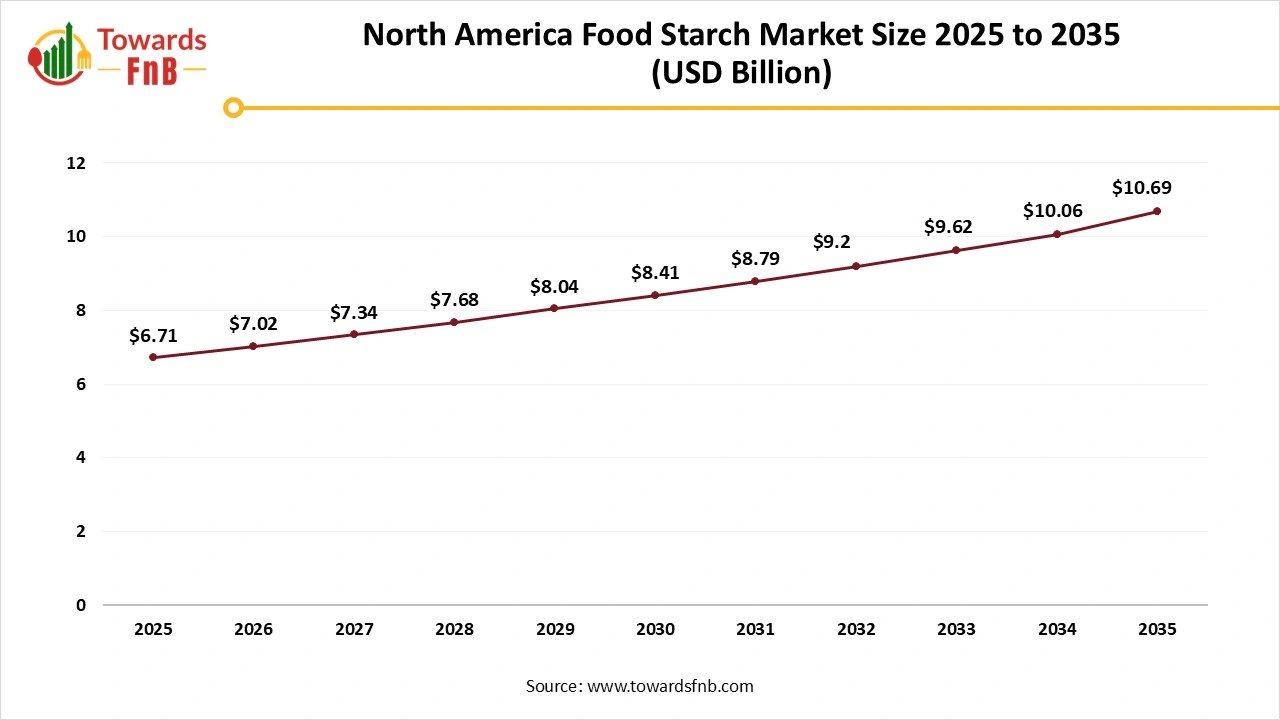
North America Food Starch Market Size 2025 to 2035
The North America food starch market size was calculated at USD 6.71 billion in 2025 with projections indicating a rise from USD 7.02 billion in 2026 to approximately USD 10.69 billion by 2035, expanding at a CAGR of 4.77% throughout the forecast period from 2026 to 2035.
Powering Bites: United States Powerhouse in the Production of Food Starch
The United States is a major contributor to the market. The abundance of feedstocks and the transition towards non-GMO ingredients increase the production of food starch. The high consumption rate of frozen food and the strong presence of quick-service restaurants increase demand for food starch. The strong focus on meat substitutes and the increased production of dairy products requires food starch. The presence of companies like Tate & Lyle, Cargill, and Ingredion supports the overall market growth.
Asia Pacific Food Starch Market Trends
Asia Pacific is experiencing the fastest growth in the market during the forecast period. The push for convenience foods and the high purchasing power of packaged food increases demand for food starch. Consumer shift towards natural ingredients and the expanding food infrastructure require food starch. The increased consumption of confectionery products and heavy investment in food technology increases adoption of food starch. The increased utilization of native starches drives the market growth.
Building Plate Base: China's Role in Food Starch Production
China is the largest contributor to the market in the Asia Pacific region. The growing demand for fast food and the trending gluten-free diet increases demand for food starch. The strong focus on replacing expensive sugar in food products and expanding the meat industry increases the adoption of food starch. The high availability of corn and the robust growth in modified starches support the overall market growth.
Food Starch Market Share, By Type, 2025 (%)
| Segments | Shares (%) |
| Modified Starch | 60% |
| Native Starch | 40% |
Why Modified Starch Segment is Dominating the Food Starch Market?
The modified starch segment dominated the food starch market in 2025. The robust growth in convenient foods and the clean label trend increases demand for modified starch. The focus on enhancing the texture of food products and the high consumption of processed food require modified starch. The cost-effectiveness, high stability, and superior functional performance of modified starch drive the market growth.
The Native Starch Segment is the Fastest-Growing in the Market During the Forecast Period
The consumer transition towards cleaner food and the growth in healthy diets increases adoption of native starch. The increasing need for thickening agents in food products and the expansion of ready-to-eat meals require native starch. The increased use of native starches in dairy products, soups, and bakery items supports the overall market growth.
Food Starch Market Share, By Source, 2025 (%)
| Segments | Shares (%) |
| Maize | 50% |
| Wheat | 25% |
| Potato | 15% |
| Others | 10% |
How did the Maize Segment hold the Largest Share in the Food Starch Market?
The maize segment held the largest revenue share in the market in 2025. The strong focus on enhancing the texture of sauces and the increased production of high-fructose corn syrup increase demand for maize. The growing demand for gluten-free products and the need to improve the appearance of food products increase the adoption of maize. The large-scale cultivation of the maize crop and the high functionality of maize drive market growth.
The Potato Segment is Experiencing the Fastest Growth in the Market During the Forecast Period
The consumer focuses on finding allergen-free alternatives, and the transition towards vegetarian diets increases demand for potato starch. The robust expansion of the gluten-free industry and the well-developed pharmaceutical sector increases demand for potato starch, which is derived from potatoes. The excellent viscosity, sustainability, and functional superiority of potatoes support the overall market growth.
Food Starch Market Share, By Form, 2025 (%)
| Segments | Shares (%) |
| Powder | 70% |
| Liquid | 30% |
What Made the Powder Segment Dominate the Food Starch Market?
The powder segment dominated the food starch market in 2025. The growing food-binding activities and surging instant food industry increase demand for powder starch. The strong presence of automated food production lines and the robust growth in the snack food industry increase demand for starch powder. The cost-efficiency, efficient processing, longer shelf life, ease of use, and high consistency of starch powder drive the market growth.
The Liquid Segment is the Fastest-Growing in the Market During the Forecast Period
The focus on natural food labels and the high popularity of processed food increases demand for liquid starch. The increased production of beverages and the rising use of emulsifiers in food products increases adoption of liquid starch. The instant solubility, production efficiency, and improved process control of liquid starch support the overall market growth.
Which Application Segment held the Largest Share in the Food Starch Market?
The bakery and confectionery segment held the largest revenue share in the market in 2025. The increased production of gluten-free bakery products and the need for enhancing the stability of confectionery products increase demand for food starch. The company's focus on extending the shelf-life of baked goods and the popularity of ready-to-eat baked goods require food starch. The growing demand for improving the texture of baked products and the high need for fat replacers in confectionery items requires food starch, driving the overall market growth.
The Soup, Sauces, and Dressings Segment is Experiencing the Fastest Growth in the Market During the Forecast Period
The growing availability of ready-to-eat soups and the need for maintaining stability in sauces increase demand for food starch. The development of a creamy texture for soups and the high demand for varied sauces require food starch. The increased use of dressing in the food industry and the high consumption of sous in countries like China support the overall market growth.
Emsland Group
Roquette
AGRANA
By Type
By Source
By Form
By Application
By Region




Principal Consultant
Vidyesh Swar, Senior Research Analyst at Towards Food & Beverages, specializes in market research, focusing on supply-demand evaluation, pricing analysis, alternative proteins, plant-based foods, and sustainable food technologies within the industry.
Learn more about Vidyesh Swar
Reviewed By
Aditi Shivarkar, with 14+ years in Food and Beverages market research, specializes in food, beverage, and eco-friendly packaging. She ensures accurate, actionable insights, driving Towards FnB's excellence in industry trends and sustainability.
Learn more about Aditi ShivarkarApril 2026
April 2026
April 2026
April 2026

Food Starch Market


 +1 804-441-9344
 Download Sample
 Schedule a Meeting