April 2026



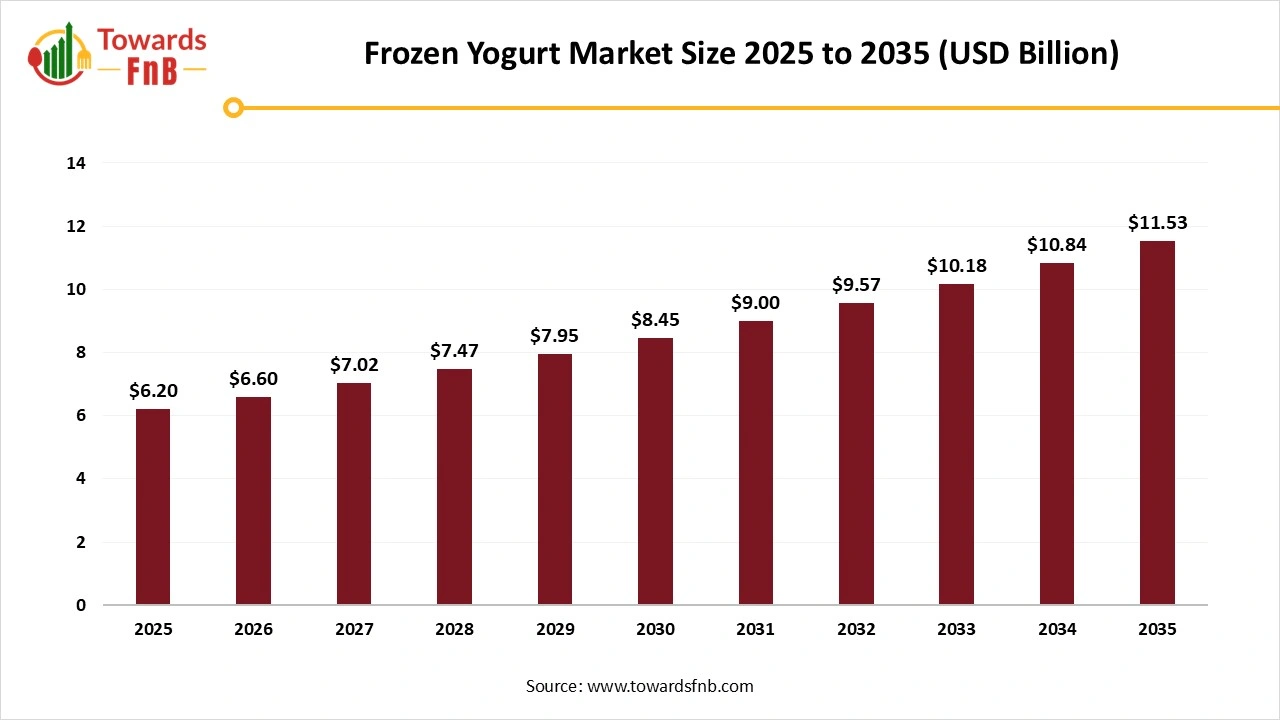
The global frozen yogurt market size reached at USD 6.20 billion in 2025 and is anticipated to increase from USD 6.60 billion in 2026 to an estimated USD 11.53 billion by 2035, witnessing a CAGR of 6.4% during the forecast period from 2026 to 2035. Rising demand for healthier desserts and flavor innovation are driving the market.
| Study Coverage | Details |
| Growth Rate from 2026 to 2035 | CAGR of 6.4% |
| Market Size in 2026 | USD 6.60 Billion |
| Market Size in 2027 | USD 7.02 Billion |
| Market Size by 2035 | USD 11.53 Billion |
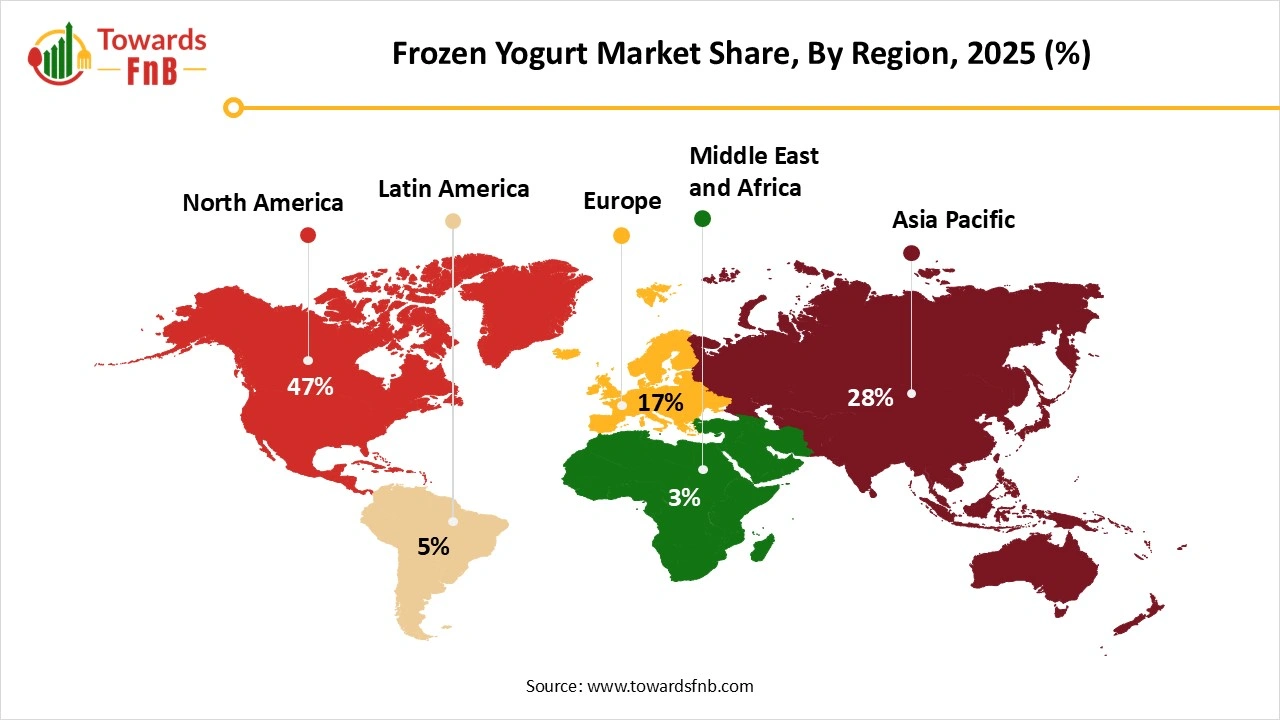
| Largest Market | North America |
| Base Year | 2025 |
| Forecast Period | 2026 to 2035 |
| Regions Covered | North America, Europe, Asia-Pacific, Latin America, and Middle East & Africa |
Frozen yogurt is a dairy item formulated from fermented milk using bacteria like Lactobacillus bulgaricus and Streptococcus thermophilus. These yoghurts also contain non-dairy ingredients like almond milk and soymilk. Frozen yogurt is a favored icy dessert rich in calcium, potassium, and protein. This increase is mainly fueled by a rising consumer desire for desserts that merge indulgence with health advantages.
Technological advancements have been instrumental in enhancing production efficiency and ensuring product quality consistency. The implementation of automated freezing and packaging lines, along with real-time quality control systems, has contributed to reduced operational costs and minimized waste. The rise of artificial intelligence (AI) offers shop owners innovative tools to enhance operations, improve customer experiences, and increase the effectiveness of marketing strategies. For instance, companies like Danone, a prominent player in the dairy industry, utilize AI to detect emerging flavor trends and develop products that align with consumer tastes. For small frozen yogurt establishments, AI-driven inventory management tools such as Zoho Inventory and DEAR Inventory represent excellent options.
Raw Material Procurement
Processing
Packaging
What Made the North America a Dominant Region in the Frozen Yogurt Market?
North America dominated the market in 2025. This growth trajectory suggests that the North American yogurt market is transitioning from a volume-driven expansion model to one focused on premiumization, where protein fortification, specific probiotic content, and functional claims have become increasingly significant compared to merely indulgent flavors. The frozen yogurt sector in the Americas has witnessed steady growth, primarily driven by health-conscious consumer trends and an increased demand for healthier dessert alternatives. Market participants are emphasizing low-fat, probiotic-rich products to capture the attention of health-focused consumers.
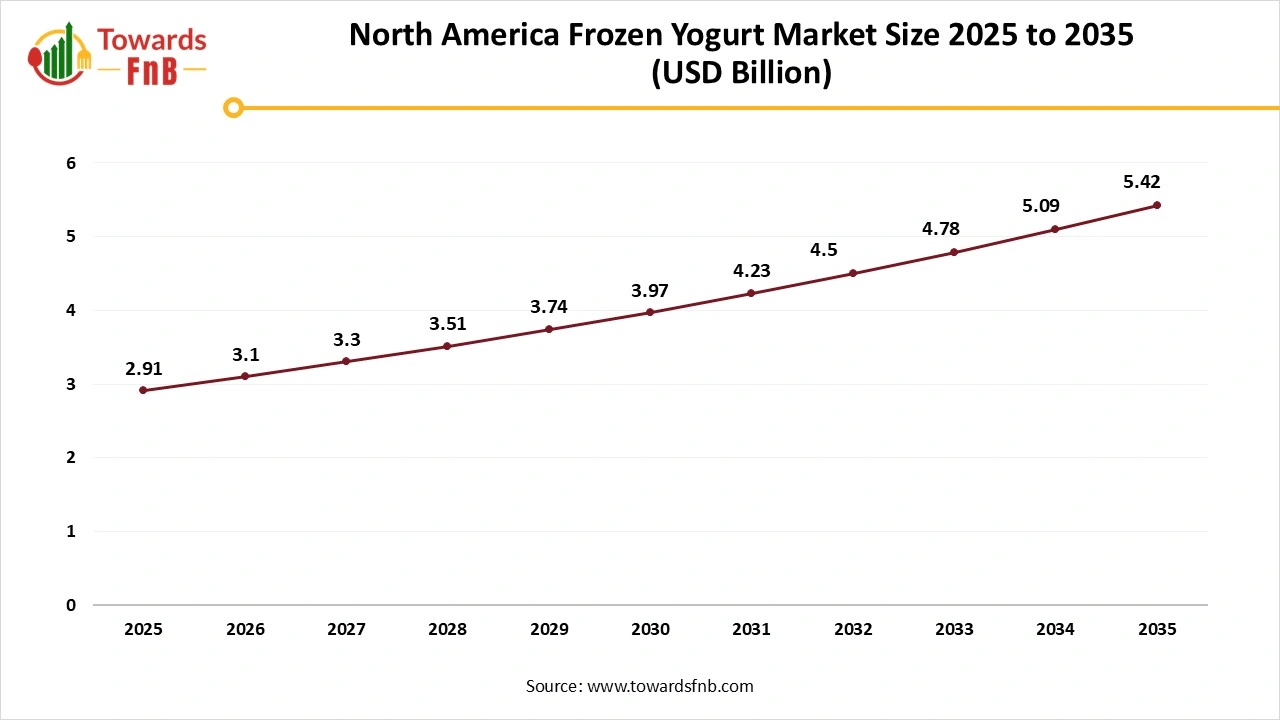
The North America frozen yogurt market size estimated at USD 2.91 billion in 2025 and is predicted to increase from USD 3.1 billion in 2026 to nearly reaching USD 5.42 billion by 2035, growing at a CAGR of 6.4% during the forecast period from 2026 to 2035.
United States Frozen Yogurt Market Analysis
The United States frozen yogurt market has experienced substantial growth in recent years, propelled by rising consumer demand for healthier dessert options and a preference for customizable, low-fat alternatives. As consumers become more health-conscious, frozen yogurt has emerged as a favored substitute for traditional ice cream, offering a wide array of flavors and toppings that cater to diverse palates. The market expansion is further supported by innovative product offerings and the broadening of retail channels.
Asia Pacific: the Fastest Growing Region in the Frozen Yogurt Market
Asia Pacific expects fastest growth during the forecast period. The Asia Pacific market is undergoing a remarkable transformation, driven by shifting consumer preferences and technological innovations. Growing health consciousness among consumers has redirected demand toward low-fat, probiotic-rich, and products comprising natural ingredients, intensifying competition among brands to innovate and differentiate themselves. The entry of regional players focusing on localized flavors and sustainable sourcing practices has further diversified the competitive landscape.
India Frozen Yogurt Market Analysis
In India, the frozen yoghurt market is currently experiencing a dynamic transition, influenced by changing consumer preferences and rising disposable incomes. Presently, there is a marked increase in the demand for low-calorie, high-protein, and health-conscious dessert options, which can be attributed to evolving consumer behaviors. This trend, combined with the growing adoption of healthy lifestyles aimed at maintaining fitness and reducing chronic disease occurrences, is significantly contributing to the market's growth in India.
Europe's Frozen Yogurt Market Expansion
In Europe, the frozen yogurt market is experiencing consistent growth, driven by a trend towards healthier eating and an increased appreciation for probiotic-rich foods. Countries such as the United Kingdom, Germany, and France have emerged as key markets, where traditional desserts are increasingly being supplanted by innovative options. Artisanal and premium frozen yogurt are particularly favored, reflecting Europe's preference for high-quality, locally-sourced ingredients. Innovative marketing strategies, along with the introduction of lactose-free and vegan alternatives, are expected to further propel the market's expansion.
UK Frozen Yogurt Market Examination
The frozen yogurt market in the United Kingdom is transforming as health-conscious consumers increasingly seek probiotic-rich, low-sugar, and dairy-free options. This growing trend towards health-oriented consumption and a preference for low-fat dairy alternatives significantly contribute to the growth of the UK's frozen yogurt sector. Additionally, the global shift towards plant-based diets, spurred by health concerns, environmental factors, and ethical considerations, has a profound impact on the UK premium frozen yogurt market.
The Middle East and Africa Frozen Yogurt Market Growth
In the Middle East and Africa, the frozen yoghurt is primarily driven by rising consumer demand for convenient, ready-to-use food ingredients. Urbanization, along with a young population with increasing disposable income, has led to a rise in the consumption of frozen dessert, thereby enhancing the need for high-quality dry mix bases. Furthermore, the expansion of retail chains and food service outlets plays a significant role in improving accessibility to frozen dessert products. A growing interest in premium, artisanal, and unique flavor offerings is further propelling market expansion.
Saudi Arabia Frozen Yogurt Market Study
In Saudi Arabia, the yogurt market is experiencing substantial growth in the popularity of flavored and frozen yogurt, influenced by changing consumer preferences and lifestyle shifts. Health-conscious individuals increasingly opt for these alternatives due to their lower fat content and probiotic benefits, making them preferable to traditional sugary desserts. This change is further supported by a burgeoning demand for indulgent yet health-oriented snacks, leading to the introduction of a diverse range of flavors.
South America Frozen Yogurt Market Advancements
In South America, the frozen yogurt market is driven by rising urbanization and evolving consumer habits. Consumers in South America are prioritizing health and nutrition in their food choices, indicating a willingness to compromise on indulgence for healthier options. This trend has fostered demand for yogurt products claiming no added sugar, sugar-free, HFCS-free, and unflavored variants, which are gaining popularity. Brazil, Mexico, and Argentina stand out as the leading producers of premium frozen yogurt in South America, benefiting from robust dairy industries and expanding consumer markets.
Brazil Frozen Yogurt Market Analysis
As the largest economy in South America, Brazil has been an early adopter of frozen yogurt establishments. Consumers in Brazil, known for their preference for acai and health-conscious choices, have embraced froyo as a fitting alternative for desserts. The demand for healthier dessert options incorporating probiotics, low fat, and natural ingredients continues to grow. Yogoberry, which is the largest frozen yogurt chain in Brazil, was established in Rio de Janeiro in 2007, inspired by the froyo trend in California, and was adapted to appeal to health-oriented Brazilian consumers.
Frozen Yogurt Market Share, By Flavor, 2025 (%)
| Segments | Shares (%) |
| Chocolate | 40% |
| Mango | 15% |
| Banana | 10% |
| Strawberry | 20% |
| Pineapple | 5% |
| Others | 10% |
Why did the Chocolate Segment Dominate the Frozen Yogurt Market in 2025?
The chocolate segment dominated the market in 2025, as chocolate remains one of the most popular flavors among both adults and children. Its rich and indulgent flavor continues to resonate with consumers, while innovation within this segment, such as the incorporation of dark chocolate or mixed chocolate swirls, keeps it relevant and appealing. Chocolate's versatility allows for a variety of toppings, enhancing its attractiveness.
The Strawberry Segment is Anticipated to Experience Notable Growth During the Forecast Period.
Strawberry-flavored yogurt is often associated with nostalgia and comfort, and its natural sweeteners and vibrant color contribute to its consumer appeal. For instance, brands like Chobani have effectively marketed their strawberry yogurt by emphasizing the use of real fruit and minimal added sugars, thereby attracting health-conscious consumers seeking both tasty and nutritious options.
Frozen Yogurt Market Share, By Fat Content, 2025 (%)
| Segments | Shares (%) |
| Low fat (0.5%-2%) | 60% |
| No fat (<0.5%) (40%) | 40% |
How did the Low-Fat Segment Dominate the Frozen Yogurt Market in 2025?
The low-fat segment held the dominating share of the market in 2025, driven by changing consumer tastes and an increasing consciousness of health and wellness. As people increasingly look for healthy substitutes for conventional dairy items, low-fat yogurt has become a popular option. This change is driven by a commitment to healthier living, as numerous consumers favor items that match their nutritional objectives.
The No-Fat Segment is Observed to Grow at the Fastest Rate During the Forecast Period.
The no- fat yogurt segment, has become a key element of contemporary wellness trends, attracting consumer interest with its assurance of indulgence without sacrifice. In recent years, a greater emphasis on holistic health and mindful eating habits has driven this segment into wide acceptance. As consumers look for choices that provide both health benefits and taste appeal, fat-free yogurt stands out by matching dietary goals.
Frozen Yogurt Market Share, By Distribution Channel, 2025 (%)
| Segments | Shares (%) |
| Online sales channel (E-commerce) | 25% |
| Supermarket/Hypermarket | 15% |
| Specialty Stores | 40% |
| Retailers (Grocery Stores) | 12% |
| Others | 8% |
Which Distribution Channel Dominated the Frozen Yogurt Market in 2025?
The specialty stores segment held the largest share of the frozen yogurt market in 2025, fueled by rising consumer interest in distinctive, niche products that accommodate interests and lifestyles. Stores that emphasize healthy food or gourmet items are also apt to collaborate with wholesale yogurt companies. These shops are probably going to buy items that are more unusual like buffalo yogurt. Specialty frozen yogurt shops mainly provide a Do-It-Yourself (DIY) self-serve approach, allowing customers to select their cup, pour different flavors from soft-serve machines, and then top it with an array of toppings before paying by weight, enabling extensive customization.
The Online Sales Channels Segment is Anticipated to Expand at the Fastest Rate in the Market Throughout the Forecast Period.
The increasing trend of e-commerce enables customers to easily request frozen yogurt for home delivery, aiding in market expansion. Social media serves as a crucial resource for frozen yogurt companies, providing a direct means to connect with your audience. Increase in online retail sales, enhancements in logistics services, simplified payment methods, and the ability for large brands to enter new global markets further enhance the market growth.
16 Handles
Lactalis Canada
Yasso
By Flavours
By Fat Contents
By Distribution Channel
By Region




Principal Consultant
Vidyesh Swar, Senior Research Analyst at Towards Food & Beverages, specializes in market research, focusing on supply-demand evaluation, pricing analysis, alternative proteins, plant-based foods, and sustainable food technologies within the industry.
Learn more about Vidyesh Swar
Reviewed By
Aditi Shivarkar, with 14+ years in Food and Beverages market research, specializes in food, beverage, and eco-friendly packaging. She ensures accurate, actionable insights, driving Towards FnB's excellence in industry trends and sustainability.
Learn more about Aditi ShivarkarApril 2026
April 2026
April 2026
April 2026

Frozen Yogurt Market


 +1 804-441-9344
 Download Sample
 Schedule a Meeting