


April 2026



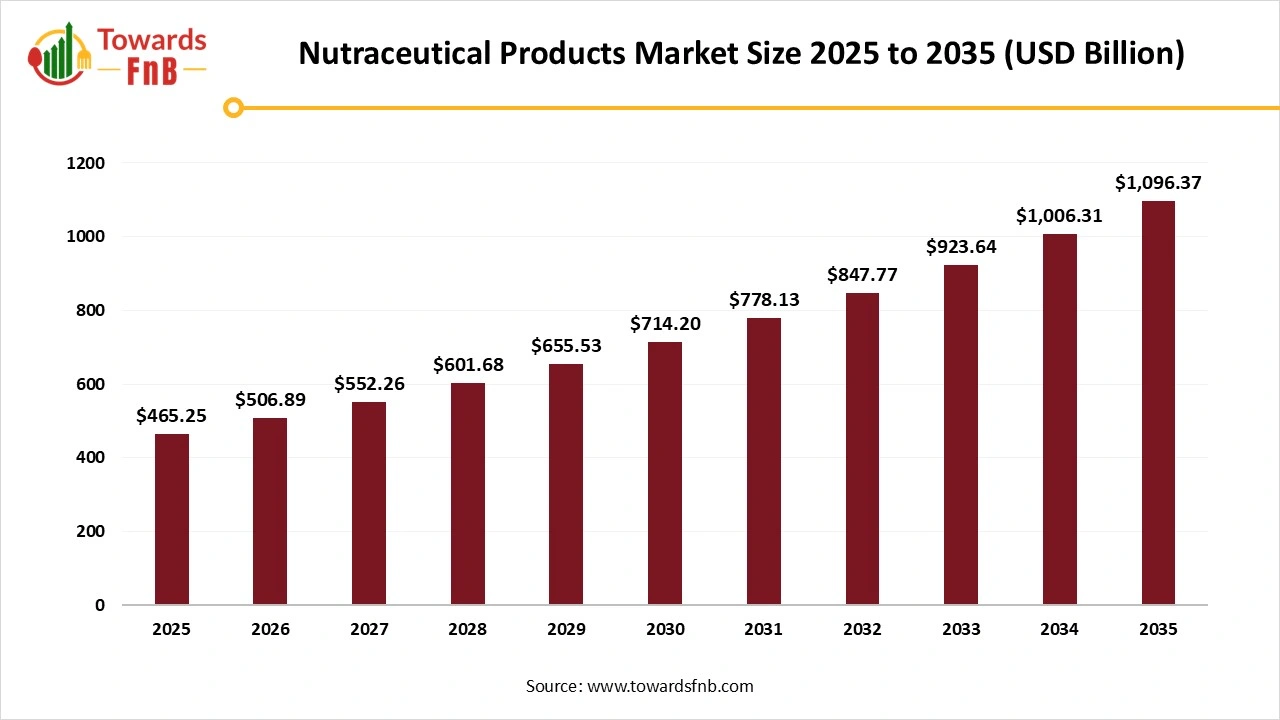
The global nutraceutical products market size reached at USD 465.25 billion in 2025 and is anticipated to increase from USD 506.89 billion in 2026 to an estimated USD 1,096.37 billion by 2035, witnessing a CAGR of 8.95% during the forecast period from 2026 to 2035. The growing prevalence of lifestyle diseases and the shift away from reactive treatment drive market growth.
| Study Coverage | Details |
| Growth Rate from 2026 to 2035 | CAGR of 8.95% |
| Market Size in 2026 | USD 506.89 Billion |
| Market Size in 2027 | USD 552.26 Billion |
| Market Size by 2035 | USD 1,096.37 Billion |
| Largest Market | North America |
| Base Year | 2025 |
| Forecast Period | 2026 to 2035 |
| Regions Covered | North America, Europe, Asia-Pacific, Latin America, and Middle East & Africa |
Nutraceutical products are products that offer several health benefits rather than just nutrition. They include functional beverages, plant products, dietary supplements, and functional food. They offer benefits like minimizing inflammation, enhancing cardiovascular health, improving digestion, improving physical health, boosting immunity, and enhancing vision. Examples of nutraceutical products include vitamin C tablets, ashwagandha, probiotic capsules, L-creatine, collagen, vitamin D, green tea extract, fortified antioxidant berries, and many others.
Market growth is driven by the awareness of the benefits of dietary supplements, growing lifestyle-related conditions, focus on healthy aging, development of cleaner formulations, high spending on health products, development of bio-enhanced formulations, increased use of 3D printing, and the rising manufacturing of customized nutrition.
The nutraceutical products industry is experiencing key technological shifts driven by demand for personalization, product stability, and transparency. Technological shifts, like 3D printing, biotechnology, nanotechnology, automation, and wearable integration, help in the development of tailored nutrient combinations and increase absorption of nutraceuticals. A prominent shift in the market is the integration of AI, which helps in enhancing manufacturing and supports rapid formulation design.
AI minimizes the time required for research & development and customizes supplements according to individual needs. AI predicts the maintenance of machinery and support brands in the development of customized products. It easily detects formula defects and develops synergistic combinations. It also predicts the stability of nutraceutical products and easily scans ingredient lists. Overall, AI accelerates the discovery of ingredients and supports smart marketing.
Raw Material Procurement
Processing and Preservation
Quality Testing and Certifications
How did North America Dominate the Nutraceutical Products Market?
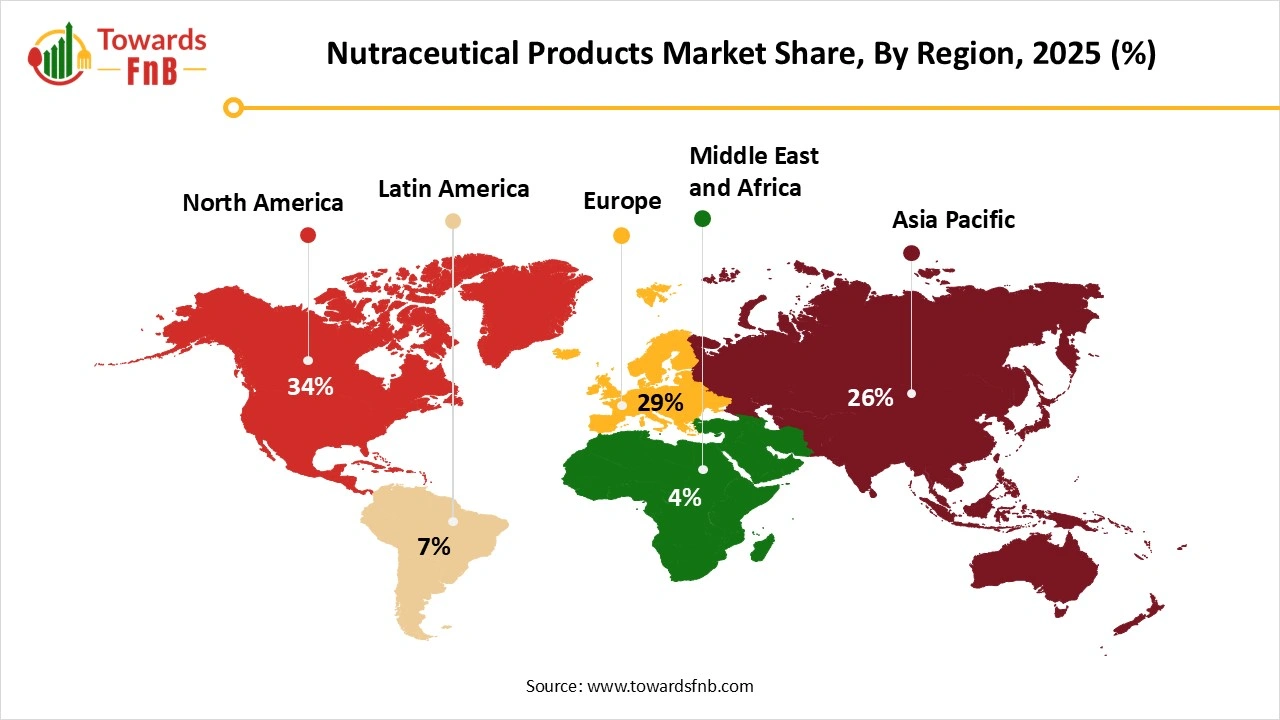
North America held a major market share of 34% in 2025 due to the strong culture of supplements. The improvement in heart health and consumer awareness of general wellness increases the demand for nutraceutical products. Heavy investments in functional drinks and the availability of digital health trackers increase the adoption of nutraceutical products. Huge spending on healthcare and the growing chronic disorders drive the market growth.
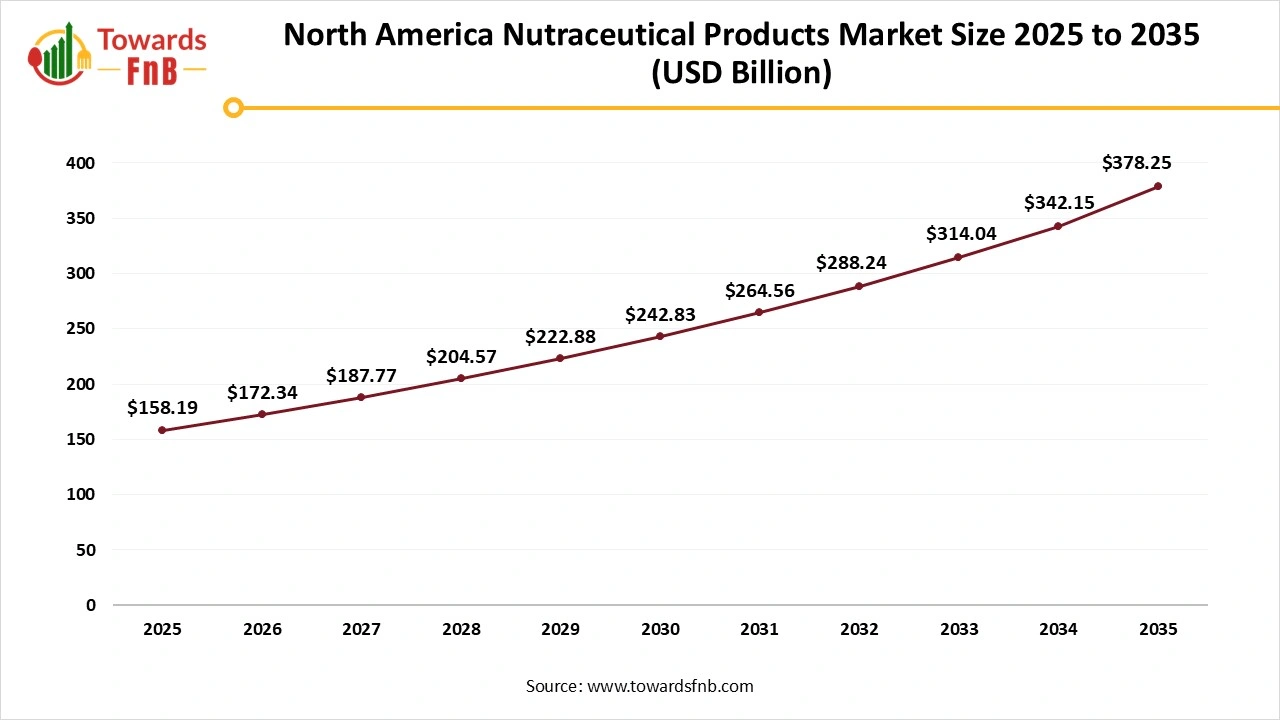
North America Nutraceutical Products Market Size 2026 to 2035
The North America nutraceutical products market size was calculated at USD 158.19 billion in 2025 with projections indicating a rise from USD 172.34 billion in 2026 to approximately USD 378.25 billion by 2035, expanding at a CAGR of 9.11% throughout the forecast period from 2026 to 2035.
United States Powering Wellness with Nutraceutical Products
The United States is a robust contributor to the market. The focus on disease prevention and the rise in product innovation increase the demand for nutraceutical products. The focus on health longevity and the expansion of digital channels increase the adoption of nutraceutical products. The high rate of health-enhancing product consumption and strong distribution networks support market growth.
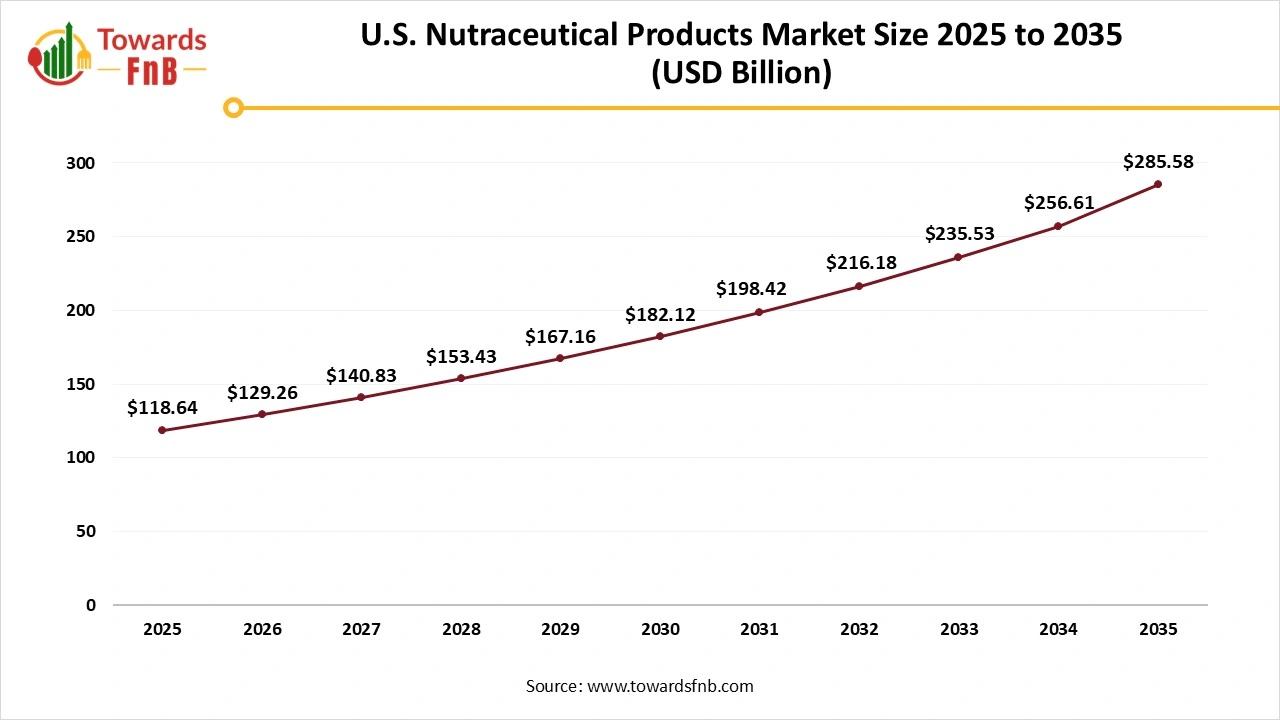
U.S. Nutraceutical Products Market Size 2026 to 2035
The U.S. nutraceutical products market size estimated at USD 118.64 billion in 2025 and is predicted to increase from USD 129.26 billion in 2026 to nearly reaching USD 285.58 billion by 2035, growing at a CAGR of 9.18% during the forecast period from 2026 to 2035.
How is Asia-Pacific Growing in the Nutraceutical Products Market?
Asia-Pacific is expected to experience the fastest growth with a CAGR of 10.5% during the predicted timeframe, due to the increased integration of nutraceutical products with traditional medicine. The preference for avoiding illnesses and the increased purchasing of wellness products increase the demand for nutraceutical products. Government's backing for food fortification and growth in the elderly population increase demand for nutraceutical products. The development of gummies drives the overall market growth.
From Tradition to Nutrition: India’s Role in Nutraceutical Products
India is experiencing the fastest growth in the market. The popularity of vitamin supplements and the awareness of lifestyle diseases increase the use of nutraceutical products. Strong expertise in the pharmaceutical industry and a broad base of consumers increase demand for nutraceutical products. The growing development of herbal nutraceuticals and the availability of medicinal plants support the market growth.
The Functional Foods Segment Dominated the Market with a 38% Share in 2025
The functional foods segment dominated the nutraceutical products market with a 38% share in 2025 due to the growing incorporation of nutrition in daily diets. The growing demand for disease-preventing compounds and the rising specific health needs increase the consumption of functional foods. The growth in fortified staples and the focus on targeting immunity drive the segment’s growth.
The dietary supplements held the second-largest market share of 35% in 2025 due to the boost in personalized nutrition. A strong focus on health maintenance and the need to boost cognitive function increases the adoption of dietary supplements. The management of nutritional deficiencies and the investment in tailored nutrition fuels the overall segment’s growth.
The functional beverages segment held the third-largest market share of 27% in 2025 and is expected to grow at the fastest CAGR of 9.5% during the forecast period due to the expansion of immunity drinks. The development of ready-to-drink (RTD) beverages and the focus on maintaining energy levels increase the adoption of functional beverages. The surge in energy drinks and advancements, such as the development of low-sugar drinks, support the segment’s growth.
The Tablets Segment Dominated the Market with 28% of Market Share in 2025
The tablets segment dominated the nutraceutical products market with a 28% share in 2025 due to the cost-effective production. The focus on easy consumption and the preference for portable health solutions increase demand for tablets. The strong physician preference increases tablet adoption. The wide availability, high profit margins, longer shelf life, and stable dosages drive the segment’s growth.
The capsules segment held the second-largest market share of 22% in 2025 due to its easy swallowing. The availability of sustainable ingredients and the expanded nutraceuticals increases the production of capsules. The rapid growth of plant-based capsules and the rise in custom-designed capsules help market expansion. The higher bioavailability and premium positioning of capsules support the segment’s growth.
The gummies & softgels segment held the third-largest market share of 18% in 2025 and is expected to show the fastest growth with a CAGR of 10.1% over the forecast period, due to its palatable formats and innovative flavors. The focus on overcoming dysphagia and the popularity of keto-friendly options increase the adoption of gummies & softgels. The higher demand for gummies & softgels among kids and millennials boosts the segment’s growth.
The powders segment held the fourth-largest market share of 18% in 2025 due to the demand for protein nutrition. Consumers' strong focus on mental clarity and the development of protein powders with plant ingredients increases powder production. Customizable dosing, superior efficacy, adjunct serving sizes, and faster dissolution of powders support the overall segment’s growth.
The Offline Segment Held the Largest Market Share of 62% in 2025
The offline segment held the largest revenue share of 62% in the nutraceutical products market in 2025 due to strong consumer belief in retail pharmacies. Consumer demand for physical advice and the rise in immediate purchasing increase the adoption of offline buying. The incorporation of offline stores with healthcare services helps market expansion. Enhanced product safety, perceived credibility, and tactile experience of offline distribution drive the overall segment’s growth.
The online segment held the second-largest market share of 38% in 2025 and is expected to gain the highest market share with a CAGR of 11.2% between 2026 and 2035, due to the convenience of e-commerce. Consumers focus on an excellent shopping experience in the comfort of their homes. The availability of D2C discounts increases the adoption of online distribution. Enhanced product visibility, broadened reach, and information availability on online distribution support the segment’s growth.
The General Wellness Segment Contributed the Biggest Market Share of 22% in 2025
The general wellness segment contributed the biggest nutraceutical products market share of 22% in 2025 due to the global awareness about preventive health. The huge demand for a general vitality product and the increased consumption of ayurveda-inspired products increase the production of general wellness nutraceutical products. The rise in routine supplementation and the growing consciousness about appearance drive the segment’s growth.
The immunity support segment held the second-largest market share of 18% in 2025 and is expected to witness the fastest growth in the market with a CAGR of 9.8% over the forecast period, due to the heavy consumption of vitamin C. The focus on combating immunosenescence and the priority for holistic health increases demand for immunity support nutraceutical products. Scientific advancements in immunity support products support the segment’s growth.
The digestive health segment held the third-largest market share of 15% in 2025 due to the increase in probiotic awareness. The need for a preventive gut supplement and surging gastrointestinal issues increase the adoption of digestive health nutraceutical products. The growth in microbiome testing and the growing digestive discomfort boost the segment’s growth.
The heart health segment held the fourth-largest market share of 13% in 2025 due to the global rise in cardiovascular risk. The increased high blood pressure issues and the focus on vascular health increase the adoption of heart health nutraceutical products. The huge omega-3 demand and the prevention of high cholesterol support the segment’s growth.
The Adults Segment Led the Market with 46% of Market Share in 2025
The adult segment led the nutraceutical products market with a 46% share in 2025 due to the growing working population. Adults preference for a curative approach and the priority to cardiovascular wellness increases demand for nutraceutical products. The popularity of fitness culture and the urbanized lifestyle of adults increases the adoption of nutraceutical products, driving the overall segment’s growth.
The geriatric segment held the second-largest market share of 21% in 2025 due to the global growth in the aged population. The rising arthritis issues in older and declining health increase demand for nutraceutical products. The older population focuses on heart health, and the healthy aging approach supports the segment’s growth.
The children segment held the third-largest market share of 17% in 2025 due to the growing parental awareness about nutrition. The high consumption of fast food and the rise of ADHD increase the use of nutraceutical products. Parents focus on lowering illness frequency, and their busy lifestyles increase the adoption of nutraceutical products. The consumption of flavored supplements boosts the segment’s growth.
The athletes segment held the fourth-largest market share of 16% in 2025 and is expected to expand rapidly in the market with a CAGR of 10.3% in the coming years, due to the surging sports participation. Athletes' preference for enhancing the recovery of muscles and focus on stress reduction increases the adoption of nutraceutical products. The growing athletes endorsement supports the overall segment’s growth.
Aayush Wellness
Dabur
MiracleMe
By Product Type
By Form
By Distribution Channel
By Application
By End User
By Region





Principal Consultant
Vidyesh Swar, Senior Research Analyst at Towards Food & Beverages, specializes in market research, focusing on supply-demand evaluation, pricing analysis, alternative proteins, plant-based foods, and sustainable food technologies within the industry.
Learn more about Vidyesh Swar
Reviewed By
Aditi Shivarkar, with 14+ years in Food and Beverages market research, specializes in food, beverage, and eco-friendly packaging. She ensures accurate, actionable insights, driving Towards FnB's excellence in industry trends and sustainability.
Learn more about Aditi ShivarkarApril 2026
April 2026
April 2026
April 2026

Nutraceutical Products Market


 +1 804-441-9344
 Download Sample
 Schedule a Meeting