April 2026



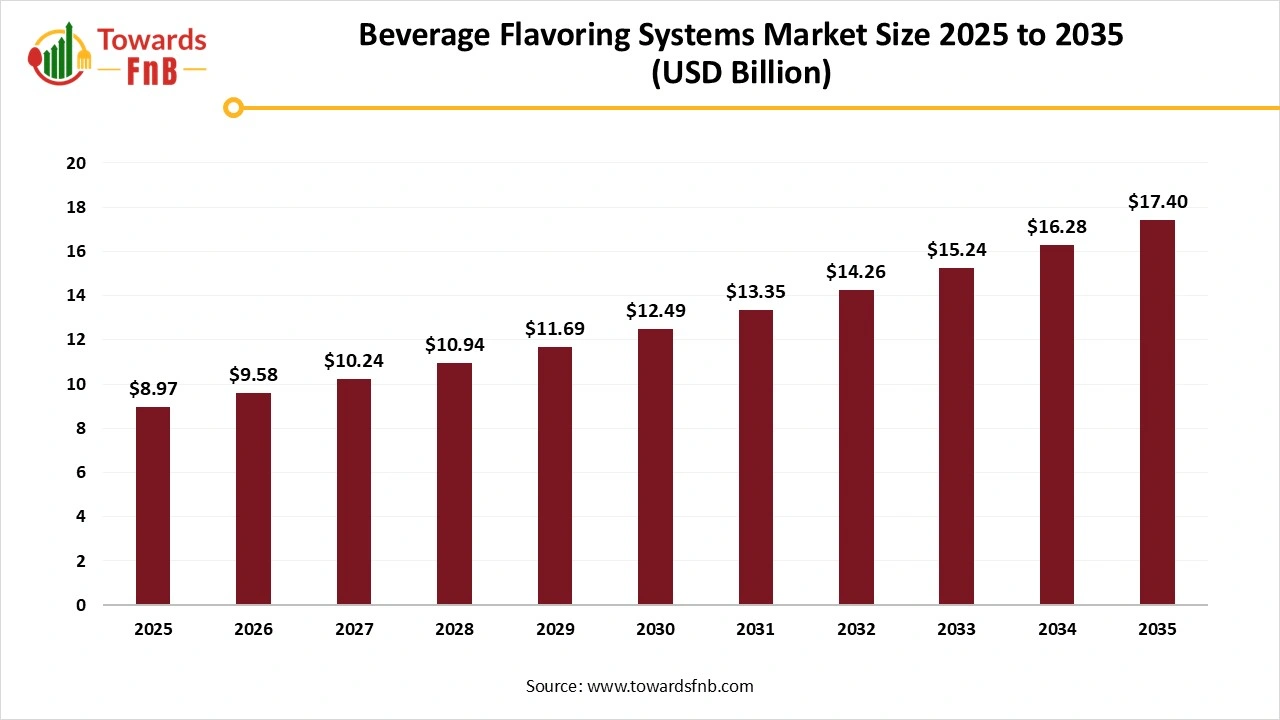
The global beverage flavoring systems market size stood at USD 8.97 billion in 2025 and is predicted to grow from USD 9.58 billion in 2026 to reach approximately USD 17.40 billion by 2035, expanding at a CAGR of 6.85% from 2026 to 2035. The growing demand for innovative beverages and the surge in premium drinks drive market growth.
| Study Coverage | Details |
| Growth Rate from 2026 to 2035 | CAGR of 6.85% |
| Market Size in 2026 | USD 9.58 Billion |
| Market Size in 2027 | USD 10.24 Billion |
| Market Size by 2035 | USD 17.40 Billion |
| Largest Market | Asia-Pacific |
| Base Year | 2025 |
| Forecast Period | 2026 to 2035 |
| Regions Covered | North America, Europe, Asia-Pacific, Latin America, and Middle East & Africa |
The beverage flavoring systems market refers to a system that offers specific flavors and mouthfeel to beverages. The components of systems include taste modulators, carriers, flavoring agents, flavor enhancers, additives, and masking agents. A beverage flavoring system offers benefits like taste enhancement, drink customization, flavor integrity, consistent taste, cost-effective manufacturing, and off-note masking. It is widely used in beverages like sports drink, dairy alternatives, carbonated soft drinks, health drinks, and alcoholic beverages.
The market growth is driven by the growing demand for immunity-boosting beverages, a surge in plant-based flavors, the development of unique blended flavors, the move towards low-calorie drinks, the preference for organic ingredients, and robust growth in premium beverages.
The beverage flavoring systems industry is experiencing technological shifts driven by demand for the creation of new flavors, improving sensory experience, and customization. Technological advancements like predictive analytics, smart production systems, machine learning, advanced analytics, and IoT help in ensuring the quality of ingredients and flavor stability. The AI integration is a robust shift in the market driven by demand for innovative tastes and hyper-personalized flavors.
AI lowers the time needed for development and easily creates new combinations. It helps in manufacturing exotic combinations and masking bitter taste. AI ensures the consistency of flavor and predicts the response of the consumer. It identifies ideal raw ingredients and manufactures unconventional flavors. AI develops personalized beverages and predicts flavor trends. Additionally, companies like Coca-Cola, Tastewise, DSM-Firmenich, and PepsiCo use AI to enhance flavor profiles.
Raw Material Procurement
Processing and Preservation
Quality Testing and Certifications
Why Asia-Pacific Dominated the Beverage Flavoring Systems Market?
Asia-Pacific dominated the market with a share of 30% in 2025 and is expected to experience the fastest growth with a CAGR of 8.1% during the predicted timeframe. The huge consumption of flavored drinks and the popularity of packaged beverages in countries like China increase demand for beverage flavoring systems. The increased young adult population and the availability of exotic flavors increase beverage consumption. Advancements in flavor delivery systems and the ongoing innovation in local flavor drive the market growth.
Asia Pacific Beverage Flavoring Systems Market Size and Growth 2025 to 2035
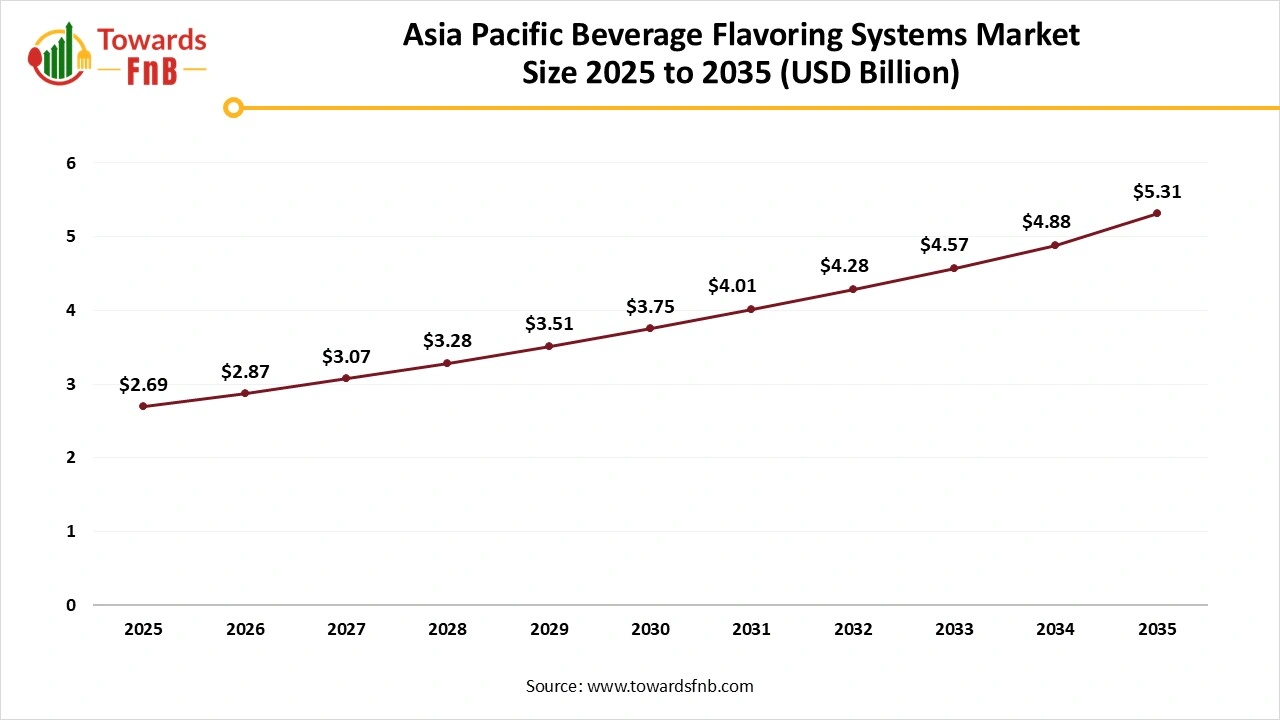
The Asia Pacific beverage flavoring systems market size was valued at USD 2.69 billion in 2025 and is predicted to grow from USD 2.87 billion in 2026 to hit approximately USD 5.31 billion by 2035, expanding at a CAGR of 7.04% from 2026 to 2035.
Taste Innovation: Influence of Beverage Flavoring System on China
China is a prominent contributor to the market. The high rate of flavored coffee consumption and the development of customized flavor fuel beverage consumption. The focus on plant-based beverages and the heavy investment in domestic production increase the adoption of beverage flavoring systems. The ongoing advancement in healthy drinks and the growth in flavored bottled beverages support the overall market growth.
How is North America Growing in the Beverage Flavoring Systems Market?
North America held 28% of the market share in 2025. Advancements in RTD drinks and the heavy demand for functional beverages increase the need for flavors. The robust growth in craft beverages and the transition to natural flavoring agents increase the use of beverage flavoring systems. The trend of sugar reduction and ongoing advancements in spirits increase demand for beverage flavoring systems. Well-established companies like IFF, PepsiCo, and Coca-Cola drive the market growth.
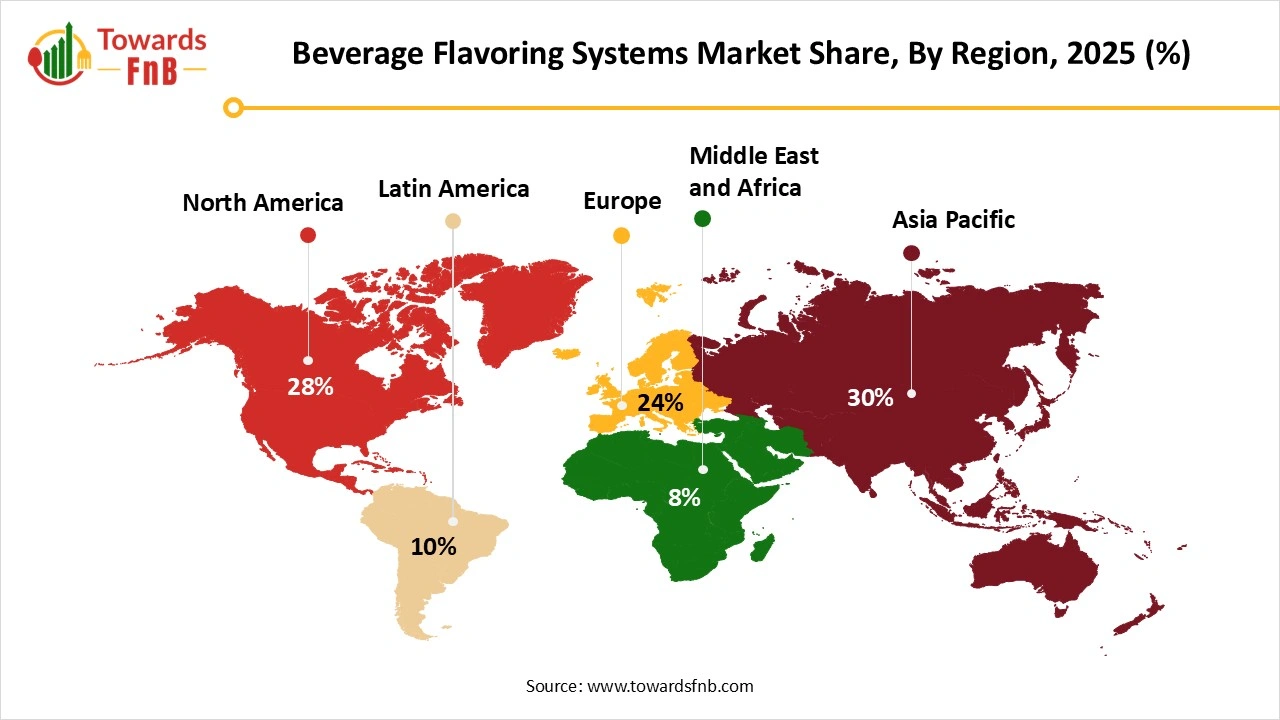
United States Forefront Role in Beverage Flavoring Systems
The United States is rapidly expanding in the market. The increased use of health-focused ingredients and the innovation in nutrient-enriched drinks increase demand for beverage flavoring systems. The rise of authentic flavor and the popularity of functional coffee boost the use of beverage flavoring systems. The trend of sugar-free flavoring and innovations in encapsulation technology support the market growth.
The Natural Flavors Segment Dominated the Market with a 62% of Market Share in 2025
The natural flavors segment dominated the beverage flavoring systems market with a share of 62% in 2025 and is expected to grow at the fastest CAGR of 7.8% during the forecast period, due to the increasing use of botanical extracts. The increased demand for alternative of artificial flavors and the higher production of clean-label beverages increase the adoption of natural flavors. The rise in plant-based extraction and the focus on authentic taste experience drive the segment’s growth.
The artificial flavors segment held 38% of the market share in 2025 due to their cost-effectiveness in large-scale manufacturing. The better shelf life and the ability to mask the unpleasant taste of artificial flavors increase adoption. The huge demand for carbonated drinks, innovation in high-intensity artificial flavors, and better stability support the segment’s growth.
The Liquid Segment Dominated the Market with 55% of Market Share in 2025
The liquid segment dominated the beverage flavoring systems market with a 55% share in 2025 due to easy blending and flexible formulation. The robust growth in liquid-based manufacturing and the focus on maintaining clarity in the product increase demand for the liquid form. The liquid form offers easy integration with carbonated beverages and incorporation with wellness ingredients that drive the segment’s growth.
The powder segment held 35% of the market share in 2025 and is expected to grow at the fastest CAGR of 7.4% during the forecast period due to the increased popularity of instant beverage mixes. The increased consumption of protein drinks and the need to enhance the product longevity increase the adoption of powder form. Easy transport, lower logistical cost, and enhanced encapsulation of powder form support the segment’s growth.
The paste segment held the third-largest market share of 10% in 2025 due to its applications in premium beverages. The production of high-viscosity beverages and the popularity of spice-infused flavors increase the adoption of paste form. The better texture, superior flavor, functional masking, and enhanced mouthfeel of the paste form support the segment’s growth.
The Non-Alcoholic Beverages Segment Dominated the Market with 72% of Market Share in 2025
The non-alcoholic beverages segment dominated the beverage flavoring systems market with a 72% share in 2025 and is expected to expand rapidly with a CAGR of 7.2% during the forecast period. The strong focus on minimizing alcohol intake and the expansion of flavored water increases the consumption of non-alcoholic beverages. The awareness about low-sugar beverages and the expanding range of RTD beverages increases flavor usage.
The growing development of premium non-alcoholic beverages drives the segment’s growth. The alcoholic beverages segment held 28% of the market share in 2025 due to the high consumption of flavored spirits. The transition towards artisanal cocktails and the expansion of hybrid alcohol beverages help in market expansion. The trending lower-ABV and strong focus on improving visually appealing products increases the development of unique flavors. The premiumization trend and the rise of social drinking support the segment’s growth.
The Fruit Flavors Segment Dominated the Market with 40% of Market Share in 2025
The fruit flavors segment dominated the beverage flavoring systems market with a 40% share in 2025 due to the growing demand for refreshing taste. The easy integration of fruit flavors with carbonated drinks and tea beverages increases adoption. The rapid development of exotic fruit flavors and the expansion of health-focused drinks increase demand for fruit flavors. The wide utilization of citrus flavors and the innovative premium blending drive the segment’s growth.
The sweet flavors segment held 18% of the market share in 2025 due to the growing demand for dessert beverages. The popularity of Instagram-worthy flavors and the increased consumption of iced teas increase demand for sweet flavors. The awareness of low-calorie sweeteners and the rise in alcoholic cocktail drinks increases the adoption of sweet flavors, supporting the segment’s growth.
The exotic & botanical flavors segment held 17% of the market share in 2025 and is expected to witness the fastest growth with a CAGR of 8.1% in the market during the forecast period due to wellness trends and botanical innovation. The expansion of floral extracts and the robust growth in adventurous flavors help with expansion. The availability of botanical ingredients and the popularity of specialized teas drive the segment’s growth.
The dairy & cream flavors segment held 15% of the market share in 2025 due to the growing demand for milk-based beverages. The popularity of natural cream and the development of cream liqueurs have increased the adoption of cream flavors. The robust expansion of dairy-based indulgent drinks supports the segment’s growth.
The Mass Market Beverages Segment Dominated the Market with 62% of Market Share in 2025
The mass market beverages segment dominated the beverage flavoring systems market with a 45% share in 2025 due to the growing soft drink manufacturing. The strong focus on superior dispersion and the growth in production of fortified beverages help with expansion. The strong distribution network, cost-effective manufacturing, and constant innovation drive the segment’s growth.
The functional & health beverages segment held 25% of the market share in 2025 and is expected to grow at the fastest CAGR of 8.3% during the forecast period due to the growing demand for energy drinks. The focus on enhancing sleep and the availability of protein-fortified ingredients increases production of functional & health beverages. The heavy demand for fat alternatives and the increased use of natural flavoring systems support the segment’s growth.
The premium beverages segment held the third-largest market share of 20% in 2025 due to high consumer spending on higher-quality beverages. The burgeoning fortified drinks industry and the focus on functional benefits increase demand for premium beverages. The innovations in premium offerings and flavor customization drive the segment’s growth.
The specialty & craft beverages segment held the fourth-largest market share of 10% in 2025 due to the growth in the urban consumer base. The growth of consumers seeking a curated experience and the growing mindful drinking increases the adoption of specialty & craft beverages. The expansion of premium craft sodas and customized small batch production drives the segment’s growth.
T Hasegawa
Nature Foods
Isobionics
By Type
By Form
By Beverage Type
By Flavor Profile
By Application
By Region




Principal Consultant
Vidyesh Swar, Senior Research Analyst at Towards Food & Beverages, specializes in market research, focusing on supply-demand evaluation, pricing analysis, alternative proteins, plant-based foods, and sustainable food technologies within the industry.
Learn more about Vidyesh Swar
Reviewed By
Aditi Shivarkar, with 14+ years in Food and Beverages market research, specializes in food, beverage, and eco-friendly packaging. She ensures accurate, actionable insights, driving Towards FnB's excellence in industry trends and sustainability.
Learn more about Aditi ShivarkarApril 2026
April 2026
March 2026
March 2026

Beverage Flavoring Systems Market

 +1 804-441-9344
 Download Sample
 Schedule a Meeting