April 2026



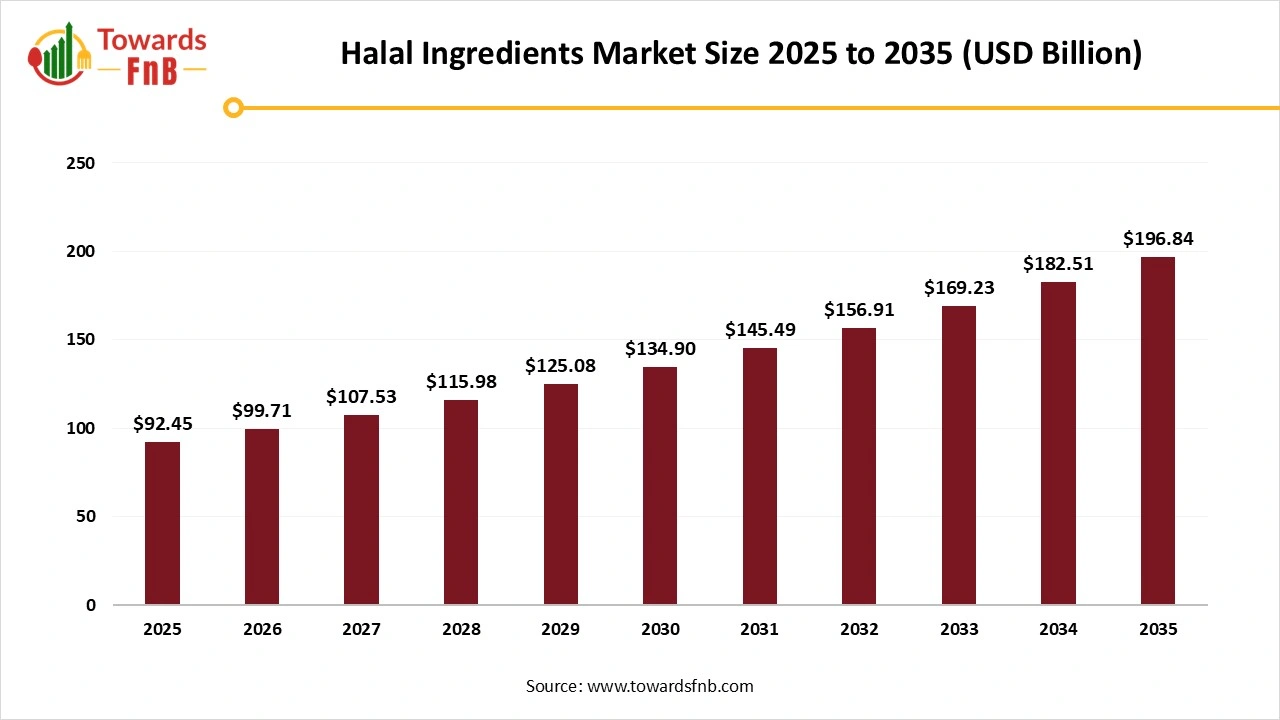
The global halal ingredients market size stood at USD 92.45 billion in 2025 and is predicted to grow from USD 99.71 billion in 2026 to approximately USD 196.84 billion by 2035, expanding at a CAGR of 7.85% from 2026 to 2035. The growth in halal certification and rising ethical consumerism drives market growth.
| Study Coverage | Details |
| Growth Rate from 2026 to 2035 | CAGR of 7.85% |
| Market Size in 2026 | USD 99.71 Billion |
| Market Size in 2027 | USD 107.53 Billion |
| Market Size by 2035 | USD 196.84 Billion |
| Largest Market | Asia Pacific |
| Base Year | 2025 |
| Forecast Period | 2026 to 2035 |
| Regions Covered | North America, Europe, Asia-Pacific, Latin America, and Middle East & Africa |
Halal ingredients are ingredients that are available to use in Islamic law. They possess characteristics like no contamination, alcohol-free, pure, verified, and safe. They offer benefits like higher nutritional value, ethical treatment, higher hygiene standards, and do not have harmful additives. They are used across processed food, color cosmetics, medications, beverages, hygiene products, and supplements. The examples of halal ingredients are vegetables, pasta, maple syrup, pectin, beef, vegetable oil, honey, Agar, and many more.
The halal ingredients market growth is driven by the growing world Muslim population, rising halal production, increased use of halal in key sectors, ease of halal compliance, growing demand for hygienic products, popularity of halal in non-muslim markets, and increased penetration of halal on online platforms.
The halal ingredients market is experiencing key technological advancements like blockchain, smart monitoring, advanced analytical methods, IoT, digital twin, and digital halal platforms. The technological advancement is driven by demand for high precision, product integrity, and streamlining the certification process. The incorporation of artificial intelligence (AI) helps in automating compliance and accelerates the certification process.
AI easily identifies non-halal elements and ensures transparency in the final product. AI easily tracks raw material and monitors inconsistencies in the manufacturing process. AI detects doubtful substances and helps to maintain the standards of halal. AI handles the documentation process and easily understands new trends in halal. Additionally, HalalLens, Halal AI, and Taste Halal are technologies used for ingredient verification.
Raw Material Procurement
Processing and Preservation
Quality Testing and Certifications
Why Asia Pacific Dominated the Halal Ingredients Market?
Asia Pacific dominated the market with a 38% share in 2025 and is expected to be the fastest growing with a CAGR of 8.3% during the forecast period. The expanding Muslim population in ASEAN countries like Malaysia, Bangladesh, & others, and a strong focus on ethical goods, increases demand for halal ingredients. The well-established halal hubs and the expanding applications of halal help market expansion. The rise in consumption of safer food products and the increased use of halal ingredients in personal care drives the market growth.
Asia Pacific Halal Ingredients Market Size and Growth 2025 to 2035
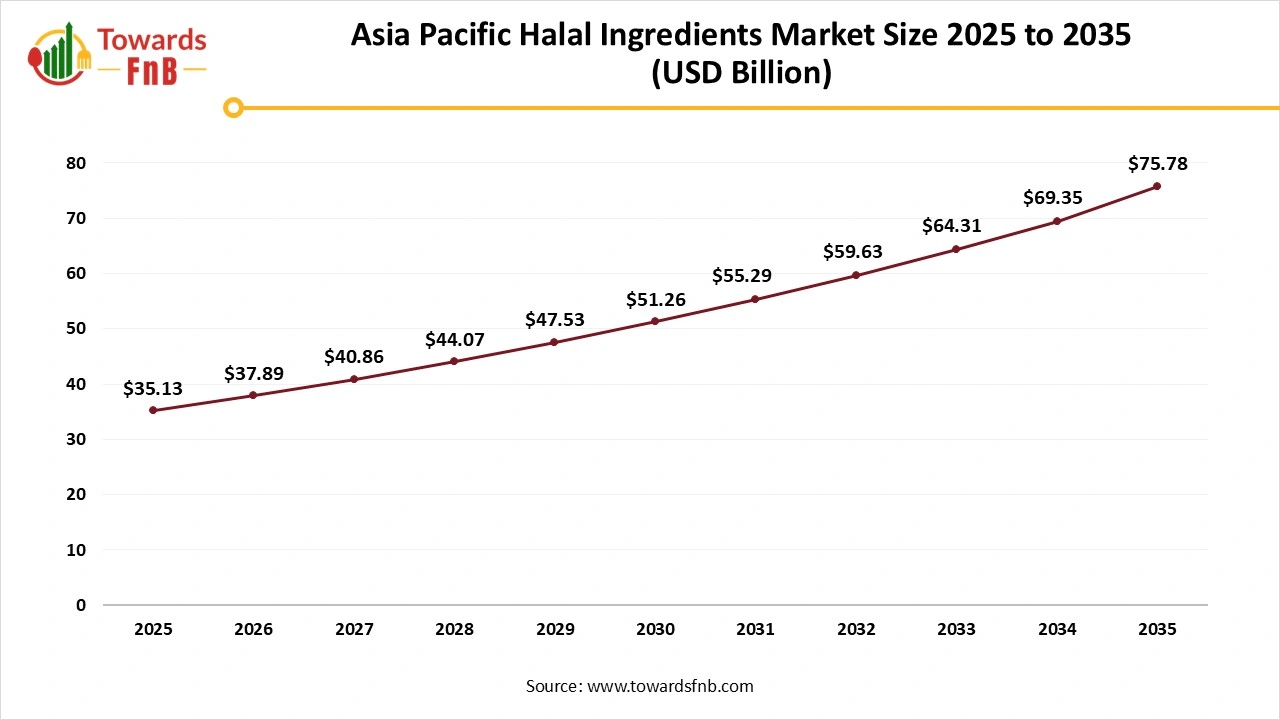
The Asia Pacific halal ingredients market size was valued at USD 35.13 billion in 2025 and is predicted to grow from USD 37.89 billion in 2026 to approximately USD 75.78 billion by 2035, expanding at a CAGR of 7.99% from 2026 to 2035.
Malaysia: Heart of Halal Ingredients
Malaysia is a major contributor to the market. The strong government backing for halal research and the well-established halal parks help market expansion. The robust growth in halal-certified cosmetics and the strong cold chain services increases the production of halal ingredients. The strong presence of the Islamic Economy and the well-established halal food production infrastructure support the overall market growth.
Middle East & Africa Halal Ingredients Market Trends
The Middle East & Africa held the second largest share in the market of 27% in 2025. The increased spending on halal-certified foods and strong cultural adherence increase demand for halal ingredients. The rise of ethical consumption and increased nutraceutical production increase use of halal ingredients. The burgeoning tourism industry and the growing import dependency increases adoption of halal ingredients. The increased use of halal-compliant ingredients in the non-food industry drives the market growth.
Excellence of Halal Ingredients in Saudi Arabia
Saudi Arabia is a key contributor to the market. The consumers growing trust in domestic food and the robust growth in the halal-based cosmetic industry increase demand for halal ingredients. The younger consumer shift to compliant halal products and the expansion of domestic manufacturing increase the production of halal ingredients. The growing consumption of halal-certified beverages supports the overall market growth.
The Food Ingredients Segment Dominated the Halal Ingredients Market in 2025 with a 52% Share
The food ingredients segment dominated the market with a 52% share in 2025 due to the surging processed food consumption. The huge demand for halal-certified snacks and the spending on bakery products increases demand for food ingredients. The strong focus on food quality standards and the development of processed items requires food ingredients. The robust growth in the halal food sector drives the market growth.
The pharmaceutical ingredients segment held the second largest share of 28% in the market in 2025 and is expected to grow at the fastest CAGR of 8.4% during the forecast period due to the increased consumption of halal-certified medicines. The growing Muslim consumer demand for vaccines and the surge in halal-compliant enzymes increase demand for pharmaceutical ingredients. The rise of halal pharmaceuticals supports the market growth.
The cosmetic ingredients segment held the third largest share of the market of 20% in 2025 due to the growing demand for alcohol-free beauty formulations. The production of wudhu-friendly products and the development of healthy cosmetic products increase demand for cosmetic ingredients. The shift away from animal-derived collagen drives the market growth.
The Plant-Based Segment Dominated the Halal Ingredients Market in 2025 with a 46% Share
The plant-based segment dominated the market with a 46% share in 2025 and is expected to be the fastest growing with a CAGR of 8.1% during the forecast period due to the growing food safety concerns. The stricter halal regulation and the trending halal plus increases adoption of plant-based sources. The huge demand for vegan-friendly products and the surge of vegan-halal require plant-based sources. The increased use of plant-based ingredients in pharmaceutical products drives market growth.
The animal-based segment held the second largest share of 34% in the market in 2025 due to the increased consumption of traditional halal meat. The rise in ethical animal sourcing and the increased use of animal ingredients in the cosmetic industry increases demand for animal-based ingredients. The surging use of gelatin in the pharma industry boosts the overall market growth.
The synthetic segment held the third largest share of the market of 20% in 2025 due to the development of lab-based halal compounds. The strong focus on finding alternatives to haram additives and large-scale halal production increases demand for synthetic ingredients. The regulatory clarity and cost-effective manufacturing of the synthetic ingredient support the overall market growth.
The Food & Beverages Segment Dominated the Halal Ingredients Market in 2025 with a 48% Share
The food & beverages segment dominated the market with a 48% share in 2025 due to the growing consumption rate of halal food. The growth in consumers seeking the ethical production of food and the popularity of packaged halal food increase demand for halal ingredients. The availability of halal meat and the expansion of halal-certified processed food drive market growth.
The pharmaceuticals segment held the second largest share of 22% in the market in 2025 and is expected to grow at the fastest CAGR of 8.5% during the forecast period due to the awareness about the benefits of halal medicines. The development of halal-certified healthcare products and the increased consumption of alcohol-free syrup increase the adoption of halal ingredients. The expanding healthcare industry boosts market growth.
The cosmetics & personal care segment held the third largest share of the market of 18% in 2025 due to the trending halal beauty. The popularity of breathable nail polish and the popularity of clean beauty increase demand for halal ingredients. The increased use of safe cosmetics and heavy investment in a halal personal care product range support the market growth.
The nutraceuticals segment held the fourth largest share of the market of 12% in 2025 due to the huge demand for halal-certified vitamins. The growing consumption of immune boosters and the global expansion of functional foods increase demand for halal ingredients. The development of halal-certified supplements boosts overall market growth.
The Direct Sales Segment Dominated the Halal Ingredients Market in 2025 with a 55% Share
The direct sales segment dominated the market with a 55% share in 2025 due to the growing bulk sourcing. The transparency in the supply chain and the authenticity guarantee increases buying of direct sales. The demand for customized formulations, easier audits, and higher industrial demand increases the adoption of direct sales, which drives the overall market growth.
The distribution & wholesalers segment held the second largest share of 25% in the market in 2025 due to the expanding distribution networks. The growth in QSRs and the huge demand for convenient halal food increases demand for distributors & wholesalers. The growing global halal demand and the focus on contamination prevention increase demand for distributors and wholesalers, supporting the overall market growth.
The online platforms segment held the share of 12% in the market in 2025 and is expected to grow at the fastest CAGR of 8.6% during the forecast period due to the burgeoning digital transformation. The reduced overhead cost and the availability of supplier visibility help with expansion. The lower risk of fraudulent certification, doorstep delivery, exchanging recommendations, and a faster certification process on online platforms boost the market growth.
The specialty stores segment held a share of 8% in the market in 2025 due to the demand for niche halal ingredients. The growth of consumers seeking personalised services and the demand for specialized halal ingredients increases the adoption of specialty stores. The high trust, ingredient safety, convenience, and high traceability of specialty stores drive market growth.
The Halal Certified Segment Dominated the Halal Ingredients Market in 2025 With a 72% Share
The halal certified segment dominated the market with a 72% share in 2025 and is expected to be the fastest growing with a CAGR of 8.2% during the forecast period due to the strong regulatory enforcement. The growing corporate investment in halal production and the high preference for a verified halal label increase demand for halal certification. The increased purchasing of certified halal products drives the market growth.
The halal compliant segment held the second largest share of 28% in the market in 2025 due to the small halal manufacturers. The transition to microbial alternatives and the increased use of non-certified products domestically increase the adoption of halal-compliant products. The expanding halal applications and the growing use of technologies like blockchain for transparency support the market growth.
Midamar
Co-op Wholesale and Express Cuisine
Golden Acre Foods
By Ingredient Type
By Source
By Application
By Distribution Channel
By Certification Type
By Region



Principal Consultant
Vidyesh Swar, Senior Research Analyst at Towards Food & Beverages, specializes in market research, focusing on supply-demand evaluation, pricing analysis, alternative proteins, plant-based foods, and sustainable food technologies within the industry.
Learn more about Vidyesh Swar
Reviewed By
Aditi Shivarkar, with 14+ years in Food and Beverages market research, specializes in food, beverage, and eco-friendly packaging. She ensures accurate, actionable insights, driving Towards FnB's excellence in industry trends and sustainability.
Learn more about Aditi ShivarkarApril 2026
April 2026
April 2026
April 2026

Halal Ingredients Market

 +1 804-441-9344
 Download Sample
 Schedule a Meeting