April 2026



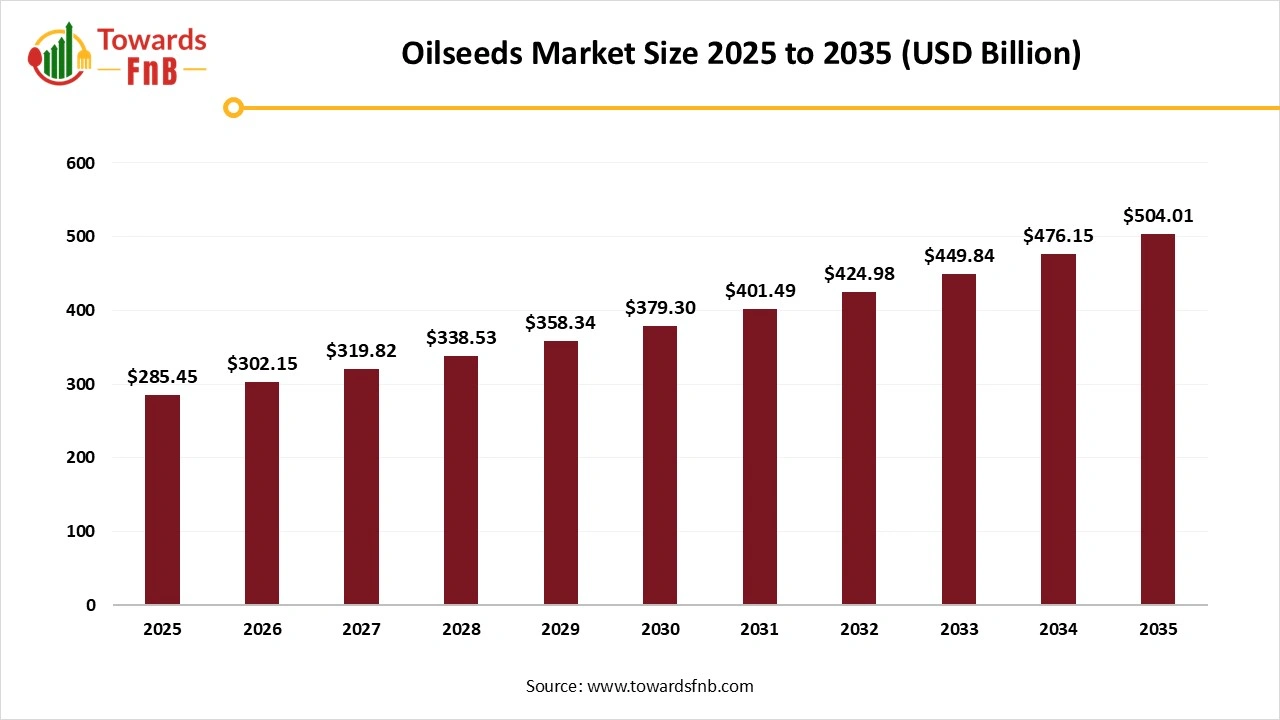
The global oilseeds market size stood at USD 285.45 billion in 2025 and is predicted to grow from USD 302.15 billion in 2026 to approximately USD 504.01 billion by 2035, expanding at a CAGR of 5.85% from 2026 to 2035. The surging demand for edible oils in developing economies drives market growth.
| Study Coverage | Details |
| Growth Rate from 2026 to 2035 | CAGR of 8.95% |
| Market Size in 2026 | USD 302.15 Billion |
| Market Size in 2027 | USD 319.82 Billion |
| Market Size by 2035 | USD 504.01 Billion |
| Largest Market | North America |
| Base Year | 2025 |
| Forecast Period | 2026 to 2035 |
| Regions Covered | North America, Europe, Asia-Pacific, Latin America, and Middle East & Africa |
Oilseeds are a type of seed that produces edible oils. They have high oil content, excellent fatty acids, and contain bioactive compounds. They offer benefits like high nutritional value, prevention of disease, an increase in good cholesterol, and regulation of appetite. The common oilseeds are canola, sesame, soybeans, mustard, peanut, linseed, sunflower, niger, flaxseed, and safflower. Oilseeds are widely used in soy meals, detergents, animal feed, traditional medicine, biodiesel, edible oils, soaps, oil cakes, cosmetics, and lubricants.
The oilseeds market growth is driven by heavy demand for biofuel feedstock, consumption of high-protein animal feed, development of GM seeds, popularity of plant-based dairy, huge consumption of edible oil, rise in renewable diesel production, expansion of protein-rich meals, and surging use of unsaturated plant-based oils.
The oilseeds market is witnessing major technological shifts driven by demand for enhancing processing efficiency and productivity. The shifts like digital farming, automation, biotechnology, data analytics, blockchain integration, and smart storage help in improving transparency, disease detection, enhancing oil content, and optimizing the use of input. The key shift in the market in incorporation of AI technology, which enhances price forecasting and optimizes cultivation.
AI technology helps in detecting nutrient deficiency early and analyzes weather patterns. AI easily identifies the species of seeds and lowers the disruption in logistics. AI manufactures climate-resilient oilseeds and offers targeted treatment to oilseeds. AI helps in sorting oilseeds accurately and lowers the use of pesticides. Overall, companies like Bayer, KhetiBuddy, and Intello Labs use AI for purposes like yield optimization, quality control, and crop protection.
Raw Material Procurement
Processing and Preservation
Quality Testing and Certifications
Why Asia Pacific Dominated the Oilseeds Market?
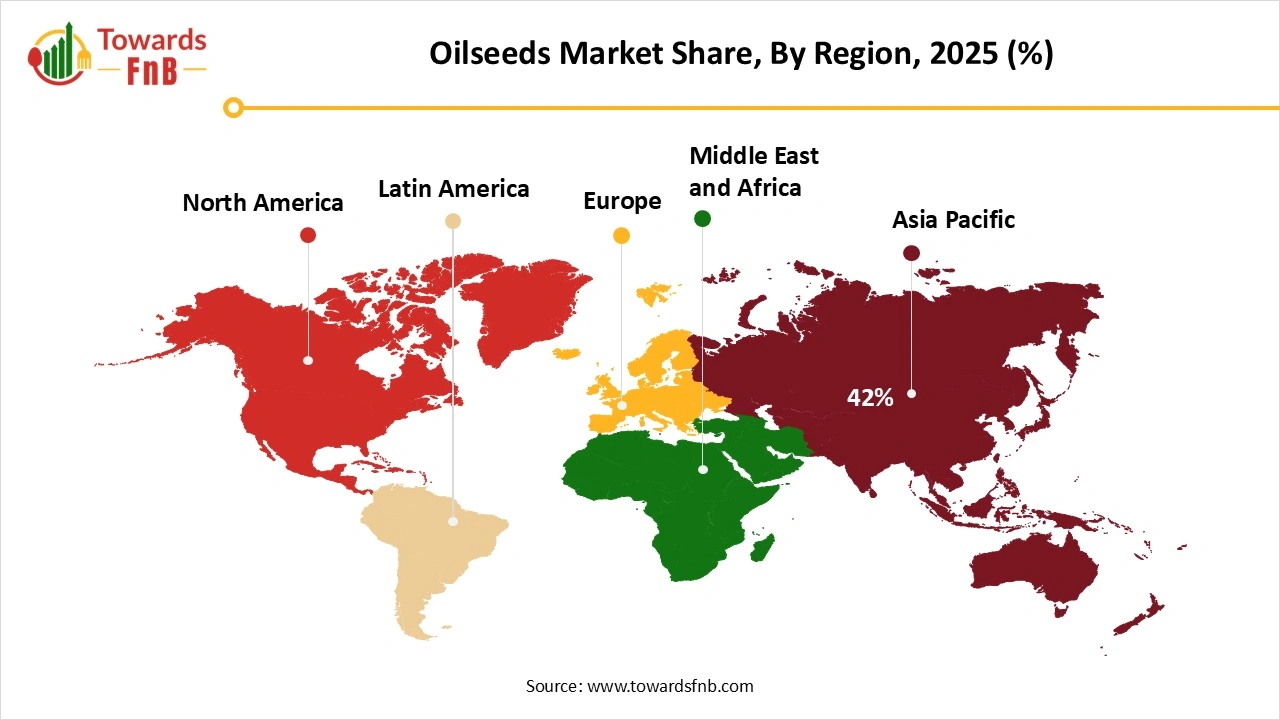
Asia Pacific dominated the oilseeds market with a 42% share in 2025 and is expected to grow at the fastest CAGR of 6.5% during the forecast period due to the growing dependence on edible oils in dietary habits. The growing demand for aviation fuel and the expansion of crushing facilities increases production of oilseeds. The high rate of processed food consumption and the growth in the livestock industry increase demand for oilseeds. The popularity of vegetable oil drives market growth.
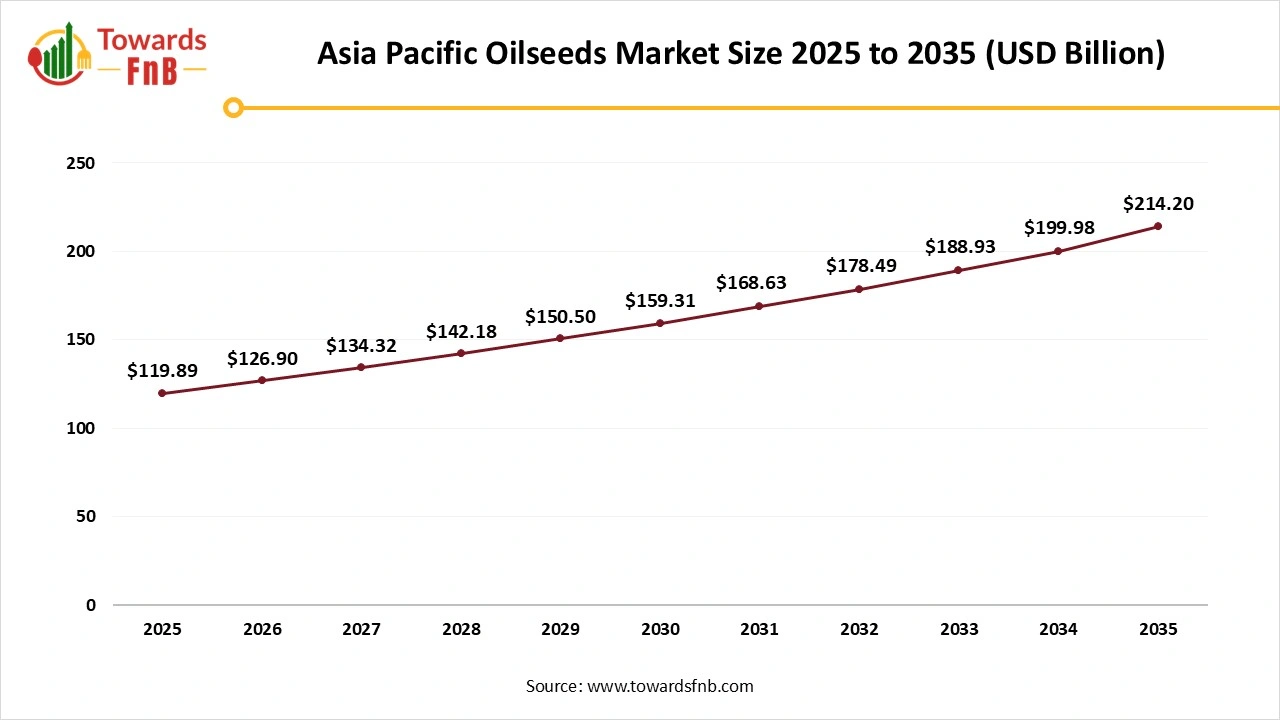
Asia Pacific Oilseeds Market Size and Growth 2025 to 2035
The Asia Pacific oilseeds market size was valued at USD 119.89 billion in 2025 and is predicted to grow from USD 126.90 billion in 2026 to approximately USD 214.20 billion by 2035, growing at a CAGR of 5.98% from 2026 to 2035.
China’s Influence on Oilseeds Production
China is a prominent contributor to the market. The robust growth in meat production and the growing dietary shifts increase demand for oilseeds. The heavy demand for edible oils and the focus on food security increase demand for oilseeds. The high rate of soybean importing and the huge soybean oil consumption support the market growth.
North America Oilseeds Market Trends
North America held the second largest share of 18% in the market in 2025 due to the well-established biodiesel industry. The expansion of meat alternatives and the increased development of crushing infrastructure increase demand for oilseeds. The presence of advanced farming practices and the heavy production of renewable diesel increases the adoption of oilseeds. The expanding oilseed cultivation area supports the market growth.
Power of Oilseeds in the United States
The United States is a key contributor to the market. The increased capacity of renewable diesel and the popularity of biomass-based diesel increase demand for oilseeds. The increased investment in crushing infrastructure and growing demand for livestock feed increases the adoption of oilseeds. The high adoption rate of high-oleic varieties drives market growth.
The Soybean Segment Dominated The Oilseeds Market In 2025 With A 38% Share
The soybean segment dominated the market with a 38% share in 2025 due to the expansion of the livestock industry. The increased high-protein meal production and the biodiesel manufacturing increase demand for soybeans. The need for nutritious cooking oil and the development of plant-based protein require soybeans. The expanding capacity of soy crushing and large-scale production drives market growth.
The sunflower segment held the second largest share of 16% in the market in 2025 and is expected to grow at the fastest CAGR of 6.2% during the forecast period due to the shift towards low-cholesterol oils. The increasing demand for nutritious snack food and the expanding food service industry increases adoption of sunflowers. The high smoke point, production efficiency, and high-oleic varieties of sunflower support market growth.
The rapeseed segment held the third largest share of 14% in the market in 2025 due to the increased biodiesel production. The shift to low-saturated-fat oil and the production of lubricants increases the use of rapeseeds. The growing high-heat cooking and the government backing for sustainable crops boost the overall market growth.
The palm kernel segment held the fourth largest share of 12% in the market in 2025 due to the increased use in the cosmetic industry. The soap manufacturing and growing demand for palm-based products increases adoption of palm kernel. The well-established palm kernel manufacturing base in Southeast Asia and economic efficiency support the market growth.
The Edible Oil Production Segment Dominated The Oilseeds Market In 2025 With A 46% Share
The edible oil production segment dominated the market with a 46% share in 2025 due to the growing demand for packaged edible oil. The rapid development of processed products and the huge demand for cooking oil increase edible oil production. The expansion of premium oil and the strong government backing for oilseed crushing increase edible oil production. The availability of high-yielding oil varieties drives market growth.
The animal feed segment held the second largest share of 28% in the market in 2025 due to the increasing meat consumption. The popularity of animal-source foods and the rising manufacturing of sustainable livestock increases demand for oilseeds. The growth in aquaculture and the high-quality dairy operations requires oilseeds, supporting the overall market growth.
The industrial use segment held the third largest share of 14% in the market in 2025 and is expected to grow at the fastest CAGR of 6.4% during the forecast period due to the popularity of bio-based chemicals. The development of paint binders and the increasing use of plant-based oils in skincare increases adoption of oilseeds. The increased use of renewable raw materials and the development of pharmaceutical products require oilseeds, boosting the overall market growth.
The food processing segment held the fourth largest share of 12% in the market in 2025 due to the expanding snacking industry. The expansion of baked goods and the growing cooking applications increases adoption of oilseeds. The move to high-protein diets and the production of refined products requires oilseeds, supporting the overall market growth.
The Processed Oilseeds Segment Dominated The Oilseeds Market In 2025 With A 41% Share
The processed oilseeds dominated the market with 41% share in 2025 due to the expanded crushing facilities. The growth in frying activities and the rise of livestock farming increase the adoption of processed oilseeds. The increased awareness of low-trans-fat oil and the massive demand for edible oil increase the demand for processed oilseeds. The development of oilseed meal drives the market growth.
The whole oilseeds segment held the second largest share of 34% in the market in 2025 due to the growing export of raw oilseeds. The growing consumer demand for unprocessed seeds and the advancement in crushing increases the adoption of whole oilseeds. The increased need for high-oleic oil options and the surging industrial applications increase the use of whole oilseeds, supporting the overall market growth.
The refined products segment held the third largest share of 25% in the market in 2025 and is expected to grow at the fastest CAGR of 6.3% during the forecast period due to the consumer transition to branded oils. The expansion of animal husbandry and the production of refined oils requires oilseeds. The innovations in refining and the popularity of specialty oils drive market growth.
The Direct Sales Segment Dominated The Oilseeds Market In 2025 With A 55% Share
The direct sales segment dominated the market with 55% share in 2025 due to the large-scale food processing. The need for high-quality oilseeds and the focus on organized marketing chains increase the adoption of direct sales. The improved profitability, supply stability, high traceability, and bulk purchasing of direct sales drive the market growth.
The supermarkets/hypermarkets segment held the second largest share of 18% in the market in 2025 due to the expansion of retail infrastructure. The availability of cold-pressed oilseeds and the private label brands increases the adoption of supermarkets/hypermarkets. The certified organic labels and competitive pricing in supermarkets/hypermarkets support market growth.
The online retail segment held the third largest share of 10% in the market in 2025 and is expected to grow at the fastest CAGR of 7.2% during the forecast period due to the presence of direct-to-consumer sales. The demand for ethical products and the expansion of digital marketplaces increases adoption of online retail. The improved traceability, product comparison, hyperlocal services, and the availability of digital payments in online retail drive market growth.
The convenience stores segment held the fourth largest share of 9% in the market in 2025 due to the increased popularity of quick purchases. The shift to time-saving solutions and the growth in daily shopping increases buying from convenience stores. The curated product selections, proximity, and premium positioning of convenience stores support the overall market growth.
AgrinovA Oorganic Farmers
Bayer
Louis Dreyfus Co. (LDC)
By Type
By Application
By Form
By Distribution Channel
By Region




Principal Consultant
Vidyesh Swar, Senior Research Analyst at Towards Food & Beverages, specializes in market research, focusing on supply-demand evaluation, pricing analysis, alternative proteins, plant-based foods, and sustainable food technologies within the industry.
Learn more about Vidyesh Swar
Reviewed By
Aditi Shivarkar, with 14+ years in Food and Beverages market research, specializes in food, beverage, and eco-friendly packaging. She ensures accurate, actionable insights, driving Towards FnB's excellence in industry trends and sustainability.
Learn more about Aditi ShivarkarApril 2026
April 2026
April 2026
April 2026

Oilseeds Market


 +1 804-441-9344
 Download Sample
 Schedule a Meeting