
April 2026



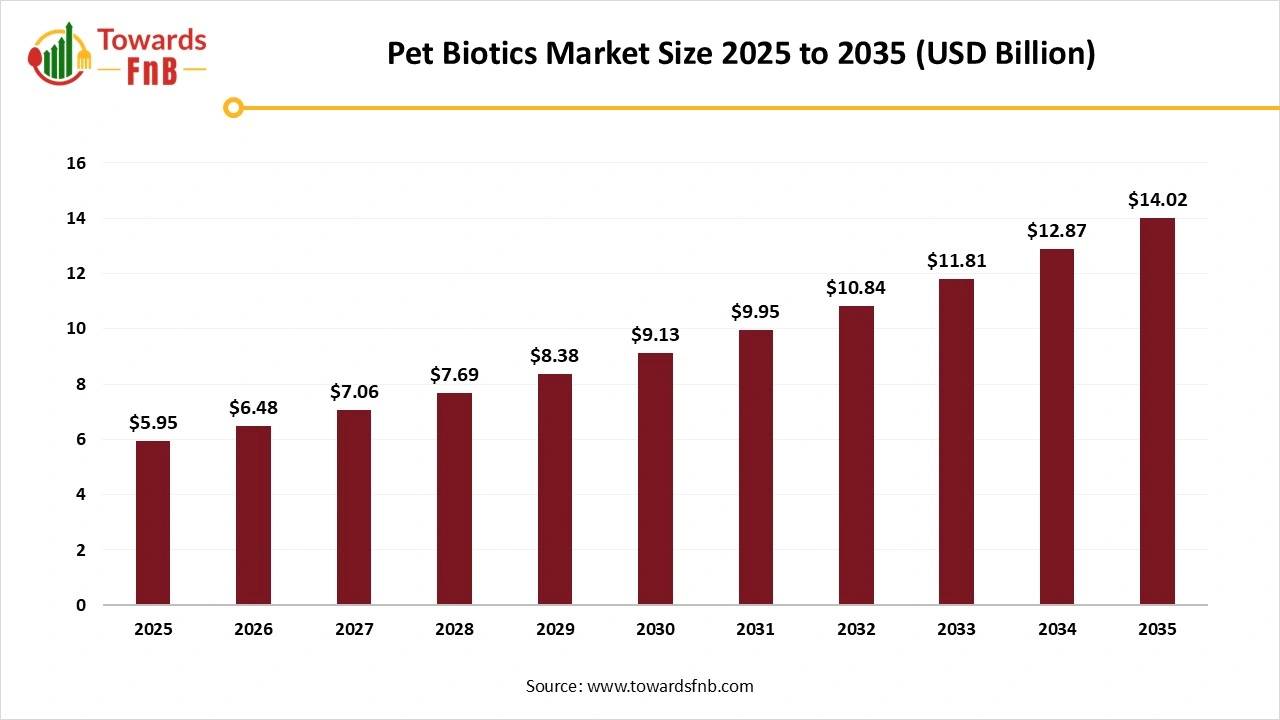
The global pet biotics market size was valued at USD 5.95 billion in 2025 and is expected to grow steadily from USD 6.48 billion in 2026 to reach nearly USD 14.02 billion by 2035 with a CAGR of 8.95% during the forecast period from 2026 to 2035. The growth in functional nutrition and a strong focus on pet treatment drives market growth.
| Study Coverage | Details |
| Growth Rate from 2026 to 2035 | CAGR of 8.95% |
| Market Size in 2026 | USD 6.48 Billion |
| Market Size in 2027 | USD 7.06 Billion |
| Market Size by 2035 | USD 14.02 Billion |
| Largest Market | North America |
| Base Year | 2025 |
| Forecast Period | 2026 to 2035 |
| Regions Covered | North America, Europe, Asia-Pacific, Latin America, and Middle East & Africa |
Pet biotics are nutrition-based pet solution that enhances overall wellness and gut health. Pet biotics majorly include synbiotics, prebiotics, postbiotics, and probiotics. It is available in diverse forms like supplements, chews, wet kibble, functional treats, and fortified kibble. It offers benefits like promoting the immune system, managing allergies, managing diarrhea, absorbing nutrients, lowering anxiety, and restoring gut flora. Common examples of pet biotics are Lactobacillus acidophilus, Bacillus coagulans, fructooligosaccharides, beet pulp, EpiCor, and others.
The pet biotics market growth is driven by the growth in pet owners, the rise of nutritional awareness, the rise in scientific backing, the expansion of postbiotics, robust growth in e-commerce, strong focus on modulation of the immune system, development of advanced formulation, rising popularity of soft chews, and the rising veterinary intervention.
The pet biotics industry is experiencing the key technological shifts driven by demand for customized formulations, strain-specific formulations, and enhanced gut health. Advancements, such as data modelling, digital diagnostics, automated tracking, and diagnostic integration, enhance metabolic health, identify patterns, and improve immunity. The major shift is the integration of artificial intelligence (AI), which helps in the development of personalized nutrition plans.
AI helps in the development of personalized probiotic formulations and detects abnormal behaviors. AI performs an accurate diagnosis of pet disease and virtually tracks the health of pets. It identifies beneficial strains of probiotics and identifies therapeutic potential. It also manufactures precision probiotics and performs the selection of strains. AI analyzes the health history of pets and minimizes contamination. Overall, AI helps in the development of evidence-based pet biotics solutions.
Raw Material Procurement
Processing and Preservation
Quality Testing and Certifications
| Types | Description | Advantages | Used in Animals | Examples |
| Prebiotics | It is non-digestible plant fibers that promote good microbiome growth. | Promoting healthier skin Metabolism regulation Enhancing immune systems Bowel movement regulation |
|
Beet Pulp Flaxseed Sweet Potato Medicinal Mushrooms Chicory Root Pumpkin Canned Pumpkin Flaxseed Meal Raw Oats Larch Arabinogalactans Jerusalem Artichoke |
| Probiotics | It is a beneficial yeast and bacteria. | Enhancing gastrointestinal health Stress management Coat improvement Better absorption of nutrients |
|
Enterococcus faecium Bacillus subtilis Lactobacillus acidophilus Bifidobacterium animals |
| Synbiotics | It is a combination of prebiotics and probiotics. | Management of intestinal issues Enhancing digestibility Providing post-antibiotic support |
|
Yeasts + Prebiotics Lactobacillus + Insulins Bifidobacterium + Fructooligosaccharides |
How did North America Dominate the Pet Biotics Market?
North America held a major market share of 38% in 2025. High spending on digestive-friendly food and the preference for high-quality nutrition increase demand for pet biotics. The established infrastructure for pet food and the growing pet owner population increase the adoption of pet biotics. The rise of premium pet supplements and the growth in dog owners increase the adoption of pet biotics. Key players like Alltech, Novonesis Group, Kemin Industries, and ADM drive the market growth.
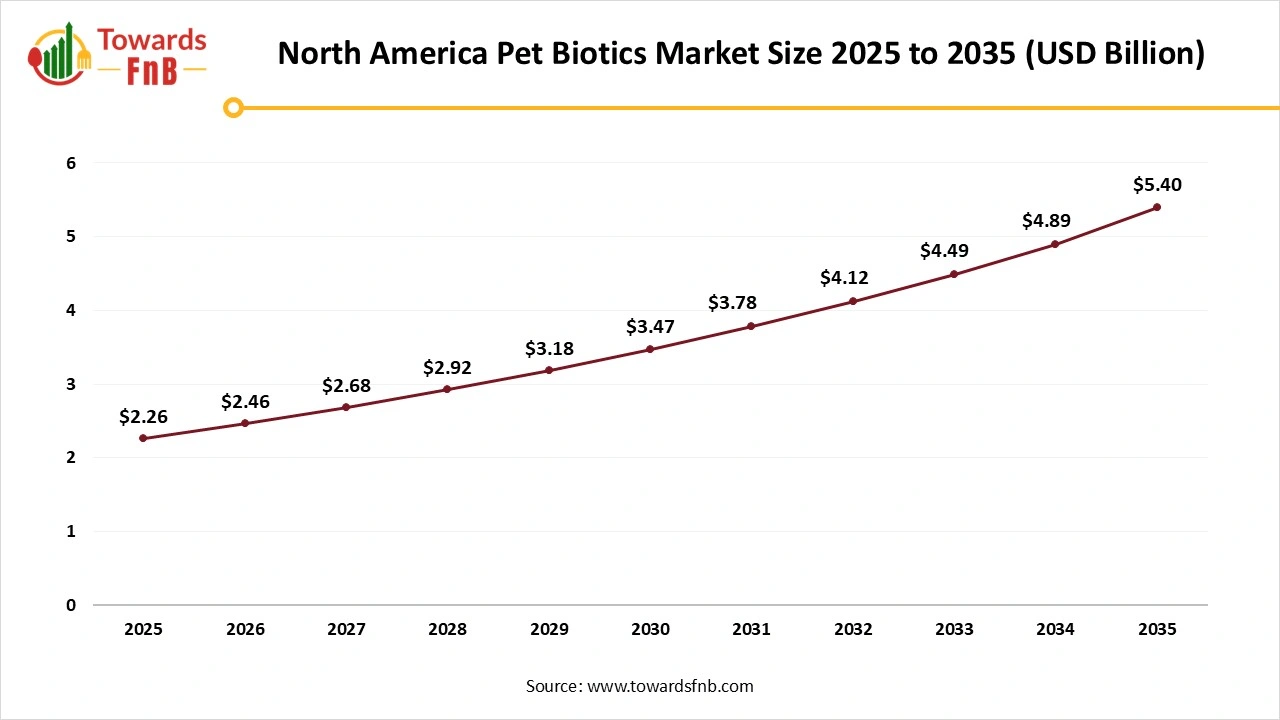
North America Pet Biotics Market Size 2025 to 2035
The North America pet biotics market size was valued at USD 2.26 billion in 2025 and is anticipated to increase from USD 2.46 billion in 2026 to an estimated USD 5.40 billion by 2035, witnessing a CAGR of 9.10% during the forecast period from 2026 to 2035.
Pet Wellness: United States Shaping the Pet Biotic Industry
The U.S. is a key contributor to the market. The growth in pet parenting and the strong focus on enhancing the digestion of pets increase demand for pet biotics. The increased endorsement by veterinary doctors and the availability of premium products of pet care increase demand for pet biotics. The huge pet expenditure and the availability of veterinary advice support the overall market growth.
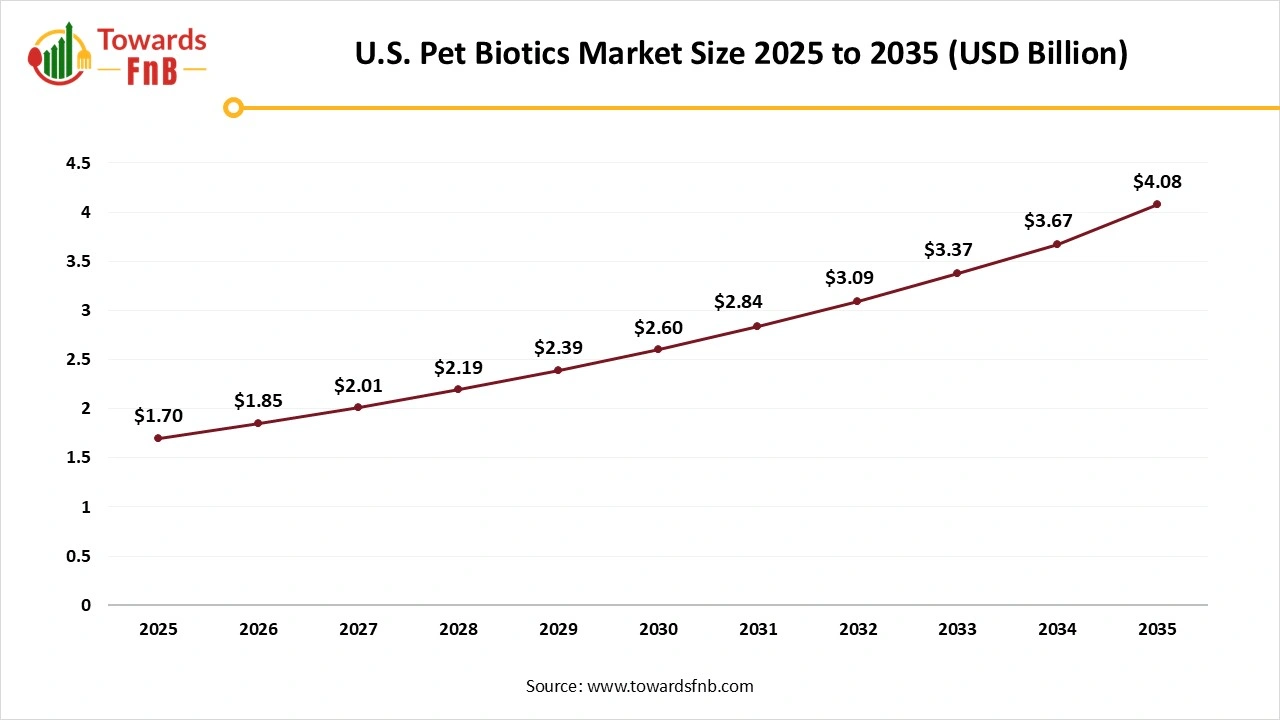
U.S. Pet Biotics Market Size and Growth 2025 to 2035
The U.S. pet biotics market size was calculated at USD 1.70 billion in 2025 with projections indicating a rise from USD 1.85 billion in 2026 to approximately USD 4.08 billion by 2035, expanding at a CAGR of 9.15% throughout the forecast period from 2026 to 2035.
How is Asia-Pacific Growing in the Pet Biotics Market?
Asia-Pacific is expected to experience the fastest growth in the market with a 10.5% CAGR during the forecast period. Spending on premium pet treats and the growing demand for microbiome-friendly nutrition increase demand for pet biotics. The expansion of functional pet nutrition and the rising veterinary recommendations increased the adoption of pet biotics. The higher pet adoption due to urban expansion and expanded e-commerce drives the overall market growth.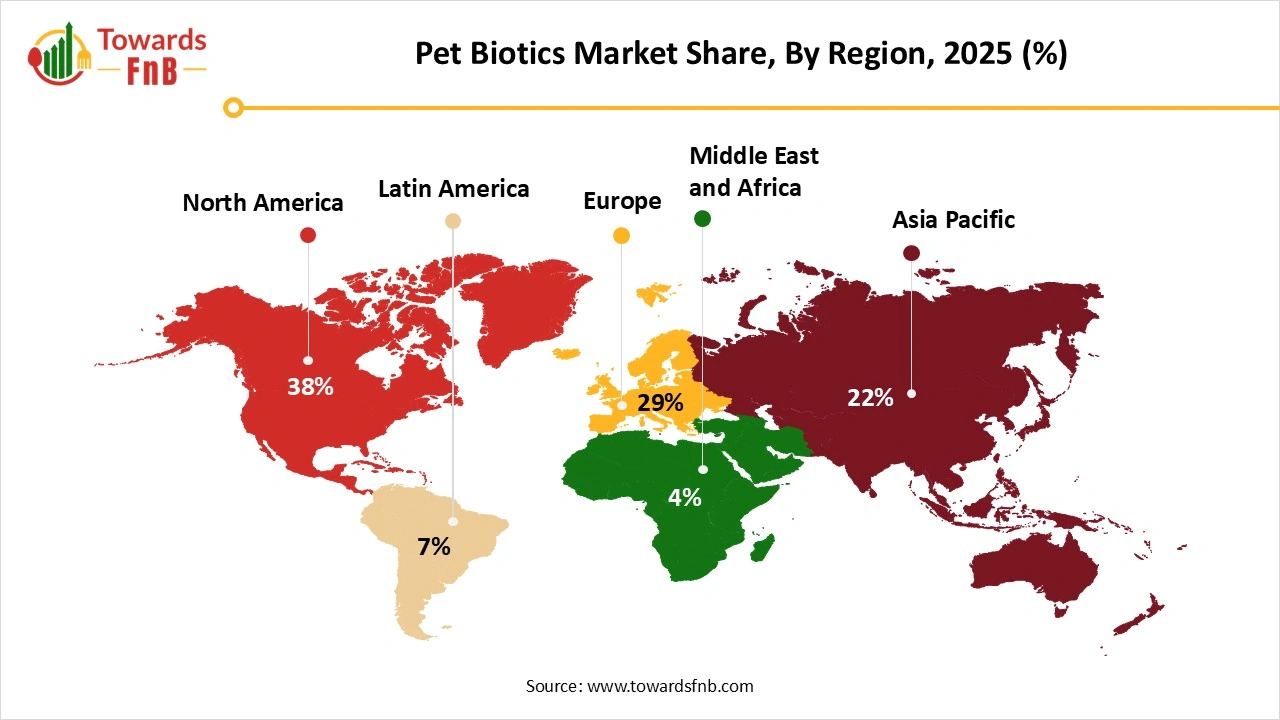
India Emerging Rise in Pet Biotics
India is rapidly growing in the market. The huge investment in pet wellness and the high purchasing power of pet nutrition increase the adoption of pet biotics. The focus on pets gut immunity and the growth in quick commerce increases the buying of pet biotics. The growing food intolerances in pets and the priority to prevent pet illness increase the adoption of pet biotics, supporting the overall market growth.
The Probiotics Segment Dominated the Pet Biotics Market with a 52% Share in 2025
The probiotics segment dominated the market with a 52% share in 2025, due to the higher awareness of the gut microbiome. The strong focus on enhancing consistency of pets stool and the knowledge about antibiotic resistance increases demand for probiotics. The trend of pet humanization and the popularity of specialized kibble require probiotics. The development of strain-specific formulations drives market growth.
The prebiotics segment held the second-largest market share of 28% in 2025 and is expected to grow at the fastest CAGR of 9.3% during the forecast period due to the priority for preventive healthcare. The focus on boosting the growth of good bacteria and the need to lower fecal odor increase the adoption of prebiotics. The strong focus on strengthening probiotic efficacy and the need to enhance metabolic health increases the adoption of prebiotics, supporting the overall market growth.
The synbiotics segment held the third-largest market share of 20% in 2025, due to its superior digestive benefits. The awareness of long-term pet wellness and focus on synergistic efficacy increases demand for synbiotics. Ongoing research on synbiotics formulations, enhanced stability, and scientific backing for synbiotics support the market growth.
The Dogs Segment Dominated the Pet Biotics Market with a 58% Share in 2025
The dogs segment dominated the market with a 58% share in 2025. The growing dog ownership and the investment in proactive care increase demand for pet biotics. The rising gastrointestinal issues in dogs and the poor gut health increase the adoption of pet biotics. The premiumization of dog products and the surging professional endorsement drive market growth.
The cats segment held the second-largest market share of 30% in 2025 and is expected to grow at the fastest CAGR of 9.1% during the forecast period, due to the increased pet adoption in urban areas. The feline favoritism and investment in cat wellness increase demand for pet biotics. Growing feline food sensitivities and the development of feline functional treats support the overall market growth.
The Dry Segment Dominated the Pet Biotics Market with a 40% Share in 2025
The dry segment dominated the market with a 40% share in 2025, due to easy integration with dry foods. The strong focus on preventing mess and the longer shelf life increase the adoption of the dry form. The increased use of dry form in daily supplements helps market expansion. The better viability, cost efficiency, and manufacturing ease of dry form drives market growth.
The chews and treats segment held the second-largest market share of 22% in 2025 and is expected to grow at the fastest CAGR of 9.5% during the forecast period, due to palatability and compatibility with premium pet snacks. The rising demand for functional treats and a strong focus on offering live organisms increase demand for chews & treats. The health benefits, daily delivery convenience, and advances of chews & treats drive market growth.
The capsules and tablets segment held the third-largest market share of 20% in 2025 due to its accurate dosing. Strong focus on the administration of daily doses and the need to protect bacteria increases the adoption of capsules and tablets. The expansion of pharmaceutical-grade supplements and the need for targeted health solutions increase the consumption of capsules and tablets, supporting the market growth.
The liquid segment held the fourth-largest market share of 18% in 2025 due to its suitability for sensitive pets. The integration of liquid with food and the popularity of liquid pet probiotics drive adoption. The advanced formulation, administration ease, delivery versatility, and the rapid adoption of liquid form drive market growth.
The Digestive Health Segment Dominated the Pet Biotics Market with a 42% Share in 2025
The digestive health segment dominated the market with a 42% share in 2025 due to the prevalence of digestive disorders. The growing rate of gut issues and the growth in development of pet health routines increase demand for pet biotics for digestive health. The strong focus on enhancing nutrient absorption and the probiotic effectiveness on digestive health drives market growth.
The immunity enhancement segment held the second-largest market share of 22% in 2025 and is expected to grow at the fastest CAGR of 9.2% during the forecast period due to the growing disease awareness. The growth in lifestyle stressors and the focus on a balanced gut microbiome increase demand for immunity enhancement pet biotics. The expansion of stress-related disorders and the need to improve immune resilience drive market growth.
The skin & coat health segment held the third-largest market share of 16% in 2025. Awareness about skin vitality and the focus on shinier coats increases adoption of pet biotics related to skin & coat health. Grooming trends in pets and the growth in skin sensitivities increase demand for pet biotics. The strong focus on pet dermatological health supports market growth.
The weight management segment held the fourth-largest market share of 12% in 2025 due to concerns of pet obesity. The focus on promoting weight loss and the growth in tracking calorie intake increases demand for pet biotics. The reduced lifespan of pets and the growing demand for advanced weight control drive market growth.
The Offline Retail Segment Dominated the Pet Biotics Market with a 52% Share in 2025
The offline retail segment dominated the market with a 52% share in 2025 due to the well-established specialty stores infrastructure. The increased buying of immunity-supporting products and the need for product education increase the adoption of offline retail. The increased number of veterinary clinics and label transparency in offline retail drives the market growth.
The online retail segment held the second-largest market share of 48% in 2025 and is expected to grow at the fastest CAGR of 10.2% during the forecast period due to the availability of subscription models. Targeted marketing and broader research in online retail increase adoption. Specialty access, convenience, social media influence, and easy product accessibility in online retail support market growth.
Zesty Paws
JoyFull
Royal Canin
By Product Type
By Animal Type
By Form
By Application
By Distribution Channel
By Region





Principal Consultant
Vidyesh Swar, Senior Research Analyst at Towards Food & Beverages, specializes in market research, focusing on supply-demand evaluation, pricing analysis, alternative proteins, plant-based foods, and sustainable food technologies within the industry.
Learn more about Vidyesh Swar
Reviewed By
Aditi Shivarkar, with 14+ years in Food and Beverages market research, specializes in food, beverage, and eco-friendly packaging. She ensures accurate, actionable insights, driving Towards FnB's excellence in industry trends and sustainability.
Learn more about Aditi ShivarkarApril 2026
April 2026
April 2026
April 2026

Pet Biotics Market


 +1 804-441-9344
 Download Sample
 Schedule a Meeting