April 2026



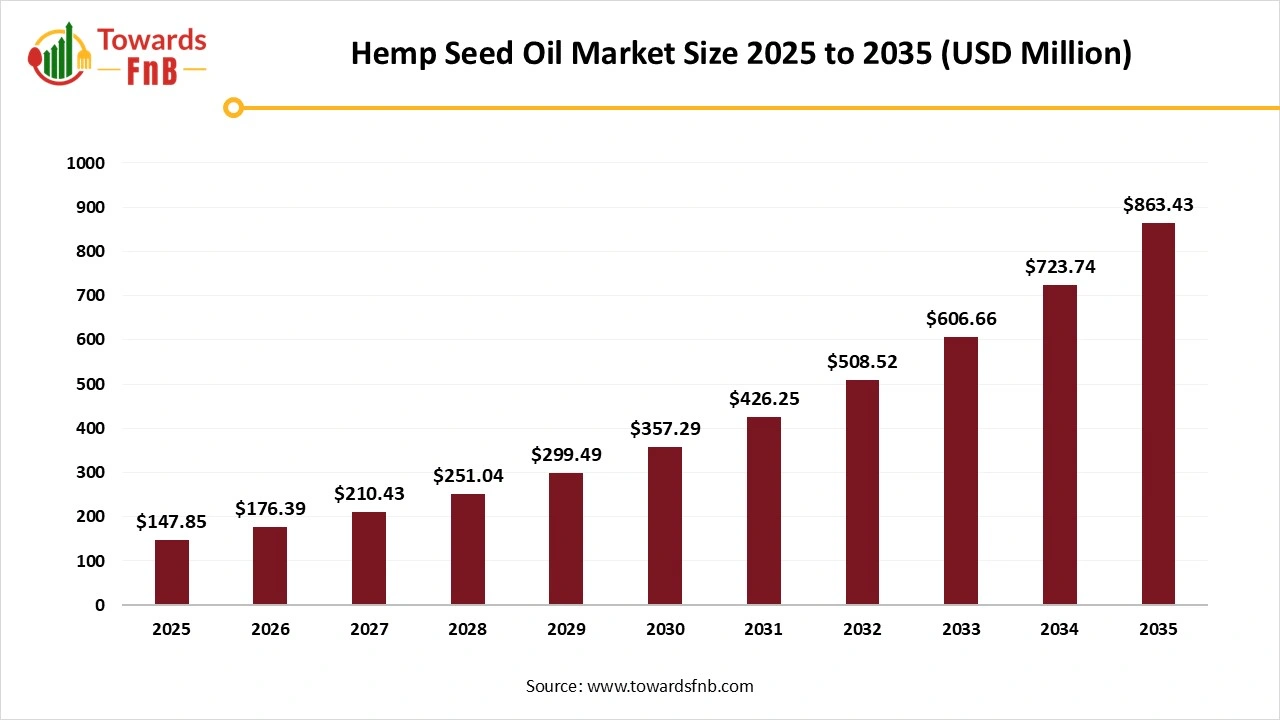
The global hemp seed oil market size estimated at USD 147.85 million in 2025 and is predicted to increase from USD 176.39 million in 2026 to nearly reaching USD 863.43 million by 2035, growing at a CAGR of 19.3% during the forecast period from 2026 to 2035. The growth of the market is driven by the increasing demand across food and beverages, personal care, and cosmetics.
| Study Coverage | Details |
| Growth Rate from 2026 to 2035 | CAGR of 19.3% |
| Market Size in 2026 | USD 176.39 Million |
| Market Size in 2027 | USD 210.43 Million |
| Market Size by 2035 | USD 863.43 Million |
| Largest Market | North America |
| Base Year | 2025 |
| Forecast Period | 2026 to 2035 |
| Regions Covered | North America, Europe, Asia-Pacific, Latin America, and Middle East & Africa |
The hemp seed oil market is driven by factors such as rising legalization easing cultivation, increasing awareness of health benefits of hemp such as vitamins and Omega-3s, increasing consumer demand for plant-based and nutritious products and versatility across pharmaceuticals, cosmetics and food and beverages. In addition, increasing supportive government regulations, expanding retail via e-commerce, and increasing sustainability trends favoring hemp’s low environmental effect, which further expected to drive the market growth.
The rise of technological advancements in the hemp seed oil industry focus on new applications, product quality and extraction efficiency, with innovations such as microwave pretreatment, CO2 extraction and advanced cold-pressing preserving nutrients and improving yields. Precision agriculture improves strain development for specific benefits and nanotechnology boosts bioavailability for edibles. Waste utilization for bio-composites and biofuels, along with streamlined processing and e-commerce platforms, further drive product accessibility and market growth.
Raw Material Procurement
Packaging and Branding
Waste Management and Recycling
| Country | Regulatory Body | Key Regulations | Focus Areas | Notable Notes |
| India | Food Safety and Standards Authority of India (FSSAI) | Food Safety and Standards (Packaging and Safety Regulations) and Licensing and Registration of Food Businesses) | Major focus areas in the hemp seed oil market focuses on nutraceuticals, cosmetics, personal care and food and beverages industries and health-conscious, plant-based and clean-label food products | The hemp seed oil market is growing industry by expansion into diverse applications, increasing demand for organic and natural products, focus on nutritional benefits and legalization and regulatory support. |
Why is North America Dominating the Hemp Seed Oil Market?
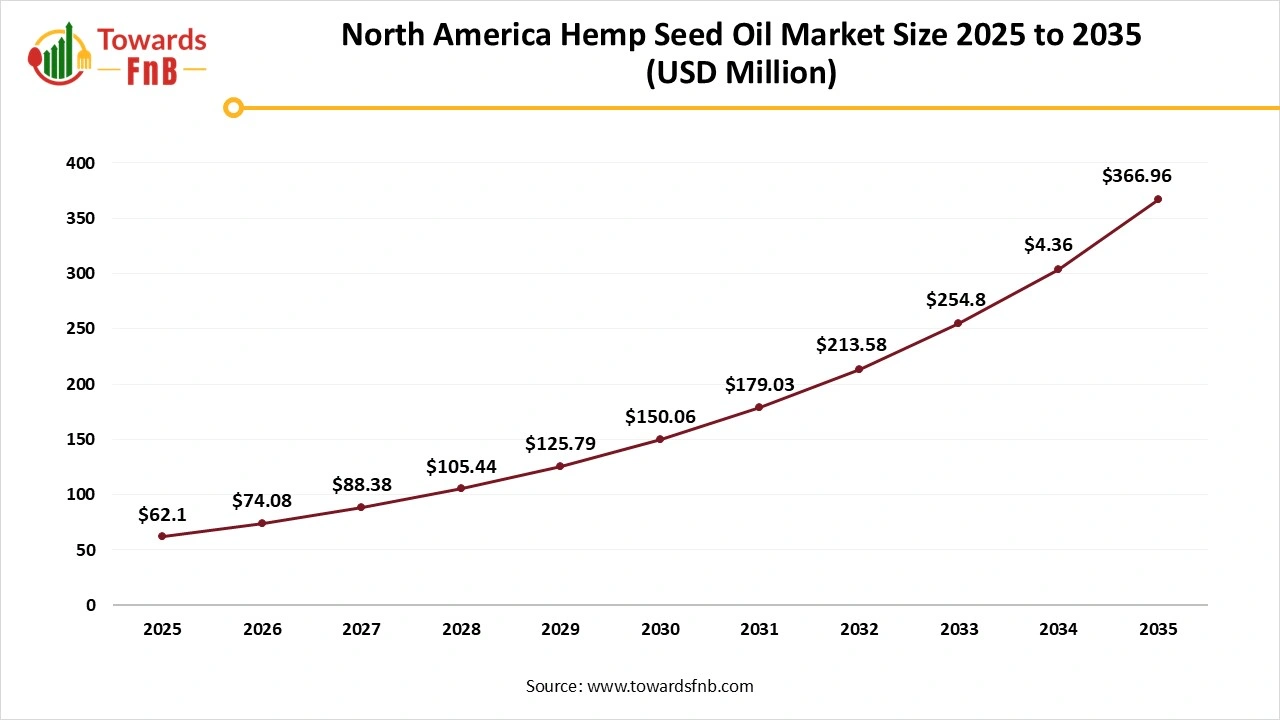
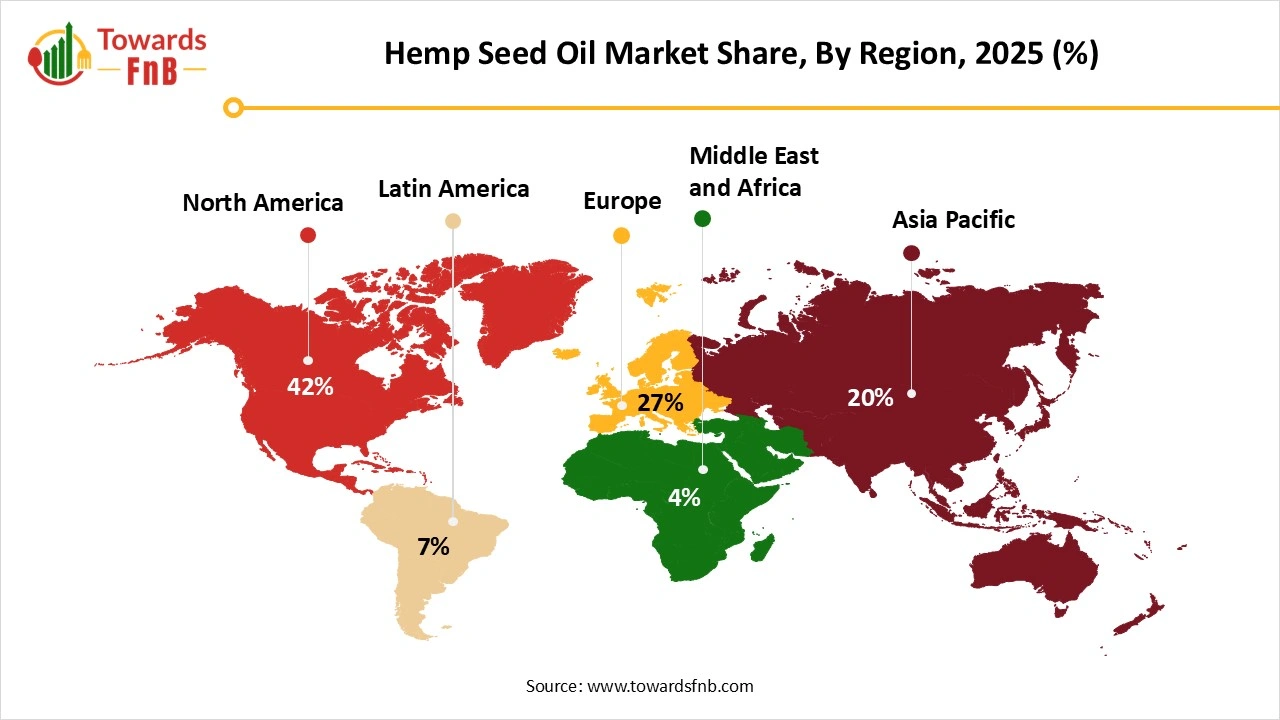
North America dominated the global market revenue in 2025. The market growth is driven by the increasing consumer high health awareness, favorable hemp legalization, increasing use in wellness and food and beverages, and consumer demand for plant-based nutrition and natural products. In addition, versatility in supplements and food, increasing shift towards plant-based and vegan trend and increasing interest in health benefits, which further expected to drive the market growth in the region.
North America Hemp Seed Oil Market Size 2025 to 2035
The North America hemp seed oil market size reached at USD 62.1 billion in 2025 and is anticipated to increase from USD 74.08 billion in 2026 to an estimated USD 366.96 billion by 2035, witnessing a CAGR of 19.44% during the forecast period from 2026 to 2035.
The U.S. Hemp Seed Oil Market Trends
The U.S. dominated the hemp seed oil industry, driven by the increasing focus on health and nutrition, increasing demand for plant-based and vegan diets, consumer preference towards sustainable products, increasing demand for natural, transparent and minimally processed ingredients and rising consumer awareness of health benefits. The government in the U.S. are creating a regulatory framework for legal growth and developing the USDA's Domestic Hemp Production Program.
How Big is the U.S. Hemp Seed Oil Market?
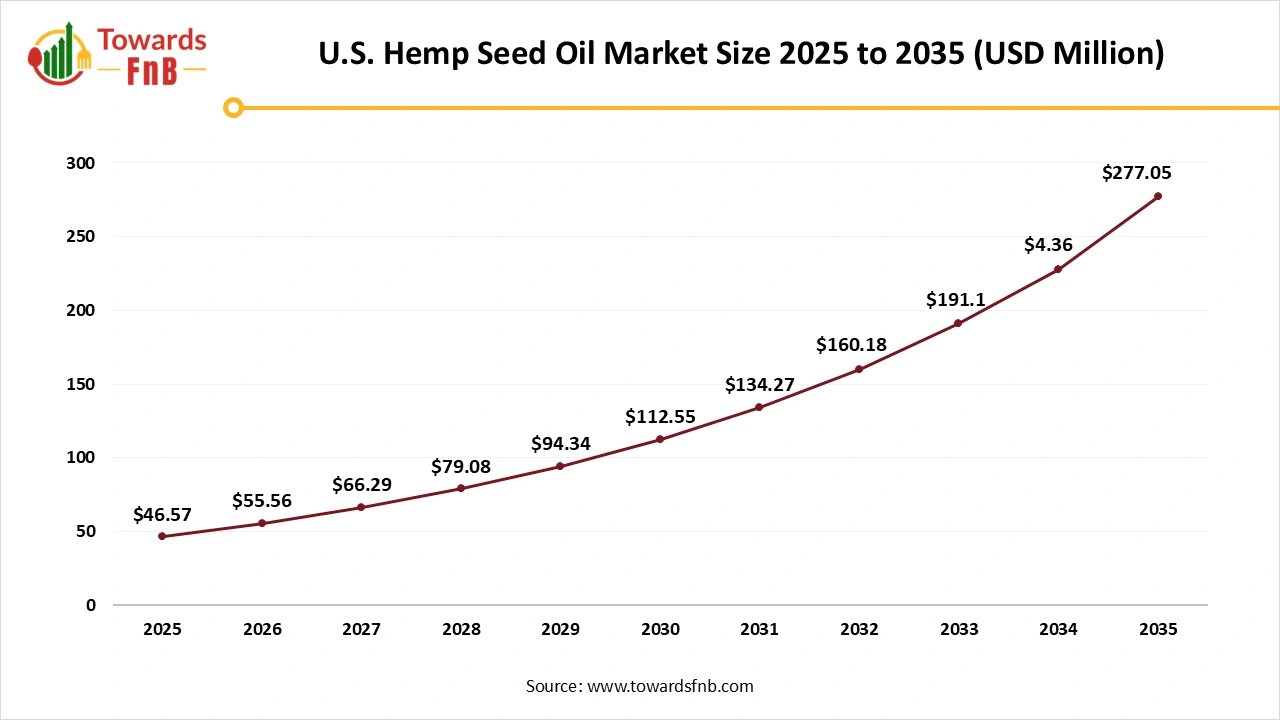
The U.S. hemp seed oil market size was valued at USD 46.57 billion in 2025 and is expected to grow steadily from USD 55.56 billion in 2026 to reach nearly USD 277.05 billion by 2035, with a CAGR of 19.52% during the forecast period from 2026 to 2035.
The Middle East and Africa is expected to grow fastest during the forecast period in the region, driven by increasing demand for plant-based and clean label products, increasing disposable incomes, growing healthcare industry and growing rapid legalization. In addition, favorable policy shifts towards hemp cultivation, increasing health consciousness, demand for wellness products, and increasing use in functional drinks, bars and dressings are further drives the market growth. South Africa and UAE are the fastest growing countries driving the market growth.
South Africa Hemp Seed Oil Market Trends
South Africa is expected to grow fastest during the forecast period. The hemp seed oil industry in South Africa is experiencing rapid growth, driven by the increasing use in diverse applications in pharmaceuticals and food and beverages, increasing consumer demand for plant-based and healthy products and evolving regulations. Major trends consists of push for local processing solutions like hemp pop-ups, use in natural skincare and the popularity of cold-pressed oil for its omega fatty acids.
Why Does Asia Pacific Driving the Hemp Seed Oil Market?
Asia Pacific is expected to grow at a notable rate during the forecast period. The market growth in the region is driven by the supportive government policies and regulations, increasing demand for natural products in supplements and food, increasing consumer awareness of health-benefits such as heart health and omega-3s and rapid expansion in product applications in automotive and food and beverages. India and China are the major countries driving the market growth in the region.
The China Hemp Seed Oil Market Trends
The hemp seed oil industry in China is a significant, driven by the increasing demand for functional and nutritional benefits, increasing demand from nutraceuticals and food and beverage, consumer awareness of hemp’s omega-6, omega-3, amino acid and rich protein content, demand for functional, plant-derived and natural foods, further drives the hemp seed oil in dairy alternatives, smoothie and dressings.
How does Europe Driving the Market in 2025?
The hemp seed oil market in the Europe is experiencing robust growth, driven by the increasing consumer demand for its organic cosmetics, supplements and nutritional benefits in food, supported by favorable policies in the Europe such as the increased local production and Novel Food Regulation, particularly in Germany, France and the UK. Major drivers such as diverse applications in pharmaceuticals, personal care and food, demand for plant-based options and consumer health consciousness.
Germany Hemp Seed Oil Market Trends
The market growth in the country is driven by factors such as the increasing trend towards functional food, increasing consumer awareness of omega fatty acids, government supportive regulations and increasing demand for natural cosmetics, supplements, plant-based food and healthy food. With organic hemp oil segments growing rapidly, the market sees major B2C sales via wellness shops, online channels, and supermarkets, further increase the demand for hemp seed oil in Germany.
Why does South America Driving the Hemp Seed Oil Market
South America expects the notable growth in the market, driven by the demand for high quality and functional foods and increasing shift towards sustainable products, with Brazil as major share country, increasing demand for clean-label and plant-based foods and increasing demand for functional food.
Brazil Hemp Seed Oil Market Trends
The hemp seed oil industry in Brazil is witnessing rapid growth, driven by the growing food and beverage and foodservice industry, increasing popularity of supplements, plant-based and healthy foods, growing e-commerce platforms, consumer preference towards functional ingredients and sustainability, demand for clean-label foods, strong local production and increasing consumer and increasing consumer shift towards nutrient-dense options.
Hemp Seed Oil Market Share, By Nature, 2025 (%)
| Segments | Shares (%) |
| Organic | 30% |
| Conventional | 70% |
Why is Conventional Segment Dominating the Hemp Seed Oil Market?
The conventional segment dominated the hemp seed oil industry revenue in 2025. The conventional segment plays an important role in the global market due to its cost-effectiveness, wide availability and affordability for mass production, making it a staple in cosmetics, nutraceuticals and mainstream. Conventional farming methods supporting high-volume production for mainstream applications and enable for lower costs and higher yields per unit.
The Organic Segment is Expected to Grow Fastest During the Forecast Period.
Organic hemp seed oil segment is a major in the market due to its eco-friendly appeal, alignment with wellness and natural trends and superior nutritional profile such as antioxidants, driving demand in sustainable, cosmetics and food products. The organic seed oil offers high-quality positioning over conventional oil for health-aware consumers looking for plant-based, premium and pure ingredients.
Hemp Seed Oil Market Share, By Type, 2025 (%)
| Segments | Shares (%) |
| Cold-pressed | 60% |
| Refined | 40% |
How is Cold-pressed Segment Dominating the Hemp Seed Oil Market?
The cold-pressed segment dominated the global market revenue in 2025. Cold-pressing play a crucial role in the hemp seed oil industry as they delivering enhanced hair/ skin benefits, delicate flavor, and superior nutritional quality and are heat-free and gentle extraction method preserves vital nutrients such as minerals, vitamins, antioxidants and fatty acids. This method ensures the oil aligning with consumer demand for health-focused and high-quality ingredients, justifying its higher price and ensures the oil remains rich in bioactive compounds.
The Refined Oil Segment is Expected to Grow Fastest During the Forecast Period.
Refined hemp seed oil is major due to its smooth texture, light color and neutral scent, making it ideal for industrial uses, skincare and cosmetics. Its neutral base, and non-greasy and light feel enable it to easily incorporated into serums, soaps and lotions for health issues and skin hydration. It also provides a bland base and stable for food manufacturing.
What Factors Help B2B Segment to Grow in 2025?
The B2B segment dominated the hemp seed oil market revenue in 2025. The B2B channel plays an important role in the global market, enabling product innovation such as plant-based, and functional foods, driving significant market share through cost efficiency and bulk sales and acting as the backbone for supplying raw materials such as protein and oil to industries such as food and beverages. B2B crucial for meeting increasing demand for sustainable and plant-based ingredients, integrating its steady supply chain for consistent quality and facilitates large-scale manufacturing.
The B2C Segment is Expected to Grow Fastest During the Forecast Period.
The segment growth in the market is driven by factors such as the increasing convenience of e-commerce, increasing consumer preference towards sustainability and favorable regulations, the versatility of hemp in food and beverages, demand for organic and natural products and increasing consumer awareness towards health and wellness.
IND HEMP
By Nature
By Type
By Distribution Channel
By Region





Principal Consultant
Vidyesh Swar, Senior Research Analyst at Towards Food & Beverages, specializes in market research, focusing on supply-demand evaluation, pricing analysis, alternative proteins, plant-based foods, and sustainable food technologies within the industry.
Learn more about Vidyesh Swar
Reviewed By
Aditi Shivarkar, with 14+ years in Food and Beverages market research, specializes in food, beverage, and eco-friendly packaging. She ensures accurate, actionable insights, driving Towards FnB's excellence in industry trends and sustainability.
Learn more about Aditi ShivarkarApril 2026
April 2026
March 2026
March 2026

Hemp Seed Oil Market


 +1 804-441-9344
 Download Sample
 Schedule a Meeting