April 2026



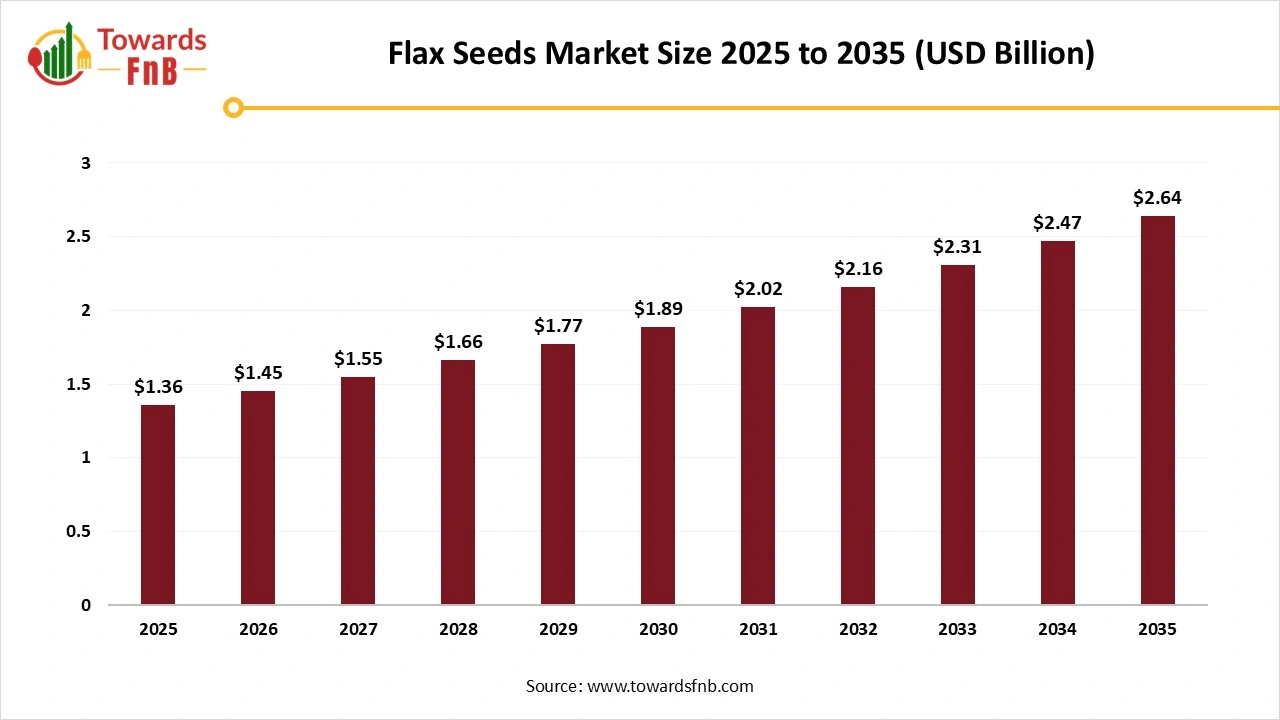
The global flax seeds market size stood at USD 1.36 billion in 2025 and is expected to grow from USD 1.45 billion in 2026 to reach approximately USD 2.64 billion by 2035, expanding at a CAGR of 6.85% from 2026 to 2035. The demand is growing due to rising consumer awareness of the health benefits of omega-3 fatty acids, fiber, and plant-based nutrition.
| Study Coverage | Details |
| Growth Rate from 2026 to 2035 | CAGR of 6.85% |
| Market Size in 2026 | USD 1.45 Billion |
| Market Size in 2027 | USD 1.55 Billion |
| Market Size by 2035 | USD 2.64 Billion |
| Largest Market | North America |
| Base Year | 2025 |
| Forecast Period | 2026 to 2035 |
| Regions Covered | North America, Europe, Asia-Pacific, Latin America, and Middle East & Africa |
The flax seed industry is experiencing robust growth driven by an increase in the demand for functional food, plant-based diets, and healthcare prevention. The use of omega-3 fatty acids, fiber, and lignans in the food and beverages, nutraceutical, and animal feed industries is supported by growing knowledge of their advantages. Additionally, regulatory agencies are promoting the use of clean-label, nutrient-rich ingredients, which is hastening market adoption. Furthermore, flax is an appealing crop in environmentally conscious agriculture because of its comparatively low water requirements, which aligns with sustainability trends.
For instance,
Raw Material Procurement
Processing and Preservation
Quality Testing and Certification
What Made North America Dominate the Flax Seeds Market?
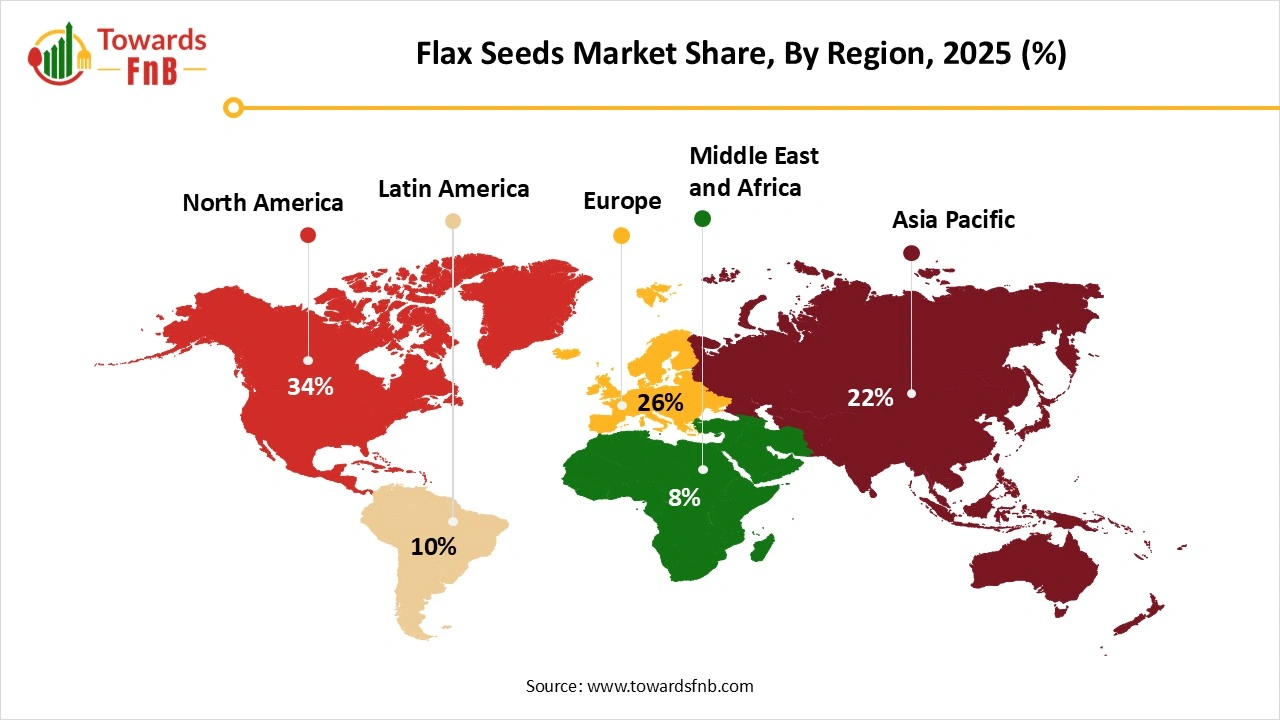
North America held a major market share of 34% in 2025, driven by well-established supply chains, a large number of food brands with a health focus, and high consumer awareness. The region gains from growing demand for plant-based nutrition and sophisticated food processing infrastructure. Growth is also aided by a preference for high-end health products and a high level of disposable income. Regional dominance is also being strengthened by continued product innovation and marketing tactics.
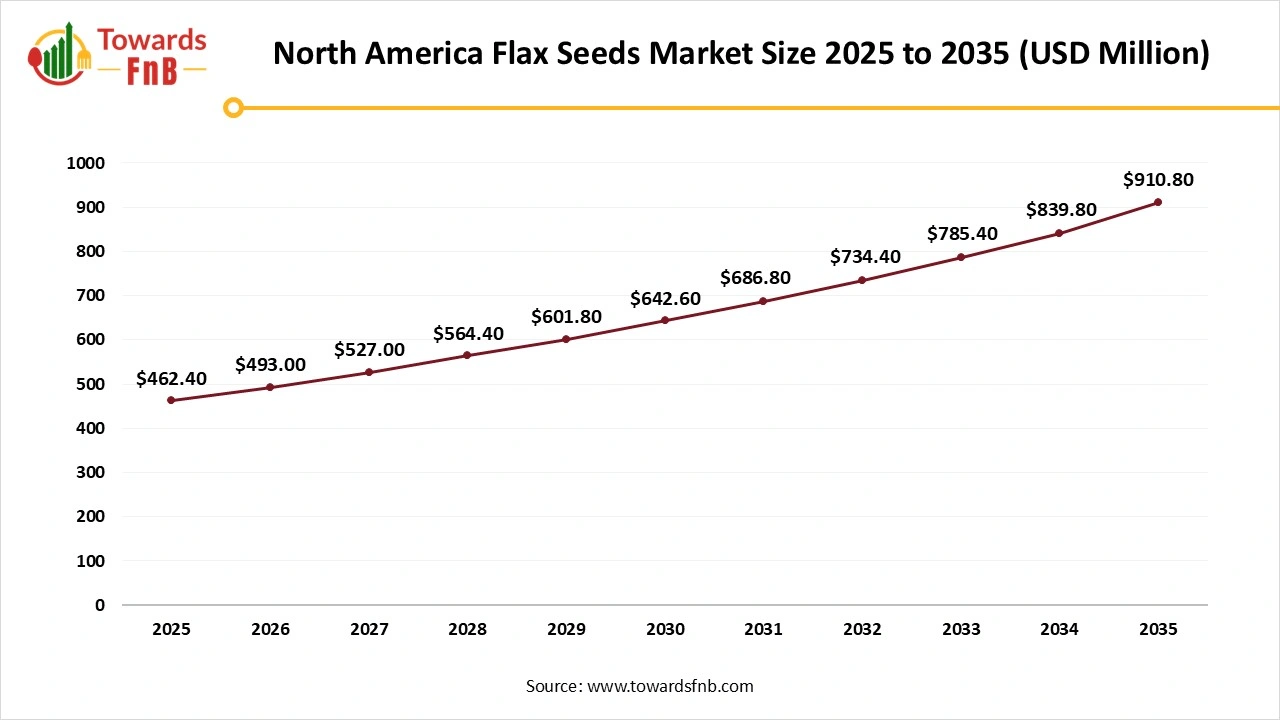
North America Flax Seeds Market Size and Growth 2025 to 2035
The North America flax seeds market size was valued at USD 462.40 million in 2025 and is predicted to grow from USD 493 million in 2026 to reach approximately USD 910.80 million by 2035, expanding at a CAGR of 7.01% from 2026 to 2035.
U.S. Flax Seeds Market Trends
The U.S. plays a key role due to dietary supplements and functional foods being consumed in large quantities. Demand for flax-based products is being driven by an increase in vegan and health-conscious consumers. Clean label and fortified foods innovations also keep driving market growth. Product availability is increased by the presence of significant food and nutraceutical companies. Investing more in the creation of health-focused products helps the market expand.
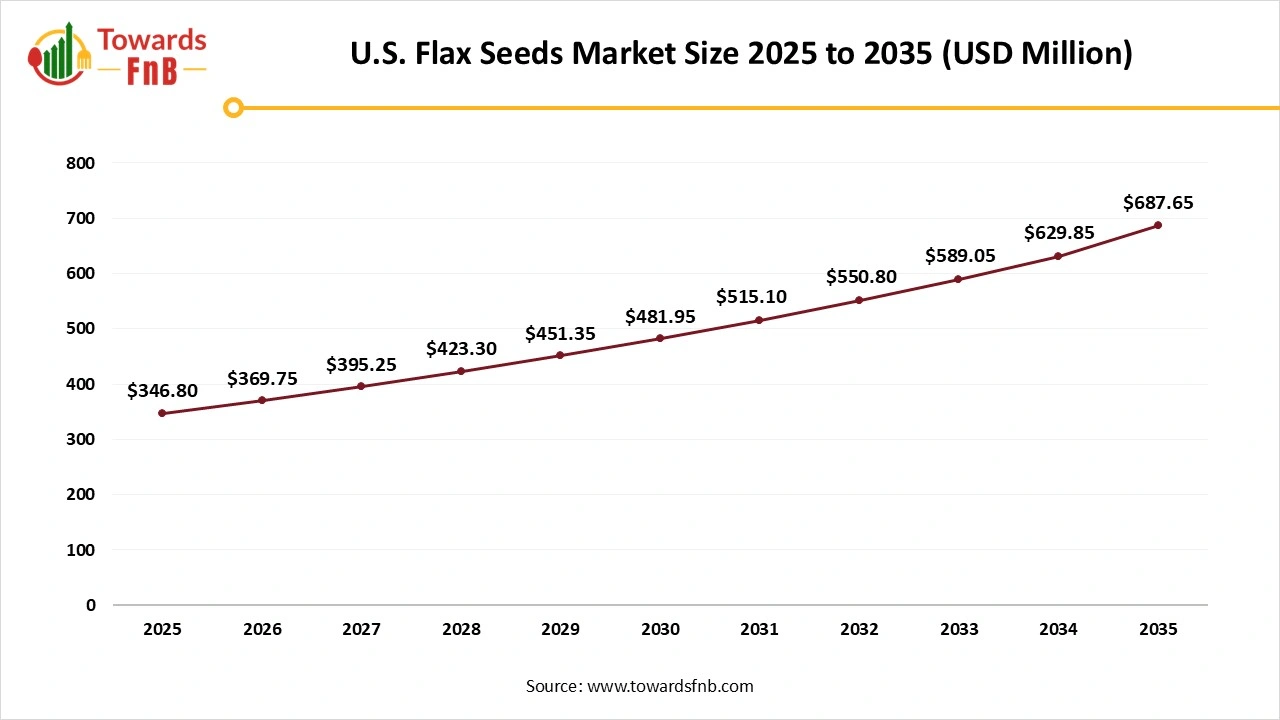
U.S. Flax Seeds Market Size and Growth 2025 to 2035
The U.S. flax seeds market size was calculated at USD 346.80 million in 2025 and is predicted to grow from USD 369.75 million in 2026 to reach approximately USD 687.65 million by 2035, expanding at a CAGR of 7.09% from 2026 to 2035.
How is Asia-Pacific Growing in the Flax Seeds Market?
Asia-Pacific held 22% of the market share in 2025 and is expected to experience the fastest growth with a CAGR of 8.3% during the predicted timeframe, fueled by the growing middle class population, urbanization, and increased health consciousness. Demand is being supported by the growing use of functional foods and Western dietary patterns. Growth is also aided by government programs that support wellness and nutrition. Product accessibility is increasing due to the rapid growth of retail and e-commerce channels. Increasing local production also contributes to cost reduction and increased consumption.
India Flax Seeds Market Trends
India is witnessing rising demand due to flaxseeds becoming more common in daily diets and people becoming more conscious of traditional superfoods. Accessibility is being improved by the growth of e-commerce and health food brands. The nation's robust agricultural foundation also contributes to the expansion of domestic production and consumption. Increased awareness of preventive healthcare and growing urban health trends are driving demand even more. The government's emphasis on health and nutrition is also promoting market growth.
The Brown Flaxseed Segment Dominated the Market with 62% Market Share in 2025
The brown flax seeds segment dominated the flax seeds market with a share of 62% in 2025, as brown flaxseeds are widely accessible, reasonably priced, and well-established in the bulk food processing sector. These seeds are widely used in applications such as animal feed and cereals, where price sensitivity is crucial. Furthermore, their similar nutritional profile to golden varieties, which includes high fiber and omega-3 fatty acids, supports steady demand in both developed and emerging markets.
The golden flax seeds segment held the second-largest market share of 38% in 2025 and is expected to grow rapidly with 7.8% CAGR in the coming years, driven by consumers' growing desire for high-quality, aesthetically pleasing, and mildly flavored health ingredients. Growth is aided by their increasing use in smoothie, functional foods, and upscale baked goods. Golden flax seeds are also being incorporated into value-added products by manufacturers due to clean-label trends and consumer demand for plant-based nutrition.
The Whole Seeds Segment Led the Market with 34% of Market Share in 2025
The whole seeds segment led the flax seeds market with a share of 34% in 2025 because, in contrast to processed forms, they have a longer shelf life and are more adaptable in storage and transportation because of their stability and ease of incorporation into various recipes. Additionally, to preserve freshness and nutritional value, consumers are increasingly choosing whole seeds for home grinding. Affordability is further enhanced by their lower processing costs when compared to ground or oil forms. For long-term storage and bulk purchases, this makes them very appealing.
The flaxseed oil segment held the second-largest market share of 28% in 2025 and is expected to grow rapidly with a CAGR of 8.1% during the forecast period, driven by growing knowledge of its anti-inflammatory and cardiovascular properties. It is becoming more popular in functional food formulations and dietary supplements due to its high alpha linolenic acid content. Globally, its adoption is being accelerated by the growing nutraceutical industry and rising demand for plant-based oils. Growth is also being aided by the rising use of skincare and cosmetic products. Additionally, innovation in organic and cold-pressed oil variations is increasing the products' appeal to high-end customers.
The ground flaxseed segment held the third-largest market share of 22% in 2025 because they offer superior nutrient absorption over whole seeds, making it a top choice for consumers who are health-conscious. Smoothies, baked goods, and nutritional supplements frequently contain them. Their consistent demand is further supported by the convenience factor and growing awareness of digestive health. Furthermore, consumers save time because ready-to-use formats do not require grinding. Another factor driving demand growth is their growing inclusion in diets for weight management.
The Food & Beverages Segment Held the Largest Market Share of 46% in 2025
The food & beverages segment held the largest revenue share of 46% in the flax seeds market in 2025 because flax seeds are widely used in baked goods, cereals, snacks, and functional drinks. Their use is increasing due to the growing demand for plant-based and fiber-rich food ingredients. Additionally, producers are being encouraged to incorporate flax seeds into common food items by clean-label and fortified-food trends. Growing innovation in protein-rich snacks and plant-based dairy substitutes is contributing to the segment's growth. Superfoods are becoming increasingly popular in daily diets, which is fueling their robust consumption.
The nutraceuticals & dietary supplements segment held the second-largest market share of 21% in 2025 and is expected to grow rapidly with a CAGR of 8.4% over the studied period, driven by growing interest in preventive healthcare and an increase in demand for natural supplements. Flax seeds are perfect for heart health, hormonal balance, and digestive support because they are high in lignans and omega-3 fatty acids. Growth in this segment is further accelerated by wellness trends and aging populations. Expanding investments in personalized health products and functional nutrition are also encouraging growth.
The animal feed segment held the third-largest market share of 18% in 2025, as the nutritional value of animal products like eggs, milk, and meat is improved by the use of flax seeds. They increase animal-derived products' omega-3 content, which consumers are beginning to value more. The increase in demand for enriched animal nutrition and the increased awareness of animal health and feed efficiency augment the segment’s growth. Additionally, the market is expanding due to rising demand for premium dairy and poultry products.
The Supermarkets & Hypermarkets Segment Held the Largest Market Share of 39% in 2025
The supermarkets & hypermarkets segment dominated the flax seeds market with a share of 39% in 2025 because of their robust supply chains, extensive product selection, and capacity to provide competitive pricing. For large purchases and convenient access, customers favor these stores. Their dominance is further reinforced by the availability of multiple brands and in-store promotions. Additionally, their capacity to offer private label options at reduced costs draws in budget-conscious customers. Furthermore, organized retail expansion is bolstering ongoing growth in emerging economies.
The online retail segment held the second-largest market share of 28% in 2025 and is expected to grow rapidly with a CAGR of 9.1% in the coming years, driven by the ease of home delivery and growing digital adoption. Before making a purchase, customers can compare costs, read reviews, and access a large selection of flaxseed products. Growth is being accelerated by the rise of subscription-based health product models and e-commerce platforms; personalized recommendations, doorstep delivery, and discounts all improve the customer experience. Online sales are also being boosted by rising smartphone penetration and the use of digital payments.
The specialty stores segment held the third-largest market share of 16% in 2025 because they serve specialized consumer groups looking for premium organic non-GMO flaxseed products. Health-conscious customers are drawn to these stores because they offer carefully chosen options and professional advice. Consistent demand is supported by their emphasis on quality and transparency. They frequently carry certified and sustainably sourced goods, which draw customers who care about the environment. In-store instruction and sampling also contribute to the development of customer loyalty and trust.
The Household/Residential Segment Contributed the Highest Market Share of 44% in 2025
The commercial/industrial segment contributed the highest revenue share of 44% in the flax seeds market in 2025 and is expected to grow rapidly with a CAGR of 7.2% during the forecast period because flaxseeds are used more often in the food processing, animal nutrition, and nutraceutical industries. Manufacturers are encouraged to purchase functional ingredients in bulk due to growing demand for them in packaged foods and supplements. Demand is being further driven by the growth of plant-based food production. Additionally, supply chains are being strengthened by consistent quality, which is being ensured through partnerships between food brands and suppliers.
The household/residential segment held the second-largest market share of 44% in 2025 because flaxseeds are becoming better known as a superfood for regular diets. Smoothie breakfast options and home-cooked meals are becoming more and more popular. This segment is largely driven by the trend toward natural nutritional and preventive healthcare. Daily consumption is also being encouraged by the growing impact of social media and health influencers. Additionally, widespread household adoption is supported by easy availability through retail channels.
Leibniz Institute for Food Systems Biology
Mother’s Recipe
By Type
By Form
By Application
By Distribution Channel
By End-User
By Region





Principal Consultant
Vidyesh Swar, Senior Research Analyst at Towards Food & Beverages, specializes in market research, focusing on supply-demand evaluation, pricing analysis, alternative proteins, plant-based foods, and sustainable food technologies within the industry.
Learn more about Vidyesh Swar
Reviewed By
Aditi Shivarkar, with 14+ years in Food and Beverages market research, specializes in food, beverage, and eco-friendly packaging. She ensures accurate, actionable insights, driving Towards FnB's excellence in industry trends and sustainability.
Learn more about Aditi ShivarkarApril 2026
April 2026
April 2026
April 2026

Flax Seeds Market


 +1 804-441-9344
 Download Sample
 Schedule a Meeting