April 2026



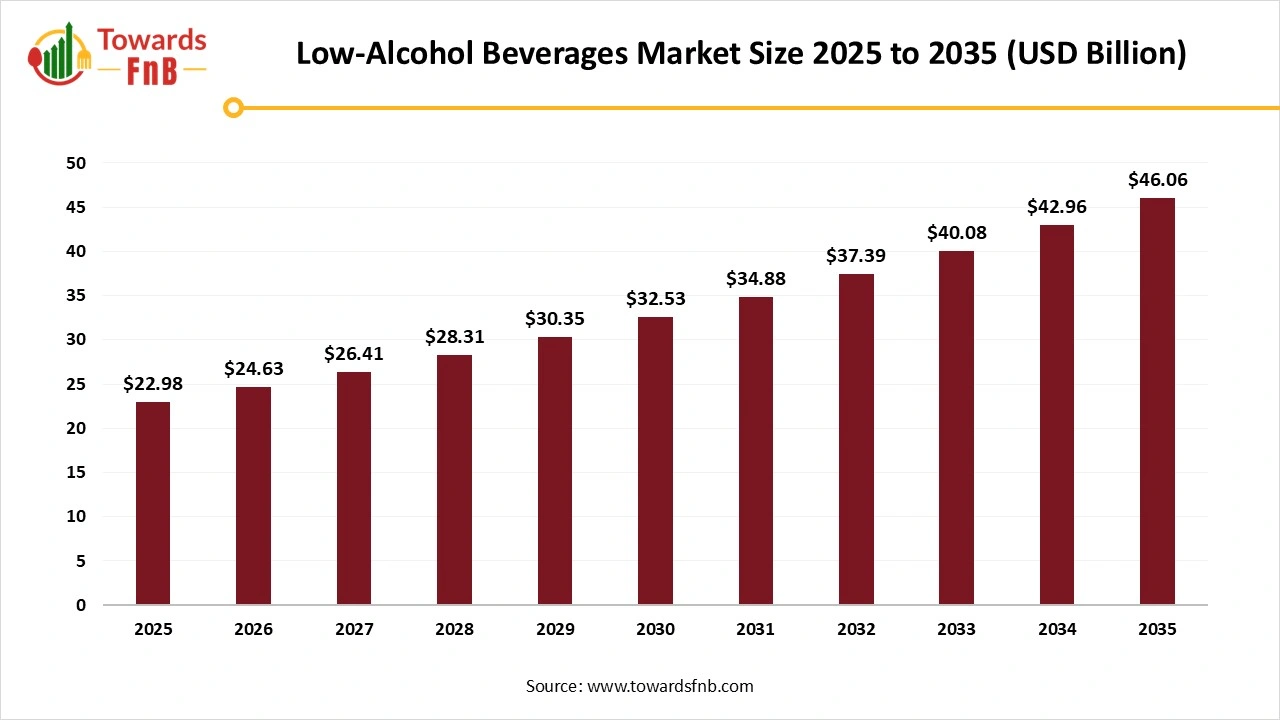
The global low-alcohol beverages market size stood at USD 22.98 billion in 2025 and is predicted to increase from USD 24.63 billion in 2026 to reach approximately USD 46.06 billion by 2035, expanding at a CAGR of 7.2% from 2026 to 2035. The growing low-beverage availability and the focus on wellness drive the market growth.
| Study Coverage | Details |
| Growth Rate from 2026 to 2035 | CAGR of 7.2% |
| Market Size in 2026 | USD 24.63 Billion |
| Market Size in 2027 | USD 26.41 Billion |
| Market Size by 2035 | USD 46.06 Billion |
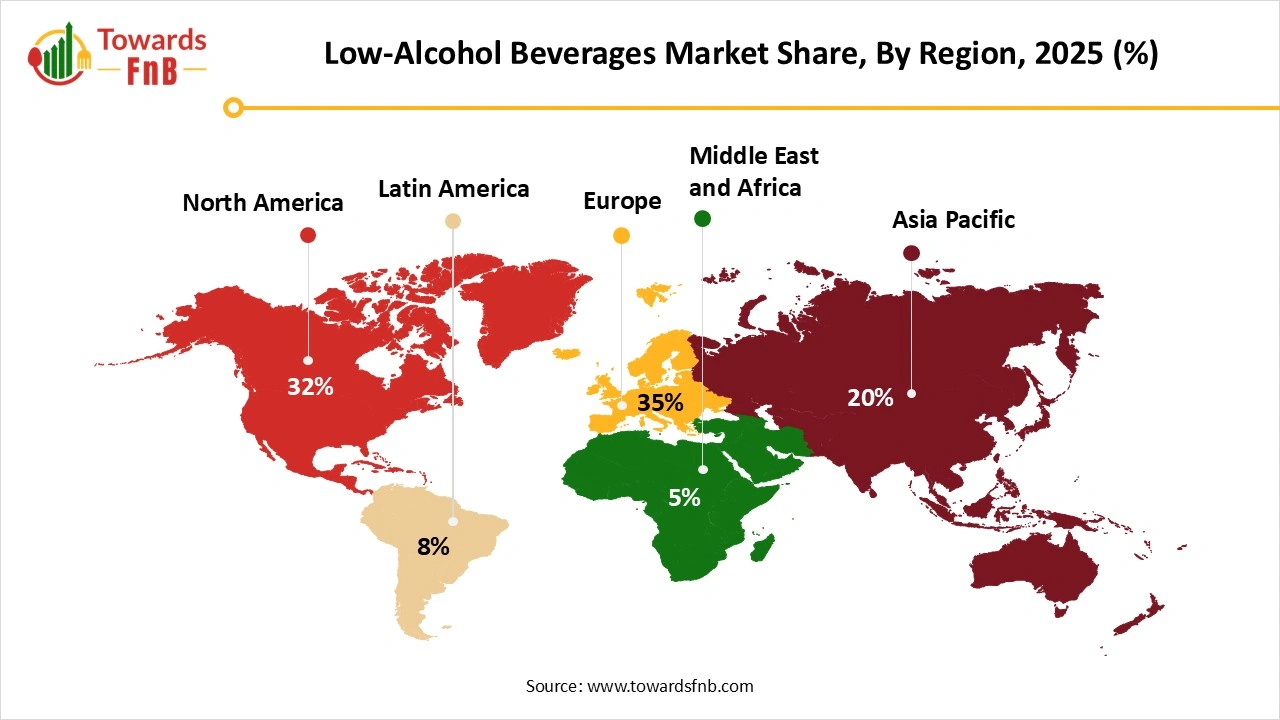
| Largest Market | Europe |
| Base Year | 2025 |
| Forecast Period | 2026 to 2035 |
| Regions Covered | North America, Europe, Asia-Pacific, Latin America, and Middle East & Africa |
Low-alcohol beverages are beverages with a lower alcohol content. It is produced using de-alcoholization and limited fermentation. It offers benefits like minimizing alcohol intake, lowering cancer risk, better sleep, calorie management, cardiovascular wellness, improved liver function, and mental clarity. The diverse types of low-alcohol beverages are low-alcohol wine, mid-proof spirits, low-alcohol beer, and low-alcohol spirits. It is widely used for social drinking, responsible consumption, and the sober curious movement.
The low-alcohol beverages industry growth is driven by a healthier lifestyle trend, rise in NOLO alternatives, robust growth in RTD beverages, expansion of mainstream retail, rising social acceptability, focus on avoiding hangovers, and the shift to portable packaging.
The low-alcohol beverages industry is undergoing key technological shifts like machine learning, augmented reality, smart packaging, IoT, precision fermentation, and virtual reality helps in enhancing sensory profiles, sustainability, and improving texture. Technological advancements improve functionality and mimic traditional alcohol taste. The AI integration is the prominent technological shift driven by demand for accelerating innovation.
AI analyzes consumer reviews and creates new formulations of low-alcohol beverages. AI enables virtual testing and monitors the fermentation process. AI helps in advertising and forecasts the demand for low-alcohol beverages. AI analyzes new combinations of ingredients and optimizes flavor. AI automates quality control and creates appealing recipes. Additionally, companies like Katlenburger Winery, Sapporo Breweries, and Carlsberg use AI for diverse purposes.
Raw Material Procurement
Processing and Preservation
Quality Testing and Certifications
Why Europe Dominated the Low-Alcohol Beverages Market?
Europe held a major market share of 35% in 2025 due to the growing trend of moderate drinking. The move to no-alcohol options and awareness of lowering alcohol intake increases demand for low-alcohol beverages. Consumers focus on Less but Better, and the strong regulatory support increases the adoption of low-alcohol beverages. Increased investment in the development of new products and the growing cultural acceptance drive market growth.
Europe Low-Alcohol Beverages Market Size and Growth 2025 to 2035
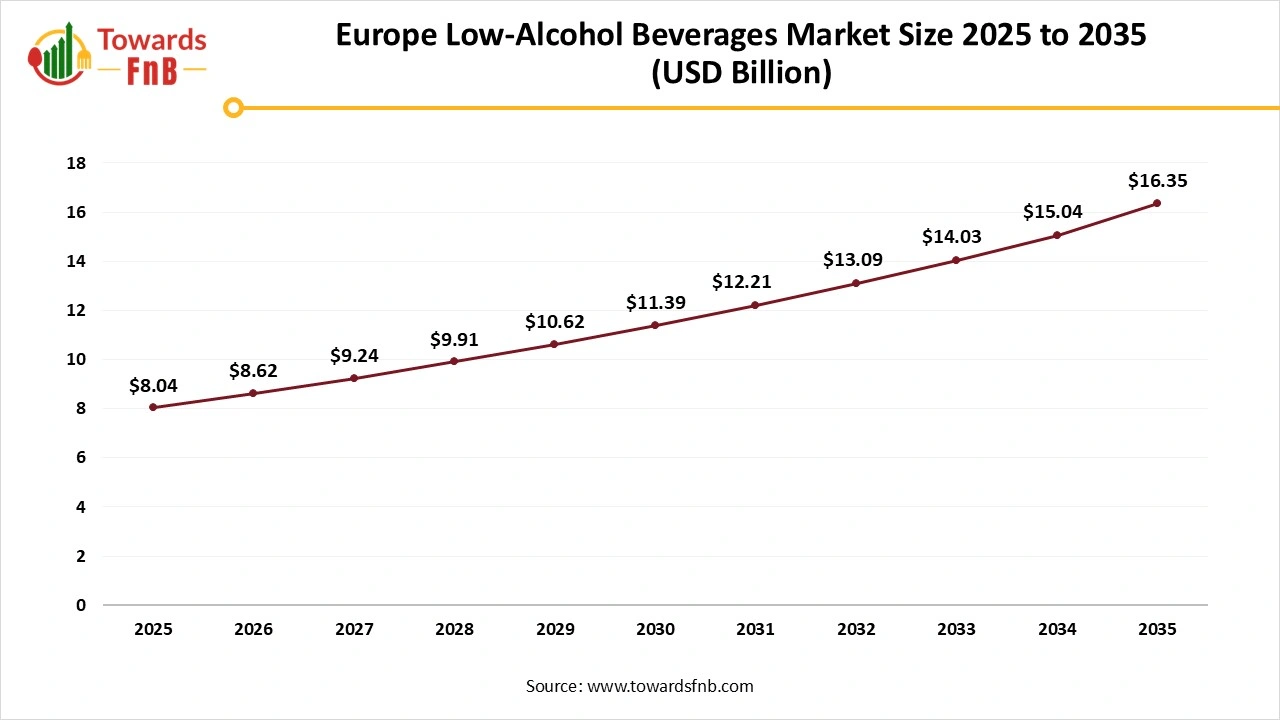
The Europe low-alcohol beverages market size was valued at USD 8.04 billion in 2025 and is predicted to increase from USD 8.62 billion in 2026 to reach approximately USD 16.35 billion by 2035, expanding at a CAGR of 7.36% from 2026 to 2035.
Evolution of Low-Alcohol Beverages in Germany
Germany is robustly growing in the market. The strong consumer focus on enhancing physical health and the strong presence of dealcoholization technology increase the production of low-alcohol beverages. The alcohol moderation culture in Germany increases the consumption of low-alcohol beverages. The high availability of non-alcoholic beers and the innovative brewing technology support the market growth.
How is Asia-Pacific Growing in the Low-Alcohol Beverages Market?
Asia-Pacific is expected to experience rapid growth in the market with a CAGR of 10.9% during the forecast period due to the growing young population. The drink smarter movement and the growing cost-of-living issues increase demand for low-alcohol beverages. Rising economic prosperity and the strongest growth of craft products increase the adoption of low-alcohol beverages. The development of better-tasting options and the increased investment in new formulations drive the market growth.
Rise of Low-Alcohol Beverages in India
India is substantially growing in the market. The increased awareness of the heavy drinking side effects and the high preference for moderate drinking increases demand for low-alcohol beverages. Younger consumer awareness about Dry January and the popularity of mocktails increases the adoption of low-alcohol beverages. The expansion of flavorful non-alcoholic beverages supports the market growth.
How Low-Alcohol Beer Segment Dominated the Low-Alcohol Beverages Market?
The low-alcohol beer segment dominated the market with a 42% share in 2025 due to the increased consumption of healthier alcohol. The higher demand for hangover-free options and the rise in socializing increase demand for low-alcohol beer. The popularity of beer among consumers and the focus on avoiding intoxication increase the consumption of low-alcohol beer. The enhanced social availability of low-alcohol beer drives segment growth.
The low-alcohol wine segment held the second-largest market share of 24% in 2025 due to the growing demand for healthier premium wine. The growing younger consumer preference and the rising female consumer base help with expansion. Evolving social habits and ongoing innovations in flavored wine support segment growth.
The RTD beverages segment held the third-largest market share of 20% in 2025 and is expected to grow at the fastest CAGR of 11.3% during the forecast period due to the rise in convenience-driven consumption. The growing travel consumption and popularity of spirit-based cocktails increase the adoption of RTD beverages. The strong marketing and portability of RTD beverages boost segment growth.
The low-alcohol spirits segment held the fourth-largest market share of 14% in 2025 due to the growing experimentation in cocktail culture. The increased demand for the product supports fitness goals, and the preference for drinking less increases consumption of low-alcohol spirits. The development of low-ABV spirits variants supports the segment growth.
Why 1.3%-2.5% ABV Segment Dominated the Low-Alcohol Beverages Market?
The 1.3%-2.5% ABV segment dominated the market with a 30% share in 2025 due to its lower alcohol content. The growing sessionable trend and the focus on consuming fewer calories increase demand for 1.3%-2.5% ABV. The increased suitability of 1.3%-2.5% ABV for health-focused moments and the increased utilization in beers help with expansion. Better taste and the balance between flavors in 1.3%-2.5% ABV drives segment growth.
The 0.0%-0.5% ABV segment held the second-largest market share of 28% in 2025 and is expected to grow at the fastest CAGR of 10.5% during the forecast period due to the benefits of zero-alcohol alternatives. The popularity of healthier beverage alternatives and the growing social drinking scenarios increase the adoption of 0.0%-0.5% ABV. The expansion of 0.0%-0.5% ABV in mainstream retail supports the segment growth.
The 0.6%-1.2% ABV segment held the third-largest market share of 22% in 2025 due to the growing use among fitness-oriented individuals. The higher adoption rate of zebra striping behavior and the focus on lowering weight gain risks increase demand for 0.6%-1.2% ABV. The mild alcohol effects, social flexibility, and tax advantages of 0.6%-1.2% ABV boost segment growth.
The 2.6%-3.5% ABV segment held the fourth-largest market share of 20% in 2025 due to its stronger taste profiles. The active reduction of alcohol consumption and the robust growth in a fitness-conscious lifestyle increase demand for 2.6%-3.5% ABV. The favorable environment, improved quality, and sessionability of 2.6%-3.5% ABV support segment growth.
How did the Bottles Segment Lead the Low-Alcohol Beverages Market in 2025?
The bottles segment led the market with a 38% share in 2025 due to its premium perception. The focus on products stands out, and the need to maintain flavor profiles increases the use of bottles. The on-trade acceptance and sustainability perceptions of bottles help with expansion. The increased buying of wine bottles and the premium presentation of glass bottles drive segment growth.
The cans segment held the second-largest market share of 34% in 2025 and is expected to grow at the fastest CAGR of 10.6% during the forecast period due to the high consumer preference for portable packaging. The growing number of outdoor events and the corporate priority for eco-friendly packaging increase the adoption of cans. The expansion of RTD cocktails and aesthetic branding of cans supports the segment growth.
Why the Off-Trade Segment Dominated the Low-Alcohol Beverages Market?
The off-trade segment held the largest market share of 62% in 2025 due to the rising product accessibility on online platforms. The growing consumption of low-alcohol beverages and the rise in routine consumption increase demand for off-trade. The bulk purchasing options, easy access, extensive shelf space, affordability, and the frequent promotions in the off-trade drive segment growth.
The on-trade segment held the second-largest market share of 38% in 2025 and is expected to grow at the fastest CAGR of 9.6% during the forecast period due to the explosion of social drinking culture. The huge consumer spending on flavorful low-alcohol drinks and the shift to mindful social experiences increase the adoption of on-trade. The expansion of menus helps with growth. The recovery of the hospitality sector supports segment growth.
How the 26-40 Years Segment Dominated the Low-Alcohol Beverages Market?
The 26-40 years segment contributed the biggest market share of 34% in 2025 due to higher adoption of balanced lifestyle habits. The increased consciousness of alcohol intake and the rise in alcohol flexitarianism in 26-40 years increases the adoption of low-alcohol beverages. The 26-40 years preference to socialization with moderation, and the popularity of premium low-alcohol beverages in this age group, drive the segment growth.
The 18-25 years segment held the second-largest market share of 26% in 2025 and is expected to grow at the fastest CAGR of 10.8% during the forecast period due to the strong influence of social media. The awareness of the negative effects of alcohol and the focus on staying in control among 18-25-year-olds increases demand for low-alcohol beverages. The shift away from expensive alcoholic drinks boosts segment growth.
The 41-60 years segment held the third-largest market share of 25% in 2025 due to growing health considerations. The popularity of physical fitness and the focus on avoiding a next-day hangover increase demand for low-alcohol beverages. The stable purchasing patterns and the rise of premium low-alcohol wines in 41-60 years support the market growth.
The 60+ years segment held the fourth-largest market share of 15% in 2025 due to the older consumer focus on wellness. The focus on improving sleep quality and the increased consumption of OTC medications in older adults increases demand for low-alcohol beverages. The older consumer focuses on lowering alcohol sensitivity, and active aging fuels the segment growth.
How did the Male Segment Dominate the Low-Alcohol Beverages Market?
The male segment accounted for the highest market share of 58% in 2025 due to the traditional alcohol consumption pattern. The cultural masculinity norms and the habit of social drinking in male increases demand for low-alcohol beverages. The men’s focus on socializing for a longer time and the higher adoption rate of beer-based products drive the segment growth.
The female segment held the second-largest market share of 42% in 2025 and is expected to grow at the fastest CAGR of 9.9% during the forecast period due to increasing participation of females in social drinking. The female's preference for low-sugar alternatives and the Gen Z female shift away from intoxication increases the adoption of low-alcohol beverages. Growing financial independence and the changing social norms support segment growth.
Vinarchy Wines
Sula
Edinburgh Gin
By Product Type
By Alcohol Content
By Packaging Type
By Distribution Channel
By Consumer Demographics
By Region




Principal Consultant
Vidyesh Swar, Senior Research Analyst at Towards Food & Beverages, specializes in market research, focusing on supply-demand evaluation, pricing analysis, alternative proteins, plant-based foods, and sustainable food technologies within the industry.
Learn more about Vidyesh Swar
Reviewed By
Aditi Shivarkar, with 14+ years in Food and Beverages market research, specializes in food, beverage, and eco-friendly packaging. She ensures accurate, actionable insights, driving Towards FnB's excellence in industry trends and sustainability.
Learn more about Aditi ShivarkarApril 2026
April 2026
April 2026
April 2026

Low-Alcohol Beverages Market


 +1 804-441-9344
 Download Sample
 Schedule a Meeting