April 2026



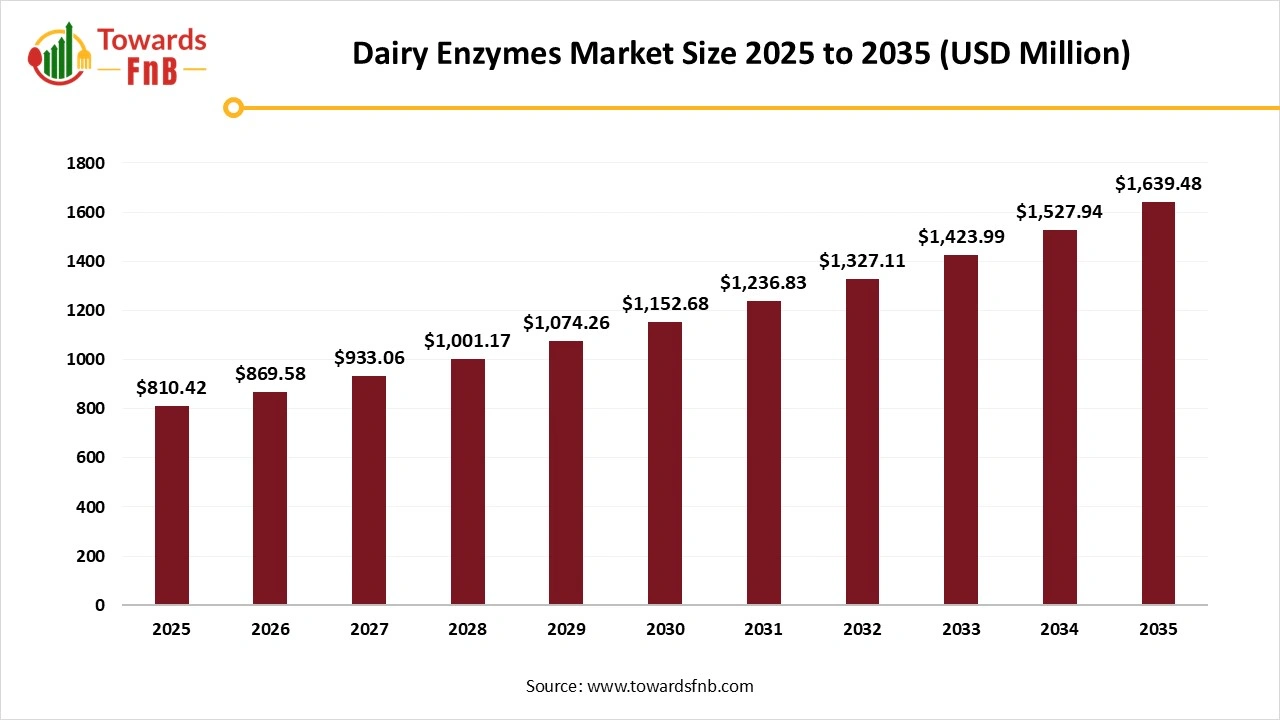
The global dairy enzymes market size estimated at USD 810.42 million in 2025 and is predicted to increase from USD 869.58 million in 2026 to reach nearly USD 1,639.48 million by 2035, with a CAGR of 7.3% during the forecast period from 2026 to 2035. Growing demand for lactose-free products and cheese production is driving the market.
| Study Coverage | Details |
| Growth Rate from 2026 to 2035 | CAGR of 7.3% |
| Market Size in 2026 | USD 869.58 Million |
| Market Size in 2027 | USD 933.06 Million |
| Market Size by 2035 | USD 1,639.48 Million |
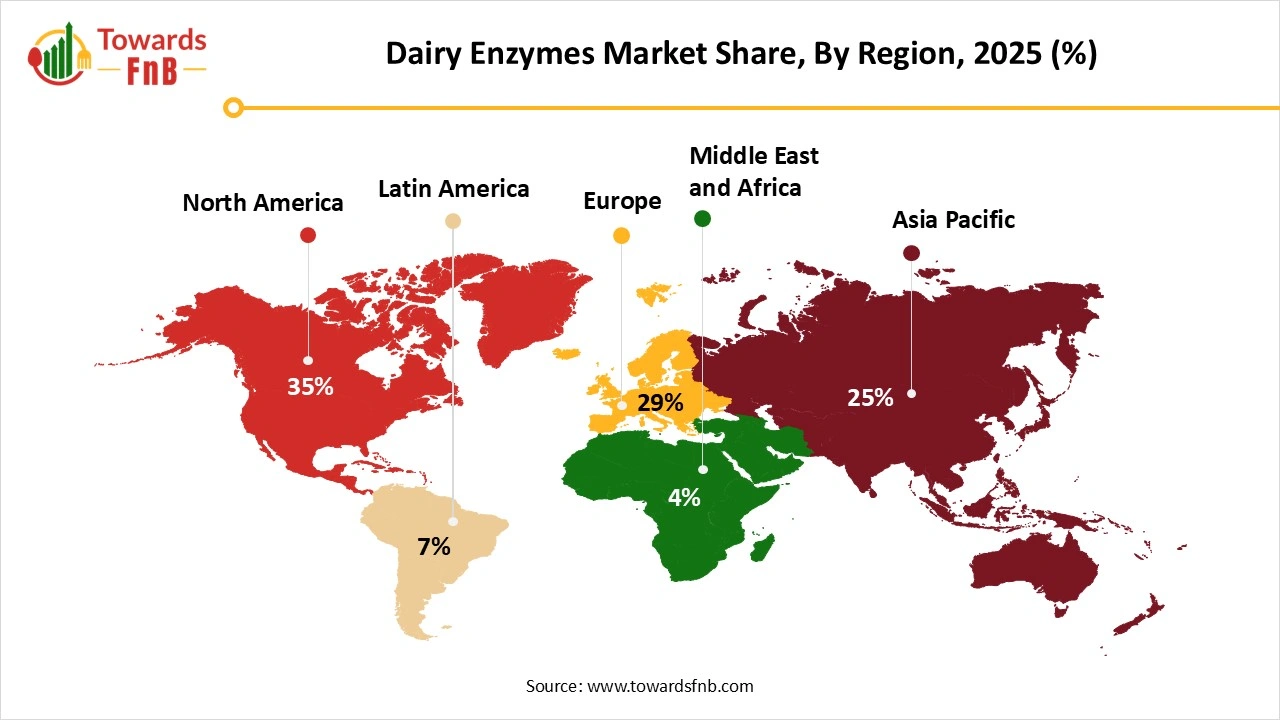
| Largest Market | North America |
| Base Year | 2025 |
| Forecast Period | 2026 to 2035 |
| Regions Covered | North America, Europe, Asia-Pacific, Latin America, and Middle East & Africa |
The dairy enzymes market is expected to grow noticeably. This growth is projected to be driven by the rising incidence of lactose intolerance and the growing demand for dairy products. Dairy enzymes are complex components that act as catalysts and are widely used in various dairy products. Furthermore, the rising development of plant-based and microbial enzymes is boosting market growth.
Advances in genetic engineering and synthetic biology are driving the development of enzymes characterized by improved stability, activity, and specificity. For example, engineered lactases active at elevated temperatures are rendering the production of lactose-free dairy more efficient. Furthermore, the incorporation of digital technologies such as artificial intelligence and machine learning is streamlining the optimization of enzyme applications. As the industry progresses toward cleaner labels, enhanced digestibility, and innovative dairy formats, enzyme technology will remain pivotal in shaping the next generation of dairy products.
Raw Material Procurement
Processing
Why did North America Dominate the Dairy Enzymes Market in 2025?
North America dominated the market in 2025, attributed to novel applications of dairy enzymes in areas such as protein fortification. The increasing consumption of dairy products and the penetration of milk into the food and beverages industry are also contributing significantly to this region's market growth. The United States and Canada are key players, focusing on enhancing product quality and extending shelf life. The competitive landscape is marked by major entities, including DuPont, Kraft Heinz, and Enzyme Development Corporation, which are investing in research and development to create innovative enzyme solutions that align with consumer preferences.
North America Dairy Enzymes Market Size 2025 to 2035
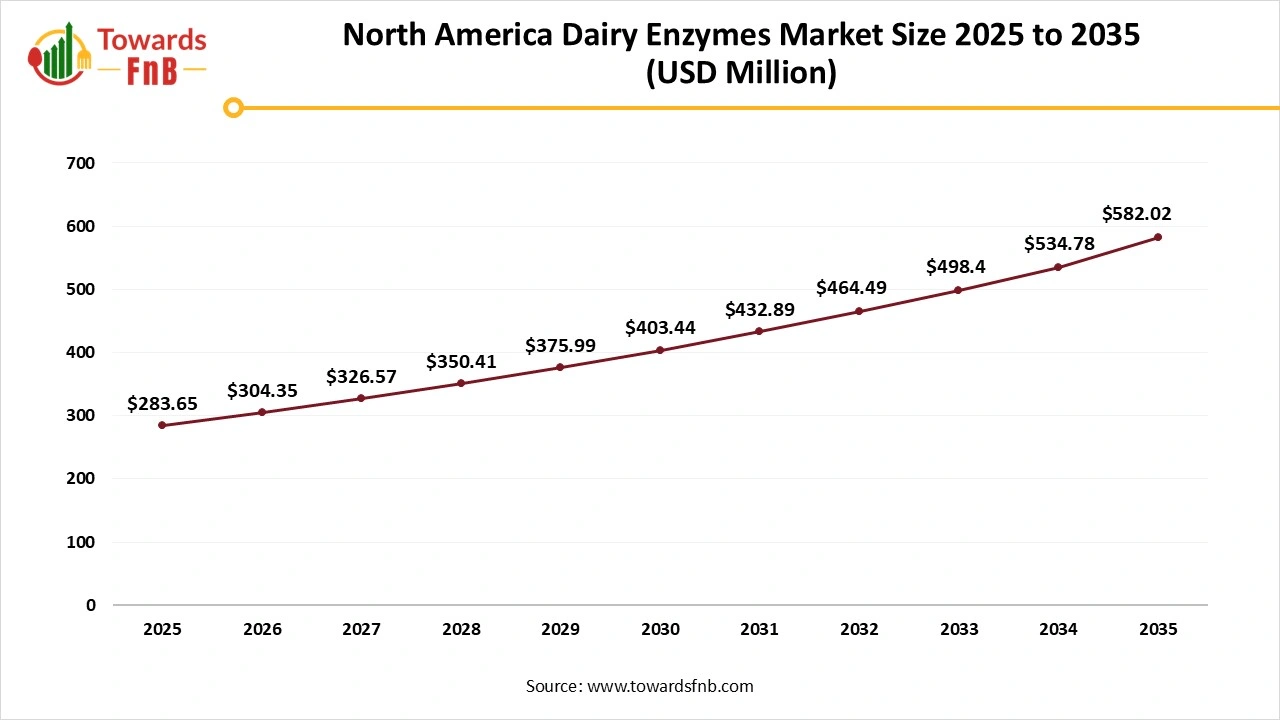
The North America dairy enzymes market size was calculated at USD 283.65 million in 2025 with projections indicating a rise from USD 304.35 million in 2026 to approximately USD 582.02 million by 2035, expanding at a CAGR of 7.45% throughout the forecast period from 2026 to 2035.
U.S. Dairy Enzymes Market Trends
The dairy enzymes market in the U.S. is growing significantly. This growth is underpinned by rising activities related to dairy enzymes in the U.S., an increasing demand for enzymatic dairy processing solutions, and growing applications across cheese production, yoghurt production, and milk processing. Factors such as lactose intolerance, vegan preferences, and the heightened focus on gut health necessitate innovation without sacrificing taste or texture. In this case, enzymes have emerged as gamechangers.
How Big is the U.S. Dairy Enzymes Market?
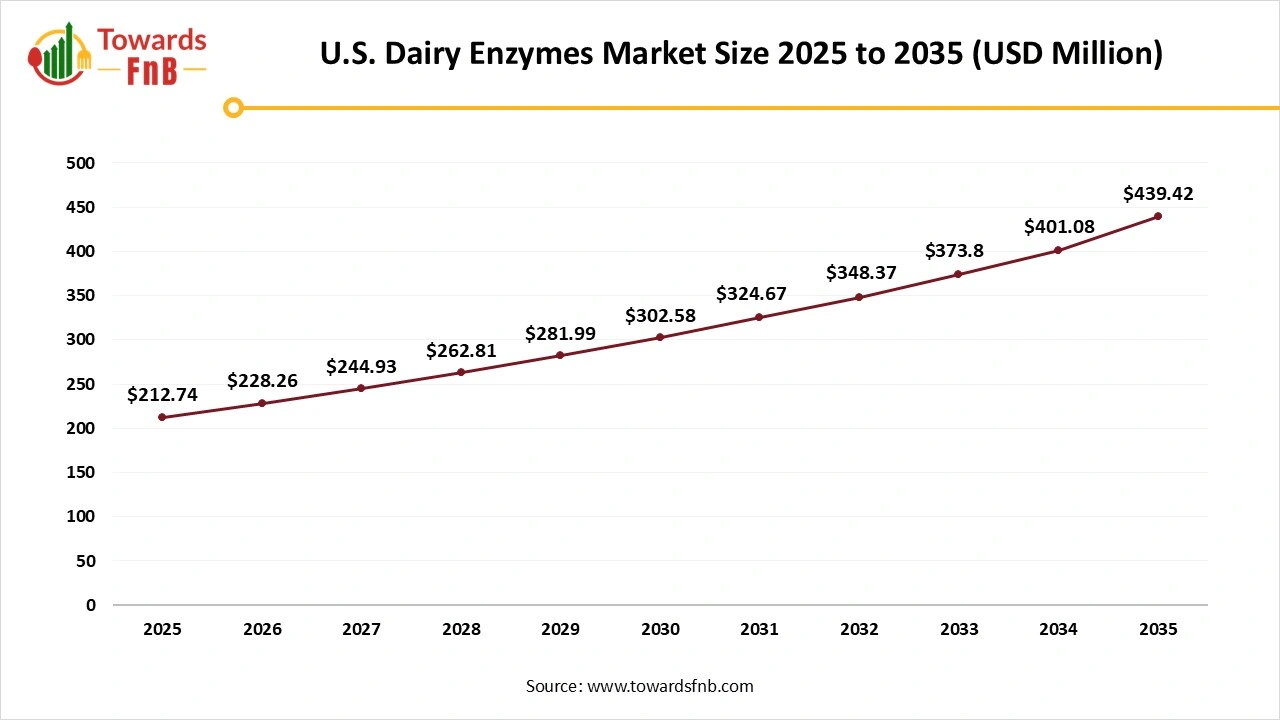
The U.S. dairy enzymes market size was valued at USD 212.74 million in 2025 and is expected to grow steadily from USD 228.26 million in 2026 to reach nearly USD 439.42 million by 2035, with a CAGR of 7.52% during the forecast period from 2026 to 2035.
Asia Pacific Dairy Enzymes Market Trends
Asia Pacific is projected to experience rapid growth in the dairy enzymes market, driven by urbanization. An increasing consciousness regarding health among the population is fostering demand for dairy ingredients. Moreover, the rising incomes of the middle class and shifts in dietary habits are supporting product demand and facilitating market growth. The expanding middle-class population in China and India is accelerating the adoption of Western dietary patterns, which include higher consumption of dairy products such as milk, cheese, and yoghurt. The amplified demand for convenience and value-added dairy products is further driving the need for dairy enzymes.
Indian Dairy Enzymes Market Trends
The Indian dairy enzymes market is witnessing substantial growth, propelled by an expanding dairy products sector. India is the world's largest milk producer and has made significant advancements in its dairy processing ecosystem. This sector encompasses a diverse range of products, including milk, butter, cheese, yogurt, ghee, flavored milk, lactose-free dairy products, and value-added items such as ice cream and yogurts. The growing health awareness among Indian consumers and an increasing understanding of lactose intolerance have further stimulated demand for lactose-free and functional dairy products. Continuous technological innovations in fermentation and enzyme production are also contributing to market growth.
European Dairy Enzymes Market Trends
The European dairy enzymes market is experiencing robust expansion driven by growing consumer demand for high-quality dairy products, technological advancements in enzyme development, and rising applications across cheese, yogurt, and other dairy segments. The market's growth is also supported by increasing health consciousness and the demand for efficient processing solutions among dairy manufacturers.
Germany Dairy Enzymes Market Trends
Germany's dairy enzymes market is growing due to technological innovation and a strong emphasis on quality and sustainability. Germany has a strong dairy industry and is adopting advanced enzymatic solutions to enhance process efficiency, product consistency, and nutritional profiles. Rising consumer awareness about natural ingredients and organic products is shaping market trends.
Product Class Insights
Why did Carbohydrase Segment Dominate the Dairy Enzymes Market in 2025?
The carbohydrase segment held the dominating share of the market in 2025. Carbohydrases, including amylase and cellulase, are essential in the production of various dairy products as they enhance texture, digestibility, and nutritional quality. For instance, an acid-optimum beta-D-galactoside galactohydrolase is derived from a non-GMO strain of Aspergillus oryzae. This enzyme hydrolyzes lactose into glucose and galactose, making it suitable for use in fermented products such as yogurt and in the production of galactooligosaccharides. This enzymatic action is particularly significant in addressing consumer needs related to lactose intolerance and in expanding the market potential of dairy products.
The Polymerases and Nucleases Segment is Projected to Experience Rapid Growth During the Forecast Period
Nucleases, including DNase and RNase, are utilized in dairy processing to eliminate nucleic acids from dairy-derived ingredients. The integration of nucleases and polymerases is increasingly prevalent in the contemporary dairy industry, primarily serving as advanced processing aids in the creation of high-value dairy ingredients and specialty products, as well as in the treatment of dairy waste.
Which Source Segment Dominated the Dairy Enzymes Market in 2025?
The plant segment dominated the market in 2025, driven by a growing consumer preference for plant-based protein as part of a healthy, environmentally conscious lifestyle. The choice of plant-based proteins is perceived as a meaningful contribution to sustainability. Enzymes such as papain (from papaya) and bromelain (from pineapple) serve as plant-derived proteolytic enzymes engaged in the hydrolysis of milk proteins, aligning with the goals of reducing reliance on traditional animal-based rennet.
The Animal and Micro-Organisms Segment is Anticipated to Experience Notable Growth in the Predicted Timeframe
Animal-derived rennet, which contains chymosin and pepsin, remains critical for milk coagulation in cheese production. The dairy industry is increasingly incorporating microbial enzymes to shorten processing times, decrease energy expenditure, and improve cost efficiency. Ongoing advancements in microbial dairy enzymes are necessary to support the growing demand for innovative, value-added dairy products on a global scale.
Which Application Segment Dominated the Dairy Enzymes Market in 2025?
The cheese segment held the largest share of the market in 2025. The escalating demand for healthy dairy products rich in nutritional value is a primary driver of the demand for cheese enzymes. Their ability to rapidly induce concentrated flavors while enhancing melt characteristics renders enzyme-modified cheese particularly valuable in various food industry applications, from snack manufacturing to ready meals production. This trend encourages the development of low-fat, lactose-free, and functional cheese products, stimulating innovation tailored to health-conscious consumers.
The Infant Formula Segment is Anticipated to Witness the Fastest Growth During the Forecast Period
With an increasing awareness of infant nutrition and a rise in the number of working parents, the demand for high-quality, scientifically formulated infant formulas is on the rise. Manufacturers are continually innovating to create formulas that closely replicate the composition of breast milk, addressing specific health concerns and dietary requirements within this critical market segment. For instance, protease are employed in the in vitro digestion of milk protein for use in infant formulas.
Biocatalysts Ltd
IFF
By Product Class
By Source
By Application
By Region





Principal Consultant
Vidyesh Swar, Senior Research Analyst at Towards Food & Beverages, specializes in market research, focusing on supply-demand evaluation, pricing analysis, alternative proteins, plant-based foods, and sustainable food technologies within the industry.
Learn more about Vidyesh Swar
Reviewed By
Aditi Shivarkar, with 14+ years in Food and Beverages market research, specializes in food, beverage, and eco-friendly packaging. She ensures accurate, actionable insights, driving Towards FnB's excellence in industry trends and sustainability.
Learn more about Aditi ShivarkarApril 2026
April 2026
April 2026
April 2026

Dairy Enzymes Market

 +1 804-441-9344
 Download Sample
 Schedule a Meeting