April 2026



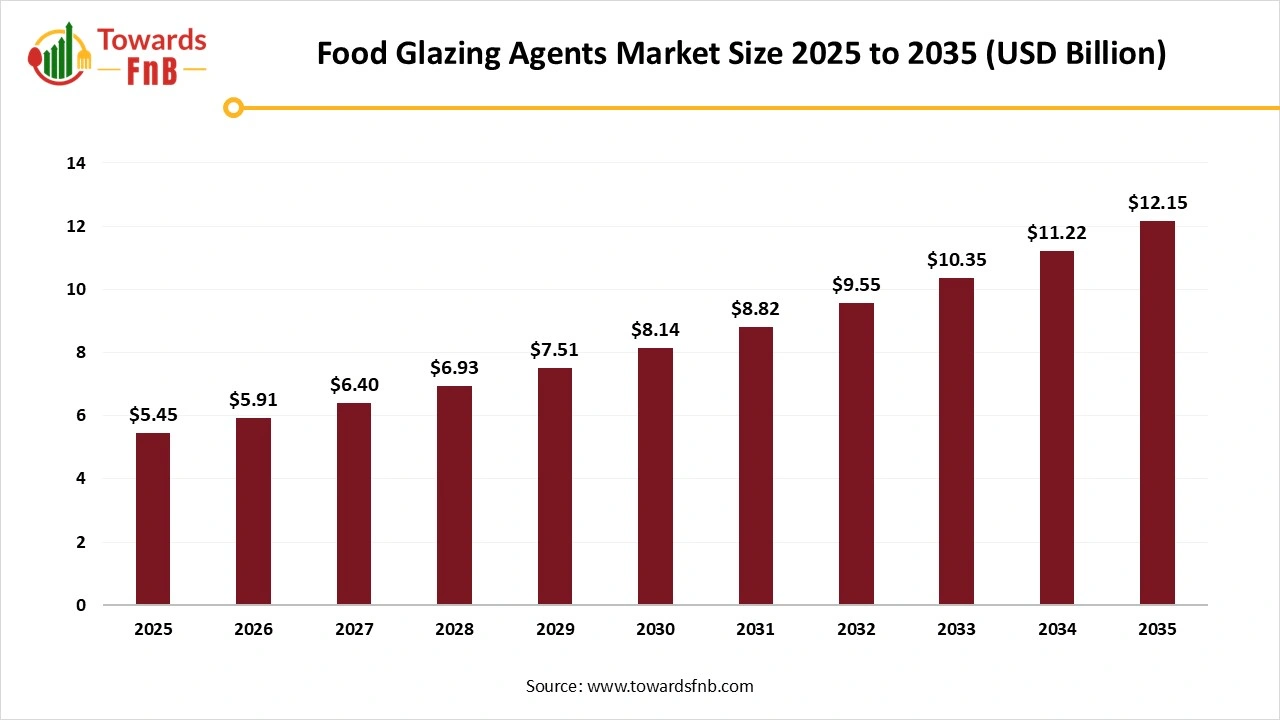
The global food glazing agents market size estimated at USD 5.45 billion in 2025 and is predicted to increase from USD 5.91 billion in 2026 to nearly reaching USD 12.15 billion by 2035, growing at a CAGR of 8.35% during the forecast period from 2026 to 2035. The high convenience food consumption and the increased use of sustainable ingredients drive market growth.
| Study Coverage | Details |
| Growth Rate from 2026 to 2035 | CAGR of 8.35% |
| Market Size in 2026 | USD 5.91 Billion |
| Market Size in 2027 | USD 6.40 Billion |
| Market Size by 2035 | USD 12.15 Billion |
| Largest Market | North America |
| Base Year | 2025 |
| Forecast Period | 2026 to 2035 |
| Regions Covered | North America, Europe, Asia-Pacific, Latin America, and Middle East & Africa |
Food glazing agents are materials or substances applied to the outside of food products to create a shiny texture. They possess characteristics like a superior moisture barrier, high stability, appearance enhancement, and uniform coating. The commonly used food glazing agents are beeswax, candelilla wax, oxidized polyethylene wax, carnauba wax, and microcrystalline wax. They are mainly used in food items like chewing gum, fresh fruits, pastries, jelly beans, buns, chocolates, and candies. Food glazing agents offer functional benefits like easy handling, protection, and enhanced aesthetics.
The food glazing agents market growth is driven by the expansion of convenience foods in North America, focus on creating protective barriers, rising manufacturing of natural coatings, higher demand for polished food items, growing convenience snacks, growth in biscuits consumption, and increased purchasing of high-quality products.
The food glazing agents market is experiencing key technological shifts driven by demand for enhanced visual appeal, food safety, and improved functionality. The incorporation of computer vision, IoT, nano-emulsions, bioengineered coating, and machine learning are technological innovation driven by demand for optimizing texture, heat stability, consistency, and uniformity. The AI integration is a robust shift in the market, driven by demand for clean-label glazing and lowering waste.
AI easily identifies irregularities in thickness and manufactures functional glazing agents. AI identifies properties of the ingredient and lowers the need for manual inspection. AI helps in controlling the thickness of coating and manufactures eco-friendly coating materials. AI ensures consistency in glazing agents and easily predicts fluctuations in ingredients. Overall, AI lowers the operational cost and optimizes the manufacturing process of food glazing agents.
Raw Material Procurement
Processing and Preservation
Quality Testing and Certifications
Why North America Dominated the Food Glazing Agents Market?
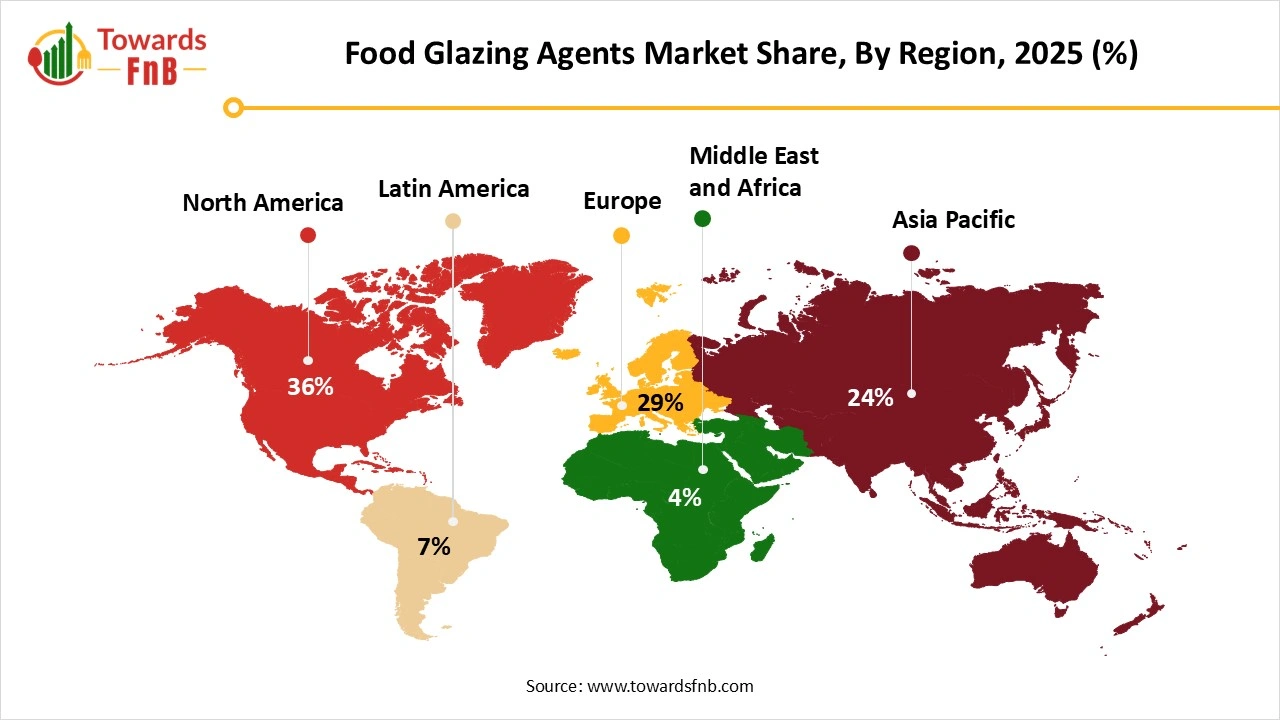
North America dominated the food glazing agents market in 2025. The massive presence of the meat processing industry and the growth in consumers seeking organic food increase demand for food glazing agents. The rise in RTD meals and the large-scale confectionery sector creates demand for food glazing agents. The stricter regulations for product quality and the trend of natural product consumption increase the adoption of food glazing agents. The rising development of new food glazing agents infrastructure drives the market growth.
North America Food Glazing Agents Market Size 2025 to 2035
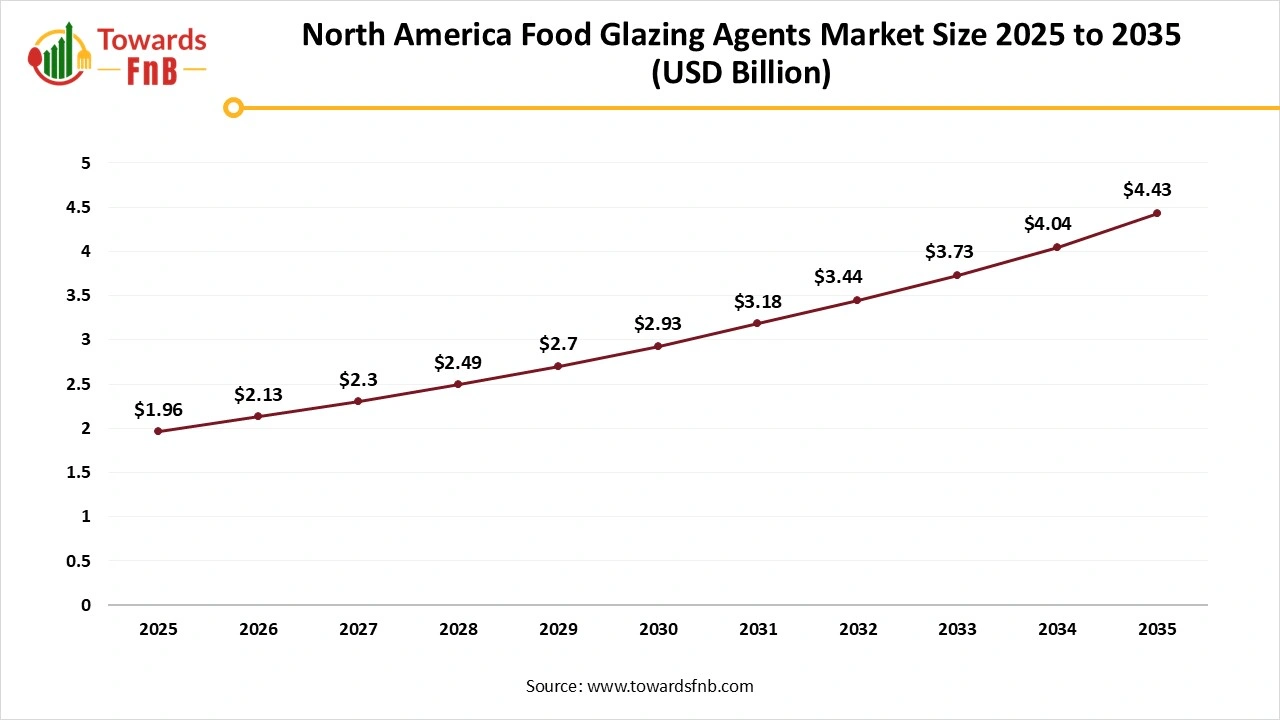
The North America food glazing agents market size was calculated at USD 1.96 billion in 2025 with projections indicating a rise from USD 2.13 billion in 2026 to approximately USD 4.43 billion by 2035, expanding at a CAGR of 8.50% throughout the forecast period from 2026 to 2035.
Gloss & Shining: Food Glazing Agents Influence on the United States
The United States is a major contributor to the market due to the huge processed food demand. The surging bakery market and the strong food safety standards increase demand for food glazing agents. The focus on enhancing the shelf life of RTE and the dominance of the food industry boost demand for food glazing agents. The popularity of organic glazing agents and the strong presence of companies like ADM & Cargill Inc. support the overall market growth.
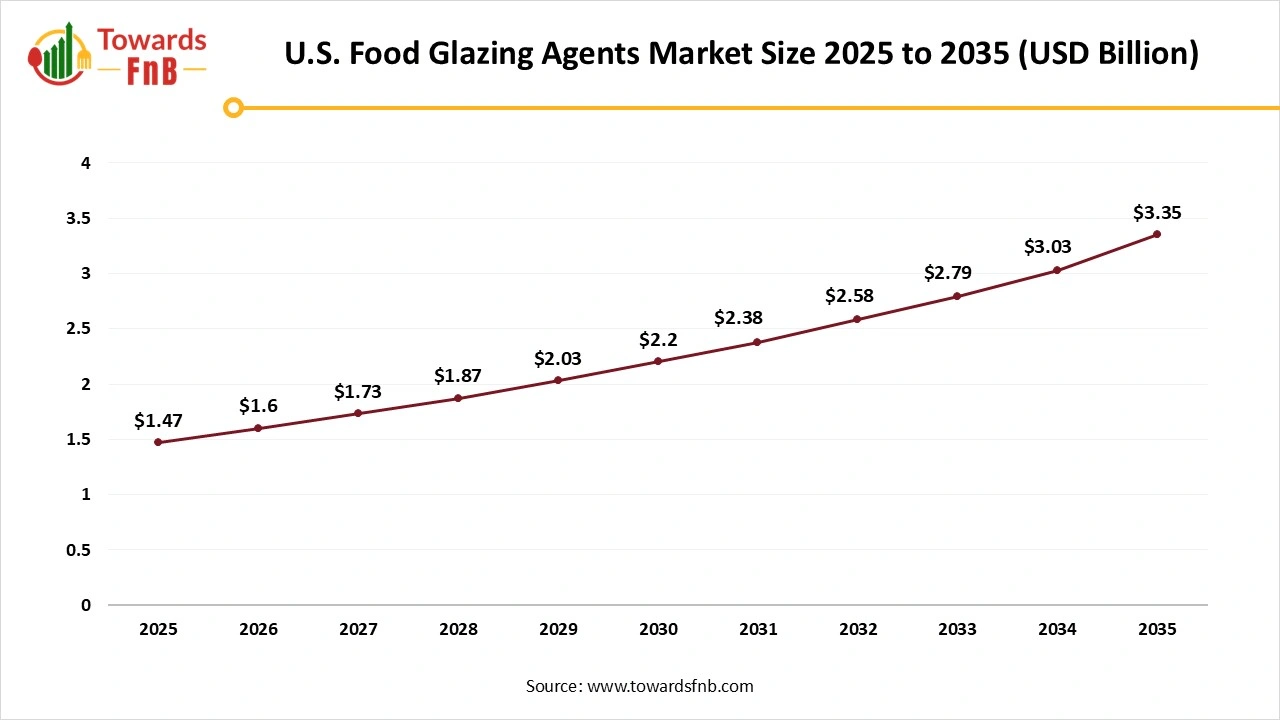
U.S. Food Glazing Agents Market Size 2025 to 2035
The U.S. food glazing agents market size was valued at USD 1.47 billion in 2025 and is expected to grow steadily from USD 1.6 billion in 2026 to reach nearly USD 3.35 billion by 2035, with a CAGR of 8.59% during the forecast period from 2026 to 2035.
Asia Pacific Food Glazing Agents Market Trends
Asia Pacific is experiencing the fastest growth in the market during the forecast period. The robust growth in the bakery industry in Japan and heavy snack consumption increases demand for food glazing agents. The expansion of retail networks and the increased use of glazing agents made up of plants help market growth. The increased investment in advanced coating by Singapore and the enhanced cold chain boost market expansion. The increased use of carnauba wax drives the overall market growth.
From Heritage to Modern Shine: China’s Role in Food Glazing Agents
China is the leading player in the market. The changing dietary patterns and the huge spending on Chinese confectionery increase demand for food glazing agents. The strong focus on food presentation and the growing demand for chocolate-coated products increases adoption of food glazing agents. The need to improve the storage life of processed food and the rise in purchasing of packaged items support the overall market growth.
Europe Food Glazing Agents Market Trends
Europe is substantially growing in the market. The dominance of gourmet confectionery and the vegan transition increases demand for food glazing agents. The well-established EFSA standards and high investment in innovative coatings help market expansion. The popularity of premium chocolates and the increased consumption of fresh fruits increases demand for food glazing agents, driving the overall market growth.
Refined Shine: Germany’s Excellence in Food Glazing Agents
Germany is robustly growing in the market. The trend of frozen food and the focus on improving the life of fresh produce increases demand for food glazing agents. The growing snacks market and the strong food service industry increases adoption of food glazing agents. The high availability of food glazing agent VivaCoat Natural supports the overall market growth.
Food Glazing Agents Market Share, By Ingredient Type, 2025 (%)
| Segments | Shares (%) |
| Stearic Acid | 35% |
| Beeswax | 10% |
| Carnauba Wax | 25% |
| Candelilla Wax | 5% |
| Shellac | 6% |
| Paraffin Wax | 4% |
| Others | 15% |
Stearic Acid Segment Dominated the Food Glazing Agents Market in 2025
The stearic acid segment dominated the market in 2025. The enhancement in chocolate texture and the creation of uniform coatings increase demand for stearic acid. The growing need for multifunctional additives and the increased use of biodegradable products increase demand for stearic acid. The focus on food products glossy finish and the need for a stable coating creates demand for stearic acid. The stearic acid characteristics, like cost-effectiveness, high processing efficiency, and multifunctional application drives market growth.
The Carnauba Wax Segment is the Fastest-Growing in the Market During the Forecast Period
The growing vegan demand and the focus on preventing the melting of candies increase demand for carnauba wax. The need to lower the weight loss in food items and the popularity of coated snacks increases adoption of carnauba wax. The development of high-end baking requires carnauba wax. The high heat resistance, moisture barrier, stability, and regulatory acceptance of carnauba wax support the overall market growth.
Food Glazing Agents Market Share, By Function, 2025 (%)
| Segments | Shares (%) |
| Coating Agents | 45% |
| Surface-Finishing Agents | 15% |
| Firming Agents | 20% |
| Film Formers | 12% |
| Others | 8% |
Coating Agents Segment Led the Food Glazing Agents Market in 2025
The coating agents segment held the largest revenue share in the market in 2025. The need to lower spoilage and the focus on preventing degradation of texture increase demand for coating agents. The development of attractive finishes and the focus on preventing sugar bloom increase the adoption of coating agents. The popularity of premium-looking products and the need to preserve food taste require coating agents, driving the overall market growth.
The Firming Agents Segment is Experiencing the Fastest Growth in the Market During the Forecast Period
The sogginess prevention in vegetables and the long-distance transport of fruits increase demand for firming agents. The development of well-structured food and the transition to plant-based ingredients increase the adoption of firming agents. The quality control and enhanced appearance of firming agents support the market growth.
Food Glazing Agents Market Share, By Application, 2025 (%)
| Segments | Shares (%) |
| Bakery | 40% |
| Confectionery | 25% |
| Meat | 6% |
| Poultry & Seafood | 4% |
| Fruits & Vegetables | 12% |
| Dietary Supplements | 5% |
| Others | 8% |
Bakery Segment Dominated the Food Glazing Agents Market in 2025
The bakery segment dominated the market in 2025. The focus on developing a fresh appearance for bakery product and the need to prevent oxidation increases demand for food glazing agents. The development of convenience baked goods and the popularity of pastries increases the adoption of food glazing agents. The development of custom-designed baked goods and the creation of high-quality bakery products drive market growth.
The Confectionery Segment is the Fastest-Growing in the Market During the Forecast Period
The need to enhance the color uniformity of confectionery items and focus on lowering stickiness increases demand for food glazing agents. The expanded gummies and the creation of high-gloss confectionery increases adoption of food glazing agents. The focus on the melting prevention of candies and the growth in packaged confectionery items support the overall market growth.
Puratos USA
By Ingredient Type
By Function
By Application
By Region





Principal Consultant
Vidyesh Swar, Senior Research Analyst at Towards Food & Beverages, specializes in market research, focusing on supply-demand evaluation, pricing analysis, alternative proteins, plant-based foods, and sustainable food technologies within the industry.
Learn more about Vidyesh Swar
Reviewed By
Aditi Shivarkar, with 14+ years in Food and Beverages market research, specializes in food, beverage, and eco-friendly packaging. She ensures accurate, actionable insights, driving Towards FnB's excellence in industry trends and sustainability.
Learn more about Aditi ShivarkarApril 2026
April 2026
April 2026
March 2026

Food Glazing Agents Market


 +1 804-441-9344
 Download Sample
 Schedule a Meeting