April 2026



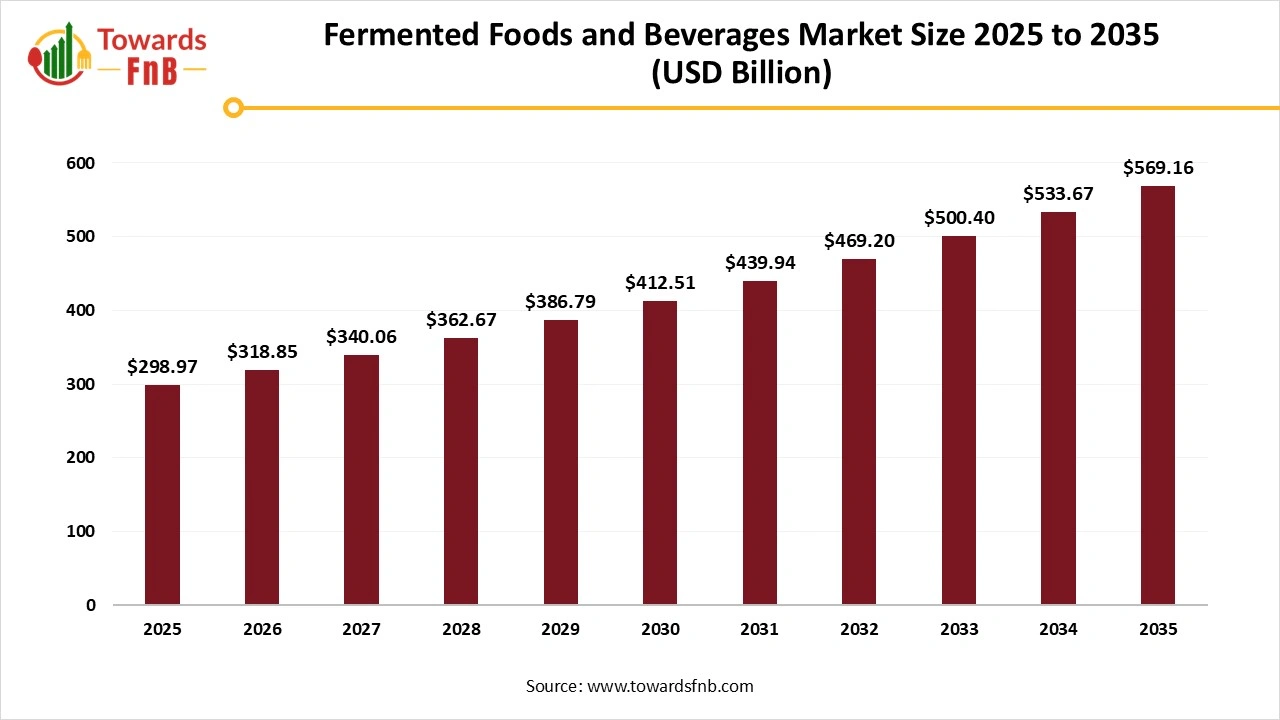
The global fermented foods and beverages market size estimated at USD 298.97 billion in 2025 and is predicted to increase from USD 318.85 billion in 2026 to reach nearly USD 569.16 billion by 2035, with a CAGR of 6.65% during the forecast period from 2026 to 2035. The strong focus on food preservation and the growing demand for probiotic drives market growth.
| Study Coverage | Details |
| Growth Rate from 2026 to 2035 | CAGR of 6.65% |
| Market Size in 2026 | USD 318.85 Billion |
| Market Size in 2027 | USD 340.06 Billion |
| Market Size by 2035 | USD 569.16 Billion |
| Largest Market | Asia Pacific |
| Base Year | 2025 |
| Forecast Period | 2026 to 2035 |
| Regions Covered | North America, Europe, Asia-Pacific, Latin America, and Middle East & Africa |
Fermented foods and beverages are the products made with using a fermentation process. The various types of fermentation are alcoholic, alkali, lactic acid, and acetic acid. The fermented foods and beverages offer benefits like a stronger immune system, weight management, enhanced digestive health, improved nutrition, and the management of heart health. The examples of fermented foods are sourdough bread, yogurt, dosa, miso, cheese, pickles, idli, kimchi, sour cream, and many more. The examples of fermented beverages are kefir, cider, kombucha, ginger beer, wine, and kvass.
The fermented foods and beverages market growth is driven by probiotic demand, health-conscious younger generation, food security needs, vegan growth, wellness focus, clean label trend, increased gut health awareness, expanded e-commerce, rise in innovative flavor, focus on functional nutrition, and high demand for fermented products in the Asia Pacific.
The fermented foods and beverages market is undergoing key technological shifts driven by demand for enhancing nutritional value, optimizing yield, and product consistency. Innovations like IoT sensors, smart fermentation, machine learning, biotechnology, smart packaging, and advanced precision are driven by demand for optimizing quality, functional outcomes, product consistency, and improving yield. The AI integration is the major innovation in the market, driven by demand for efficient fermentation and low manufacturing costs.
AI monitors the nutrient concentration and focuses on maximizing yield. AI easily predicts the outcomes of fermentation and minimizes batch failures. AI manufactures higher yields and detects spoilage in early stage. AI ensures product stability and detects adulteration in fermented beverages. AI predicts the aroma of fermented products and increases resource efficiency. Overall, AI optimizes the complex production methods.
Raw Material Procurement
Processing and Preservation
Quality Testing and Certifications
How Asia Pacific Dominated the Fermented Foods and Beverages Market?
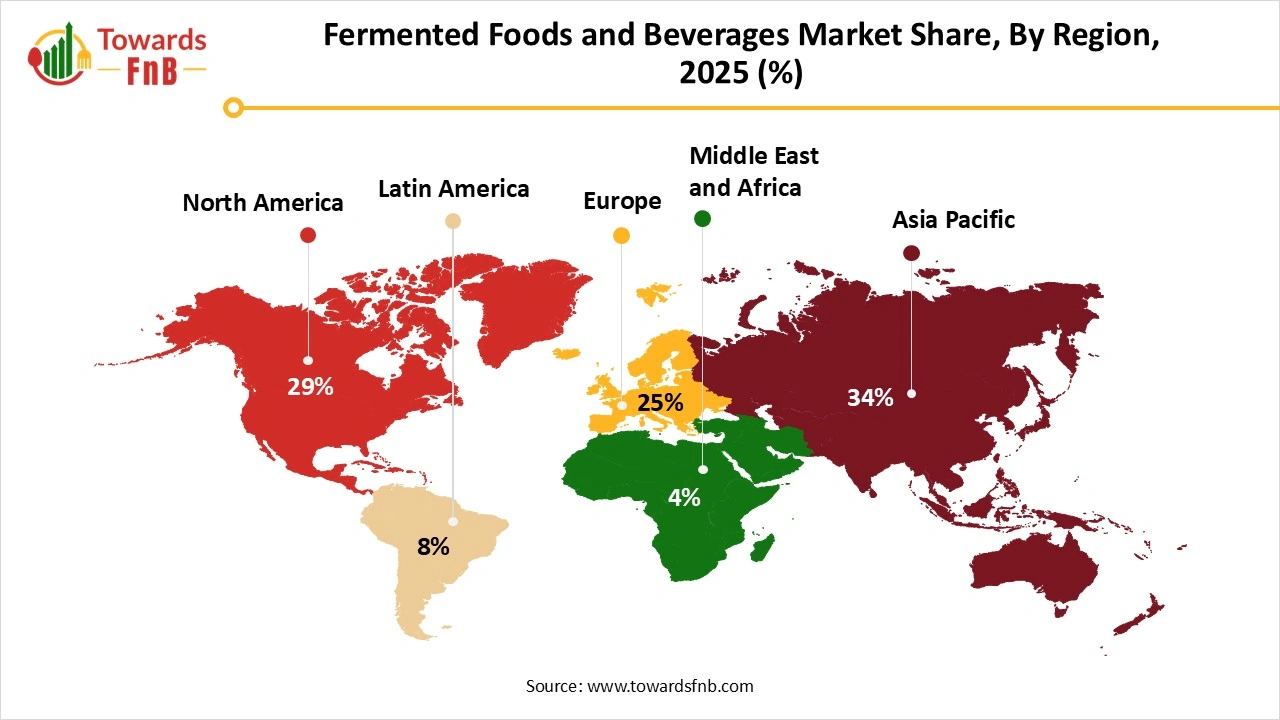
Asia Pacific dominated the fermented foods and beverages market in 2025. The high rate of fermented products consumption and the increased awareness about gut health increase demand for fermented foods and beverages. The changing consumption patterns of food and the rise in functional food require fermented foods and beverages. The growing consciousness about immunity and the increased awareness of health-focused products increase demand for fermented foods and beverages, driving the overall market growth.
Asia Pacific Fermented Foods and Beverages Market Size 2025 to 2035
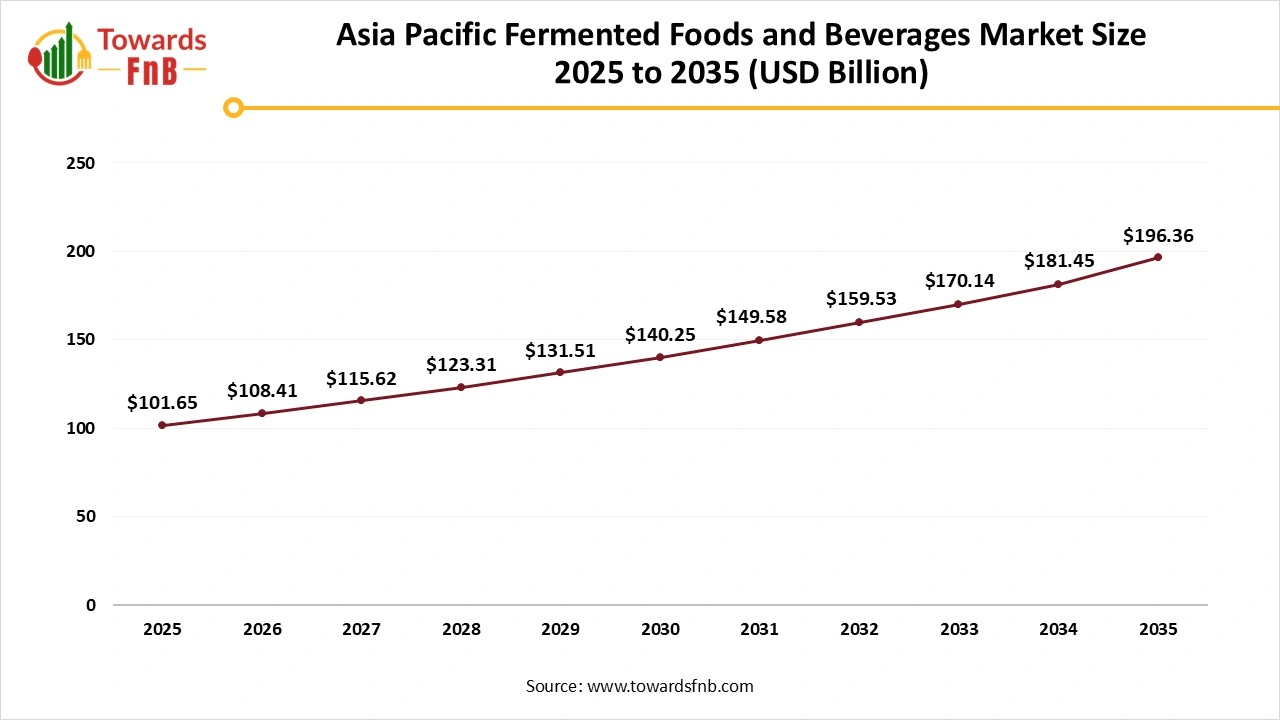
The Asia Pacific fermented foods and beverages market size was calculated at USD 101.65 billion in 2025 with projections indicating a rise from USD 108.41 billion in 2026 to approximately USD 196.36 billion by 2035, expanding at a CAGR of 6.81% throughout the forecast period from 2026 to 2035.
From Culture to Science: Rise of Fermented Foods and Beverages in India
India is rapidly growing in the market. The cultural significance of fermented foods and the high availability of fermented staples help market expansion. The robustly growing Indian alcohol industry and the growing dairy modernization increase demand for fermented foods and beverages. The surging consumption of lassi, dhokla, pickles, & other products and the high availability of packaged dosa batter support the market growth.
North America Fermented Foods and Beverages Market Trends
North America is experiencing the fastest growth in the market during the forecast period. The strong focus on boosting digestive health and the increased awareness about the benefits of probiotics consumption increase demand for fermented foods and beverages. The heavy consumption of kombucha and the high preference for natural fermentation increase the production of fermented foods & beverages. The increased spending on fermented beverages and the high production of probiotic-rich foods drive market growth.
Role of Fermented Foods and Beverages in the United States
The United States robustly contributes to the market. The booming health consciousness and the high priority towards digestive health increase demand for fermented foods and beverages. The popularity of fermented drinks and the increased adoption of environmentally friendly diets increase the adoption of fermented foods and beverages. The high availability of fermented products in retail and improved nutritional profiles support the market growth.
Fermented Foods and Beverages Market Share, By Product Type, 2025 (%)
| Segments | Shares (%) |
| Fermented Dairy Products | 45% |
| Fermented Alcoholic Beverages | 25% |
| Fermented Non-Alcoholic Beverages | 12% |
| Fermented Vegetables | 5% |
| Fermented Soy Products | 8% |
| Fermented Cereals & Grains | 3% |
| Others | 2% |
Why the Fermented Dairy Products Segment Dominates the Fermented Foods and Beverages Market?
The fermented dairy products segment dominated the fermented foods and beverages market in 2025. The growing rate of lactose intolerance and the increased demand for health-boosting products increase demand for fermented dairy products. Consumer awareness about overall nutrition and a strong focus on gut-friendly diets increases demand for fermented dairy products. The integration of yogurt in daily routines and the high interest in fermented dairy drive the market growth.
The Fermented Non-Alcoholic Beverages Segment is the Fastest-Growing in the Market During the Forecast Period
The increased knowledge about probiotic sources and the shift towards low-calorie foods increase demand for fermented non-alcoholic beverages. The rising number of wellness-focused consumers and the transition to eco-friendly options increase demand for beverages like kombucha and others. The growing accessibility of fermented non-alcoholic beverages in online retail boosts market growth.
Fermented Foods and Beverages Market Share, By Microorganism Type, 2025 (%)
| Segments | Shares (%) |
| Bacteria | 60% |
| Yeast | 30% |
| Mold | 10% |
How did the Bacteria Segment hold the Largest Share in the Fermented Foods and Beverages Market?
The bacteria segment held the largest revenue share in the fermented foods and beverages market in 2025. The strong focus on natural antimicrobial preservatives and anti-inflammatory benefits increases demand for bacteria. The need to enhance food digestibility and mineral bioavailability increases demand for bacteria like Lactobacillus and others. The texture development of fermented products and large-scale production requires bacteria, driving the overall market growth.
The Yeast Segment is Experiencing the Fastest Growth in the Market During the Forecast Period
The strong focus on nutritional enhancement and treating gastrointestinal disorders requires yeast. The expanded bakery development and craft beverage trends increase demand for yeast. The focus on natural fermentation and the need to enhance savory flavors requires yeast, supporting the overall market growth.
Which Distribution Channel Dominated the Fermented Foods and Beverages Market?
The supermarkets & hypermarkets segment dominated the fermented foods and beverages market in 2025. The increased popularity of local fermented products and daily purchasing habits increases demand for supermarkets & hypermarkets. The focus on organized shelves and consumers need to ensure product freshness increases purchasing from supermarkets & hypermarkets. The regular discounts, international product availability, accessible layout, and loyalty programs in supermarkets & hypermarkets drive the market growth.
The Online Retail/E-Commerce Segment is the Fastest-Growing in the Market During the Forecast Period
The focus on avoiding in-person shopping and the growing adoption of mobile technology increase demand for online retail. The availability of niche products and the high availability of DTC websites increase demand for online retail. The availability of safe delivery and sustaining sales on e-commerce supports the overall market growth.
Fermented Foods and Beverages Market Share, By End-Use, 2025 (%)
| Segments | Shares (%) |
| Household Consumption | 55% |
| Food Service/HoReCa | 20% |
| Food Processing Industry | 25% |
How did the Household Consumption Segment hold the Largest Share in the Fermented Foods and Beverages Market?
The household consumption segment held the largest revenue share in the fermented foods and beverages market in 2025. The integration of fermented products in daily meals and the high consumption of sourdough bread boost market expansion. The increased production of kombucha at residential settings and the deeply rooted traditions in Asian countries increase the consumption of fermented food & beverages. The daily dietary needs and the rising preparation of food in houses drive the overall market growth.
The Food Service/HoReCa Segment is Experiencing the Fastest Growth in the Market During the Forecast Period
The increased preparation of flexitarian diets and the surge in the creation of cocktails increase demand for fermented ingredients. The focus on creativity during menu curation and the restaurant's focus on lowering vegetable trimming waste increases demand for fermented food & beverages. The popularity of cultured desserts and the growth in on-the-go nutrition support the overall market growth.
wildbrine
Cleveland
Lipton
Kanji Company
By Product Type
By Microorganism Type
By Distribution Channel
By End-Use/Application
By Region




Principal Consultant
Vidyesh Swar, Senior Research Analyst at Towards Food & Beverages, specializes in market research, focusing on supply-demand evaluation, pricing analysis, alternative proteins, plant-based foods, and sustainable food technologies within the industry.
Learn more about Vidyesh Swar
Reviewed By
Aditi Shivarkar, with 14+ years in Food and Beverages market research, specializes in food, beverage, and eco-friendly packaging. She ensures accurate, actionable insights, driving Towards FnB's excellence in industry trends and sustainability.
Learn more about Aditi ShivarkarApril 2026
April 2026
April 2026
April 2026

Fermented Foods and Beverages Market


 +1 804-441-9344
 Download Sample
 Schedule a Meeting