April 2026



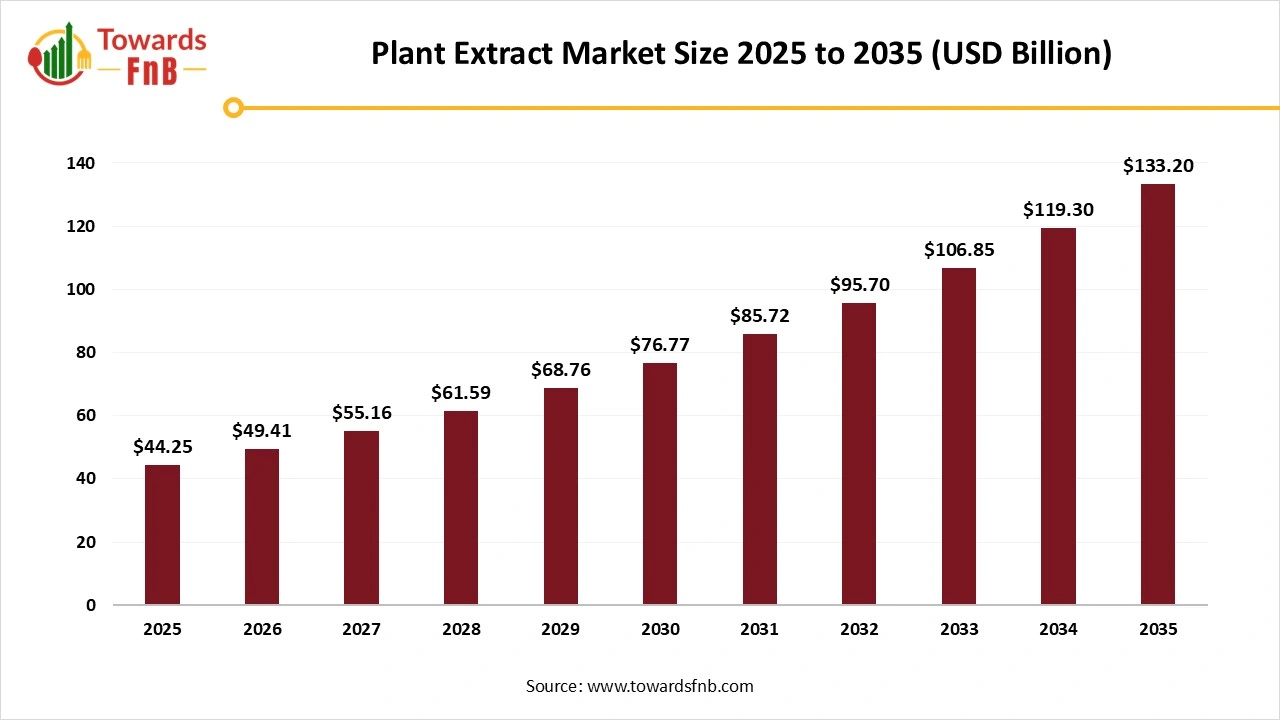
The global plant extracts market size reached at USD 44.25 billion in 2025 and is anticipated to increase from USD 49.41 billion in 2026 to an estimated USD 133.20 billion by 2035, witnessing a CAGR of 11.65% during the forecast period from 2026 to 2035. The growing demand for chemical-free products and the surge in herbal medicines drive market growth.
| Study Coverage | Details |
| Growth Rate from 2026 to 2035 | CAGR of 11.65% |
| Market Size in 2026 | USD 49.41 Billion |
| Market Size in 2027 | USD 55.16 Billion |
| Market Size by 2035 | USD 133.20 Billion |
| Largest Market | North America |
| Base Year | 2025 |
| Forecast Period | 2026 to 2035 |
| Regions Covered | North America, Europe, Asia-Pacific, Latin America, and Middle East & Africa |
Plant extract is a product developed using plant tissues. Plant extract is extracted using diverse techniques like percolation, infusion, SFE, microwave-assisted extraction, PLE, hydrodistillation, maceration, and UAE. The components of plant extracts are terpenoids, saponins, polyphenols, polysaccharides, and alkaloids. It is widely used in anti-aging products, biopesticides, nutraceuticals, natural drugs, acne treatment, the food industry, bioherbicides, and dietary supplements. The common plant extracts are Ginkgo Biloba, garlic extract, fennel seed extract, hibiscus, turmeric, and many more.
The plant extracts market is growing due to the growing demand for immune-supporting ingredients, the development of natural colorants, the rise in fortified beverages, the shift to vegan diets, the growth in homeopathy medicine, the development of cosmetic formulations, enhanced extraction methods, growing income levels, and the rise in sourcing of natural products.
The plant extracts market is undergoing key technological shifts driven by demand for better sustainability, increased yield, and enhanced bioavailability. The innovations like blockchain, nanoencapsulation, digital twins, upcycling, phytochemical mapping, and IoT enhance the bioavailability and transparency of plant extracts. The AI integration is one of the prominent shifts in the market, driven by demand for maximizing the yield of bioactive compounds.
AI optimizes the process of extraction and supplies raw material consistently. AI rapidly identifies new phytochemicals and lowers the time for R&D. AI maintains the product quality and easily detects adulteration in plant extracts. AI maximizes the purity of plant extracts and develops new formulations of plant extracts. AI lowers the usage of chemicals and optimizes the time required for harvesting. Overall, AI speeds up the formulation of the final product.
Raw Material Procurement
Processing and Preservation
Quality Testing and Certifications
Why North America Dominated the Plant Extracts Market?
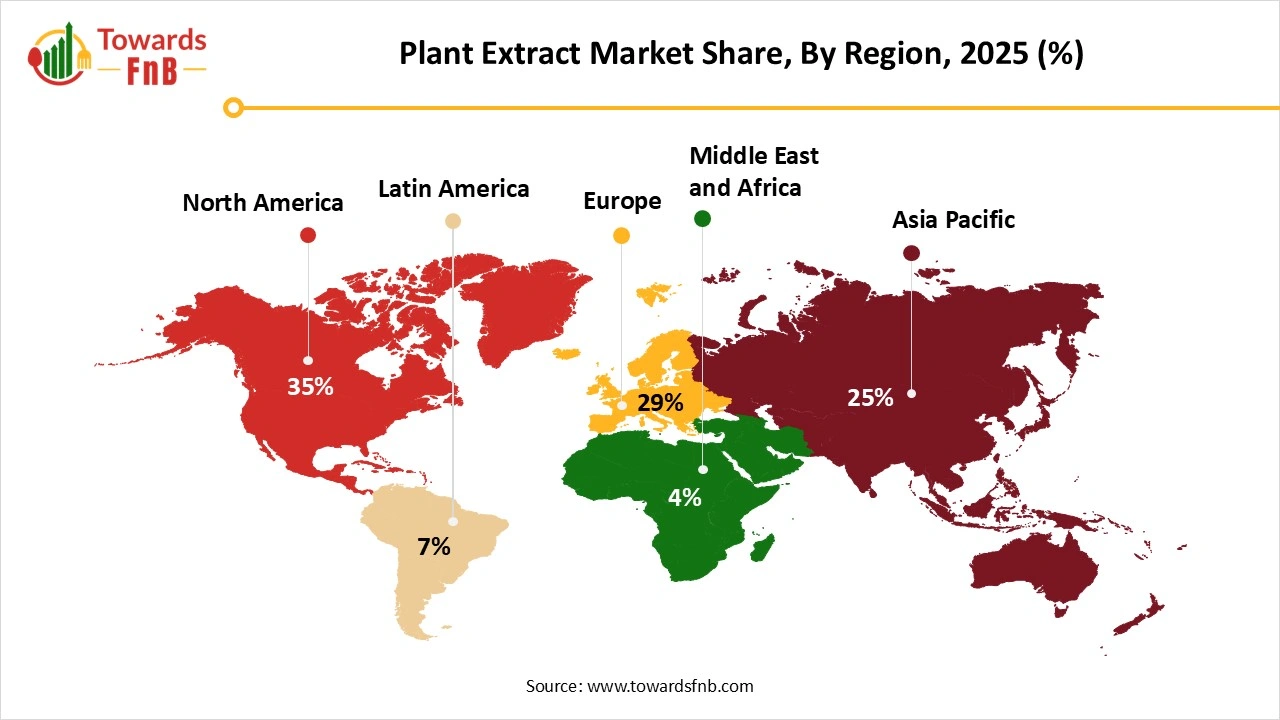
North America dominated the market with a 35% share 2025. The higher natural product demand and the increased awareness of wellness increase demand for plant extracts. The surge in plant-based alternatives and the extensive pharma industry increases the adoption of plant extracts. The increased use of supercritical fluid extraction and the mature plant extracts market help market expansion. The robustly growing plant-based beverages drive the overall market growth.
North America Plant Extracts Market Size 2026 to 2035
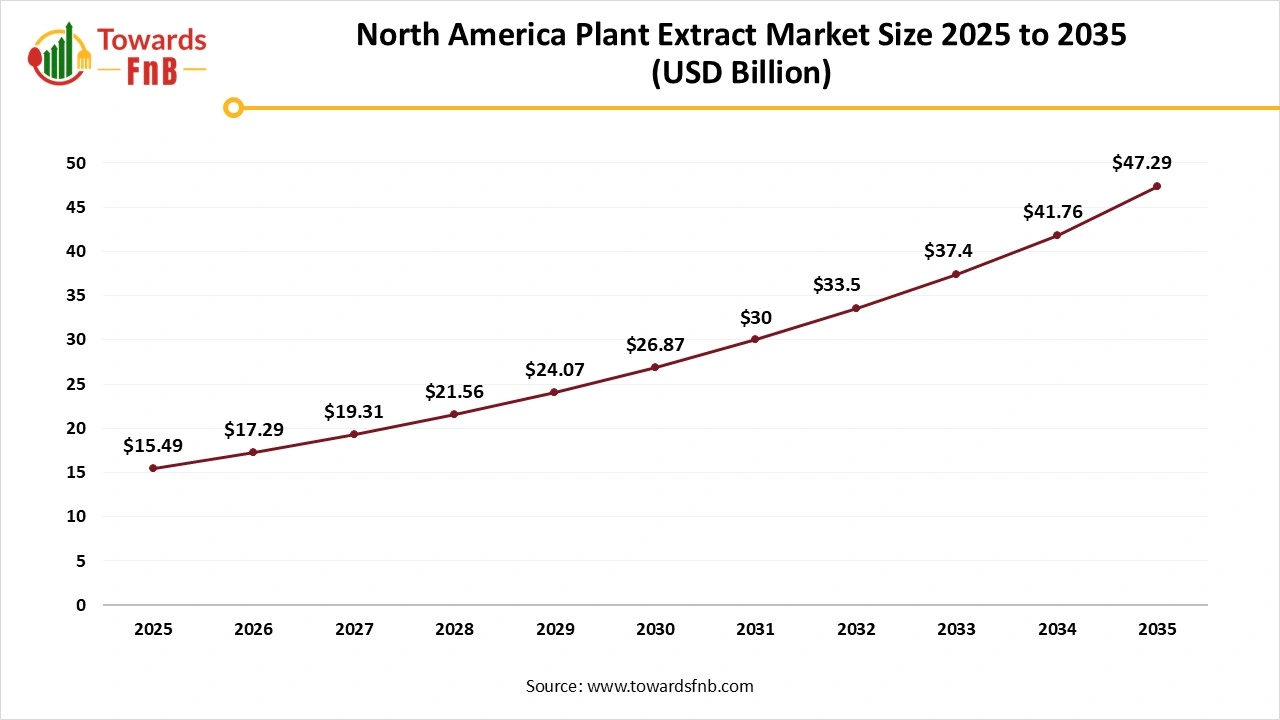
The North America plant extracts market size was calculated at USD 15.49 billion in 2025 with projections indicating a rise from USD 17.29 billion in 2026 to approximately USD 47.29 billion by 2035, expanding at a CAGR of 11.81% throughout the forecast period from 2026 to 2035.
United States Role in Plant Extracts
The United States is a prominent player in the market. The higher utilization of cosmetic products and the robust growth in health foods increases adoption of plant extracts. The popularity of advanced extraction technology and the heavy investment in plant based supplements boost market growth. The strong companies like Nature’s Way and Givaduan support the overall market growth.
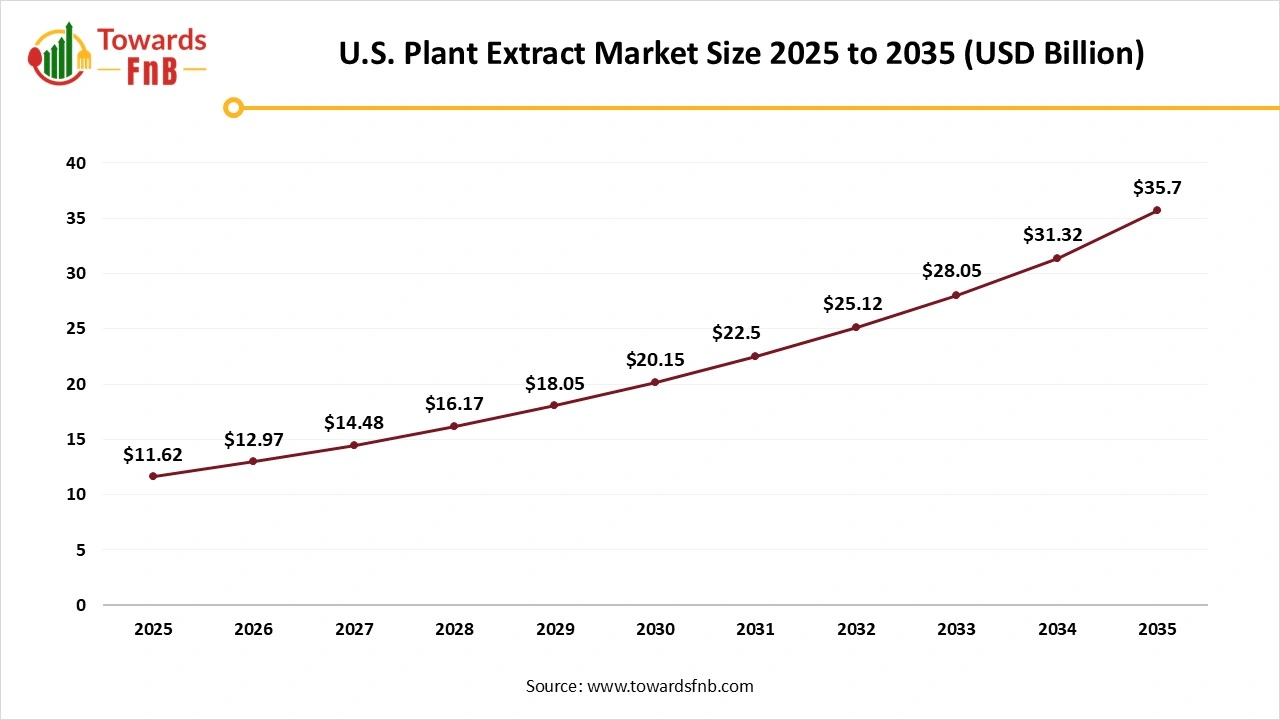
U.S. Plant Extracts Market Size 2026 to 2035
The U.S. plant extract market size was valued at USD 11.62 billion in 2025 and is expected to grow steadily from USD 12.97 billion in 2026 to reach nearly USD 35.7 billion by 2035, with a CAGR of 11.88% during the forecast period from 2026 to 2035.
Asia Pacific Plant Extracts Market Trends
Asia Pacific is experiencing the fastest growth in the market with a 12% CAGR during the forecast period. The increased awareness of herbal supplements and the high availability of traditional cultural medicine increase demand for plant extracts. The large population and the tradition of Ayurveda increase the use of plant extracts. The low-cost plant extracts manufacturing base and the high utilization of traditional herb drives the overall market growth.
Rise of Plant Extracts in China
China is a robust contributor to the market. The popularity of traditional herbal medicine and the robust growth in industrial activities increase demand for plant extracts. The focus on clean-label nutraceuticals and the well-developed biotech industry increases demand for plant extracts. The rich biodiversity and faster plant extract production support the overall market growth.
China exported 569 shipments of herbal extracts.
The Essential Oils Segment Dominated the Plant Extracts Market In 2025 With a 30% Share
The essential oils segment dominated the market with a 30% share in 2025 and expected to be the fastest growing with the CAGR of 13% during the forecast period. Due to the increasing use of aromatherapy. The increased popularity of natural fragrance cosmetics products and the move to vegan products increases demand for essential oil. The development of perfumes and the awareness of natural flavoring agents drive the market growth.
The herbal extracts segment held the second largest share of 20% in 2025 due to the growing consumption of herbal supplements. The higher need for immunity-boosting ingredients and awareness of the anti-inflammatory benefits of supplements increase the use of herbal extracts. The growing incorporation of herbal extracts in traditional medicine drives the market growth.
The oleoresins segment held the third largest share of 18% in 2025 due to higher use in food flavorings. The rise of pharmaceutical formulations and the processed food manufacturing uses oleoresins. The superior functionality, advanced extraction, quality consistency, and reduced storage space of oleoresins support the market growth.
The phytochemicals segment held the fourth largest share of 15% in 2025 due to its bioactive health properties. The growth in customized nutrition and the popularity of natural skincare products increases the use of phytochemicals. The expansion of pharmaceuticals and the management of chronic diseases increases demand for phytochemicals, supporting the overall market growth.
The Liquid Extract Segment Dominated the Plant Extracts Market In 2025 With a 45% Share
The liquid extract segment dominated the market with a 45% share in 2025 and expected to be the fastest growing with the CAGR of 11% during the forecast period due to its ease of formulation. The ease of blending in diverse end-use formulations and focus on delivering active ingredients increases demand for liquid extract. The less processing, faster absorption, manufacturing convenience, and superior functional performance of liquid extract drive market growth.
The powder extract segment held the second largest share of 30% in 2025 due to its high shelf life. The heavy demand for functional food that provide immune support and preventive healthcare increases demand for powder extract. The trending dietary supplements and the expanding clean beauty increases demand for powder extract. The high stability, purity, and increased R&D of powder extract support the market growth.
The oil-based extract segment held the third largest share of 15% in 2025 due to the growing demand for natural oils in cosmetics. The surge in anti-acne products and the booming food flavoring increases demand for oil-based extracts. The expansion of haircare and the development of wellness products increases demand for oil-based extracts. The surging use of essential oils supports the market growth.
The dry extract segment held the fourth largest share of 10% in 2025 due to the increased use in packaged food products. The shift away from synthetic preservatives and the rise in the use of natural colorants across end-use industries increases demand for dry extract. The superior stability, logistical benefits, and high efficiency of dry extract boost market growth.
The Food & Beverages Segment Dominated The Plant Extracts Market In 2025 With a 35% Share
The food & beverages segment dominated the market with a 35% share in 2025 due to the rise in demand for natural flavoring. The clean-label preservation and focus on increasing products shelf life increase demand for plant extracts. The development of plant-based dairy products and the increased use of botanical ingredients in culinary increases demand for plant extracts. The natural food coloring drives the market growth.
The cosmetics and personal care segment held the second largest share of 25% in 2025 and is expected to grow at the fastest CAGR of 11% during the forecast period and due to surging consumer demand for natural skincare. The popularity of vegan-labelled products and the rise of sun-protection agents increase demand for plant extracts. The increasing use of plant-based ingredients in haircare solutions and the growth in anti-aging solutions increases adoption of plant extracts, supporting the overall market growth.
The pharmaceuticals segment held the third largest share in the market of 20% in 2025. The strong focus on lowering the adverse effects of pharmaceuticals and the surge in plant-based medicines increase demand for plant extracts. The focus on sustainability in pharmaceutical firms and the popularity of plant-based therapeutic compounds drive market growth.
The nutraceuticals and dietary supplements segment held the fourth largest share in the market of 15% in 2025 due to surging health awareness. The growth in plant-based nutraceuticals and the increasing demand for nutritional deficiencies product increases demand for plant extracts. The rise in TCM medicines and the preference for non-genetically modified products require plant extracts, supporting the overall market growth.
The Solvent Extraction Segment Dominated the Plant Extracts Market In 2025 With a 28% Share
The solvent extraction segment dominated the market with a 28% share in 2025 due to its mass production cost-efficiency. The need to enhance final product stability and the adjustment in solvent polarity increases demand for solvent extraction. The high concentration, broad applicability, high yield, easy scaling up, and process stability in solvent extraction drive market growth.
The steam distillation segment held the second largest share of 22% in 2025 due to growing essential oil extraction. The growing demand for synthetic-free ingredients and the shift towards eco-friendly processes increase demand for steam distillation. The lower capital investment and the high-purity of steam distillation support the market growth.
The supercritical CO2 extraction segment held the 20% market share in 2025 and expected to grow at the fastest CAGR of 12% in the market during the forecast period due to its eco-friendly profile. The growing extraction of high-value oils and the rise in spice extraction increase demand for supercritical CO2 extraction. The high selectivity, recyclability, faster extraction times, high purity, and high throughput of supercritical CO2 extraction support the overall market growth.
The cold pressing or mechanical segment held the 15% market share in 2025. The development of premium skincare and the focus on preserving the integrity of raw materials increases use of cold pressing or mechanical extraction. The enhanced flavor, excellent nutrient retention, and premium quality of cold pressing or mechanical extraction drive the market growth.
The Leaves Segment Dominated the Plant Extracts Market In 2025 With a 30% Share
The leaves segment dominated the market with a 30% share in 2025 due to increasing use in diverse bioactives. The production of natural health products and the development of skin-rejuvenating formulations increases use of leaves. The diverse medicinal formulations use leaves. The ease of harvesting, versatility, and sustainability of leaves drive market growth.
The roots & rhizomes segment held the second largest share of 20% in 2025 due to the increasing use of roots in traditional medicines. The preparation of functional flavors and the rise in supplement consumption increase demand for roots & rhizomes. The development of healthy drinks and the huge demand for natural health product uses roots & rhizomes. The high therapeutic properties and improved extraction of roots & rhizomes drive market growth.
The fruits segment held the 15% market share in 2025 and expected to grow at the fastest CAGR of 12% during the forecast period. due to its antioxidant properties. The expansion of dietary supplements and the rise in natural preservation increase demand for fruits. The burgeoning functional beverages industry supports the overall market growth.
The barks & stems segment held the 15% market share in 2025, due to the higher demand for specialty pharmaceutical extracts. The development of skin health products and natural pharmaceuticals increase use of barks & stems. The high bioactive content and therapeutic applications of barks & stems drive market growth.
Symrise
Purple Life Sciences
Botanic Healthcare
By Product Type
By Form
By Application
By Extraction Technique
By Source
By Region





Principal Consultant
Vidyesh Swar, Senior Research Analyst at Towards Food & Beverages, specializes in market research, focusing on supply-demand evaluation, pricing analysis, alternative proteins, plant-based foods, and sustainable food technologies within the industry.
Learn more about Vidyesh Swar
Reviewed By
Aditi Shivarkar, with 14+ years in Food and Beverages market research, specializes in food, beverage, and eco-friendly packaging. She ensures accurate, actionable insights, driving Towards FnB's excellence in industry trends and sustainability.
Learn more about Aditi ShivarkarApril 2026
April 2026
April 2026
April 2026

Plant Extracts Market


 +1 804-441-9344
 Download Sample
 Schedule a Meeting