April 2026



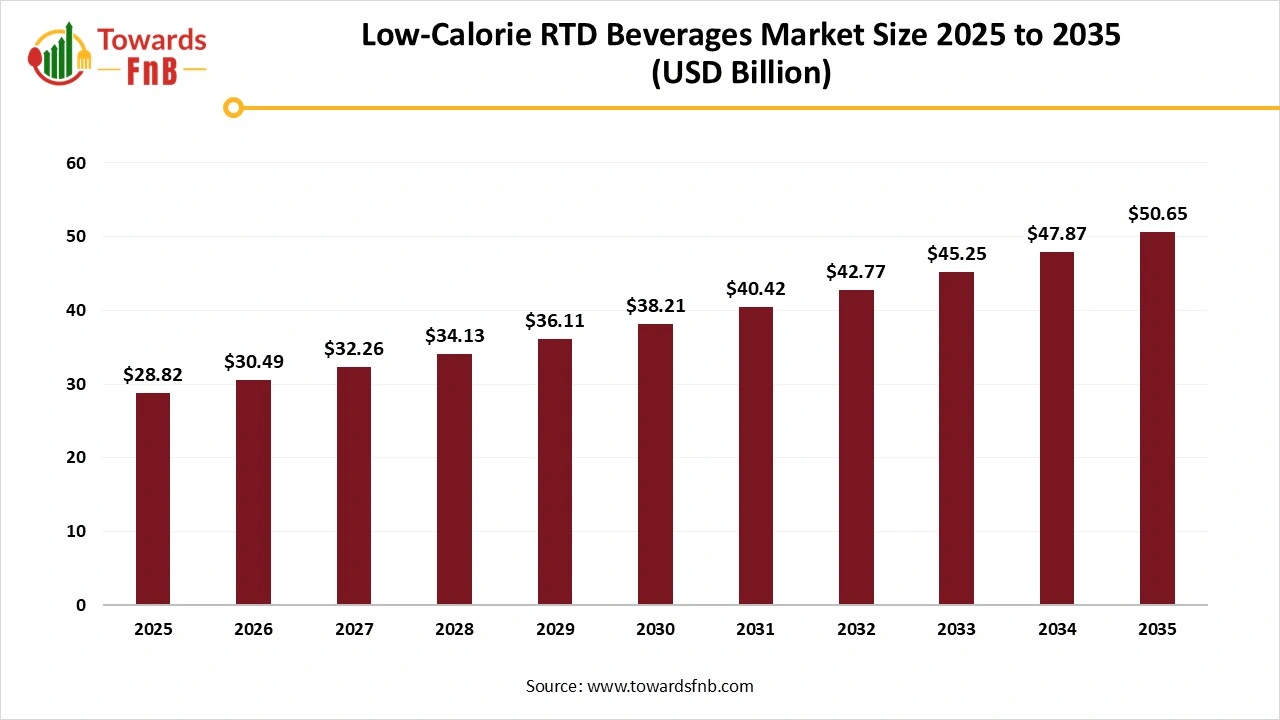
The global low-calorie RTD beverages market size stood at USD 28.82 billion in 2025 and is predicted to grow from USD 30.49 billion in 2026 to approximately USD 50.65 billion by 2035, expanding at a CAGR of 5.8% from 2026 to 2035. The market is growing as more people are choosing healthier, low-sugar drinks due to increasing health awareness. At the same time, busy lifestyles are pushing demand for convenient ready-to-drink options, while new product innovations with natural ingredients are attracting a wider range of consumers.
| Study Coverage | Details |
| Growth Rate from 2026 to 2035 | CAGR of 5.8% |
| Market Size in 2026 | USD 30.49 Billion |
| Market Size in 2027 | USD 32.26 Billion |
| Market Size by 2035 | USD 50.65 Billion |
| Largest Market | North America |
| Base Year | 2025 |
| Forecast Period | 2026 to 2035 |
| Regions Covered | North America, Europe, Asia-Pacific, Latin America, and Middle East & Africa |
Low-calorie RTD beverages are single-serving drinks designed for calorie restriction. They contain fewer calories per serving and are formulated using natural sweeteners. The ingredients used in low-calorie RTD beverages are botanicals, flavor modulators, functional bases, and natural flavors. They offer benefits like portability, lower sugar consumption, enhanced hydration, and convenience. They are widely used in applications like functional hydration, weight management, and functional nutrition. Examples include bottled coffee, vodka soda, green tea, unsweetened iced tea, sparkling water, and many more.
The low-calorie RTD beverages industry growth is driven by the popularity of functional waters, increased use of products supporting wellness, growing functional benefits of low-calorie RTD, expansion of quick commerce, advancements in flavor profiles, growth in low-calorie energy drinks, rising interest in functional additives, and the premiumization of low-calorie RTD.
The low-calorie RTD beverages industry is undergoing key technological shifts driven by demand for production optimization, sugar reduction, and enhanced taste. Technological shifts like machine learning, IoT, advanced formulation, smart packaging, automation, modern fermentation, and robotics help in the development of natural formulations and predicting ingredient trends. AI integration is the prominent shift in the market, driven by demand for product innovation and hyper-personalization.
AI predicts the acceptance of low-calorie RTD beverages and identifies trending flavors. AI forecasts weather patterns and easily detects minute deviations. It understands the purchasing behavior of consumers and optimizes resource allocation. It also optimizes the matrices of ingredients and supports virtual testing. AI manages the sourcing of raw ingredients and easily manufactures a low-calorie option. Additionally, companies like Nestle and Coca-Cola use AI for product development.
Raw Material Procurement
Processing and Preservation
Quality Testing and Certifications
Why North America Dominated the Low-Calorie RTD Beverages Market?
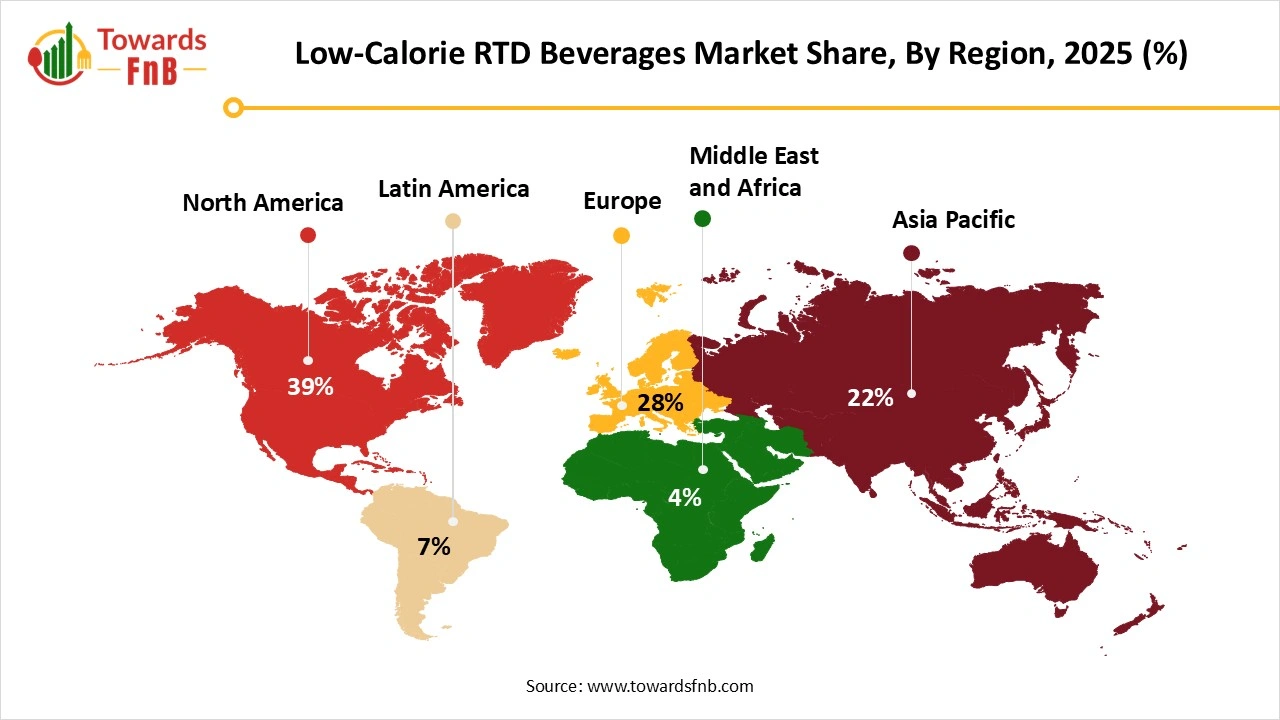
North America held a major market share in 2025. The focus on minimizing sugar consumption and the expansion of RTD options increases demand for low-calorie RTD beverages. Consumer awareness of ready-to-consume drinks and the popularity of artisanal ingredients help with expansion. The robust expansion of non-alcoholic RTDs and the increased accessibility of drinks in retail outlets drive the overall market growth.
North America Low-Calorie RTD Beverages Market Size and Growth 2025 to 2035
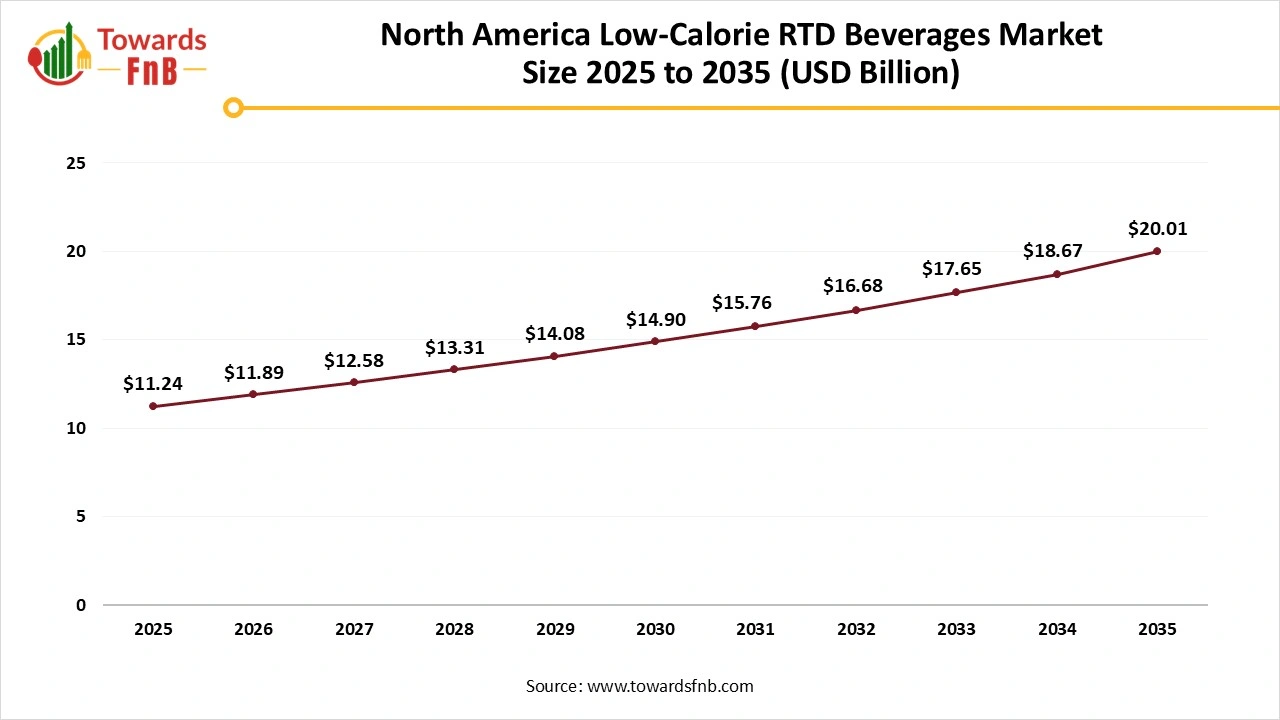
The North America low-calorie RTD beverages market size was valued at USD 11.24 billion in 2025 and is predicted to grow from USD 11.89 billion in 2026 to approximately USD 20.01 billion by 2035, expanding at a CAGR of 5.94% from 2026 to 2035.
Less Sugar, Sip Smart: United States Role in Low-Calorie RTD Beverages
The U.S. is a robust contributor to the market due to the adoption of an on-the-go lifestyle. The adverse effects of high-calorie sodas and the popularity of single-serve RTD increases adoption of low-calorie RTD beverages. Rising obesity concerns and the growing social gatherings require low-calorie RTD beverages. The surge in alcoholic RTDs and the strong distribution networks support the market growth.
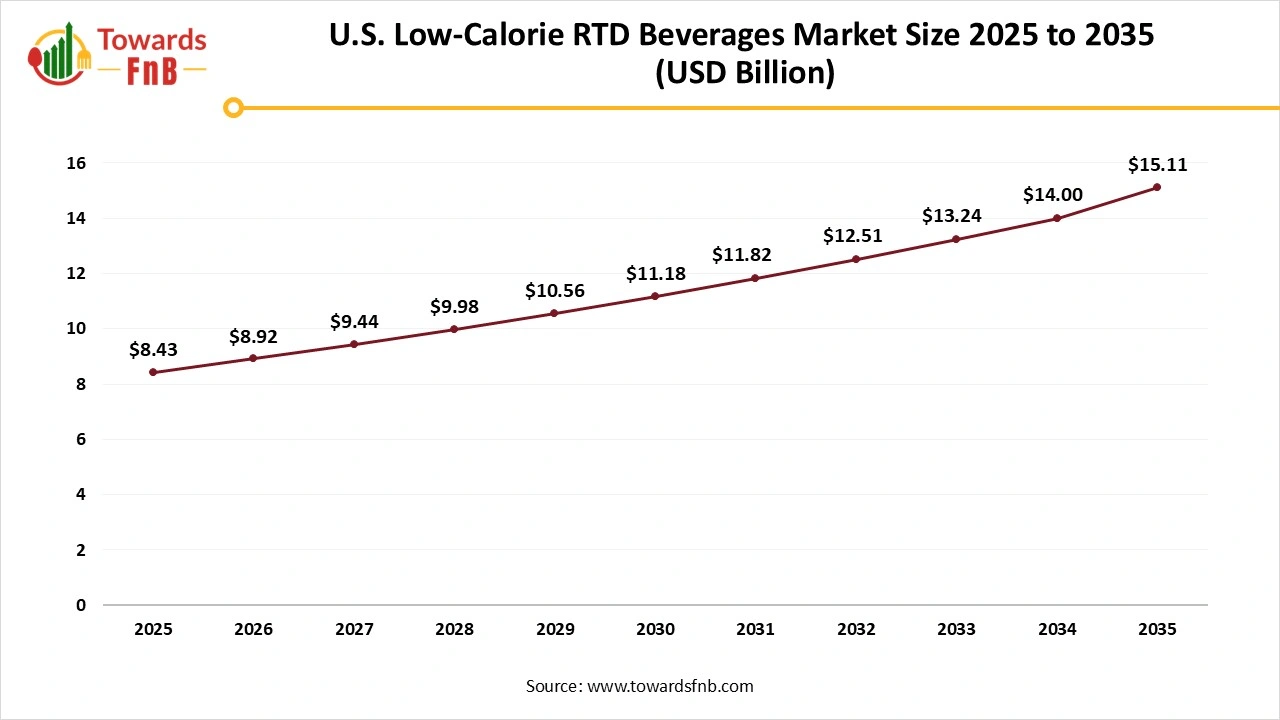
U.S. Low-Calorie RTD Beverages Market Size and Growth 2025 to 2035
The U.S. low-calorie RTD beverages market size was calculated at USD 8.43 billion in 2025 and is predicted to grow from USD 8.92 billion in 2026 to approximately USD 15.11 billion by 2035, expanding at a CAGR of 6.01% from 2026 to 2035.
How is Asia-Pacific Growing in the Low-Calorie RTD Beverages Market?
Asia-Pacific is expected to experience the fastest growth in the market during the forecast period. Stringent sugar taxes in ASEAN countries and the growing workplace mobility increase the adoption of low-calorie RTD beverages. The higher demand for beverages enriched with vitamins and the preference for healthier products increase the adoption of low-calorie RTD beverages. The time-compressed routines and rise of store proliferation increase the adoption of low-calorie RTD beverages. The surge in low-alcohol options drives market growth.
Boom of Low-Calorie RTD Beverages in China
China is robustly growing in the market due to the growing diabetic population. The popularity of sugar-free tea and the ongoing flavor innovation help with expansion. The growing health-based transformation and the surging number of urban professionals increase demand for low-calorie RTD beverages. The supportive government policies for low-calorie RTD beverages and affordable premiumization support market growth.
The Carbonated Drinks Segment Dominated the Market in 2025
The carbonated drinks segment dominated the low-calorie RTD beverages market in 2025. The rise in craving for carbonation and the shift to low-glycemic sweeteners increase the adoption of carbonated drinks. The development of healthier carbonated teas helps with expansion. The sensory experience, refreshing functional appeal, portability, familiar taste, refreshing experience, and convenience of carbonated drinks drive the overall segment growth.
The non-carbonated drinks segment is expected to be the fastest-growing segment in the market during the forecast period. Consumer awareness about sugar-based carbonated drinks and the utilization of organic ingredients increases demand for low-calorie non-carbonated drinks. The growing introduction of new flavors of non-carbonated drinks and the preference for easy-to-carry beverages support the segment growth.
The functional beverages segment is expected to grow significantly in the market. Consumer demand for products providing benefits to health and the growing natural reformulation increases demand for low-calorie functional drinks. The expanding social tonics and the popularity of probiotic options increase the adoption of functional beverages. The high availability of functional ingredients and the no-alcohol trend boost segment growth.
The Bottles Segment Led the Market in 2025
The bottles segment led the low-calorie RTD beverages market in 2025. The explosive growth in functional waters and the focus on enhancing the visibility of the product increase demand for bottles. The growing lightweight packaging solutions increase the adoption of bottles. The resealability, durability, shelf appeal, portability, and convenience of bottles drive the segment growth.
The cans segment is expected to experience the fastest growth in the market during the forecast period. The move towards eco-friendly packaging and the strong focus on portion control increase demand for cans. The huge consumption of spirit-based cocktails increases the use of cans. The high recyclability, unparalleled convenience, and lightweight nature of cans support the segment growth.
The cartons segment is expected to grow at a notable CAGR in the coming years. The growing sustainability-conscious consumer and the product integrity focus increase demand for cartons. The focus on improving the branding of low-calorie products and the reduction of carbon footprint increases demand for cartons. The increased use of aseptic carton packaging and the cost-effectiveness of cartons boost segment growth.
The Supermarkets/Hypermarkets Segment Held the Largest Market Share in 2025
The supermarkets/hypermarkets segment held the largest revenue share in the low-calorie RTD beverages market in 2025. The availability of diverse low-calorie brands and the growing routine shopping increase buying from supermarkets/hypermarkets. Special displays and high-volume availability in supermarkets/hypermarkets help with expansion. The vast number of supermarket outlets and surging cost-conscious shoppers drive the segment growth.
The online retail segment is expected to show the fastest growth over the forecast period. Explosive growth in global quick commerce and the preference for online ordering help with expansion. The growing digital consumer base and rising online visibility of the product increase the adoption of online retail. Increased internet penetration and easy availability of new-age niche brands on online retail support the segment growth.
The convenience stores segment is expected to expand rapidly in the market in the coming years. The growing quick purchases and the focus on promoting low-calorie products increase the use of convenience stores. The product diversification, higher velocity, and strategic placement in convenience stores help with expansion. The Cold Vault transformation and the availability of quick trials in convenience stores boost segment growth.
West Coast Cooler
Radnor Hills
Crystal Light
Good Boy Vodka
By Product Type
By Packaging
By Distribution Channel
By Region





Principal Consultant
Vidyesh Swar, Senior Research Analyst at Towards Food & Beverages, specializes in market research, focusing on supply-demand evaluation, pricing analysis, alternative proteins, plant-based foods, and sustainable food technologies within the industry.
Learn more about Vidyesh Swar
Reviewed By
Aditi Shivarkar, with 14+ years in Food and Beverages market research, specializes in food, beverage, and eco-friendly packaging. She ensures accurate, actionable insights, driving Towards FnB's excellence in industry trends and sustainability.
Learn more about Aditi ShivarkarApril 2026
March 2026
February 2026
March 2026

Low-Calorie RTD Beverages Market


 +1 804-441-9344
 Download Sample
 Schedule a Meeting