March 2026



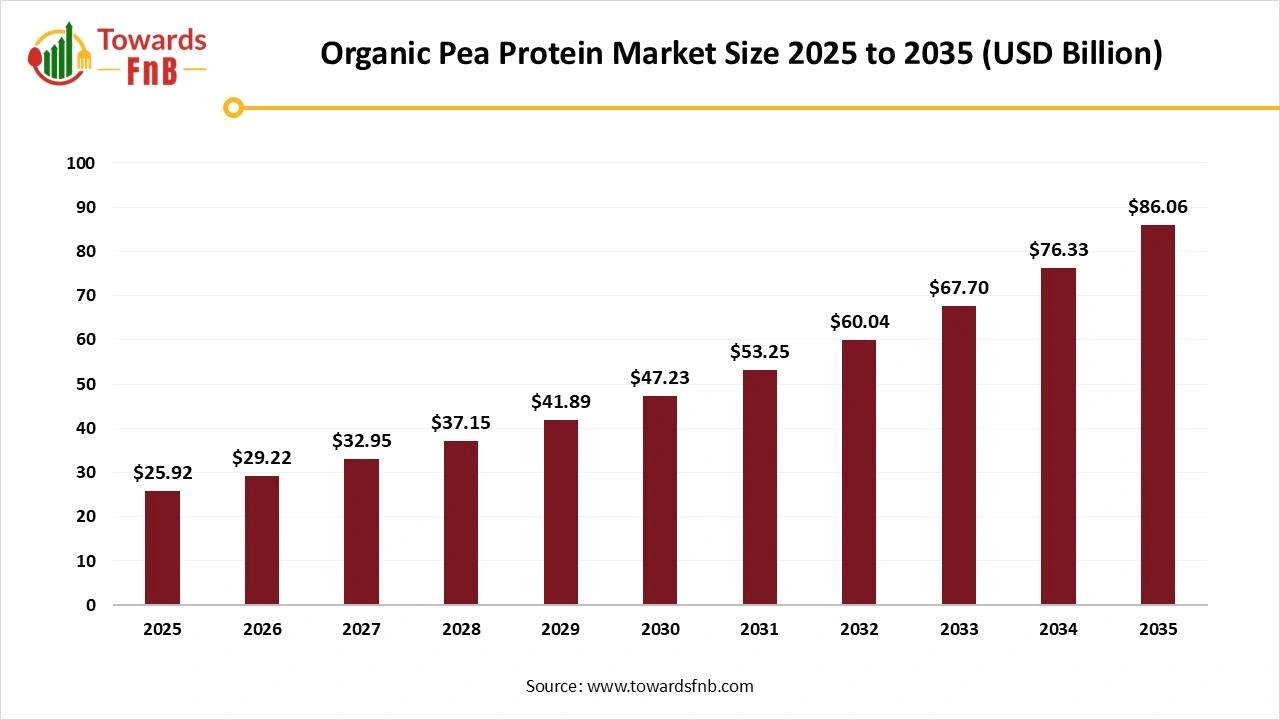
The global organic pea protein market size reached at USD 25.92 billion in 2025 and is anticipated to increase from USD 29.22 billion in 2026 to an estimated USD 86.06 billion by 2035, witnessing a CAGR of 12.75% during the forecast period from 2026 to 2035. Rising demand for plant-based, allergen-free proteins, driven by vegan trends, clean-label preferences and sustainable food innovations.
| Study Coverage | Details |
| Growth Rate from 2026 to 2035 | CAGR of 12.75% |
| Market Size in 2026 | USD 29.22 Billion |
| Market Size in 2027 | USD 32.95 Billion |
| Market Size by 2035 | USD 86.06 Billion |
| Largest Market | North America |
| Base Year | 2025 |
| Forecast Period | 2026 to 2035 |
| Regions Covered | North America, Europe, Asia-Pacific, Latin America, and Middle East & Africa |
Organic pea protein is slowly but surely gaining traction as the first choice among those seeking a clean and plant-based alternative to whey protein. Its rise in popularity is fueled by increasing awareness around sustainable living and the need for allergen-free dietary choices. Sourced from yellow peas through gentle, chemical-free processing, it delivers strong nutritional value. It provides a balanced amino as a profile that helps support muscle development and recovery, making it appealing to active and fitness-oriented individuals. It is also easy on digestion and is a naturally content environment spindle like iron, enhancing its overall health benefits. Together, these features position pea protein as a wholesome and dependable choice for today’s health-conscious consumers. Its allergen-free characteristics make it an important source in comparison to other protein sources like dairy and soy. Its neutral taste and better texture allow it to be an important protein source in the modern food industry due to its versatility.
Technological process Progress in the organic pea protein industry is in a dynamic phase and there is a high focus on developing taste functionality and purity without the use of chemical solvents, enzyme processing, membrane filtration and texturization are some of the techniques being employed to deliver a superior quality of the product. In addition, generative AI technologies help companies in the creation of better products by understanding consumer needs, nutritional needs and taste preferences. The technology also enables companies to predict consumer needs, manage their supply chains and make better business decisions. This change in technology helps companies introduce waste, manage their costs and be flexible in a rapidly changing market.
Raw Material Procurement
Processing and Preservation
Quality Testing and Certifications
Why North America is Dominating the Organic Pea Protein Market?
North America dominate organic pea protein market in 2025. Due to its increased consumption, driven by the rising rate of consumption of clean label plant-based and health-oriented food products in the region. This is because consumers are becoming increasingly aware of their dietary habits, which has led to a significant move towards a plant-based diet and an increased inclination towards a vegan and vegetarian lifestyle. The shift in consumer behavior has not only led to an increased rate of consumption of this product but has also led to innovation in organic pea protein products. Additionally, the North America region has a well-developed market for functional food. This has led to whispered Ability of this product in the market. All this factor has collectively contributed to the development of market in the region which has led to sustained growth in the market and increased rate of adoption of plant based nutritional products.
North America Organic Pea Protein Market Size 2025 to 2035
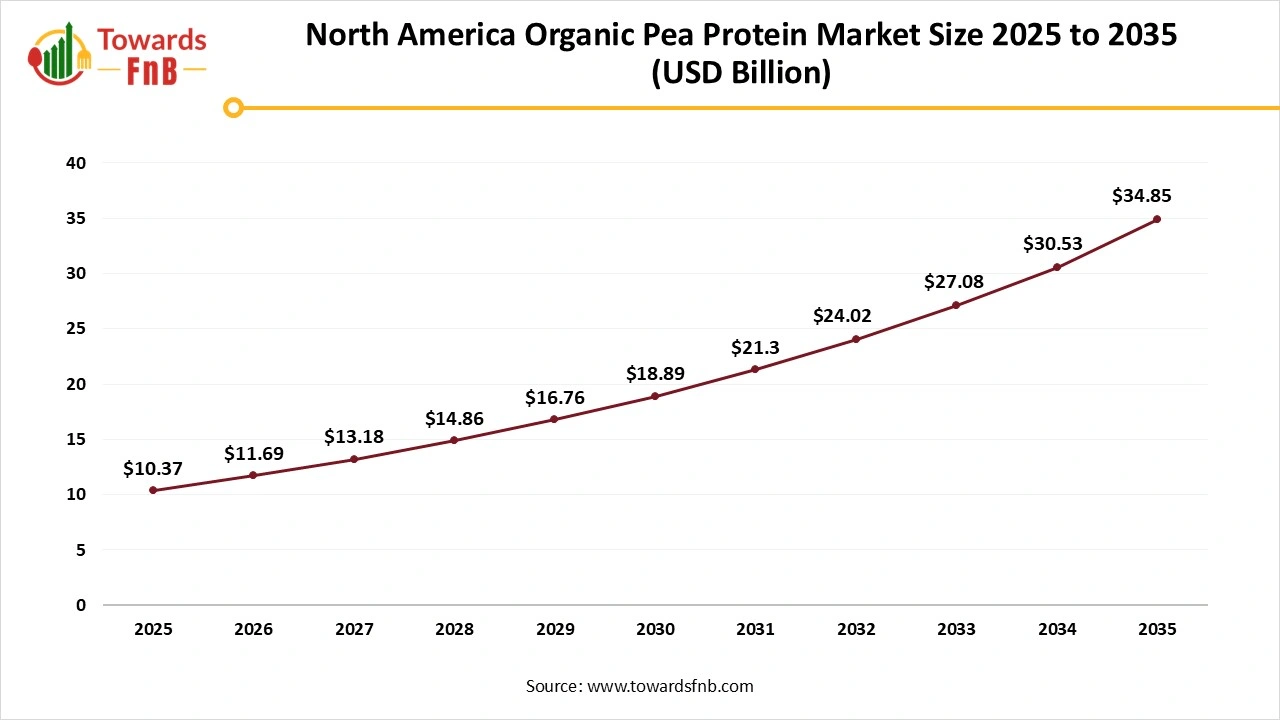
The North America organic pea protein market size was calculated at USD 10.37billion in 2025 with projections indicating a rise from USD 11.69 billion in 2026 to approximately USD 34.85 billion by 2035, expanding at a CAGR of 12.89% throughout the forecast period from 2026 to 2035.
United States Organic Pea Protein Market Trends
Driven by strong interest from consumers regarding plant-based protein sources, the highly developed health food industry and the rise of vegan vegetarian living have all helped to accelerate this growth. The top players are also encouraging this growth by reducing new organic products to the market as well as offering incentives to boost them. This has helped to establish the United States as a leader in the production and consumption of organic wheat protein, which goes to show that there is increasing demand for a plant-based nutrition sector.
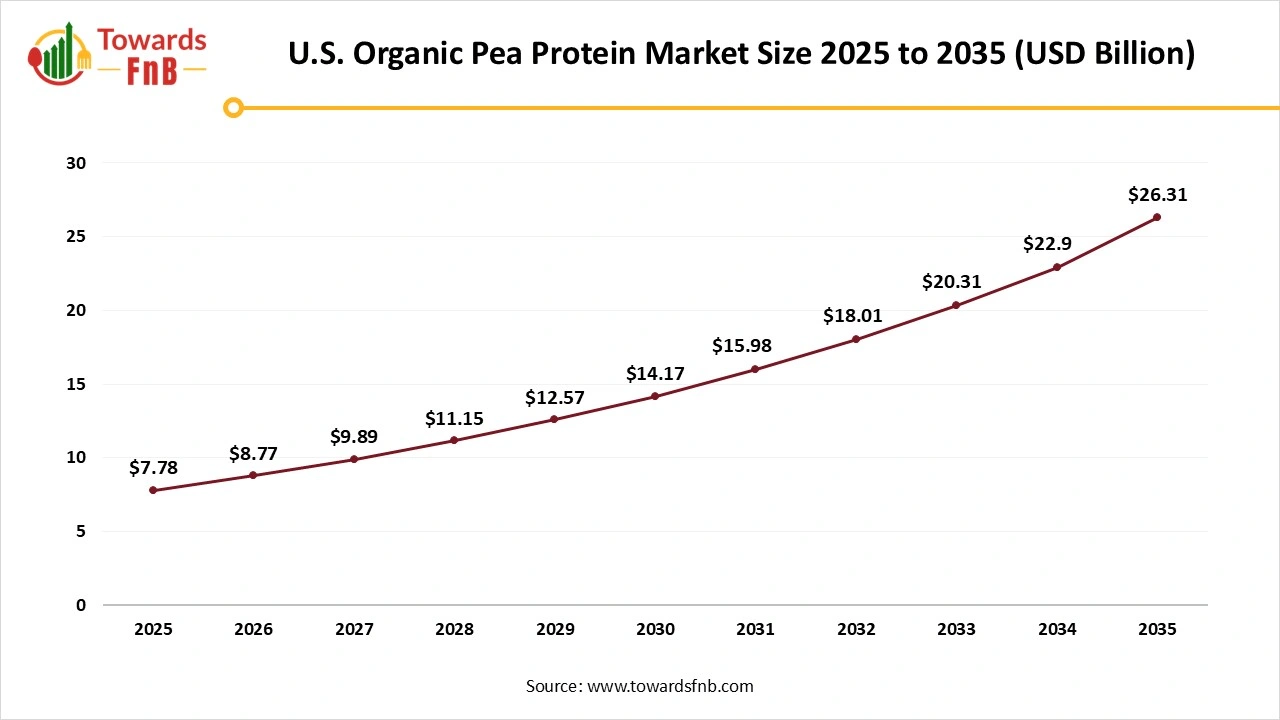
U.S. Organic Pea Protein Market Size 2025 to 2035
The U.S. organic pea protein market size was valued at USD 7.78 billion in 2025 and is expected to grow steadily from USD 8.77 billion in 2026 to reach nearly USD 26.31 billion by 2035, with a CAGR of 12.96% during the forecast period from 2026 to 2035.
Europe expects the fastest growth in the market during the forecast period. Driven by the rising awareness among consumers in Europe about sustainable living health benefits and the benefits associated with consumption of organic foods, this is causing consumers to increasingly opt for plant-based protein as part of their sustainable lifestyle. Along with this, an increasing health consciousness among Europeans is causing the reason to play an important role in the growth and expansion of organic protein products.
Germany Organic Pea Protein Market Trends
Driven by consumers' increasing interest in sustainable living with organic and plant-based protein, more consumers in the country are opting for clean eating options and vegan protein sources. This is a reflection of a large movement towards healthy living that is environmentally friendly. Additionally, there is government support for organic farming, including the promotion of the use of meat substitutes. All these factors have contributed to the growth of the market in Germany, making it a hub for innovation, production and consumption.
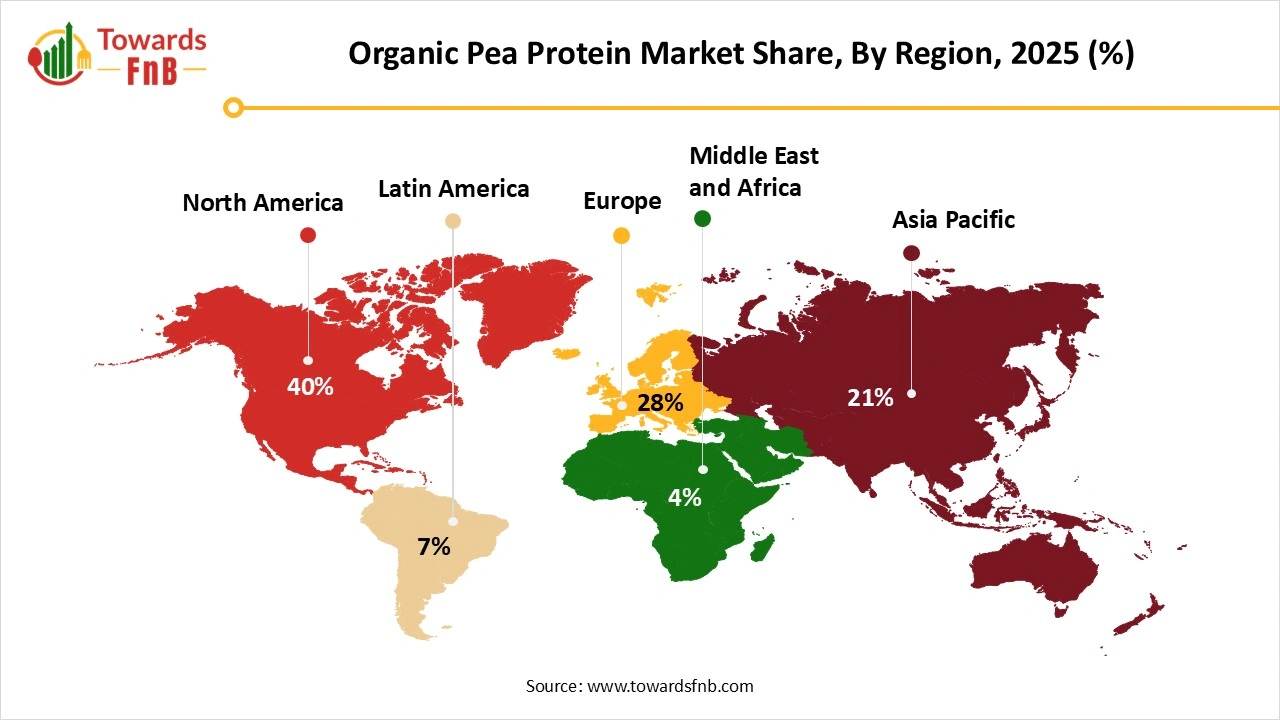
Asia Pacific expects the significant growth in the market. Due to increased awareness of personal health, rapid urbanization, and the prevalence of lactose intolerance are causing an increase in consumption and production of organic beef protein. This trend is evident in the Asia Pacific region, where local companies are increasing their range of plant-based protein products, while multinational companies are capitalizing on the changing battery habits. This trend is evident in countries such as China, India and Japan, where the increasing trend of plant-based protein products is causing an increase in the consumption of organic wheat protein. This trend is causing the Asia Pacific to become a hub for the expansion of organic pea protein.
China Organic Pea Protein Market Trends
Driven by increasing awareness of healthy nutrition and sustainable consumption, the demand and supply of plant-based protein are growing steadily, fueled by the face of urbanization, the growing number of people suffering from lactose intolerance and the increasing capability of local players that manufacture plant-based proteins such as those from peas. This trend mirrors an overall shift towards a healthier plant-based diet in the country, making China a hub for the growth, adoption and innovation of organic pea protein products in the Asia Pacific region.
Organic Pea Protein Market Share, By Type, 2025 (%)
| Segments | Shares (%) |
| Isolates | 60% |
| Concentrates | 30% |
| Textured | 10% |
Why Isolates Segment Dominated the Organic Pea Protein Market?
The isolates segment dominated the organic pea protein market in 2025. Due to its high protein, mild taste and strong functionality, this allows this plant-based protein to be utilized in different products such as sports nutrition formulas, dairy alternatives and health supplements. This also allows manufacturers to promote their high protein content in a clean-label and simple manner. Due to these characteristics and uses, isolate continues to dominate the market by meeting the needs of the industry and the rising demand for plant-based protein.
Concentrates segment expects the fastest growth in the market during the forecast
Due to the presence of fiber content, as well as moderate levels of protein, pea protein concentrates find their best use as a component of bakery products, as well as plant-based food analogs. The presence of these components allows the manufacturer to provide a product that not only has a positive impact on the environment but also offers a nutritious product, which aligns with the growing trend of plant-based food. The demand for healthy, fiber-rich, environmentally friendly products will see a substantial rise, which will result in a high adoption rate of the concentrate form.
Organic Pea Protein Market Share, By Form, 2025 (%)
| Segments | Shares (%) |
| Dry | 65% |
| Liquid | 35% |
Why Dry Segment Dominated the Organic Pea Protein Market?
The dry segment dominated the organic pea protein market in 2025. Due its longer shelf life, ease of storage, and suitability for various uses in the food industry, such as protein powders, snacks, and baked goods, have made it highly popular. Its protein content and affordability have made it the most sought-after by both manufacturers and consumers of convenient plant-based protein sources. This has made the dry form of the protein the most popular in the market.
Liquid segment expects the fastest growth in the market during the forecast
Due to its smooth texture, blending properties, and versatility in different liquid formulations. The product has an increasing demand with the trend in healthy drink mixes and fortified beverages catering to clean-label and vegan consumer groups. While it is less stable in comparison to dry forms, it is convenient, versatile, and allows for the creation of tasty and healthy drink mixes, making it a popular product with manufacturers and consumers alike.
Organic Pea Protein Market Share, By Application/End-Use, 2025 (%)
| Segments | Shares (%) |
| Food & Beverages | 60% |
| Nutritional Supplements | 25% |
| Animal Feed | 15% |
Why Food & Beverages Segment Dominated The Organic Pea Protein Market?
The food & beverages segment dominated the organic pea protein market in 2025. Because of the global move towards plant-based diets and growing emphasis on health and nutrition, currently organic pea protein is supplied in various products, such as meat substitutes, daily alternatives, protein bar and baked goods, with consumers becoming more health conscious. There is a growing trend towards products that provide specific nutritional benefits in addition to meeting clean label claims. This growing trend towards nutrition plant-based and easily digestible routines has made the food and produce sector the largest contributor to the market.
Nutritional supplements segment expects the fastest growth in the market during the forecast
Due to the increase in prices for fitness wellness and natural nutrition, organic pea protein is being added to a number of protein powders, energy boosters and dietary supplements. The ease of digestion of pea protein as well as its hypoallergenic properties have made it a more popular choice compared to other forms of protein like soy. The plant source of pea protein as well as nutritional benefits has thus created a high demand for organic pea protein.
Ripple Foods
TERRA
ZXCHEM GROUP
By Type
By Form
By Application/End-Use
By Region





Principal Consultant
Vidyesh Swar, Senior Research Analyst at Towards Food & Beverages, specializes in market research, focusing on supply-demand evaluation, pricing analysis, alternative proteins, plant-based foods, and sustainable food technologies within the industry.
Learn more about Vidyesh Swar
Reviewed By
Aditi Shivarkar, with 14+ years in Food and Beverages market research, specializes in food, beverage, and eco-friendly packaging. She ensures accurate, actionable insights, driving Towards FnB's excellence in industry trends and sustainability.
Learn more about Aditi ShivarkarMarch 2026
February 2026
February 2026
February 2026

Organic Pea Protein Market


 +1 804-441-9344
 Download Sample
 Schedule a Meeting