April 2026



The global edible oil market size reached at USD 222.96 billion in 2025 and is expected to grow steadily from USD 235.22 billion in 2026 to reach nearly USD 380.85 billion by 2035, with a CAGR of 5.5% during the forecast period from 2026 to 2035. The global edible oil market is attributed to the increasing changing dietary patterns across the globe.

| Study Coverage | Details |
| Growth Rate from 2026 to 2035 | CAGR of 5.5% |
| Market Size in 2026 | USD 235.22 Billion |
| Market Size in 2027 | USD 248.16 Billion |
| Market Size by 2035 | USD 380.85 Billion |
| Largest Market | Asia Pacific |
| Base Year | 2025 |
| Forecast Period | 2026 to 2035 |
| Regions Covered | North America, Europe, Asia-Pacific, Latin America, and Middle East & Africa |
The edible oil market deals with cooking oil that is gained from the fat of microorganisms, plants, and animals. They have various uses such as personal care industries, cosmetics, bakery, cooking, salad dressings, and frying. The food and beverage sector has been using edible oils in several forms for various applications. Edible oils are widely used in home cooking and industrial food manufacturing. They are primary source of vitamin E and unsaturated fats in human diets and are beneficial for human consumption. They are hygienic and healthy due to their nutritional elements. The global market for edible oil is experiencing rapid growth due to factors such as the increasing consumer preference for the selection of edible oil, changing consumer eating habits, and rising innovations in nutritive products.
One of the significant drivers propelling the edible oil market growth is increasing awareness of the advantages of edible oil. The major causes of morbidity and mortality are cardiovascular diseases across the globe. Due to various environmental factors including sedentary lifestyles and dietary habits and various gene interactions, these diseases occur. The increasing quality of edible oils is commonly related to the pathogenesis of cardiovascular diseases. In regular food intake, edible oil is the major dietary component. In addition, there are also various benefits of edible oil such as reducing the risk of heart disease, reduce the risk of breast cancer, help to enhance the immune system, helps in improving metabolism, helps to improve cell growth, reducing depression and anxiety, reducing stomach ulcers, and improving digestion and others, which further expected to drive the growth of the market.
The rising technological advancements have been fueled by motives of energy and cost efficiency. To reduce the amount of waste generated by the process, various market players have shifted towards physical refining. The rising advances in technology, such as biotechnology and genetic modification are expected to shape the future of edible oil. These innovations can lead to the creation of new types of oils and more efficient methods of production with unique health benefits and properties.
In addition, there is also increasing demand for sustainably sourced edible oil raw materials with the increasing government regulations and consumer awareness on human rights issues and environmental protection. By implementing more ethical and transparent supply chains, this trend is expected to continue in the future, which is expected to revolutionize the edible oil market growth in the coming future.
The volatility of raw material prices is the major challenge that may restrain market growth. The high cost of agricultural products, seeds, and crude oil can affect political tensions and weather conditions. The volatility of raw material costs can hamper market demand and strain budgets. In addition, rising regulatory policies in the edible oil are further expected to restrain the growth of the edible oil market.
| Region / Country | Consumption Characteristics | Primary Edible Oils Consumed | Key Government Initiatives & Policy Focus |
| North America (U.S., Canada) | High per-capita consumption driven by processed foods, foodservice, and household cooking | Soybean oil, canola oil, corn oil, sunflower oil | Support for domestic oilseed farming, biofuel-linked oilseed policies, food labeling regulations, promotion of healthier oils |
| Europe | Moderate to high consumption with strong preference for health-oriented oils | Olive oil, rapeseed (canola) oil, sunflower oil | Sustainability regulations, import controls, promotion of olive oil production, trans-fat reduction policies |
| Asia Pacific – Overall | Very high consumption due to large population and home cooking dominance | Palm oil, soybean oil, mustard oil, groundnut oil, rice bran oil | Import duty management, domestic oilseed missions, price stabilization measures, self-sufficiency programs |
| China | High consumption driven by urbanization and foodservice sector | Soybean oil, rapeseed oil, peanut oil | Strategic edible oil reserves, domestic oilseed production support, import diversification policies |
| India | One of the largest consumers globally with strong household demand | Palm oil, soybean oil, mustard oil, sunflower oil | National edible oil missions, import duty adjustments, oilseed productivity programs, promotion of blended oils |
| Japan | Stable consumption with emphasis on food processing | Soybean oil, rapeseed oil | Food safety regulations, import dependency management, quality standards enforcement |
| Southeast Asia (Indonesia, Malaysia) | High domestic consumption and export-oriented production | Palm oil | Palm oil sustainability mandates, biodiesel blending programs, export management policies |
| South America (Brazil, Argentina) | Growing consumption alongside strong export production | Soybean oil, sunflower oil | Support for oilseed exports, domestic processing incentives, biofuel-linked oil policies |
| Middle East | High import dependence with strong household and foodservice demand | Palm oil, sunflower oil, corn oil | Import subsidies, price controls on essential food items, food security initiatives |
| Africa – Overall | Rapidly growing consumption due to population growth and urbanization | Palm oil, groundnut oil, soybean oil | Agricultural development programs, import tariff adjustments, food affordability initiatives |
| Sub-Saharan Africa | Increasing demand driven by packaged food consumption | Palm oil, groundnut oil | Support for local oilseed cultivation, SME processing incentives |
| North Africa (Egypt, Morocco) | High reliance on imported edible oils | Sunflower oil, soybean oil | Consumer subsidy programs, import regulation, food price stabilization measures |
Raw Material Procurement
Packaging and Branding
Waste Management and Recycling
Asia Pacific Dominated the Edible Oil Market in 2025
The Asia Pacific edible oil market size reached at USD 95.87 billion in 2025 and is expected to grow steadily from USD 101.14 billion in 2026 to reach nearly USD 163.77 billion by 2035, with a CAGR of 5.5% during the forecast period from 2026 to 2035.
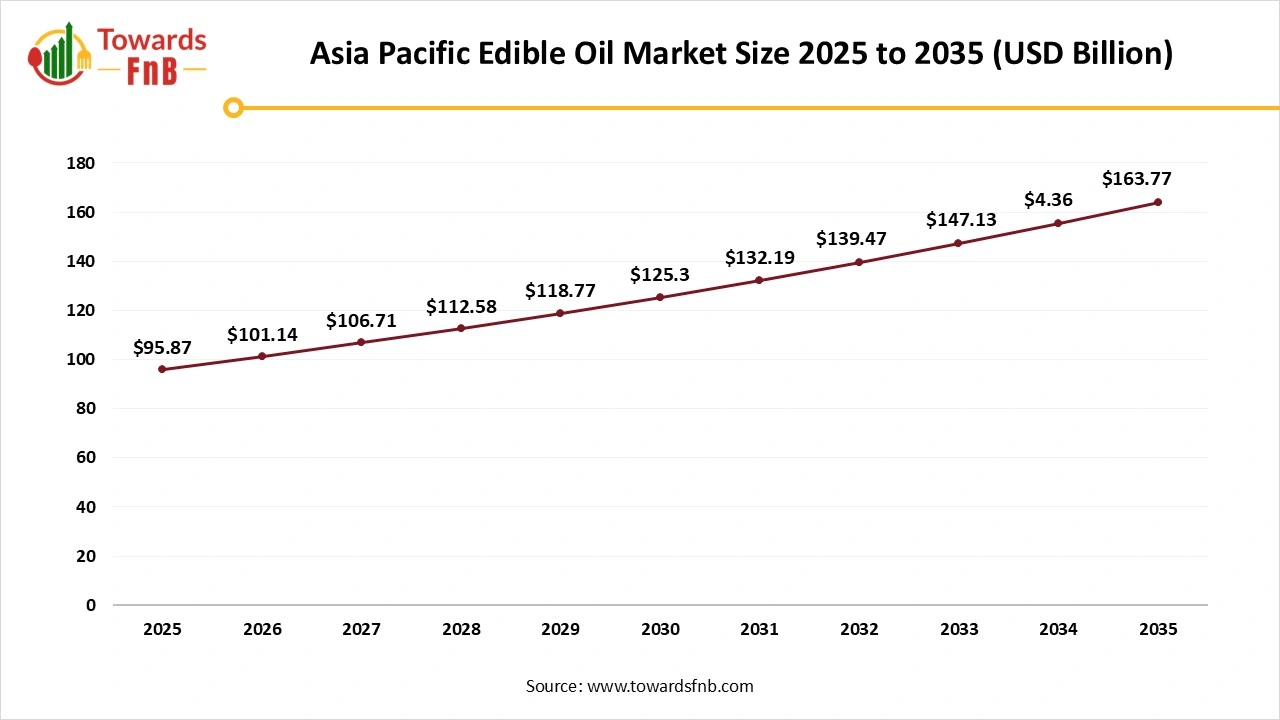
The market growth in the region is attributed to the increasing demand for various types of edible oils, increasing consumer preference towards tastes, growing population, and a combination of cultural diversity. China, India, Japan, and South Korea are dominating countries driving the market growth. These countries are major hubs for the export, import, and production of edible oil. Due to the varied rich cuisines in the region, mustard, and soybean oils are consumed rapidly.
Is India Dominated in the Edible Oil Market Growth?
India dominated the market share in 2024 due to factors such as increasing consumption of various types of edible oils and increasing awareness of health and wellness. In the last two years, India’s per capita edible oil consumption has nearly tripled. According to a report by Mint, deepening public health concerns related to non-communicable diseases and obesity relieve the country’s dominance. Almost every consumer consumes 24 kg of edible oil in India every year. India is significantly based on imports.
North America is Expected to Grow Fastest During the Forecast Period
The market growth in the region is attributed to the increasing biofuel sector, increasing growth in convenience and processed food, growing adoption of vegan and plant-based diets, increase in organic and functional oils and increasing consumer preference towards healthier dietary choices. The U.S. and Canada are the fastest growing countries driving the market growth.
The U.S. Edible Oil Market Trends
The U.S. dominated the market share in 2024, which is driven by the increasing supportive government policies and regulations and rising technological advancements in oil processing. Soybean oil is commonly used for cooking food in the U.S. Due to its well-utilized and cultivated plant, this oil is extensively used in the U.S. Popular U.S. dishes such as Chicken nuggets and French fries can be indulged in the food. Soybean oil is the first choice of the general food industry in the U.S., due to its good blending ability, which may accelerate the market demand in the U.S.
Europe is expected to grow at a notable rate during the forecast period. The Edible oil industry in Europe is growing significantly, driven by major demand for organic and plant-based oils, innovation in blends, increasing sustainability trends and rise of health trends plant-based, strong biofuel and food processing sectors, popularity of specialty oils such as sesame and premium oils such as sunflower, rapeseed and olive.
Germany Edible Oil Market Trends
Edible oil market in Germany is a growing and large market, driven by the increasing focus on healthy fats boost demand for oils, demand for organic, cold-pressed and plant-based oils, rising veganism or vegetarianism, increasing health awareness, demand for avocado, rapeseed, oils and increasing demand for plant-based diets. Various major players are focusing on strategic acquisitions, product diversification, sustainability and edible oils, further driven by consumer demand for innovations in cooking applications.
Why is the Middle East and Africa Driving the Edible Oil Market?
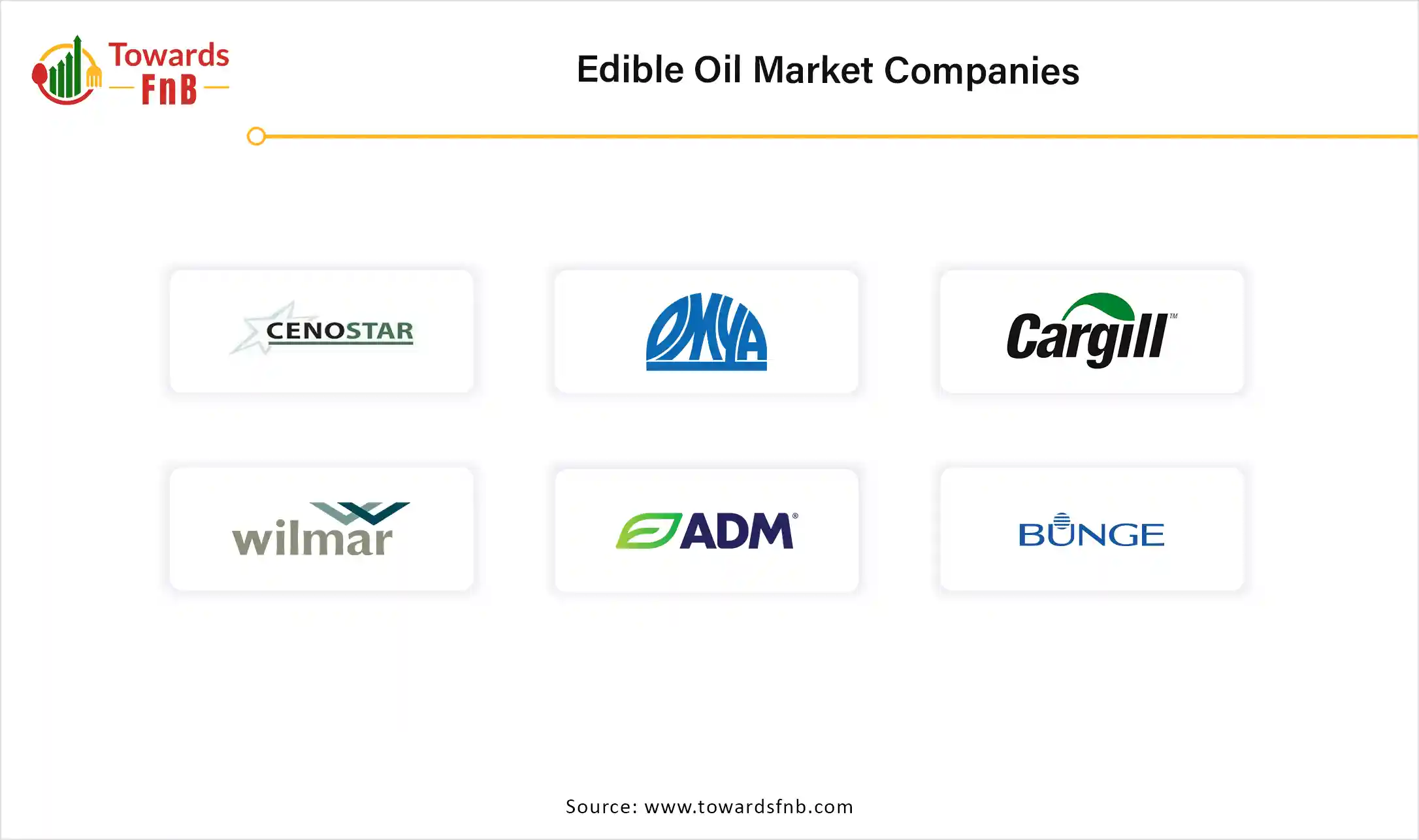
The market growth in the Middle East and Africa is driven by factors such as the increasing demand for plant-based options such as sunflower and palm oils, increasing health awareness, increasing disposable incomes, demand for healthier oils, growing rapid population, and growing multi-billion. With strong domestic consumption, major players such as Bunge, Cargill, and ADM navigate a dynamic landscape.
South Africa Edible Oil Market Trends
The edible oil market in South Africa is driven by increasing industrial use such as baking and snacks, string local production of soya and sunflower, demand for healthy options such as avocado, canola and sunflower and rise of e-commerce, with major players such as IFFCO and Willowton Group integrating local branding, refining and crushing.
How is Latin America Fueling the Edible Oil Market?
The Latin America edible oil industry is a growing market, driven by increasing biofuel demand, food processing growth and healthy eating trends, with palm and soybean oil in Colombia and Brazil with major players such as Wilmar, ADM and Cargill, while traditional sustainability and retail channels is the major focus, especially for palm oil with the major global player.
Brazil Edible Oil Market Trends
The edible oil industry in Brazil is growing, driven by increasing health awareness, increasing popularity of diverse local cuisine and demand for diverse cooking oils, with various major players. The market is also driven by shifts toward healthy options such as corn, olive, palm plant-based and healthier foods and massive olive oil production, further expected to drive the market growth.
The Soybean Segment Dominated the Edible Oil Market in 2025
The segment growth in the market is attributed to the various benefits such as reduced signs of premature aging, antioxidant activity, promoting hair growth, and healthy bones, improving skin health, enhancing the immune system, and maintaining cholesterol levels. Soybean oil can significantly reduce the risk of developing cardiovascular diseases such as strokes and heart attacks. It neutralizes unfavorable cholesterol levels. It helps in maintaining a healthy immune system which enables individuals' bodies to fight immunological-related diseases and illnesses. Omega-3 and vitamin E in soybean oil can enhance hair health, which further drives the segment growth.
The Olive Oil Segment is Expected to Grow Fastest During the Forecast Period
Olive oil is commonly utilized in foods and food products. Olive oil acts as a medicine. People commonly use olive oil because it helps to prevent high blood pressure, diabetes and heart disease. Olive oil helps protect against cancer, reduce risk of heart disease and decreases inflammation.
The Conventional Segment Dominated the Edible Oil Market in 2025
The segment growth in the market is driven by factors such as rising technological advancements in oil processing, increasing consumer preference towards nutritional and health awareness and increasing changing lifestyles. Conventional edible oils include corn oils, canola oil and soybean are used for various applications such as frying, cooking, baking, and nutraceuticals needs.
The Organic Oils Segment is Expected to Grow Fastest During the Forecast Period
The segment growth in the edible oil market is driven by the growing e-commerce platform, increasing adoption of plant-based diets, increasing government regulatory support and rising environmental sustainability. Organic edible oil is pest-free and chemical free and contains more nutrients. Choosing organic oils can support farming practices that enhance soils, conserve water, and reduce pollution, which is expected to drive segment growth.
The Business to Consumer (B2C) Segment Dominated the Edible Oil Market in 2025
The segment growth in the market is driven by growing e-commerce industry, growing premiumization, and increasing health awareness. In addition, evolving shopping experiences and rising digital advances are further expected to enhance segment growth. Various companies equip with innovative strategies focused on the 4Ps such as promotion, place, price, and product. Product strategies include providing several types and volumes.
The Business to Business (B2B) Segment is Expected to Grow Fastest During the Forecast Period
The leading B2B listing directory provides a wide range of ghee and edible oils. They offer a variety of products, such as ghee and edible oils, and serve various food and cooking needs. To meet consumer requirements and needs, B2B companies help buyers find the right edible oil products, which are expected to drive the segment growth.
The Food Service Segment Dominated the Edible Oil Market in 2025
With a range of products and services for the market, innovative solutions are serving the needs of edible oil and food which is designed to guarantee high-quality end products. The high-quality oils are obtained from edible oil purification which is essential to focus the complexities of the market, so consumers can focus on delivering healthy and delicious food products, which further drives the demand for food services.
The Industrial Segment is Expected to grow Fastest During the Forecast Period
Industrial edible oil offers high-quality refined oils that serve several industrial and consumer needs. Industries committed to delivering superior quality products that ensure long shelf life, promote good health, and enhance taste, with a wide range of refined oils, which are further expected to drive market growth.
Union agriculture ministry
KRBL
Louis Dreyfus Company (LDC)
Raj Oil Mills Limited
By Nature
By Product
By Distribution Channel
By End-use
By Region




Principal Consultant
Vidyesh Swar, Senior Research Analyst at Towards Food & Beverages, specializes in market research, focusing on supply-demand evaluation, pricing analysis, alternative proteins, plant-based foods, and sustainable food technologies within the industry.
Learn more about Vidyesh Swar
Reviewed By
Aditi Shivarkar, with 14+ years in Food and Beverages market research, specializes in food, beverage, and eco-friendly packaging. She ensures accurate, actionable insights, driving Towards FnB's excellence in industry trends and sustainability.
Learn more about Aditi ShivarkarApril 2026
April 2026
April 2026
April 2026

Edible Oil Market


 +1 804-441-9344
 Download Sample
 Schedule a Meeting