April 2026



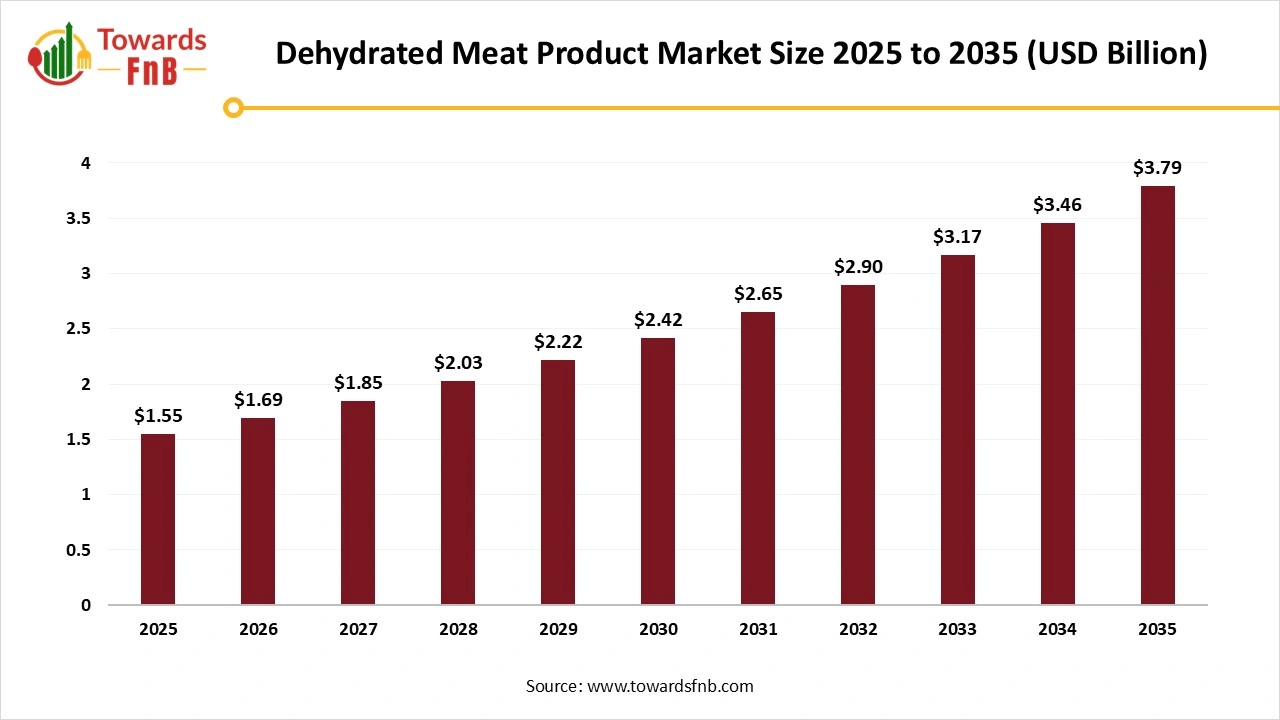
The global dehydrated meat product market size estimated at USD 1.55 billion in 2025 and is predicted to increase from USD 1.69 billion in 2026 to nearly reaching USD 3.79 billion by 2035, growing at a CAGR of 9.35% during the forecast period from 2026 to 2035. The robust growth in portable snacks and the expansion of backpacking drives market growth.
| Study Coverage | Details |
| Growth Rate from 2026 to 2035 | CAGR of 9.35% |
| Market Size in 2026 | USD 1.69 Billion |
| Market Size in 2027 | USD 1.85 Billion |
| Market Size by 2035 | USD 3.79 Billion |
| Largest Market | North America |
| Base Year | 2025 |
| Forecast Period | 2026 to 2035 |
| Regions Covered | North America, Europe, Asia-Pacific, Latin America, and Middle East & Africa |
Dehydrated meat product are products that are developed by removing moisture from meat. It possesses characteristics like low water activity, concentrated flavor, high nutrient density, reduced water content, superior texture, color changes, and rehydration capability. The various production methods for dehydration meat products include sun drying, vacuum drying, convective hot air drying, freeze drying, and many others. The examples of dehydrated meat products are biltong, kilishi, tapa, jerky, sausages, and pastirma. It is widely used in applications like convenience meals, culinary ingredients, snacks, travel food, pet food, and emergency food supply.
The dehydrated meat product market growth is driven by the increased production of ready-to-eat products, the popularity of protein-rich diets, the growth in hiking activities, growing premiumization, increased penetration of online retail, strong focus on emergency preparedness, rise in flavor innovation, and health-conscious trends.
The dehydrated meat product market is undergoing key technological changes like machine learning, smart manufacturing software, automation, IoT-based drying systems, intelligent cutting technology, and robotics, driven by demand for high-quality production, safety, transparency, and lowering waste. The key technological shift is the AI integration driven by demand for production efficiency, energy efficiency, and optimization of the drying process.
AI adjusts dehydration parameters and detects physical defects in dehydrated meat products. AI ensures quality standards and supports energy-efficient processing. AI easily predicts equipment failures and supports better inventory management. AI develops tailored dehydrated meat products and predicts drying times. AI monitors moisture content and easily handles complex procedures. Overall, an AI automated process that increases the production speed.
Raw Material Procurement
Processing and Preservation
Quality Testing and Certifications
How North America Dominates the Dehydrated Meat Product Market?
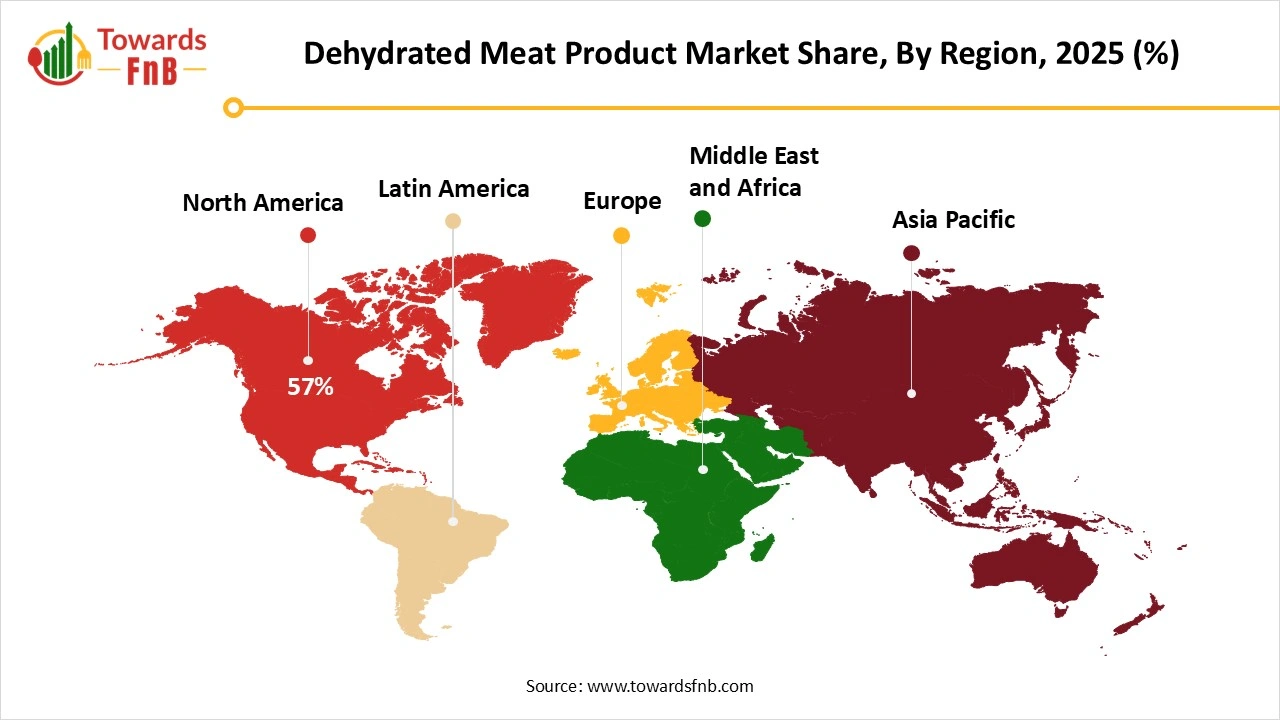
North America dominated the dehydrated meat product market in 2025 with a 57% share. The consumer transition to high-protein diets and the growing number of outdoor activities increase demand for dehydrated meat product. The increased innovation in food technology and the growth in the military sector increase demand for dehydrated meat product. The higher need for emergency food supplies requires dehydrated meat product. The presence of companies like Kraft Heinz, Jack Link’s, and Hormel Foods drives the market growth.
North America Dehydrated Meat Product Market Size 2025 to 2035
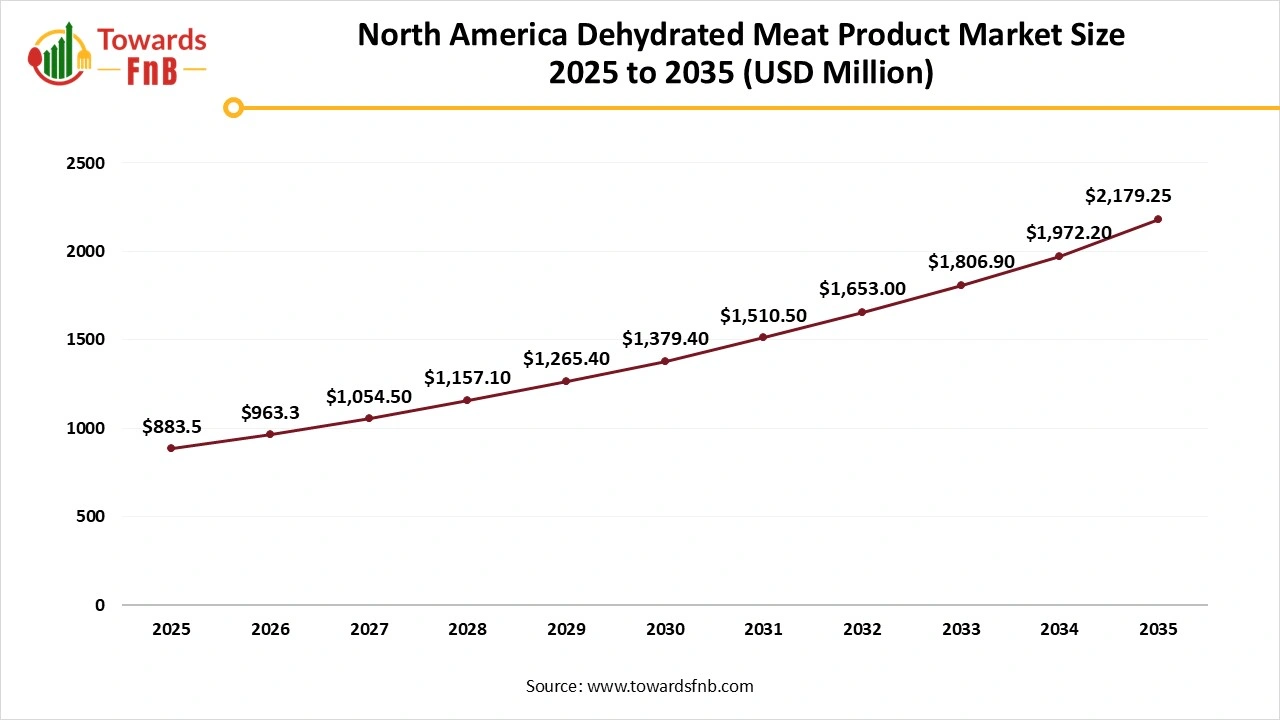
The North America dehydrated meat product market size was calculated at USD 883.5 million in 2025 with projections indicating a rise from USD 963.3 million in 2026 to approximately USD 2,179.25 million by 2035, expanding at a CAGR of 9.45% throughout the forecast period from 2026 to 2035.
United States Contribution to Dehydrated Meat Product
The United States is the largest contributor to the market. The shift towards low-fat diets and the increased consumption of shelf-stable foods increases demand for dehydrated meat product. The consumer demand for protein snacks and the popularity of the campaign increase the adoption of dehydrated meat product. The strong focus on meat-centric diets and the growing adventure culture requires meat products, supporting the overall market growth.
How Big is the U.S. Dehydrated Meat Product Market?
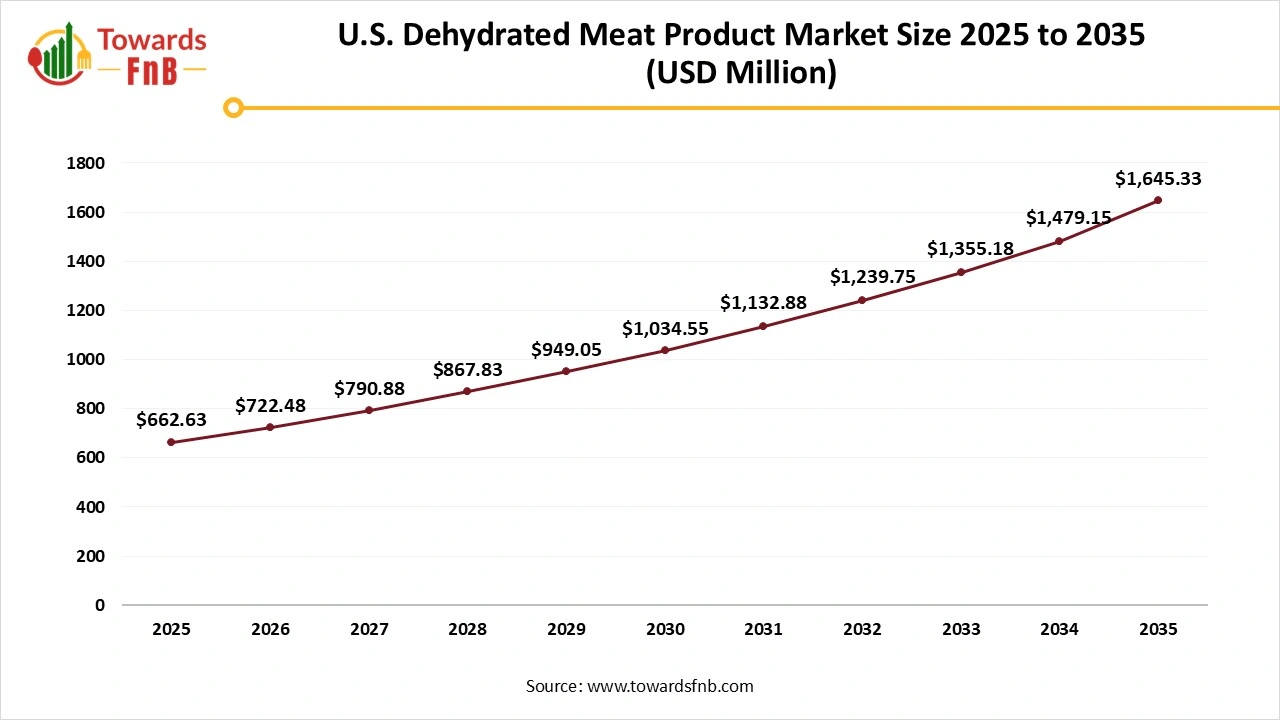
The U.S. dehydrated meat product market market size was valued at USD 662.63 million in 2025 and is expected to grow steadily from USD 722.48 million in 2026 to reach nearly USD 1,645.33 million by 2035, with a CAGR of 9.52% during the forecast period from 2026 to 2035.
Asia Pacific Dehydrated Meat Product Market Trends
Asia Pacific is experiencing the fastest growth in the market during the forecast period. The surging fast-paced lifestyles and the increased nutritional awareness increases adoption of dehydrated meat product. The increased production of innovative snacks and the high consumption of nutrient-dense diets increase demand for dehydrated meat product. The high availability of premium dried meat snacks and the growth of direct-to-consumer platforms drive the market growth.
India’s Growing Role in Dehydrated Meat Product
India is robustly growing in the market. The popularity of easy-to-store foods and the increased consumption of low-carbohydrate snacks increases demand for dehydrated meat product. The robustly growing cloud kitchen and the increased urban pet ownerships increases adoption of dehydrated meat product. The strong focus on lowering refrigeration and the growing nutrition consciousness support the overall market growth.
Dehydrated Meat Product Market Share, By Product Type, 2025 (%)
| Segments | Shares (%) |
| Beef | 20% |
| Chicken/Poultry | 31% |
| Pork | 25% |
| Specialty/Exotic/Game Meat | 24% |
Why the Chicken Segment is Dominating the Dehydrated Meat Product Market?
The chicken segment dominated the dehydrated meat product market in 2025 with a 31% share. The consumer focuses on high-protein food, and the increased production of pet food formulations increases demand for chicken. The higher demand for lightweight products and the growth in food service channels increases adoption of chicken. The improved shelf life, affordability, convenience, and production efficiency of chicken drive market growth.
The Specialty/Exotic Meats Segment is the Fastest-Growing in the Market During the Forecast Period
The growing interest in highly processed snacks and the popularity of on-the-go activities increase demand for specialty meats. The focus on the consumption of adventurous flavors and the spending on premium products increases the adoption of exotic meats. The improved processing techniques, portability, and flavor exploration in specialty/exotic meats support the overall market growth.
Dehydrated Meat Product Market Share, By Format, 2025 (%)
| Segments | Shares (%) |
| Jerky | 56% |
| Meat Sticks/Biltong | 20% |
| Others | 24% |
How did the Jerky Segment hold the Largest Share in the Dehydrated Meat Product Market?
The jerky segment held the largest revenue share of approximately 56% in the dehydrated meat product market in 2025. The surging number of fitness enthusiasts and the growing travel activities increase demand for jerky. The strong focus on muscle health and the heavy demand for portable products increase the adoption of jerky. The higher adoption rate of protein-focused lifestyles and the consumer interest in nutrient-rich snacks require jerky, driving the overall market growth.
The Meat Sticks/Biltong Segment is Experiencing the Fastest Growth in the Market During the Forecast Period
The popularity of carnivore diets and the increased consumption of non-perishable protein snacks increases demand for meat sticks. The transition to antibiotic-free meat and the strong focus on savory flavor increases adoption of biltong. The portability, superior texture, high nutritional value, increased utilization, and superior taste of meat sticks/biltong support the overall market growth.
Dehydrated Meat Product Market Share, By Technology, 2025 (%)
| Segments | Shares (%) |
| Hot Air-Dried | 40% |
| Freeze-Dried | 25% |
| Vacuum-Dried | 20% |
| Sun-Dried | 15% |
Which Technology Segment Dominated the Dehydrated Meat Product Market?
The hot air-dried segment dominated the dehydrated meat product market in 2025. The increased production of jerky and the rising processing of various meats increases demand for hot air-dried technology. The high scalability, product quality control, extended shelf life, versatility, cost-effectiveness, and optimal preservation of hot air-dried technology drive market growth.
The Freeze-Dried Segment is the Fastest-Growing in the Market During the Forecast Period
The strong focus on removing moisture from meat and the need for emergency meals increase the adoption of freeze-dried. The rise in healthy snacking and the increased pet food demand increases the adoption of freeze-dried. The long-term shelf life, improved logistics, exceptional quality, rapid rehydration, and superior nutrition of freeze-dried supports the overall market growth.
How did the Offline Segment hold the Largest Share in the Dehydrated Meat Product Market?
The offline segment held the largest revenue share in the market in 2025. The high preference for checking the product physically and the rise in impulse purchasing increases adoption of offline buying. The availability of specialized outlets and the well-established traditional retail help market expansion. The instant availability, consumer trust, and limited digital penetration of offline distribution drive market growth.
The Online/E-Commerce Segment is Experiencing the Fastest Growth in the Market During the Forecast Period
The growing rate of smartphone adoption and the strong presence of subscription services increases buying online. The availability of specialized products and the ease of shipping increase online buying. The consumer preference for convenient buying and easy access to a variety of products supports the market growth.
Maple Leaf Foods
Archer
Singing Pastures
By Product Type
By Format
By Technology
By Distribution Channel
By Region





Principal Consultant
Vidyesh Swar, Senior Research Analyst at Towards Food & Beverages, specializes in market research, focusing on supply-demand evaluation, pricing analysis, alternative proteins, plant-based foods, and sustainable food technologies within the industry.
Learn more about Vidyesh Swar
Reviewed By
Aditi Shivarkar, with 14+ years in Food and Beverages market research, specializes in food, beverage, and eco-friendly packaging. She ensures accurate, actionable insights, driving Towards FnB's excellence in industry trends and sustainability.
Learn more about Aditi ShivarkarApril 2026
April 2026
April 2026
February 2026

Dehydrated Meat Product Market


 +1 804-441-9344
 Download Sample
 Schedule a Meeting