April 2026



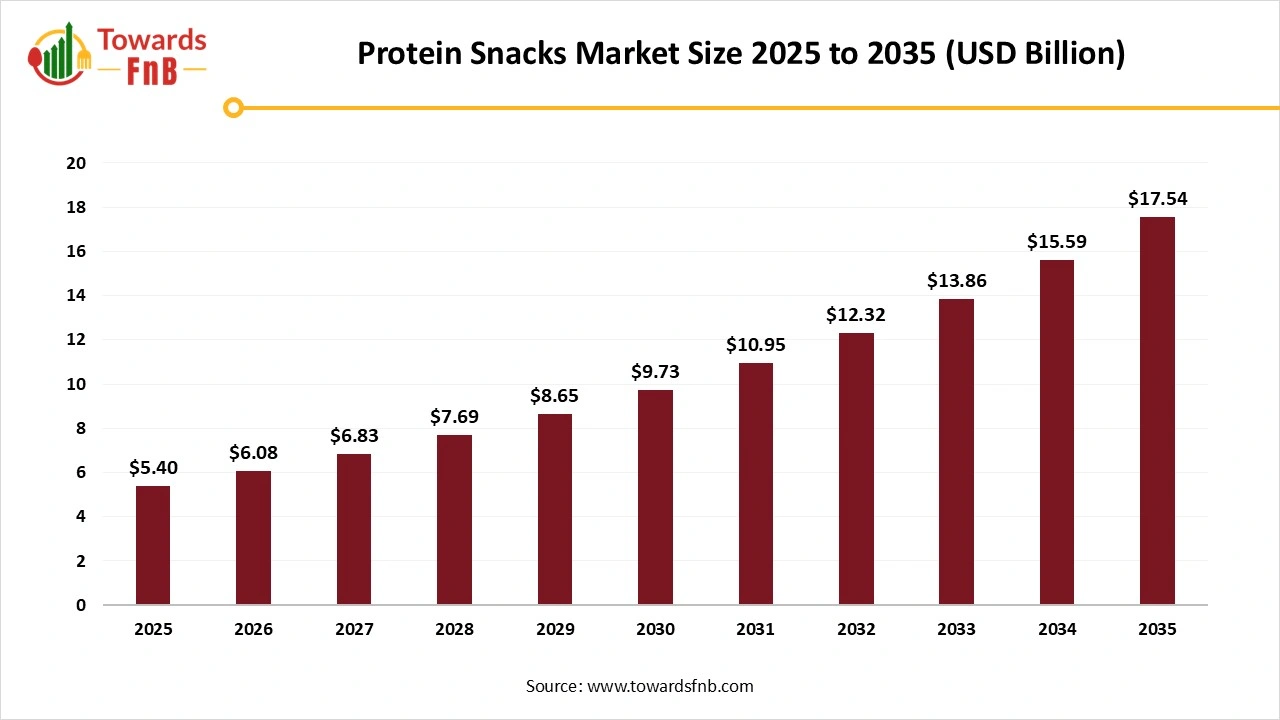
The global protein snacks market size is valued at USD 5.40 billion in 2025 and is predicted to grow from USD 6.08 billion in 2026 to reach approximately USD 17.54 billion by 2035, expanding at a CAGR of 12.5% from 2026 to 2035. Increasing demand for convenient, nutrient-dense food options is significantly driving the market.
| Study Coverage | Details |
| Growth Rate from 2026 to 2035 | CAGR of 12.5% |
| Market Size in 2026 | USD 6.08 Billion |
| Market Size in 2027 | USD 6.83 Billion |
| Market Size by 2035 | USD 17.54 Billion |
| Largest Market | North America |
| Base Year | 2025 |
| Forecast Period | 2026 to 2035 |
| Regions Covered | North America, Europe, Asia-Pacific, Latin America, and Middle East & Africa |
The protein snacks market includes ready-to-eat, high-protein food products designed to support nutrition, energy, weight management, and active lifestyles. These snacks are made from whey, soy, pea, nuts, seeds, and other protein sources. They are widely consumed by athletes, fitness consumers, and health-focused individuals seeking convenient nutrient-dense options. Growing demand for clean-label, fortified, and plant-based products, rising gym culture, busy lifestyles, and increasing awareness of protein intake are driving market expansion across retail, online, and specialty nutrition channels.
Extrusion offers unmatched versatility for developing high-protein foods in snackable and ready-to-eat forms. Innovations in high-pressure processing (HPP), smart packaging, hybrid protein formulations, and AI-powered flavor forecasting are redefining standards in snack production and consumer engagement. The plant-based meat analog sector is exploring and designing innovative technologies such as electrospinning and three-dimensional/four-dimensional 3D food printing while also applying existing technologies like extrusion, shear pressing, mechanical elongation, and antisolvent extraction to refine and improve the texturization of plant proteins at a lower environmental cost using suitable combinations of various plant proteins.
Raw Material Procurement
Processing
Packaging
Why Did North America Dominate the Protein Snacks Market?
North America dominated the market with 43.5% share in 2025. The North American protein snacks market is experiencing swift growth due to evolving consumer preferences, heightened health awareness, and a growing need for convenient, on-the-go nutrition. The trend toward healthier snacks is being fueled by consumers' increasing interest in high-protein choices that support active lifestyles, muscle development, and weight management. Additionally, innovations in product formulations and the availability of a wide array of protein-rich snack options, such as bars, chips, and nuts, are contributing to market growth.
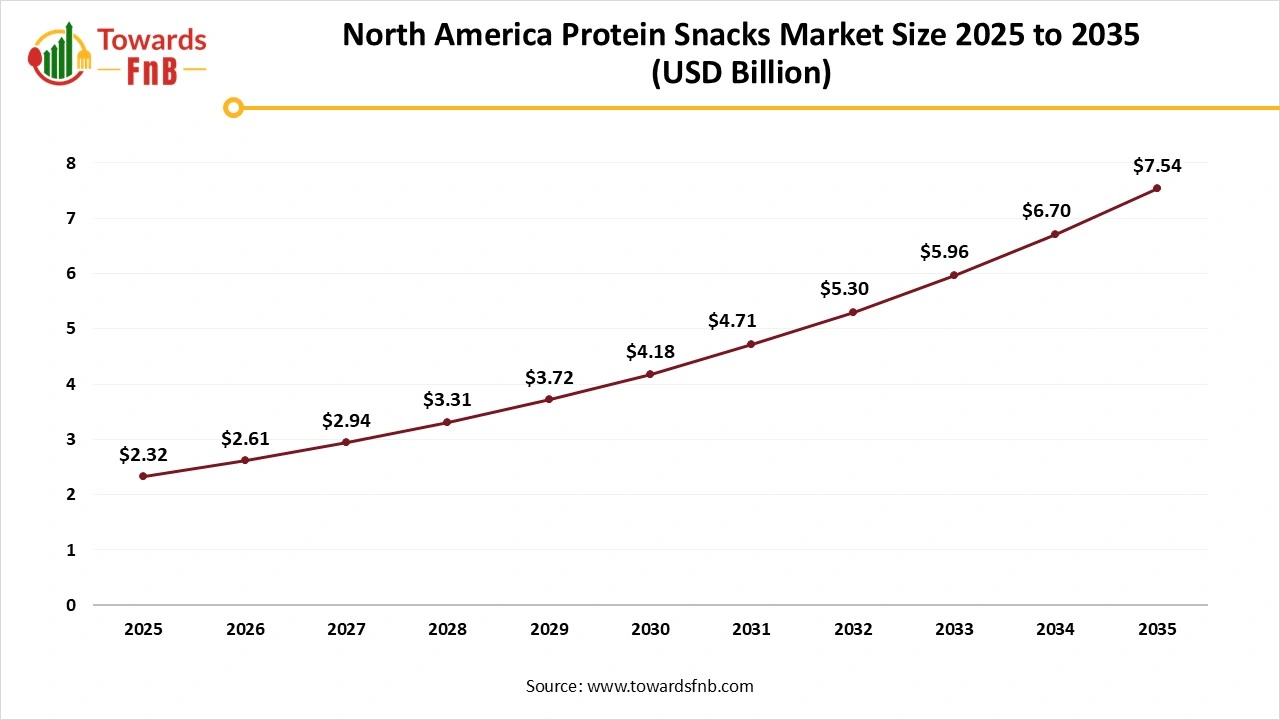
The North America protein snacks market size is valued at USD 2.32 billion in 2025 and is predicted to increase from USD 2.61 billion in 2026 to reach approximately USD 7.54 billion by 2035, expanding at a CAGR of 12.5% from 2026 to 2035.
U.S. Protein Snacks Market Examination
In the U.S., the demand for protein snacks is on the rise as consumers increasingly pursue convenient, nutrient-dense snack alternatives that align with active lifestyles and wellness objectives. Another important factor is the escalating focus on clean-label ingredients, plant-based protein sources, and functional benefits like muscle support, appetite regulation, and weight management. Brands are utilizing labels that highlight high-protein on packaging to cater to the growing consumer awareness and demand for snacks that are conducive to performance or dietary goals. Moreover, e-commerce and direct-to-consumer channels have enhanced the accessibility and visibility of niche protein snack brands, promoting market
Fastest Growing Protein Snacks Market of the Asia Pacific
Asia Pacific is expected to grow at the fastest CAGR of 10.5% during the forecast period, driven by increasing urbanization, rising disposable incomes, and greater awareness of health and wellness trends in emerging economies such as China, India, and Southeast Asia. Consumers are progressively embracing functional foods that support active lifestyles and address specific health issues like obesity and nutrient deficiencies. Local producers are innovating by blending traditional ingredients with contemporary formulations to meet regional taste preferences while preserving health benefits.
India's Protein Snacks Market Analysis
The Indian protein snacks market, a dynamic and highly competitive environment, is currently undergoing significant disruption from health-oriented FMCG food companies. While there is an expanding health-conscious demographic, the route to widespread acceptance of protein snacks in India is intricate. Although increasing health awareness and rising disposable incomes are driving this trend, the influence of celebrities and social media personalities promoting higher protein intake as part of their lifestyle is further accelerating its growth. It's not just health-focused startups like Yoga Bar, Troovy, The Whole Truth, SuperYou, and Protein Chef that are contributing to this trend; established players in the food and beverage sector are also entering the market.

Europe Protein Snacks Market Expansion
As Europeans incorporate more healthy snacks into their diets, they are simultaneously consuming fewer items they deem unhealthy. To cater to consumers' growing interest in snacks enriched with protein, brands might consider offering a wider variety of protein-fortified formats. Among users of protein bars, 50% find protein cookies appealing, while 47% are attracted to protein brownies. Key markets such as the UK, Germany, France, and Spain, are showing a notable shift toward premium, clean-label, and diverse protein sources.
UK Protein Snacks Market Study
The protein snacks market in the United Kingdom is experiencing robust growth, attributed to health-conscious trends, convenience, and an increased demand for high-protein, low-sugar alternatives. 'Healthy eating' has become a principal concern among consumers, leading to the introduction of numerous innovative products within the snacking segment. Notably, approximately 66% of consumers engage in snacking between meals at least once daily, underscoring the integral role of snacks in contemporary diets. Protein-based snacks have transitioned into a staple for a diverse range of consumers, including not only fitness enthusiasts but also students, busy commuters, and casual snackers. Brands are increasingly highlighting protein content on packaging and, in certain instances, structuring their entire branding around this feature.
Middle East and Africa Protein Snacks Market Growth Drivers
The protein snacks market in the Middle East and Africa is also undergoing significant expansion, driven by a growing consumer preference for healthy and convenient snacking options. Heightened awareness regarding the advantages of high-protein diets, particularly among fitness devotees and health-conscious individuals, is propelling this demand. The region’s increasing urbanization and fast-paced lifestyles are further catalyzing a shift towards on-the-go snacking, prompting consumers to seek protein-enriched products. Consumer lifestyles play a pivotal role in their selection within this indulgent category, with notable preferences for halal, kosher, vegan, and various other dietary requirements. Brands operating within the Middle East and Africa are strategically aligning their marketing efforts with health priorities to meet consumer needs.
UAE Protein Snacks Market Trends
The United Arab Emirates is not merely adhering to global trends; it is leading the way for the Middle East and Africa in the domain of protein-rich snacks. Products characterized by clean-label, natural, organic, and sugar-free formulations are resonating with consumers. The rise in gym memberships in urban areas is resulting in an increased demand for performance-oriented snack products. The burgeoning popularity of strength training among residents in the UAE has notably contributed to a rise in the consumption of protein bars.
South America Protein Snacks Market Potential
A growing consumer awareness regarding health and wellness is boosting the demand for protein snacks. Urbanization and increasingly hectic lifestyles are driving the need for nutritious, convenient on-the-go options. Innovations in product formulations, particularly those focusing on plant-based and clean-label protein sources, are enhancing the market's attractiveness. Brazil, Argentina, and Mexico emerge as primary producers of protein-rich snacks within South America, capitalizing on their robust agricultural sectors and manufacturing capabilities.
Brazil Protein Snacks Market Analysis
In Brazil, the demand for convenience foods is escalating at an accelerated pace, influenced by shifting social and economic dynamics, an increase in expenditure on food and beverages, awareness surrounding healthy eating, alterations in meal patterns and existing food habits, and a keen interest in novel products. Brazil represents a strategic opportunity due to its large and increasingly health-conscious population, rising disposable incomes, and heightened awareness regarding the role of protein in nutrition and wellness. The prevailing global trend emphasizes the increasing consumer inclination toward plant-based and clean-label protein sources, a shift that the Brazilian market is rapidly embracing.
Protein Snacks Market Share, By Product Type, 2025 (%)
| Segments | Shares (%) |
| Protein Bars | 35.6% |
| Protein Chips | 15% |
| Protein Cookies | 10% |
| Protein Nuts & Seeds | 12% |
| Protein Shakes & Drinks | 9% |
| Meat-Based Protein Snacks | 13% |
| Plant-Based Protein Snacks | 5.4% |
Why did the Protein Bars Segment Dominate the Protein Snacks Market?
The protein bars segment led the market with 35.6% share in 2025. Diet trends such as high-protein and ketogenic regimens are gaining traction, thereby driving the demand for protein bars that align with these nutritional strategies. Additionally, the increasing emphasis on personalized nutrition, with consumers seeking tailored health solutions, has further stimulated the market for protein bars that provide specific benefits, such as muscle recovery or weight management.
The plant-based protein snacks segment is anticipated to grow at the most rapid CAGR of 9.2% during the forecast period. This growth is bolstered by rising consumer awareness regarding health benefits, an increased demand for sustainable food options, and a growing emphasis on plant-based nutrition and ethical consumption. Food manufacturers are actively expanding their portfolios of plant-based snack offerings to meet the surging demand for nutritious and sustainable snacking solutions.
Protein Snacks Market Share, By Distribution Channel, 2025 (%)
| Segments | Shares (%) |
| Supermarkets & Hypermarkets | 45.5% |
| Convenience Stores | 10% |
| Specialty Nutrition Stores | 8% |
| Online Retail | 12% |
| Fitness Centers | 25% |
Which Distribution Channel Dominated the Protein Snacks Market?
The supermarkets & hypermarkets segment held the dominating share of 45.5% in the market in 2025. Supermarkets and hypermarkets provide a diverse range of protein bar brands, flavors, and formulations all in one place. This selection enables shoppers to easily evaluate items and select based on their tastes, dietary requirements, or health objectives. The availability of different options increases consumer satisfaction and encourages repeat purchases.
The online retail segment is seen to grow at a fastest CAGR of 9.4% during the predicted timeframe. This growth is driven by the convenience of shopping from home and the wide variety of products available online. Shoppers can conveniently compare different brands, check reviews, and locate protein snacks that satisfy their requirements. Online shopping enables bulk buying and subscription services, simplifying the process for health-oriented consumers to replenish their preferred snacks.
How did the Chocolate Flavor Dominate the Protein Snacks Market?
The chocolate flavor segment dominated the market with the 43.5% share in 2025. The significant liking for chocolate-flavored high-protein snacks is due to their broad consumer attraction, providing a mix of indulgence and nutritional value. Chocolate continues to be a timeless option in the functional food category, improving the flavor of protein-packed snacks while providing a sense of comfort for buyers.
Savory flavors segment is expected to grow at the fastest CAGR of 9.6% during the forecast period. Savory snacks rich in protein present a chance for innovation to satisfy consumers’ increasing desire for healthy protein in their preferred savory forms. Chips with high protein content, such as Quest Protein Chips, are a particularly favored type of savory protein snack. Savory snacks rich in protein are poised for success as a growing number of consumers lean towards healthier snack options.
Genius Gourmet
Ready®
The Kroger Co.
By Product Type
By Distribution Channel
By Flavor
By Region




Principal Consultant
Vidyesh Swar, Senior Research Analyst at Towards Food & Beverages, specializes in market research, focusing on supply-demand evaluation, pricing analysis, alternative proteins, plant-based foods, and sustainable food technologies within the industry.
Learn more about Vidyesh Swar
Reviewed By
Aditi Shivarkar, with 14+ years in Food and Beverages market research, specializes in food, beverage, and eco-friendly packaging. She ensures accurate, actionable insights, driving Towards FnB's excellence in industry trends and sustainability.
Learn more about Aditi ShivarkarApril 2026
April 2026
April 2026
April 2026

Protein Snacks Market


 +1 804-441-9344
 Download Sample
 Schedule a Meeting