April 2026



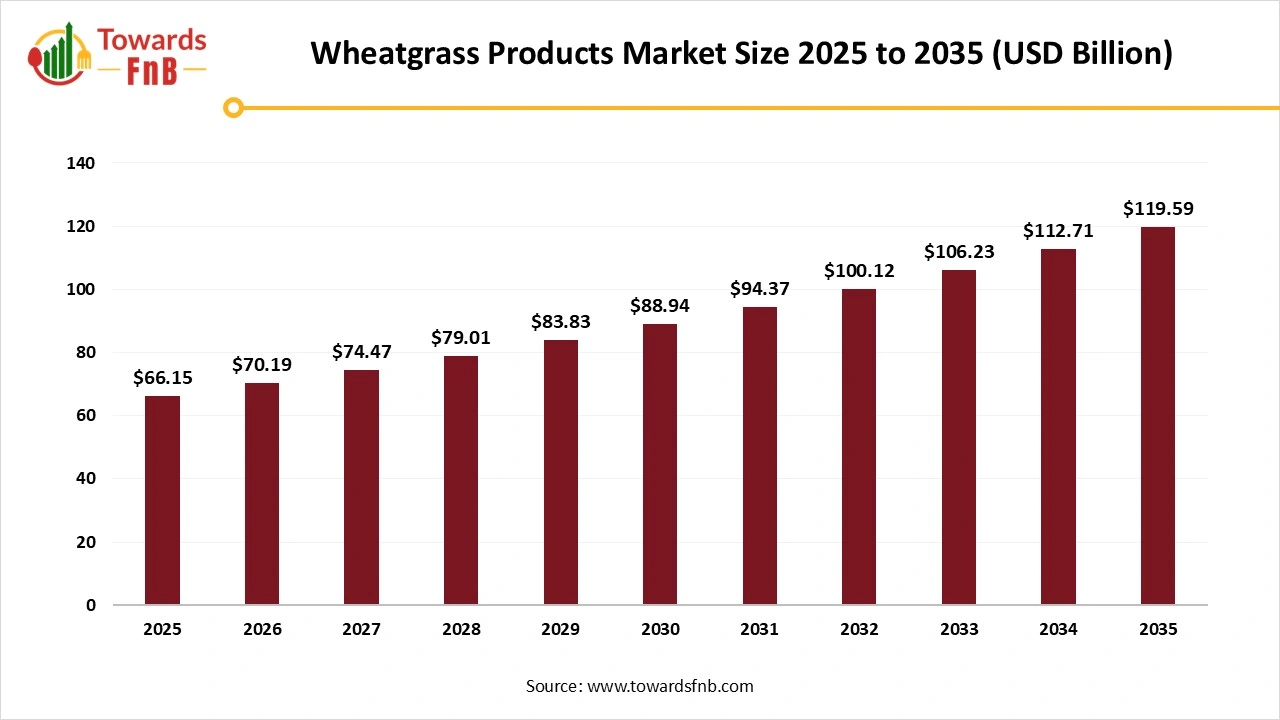
The global wheatgrass products market size reached at USD 66.15 billion in 2025 and is anticipated to increase from USD 70.19 billion in 2026 to an estimated USD 119.59 billion by 2035, witnessing a CAGR of 6.1% during the forecast period from 2026 to 2035. Rising awareness about the health benefits of wheatgrass among consumers is significantly driving the market.
| Study Coverage | Details |
| Growth Rate from 2026 to 2035 | CAGR of 6.1% |
| Market Size in 2026 | USD 70.19 Billion |
| Market Size in 2027 | USD 74.47 Billion |
| Market Size by 2035 | USD 119.59 Billion |
| Largest Market | North America |
| Base Year | 2025 |
| Forecast Period | 2026 to 2035 |
| Regions Covered | North America, Europe, Asia-Pacific, Latin America, and Middle East & Africa |
In the current landscape, wheatgrass products have gained popularity as a healthy food due to their high content of vitamins, as well as minerals such as iron, magnesium, and calcium. It is also rich in antioxidants and several bioactive compounds that provide potential health benefits, including anti-inflammatory, anti-cancer, anti-diabetic, immunomodulatory, and cardiovascular protective properties, as well as promoting good digestive health. The wheatgrass products industry is benefiting from the expansion of distribution channels, enhancing product accessibility.
Advances in processing technologies and product development have shown that optimized levels of wheatgrass powder or juice can enhance the nutritional and antioxidant profiles of food products while maintaining desirable taste and texture. Additionally, sustainable cultivation methods and value-added applications present opportunities for expanding the wheatgrass industry and meeting the rising demand for functional foods. Innovations in freeze-drying and cold-press extraction methods are helping to retain the maximum nutritional content of wheatgrass, making it easier to consume in various forms, such as powders and juices.
Raw Material Procurement
Processing
Distribution
Why did North America Dominate The Wheatgrass Products Market?
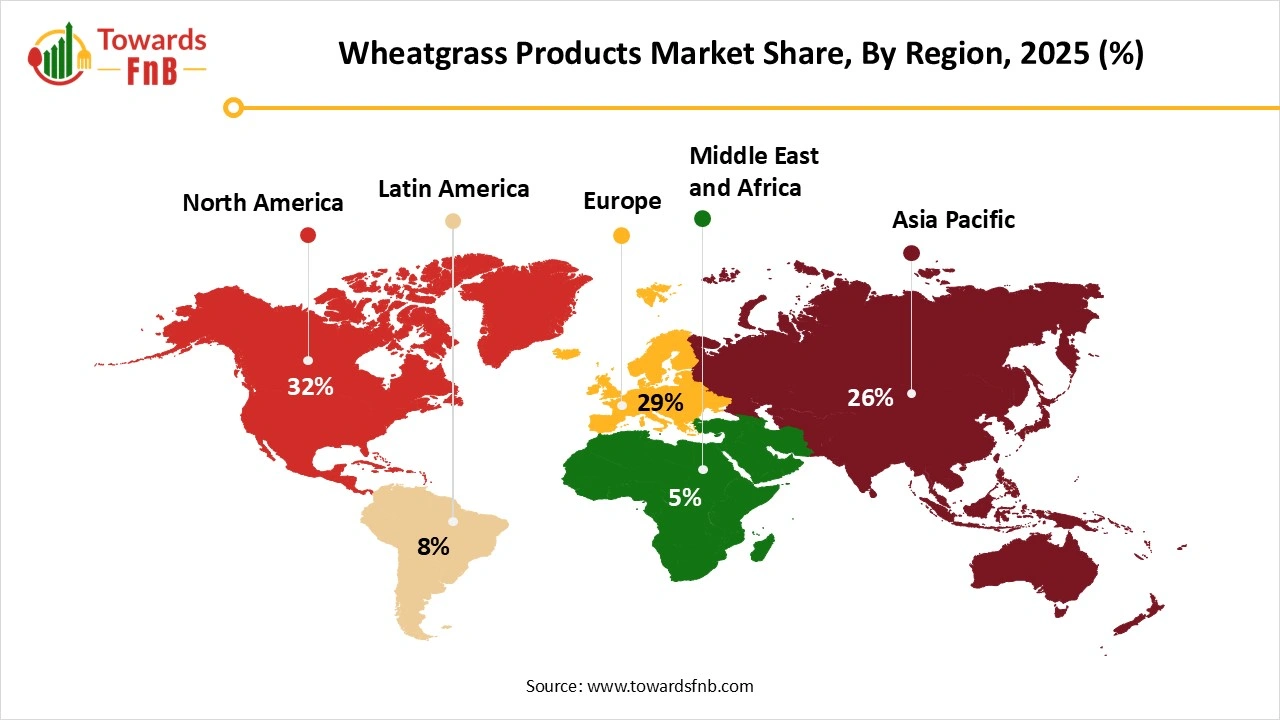
North America dominated the market in 2025. The market is driven by rising consumer demand for organic, non-GMO, and functional superfoods, along with the increasing inclusion of wheatgrass in smoothie, juices, and dietary supplements. Additionally, the growing popularity of fitness influencers and holistic health coaches is raising consumer awareness of wheatgrass's nutritional value, further promoting market expansion. Continuous advancements in cold-pressing and freeze-drying technologies are also supporting the development of high-quality wheatgrass products with extended shelf life, enhancing market appeal.
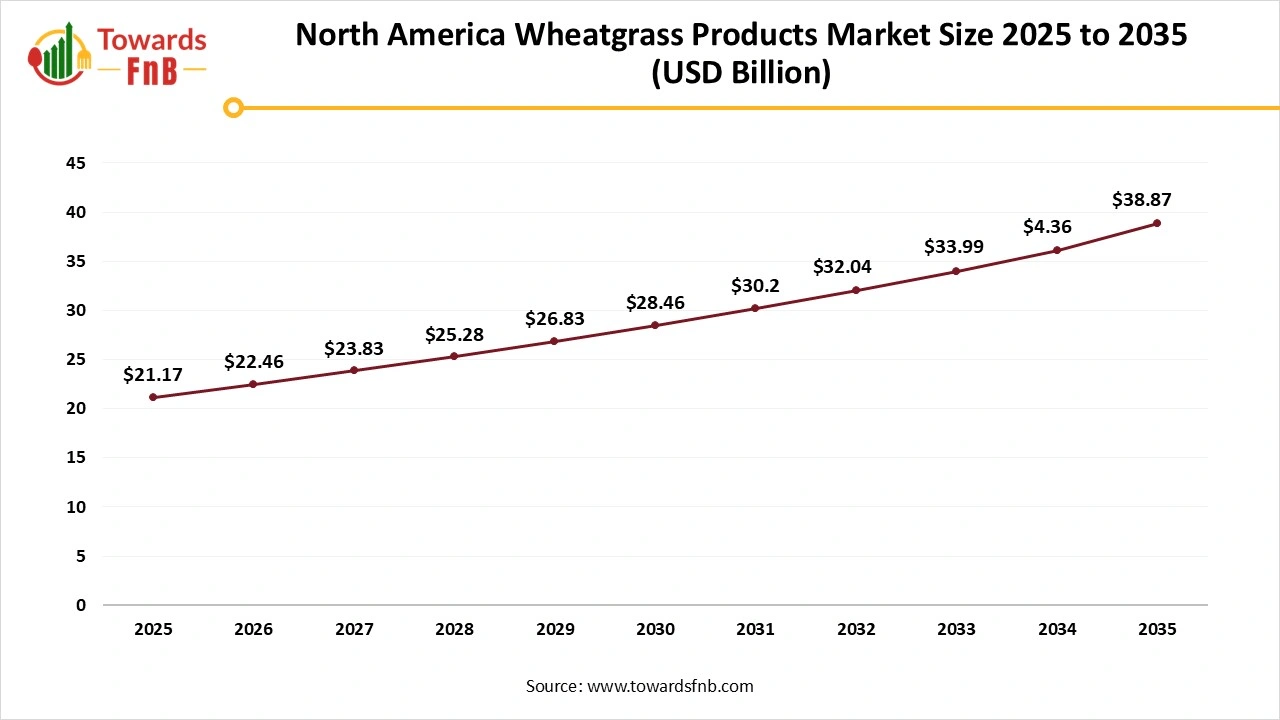
North America Wheatgrass Products Market Size 2025 to 2035
The North America wheatgrass products market size was calculated at USD 21.17 billion in 2025 with projections indicating a rise from USD 22.46 billion in 2026 to approximately USD 38.87 billion by 2035, expanding at a CAGR of 6.26% throughout the forecast period from 2026 to 2035.
U.S. Wheatgrass Products Market Trends
The United States market is positioned for significant growth, driven by rising consumer interest in health, wellness, and sustainable living. The increasing prevalence of lifestyle-related health issues has encouraged consumers to seek natural supplements rich in nutrients. The market offers substantial opportunities for existing players and new entrants to innovate through organic certification, product diversification, and sustainable sourcing practices. The increasing popularity of e-commerce channels is further amplifying market reach.
How Big is the U.S. Wheatgrass Products Market?
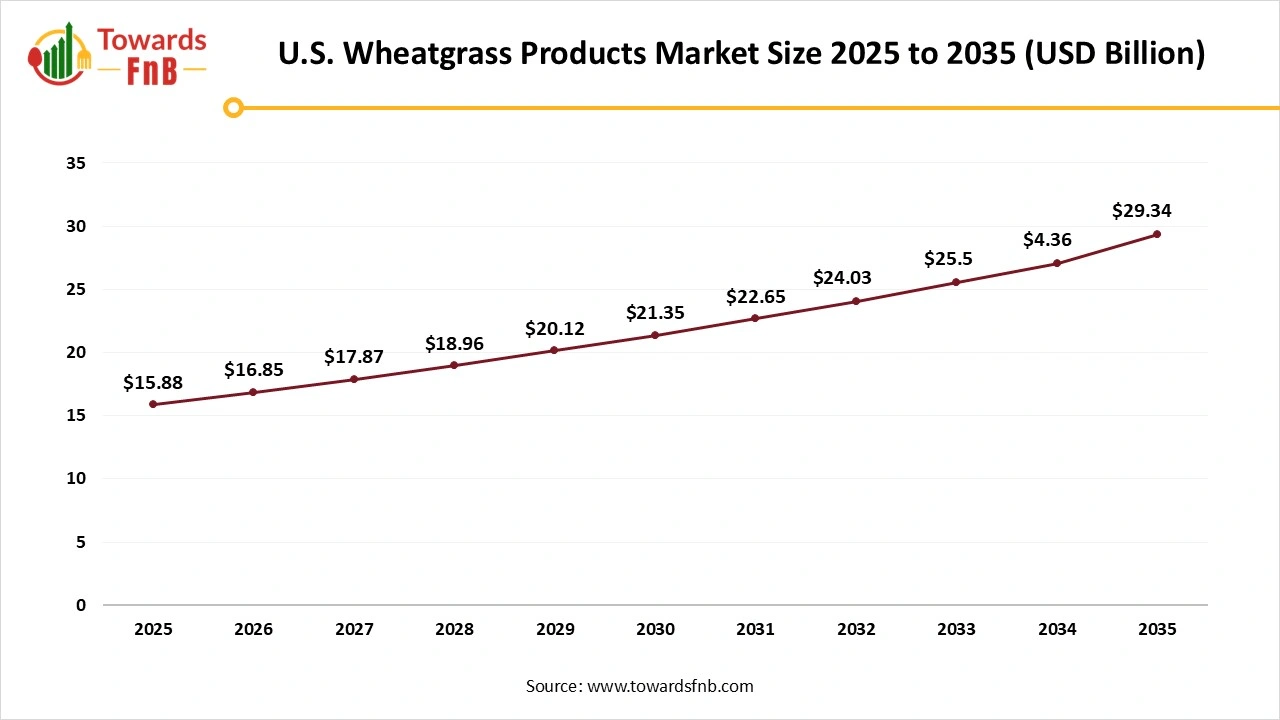
The U.S. wheatgrass products market size estimated at USD 15.88 billion in 2025 and is predicted to increase from USD 16.85 billion in 2026 to nearly reaching USD 29.34 billion by 2035, growing at a CAGR of 6.33% during the forecast period from 2026 to 2035.
Asia Pacific Wheatgrass Products Market Trends
Asia Pacific expects fastest growth during the forecast period. The Asia Pacific market is undergoing a notable transformation driven by growing consumer health consciousness and an increasing preference for natural, organic food. The sector's competitiveness is shifting from traditional agricultural practices to innovative cultivation methods that emphasize organic certification and sustainable sourcing. Technological advancements in cultivation, harvesting, and processing are improving product quality and consistency, thereby elevating industry standards. Furthermore, the integration of digital marketing channels and e-commerce platforms has expanded market reach.
China Wheatgrass Products Market Trends
The China wheatgrass products market is undergoing significant changes due to evolving consumer preferences, technological advancements, and regulatory shifts. The growing demand for functional food with health benefits has increased the competitiveness of wheatgrass products, positioning them as a crucial segment within the broader health food industry. Innovations in cultivation techniques, such as hydroponic and organic farming, are improving product quality and yield, which, in turn, lowers production costs and enhances profit margins.
Europe Wheatgrass Products Market Trends
Europe's wheatgrass products industry growth is being driven by a rapid increase in health-conscious consumers across European countries, leading to a higher demand for nutrient-dense, convenient, and scientifically validated superfood supplements that offer proven health benefits. Modern consumers view wheatgrass products as concentrated sources of vitamins, minerals, chlorophyll, and antioxidants, bolstering the demand for items that deliver measurable health advantages.
UK Wheatgrass Products Market Trends
In the UK, the market is experiencing robust growth, largely fueled by health-conscious consumers seeking natural, nutrient-dense superfoods. The dietary supplement and functional beverage sectors dominate this segment, with millennials and wellness-focused demographics showing increasing interest.
South America Wheatgrass Products Market Trends
The South American market remains relatively niche but steadily growing, driven by rising consumer awareness of health, wellness, and plant-based nutrition. Urban consumers in countries like Brazil and Argentina are increasingly adopting functional foods and natural detox supplements, which fuels demand for wheatgrass products such as powders, juices, and wellness mixes.
Brazil Wheatgrass Products Market Trends
In Brazil, the market is emerging alongside a broader rise in health-focused and functional foods, driven by growing consumer interest in natural, plant-based nutrition and wellness supplements. Wheatgrass in forms like powders, juices, and supplements is increasingly available in health food stores and online retail channels, often positioned for benefits such as detox support, immunity enhancement, and nutrient density though much of the product supply still comes from imports and premium international brands.
Middle East and Africa Wheatgrass Products Market Trends
The Middle East and Africa wheatgrass products market is emerging steadily as health and wellness trends take stronger hold among urban consumers, particularly in countries like the UAE, South Africa, Egypt, Nigeria, and Saudi Arabia, where demand for natural, plant-based dietary supplements is rising. Growing health consciousness, driven by increased awareness of nutrition and preventive health, is encouraging more consumers to adopt wheatgrass in forms such as juices, powders, tablets, and ready-to-drink blends, with retail and online channels expanding product accessibility.
UAE Wheatgrass Products Market Trends
In the UAE, the market is on a growth trajectory, fueled by increasing health consciousness, rising demand for organic and plant-based functional foods, and broader wellness trends among urban consumers. The market spans fresh wheatgrass, powders, juices, and supplements, with a notable uptick in availability through both retail outlets and e-commerce platforms as health-focused products gain traction.
Wheatgrass Products Market Share, By Form, 2025 (%)
| Segments | Shares (%) |
| Powder | 65% |
| Juice | 25% |
| Others | 10% |
Which Form of the Wheatgrass Products Dominated the Wheatgrass Products Market in 2025?
The powder segment dominated the market in 2025. Its convenience for on-the-go consumption makes it appealing to busy consumers. Whether mixed into a smoothie, sprinkled on a salad, or applied as a skin treatment, wheatgrass easily fits into a healthy lifestyle. Its longer shelf life and portability distinguish it from fresh wheatgrass juice, providing a convenient way to increase vitamin, mineral, and antioxidant intake when fresh greens are unavailable or unappealing.
The Juice Segment is Projected to Grow at the Fastest Rate During the Forecast Period.
As the wellness movement continues to gain momentum, consumers are increasingly seeking nutrient-dense beverages that support immune function, energy, and overall health. Healthy juices have become a popular choice, contributing to substantial market growth as they provide a convenient and enjoyable way to consume recommended nutrient amounts.
Wheatgrass Products Market Share, By Distribution Channel, 2025 (%)
| Segments | Shares (%) |
| B2B | 20% |
| B2C | 35% |
| Supermarket/Hypermarket | 15% |
| Convenience Drug Store | 10% |
| Online | 12% |
| Others | 8% |
Which Distribution Channel Dominated the Wheatgrass Products Market in 2025?
The B2C segment held the largest market share in 2025, as most wheatgrass products are purchased directly by consumers for daily wellness and preventive health. Supermarkets, specialty health stores, and online platforms offer wide access to organic and premium wheatgrass brands. Direct customer interactions yield valuable data that help understand consumer behavior, identify trends, and refine marketing strategies.
The Online Segment is Expected to Grow Notably During the Forecast Period.
Various online channels and brands provide wheatgrass products globally, ranging from powders and supplements to fresh juice kits. E-commerce sales channels can reach a wider audience, diversify revenue streams, and optimize sales strategies to cater to different customer preferences and behaviors. By effectively managing and integrating these channels, e-commerce retailers can enhance their online presence and increase sales.
Hiya
Amazing Grass
By Form
By Distribution Channel
By Region





Principal Consultant
Vidyesh Swar, Senior Research Analyst at Towards Food & Beverages, specializes in market research, focusing on supply-demand evaluation, pricing analysis, alternative proteins, plant-based foods, and sustainable food technologies within the industry.
Learn more about Vidyesh Swar
Reviewed By
Aditi Shivarkar, with 14+ years in Food and Beverages market research, specializes in food, beverage, and eco-friendly packaging. She ensures accurate, actionable insights, driving Towards FnB's excellence in industry trends and sustainability.
Learn more about Aditi ShivarkarApril 2026
April 2026
April 2026
April 2026

Wheatgrass Products Market


 +1 804-441-9344
 Download Sample
 Schedule a Meeting