April 2026



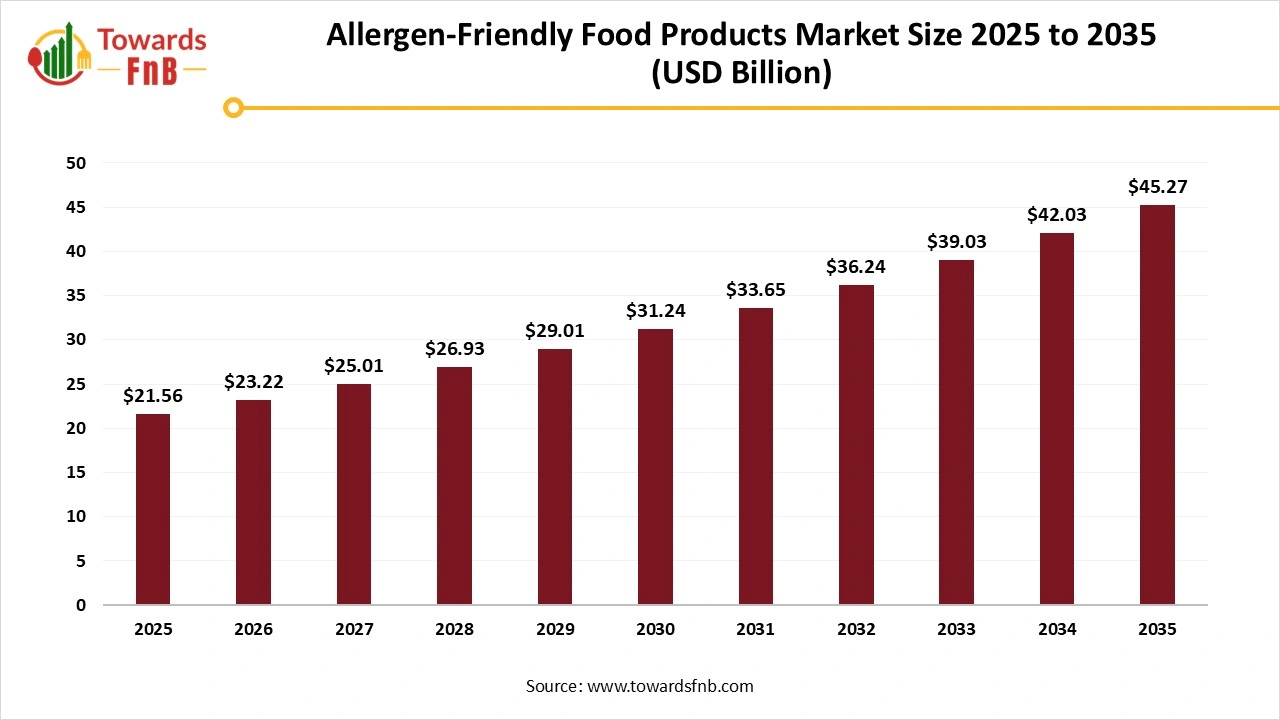
The global allergen-friendly food products market size reached at USD 21.56 billion in 2025 and is anticipated to increase from USD 23.22 billion in 2026 to an estimated USD 45.27 billion by 2035, witnessing a CAGR of 7.7% during the forecast period from 2026 to 2035. The rapid growth in food allergies and consumer preference for dairy-free diets drives market growth.
| Study Coverage | Details |
| Growth Rate from 2026 to 2035 | CAGR of 7.7% |
| Market Size in 2026 | USD 23.22 Billion |
| Market Size in 2027 | USD 25.01 Billion |
| Market Size by 2035 | USD 45.27 Billion |
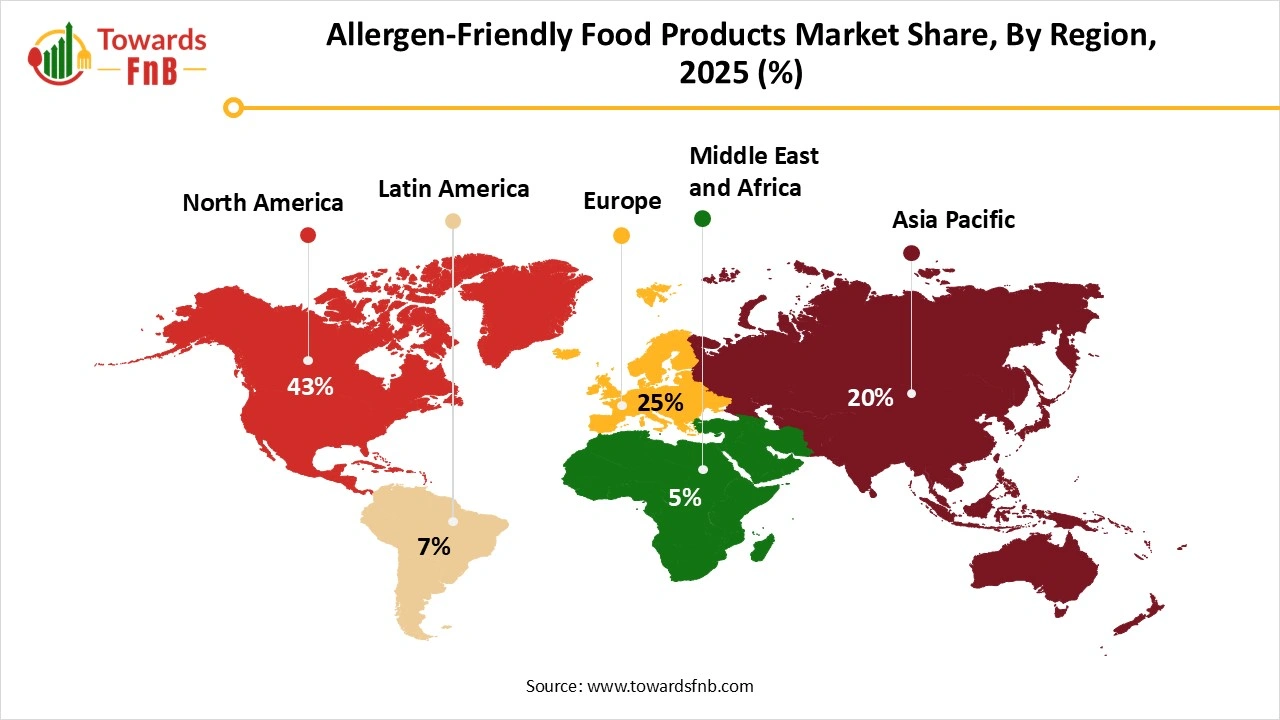
| Largest Market | North America |
| Base Year | 2025 |
| Forecast Period | 2026 to 2035 |
| Regions Covered | North America, Europe, Asia-Pacific, Latin America, and Middle East & Africa |
Allergen-friendly food products are food products that do not contain items causes allergic reactions. The Top 9 ingredients that cause allergies are eggs, shellfish, peanuts, soy, milk, wheat, fish, sesame, and nuts. Some types of allergen-friendly food are dairy-free, nut-free, gluten-free, egg-free, and soy-free. They possess characteristics like rigorous safety, nutritional qualities, specialized storage, free-from specific allergens, and transparent labeling. They offer benefits like enhancing gut health, increasing safety, clean nutrition, and lowering inflammation. Some examples of allergen-free food products are fresh vegetables, rice, canola oil, SkinnyPop popcorn, fresh fruits, and others.
Allergen-friendly food products market growth is driven by the growing intolerances among consumers, push for healthier eating habits, comprehensive food labeling regulations, online retail expansion, increased adoption of veganism, high spending on premium products, shift towards a clean label lifestyle, and the growing demand for dairy alternatives.
The allergen-friendly food products market is undergoing key technological shifts driven by demand for sensory experience and non-thermal processing. The technological shift, like blockchain traceability, nanobiosensors, advanced detection methods, advanced ingredient substitution, and IoT integration, ensures purity and identifies allergic ingredients. The major innovation is the AI integration that enhances safety detection and provides accurate labelling.
AI easily detects hypoallergenic ingredients and creates new allergen-free products. AI identifies the micro-level of allergens in food products and offers a real-time view of allergen status. AI easily understands a multi-lingual ingredient list and predicts cross-contamination risks. AI provides accurate food labels and highlights allergens. Additionally, Companies like CanEat, NotCo, and Mondelez International use AI for various purposes, like scanning allergens, developing allergen-friendly alternatives, and developing gluten-free products.
Raw Material Procurement
Processing and Preservation
Quality Testing and Certifications
| Company | Allergen-Friendly Food Products Developed | Products Free From |
| Enjoy Life Foods | Crunchy Cookies Chocolate Bars Baking Mixes Lentil Chips Brownies |
Peanuts Dairy Eggs Fish Wheat Tree Nuts Sesame Soy |
| MadeGood | Granola Minis Soft Baked Chewy Cookies Granola Bars Baked Oat Cups Crackers |
Tree nuts Dairy Sesame Shellfish Wheat Peanuts Soy Egg Fish Gluten |
| Free2b | Sun Cup Minis Bag O’ Treats Sun Cups Crunchsters |
Peanut Dairy Gluten Fish Sesame Tree Nut Egg Soy Shellfish |
Why North America Dominates the Allergen-Friendly Food Products Market?
North America dominated the allergen-friendly food products market in 2025. The growing rate of food allergies and the shift towards plant-based diets increase demand for allergen-friendly food products. The stringent allergen-labeling regulations and the strong presence of retail infrastructure increases buying of allergen-friendly food products. The growing incidence of celiac disease and the increasing number of individuals with lactose intolerance increase demand for allergen-friendly food products, driving the overall market growth.
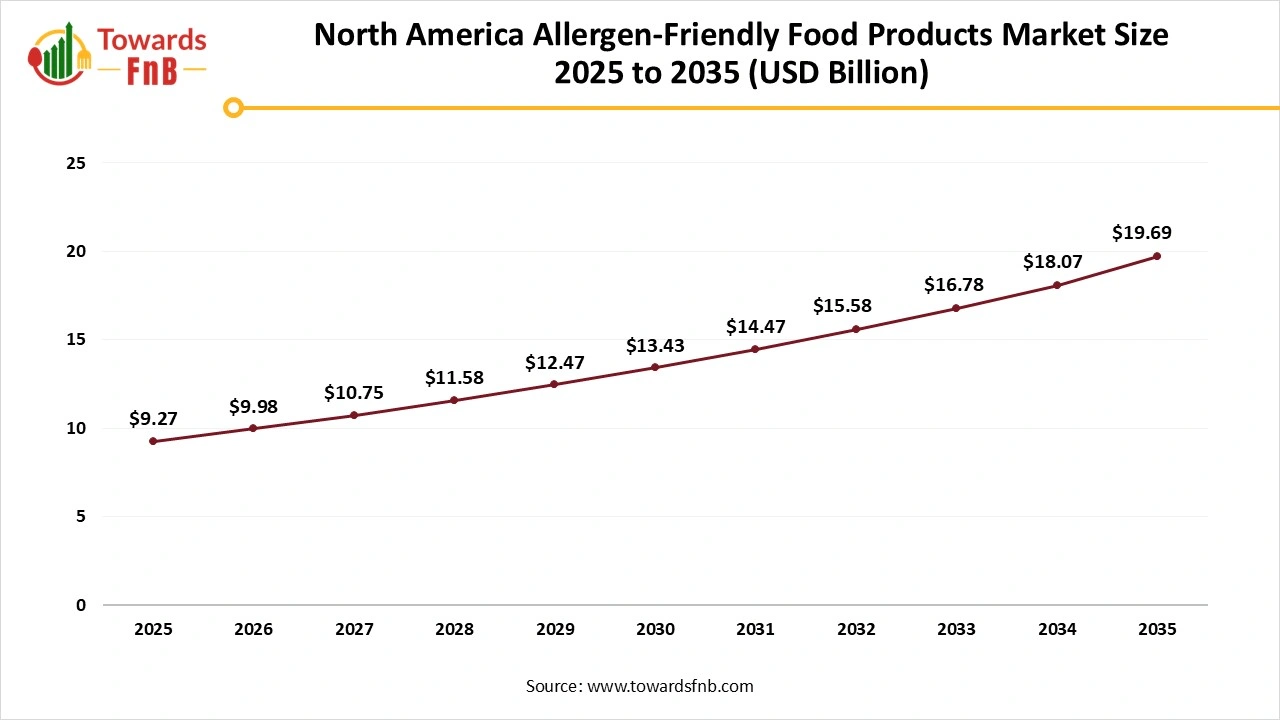
North America Allergen-Friendly Food Products Market Size 2025 to 2035
The North America allergen-friendly food products market size was calculated at USD 9.27 billion in 2025 with projections indicating a rise from USD 9.98 billion in 2026 to approximately USD 19.69 billion by 2035, expanding at a CAGR of 7.82% throughout the forecast period from 2026 to 2035.
The United States Role in Allergen-Friendly Food Products
The United States is the leading contributor to the market. The growing prevalence of allergies in children and the consumer focus on consumption of nut-free products increase demand for allergen-friendly food products. The regulations for clear labelling of allergens and the growth in health-conscious consumer increases adoption of allergen-friendly food products. The well-established food allergen testing infrastructure supports the overall market growth.
Asia Pacific Allergen-Friendly Food Products Market Trends
Asia Pacific is experiencing the fastest growth in the market during the forecast period. The growing diagnosis rate of food allergies and the increased consumption of health-oriented food increase demand for allergen-friendly food products. The expanding online grocery platforms and the favorable food labeling guidelines increases adoption of allergen-friendly food products. The growing popularity of Western diets and the high rate of intolerances support the overall market growth.
Rising Revolution of Allergen-Friendly Food Products in China
China is a key contributor to the market due to the growing awareness of food intolerances. The high exposure to allergens and the strong focus on better allergen detection increase demand for allergen-friendly food products. The rising food allergies and increased spending on safe food create a higher demand for allergen-friendly food products. The expanding digital sales platform and consumers dietary shifts support the overall market growth.
Allergen-Friendly Food Products Market Share, By Product Type, 2025 (%)
| Segments | Shares (%) |
| Bakery & Confectionery (allergen-free) | 30% |
| Dairy & Dairy Alternatives (lactose-free, nut-free milks/yogurts) | 18% |
| Snacks & Savory Foods | 15% |
| Frozen & Ready-to-Eat Meals | 13% |
| Infant & Baby Foods (allergen-friendly) | 5% |
| Beverages (free from common allergens) | 8% |
| Supplements & Functional Foods | 11% |
Why the Bakery and Confectionery Segment Dominates the Allergen-Friendly Food Products Market?
The bakery and confectionery segment dominated the allergen-friendly food products market in 2025. The busier lifestyle of the consumer and the increased consumption of convenient snacks increase demand for bakery and confectionery products. The increased production of gluten-free bakery product and the shift towards dairy-free cakes help market expansion. The increased consumption of on-the-go baked goods and the shift towards egg-free confectionery drive the overall market growth.
The Infant and Baby Foods Segment is the Fastest-Growing in the Market During the Forecast Period.
The increasing rate of food allergies among children and the parents preference for non-GMO food increases demand for allergen-free infant & baby foods. The focus on reducing foodborne disease in children and the high spending on allergen-friendly items increase the adoption of allergen-free infant & baby foods. The increasing lactose intolerance in infants and the focus on preventive allergens support the overall market growth.
How did the Gluten-Free Segment hold the Largest Share in the Allergen-Friendly Food Products Market?
The gluten-free segment held the largest revenue share in the market in 2025. The growing incidence of celiac diseases and the focus on weight management increase demand for gluten-free products. The increasing rate of non-celiac gluten sensitivity and the high availability of health-food stores increases adoption of gluten-free products. The increased prevalence of non-celiac gluten sensitivity and growing health consciousness drive the overall market growth.
The Multiple Allergen-Free Products Segment is Experiencing the Fastest Growth in the Market During the Forecast Period.
The increasing awareness of allergies and the focus on avoiding multiple allergens increases demand for multiple-allergen-free products. The consumer’s focus on clean eating and the increased diagnosis of intolerances creates a higher demand for multiple-allergen-free products. The complex dietary needs support the overall market growth.
Allergen-Friendly Food Products Market Share, By Formulation, 2025 (%)
| Segments | Shares (%) |
| Clean-Label / Natural Allergen-Friendly | 40% |
| Organic Allergen-Friendly | 10% |
| Non-GMO Allergen-Friendly | 30% |
| Functional / Fortified Allergen-Friendly | 20% |
What made the Clean-Label or Natural Allergen-Friendly Formulations Segment Dominates the Allergen-Friendly Food Products Market?
The clean-label or natural allergen-friendly formulations segment dominated the allergen-friendly food products market in 2025. The consumer's strong focus on ingredient lists of food and the increasing need for avoiding preservatives increases the adoption of clean-label allergen-friendly formulations. The push for natural alternatives to synthetic ingredients and the surging plant-based protein help market expansion. The stringent food labeling laws and the younger generation's demand for sustainably sourced food drive the overall market growth.
The Organic Allergen-Friendly Formulations Segment is the Fastest-Growing in the Market During the Forecast Period.
Consumer shift towards transparently labelled food and the growing wellness consciousness increases the adoption of organic allergen-friendly formulations. The focus on sustainability concerns and the rising awareness of allergens increases demand for organic allergen-friendly formulations. The ongoing lifestyle changes and the expanding organic food options support the overall market growth.
Allergen-Friendly Food Products Market Share, By Distribution Channel, 2025 (%)
| Segments | Shares (%) |
| Supermarkets / Hypermarkets | 45% |
| Specialty Health Food Stores | 15% |
| Convenience Stores | 11% |
| E-commerce & Online Grocery Platforms | 20% |
| Direct-to-Consumer (Brand Websites) | 9% |
Which Distribution Channel held the Largest Share in the Allergen-Friendly Food Products Market?
The supermarkets or hypermarkets segment held the largest revenue share in the allergen-friendly food products market in 2025. Consumer trust in in-person ingredients verification and the availability of a wide variety of products increases demand for supermarkets or hypermarkets. The availability of private-label allergen-free products in supermarkets helps market expansion. The convenience, increased visibility, and easy accessibility in supermarkets or hypermarkets drive the market growth.
The E-commerce and Direct-to-Consumer Segment is Experiencing the Fastest Growth in the Market During the Forecast Period.
The presence of people in remote areas and specific dietary restrictions increases the buying of allergen-friendly products from e-commerce. Consumers focus on detailed information, and rising hyper-personalization increases the adoption of direct-to-consumer. The direct communication, transparency, brand loyalty, and safety on e-commerce and direct-to-consumer support the overall market growth.
Daiya
Wow! Momos
Shicken
By Product Type
By Allergen Type Targeted
By Formulation
By Distribution Channel
By Region




Principal Consultant
Vidyesh Swar, Senior Research Analyst at Towards Food & Beverages, specializes in market research, focusing on supply-demand evaluation, pricing analysis, alternative proteins, plant-based foods, and sustainable food technologies within the industry.
Learn more about Vidyesh Swar
Reviewed By
Aditi Shivarkar, with 14+ years in Food and Beverages market research, specializes in food, beverage, and eco-friendly packaging. She ensures accurate, actionable insights, driving Towards FnB's excellence in industry trends and sustainability.
Learn more about Aditi ShivarkarApril 2026
April 2026
April 2026
April 2026

Allergen-Friendly Food Products Market

 +1 804-441-9344
 Download Sample
 Schedule a Meeting