April 2026



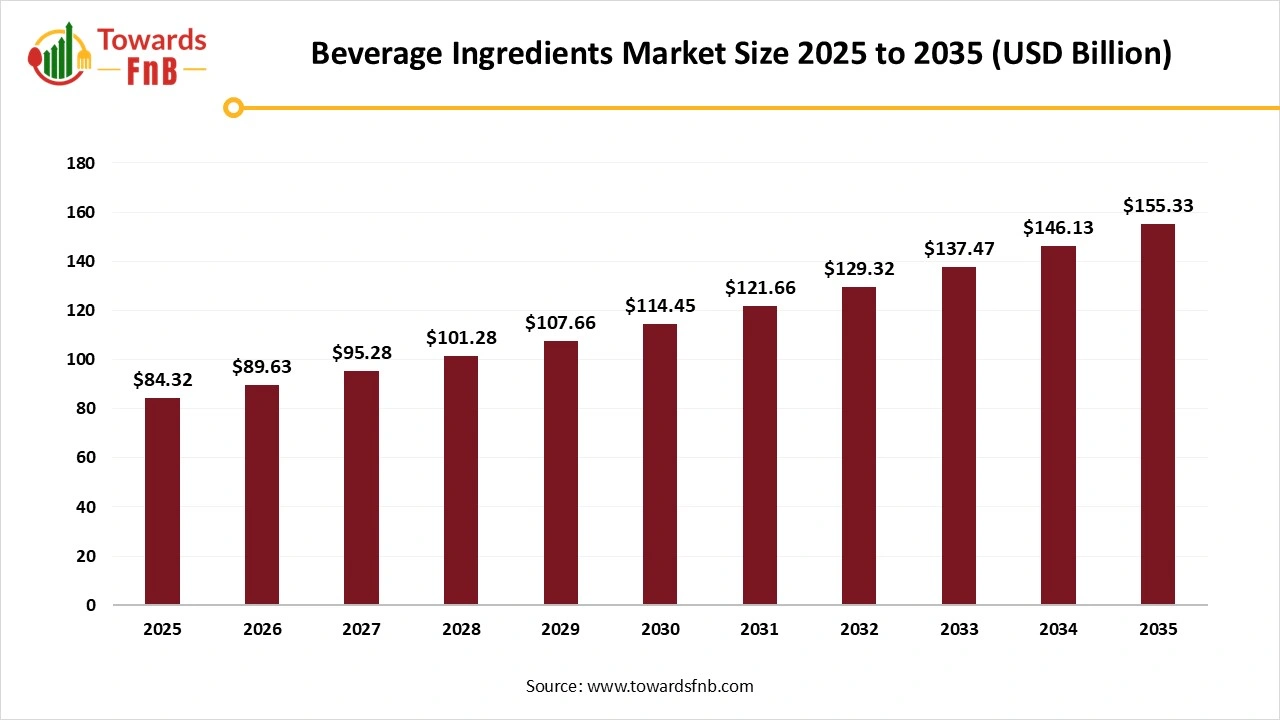
The global beverage ingredients market size estimated at USD 84.32 billion in 2025 and is anticipated to increase from USD 89.63 billion in 2026 to nearly reaching USD 155.33 billion by 2035, witnessing a CAGR of 6.3% during the forecast period from 2026 to 2035. Rising health awareness and growing demand for functional drinks are significantly driving the market.
| Study Coverage | Details |
| Growth Rate from 2026 to 2035 | CAGR of 6.3% |
| Market Size in 2026 | USD 89.63 Billion |
| Market Size in 2027 | USD 95.28 Billion |
| Market Size by 2035 | USD 155.33 Billion |
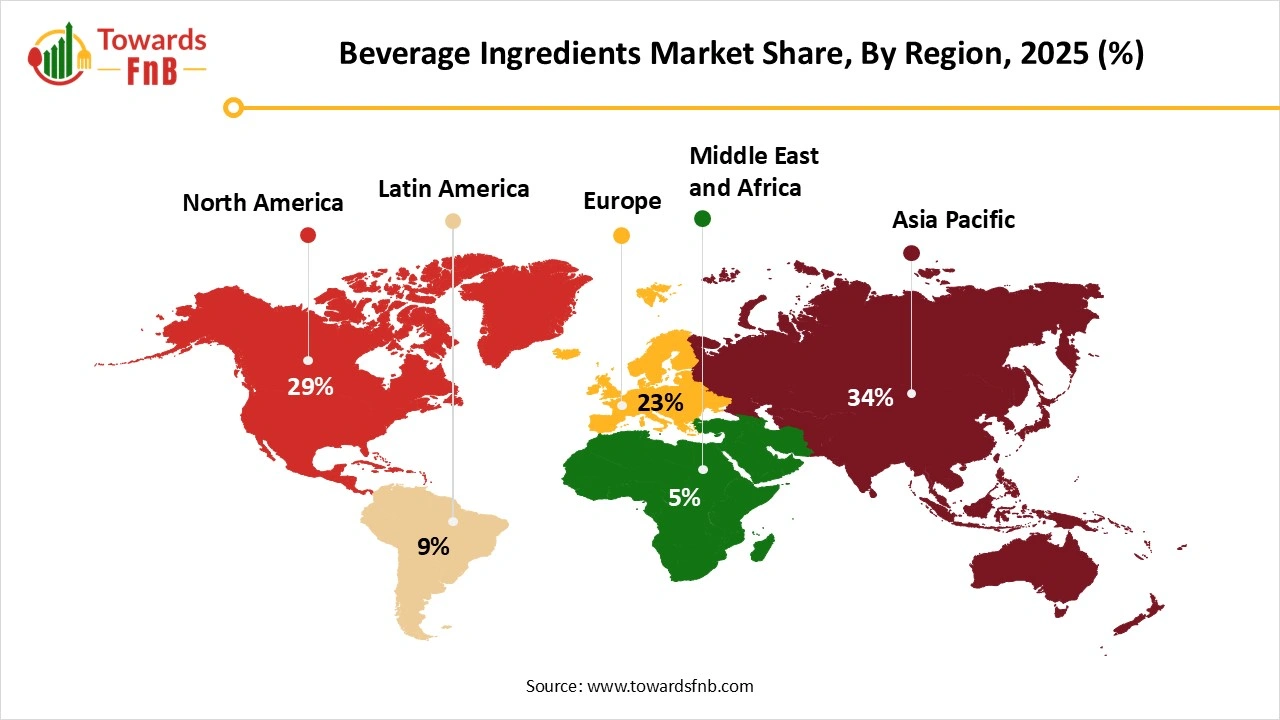
| Largest Market | Asia Pacific |
| Base Year | 2025 |
| Forecast Period | 2026 to 2035 |
| Regions Covered | North America, Europe, Asia-Pacific, Latin America, and Middle East & Africa |
The beverage ingredients market refers to the global industry that produces and supplies raw materials used to make drinks. These ingredients include flavors, sweeteners, colors, preservatives, enzymes, acids, vitamins, minerals, and functional additives used in beverages such as soft drinks, juices, energy drinks, dairy-based drinks, alcoholic beverages, and plant-based alternatives. The market is driven by changing consumer preferences, demand for healthier and functional beverages, and innovation in natural and clean-label ingredients. Manufacturers focus on improving taste, shelf life, nutrition, and sustainability. Growth is also influenced by urbanization, rising incomes, and new beverage product launches.
Advanced processing techniques now enable the preservation of delicate flavor compounds and nutritional components that would have been lost in traditional processing methods. Consequently, fruit-based ingredients deliver genuinely authentic taste experiences. Researchers are working on improving the stability of active compounds using encapsulation, emulsion, and high-pressure homogenization techniques to enhance the consumer perception of functional beverages. Food and beverages brands can now explore an extensive library of ingredients with the help of AI, allowing for the design of exciting new flavors and unexpected taste combinations. This technology is revolutionizing ingredient discovery, enabling food scientists to experiment with a seemingly endless array of flavors and ingredients.
Raw Material Procurement
Processing
Distribution
Why did the Asia Pacific Dominate the Beverage Ingredients Market in 2025?
Asia Pacific dominated the beverage ingredients market in 2025. The Asia Pacific region presents significant potential for the beverage ingredients industry, featuring key players such as China, India, Japan, South Korea, and Australia. Urbanization and rising disposable incomes, along with shifts in consumer lifestyles, are driving growth in these markets. The increasing demand for health-conscious beverages and the expanding middle-class demographic position the Asia Pacific region favorably for a growing market. Additionally, the rising preference for natural and organic ingredients is another important trend influencing the market.
Asia Pacific Beverage Ingredients Market Size 2025 to 2035
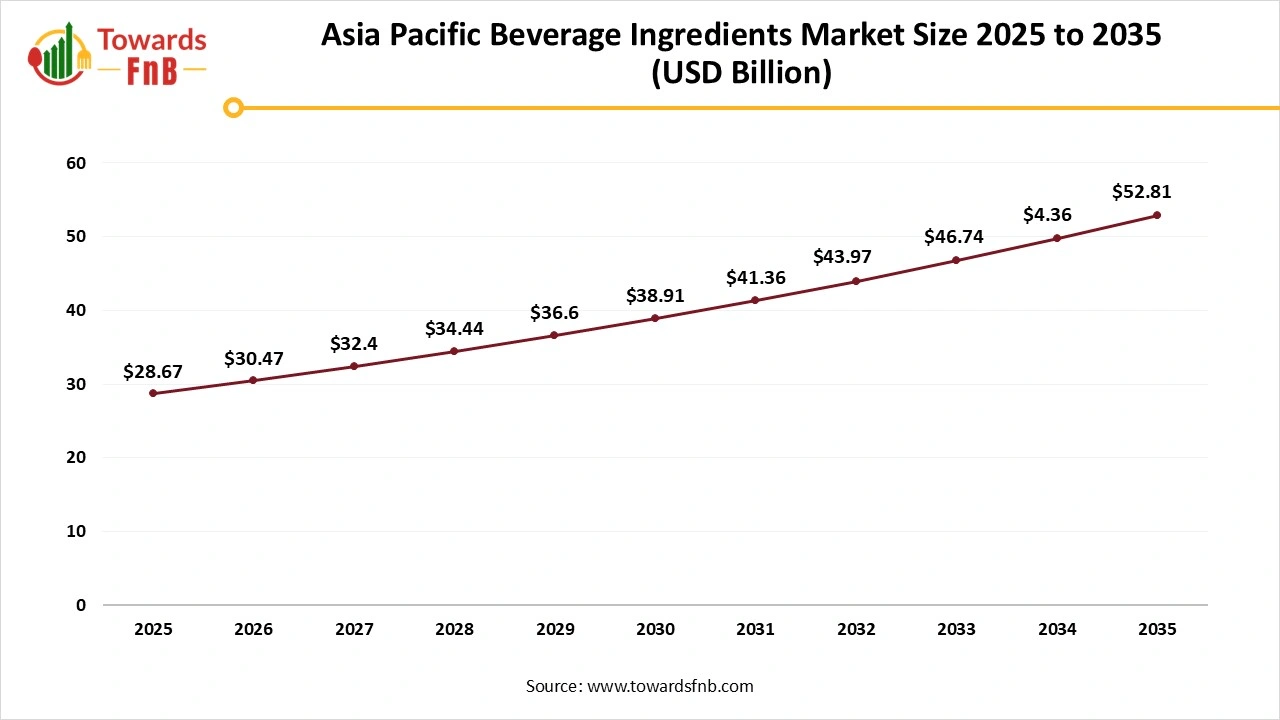
The Asia Pacific beverage ingredients market size was calculated at USD 28.67 billion in 2025 with projections indicating a rise from USD 30.47 billion in 2026 to approximately USD 52.81 billion by 2035, expanding at a CAGR of 6.45% throughout the forecast period from 2026 to 2035.
China Beverage Ingredients Market Analysis
The Chinese beverage ingredients market is undergoing rapid transformation due to shifting consumer preferences, technological advancements, and a growing health-conscious population. As one of the largest markets globally, China presents substantial opportunities for ingredient suppliers and manufacturers keen to capitalize on the evolving landscape of beverage formulations. The demand for functional, natural, and organic ingredients is shaping product development strategies throughout the industry.
North America: The Fastest-Growing Region in the Beverage Ingredients Market
North America expects the fastest growth during the forecast period. The expansion of the market is driven by several significant factors. The increasing demand for healthier and functional beverages, alongside the rising popularity of personalized drinks, serves as a primary catalyst. Consumers are increasingly inclined to seek beverages enriched with vitamins, minerals, and other functional ingredients that align with their wellness objectives. Additionally, modern consumers exhibit a strong preference for health, sustainability, and ethical sourcing in their purchasing choices. Research indicates that 56% of consumers are willing to pay a premium for recognizable ingredients, while 38% of new product launches in the United States and Canada feature clean label claims. The growing demand for convenient and ready-to-drink beverages further influences market dynamics. Innovation in beverage formulations, including the introduction of novel flavors and textures, plays a pivotal role in driving market growth.
United States Beverage Ingredients Market Growth Factors
In the United States, the market is primarily influenced by both global and domestic factors. The heightened awareness of health issues and nutritional needs is advancing the demand for natural, functional, and low-calorie beverages. Consumers are increasingly favoring products with fewer artificial ingredients, which promotes transparency in product formulations. The interest in unique and exotic flavors compels companies to explore diverse ingredients to satisfy varying consumer tastes. The market has witnessed a surge of new product introductions, such as Brighter A.M.’s Morning Magic, a drink mix that combines green tea caffeine with L-theanine, KSM-66 ashwagandha, rhodiola, and lion's mane to promote calm focus without jitters. Additionally, Clevr Blends has launched adaptogen-infused lattes.
Europe Beverage Ingredients Market Growth
The beverage ingredients market in Europe is also experiencing robust growth, driven by consumer demand for clean-label, natural, and functional ingredients. The European beverage ingredients sector has seen significant mergers and acquisitions in recent years, attracting corporate and private equity investors who recognize the substantial growth and value generation opportunities the sector presents. Consumers increasingly prefer products that are natural, health-oriented, and environmentally friendly. Leading countries in Europe include Germany, France, and the United Kingdom, where companies such as BASF and Givaudan are at the forefront of developing sustainable ingredients.
Germany Beverage Ingredients Market Analysis
Germany provides a highly favorable market environment for producers of various beverage ingredients. The combination of a large local market and evolving consumer preferences in response to health and wellness trends, alongside consistent growth in exports, contributes to the strong demand for innovative ingredients and formulations.
The Middle East and Africa Beverage Ingredients Market Growth
In the Middle East and Africa, the beverage ingredients market is primarily driven by the increasing consumer demand for functional beverages and healthier alternatives. Rising health consciousness among consumers has prompted a growing interest in beverages that provide nutritional benefits, such as energy enhancement, weight management, and immune support. This trend has encouraged manufacturers to innovate and introduce ingredient-specific drinks. Moreover, the expanding food and beverage industry in emerging economies, such as South Africa, the United Arab Emirates, and Saudi Arabia, significantly contributes to market growth.
UAE Beverage Ingredients Market Study
The United Arab Emirates (UAE) market is established with a strategic presence in a dynamic and rapidly growing region, renowned for its evolving beverage industry. The UAE presents a lucrative opportunity due to its expanding craft and premium beverage segments, increasing consumer sophistication, and favorable trade policies. Various regional and international firms offer beverage ingredients in the UAE, encompassing a diverse range of products, including low-calorie sweeteners, caffeine, high fructose corn syrup (HFCS), citric acid, folic acid, potassium, and vitamins, among others.
South America Beverage Ingredients Market Analysis
The market for beverage ingredients in South America is positioned for significant growth, driven by an increasing consumer preference for natural, clean-label, and innovative flavors in food and beverages. In this region, trends surrounding functional drinks are largely influenced by consumers seeking healthier alternatives to high-sugar options, such as sodas, in response to weight management and overall health concerns.
Brazil Beverage Ingredients Market
In Brazil, the beverage ingredients market is experiencing dynamic expansion, supported by a large, diverse population and heightened health awareness. There is a notable rise in the demand for natural, organic, and functional ingredients, bolstered by local production capabilities and a robust agricultural sector. This market benefits from the country's distinct flavor profiles and cultural diversity, which encourage innovation in flavorings and specialty ingredients. Moreover, regulatory frameworks and sustainability initiatives further influence market development, positioning Brazil as a significant player within the South American beverage ingredients landscape.
Beverage Ingredients Market Share, By Ingredient Type, 2025 (%)
| Segments | Shares (%) |
| Flavors | 25% |
| Sweeteners | 45% |
| Colorants | 17% |
| Functional Ingredients | 13 |
Which Ingredient Type Segment Dominated the Beverage Ingredients Market in 2025?
The sweeteners segment led the beverage ingredients market in 2025, primarily due to a growing trend of health awareness among consumers. There is an increased acceptance of carb-free and keto-friendly beverages, driving the usage of natural low-calorie sweeteners such as stevia, monk fruit, and erythritol. Additionally, a resurgence in energy drinks, characterized by a shift toward low-sugar functional options, has resulted in the consumption of zero-sugar and reduced-calorie sweeteners. The rising trend of personalized beverages, which offer customizable sweetness levels and flavor enhancements, is also shaping the future of global beverage sweetener formulations.
The Flavors Segment is Projected to Exhibit the Fastest Growth Rate Throughout the Forecast Period.
The rising demand for diverse, customized, and indulgent flavor profiles in both alcoholic and non-alcoholic beverages is propelling the global beverage ingredients market. Consumers are increasingly adventurous, seeking creative experiences and diversions, which has led to the proliferation of unique flavor combinations in food and beverages. Notably, Asian ingredients such as yuzu, matcha, and lychee are becoming prominent in Western markets, while Middle Eastern flavors such as rose, pomegranate, and saffron impart an aura of opulence and tradition to contemporary drinks.
Beverage Ingredients Market Share, By Nature, 2025 (%)
| Segments | Shares (%) |
| Natural | 60% |
| Synthetic | 40% |
Why did the Natural Segment Dominate the Beverage Ingredients Market in 2025?
The natural segment dominated the beverage ingredients market by 2025, as consumers increasingly favor beverages containing natural and organic ingredients, while avoiding artificial additives and preservatives. This trend towards health-conscious and sustainable consumption has prompted manufacturers to develop natural flavoring systems that align with consumer preferences. Additionally, the rise of functional and fortified beverages, which often highlight natural ingredients, has supported the leading status of the natural segment.
The Synthetic Segment is Anticipated to Grow at the Fastest Rate During the Projected Period
Owing to its scalability, affordability, and consistency. This enables the mass production of reliable flavors, colors, and sweeteners, which are crucial for cost-effective processed drinks, energy beverages, and soft drinks, in spite of the growing demand for natural and clean-label options.
Beverage Ingredients Market Share, By Application, 2025 (%)
| Segments | Shares (%) |
| Alcoholic Beverages | 25% |
| Dairy & Plant-based Beverages | 20% |
| Soft Drinks | 30% |
| Functional Drinks | 15% |
| Others | 10% |
How did the Soft Drinks Segment Dominate the Beverage Ingredients Market in 2025?
The soft drinks segment dominated the market with the largest share in 2025. This robust performance is primarily attributed to the widespread consumer preference for carbonated and flavored beverages, particularly in urban areas where fast-paced lifestyles drive consumption patterns. Despite the high levels of competition within the soft drink market, it continues to thrive, bolstered by globalization trends and increasing disposable incomes in emerging economies, resulting in sustained demand for these fizzy beverages.
The Alcoholic Beverages Segment is Expected to Grow at the Fastest Rate During the Forecast Period
This growth is primarily driven by the increasing demand for premium alcoholic beverages, accompanied by innovations in ingredient formulations that enhance flavor profiles and improve the overall quality of alcoholic drinks. The role of various alcohol ingredients, such as yeast, enzymes, and flavors, is crucial in the production and differentiation of alcoholic beverages.
Which Functionality Segment Dominated the Beverage Ingredients Market in 2025?
The flavoring segment held the largest share of the market in 2025. The growing demand for innovative and exotic flavors in beverages is a significant driver, as consumers demand unique and diverse taste experiences. The increasing health consciousness among consumers driving the demand for natural and organic flavors, boosting market growth. Furthermore, the expansion of the beverage industry, including the swift growth of functional and fortified drinks, has fostered the demand for advanced flavoring systems.
The Nutritional Enrichment Segment is Observed to Grow at the Fastest Rate During the Forecast Period
Growth is driven by increasing health consciousness, preventative wellness trends, busy lifestyles, and a shift towards plant-based or natural options. In recent times, high and growing demand for beverage items fortified or enriched with ingredients of added health benefits, which include ingredients like minerals, vitamins, antioxidants, dietary fibers, and protein, has been noted. Consumers increasingly choose products that not only offer essential nutrients but also align with their lifestyle choices.
Tetra Pak
PepsiCo
By Ingredient Type
By Nature
By Application
By Functionality
By Region




Principal Consultant
Vidyesh Swar, Senior Research Analyst at Towards Food & Beverages, specializes in market research, focusing on supply-demand evaluation, pricing analysis, alternative proteins, plant-based foods, and sustainable food technologies within the industry.
Learn more about Vidyesh Swar
Reviewed By
Aditi Shivarkar, with 14+ years in Food and Beverages market research, specializes in food, beverage, and eco-friendly packaging. She ensures accurate, actionable insights, driving Towards FnB's excellence in industry trends and sustainability.
Learn more about Aditi ShivarkarApril 2026
April 2026
April 2026
April 2026

Beverage Ingredients Market


 +1 804-441-9344
 Download Sample
 Schedule a Meeting